The Past Month on TV #55

It’s SF/F-agogo in this month’s TV update, with new Star Trek, new Doctor Who, old Twilight Zone, and I’ve finally finished His Dark Materials too.

Doctor Who  Series 12 Episodes 3-5
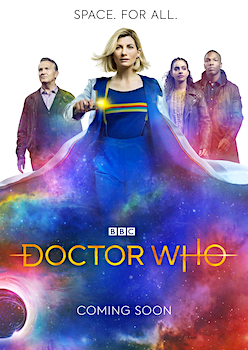
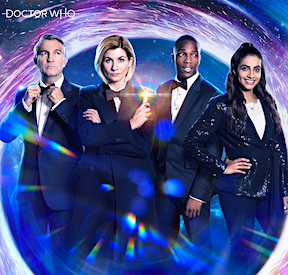
Doctor Who series 12Well, it certainly has been an eventful first half to this series of Doctor Who! Never mind bringing back the Master and destroying Gallifrey (again) in the opening two-parter — showrunner Chris Chibnall has much bigger continuity-bothering ideas on his mind. But before that, two standalone episodes.

The first, Orphan 55, is currently the worst-rated episode of modern Who according to IMDb voters, with a score almost as low as the much-maligned Game of Thrones finale. But whereas I defended that episode, unfortunately I have no love for Orphan 55. I know a lot of people’s issue with it is that it’s a bit of a climate change polemic — some people just hate Who engaging with contemporary ‘political’ issues. Sorry, but it’s been doing that since at least the Pertwee era. It’s normally a mite more subtle than this, though. I mean, The Happiness Patrol is a blatant analogy for Thatcher, but at least it’s an analogy. So Orphan 55’s problem isn’t the content, it’s the delivery: an on-the-nose lecture, practically delivered straight to camera, stapled on the end like an afterthought. But it doesn’t exactly ruin the episode, because the rest of it isn’t much cop either: a logically-dubious runaround with a shopworn twist (one that Doctor Who itself has done before, in fact). But is it actually worse than previous “most despised” editions, like Fear Her and Sleep No More? Um, actually, I think it might be.

Thankfully, the week after things swung back in the right direction. In previous years Nikola Tesla’s Night of Terror would probably have been regarded as a solid midseason bit of fun, but in the current era it virtually amounts to a classic. There were undeniable overtones of the Racnoss in the creature design, and Vincent and the Doctor in its depiction of an unappreciated-in-his-time historical genius (I half expected them to take Tesla into the future to show him there was a car named after him), but plenty of Who is like other parts of Who (it is 57 years and 879 episodes old, after all, not to mention the uncountable spinoff novels, audio dramas, comic strips, etc). All in all, it was fun enough.

But the real belter was the most recent episode, Fugitive of the Judoon. It’s most impressive as a bit of show-running stagecraft: foregrounding a popular returning monster in the title and publicity (the Judoon, obv) in order to hide the long-awaited return of a popular character (Captain Jack), which was a big surprise that in itself is designed to distract you from the real twist: another incarnation of the Doctor, played by Jo Martin.The two Doctors Social media and fan forums and whatnot have debated and analysed that revelation to death, so I won’t bother digging too much into all the possibilities of what it means — only time can tell. I will stake out this opinion, though: I am not a fan of the theory that she’s a pre-Hartnell version of the Doctor. The idea there were incarnations before the one we know as the first has always seemed disrespectful to me, somehow. Yeah, the Daleks ‘made’ Doctor Who, but Hartnell gave it his all too — without him week to week, and the effort he put into public appearances and the like, would the series have survived those early years? He’s not the only thing responsible for its success, and certainly not for its longevity, but he was The First — leave that be, thanks.
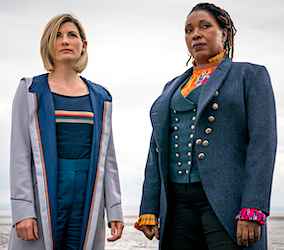
But, as I say, we’ll find out in time. More interesting to me, for now, is how showrunner Chris Chibnall is going about his job nowadays. Comparing his two seasons so far, Chibnall’s attitude to reusing stuff from Who’s past seems to be — very literally — all or nothing. Last season, he made a point of not using any continuity — no returning characters or villains, no significant references to the Doctor’s past or previous adventures. This season, he seems to be using all the continuity. I can’t remember a Doctor Who story so loaded with references to not-recent previous adventures as this one. Even the Chameleon Arch gets an outing, a thing that mattered in two stories that aired 13 years ago. It feels like Chibnall is an RTD-era fanboy revelling in bringing back stuff from a time when the show was at its peak of popularity. Maybe that’s what it needs right now. Though, in a broader sense, I feel like last season was Chibnall trying to copy RTD-in-2005 (fresh! new! start watching here!), while this time he’s doing his best to be Moffat-in-2011 (complicated mysteries! revisionist continuity! wibbly-wobbly timey-wimey explanations!)

Whether these additions to the mythology are interesting and productive, or whether it’ll be like “half-human” and fans ignore it ASAP, will depend on what’s to come. Either way, it’s the most exciting the show’s been in a good few years, and that’s something in itself.

Star Trek: Picard  Season 1 Episode 1
Star Trek: Picard season 1The Star Trek series boldly goes where it’s never gone before: into the Prestige TV market. (Despite initial appearances, based on things like the reviews I’ve read and variably-sized season orders, I’m not sure Discovery was really “prestige TV” in the end.) Is it up to competing with the big boys of this peak TV era?

Well, after just the first episode, I’m going to hang fire on answering that — on the evidence of this one instalment, it could go either way. It can certainly walk the walk: it looks very nice, with plenty of lush cinematography and expensive visuals (both globe-hopping locations and swish CGI), and it certainly wants to appear weighty, with themes of ageing and decay (not only of people but also institutions). But can it talk the talk? Does it actually have things to say beyond “Picard is old now, and Starfleet’s a bit shit”? Once upon a time I’d’ve said the fact it’s heavily (heavily) embedded in existing Trek continuity was a barrier, both to entry (“only fans will know enough to follow the plot”) and quality (“it’s so busy looking to the past it doesn’t do anything new”) and acclaim (“I’m not a Trekkie so I didn’t care”) — but that’s not necessarily the case anymore, as HBO’s Watchmen only just proved: you can reuse and remix and lean hard on previous texts, and still produce a high-quality work. That said, while Picard does invest energy in making sure newbies have all the continuity stuff explained, I feel like the show already shows signs of wavering towards Trek’s usual habits, for good or ill. But there’s an interesting enough set of mysteries just getting underway, and it’s always great to see Patrick Stewart, so I remain optimistic it’s going to go somewhere good.

His Dark Materials  Series 1
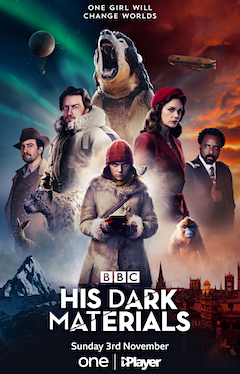
His Dark Materials series 1I reviewed the first three episodes of His Dark Materials in my previous regular update, just over a month ago, but I’d actually watched them much earlier, so when I returned to the series in the new year I decided to restart from the beginning. That improved my opinion of them considerably, I must say, but then a second viewing always has the ability to help clarify things you were unclear of before. Still, I got much more invested this time, and was swept along for the ride and the mysteries the show unfurled. Like the two series I’ve reviewed above, there’s plenty of mystery and intrigue here — some of it answered, much of it left hanging for future seasons (there’s two whole books to come, intended to be adapted across four more seasons). But even in this first salvo, events and characters move in interesting directions. It’s a very dark show at times, especially for something adapted from what are ostensibly children’s books, but that at least creates a genuine sense of jeopardy and unpredictability. So too the way it handles its characters — there’s not just simplistic twists of “hero turns out to be villain” or vice versa, but definite shades of grey. With the promise of whole new worlds to come, I’m definitely excited to see what’s next.

Also, I bloody love the theme music now.

The Twilight Zone  ‘Best Of’
The Midnight SunIt’s been six months since I did one of my “best of The Twilight Zone” roundups, but I always intended to continue them, so here we are again.

Having already reviewed the top ten episodes as ranked by several different sources (IMDb voters, ScreenCrush, and Paste), I decided to resume my journey through the original Twilight Zone by producing an average of various different lists to identify which instalments are acclaimed by consensus (because that’s the kind of thing I do). To help broaden the range of opinions, I added a bunch of new lists to my calculations — namely, Ranker’s The Best Twilight Zone Episodes of All Time as sorted by voters; Buzzfeed’s Ranking Every Episode by Arianna Rebolini; TV Guide’s 50 Essential Episodes Ranked by Joal Ryan: and Thrillist’s The 50 Best Episodes by Scott Beggs.

This new average ranking gave me a fresh top ten with a couple of episodes I’d not seen. The first of those was in 9th place (also, for what it’s worth, it’s now in IMDb’s top ten too, having moved up from 11th to 8th since I last looked). That’s The Masks, which I think is one of the series’ best-paced episodes. I’ve found that even some of the greatest episodes can feel a little thin, with a singular concept that only just fills 25 minutes, but this one doesn’t overstay its welcome by a second — and yet it’s as simple and clear a concept as any. That’s perhaps when TZ is at its best: simple but effective concepts, cleanly executed. And there’s a moral lesson too, of course.

I was slightly less impressed by The After Hours, which finishes off the consensus top ten. It’s an effectively creepy edition for the most part, with some genuine scares, but for me it was slightly undermined by the final explanation, which I don’t think quite hangs together with what’s gone before. A definite case of “it’s about the journey not the destination”, then, because up ’til that point it’s superb.
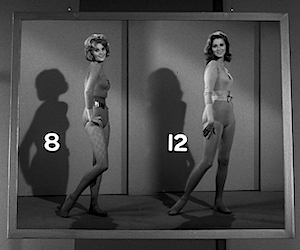
Number 12 Looks Just Like YouMoving beyond the top ten to complete the top 10% (i.e. the 16 best episodes), next is Number 12 Looks Just Like You (which, by-the-by, comes 10th on Thrillist). This is what some people might call “proper sci-fi” — an idea of the future spun out of what’s possible in the present, using it to present an analogy for the times we live in. And what is the analogy? In this case, there’s a few things you can read into it: mental health; conformism; the transition from childhood to adulthood; maybe all of the above; maybe something else. The only real downside is the episode hints at a wider world that isn’t explored. It’s mentioned in passing that the writing of Shakespeare, Keats, and others has been banned. Why? By whom? And while a bunch of middle-class white people are choosing which generic model they want to look like, what about other races? Class is less of an immediate issue because it seems this is a government-backed thing that everyone must undergo — but then, why do the lower classes get to look just the same as their ‘betters’? Surely there’d be different models depending on your social station? Never mind a 25-minute episode, someone could spin an entire series out of this… Still, having so much to ponder is one mark of a very good episode.

The Midnight Sun is the penultimate episode in the top 16, and also is another one that’s 10th on one list, this time Ranker’s. I’d probably put it even higher — this is definitely one of my favourite episodes so far. It takes a massive world-altering event and shows it to us from the point of view of two ordinary women; and not even from when the event happens or is discovered, but from a month into the new status quo, when it’s become a fact of life rather than some revelation. It’s a different way to approach such a story even today, and it works all the more for it. And, of course, there’s a twist (spoiler to come!) — one of the very, very few times “it was just a dream” works.

Robert Redford invites you to The Twilight ZoneFinally for now, the last episode in the top 16 (and the only one of today’s episodes not in anyone’s top ten), Nothing in the Dark. Probably best known for staring a young Robert Redford, it’s about an old woman who’s paranoid and agoraphobic due to her fear of meeting Death; but when Redford’s cop is shot right outside her door, she has to let him in to save his life. It’s a nice idea for a story, but (to loop back to what I was saying about The Masks) it feels a little slight in the execution. Half of the second act is taken up in a diversion with a demolition guy which is just that, a diversion. Still, there are very good performances from the two leads, and it comes with a well-meant little message by the end.

Also watched…
  • The Goes Wrong Show Series 1 Episodes 3-5 — I love this show with all my heart. Episode 3 was perhaps the best yet (even the title, A Trial to Watch, is a gag). So this is a friendly reminder that the series so far is available on iPlayer and the sixth (and final, *sob*) episode is on tonight.
  • The Great British Bake Off Series 1 Episodes 1-3 — I joined Bake Off before it was an all-encompassing phenomenon, with series two. So I’ve always meant to go back and see the one season I’d missed, especially since the whole lot became available on Netflix. It’s funny watching it now, though, because so much of it is familiar as Bake Off, but it’s early days and it’s unrefined. It’s a bit like watching a version of the show made by someone who pretty much remembers how it works but not exactly.
  • Star Trek: The Next Generation — I’ve never seen all of TNG (far from it), so as Picard is expected to be heavily indebted to existing continuity, I sought out a few likely-to-be-relevant episodes. The first was season 5 episode 23, I Borg, which is regarded as one of the series’ very best, and deservedly so. The other was the season 6 finale / season 7 premiere, a two-parter called Descent, which I guess was decent. There’s some good stuff in the first half about Data dealing with the possibility of experiencing emotion, but the second half is a bit too pulpy in a way I’m not sure fits Trek (or at least my idea of it). If any Trekkies reading this have other episodes they’d recommend (for relevance to Picard, not just because they’re good), I’m open to suggestions.
  • Twin Peaks in UHD — The recently-released Twin Peaks: From Z to A box set includes a bonus disc with two episodes in 4K Ultra HD. Yeah, just two. Why they didn’t do the full series, who knows. Expense, I guess. Some people reckon this is testing the waters for a full-series UHD release, but I dunno — considering they’ve already released the whole series on individual season DVDs, then a complete box set DVD, then Blu-ray, now a collector’s edition Blu-ray, do they think they’ll manage to sell it to people again? Sure, there’ll be some customers, but enough? Anyway, the two episodes here are the original pilot and season 3 / A Limited Event Series / The Return (whatever you want to call it) Part 8. The latter looked pretty great, even without HDR enhancement; the former… I’m counting as a movie, so will write about in January’s Rewatchathon segment.

    Things to Catch Up On
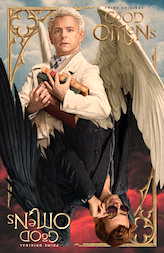
    Good OmensThis month, I have mostly been missing Good Omens… again! I didn’t get round to it on Prime Video when it premiered last May, and now it’s airing weekly on BBC Two but I still haven’t started it. I read the book as a kid and absolutely loved it (for a very long time I would’ve said it was my favourite novel), so when they announced a miniseries adaptation I was excited — especially as it was being managed by Neil Gaiman himself and starred a bunch of my favourite actors, not least Michael Sheen and David Tennant in the lead roles. That’s almost the problem: I want to watch it properly; I can’t just bung it on. Maybe I’ll get to it before next month’s column.

    Also missed: The Trial of Christine Keeler (I hear it got pretty good, but only after a couple of episodes); White House Farm (I’m interested in the case, but apparently the series is overly slow and long-winded); Deadwater Fell (David Tennant again); and probably a tonne of other stuff that’s slipped my mind for the moment…

    Next month… more Doctor Who, more Picard, more Twilight Zone. As for new stuff, Locke & Key finally makes it to the screen via Netflix… but that’s about all I can foresee for now. Maybe I will finally do Good Omens

    P.S. If you’re an attentive regular reader who’s thinking, “hold on, did I miss #53 and #54?”, the answer is no, you didn’t — the mistake is mine. A whole year ago, I forgot to count the 2018 Christmas post towards the numbering, which is the way I’d previously done things, so I am belatedly correcting for it by ‘hiding’ the jump alongside the one for 2019’s Christmas post. If you think that’s terribly confusing, just remember: it doesn’t really matter anyway.
  • Ad Astra (2019)

    2020 #10
    James Gray | 123 mins | Blu-ray (UHD) | 2.39:1 | USA & China / English | 12 / PG-13

    Ad Astra

    This review contains spoilers (though most of them are in the trailer).

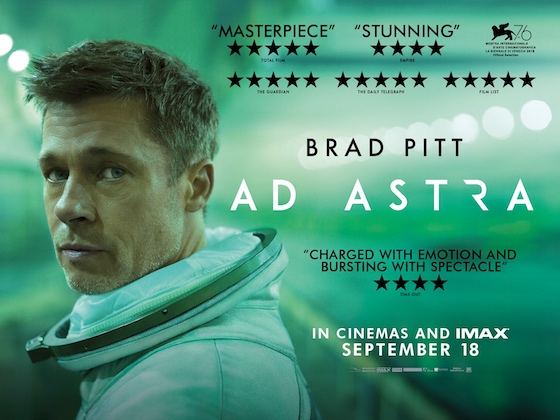
    Rad Astra”, “Bad Astra”, “Sad Astra”, “Dad Astra”, “Mad Astra”, “Glad Astra”, “Brad Astra”, “Fad Astra”… the puns came thick and fast when Ad Astra hit cinemas back in September (and, as you may see in some of those links, ever since). I’d love to contribute to the game, but I’m four months late so I think all the puns have been had Astra.*

    Resisting the urge to describe the film’s plot using some of those aforementioned puns (considering I already gave into that urge for the email notifications and social media posts promoting this review), I’ll instead do it in an equally pithy fashion: this is “Apocalypse Now in space”. Kinda. After unexplained energy waves from Neptune have disastrous consequences on Earth, astronaut Roy McBride (Brad Pitt) is informed that his believed-dead father may actually still be alive and be the one causing these waves, and NASA Starfleet his bosses want him to send a message into space in the hope his dad’s out there and it reaches him. But with Earth facilities damaged by the aforementioned energy waves, Roy must travel to Mars, via the Moon, to even send the message. Hence where Apocalypse Now comes into it: it’s about a man travelling ‘up river’ in search of a superior-gone-rogue.

    Apocalypse Now is one of my favourite movies. Sci-fi is one of my favourite genres. “Apocalypse Now in space” sounds like a pitch aimed at me. Ad Astra doesn’t score a direct hit, but it gets pretty close. One thing is it’s not just an emulation of the previous film’s plot (which itself is, of course, rejigged from Joseph Conrad’s novel Heart of Darkness), but also adopts its meditative style. Roy is a man with emotional problems, struggling with the state of his relationship on Earth (with Liv Tyler) and with the comfort the isolation of space brings him. Is it comfort, or is it just escape? And is that healthy? These are the things the film has on its mind.

    In space, no one can hear you ponder your own sense of isolation

    While it does have something to say about them, I feel like it thinks it’s deeper than it actually is. The final act, in particular, gets a little muddled. Why did his father make the decisions he made? Thematically, what does Roy gain by learning the truth about his father? On a simplistic level, he sees what isolation taken to extremes does to you; but he and his father seem to have fundamentally different attitudes to disconnection anyway. I appreciate that the film dodged the easy blockbuster-y versions of things (it would’ve been a bit pat if his dad was either desperate to be rescued or outright insane and tried to stop the mission), but I’m not convinced what it did instead wholly hung together. Still, as third acts go, “not completely ruining the film” is better than some.

    But it does seem like Ad Astra is at least a partially compromised movie. Co-writer/director James Gray has said that he had to make some changes to the ending to get a studio to finance it, and if you watch the trailers again after the film it’s clear that stuff was cut, including much of Liv Tyler’s character. How big an effect that had it’s impossible to say (unless someone inside the production speaks up), but it certainly implies some reworking in post-production. Another thing that makes me wonder this is the film’s use of religion. At times it seems fairly foregrounded — not in a heavy “this movie is about religion” way, but there are lots of references to it, people saying prayers for the dead, that kind of thing — but then the film doesn’t really seem to do anything with that. No one’s actions are different because they’ve found God, nor is caused to find God by the events of the movie, nor rejects God because of them, nor thinks they are God… Religion seems to be this underlying theme (it might be too kind to call it that, even) which ultimately disappears from the narrative just when it should, perhaps, be becoming more prominent.

    On the flip side, perhaps it was meant to be this subtle. Ad Astra is certainly trying to say something about our place in the universe (are we alone? If we are, what does that mean? How does the vastness of space, the emptiness, the isolation, the distance from home, affect the mind?), and maybe that’s all implicitly tied to religion and our belief (or otherwise) in an all-powerful creator who made us in his image (and, by extension, no other ‘intelligent’ life). Or maybe the studio got cold feet about tackling religion and made Gray cut that, too.

    Moon pirates!

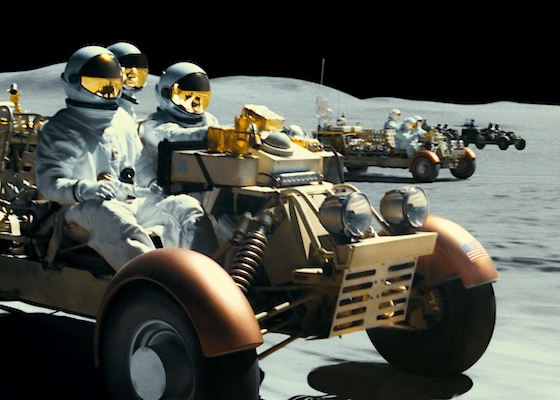
    Nonetheless, there’s still a lot more good than bad in Ad Astra. Its depiction of the future is interesting; a plausible extension of the present, where space travel has been at least partially commercialised, the Moon more like a concrete shopping mall than a place of genuine wonder. That groundedness extends to the ‘action’ scenes. I mean, you wouldn’t expect a movie that I’ve described as “meditative” to feature “a chase/shoot-out with moon pirates” — that sounds like the pulpiest thing imaginable — but it’s here, and it’s achieved with what feels like a large degree of plausibility and realism. Personally, I like the way the film mixes together contemplativeness with such spikes of adrenaline — again, it’s quite like Apocalypse Now. There’s also the bold choice not to present sound in space. This isn’t the first film to make that choice, certainly, but it remains a noteworthy decision, and it has a more tangible impact than you might expect. Indeed, that seemingly-simple choice goes a long way towards that feeling of reality, though it is just one of several connected choices that ground the film’s vision of the future and make it plausible.

    Ad Astra is certainly a journey into darkness — of space; of mind. Whether it gets to the heart of it, I’m not convinced. But it’s still a trip worth taking.

    4 out of 5

    Ad Astra is released on DVD, Blu-ray, and 4K Blu-ray in the UK this week.

    * I’m so proud of that gag I’ve already used it on three different social media posts, and now I’ve worked it in here for posterity. ^

    The Personal History of David Copperfield (2019)

    2019 #136
    Armando Iannucci | 119 mins | cinema | 2.35:1 | UK & USA / English | PG / PG

    The Personal History of David Copperfield

    A fresh perspective on Charles Dickens’s favourite of his own novels, from co-writer/director Armando Iannucci, best known for sitcom The Thick of It, its spinoff movie In the Loop, and The Death of Stalin.

    Those are all political satires, of course, whereas David Copperfield is more of a shaggy dog story; though its attracted some degree of ‘political’ commentary thanks to its colourblind casting. So let’s get that out of the way first. Not every character here is played by a white actor. Is every character in Dickens’s novel white? I dunno, probably. Is it unrealistic to have people of colour in a story set in Victorian England? Well, considering England was at the heart of a worldwide empire with global trade links and had been through the slave trade, I would guess not everyone in the country was white by that point. I’m no expert on this, but I’ve certainly seen comments by experts that would agree with that.

    Now, all of that said, David Copperfield’s attitude to casting is the most genuinely colourblind I’ve ever seen — it’s not concerned that related characters have ‘plausible’ similar skin tones, even. It seems Iannucci has just cast whichever actor he felt was right for the role. I guess that’s going to prove an insurmountable barrier to some people; too great an ask to accept the ‘reality’ of the story. Whereas a giant hand crashing through a ceiling to pluck little David from comfort, well, that’s just dandy. Anyway, I’m already getting bored with this debate and I’ve barely written about it. If it bothers you, I don’t think it should, but hey, you do you. For the rest of us, we can just get on with enjoying everything else the film has to offer.

    Dev Patel IS David Copperfield

    And that’s quite a bit. Dickens’s novel is a thick tome (768 pages, as per the film tie-in edition), and here it’s been condensed briskly into just under two hours, so there’s a lot more going on than the colour of people’s skin. It’s a semi-autobiographical tale, and Iannucci emphasises that side of it by framing it as David telling his own story at a staged reading. Such a framing device also allows for some flights of whimsy in the film’s treatment of certain things, especially scene transitions, but to say too much of those would destroy some delightful surprises. Trust that Iannucci is doing more than just showing off or messing around, however, instead establishing a style that allows for a neat twist or two later on.

    I don’t know how thoroughly the film adapts those 768 pages, but it feels like it’s trying to cram in as much as possible. It rattles by at a whipcrack pace, which is both one of its greatest assets, because it moves like the clappers, and its biggest drawbacks, because it winds up feeling a bit too long. Every time you think it’s getting to the end, there’s another bit. (Maybe this is less of a problem if you’re familiar with the whole story, which I was not.) This is a minor complaint, though, because while those 119 minutes may be a few more than seems strictly necessary, what’s within them is frequently riotously funny. I saw the film with an almost-full house, and it was clear everyone was having a whale of a time.

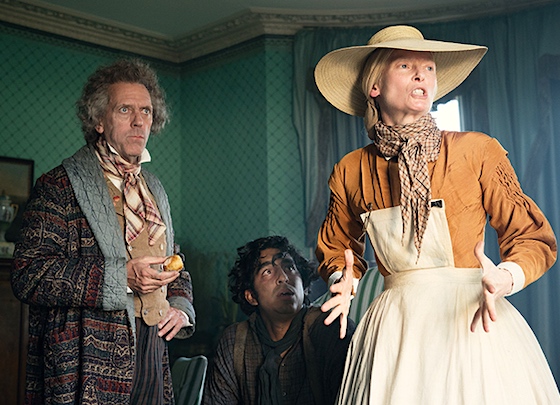
    The same appears to be true of the cast. I suppose Dev Patel is best known for heavier stuff, like Slumdog Millionaire (though that was 12 years ago now (jeez)) and Lion, but here reminds us he’s adept at lighter material too (which shouldn’t surprise anyone who’s seen the Marigold Hotel films). Elsewise, the extensive and sublime supporting cast vie for attention in an array of standout performances. For my money the winner (if we must pick one) is Hugh Laurie as the flighty but unfailingly kind Mr Dick. Plus it’s quite nice (or you could say “nostalgic”) to see him back in bumbling toff mode after years of things like House and The Night Manager.

    If he's Mr Dick, what's HER name likely to be?

    Not that the others don’t get their moments to shine — when you’ve got the likes of Tilda Swinton, Peter Capaldi, and Ben Whishaw involved, you’d expect nothing less. I could go on listing recognisable names, for there are plenty here, but you can always just read the cast list for yourself. One of the most noteworthy is Morfydd Clark in a dual role, one of which likes to mainly talk through her dog. I suspect this may be another stop on her path to stardom — she was recently seen in the BBC’s Dracula and a small-but-memorable role in His Dark Materials, and has been cast as Galadriel in Amazon’s Lord of the Rings series.

    So there’s a lot of talent on screen, but it takes that degree of skill to negotiate the tone Iannucci has set: a narrative full with comedy, but that doesn’t lose sight of an underlying heart. Indeed, the degree of humour is a welcome counterpoint to the machinations of the plot, which contain an array of miseries when looked at objectively — death, loss of home, betrayal, and so on. This is again perhaps where that framing device comes into play, setting the story as a man finding the (sometimes dark) humour in the list of tragedies that have befallen him, as well as his friends and family. David’s predilection for storytelling is an important throughline, and the film’s affection for the emotional power of the act of writing is sure to make it a favourite for many authors (and wannabes).

    4 out of 5

    The Personal History of David Copperfield is in UK cinemas now. It’s released in the US on May 8th.

    Blindspot 2020: What do you mean you haven’t seen…?

    The Blindspot challenge (for the benefit of those still unfamiliar with it) is where you pick 12 films you feel you should’ve seen but haven’t, then watch one a month throughout the year. I started doing this in 2013, calling it “What Do You Mean You Haven’t Seen…?” (WDYMYHS for short), but then someone else came up with the same notion independently and gave it a much snappier moniker, and that caught on.

    My fortunes with the Blindspot / WDYMYHS challenge have been up and down over the years. I’ll spare you a full potted history, but last year I set myself two lists of 12 films each and didn’t complete either — although between them I did watch 17 movies. I braved 24 films because for two years before that I’d done 22 and completed it with relative ease. So maybe I should aim for 24 again this year…

    …but I’m not going to. In the same way that the second half of 2019 was a bit unpredictable (leading to my failures), I’m not wholly sure what the future holds, so I’m going to rein it back to the original 12 and see how it goes. And besides, if I find 12 unchallenging then I’ve got the seven remaining films from last year I could move on to; plus one from 2015 that I never got round to. That’s a pretty big ‘buffer’ to work on.

    Now, I’ll jump ahead to the main event: the 12 films I must watch, in alphabetical order. Afterwards, I’ll explain how they were chosen.


    8½


    All Quiet on
    the Western Front
    All Quiet on the Western Front


    An American Werewolf
    in London
    An American Werewolf in London


    Andrei Rublev
    Andrei Rublev


    The Battle of Algiers
    The Battle of Algiers


    Do the Right Thing
    Do the Right Thing


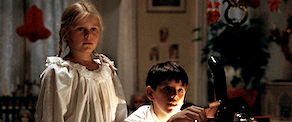
    Fanny and Alexander
    Fanny and Alexander


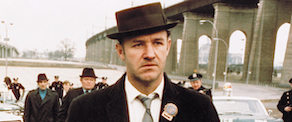
    The French Connection
    The French Connection


    In the Mood for Love
    In the Mood for Love


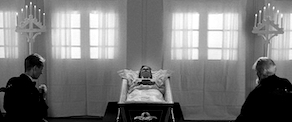
    Ordet
    Ordet


    Ugetsu Monogatari
    Ugetsu Monogatari


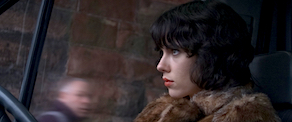
    Under the Skin
    Under the Skin

    So, some people just pick their 12 films. When I did two lists, that’s what I did for one of them. But the rest of the time I’ve let consensus decide, by compiling “great film” lists in various different combinations to suggest the films other people feel I should’ve seen. I quite like both methods, so for 2020 I’ve picked six with one and half-a-dozen with the other. That said, my ‘free choice’ six were influenced by some of the films that didn’t quite make it into the ‘preselected’ six. (Feel free to guess which films belong in which six. Fun and games! Answers in a mo.)

    This year, the selection process involved the following lists:

  • Letterboxd’s Official Top 250 Narrative Feature Films
  • IMDb’s Top Rated Movies (aka the IMDb Top 250)
  • The 1,000 Greatest Films by They Shoot Pictures, Don’t They? (aka TSPDT)
  • the Reddit Top 250
  • Empire’s The 500 Greatest Movies of All Time (aka the Empire 500)
  • Sight & Sound’s The 100 Greatest Films of All Time (2012 edition)

    Because TSPDT takes Sight & Sound’s voter ballots as its foundation, I counted the Letterboxd scores twice as a way of evening it out a bit and not letting S&S be too dominant. It only worked up to a point. For example, Harakiri is ranked 4th on the Letterboxd list and 33rd on IMDb, but it’s a lowly 647th on TSPDT and nowhere on the other lists. So as I started adding the lists together (in the order I’ve credited them above), Harakiri was right at the top, then gradually fell right back. But that’s kinda the point of counting multiple lists: it’s getting a consensus of consensuses. Letterboxd users clearly think Harakiri is one of the very greatest films of all time; IMDb voters aren’t quite as enthusiastic, but it’s up there; everyone else… not so much.

    But it’s not just about the raw numbers of which films top the list: I have some rules. Chief among them, I’ve previously only selected films I already own on DVD/Blu-ray or have access to on Netflix/Prime/etc. This year, I let the door open to anything, though I did first make sure I could reasonably source a copy. So, top of the list was Andrei Rublev, followed by Federico Fellini’s . Next, in a somewhat ironic turn of events, my new “open door” policy actually led to some high-scoring films being eliminated. While sourcing copies of Come and See and Sátántangó, I discovered that both have recently been restored and are expected to get Blu-ray releases in 2020. You might think that’s perfect timing, but what if one or both slipped to 2021, or were insanely overpriced? So I decided to adopt a “wait and see” approach. Maybe they’ll be on 2021’s list.

    Next in the running was In the Mood for Love, followed by Ordet. Then my only still-standing regular rule came into play: one film per director. That meant the next film — La Dolce Vita, which shares Fellini with — was cut. After that is actually where Sátántangó was ranked (keeping up? I don’t blame you if you’re not), followed by Mirror — but Mirror is directed by Andrei Tarkovsky, the same as Andrei Rublev, so out it went too. But now we do finally reach the end: the next two high-scorers were Fanny and Alexander and The Battle of Algiers, which (as you’ll know from their inclusion in the list above) were fine.

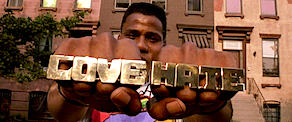
    And with those six settled upon, I turned to picking six more from my DVD/Blu-ray collection. There’s less to say about these: I made a long-list of 127 ‘maybe’s; narrowed it down to 38 ‘very possibly’s; and then picked six, based on a mix of intuition about what I ‘should’ have seen and things I’ve personally been wanting to see for a while. I did also try to keep some variety in terms of the films’ ages, genres, countries, and languages… but almost all the ones that made my short-list were in English, so, er, oops. It meant Ugetsu Monogatari was an easy choice, anyway; and I was sure to include some British films (or British co-productions, at least); and Do the Right Thing may be American, but it’s also the only one of the 12 from a black filmmaker. (No female directors, though, which is an unfortunate oversight.) Still, on balance there are more films not in English (seven vs five), and the B&W/colour split is exactly 50/50.

    Four of my six ‘free choices’ do appear further down the rankings I’d compiled. That’s coincidence rather than design, although I suppose seeing them on the list might’ve helped push them to the forefront of my mind. Those four were Do the Right Thing (18th), Ugetsu Monogatari (23rd), An American Werewolf in London (127th), and The French Connection (162nd). I don’t know about you, but I was a little surprised All Quiet on the Western Front didn’t make it. Well, of the lists I’ve used this year the only one it’s on is TSPDT, at a lowly 742nd. (I’m not surprised Under the Skin wasn’t on any, what with it being so recent. For one thing, it hadn’t even been released when the Empire and Sight & Sound polls were conducted.)

    And that’s all that thoroughly over-explained.

    (Did anyone read all this?) (Hello future-me, who surely will re-read all this at some point, sad egocentric that I am.)

    Finally, if I manage those 12 and want more, the eight left outstanding from 2015 and 2019 are…

  • All About Eve
  • All the President’s Men
  • The Breakfast Club
  • Ikiru
  • The Ipcress File
  • The Royal Tenenbaums
  • The Thin Red Line
  • To Kill a Mockingbird

    This is hardly a chore — there are some great-looking movies there — so hopefully I’ll find time for all 20. It would only be fitting, given the year…

  • The Past Christmas on TV

    Continuing the spirit of publishing things about ten days late, here’s my Christmas TV review, about ten days after the season ended. (And if you’re thinking, “um, Christmas was 18 days ago,” well, the TV ‘Christmas’ season goes on until at least January 1st here, so there.)

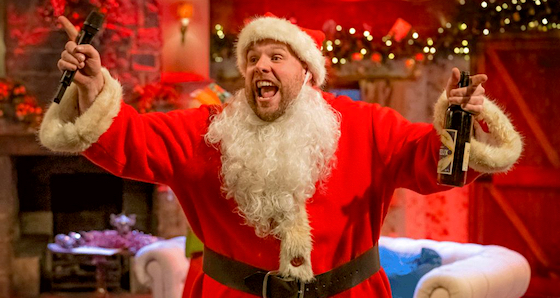
    Santa Goes Wrong
    Here’s Santa to rekindle your festive spirit.
    With alcohol.

    This is now my fourth annual Christmas TV post, would you believe. I still feel like TV reviews are a fairly recent addition to this blog, but nope, it’s been four years. And this is, in a way, a vintage year, what with the Gavin & Stacey revival becoming the most-watched Christmas Day broadcast in something like 17 years; and, even more impressively, it was the only scripted programme to make the top ten TV broadcasts of the decade (the rest going to sporting events and one random episode of The X Factor).

    As for whether it was any good, and what I thought of other stuff that was on… well, read on…

    Doctor Who  Spyfall
    Doctor Who: SpyfallFor the first time in 14 years, since the series returned, there was no Doctor Who Christmas/New Year special. Gasp! At least we got the first episodes of a new series, though — two slightly-longer-than-normal instalments (at 60 minutes each, which doesn’t feel that special when regular episodes are 50 minutes now). And a two-parter, too — the first of those since 2017. And a big two-parter at that, with big-name guest stars and big action sequences and big overseas locations.
    Yep, this is Doctor Who with a bang — a marked contrast to last series, which mostly went for understated. Well, as understated as modern Doctor Who gets, anyway. But whereas series 11 had no two parters and no returning monsters and, as I say, a markedly calmer pace and tone, series 12 begins with the antithesis of all of that. In case you’ve not seen it I shan’t spoil the end-of-part-one reveal, which was a massive delight that I did not see coming (I guess someone learnt a lesson from last time that villain returned, when the production team basically spoiled it themselves before anyone else could). That was the highlight of an episode that moved at a mile a minute, not pausing to let you consider the logic of what was going on (which, yeah, was not faultless). But while it may not have been perfect, I’m glad to see a return for this fun, exciting version of the show. I didn’t find series 11 a total washout (I think my reviews as it was airing were mostly positive, even), but overall I felt like something wasn’t quite working.

    Well, let’s be honest, what wasn’t working is showrunner Chris Chibnall. His episodes under previous showrunners Russell T Davies and Steven Moffat were never the very best (and I say that as someone who likes them more than most), but without their oversight to guide him, he seemed a bit lost. He’s a long-time fanboy of the show (somewhat famously, he appeared on a viewer feedback show in the ’80s to slag off the quality of the writing), and at times last series it felt like he was writing for the show as he’d loved it as a kid (that is to say, a bit slow-paced and old-fashioned). Now, possibly taking some of the criticism on board (or possibly just trying to mix it up), he’s attempting to emulate the whoosh-bang blockbuster-but-quirky style of RTD and Moffat. What he can’t grasp is their effortless-seeming slickness — when they rushed over something it was usually because “it makes sense if you think about it”, whereas Chibnall is trying to cover a logic gap; conversely, when there’s no gap to be hidden, he has characters mercilessly over-explain everything, I guess for the sake of anyone who’s just walked in.

    So, not perfect, but I thought Part 1 was a blast nonetheless. Sadly, I was much less enamoured with Part 2 — a virtually nonsensical runaround through time, which didn’t seem to know what to do with everything that had been put in play, just throwing “more” at us until the Doctor basically said “time for the story to end now”, and so the baddies disappeared and that was that. Apart from an epilogue, which was quite intriguing — and dove head first into full-on mythology territory, something the series studiously avoided last year. Whether Chibnall’s got anywhere good to go with what he’s teasing, God only knows (I fear not, based on the evidence), but it’s a welcome bit of business that will hopefully jazz up the season to come.

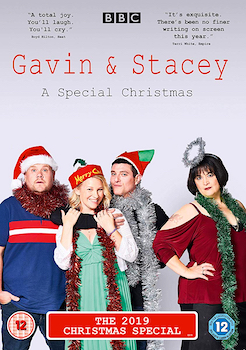
    Gavin & Stacey  A Special Christmas
    Gavin & Stacey: A Special ChristmasI won’t recap Gavin & Stacey’s ratings success (what with already having mentioned it at the start), nor will I touch on the controversy around its use of Fairytale of New York (I kind of get why people complained, but also, the song is the song). As for the episode itself, well, I thought it was masterful. It may be nine years since the last episode, but it was like they hadn’t been away. Not that they tried to ignore the passage of time — clearly, the best part of a decade had passed in the characters’ lives, and naturally changes had come with that — but the characters and performances felt true to their old selves, as if they’d never stopped playing them, with the rhythms and comedic style of the show fully intact. Some decade-later revivals feel like new shows — the writers have forgotten how to write it properly; the cast have forgotten how to play it right — but not this one. This was bang on what it should be. Tidy.
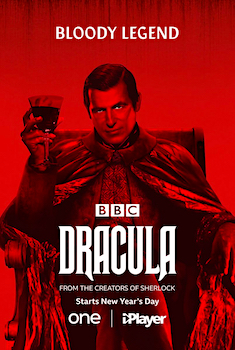
    Dracula
    Dracula“From the makers of Sherlock”, declared the publicity for this new adaptation of the Victorian novel — so you’d be forgiven for thinking it was a present-day reimagining. But it wasn’t. Well, until it was.

    This new Dracula is very much a tale of three parts, and not just because it was in three 90-minute episodes. While undoubtedly a serial, each episode was almost a standalone instalment, which was a structural trick I quite liked — it doesn’t feel like you’re watching one four-and-a-half-hour work broken into three by the necessities of the schedule, but rather three separate-but-connected works. And I really, really liked the first two.

    The Rules of the Beast is what you most expect of Dracula: a spooky Transylvanian castle; “I don’t drink… wine”; mild little Englishman Jonathan Harker discovering terrible secrets… Of course, writers Steven Moffat and Mark Gatiss didn’t shy away from bringing a few affectations and twists to the piece, but I thought they all worked well. Claes Bang makes for a fantastic Dracula (a comment that holds true throughout the series), the rest of the cast were very good as well, and there were some proper horror bits — this adaptation was not, ahem, toothless.

    The second instalment, Blood Vessel, dealt with Dracula’s voyage to England aboard the Demeter — a part usually more or less glossed over in other adaptations, as far as I know. But here Moffat and Gatiss spin it out into a full 90-minutes, kind of like a slasher movie set in a confined location, albeit we know whodunnit — so, naturally, there are other twists to be found. Again, I liked this a lot — the way it felt respectful to the source while also expanding and refreshing it; the interesting supporting cast; some very impressive production work (they built the entire ship on a soundstage!)

    Then we get to episode three, The Dark Compass. There’s no way to talk about what happens here without spoiling it, so if you haven’t watched the series yet and are intending to, look away now. If you have watched it, you’ll know this episode jumps the action forward 123 years to 2020. And you also probably hated it, because it seems almost everyone did. My feelings were slightly more nuanced. In my opinion, its biggest mistake is that it’s a completely different show. Sure, we still have Claes Bang playing Dracula (and he’s still excellent), and we still have Moffat and Gatiss’s recognisable stylings in the dialogue and whatnot, but the entire setup has shifted. Judged in isolation, as a present-day-set reworking of the Dracula story as told in the novel, I don’t think it’s that bad. Maybe it’s a tad too cheesy (the scenes in nightclubs and whatnot do have a feel of “how do you do, fellow kids”), but it’s workable as a modern-day adaptation of the character and plot. The problem, as I say, comes from placing it as part of a whole alongside the reenvisioned-but-fundamentally-faithful adaptation we got in the first two episodes. In doing so, Moffat and Gatiss undermine the whole enterprise — it robs the first two-thirds of a fitting finale; and, by being so radically different to the style we’ve spent three hours getting used to, it doesn’t give itself a fair shake either.

    And so many have judged the overall result to be a failure. Personally, I enjoyed enough of it that I was still entertained, but if they’d given us a ‘proper’ third episode to round it out then I think I may’ve loved it.

    The Goes Wrong Show  Series 1 Episodes 1-2
    The Goes Wrong Show - The Pilot (Not the Pilot)Oh my, what a treat! Regular readers will remember how much I loved Peter Pan Goes Wrong at Christmas 2016 (“the best thing that was on TV during the festive season”) and its 2017 followup, A Christmas Carol Goes Wrong. When the gang missed Christmas 2018 I feared we wouldn’t be getting any more, possibly thanks to the negative-nelly reception in some quarters. But oh no, for 2019 they’re back with a vengeance: not a one-off hour, but a whole series of half-hour Plays Gone Wrong. Reader, I am cock-a-hoop with delight!
    The first episode was another Christmas special; the second a historically-inaccurate WW2 thriller (set in 1961); the third aired on Friday but I’m currently saving it. It’s a half-hour parade of utter silliness — slapstick, wordplay, entirely predictable tomfoolery… but sometimes the total predictability of what’s about to go wrong is part of the fun (episode one begins with a blatant setup for a joke that isn’t paid off until the very end of the episode). And it’s exactly the kind of thing the whole family can watch and enjoy, whether you’re 6 or 66. I genuinely can’t remember the last time I was driven to tears of laughter. Actually, I can — it was Peter Pan Goes Wrong. Long live the Cornley Polytechnic Drama Society!

    Also watched…

    A mix of Christmas scheduling and non-Christmas stuff we just happened to catch up on.

  • Criminal: United Kingdom Season 1 — Netflix’s high-concept cop show wasn’t quite as classy as the publicity would have you believe (it still indulged in the old staples of office politics, breaking from the tension of the interrogation to faff around with romance subplots and whatnot), but the guest stars still gave it their all — I don’t think I’ve ever seen Hayley Atwell like that before, and David Tennant was superb as always. Good enough that I’ll check out some of the international versions.
  • In Search of Dracula with Mark Gatiss — This felt like it was planned as a promo for the BBC’s new Dracula, but aired after it. Weird. Anyway, Gatiss has fronted several great documentaries on horror before, and while this wasn’t quite in their league (the others are exceptionally good) it was still a solid and interesting look at the history of the Count. And it made me want to see a load of previous Dracula films, which I always think is the mark of a good movie documentary.
  • Miranda My Such Fun Celebration — I know the sitcom Miranda wasn’t to everyone’s taste, but I loved it, as did lots of others, hence this one-off special to mark its tenth anniversary. It’s a bit of an oddity — a mix of cast reunions, sketches, clip montages, and song and dance. Yes, song and dance. It was well-meaning but, well, I found it a little strange. But for those people whose lives have been positively impacted by the series (and, genuinely, hurrah to it and them for that), I’m sure it was a delight.
  • Vienna Blood Series 1 — A new crime series from “that other guy who wrote some episodes of Sherlock”, this adaptation of a series of novels set in Vienna c.1907 did feel a bit like Sherlock Lite, with its Freud-influenced genius consulting detective and some stylish visuals. But it lacked the innovation that marked out Sherlock, especially in its early days. You can tell this has half an eye on being an easy sell to international markets, able to sit comfortably alongside all the other 90-minute crime dramas the UK TV industry churns out. So, it was a bit predictable and formulaic, but decently done and reasonably entertaining. This Guardian article echoes my feelings on it pretty well.

    Things to Catch Up On
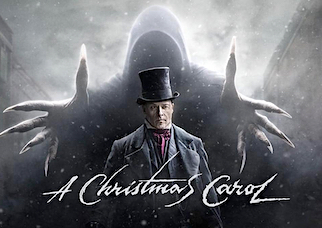
    A Christmas CarolThis month, I have mostly been missing the BBC’s new adaptation of A Christmas Carol, written by Peaky Blinders creator Steven Knight. I know it went down with some degree of controversy, but its revisionist, horror-tinged style looked right up my alley. Unfortunately, it was stripped over three nights, and because I knew I was going to be away for the third evening I didn’t start it. By the point I had enough time to make room for it, it was so long after Christmas that I wasn’t sure it was appropriate. Now, it’s January 12th and it’s definitely too late. Guess I’ll have to try to remember to watch it next year, then.

    Next month… it’s a new year, so I’m sure there must be plenty of new TV. Although I kind of hope not, because I’ve still got tonnes and tonnes from last year to catch up on.

  • The Best & Worst of 2019

    As it’s January 10th, what better date to post my top 10 from last year’s viewing? (Yes, I know: “an earlier one.”)

    As well as my favourite films I saw during 2019, this final review-of-the-year post also includes my least favourite films, as well as a list of 2019’s most noteworthy releases that I missed.

    Before we begin, a quick reminder that these lists are not selected from films released in 2019, but from all 151 movies I saw for the first time during 2019.


    The Five Worst Films I Saw For the First Time in 2019

    “Worst of” lists are very unpopular on Twitter nowadays (there was a whole to-do about them when the pro ones started popping up last month). I do kind of agree that they’re of dubious value, but it remains an unavoidable fact that some films are poor or disappointing and therefore, as part of an overall review of the year, it seems only fair to remember the weaker side of it too. (Especially as I’ve been so tardy with reviews this year, and therefore haven’t shared my negative opinion of all of these elsewise.)

    So, in alphabetical order…

    Cosmopolis
    With Robert Pattinson being cast as Batman, there was a lot of commentary about how he’d done so much good work since Twilight — and I realised I hadn’t seen any of it. Someone described this David Cronenberg film as basically being a Bruce Wayne movie, so that seemed as good a place to start. Sadly, it proved nothing about Pattinson’s acting ability, nor Cronenberg’s enduring ability to make good movies. I found it confusing, cheap-looking, and boring.
    [Full review]

    Happy New Year, Colin Burstead
    Talking of boring, here’s the most recent work from director Ben Wheatley. I’ve had mixed feelings about his previous films, but they were all at least interesting in some way. Colin Burstead is not. In the review I’ve written but never got round to posting, I describe it as “like an art house EastEnders” and say “it’s really slow and frequently abstruse.” Over a year after it first aired it’s still available on iPlayer, but I wouldn’t recommend you seek it out. [Full review]

    Holmes & Watson
    I don’t rank these, but if I did Holmes & Watson would come last. A movie so shockingly inept it’s a wonder that it’s a studio movie made by seasoned professionals — I’m no fan of Will Ferrell, but you’d think at this point he’d be in movies that are at least competently produced. Weak filmmaking wouldn’t really matter if it was funny, because that’s the sole and defining purpose of a comedy, but there are no laughs here either. A total disaster. [Full review]

    The Saint
    Made as a pilot for a TV series, then retrofitted into being a movie after that failed to get picked up, it might seem like I’m kicking this when it’s down to name it a “bad movie”. The thing is, it would’ve been a bad TV show too. Its biggest problem is that, stylistically, it feels 25 years older than it is — like mid-’90s syndication filler, rather than the slick, contemporary, spy-actioner I think it wanted to be. The Saint is an IP with potential, but this does not utilise it. [Full review]

    Star Wars: The Rise of Skywalker
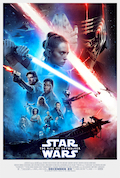
    Okay, Episode IX probably isn’t one of the five worst films I saw in 2019 (I gave it 3 stars after all, though I was being generous), but it was certainly the most disappointing. Maybe I shouldn’t’ve had hope, but I enjoyed both Episodes VII and VIII, so I thought there was a reasonable chance they could stick the landing. I was wrong. And it makes the preceding Sequel Trilogy films lesser with it, because it exposes the lack of overarching point to any of it. [Full review]


    The 15 Best Films I Saw For the First Time in 2019

    Where others may do a top ten, or twenty, or fifty, nowadays I do a top 10%. This year I watched 151 films, so my ‘top ten’ has 15 films.

    Although this list is selected from all the movies I watched for the first time in 2019, I did watch 34 films that had their UK release in 2019… plus four that will have their UK release in 2020, which is a first. So I’ve lumped those in with the 2019 lot and noted their ‘2019 rank’ in case you’re interested.

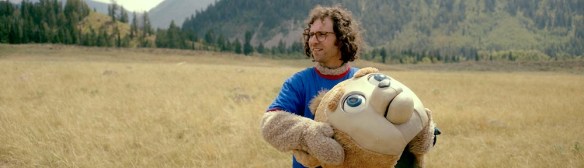
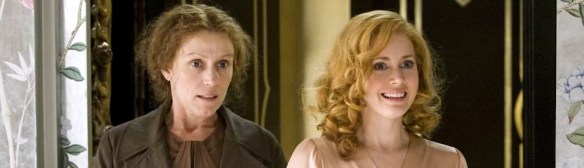
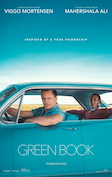
    Moviemakers like to make movies about people who set out by themselves to make movies — think Son of Rambow, Be Kind Rewind, or Me and Earl and the Dying Girl. Brigsby Bear follows in their tonal vein, as a quirky story about a young man freed from a lifetime of imprisonment who’s determined to complete the story of the TV show his captors used to make just for him. Think Room written by Charlie Kaufman and directed by Michel Gondry. [Full review.]

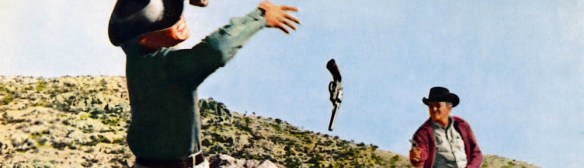
    A very much overlooked, nigh-on forgotten minor Western, which I’m sure I never would’ve seen were it not for Quentin Tarantino including it in his pre-Once Upon a Time in Hollywood movie marathon (as an example of the kind of Western programmers that film’s actor hero would’ve starred in). But I’m glad he brought it to my attention, because I found it be a well-told, well-performed study of toxic masculinity and parental influence, with a splash of gun control rhetoric to boot. This may’ve been made in 1958, but it has a heckuva lot of accurate stuff to say about our society six decades later. [Full review.]

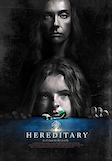
    This is the kind of movie I’m not sure I’ll ever watch again, because living through its terror once was enough. I watched it back in February but there are images that still pop into my head to chill me. A masterful work of horror. [Full review.]

    12
    The Report

    2019 #4 This is a movie not to everyone’s taste, as some middle-of-the-road reviews, and Amazon’s lack of backing for it in awards season, attest. It’s easy to dismiss it as a filmed Wikipedia article, because it’s obsessively accurate and methodical in the way it lays out the facts of its case — about the CIA’s ineffective use of torture post-9/11 — but, in fact, that fits both the style of its lead character-cum-hero, and the purpose of its existence, which I think is to help expose the truth more widely. After all, we know what went on, but who’s actually had to face any consequences for it? In apportioning blame, writer-director Scott Z. Burns is strikingly nonpartisan, refusing to let the Obama administration off the hook for their part. So it’s a shame it hasn’t connected more widely, because its message is important; and even besides that, it’s an absorbing thriller… about someone doing paperwork.

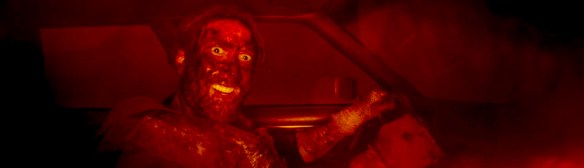
    I probably saw better films than Mandy during 2019, but I saw few that were as aesthetically striking — and certainly none with a header pic that could equal this shot of star Nic Cage. It’s a nightmarishly surreal journey of revenge, with plot points and visuals that can’t be described, they just have to be experienced. And oh my, what an experience. [Full review.]

    10
    Miss Pettigrew Lives for a Day

    This overlooked ’30s-set rom-com boasts a starry cast and a likeable bounce, and I guess that’s where many people’s assessment of it stops — if they’ve even bothered to assess it at all. But what really worked for me was the way it feels like an actual movie from its era, with the quick-talking wit of screwball comedies, the slight earnestness of a simpler age, and the confidence to throw in some more serious undercurrents without the fear it will ruin the fun. Instead, they elevate it. As a throwback to classic cinema, it’s delightful.

    2019 #3 On Letterboxd I simply stated this was “the most truthful movie about what it’s actually like to be a teenager I think I’ve ever seen,” and that just about sums up why its here. The milieu of its story is very Now — teenagers locked to their phones, living their lives through Instagram and YouTube — but look past the ultra-current specificity and there’s a universality in the experience of shy, insecure thirteen-year-old Kayla. Most of us have been there, and Eighth Grade captures just what it was like. (Before anyone asks/complains: this counts as a 2019 film because its UK release wasn’t until April ’19.) [Full review.]

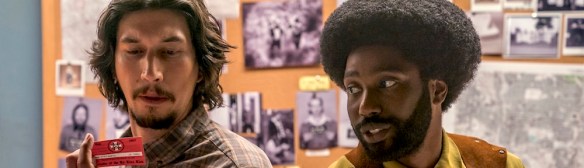
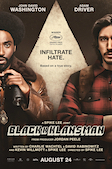
    The premise of Spike Lee’s detective movie sounds like a joke — “what if a black man joined the KKK?” — but it’s a true story. With that in mind, you may expect a deadly serious, heavy-going movie. Instead, Lee mixes in a lively humour that keeps the movie entertaining even as it hits you with serious points. And very timely ones, as the controversial (but, in my opinion, merited) closing moments make clear. [Full review.]

    2019 #2 Reading reviews, I didn’t have particularly high hopes for this French romantic comedy-drama — it looked like it might be nice, and that’s about all. A pleasant surprise, then, to find there’s so much more to it than just a pleasantly diverting couple of hours. The story of a man who attempts to relive the day he met the wife who no longer loves him, it’s sharply witty, surprisingly beautiful in places, and genuinely emotional by the end. Surely it’s destined for an inferior American remake. [Full review.]

    There are several true-story crime thrillers close-by on this top ten — if you watched them back-to-back with Searching, they might show it up a little bit, because it does get a little Movie Logic in its final act. But that’s worth letting slide because of the very particular way it tells its engrossing story. The entire movie takes place from the POV of a computer screen, as a desperate father tries to work out what’s happened to his missing teenage daughter. Pleasingly, the film doesn’t break its own rules, but uses the limitations to its advantage to create a new, timely way of viewing a narrative. And while the final act may be a bit grandiose compared to real life, its array of twists are satisfying. [Full review.]

    Director Bong Joon Ho is attracting a lot of attention this awards season (heck, this year) for his latest, Parasite, and made my top ten last year with his long-delayed-in-the-UK sci-fi parable Snowpiercer. This surprisingly-hard-to-come-by (someone do a good Western Blu-ray release, please!) film wasn’t his first, but was what initially garnered him some attention outside Korea. A true-story-inspired crime thriller, it invites comparisons to David Fincher’s Zodiac in the way it follows obsessed investigators as they try to uncover the truth behind an unsolved wave of murders. Zodiac is one of my favourite films, but Memories of Murder is strong enough to withstand the comparison. (Also, yes, it predates Fincher’s film. I’m not claiming one copied the other, they just approach the same genre from a similar headspace.) [Full review.]

    4
    Scott Pilgrim vs. the World

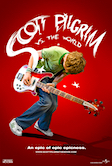
    If I’m honest, I was prepared to dislike Scott Pilgrim — I mean, there’s a reason it took me almost a decade to get round to it. It always looked Too Cool; kind of too hipster-ish, though I guess in a geeky way. (Well, “hipster” and “geek” have been more closely linked than ever this decade, haven’t they?) I remember distinctly when it went down a storm at Comic-Con and so everyone believed it was The Next Big Thing, only for it to flop hard at the box office (providing a much-needed course correction on everyone’s view of the power of Comic-Con). But here’s the thing: it’s directed by Edgar Wright, and I should have trusted that. And so the film is everything you’d expect from the director of Shaun of the Dead and Hot Fuzz and Baby Driver — deep-cut references (this time to video games), piles of humour, but also a dose of genuine emotion. Best of all is how it’s ceaselessly, fearlessly, creatively inventive with its cinematic tricks. No other film on this list is so overtly Directed, but in a good way.

    Sherlock Jr. is almost 100 years old now, but it still plays as fresh as a daisy. That’s the wonder of Buster Keaton, who mixes daredevil stunts with genuine movie magic to produce an unforgettable farce with more laughs per minute than [insert your comedian of choice here] and more I-can’t-believe-he-just-did-that stunts than one of Tom Cruise’s impossible missions. They don’t make ’em like this anymore. Heck, they probably wouldn’t let ’em. [Full review.]

    2
    Rififi

    This methodical French crime thriller is famed for its centrepiece — a half-hour heist that takes place in virtual silence — and that is indeed an unforgettably effective, edge-of-your-seat piece of cinema. But the film around it is so good, too: the events and plans that lead up to the heist; and the fallout of what occurs after. If you want to be a pedant then film noir “can’t be made outside America” — but even if that’s true, well, tough, because this is noir at its absolute best.

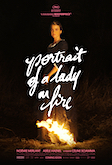
    2019 #1 If my end-of-year #1s had a reputation, it would probably be for choosing recent movies. Every year I theoretically have the entirety of film history to choose from, but only once have I given my #1 slot to a film that was more than 18 months old. But this year takes that to extremes: I’ve given #1 to a film that isn’t even out yet (in the UK). Never mind Skyfall or Blade Runner 2049 only being 2 months old when I picked them — here, Portrait of Lady on Fire is currently -2 months old (its UK release is scheduled for 28th February). Still, it’s screened at plenty of festivals and had a few international releases, and received plenty of acclaim — well deserved, I think (obviously). It’s the kind of film that casts a spell, with its remote setting that isolates us with its characters, absorbing us into this vital moment in their lives; its thoroughly gorgeous photography, which is appropriately painterly; and a very particular pace, which some would dismiss as “slow” but I thought was just right. It also has a healthy, perhaps surprising dash of Gothic in how its narrative plays out, which particularly appealed to me. Basically, it’s an all-round stunning work. [Full review.]


    As usual, I’d just like to highlight a few other films.

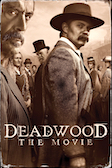
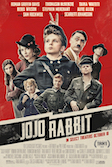
    I’m always loathe to mention “films that almost made my list”, because that feels like cheating (I may as well just make the list longer and include them). However, because I only included four films released in 2019, I thought I’d flag up a few more of my favourites from the year itself. These aren’t #16–19, then, but they are 2019’s #5–8, because they’re the four 2019 releases that came closest to getting in. But I’ll leave their exact ranking to your imagination and just list them alphabetically: Deadwood: The Movie, Jojo Rabbit, Once Upon a Time in Hollywood, and The Personal History of David Copperfield. Of course, there were dozens of acclaimed and/or popular 2019 films that I didn’t see, so take this ranking with a large pinch of salt — if I revisited yearly rankings after I’d caught up on more movies, they’d change entirely.

    Another honorary mention I want to make is more for a person than a film: Thomasin McKenzie, who almost single handedly earnt Leave No Trace a place in my top 15. I mean that as no disservice to everyone else involved — their combined work put it in contention, but it was McKenzie’s superb performance that almost tipped it in. (So, I guess that is #16.) And the other reason I’m mentioning her rather rather than just the film is because she was also excellent in Jojo Rabbit — easy to overlook among that film’s showy cast, but a pivotal and well-played part nonetheless. She’s definitely one to watch.

    Now, let’s recap the 12 films that won Favourite Film of the Month at the Arbies, some of which have already been mentioned in this post and some of which haven’t. In chronological order (with links to the relevant monthly update), they were The Player, Memories of Murder, Isle of Dogs, Searching, The Meg, Deadwood: The Movie, Sherlock Jr., Rififi, The Red Shoes, For Sama, La Belle Époque, and Eighth Grade.

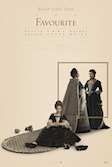
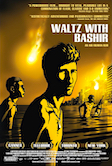
    Finally, I never end this without mentioning all the films that earned themselves 5-star ratings throughout the year — especially as I haven’t reviewed most of them yet, so they merit their moment in the spotlight. During 2019 there were 25. 13 made it into my best list, so rather than name them again I’ll let you have fun guessing which were the two to only get 4-stars (hint: only one of them is in the actual top 10; and the other has a review, so you can easily find it out). The remaining twelve were Les diaboliques, The Favourite, For Sama, Isle of Dogs, Jojo Rabbit, The Killer, Once Upon a Time in Hollywood, The Player, The Red Shoes, Roma, Rope, and Waltz with Bashir.. Finally, I also gave full marks to Monty Python and the Holy Grail (which will be the subject of a “Guide To” at some point) and three short films, Pleased to Eat You!, Hey You, and Facing It (all reviewed in this roundup).


    I watched 34 films from 2019 during 2019, which means there are plenty of noteworthy releases I didn’t see — so here’s an alphabetical list of 50 I missed. (Why it’s 50, I’m not quite sure; but I’ve been doing it for 13 years, I’m not changing it now.) They’ve been chosen for a variety of reasons, from box office success to critical acclaim via simple notoriety; plus I’ve made an attempt to include a spread of styles and genres, successes and failures.

    As usual, I’ve followed IMDb’s dating in my selection process, which means there are movies listed here that haven’t actually come out in the UK yet. And some films have likely fallen through the cracks because they’re listed as 2018 but I wasn’t aware of them in time for last year’s list (though I’ve made one exception in that regard). But there are always more films worth noting than can be included, anyway. I mean, this year my starting list was 119 films long (maybe I should increase how many I include…)

    1917
    Doctor Sleep
    It: Chapter Two
    Le Mans '66
    Parasite
    Spider-Man: Far from Home
    Aladdin
    Godzilla: King of the Monsters
    Joker
    The Lighthouse
    Us
    X-Men: Dark Phoenix
    1917
    Ad Astra
    Aladdin
    Alita: Battle Angel
    Apollo 11
    Bait
    A Beautiful Day in the Neighborhood
    Booksmart
    Cats
    Doctor Sleep
    Dolemite is My Name
    The Farewell
    Fast & Furious: Hobbs & Shaw
    Frozen II
    Gemini Man
    Godzilla: King of the Monsters
    Hellboy
    How to Train Your Dragon: The Hidden World
    Hustlers
    It: Chapter Two
    Joker
    Jumanji: The Next Level
    The Kid Who Would Be King
    Klaus
    Knives Out
    Last Christmas
    Le Mans ’66
    The Lego Movie 2: The Second Part
    The Lighthouse
    Little Women
    Marriage Story
    Men in Black: International
    Midsommar
    Parasite
    The Peanut Butter Falcon
    Pokémon: Detective Pikachu
    Rambo: Last Blood
    Rocketman
    A Shaun the Sheep Movie: Farmageddon
    Shazam!
    The Souvenir
    Spider-Man: Far from Home
    Terminator: Dark Fate
    The Two Popes
    Us
    The Wandering Earth
    Wild Rose
    X-Men: Dark Phoenix
    Yesterday
    Zombieland: Double Tap


    Whew, another year over!

    Time to do it all over again…

    2019 Statistics

    It’s the most wonderful time of the year. No, not Christmas — that’s well and truly over now, isn’t it? I mean, it’s not even really the new year anymore, it’s just the year now. This post is kinda late.

    No, by “most wonderful time of the year” I mean this — the day I publish my annual statistics post! As the guy who does the introductions to films at Odeon might say, “ooh, yeah, the statistics. I love the statistics. Specially chosen for this post, actually.” Except they’re not really specially chosen, I do the same ones every year. But then the trailers aren’t really specially chosen for the film, are they? That Odeon guy’s just a liar.

    Anyway, it’s time for the main event. So, turn off your phones, finish your conversations, and get ready — it’s about to begin…

    I watched 151 new feature films in 2019. That ranks 5th in the history of 100 Films — it’s the lowest of the past five years, but beats every one from 2007 to 2014. It’s 11% beyond 6th place (2014) and 15% short of 4th place (2017). And it’s down a massive 110 films (42%) on last year.

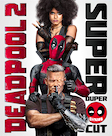
    I also watched one extended or altered cut of a feature I’d seen before — namely, Deadpool 2’s Super Duper $@%!#& Cut. (I know it’s only my own rules I’m butting up against, but I haven’t settled on a way to count alternate cuts like this now that I have my Rewatchathon. I mean, it’s not strictly a rewatch because it’s a different cut, but it’s also not a new film because it’s not that different to the version I’d already seen. Anyway, it’s included in the following graph, but I haven’t counted it towards the other stats.)
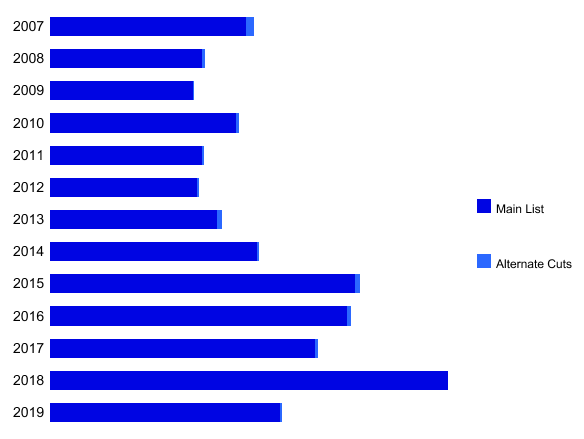
    As just alluded to, in 2019 I also undertook my Rewatchathon for the third year. My target was 50 films, but I only made it to 29. Still, that’s 29 more than I might’ve managed otherwise. Add all of those together and my overall total is 181 films. I’d love to tell you how that compares to previous years, but I’ve still not put together a proper history of rewatches for that comparison. Maybe I’ll finally get it sorted for 2020’s stats.
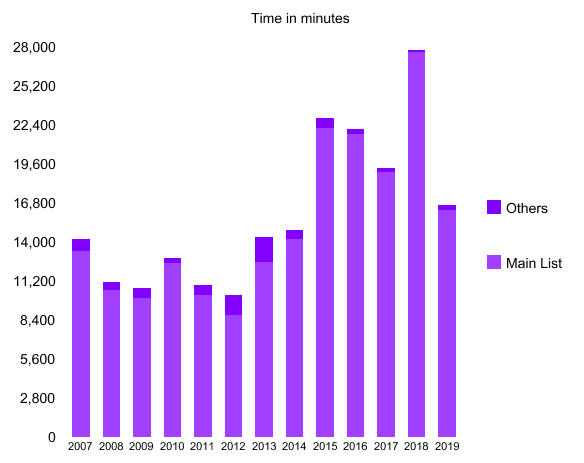
    I also watched 20 short films in 2019, which more than doubles the next nearest — second place is a tie between 2007 and 2018 with just eight each. As with the alternate cut, these only count towards one stat, which I’ll mention in a moment.

    So, the total running time of the 151 new films was 271 hours and 56 minutes. That’s down a whopping 41% on last year… but then the number of films I watched was down 42%, so fair enough. Add in the Deadpool 2 alternate cut and all those shorts and the total running time of my new 2019 viewing was 277 hours and 47 minutes — that’s just over 3½ hours of shorts, FYI. (Last year I said “maybe next year I’ll start counting my Rewatchathon here too”. I haven’t, obviously. Maybe next year…)

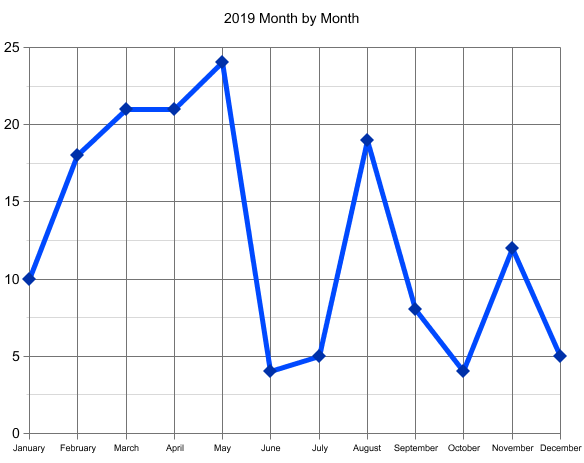
    Here’s how that viewing played out across the year, month by month. It’s a particularly interesting year to have this graph (I only added it for the first time in 2018’s stats), because my viewing patterns have been so variable. I imagine if a lot of people bothered to plot a graph like this they’d end up with a broadly flat line, because I’d presume they watch roughly the same amount of stuff (whether that’s a lot or a little) month in, month out. Or maybe they’d all be as variable as mine, I dunno. Either way, my one is anything but flat…

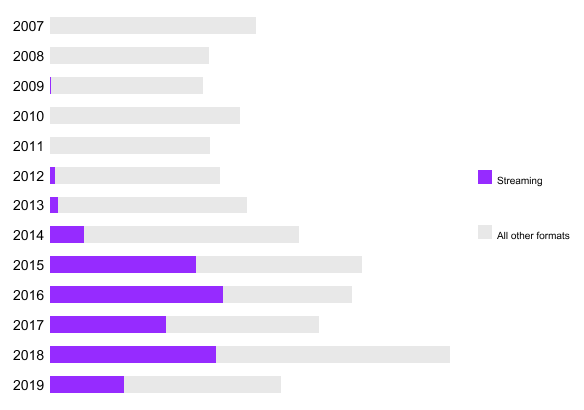
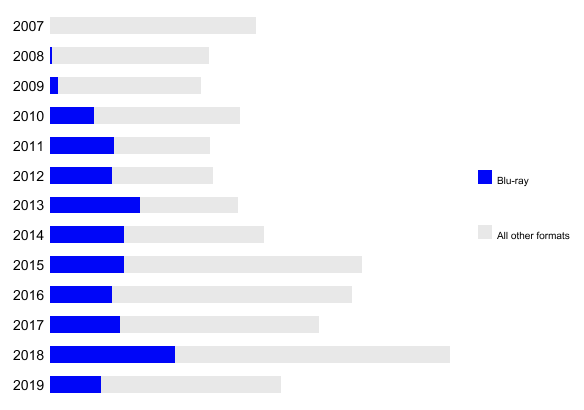
    Now, how I watched those films. Most people may be pivoting to streaming, and dedicated cinephiles of course see a lot on the big screen, but I still love my physical media. Nonetheless, for the fifth year in a row this year’s most prolific viewing format was streaming. I guess I’m one of those people too. Or not — I buy more than my fair share of Blu-rays, I just don’t get round to watching as many as I should. Anyway, streaming accounted for 49 films, or 32.5% of my viewing. The raw number is less than half what it was last year (109), but then I did watch 110 fewer films overall too. More interestingly, the percentage is also down significantly, continuing a trend that’s been going on for a few years now — it was 57% in 2016, 43.2% in 2017, 41.8% in 2018, and now just 32.5%. Maybe I’m bucking the trend after all.

    Those streaming numbers can be broken down across five services: Netflix, Amazon (a mix of Prime and paid-for rentals), Now TV (aka Sky Cinema), BBC iPlayer, and Rakuten. This year, it was Netflix in first place (it’s been Amazon the last two years) with 21 films (42.9% of streams). Mind, Amazon were close behind on 19 (38.8%). Way down in third was Now TV, with just five films (10.2%) — I only subscribe for a month so I can watch the Oscars, but I clearly didn’t get very good value for money this year (for comparison, last year I used it to watch 25 films). That said, keep reading to downloads for more on this… Rounding out the streamers were iPlayer with three (6.1%) and Rakuten with just one (2%).

    In second place was Blu-ray, represented by 34 films (22.5%). Sadly, that is also a much reduced percentage from last year (when it was 31.4%). As I said, I buy loads of the darn things, so I should do better here.

    So, where are those percentage points going? Well, in third we find downloads, with 22 films (14.6%). In real terms that’s a drop from last year (when it was 25), but if we compare percentages it’s up by around 50%. See, statistics are fun, aren’t they? (Although Now TV only gets credited with five films, a few download viewings were, shall we say, morally justified by their presence on Now TV… by which I mean I acquired better-quality copies than Now TV’s outdated 720p and watched those instead, but it’s okay because I’d paid for those films via a Now TV subscription.)

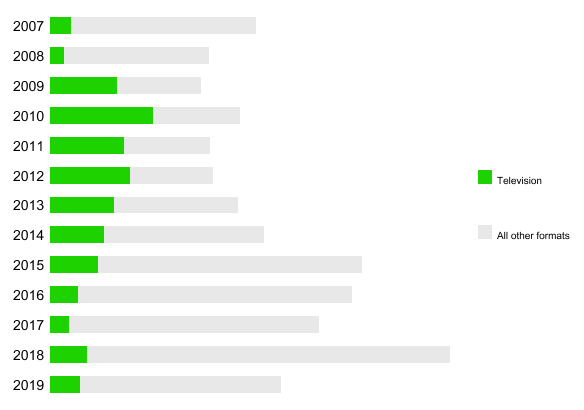
    Close behind is TV, on 20 films (13.2%) — again, a drop in real terms but a rise in percentage. Still, nowhere near where it once was — check out the drop since 2010 in this graph.

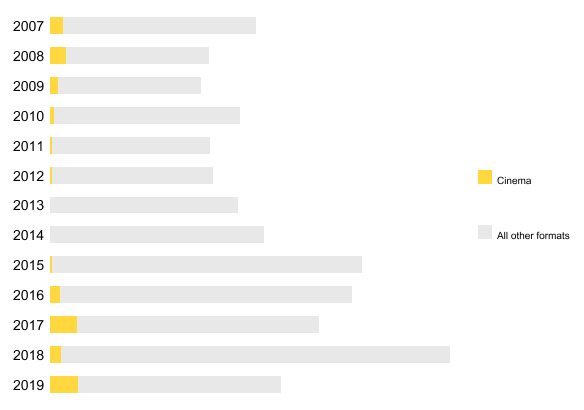
    In fifth place is cinema, whose lowly position masks something of an achievement: it’s the most cinema visits I’ve made in one year since this blog began. My total was 19 films (12.6%), besting 2017’s tally by just one. It’s also the only format number that’s bigger than last year. Mostly it’s thanks to FilmBath Festival — without that, it’d only be eight (mind you, that would still be more than most years of this blog’s life — only 4 out of 12 other years would be higher.)

    Finally, in sixth and last place, is DVD. Oh, poor DVD. Some people still love you, but the industry’s failure to get Blu-ray to catch on is a rant for another day. Anyway, this year I watched seven films (4.6%) on digital versatile disc, which is its lowest number since 2012. It’s impressive it’s still toddling on at all, really, but sometimes it’s easier just to watch the DVD I already have than source an HD copy.

    In amongst all that, I watched seven films in 3D (4.6%), down 11 from last year (which was up 11 from the year before!), and 15 in 4K UHD (9.9%), up just one from last year. Considering I own a 3D-capable 4K TV, their combined percentage of 14.6% is a bit disappointing — especially as I didn’t have a UHD Blu-ray player last year, so that new bit of kit has made very little net impact. Though, again, it depends how you do your comparison: going from 14 to 15 may not be much, but as a percentage of my viewing UHD has increased from 5.4% to that 9.9%.

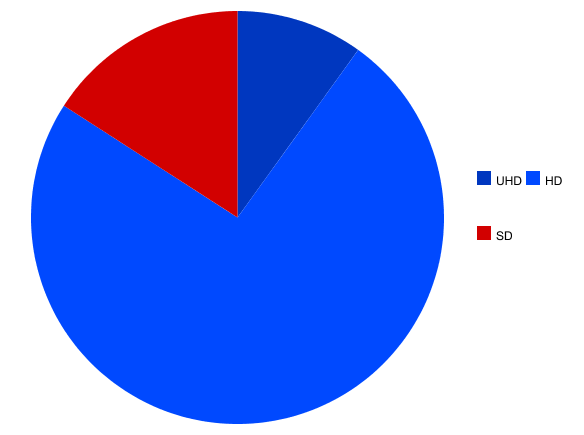
    So, with that said, how did my viewing split up in terms of UHD vs. HD vs. SD? Contributing to the UHD number is a cocktail of Blu-ray discs, streams, and downloads. For HD, it’s the same mix, plus cinema trips (you’d think big cinema screens would be keen to go for 4K instead of 2K, but nope — apparently there are shockingly few 4K cinemas out there). And in SD, well, it’s of course a similar blend again, but with DVDs instead of BDs. The final result is 112 films in HD (74.2%). Add the aforementioned 15 (9.9%) in UHD and I’ve got a total of 84.1% in HD formats. That’s down a bit from last year, which nearly hit 90% HD, but hey-ho.

    Picture quality shouldn’t really be an indicator of the age of films I watched — old films can be HD too, of course (is everyone aware of this by now? I had to explain to someone once how even silent films could be HD. But, in fairness, they weren’t the kind of person who’s likely to be reading a film blog). Nonetheless, my viewing did skew newer, as usual: the most popular decade was the 2010s, with 90 films. That’s 59.6% of my viewing, a higher percentage than last year, but not as high as the year before that. The 2010s have been my highest decade ever year since 2012 — now it’ll be interesting to see how soon the 2020s take over.

    The 2000s have come second since 2012 too… but not this year! Thanks primarily to Quentin Tarantino’s Swinging Sixties Move Marathon, in 2019 second place went to the 1960s (obviously). It’s a distant second, mind, with just 13 films (8.6%). In fact, only seven of the ten films in QT’s marathon were from the ’60s themselves, but without those it would be much lower in the rankings.

    So, the 2000s are pushed into third, with 11 films (7.3%). In fourth we find the 1970s with nine (5.96%), also helped slightly by the Tarantino marathon (though, in this case, only by one extra film). It’s back to the ’90s for fifth, with eight (5.3%), followed closely by the ’50s on seven (4.6%), including the final two films from the “sixties” marathon.

    Rounding things out, the 1920s and ’40s had four (2.6%) apiece; the ’80s is uncommonly low on just three (1.99%); and finally there’s the oldest decade for this year, the 1920s, with two (1.3%).

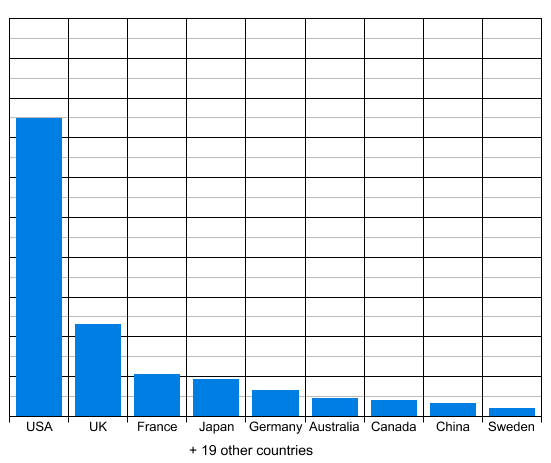
    From “when” to “where” — countries of production. And it’s another “business as usual” situation, because once again the USA dominated with a hand in 113 films (74.8%, which is up a couple of points from last year). Also as usual, second place belongs to the UK, with 35 films (23.2%, also an increase from last year). Also in double figures were France (16 films, 10.6%), Japan (14 films, 9.3%), and Germany (10 films, 6.6%). In all, 28 countries were involved in the production of at least one film. That’s a marginally lower number than it’s been the last few years, but I also watched a much lower total of films, so it’s not too bad overall.

    You might think less variety in countries would mean less variety in languages spoken, but not so. Now, English was still thoroughly dominant, being spoken in 128 films — but that works out as 84.8%, the lowest it’s ever been. In second place for the third year in a row was Japanese, its tally of 13 films being the only other language to make double figures this year. Although it totals fewer films than last year, its percentage of 8.6% is similar. In total, there were 24 languages, plus four silent films. American Sign Language cropped up in one film, as it seems to every year, while other more unusual (for my viewing) languages included Burmese, Mixtec, and Punjabi.

    A total of 134 directors plus 10 directing partnerships appear on 2019’s main list. Only six of those were responsible for multiple films, the lowest that figure’s been since 2012. Most prolific of these was Kenji Misumi with three, all Zatoichi films. The other five directors, with two apiece, were Bill Condon, Alfred Hitchcock, Phil Karlson (both from Tarantino’s sixties marathon), Fritz Lang (arguably — some would say Dr Mabuse, der Spieler is a single film), and Kimiyoshi Yasuda (also both Zatoichi films).

    For the past few years I’ve charted the number of female directors whose work I’ve watched. There were ten female directors represented among 2019’s feature film viewing — seven as sole director, three as part of a directing partnership with a bloke. Counting the co-directors as half a film each, this represents 5.63% of my viewing — better than last year (which was better than the two years before it), but, as this graph ably demonstrates, still a disappointingly low figure. I mean, I watched more films directing by someone called “John”.

    At the time of writing, 12 films from 2019’s list appear on the IMDb Top 250 (or “Top Rated Movies: Top 250 as rated by IMDb Users”, as it’s less-catchily technically known nowadays). However, because that list is ever-changing, the number I have left to see has only gone down by four, to 45. The current positions of this year’s checks range from 22nd (Life is Beautiful) to 225th (The Red Shoes).

    At the end of my annual “top ten” post I always include a list of 50 notable films I missed from that year’s releases, and continue to track my progress at watching those ‘misses’. For the past few years I’ve managed to watch some more from every one of these lists, but I let that slip in 2019. The overall number I watched dropped too, totalling 37 (the lowest it’s been since 2014, when obviously there were fewer films to choose from). Well, that’s the kind of year it’s been. Anyway, the ones I did watch included two each from 2008, 2012, and 2016; and one each from 2010, 2011, and 2017.

    Finally, in the first year of watching 2018’s 50, I saw 28 of them. That’s no record, but it’s still over 50% (to be precise, 56%), so I can’t complain.

    In total, I’ve now seen 422 out of 600 of those ‘missed’ movies. That’s 70.3%, up a teeny tiny amount from last year’s 70.0%. If I don’t pick up the pace again next year, I may be looking at a percentage drop. (As ever, the 50 for 2019 will be listed in my “best & worst” post.)

    And lo, just like that, we’re coming to the end. To conclude 2019’s statistics, it’s the climax of every review: the scores.

    As always, this includes every film, meaning some don’t have published reviews yet — and, therefore, some I was still mulling over my exact score for; the kind of films I’d happily award 3.5 or 4.5 on Letterboxd, but which here I always round up or down to a whole star. Maybe I should start giving half stars. (I feel like I say that every year…) Anyway, I’ve had to go ahead and pick a rating for everything to get this part of the stats done, and maybe I’ve been too generous in places, or too harsh in others. We shouldn’t really take such a simplistic rating system too seriously, anyway (he says, as he goes on to make it the final thing in this post as if it’s a definitive statement on the quality of the films I saw this year…)

    Barrelling on regardless: at the top end of the spectrum, this year I awarded 25 five-star ratings, which means I have 16.6% of films full marks. That’s a slightly higher percentage than last year, but lower than the year before that, but higher than the year before that, but lower than the year before that… and so on. In other words, I’ve not suddenly got harsher or more generous, or suddenly watched a lot more or lot fewer good films.

    Indeed, it was also business as usual with the score I handed out most often: four-stars, which I awarded to 62 films. Out of 13 years of this blog, four-stars has been my highest-scoring score 12 times (the exception is 2012, which saw more three-star films). That said, at 41.1% it’s the lowest percentage of four-stars-ers since 2013. That loss was spread out across the rest of the board, with slightly higher than normal percentages for the remaining three ratings. For example, there were 46 three-star films, which at 30.5% is its third highest ever percentage.

    Fortunately, the “bad” end of the scores continue to bring up the rear, with 15 two-star films (9.9%) and three films meriting just one-star (1.99%). That’s technically the highest percentage of one-star films since 2012, but as the other intervening years range between 0.7% and 1.5%, I don’t think it’s a cause for concern. It’s barely even cause for comment.

    Finally, that brings us to the average score — the single figure that arguably asserts 2019’s quality compared to other years. The short version is 3.6 out of 5, the first time it’s been below 3.7 since 2013. In fact, if we go to three decimal places, it comes out as 3.604, which is the second lowest ever (beaten by 2012’s exceptionally poor 3.352). Now, it doesn’t feel like I’ve had particularly poor viewing this year — indeed, I was worried I was handing out five-star ratings too easily at one point — so it’s something of a surprise to find it so low. But maybe I’m just getting more discerning. I mean, it’s not a sharp drop (unlike that 2012 anomaly), more a slight decline.

    And that’s the statistics over for another year, I’m afraid. But if you’re a junkie like me and still after more, check out my Letterboxd 2019 stats — that site tracks different stuff (like directors and actors), and includes different films (i.e. my Rewatchathon viewing, plus a few TV things), so it’s a bit different. That’s exciting, eh?


    If you thought it was getting a bit far into 2020 to still be thinking about 2019, oh ho ho, no! Still to come: my picks for the best and worst of my viewing from last year.

    2019: The Full List

    Here we are once again, dear readers: another year over, another long list of films.

    The final tally of new feature films I saw in 2019 is 151. Throw in an alternate cut and my Rewatchathon, and the overall total is 181. That’s not a patch on the 311 I got to last year (it’s 42% less, in fact) but it’s not bad in itself. Indeed, getting to #151 makes 2019 my 5th highest year ever, and is higher than anything before 2015 — five years ago, I would’ve considered it a wonder.

    More analysis along those lines when I get to my stats post. For now, here are some nice long lists…


    • As It Happened — 2019’s monthly updates, containing a chronological list.
    • The List — an alphabetical list of every new film I watched in 2019.
    • Television — an alphabetical list of every TV programme I reviewed in 2019.
    • Next Time — there’s more analysis of last year still to come…

    Below is a graphical representation of my 2019 viewing, month by month. Each image links to the relevant monthly review, with a chronologically numbered list of everything I watched this year. There’s other exciting stuff in there too, like my monthly Arbie awards and what I watched in my Rewatchathon.

    The main thing you can interpret from these is how much the number of films I was watching dropped and fluctuated in the second half of the year…


    And now, the main event…


    An alphabetical list of all the new-to-me films I watched in 2019, followed by the sundries I also watched (alternate cuts, shorts, etc). Where I’ve already reviewed a film, there’s a link. In the past, not-yet-reviewed titles linked to my “coming soon” page, but as there are so many of those now I decided they’d be better left link-less.

    Alternate Cuts
    The 100 Films Guide To…
    Shorts
    1941

    BlacKkKlansman

    Captain Marvel

    Deadwood: The Movie

    Dr Mabuse, der Spieler

    Eyes Wide Shut

    The Favourite

    Godzilla

    Green Book

    Hereditary

    Isle of Dogs

    Jojo Rabbit

    The Meg

    Once Upon a Time in Hollywood

    Portrait of a Lady on Fire

    The Red Shoes

    Scott Pilgrim vs the World

    Sherlock, Jr.

    The Twilight Saga: Breaking Dawn - Part 2

    Waltz with Bashir

    Zatoichi Meets Yojimbo

    Deadpool 2: Super Duper $@%!#& Cut

    The Matrix Reloaded

    Battle at Big Rock

    La jetée

    Pleased to Eat You!

    .

    This year I reviewed many and various television programmes across a dozen(ish) monthly columns. It would be pretty meaningless just to list those roundups, so instead here’s an alphabetical breakdown of what they covered, with appropriate links.


    Always the highlight of the year: it’s the statistics.

    My Most-Read Posts of 2019

    2019 may’ve given us the highest grossing film of all time, amongst numerous other big events, but TV reviews once again dominate my most-viewed posts of the year — in the rankings of new posts, there’s no film until 8th (if we widen that to include older posts, it’s all TV until 14th).

    But this is still theoretically a film blog, so — as usual — I’ve compiled my five most-read TV posts (which, obviously, is the same as my outright five most-read posts) and then my five most-read film reviews.

    My Top 5 Most-Viewed New TV Posts in 2019

    5) The Past Month on TV #45
    including Game of Thrones season 8 episodes 1-2, Thronecast specials and series 8 episodes 1-2, Deadwood season 3, and The Twilight Zone ‘best of’ selection 2.

    4) The Past Month on TV #43
    including The Punisher season 2, Russian Doll season 1, Hanna episode 1, Les Misérables episodes 4-6, the 91st Academy Awards, the British Academy Film Awards 2019, Great News season 2 episodes 8-13, and Mark Kermode’s Oscar Winners: A Secrets of Cinema Special.

    3) The Past Christmas on TV 2018
    including Doctor Who: Resolution, The ABC Murders, Watership Down, Not Going Out: Ding Dong Merrily on Live, Upstart Crow Christmas special, Click & Collect, Goodness Gracious Me: 20 Years Innit!, Mock the Week, Have I Got News for You, Insert Name Here, Mrs Brown’s Boys, Simon Callow’s A Christmas Carol, The Dead Room, Mark Kermode’s Christmas Cinema Secrets, and Les Misérables episode 1.

    2) The Past Fortnight on TV #46
    This attracted almost three times as many views as the post in 3rd (that graph in the header image is accurate — the top two were out well ahead of everything else). What attracted such attention? Nothing less than the final season of the biggest TV show of the decade: Game of Thrones. This post included Game of Thrones season 8 episodes 3-4, Ghosts series 1 episodes 1-3, Columbo: Murder by the Book, The Twilight Zone ‘best of’ selection 3, Mark Kermode’s Secrets of Cinema: Disaster Movies, and Thronecast series 8 episodes 3-4.

    1) The Past Fortnight on TV #47
    My comments about IMDb voters of the Game of Thrones finale attracted some degree of ire, which helps lead this one to first place. In fact, it’s already my 4th most-viewed post of all time. It only included Game of Thrones season 8 episodes 5-6, The Twilight Zone ‘best of’ selection 4, Eurovision 2019, and Thronecast series 8 episodes 5-7.

    My Top 5 Most-Viewed New Film Posts in 2019

    5) Star Wars: The Rise of Skywalker
    Jumping in here in the final days of the year, the much-anticipated conclusion of the 42-year nine-film Skywalker Saga. Shame it was such a load of rubbish.

    4) The Highwaymen
    Netflix films often do well in these rankings, especially if I review them promptly, and that applies to both this and the film in 3rd. There were also Netflix films in 6th, 8th, and 9th places, and a Sky Cinema debut in 7th.

    3) The Silence
    Mind, there are better Netflix films people could’ve chosen to read about than this.

    2) Glass
    That said, a promptly-reviewed big theatrical release can top even Netflix titles, as these next two show. Alternatively, they say something about the continued dominance of superhero movies.

    1) Avengers: Endgame
    Well, it is the biggest film of all time.

    The Whimper-Not-a-Bang Monthly Review of December 2019

    Happy New Year, dear readers. In fact, Happy New Decade!

    Well, kinda. Yeah, sure, technically it isn’t, but when people talk about “the 2010s” they’re going to mean “2010–2019” and when they talk about “the 2020s” they’re going to mean “2020–2029”, so…

    Anyway, as usual I’m going to spend the first week (give or take) of this new year looking back at the old one. I already started that in my Christmas Day post — which contained the kind of thing I’d normally be writing about here, so now might be an appropriate time to read that if you haven’t already.

    Otherwise, onwards to my final monthly review of the decade…


    #147 Star Wars: The Rise of Skywalker (2019)
    #148 Eighth Grade (2018)
    #149 Brightburn (2019)
    #150 Agatha and the Curse of Ishtar (2019)
    #151 Death on the Nile (1978)


    • So, I watched five new feature films in December.
    • The last of those came on New Year’s Eve, granting December a last-minute reprieve from being in my bottom 10% of months ever, and also from being one of my lowest months of 2019. Instead, that (dis)honour is shared by June and October.
    • 2019 was the first year since 2014 that any month tallied fewer than 10 films — and, with December now included among them, in total there were five such months.
    • That finalises the monthly average for 2019 as 12.58, which obviously December was well below.
    • It was also below the rolling average for the last 12 months (previously 13.3, now… 12.6, of course), and the average for December itself (previously 11.7, now 11.2).
    • There’ll be more on where this puts 2019 in relation to previous years in my annual statistics post, later in the week.
    • Nothing from Blindspot nor WDYMYHS again this month, meaning I got nowhere near completing either. Oh dear. But I did watch 17 films between the two this year, which is a better result than if I’d only been doing one of those challenges, so that’s good.
    • From last month’s “failures” I watched Brightburn and Eighth Grade.


    The 55th Monthly Arbitrary Awards

    Favourite Film of the Month
    Well, this is easy-peasy. Of the five films I watched, four scored 3 stars. The other was Eighth Grade, which gets a full 5.

    Least Favourite Film of the Month
    I watched some distinctly middle-of-the-road films this month, but plain old mediocrity is nothing in the face of the disappointment that was Star Wars: The Rise of Skywalker.

    The Audience Award for Most-Viewed New Post of the Month
    I only made four posts in December, and only one of those was an opening-weekend review of a highly-anticipated, much-talked-about final film in a 42-year-old ultra-popular franchise, so it should surprise no one that Star Wars: The Rise of Skywalker is the victor here.


    I’d’ve had to rewatch 24 films in December to reach my goal of 50 for 2019. No surprise, that didn’t happen. But I did watch a few, at least.

    #27 The Lord of the Rings: The Fellowship of the Ring – Extended Edition (2001/2002)
    #28 The Lord of the Rings: The Two Towers – Extended Edition (2002/2003)
    #29 The Lord of the Rings: The Return of the King – Extended Edition (2003/2004)

    That’s the first time I’ve watched The Lord of the Rings since I started doing Rewatchathons. They’re still great.

    And so my 2019 Rewatchathon ends on #29 — far lower than intended, but it’s better than 0, and that’s really the point.


    The streamers seem to have gone absolutely bloody mental with new additions this month — Netflix could boast 87 additions yesterday alone, while literally thousands of films poured onto Amazon’s Prime Video across the month… at least according to the site I use to track it. In reality, a lot of the stuff that picked up as ‘new’ was already available (for some reason it seems much harder to track what’s new on Amazon than Netflix). Whatever — I didn’t watch any of them, so everything worthy of note pops up down here in my failures.

    But before I get onto rattling off those titles, some comparatively short lists. Like for the cinema, where I missed what’s supposed to be one of the best films of the year, and another that’s supposed to be one of the worst. Those are Little Women and Cats, respectively. One I’ll surely pounce on when it hits disc is sequel/threequel/fourquel (depending how you want to count it) Jumanji: The Next Level, which is hopefully a bit of fun (I’ve not really read any reviews of that one).

    Speaking of discs, a mix of new purchases and Christmas presents bulked out my to-watch list this month. The single biggest addition was Criterion’s Godzilla box set, with its 15 giant monster movies. I also got my mitts on their release of the Koker trilogy. Further catalogue additions came via Master of Cinema’s release of A Fistful of Dynamite and Arrow’s of The Exorcist III, while newer titles included Anna and the Apocalypse, Happy Death Day 2U, and Men in Black: International (it was on offer). This month’s discs were rounded out by a trio of rewatchers: Toy Story 4 (in 3D!), Deadwood: The Movie (without the much-desired deleted scenes), and miniseries From the Earth to the Moon (in its controversial HD restoration).

    So, we return to Netflix and Amazon. The former had a few high-profile originals this month: possible awards contenders Marriage Story and The Two Popes, plus Michael Bay’s latest, 6 Underground. Some other 2019 releases I’ve yet to see elsewise also cropped up, including the new Hellboy, Missing Link, Mrs. Lowry & Son, Fighting with My Family, A Private War, and Mid90s. Amazon didn’t have any brand-new titles to brag about, but they did have some similarly recent acquisitions, including Wild Rose, Fisherman’s Friends, and Horrible Histories: The Movie. As for older titles popping up… well, there were many, but select ones of note across both services included Roman J. Israel, Esq. (with its Oscar-nominated turn from Denzel Washington), The Rover, The Breadwinner (moving from Amazon to Netflix), the original Benji, Blackfish, Young Mr. Lincoln, and The Great Escape (that’s right, I’ve never seen The Great Escape).

    I’m gonna need to start watching considerably more films again to even touch the sides of that lot.


    After I’ve done my usual array of posts analysing 2019, it’ll be on to 2020 — my 14th year. And it’s entirely possible it’ll be the year I reach #2000…