Quentin Tarantino’s Swinging Sixties Movie Marathon Review Roundup

To promote his new movie, Once Upon a Time in Hollywood, writer-director Quentin Tarantino has curated a selection of movies from the Columbia vault (because Columbia is owned by Sony, and Sony are releasing OUaTiH) that are in various ways connected to said new movie. Some are influences on its style; some are the kinds of movies that the film’s characters would’ve appeared in; some speak to the societal concerns of the era. Along with film writer Kim Morgan, QT has hosted a “movie marathon” of his ten picks on TV, broadcast in the run-up to OUaTiH’s release in various territories (it’s on Sony-owned channels in 60 countries, and has been sold to other broadcasters in 20 more — “check local listings for details” and all that).

It’s been on this past week in the UK, airing nightly at 11:30pm on Sony Movie Channel, finishing with a double-bill tonight. If you’ve missed it, Movies4Men are repeating the lot next week from 6:30pm. I’m away from home this weekend so will have to catch some of those repeats, but I did watch the films on earlier in the week, and here are some thoughts on the first two…

  • Model Shop (1969)
  • Getting Straight (1970)
  • (If you watched this series elsewhere and are thinking “but those weren’t the first two films,” you’re right: for no apparent reason they’ve juggled the order in the UK.)


    Model Shop
    (1969)

    2019 #106
    Jacques Demy | 97 mins | TV | 16:9 | USA & France / English
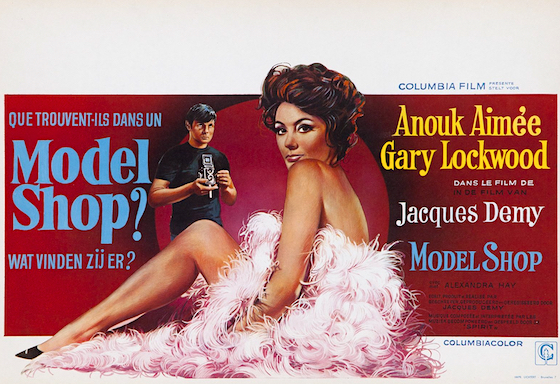
    Model Shop

    The English-language debut of French writer-director Jacques Demy, Model Shop shows us a day in the life of George (2001’s Gary Lockwood), a 26-year-old whose disillusionment is ruining his life. He’s quit his job at an architect’s because it was too low-level — he wants to design the big stuff, but isn’t interested in putting in the work to get to that tier. Consequently his girlfriend is getting fed up with him, he’s in debt, and his beloved car is about to be repossessed. George manages to talk the repo man into giving him until the end of the day to find the $100 he owes, and so he sets off on a drive around L.A. to find a friend to borrow it from. That’s when he spots a mysterious glamorous woman (Anouk Aimée) and begins to follow her.

    That perhaps makes the film sound more focused than it seems in viewing. There’s a definite European sensibility in play here — a laid-back, wandering feel, as George drifts around L.A. in his car, meeting up with different friends in different situations. The possibility of the draft hangs over their heads, informing their actions. As Morgan and Tarantino discuss in their introduction, some people might view the conversations and speeches in the film as being unnecessarily ‘heavy’, but it’s more than mere existentialism when there’s a genuine life-or-death experience just an unwanted call-up away.

    The atmosphere all that creates can make the film feel aimless, but, as Tarantino puts it, “the more you talk about Model Shop, the more you realise there is more to talk about.” Even while it feels like nothing is happening, stuff is happening. It’s the kind of film where we’re accumulating knowledge about the character and his world, and sometimes it’s only with hindsight we realise its signficance. At first it may not even seem like there’s much of a story — what could pass for the inciting incident (needing to acquire $100) is actually solved relatively quickly — but there is definitely a story, even if it’s a relatively small, somewhat undramatic one. This combination is I think why Tarantino describes the film as “deceptively simple and deceptively complicated.” I suppose it depends how much you want to see; how much you want to engage.
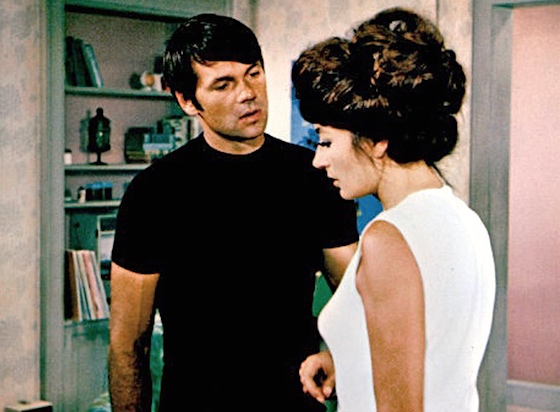
    “Open the pod bay doors, Lola.”

    Personally, I found George to be an immensely, almost painfully relatable character. The way he doesn’t quite know what he wants to do, just what he doesn’t; the way he doesn’t want to put in the long slog, just jump to the more interesting stuff at the end; the way he drifts and kills time rather than doing anything useful; and his big speech after he’s made to consider his own death “for the first time in [his] life”: he’s not a coward, but he doesn’t want to lose his life, because what’s better than life? Only, perhaps, art that reflects it. I’m not saying I am George, exactly, but boy, there were reflections.

    I was less engaged by Anouk Aimée’s character, Lola, who, once she’s properly introduced, takes over somewhat. Turns out she’s a character from Demy’s debut feature, Lola, making this a sort of sequel — only “sort of” because, while Model Shop does continue her story, she’s not at all the focus. Apparently a lot of Demy’s films feature crossover characters and connections in this way, which I guess was also an inspiration to Tarantino.

    I’d not heard of Model Shop before it cropped up in Tarantino’s selection, and it’s not been classified by the BBFC since its original release, so I presume it’s never had a video / DVD / etc release in the UK. While I would hardly say it’s some kind of ‘lost’ masterpiece, it does evoke a place and a time and the kind of lives that may’ve lived there — which is precisely why QT showed it to his Once Upon a Time crew, for the way it depicted L.A. in 1969 (he reckons it’s possibly the best movie ever for showing Los Angeles). Some of it is interesting, but at other times it retains that sense of aimlessness. It’s far from meritless, but I can also see why it’s the kind of film that’s been half forgotten.

    3 out of 5

    Getting Straight
    (1970)

    2019 #107
    Richard Rush | 120 mins | TV | 16:9 | USA / English | 15 / R
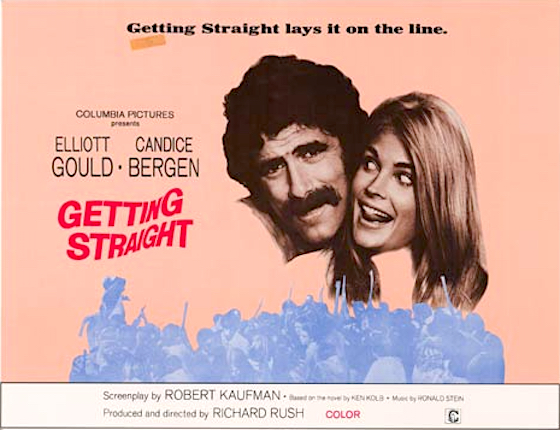
    Getting Straight

    According to Quentin Tarantino (I suppose I could try to independently verify this, but I haven’t), Getting Straight is one of four “campus radical” movies that were all released in 1970 (the other three are Zabriskie Point, R.P.M., and The Strawberry Statement). It stars Elliot Gould as Harry Bailey, a post-grad student at an unnamed Californian university, where he intends to qualify as a teacher, but where he’s also revered by the other students for his history of activism — even as he’s basically trying to join the establishment, they’re trying to lure him back to his old radical ways, beliefs he hasn’t left behind but doesn’t seem to wholly stand by anymore… or does he?

    So Harry is, on the surface, a potentially interesting main character: someone caught between the revolutionary youth and the establishment; who tells the youth why they’re dreaming and deluded, and tells the old men why they need to listen and buck up their ideas; but who is, therefore, conflicted about his own place in it all. But while putting someone in the middle might seem like a fair why to argue for both sides, it’s a bit obvious; allowing the film to have its cake and eat it, to an extent. And while it might seem objectively true that Harry is conflicted, evidenced by his flip-flopping from side to side, he seems pretty sure of himself for most of the film. There’s little done to explore his fence-sitting; to question his status as someone who proclaims to believe certain things yet seems to still find himself sat in the middle. Is he a hypocrite? If he is, I’m not sure the film bothers to interrogate that. So, if he isn’t, is that just because the film doesn’t want to show him as one? Perhaps we’re meant to buy that he’s the only sane person in a mad world, which seems a bit of a cliché.

    At the end Harry does ultimately pick one side, dramatically rejecting the establishment to go join rioting students. Why? He’s goaded into snapping by a professor’s smug, self-satisfied interpretation of The Great Gatsby, but if we’re meant to know why this bugs him so then I missed it. Does he reject the reading? Is it the tone of it, which is like being lectured down to? Maybe it’s just the straw that broke the camel’s back, but I didn’t really follow that as an arc. Earlier in the film Harry talks about finding a student riot sexy, a turn on, and then the movie ends with him and his girlfriend stripping off to shag literally in the middle of a riot, which does make you wonder if he was just thinking with his dick. I mean, he was for half of the rest of the film.
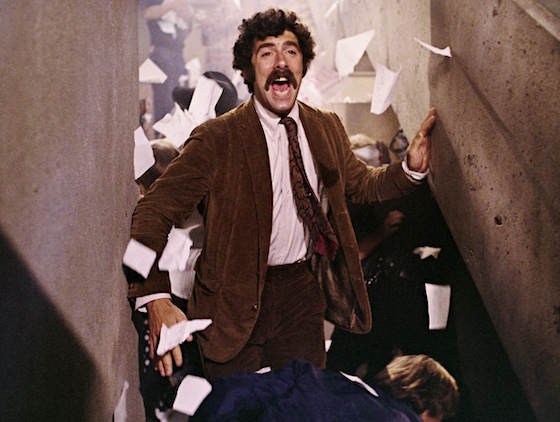
    Ranting and rioting

    With its focus on Harry, Getting Straight is something of a character study, and if this is anyone’s film it’s Gould’s. At times he gets a chance to expose different sides of this divided person, but he also certainly does a lot of shouting, lecturing, and ranting in the role. So maybe instead it’s about the times, with Harry basically a cipher to explore pertinent issues and different sides. It’s based on a 1967 novel, so was a relatively prompt adaptation, though to remain timely it would’ve had to be. Then again, Leonard Maltin’s movie guide apparently describes it as a “period piece”, and there’s a point there: the film is so much about that specific point in time that it couldn’t be set anytime else. Along with the slightly detached view of its main character, it doesn’t seem to be in or of the moment, like you might expect from a countercultural film made during the actual counterculture. It’s reflecting on it, like a period movie.

    Getting Straight is “one of [Quentin Tarantino’s] favourite movies ever,” or so he says, which unfortunately is a sentiment I can’t get on board with. I’m not even sure I can stretch to giving it a passing grade, because it was a bit too freewheeling and, by the end, in spite of the climactic ranting and rioting, kinda boring.

    2 out of 5

    Once Upon a Time in Hollywood is in UK cinemas from Wednesday, 14th August.
    Live by Night (2016)

    2018 #113
    Ben Affleck | 124 mins | streaming (HD) | 2.35:1 | USA / English | 15 / R

    Live by Night

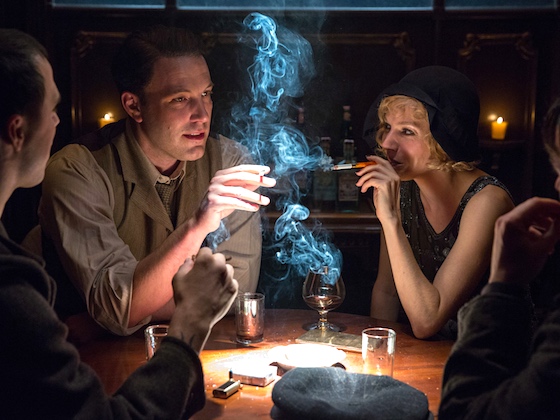
    Ben Affleck, once a bit of a laughing stock as an actor thanks to appearing in the likes of Pearl Harbor and Gigli, managed to reinvent himself somewhat as an acclaimed director, first with Gone Baby Gone and The Town, and then cementing that reputation by winning the Best Picture Oscar with Argo. This was what he chose as his next project — another adaptation of a Dennis Lehane novel (like Gone Baby Gone), another story of a Bostonian career criminal (like The Town), another period drama (like Argo… although a wholly different period, so maybe I’m stretching the comparison now). Rather, with its Prohibition-era setting, this was a gangster drama more likely to evoke classics such as The Godfather and Road to Perdition. There was, understandably, awards buzz. Then people saw it… and, it seems, just as quickly forgot it.

    I’ve mentioned a lot of other films in that opening paragraph, and you could make endless further gangster-movie comparisons, I think — and that’s a significant part of Live by Night’s problem. Almost everything about it reminds you of something you’ve seen before, often more than once. As a work in itself, it’s not remarkable enough to outshine the familiarities. Some of the plot is quite neat, with an emphasis on cause-and-effect that sees every solution turn into a new problem, and there are some very good individual scenes, though perhaps that’s easy when you’re working with quality actors Chris Cooper.

    Equally, some parts are underdeveloped. For example, Affleck gets into a relationship with Zoe Saldana that just seems like a vague sex-based aside, until he’s suddenly declaring that he’s put aside his plans for revenge, his primary motivation, because now everything is about his life with her. I need some more more joins between those dots, please. But at least it sometimes looks very pretty, though if you just want to see that then most of the visual splendour is in the trailer. There’s a surprisingly good car chase, though.

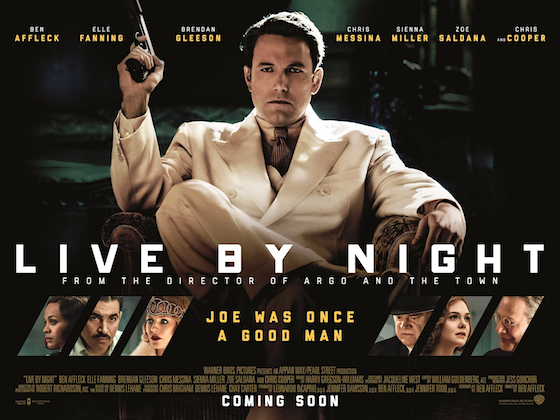
    They appear to be living, and it looks like it's nighttime. So that all checks out, then.

    Affleck is a decent director, and, actually, a quite like him as an actor too… in the right kind of roles. I’m not sure he’s got the range necessary for this part, however. His character is a conflicted, contradictory man — he genuinely has a good heart, but he’s often prepared to put it aside to do bad things; but, at other times, that moral compass gets the better of him. It’s a tricky line to tread and make believable, and Affleck’s performance is too monotone to convincingly portray it. That leaves the centre of the movie feeling empty, which is a problem however solid the stuff around him is. Apparently the film’s original cut was closer to three hours long and heavier on character stuff, so maybe the nuance disappeared in the editing — or maybe it didn’t. We’ll likely never know.

    Live by Night received an exceptionally negative response (just 35% on Rotten Tomatoes), but I can’t see why people hated it so much. It’s not fantastic, floundering somewhat in the shadow of the other gangster movies of which it’s so often reminiscent, but it’s not a bad attempt at the genre. Though, as a significant portion of the storyline takes place in “the sunshine state”, I’m not sure how good that title is. I mean, I live more of my life by night than these gangsters do. I just spend most of that time watching and writing about movies, though — maybe I should be launching a criminal empire?

    3 out of 5

    Zatoichi Meets the One-Armed Swordsman (1971)

    aka Shin Zatôichi: Yabure! Tôjinken

    2019 #99
    Kimiyoshi Yasuda | 95 mins | Blu-ray | 2.35:1 | Japan & Hong Kong / Japanese & Mandarin | 15

    Zatoichi Meets the One-Armed Swordsman

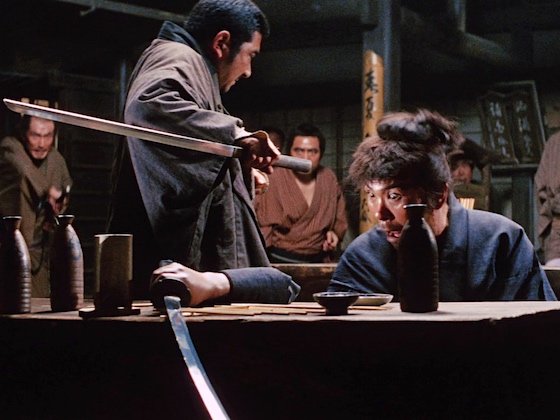
    Crossovers are an enduring device in comic books — what better way to boost sales (or, if we’re being less cynical, mix things up) than have a guest appearance by another popular character? And the past decade has seen Marvel Studios turn the same principle into a massive movie money-spinner. Of course, they’re far from the first to attempt an on-screen crossover — and what could sound more comic-book-y than a blind swordsman meeting a one-armed swordsman?

    This is the second such meet-up movie in the Zatoichi series. The first saw our hero face off against Akira Kurosawa’s Yojimbo… or someone with the same name played by the same actor, at any rate. That bait-and-switch was just one of many let-downs in what turned out to be the most disappointing film in the long-running series. With that in mind, perhaps it was foolhardy of me to look forward to this film. Certainly, it’s not the best-regarded Zatoichi adventure. But I really enjoyed the two original One-Armed Swordsman films (especially the first), so bringing that character into the beloved Zatoichi series had the potential to be a match made in martial arts heaven.

    After the prerequisite Bondian pre-titles scene that reminds us of Ichi’s skill with a sword, we’re introduced to Wang Kang (Jimmy Wang Yu), the eponymous one-armed swordsman from China, who’s travelling across Japan to meet an acquaintance at a monastery. Falling in with a family of Chinese performers, they come across a procession by a local lord, but the family’s young son gets in the way and is threatened with violence, so Wang Kang steps in to defend him. Offended, the samurai attack, killing all witnesses, including the boy’s parents. Wang Kang escapes and the slaughter is blamed on him, leading to a manhunt for the supposed fugitive. Ichi, wandering as always, encounters the boy and Wang Kang, and tries to help despite the language barrier.

    Creating a new one-armed swordsman

    An array of other characters come into the mix, as you’d expect from a Zatoichi film, including Oyone (Michie Terada) and her kindhearted parents, who take the fugitives in; Osen (Yūko Hama), a prostitute who falls for Ichi (don’t they all?); Kakuzen (Kōji Nanbara), Wang Kang’s friend at the monastery, who has plans of his own; and a trio of drunken gamblers who provide comic relief, including a risible fart gag. But that aside, the film has a dark, brooding tone. I mean, it starts with a massacre of innocents that’s blamed on the wrong man — hardly cheery — and that’s just the first of many tragic injustices visited upon these characters. And when the bad guys aren’t being menacing, Ichi is; like when he casually takes a guy’s ear off to get him to talk, or the moment when he closes in for the kill on the villainous boss, blowing the blindman’s whistle that said boss had earlier goaded him about… It’s triumphant, but also kinda chilling. Put yourself in the shoes of the men Ichi gets pitted against and you can see him as a kind of nigh-indestructible bogeyman.

    The tragedy extends as far as the ending, which is both frustrating and poignant. “If we’d understood each other’s words, we wouldn’t have had to fight,” says each of the men… except, er, they did have a way to understand each other, thanks to the bilingual boy. Have a sword fight first, ask questions later, I guess. But anyway, it’s frustrating because they didn’t need to fight (they were both good guys!), but it’s poignant because their basic natures, compounded by misunderstandings, meant they did fight — and because they fought, one of them had to die. It’s a damn good fight, mind; in fact, this is an excellent instalment for combat all round, thanks in part to there being another exceptional swordsman in town. The Chinese swordsman brings his own style, too, meaning there’s an array of stunts and tricks more familiar from Hong Kong action movies than Japanese ones. Indeed, Wang Kang is well served by the film all round. Sure, it’s still Zatoichi’s movie overall, but the guest star gets a couple of scenes to himself to show off, as well as his own honourable storyline.

    The real one-armed swordsman

    Nonetheless, rumours abound of an alternate cut, released in Chinese markets, that placed even more emphasis on Wang Kang. There doesn’t seem to be any firm evidence of its existence, but some people swear to have seen it, many years ago. Reports vary on just how different it is, ranging from merely the last 30 seconds being modified so that a different combatant wins the final duel, to there being additional Wang Kang fight sequences scattered throughout the movie. Considering this was a Japanese-Chinese co-production, it makes sense each market would prefer a version where their hero wins… although, of course, they could’ve come up with a storyline that saw the eponymous swordsman fight earlier, come to a draw, and then team up for the climax, seeing as they’re both heroes ‘n’ all. Ah well.

    The version we do get to see is as much a Zatoichi film as any other. It keeps in play many of the series’ familiar elements — not just exciting action scenes, but also emotional drama, a gambling scene with a difference, and humorous interludes that are actually moderately amusing — but adds some HK-style martial arts to the mix for a different flavour. The result may not be wholly perfect, but Zatoichi Meets the One-Armed Swordsman is a much better example of how to team-up two icons than the series’ previous attempt.

    4 out of 5

    The Eleventy-First Monthly Review of July 2019

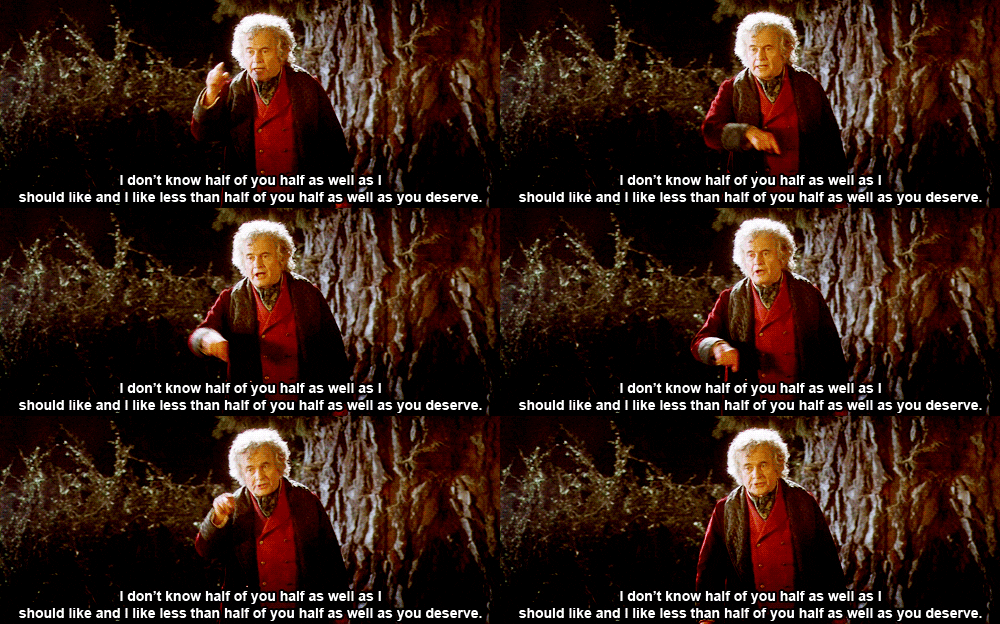
    I’ve been writing 100 Films for 151 months now, but I only instituted these monthly progress reports in May 2010 — and that makes this the 111th one! I think that’s worthy of a Hobbity celebration…

    I don't know half of you half as well as I should like, and I like less than half of you half as well as you deserve.

    Coincidentally, it’s also the 50th month of these “new look” monthly updates (the ones with the funny titles and all the formal sections), which means it’s also the 50th iteration of my Arbie Awards. You can see how I’ve honoured that special occasion when you reach the relevant section.

    But before that, there’s this…


    #99 Zatoichi Meets the One-Armed Swordsman (1971), aka Shin Zatôichi: Yabure! Tôjinken
    #100 The Killer (1989), aka Dip huet seung hung
    #101 Toy Story 4 (2019)
    #102 Sherlock Jr. (1924)
    #103 The Lion King (2019)
    The Killer
    .


    • So, I watched just five feature films in July.
    • That continues my new fewer-than-10-films-per-month streak. Once upon a time such numbers were my norm (from 2008-2013, 58% of months had 9 or fewer films), but for the past few years it, er, really wasn’t (in 2014-2018, 95% of months had 10 or more films).
    • My longest previous fewer-than-ten streak was 7 months, from June to December 2011. If 2019 continues the way it’s going, it could replicate that exactly. But, equally, a lot can change: at the end of July 2016 I was at #127 and went on to finish the year with 195, and in July 2017 I was at #107 and ended on 174; but July 2015 was lower than both of those, ending at #102, and I went on to reach 200. So while I’ll be very surprised if 2019 even comes close to last year’s 261, never say never.
    • In terms of averages, it’s distinctly less heartening. It takes the average for July down from 9.9 to 9.5, leaving it as the only month with an average lower than 10. It also brings the 2019-to-date average down from 16.3 to 14.7, and the rolling average of the last 12 months down from 17.8 to 15.9.
    • Of of the five films I did watch, one was #100 — later than I’d anticipated, because my underwhelming June tally didn’t get me there, but still the 3rd earliest #100 ever (behind 2018 (10th May) and 2016 (28th May), and ahead of 2017 (15th July)).
    • It was a double catch-up for last month, too: I missed my should-be-monthly Blindspot film in June, so made a selection from that list to be 2019’s illustrious #100. My pick was John Woo’s career-defining heroic bloodshot classic The Killer. Still holds up today, for my money. It’d be nice if we could get a quality Blu-ray release of it, though.
    • And this month’s WDYMYHS film was Buster Keaton’s slapstick classic Sherlock Jr. At 45 minutes, it’s just long enough to qualify as a feature rather than a short. As well as the comedy, it has madcap stunts Tom Cruise would be proud of, and technical effects that still hold up almost 100 years later.
    • Finally, from last month’s “failures” I watched only Toy Story 4. Well, one is better than none…


    The 50th Monthly Arbitrary Awards

    It’s the 50th Arbie Awards! In honour of that milestone, I’m… not doing anything special whatsoever. So let’s get on with this:

    Favourite Film of the Month
    Not much to choose from, though I did really enjoy almost all of the limited selection of films I did watch. The winner, though, is an action movie… and also a comedy: Buster Keaton’s Sherlock Jr., which (as I said above) is not only very funny but also technically audacious and full of daredevil stunts.

    Least Favourite Film of the Month
    This is an easy pick. I didn’t hate it, but I was certainly left underwhelmed by Jon Favreau’s too-faithful live-action animated remake of animation The Lion King.

    Song That Should’ve Been Retitled of the Month
    Can You Feel the Love Tonight This Afternoon?

    Joke I Stole from Letterboxd of the Month
    See above + here.

    The Audience Award for Most-Viewed New Post of the Month
    It was a relatively meagre month for new posts. Well, in fact, there were 10, and my average for the first six months of 2019 was 13, so maybe not so relatively low after all. Whatever, none of those new posts challenged archival ones for popularity: this month’s victor may’ve been a Netflix new release (outside the US) but it only came 39th overall. Perhaps Shaft isn’t the man after all.


    I didn’t rewatch a single film last month, which means I’ve got a mountain to climb to get to my goal of 50 rewatches this year — and July is barely helping…

    #21 Die Another Day (2002)

    To stay on target I should be on about #28 by this point. Oh dear. And the one I did watch was a fluke: I happened across it on TV the other day and ended up sucked in. So, okay, I didn’t really watch it — certainly not all of it — but I did see a fair bit of it; probably a comparable amount to when I caught Skyfall on TV last year, and I counted that, so here it is. I’m still intending to re-watch all of Bond properly at some point (or at least pick up where I left off, which was with OHMSS); but then I’ve been meaning to do that ever since the Bond 50 Blu-ray set came out in 2012…


    I made a couple of trips to the cinema this month, but I still missed some big titles — primarily, Spider-Man: Far from Home. There was also Richard Curtis/Danny Boyle/Beatles comedy Yesterday (which actually came out in June, but I didn’t mention it last month), and smaller releases (which therefore weren’t necessarily playing near me or at accessible times) like Midsommar and The Dead Don’t Die. (If you’re a US-based reader wondering why I haven’t mentioned Quentin Tarantino’s successful new film, it’s not out here for another two weeks.)

    Last month I noted that some cinema misses from February had now made it to disc, where I’d missed them again. That’s also true this month, with the release of Alita: Battle Angel. The same was true of Dumbo, though that was from my April failures — the fact it and Alita have now reached disc at about the same time shows something about the vagaries of release windows, I guess. Finally on disc, a rewatch candidate: Captain Marvel (not that I’ve posted a review from when I saw it in the cinema yet).

    The noisiest releases on streaming this month were TV series, but a couple of Amazon co-productions came to Prime Video: Mike Leigh’s Peterloo, and Beautiful Boy, with a BAFTA-nominated performance from Timothée Chalamet. As for Netflix, they offered doc The Great Hack, about the Cambridge Analytica scandal, which is the kind of thing that’s destined to sit on my watch list for ever and a day. They also threw up some stuff I missed from last year in the form of Paul Feig’s black-comedy mystery A Simple Favour and acclaimed comedy-drama Blindspotting.


    So, in conclusion, July’s prospects were marred by my being away on holiday for almost half the month. Perhaps that means August will see things perk up again…