The Past Month on TV #49

I’ve only got a small selection of TV viewings to offer this month (check out the “things to catch up on” section for all the big stuff I’ve missed), but at least that means it can be headlined by a series that I hope gets the attention it deserves…

Year of the Rabbit  Series 1
Year of the RabbitRipper Street gets a comedic makeover in Channel 4’s recent comedy series, which stars Matt Berry (of Toast of London fame, and also recently seen starring in the series version of What We Do in the Shadows) as a Victorian detective by the name of Rabbit. He investigates murders and other nefarious goings-on amid the scum of the East End accompanied by a rookie posh-boy sidekick (Freddie Fox) and the force’s first female officer (Susan Wokoma).

Rabbit juggles three things at once: being a comedy, being a case-of-the-week cop show (with basic storylines that would hold up in a genuine cop show), and also a conspiracy arc plot. That it pulls all three off (just about) with only c.25 minutes per episode is impressive. In that respect it reminded me a bit of BBC Two’s wonderful The Wrong Mans, which was definitely a comedy but also definitely a crime thriller. The style and tone of the humour is very different, mind: Wrong Mans was quite grounded, whereas this is kookier and borderline surreal, as you’d expect from Berry, really. By way of example: every episode features an aside of street urchins selling a different East End delicacy, like “twigs in a bun”. It’s also quite freewheeling: running gags are quickly established and just as quickly abandoned; other things that seemed like discardable bits come back later.

The three leads are stars that ably carry the show. Berry’s talents are well documented (I guess to a lot of people he’s Toast, but I’ve never actually got round to that. I always remember him from one of his first roles, in Garth Marenghi’s Darkplace). Fox’s family legacy may suggest he could play “posh boy” in his sleep, but a stint undercover as a Cockney geezer proves his range. Wokoma more than holds her own as the young woman determined to break into the police (her dad may be the boss, but he’s no help) and prove she’s as good as the guys. The recurring supporting cast are their equal, including Paul Kaye as a rival copper out to ruin Rabbit, Keeley Hawes as a scheming feminist, and, most memorably, David Dawson as a theatrically camp Joseph ‘Elephant Man’ Merrick (under a movie-quality prosthetic — the production values are no slouch either). There’s also blink-and-you’ll-miss-it cameos from Berry’s Shadows collaborators, Taika Waititi and Jemaine Clement.

Rabbit wraps up its arc plot, but ends with a tantalising tease for a second series storyline. It’s not been recommissioned yet, but I’ve optimistically labelled this “series one” because the writers already have ideas for more and, well, I really want some more.

The Twilight Zone  ‘Best Of’
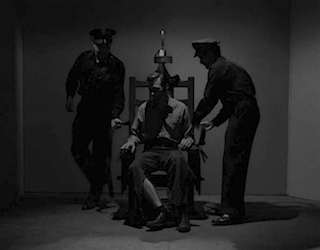
Shadow PlayHaving exhausted the top tens of both IMDb’s and ScreenCrush’s Twilight Zone episode rankings in my four previous “best of” selections, I’ve still only scratched the surface of the series: I’ve reviewed 16 episodes, which is 10% of the 156 that were produced. Now: the only reason I’ve been using ScreenCrush’s list is that I happened to see it on Twitter — it’s certainly not the only ranking of its kind. So after a bit of Googling for alternatives (which included rejecting BuzzFeed’s list because it was consistently illustrated with bloody big spoilers), I’ve decided to use Paste’s ranking to dictate which episodes I watch next. That’s partially because 50% of their top ten is episodes that weren’t in either IMDb’s or ScreenCrush’s, so that’s quite interesting. Indeed, their writer, Oktay Ege Kozak, has some very different opinions to ScreenCrush’s Matt Singer, as we’ll soon see…

First, for reference, the episodes in Paste’s top ten that I’ve already reviewed are: Eye of the Beholder (Paste’s #1, IMDb’s #3, ScreenCrush’s #11); The Monsters Are Due on Maple Street (Paste’s #2, IMDb’s #5, ScreenCrush’s #1); Time Enough at Last (Paste’s #3, IMDb’s #4, ScreenCrush’s #4); Nightmare at 20,000 Feet (Paste’s #5, IMDb’s #2, ScreenCrush’s #14); and The Hitch-Hiker (Paste’s #8, IMDb’s #21, ScreenCrush’s #6). Not a huge deal of disagreement there, but some of the gaps are about to get wild.

Indeed, the second-biggest difference is up first: season two’s Shadow Play is right up in 4th on Paste’s list, but a whopping 98 places lower at 102nd on ScreenCrush (it’s 22nd on IMDb). It’s the story of a man sentenced to execution, who claims that they’re all living inside his dream and if he’s executed everyone else will cease to exist. Is he trying to plead insanity… or might he just be telling the truth? Paste are on the money here: this is a great little story, with Dennis Weaver as the condemned man driven to the brink by (he claims) being executed over and over in a never-ending nightmare; and, on the other side, the DA and court reporter struggle with the idea that he might be telling the truth, meaning they’re not people at all but mere figments in someone else’s dream. It’s a horror story of a nightmare and an existential musing all in one, with a strong vein of tension about what will happen in the end. Kozak praises it for pulling all that off, but Singer counters that “the premise is too convoluted [with] two ideas that would each work more effectively on their own.” I can see where he’s coming from, but I don’t wholly agree — if you disconnect the two ideas, they’d both need something to fill the resultant gap in order to function as narratives.
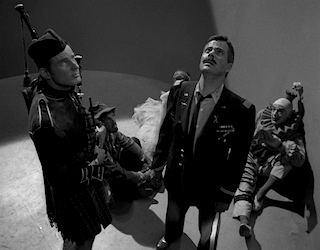
Five Characters in Search of an ExitThere’s closer agreement about Paste’s 6th choice, season three’s Five Characters in Search of an Exit, which ranks 14th on IMDb and 32nd on ScreenCrush. Singer writes that “if you enjoy the movie Cube you have this episode written by Serling from a story by Marvin Petal to thank,” which immediately put it high on my must-see list because I love Cube. This has a similar premise: five mismatched strangers awaken in a featureless metal cylinder, each with no memory of who they are and how they got there. The top of their de facto prison is open — if they can just climb up there, maybe they can find answers. The result is both a mystery drama about just what’s going on, and something of a character study on dealing and coping with situations you can’t explain or change. Naturally, there’s a twist ending. In fact, at one point the characters, theorising about why and how and where they are, list a bunch of options that all sound like Twilight Zone endings. It’s quite a bold move, really; almost acknowledging the show’s MO, and casually discarding a bunch of potential conclusions in the process — and if one of them was your guess, well, the show’s just laughingly dismissed you before the halfway mark! Weirdly, though, I did manage to guess the twist pretty precisely from early on. I’m not sure how, really — blind luck, I think, because there’s nothing to tip its hand. Possibly it’s just experience: as with so many Twilight Zone twists, this was probably highly innovative and/or unusual back in the ‘60s, but has been imitated and copied (deliberately or otherwise) since. Still, as a mystery thriller, the episode is as good as any of the similar works that have been produced in its wake.

The InvadersOne of the series’ more famous episodes is in 7th place for Paste (IMDb #28, ScreenCrush #58): The Invaders, starring Agnes Moorehead as the lone inhabitant of a remote shack, who must suddenly deal with hostile six-inch spacemen landing their saucer on her roof. It’s a near-silent drama, as Moorehead is terrorised by the miniature monsters and struggles to fend them off. And, obviously, there’s a twist. I don’t want to sound boastful, but, yeah, I saw it coming. I’ve said this many times now, but I really do suspect the series is a victim of its own success in this regard — it’s 60 years old and highly influential, so of course all the media a modern viewer has experienced leaves us ready to guess the outcomes. Actually, I bet it’d be a great show for kids — a formative experience; and, with less media exposure, the twists might retain the appropriate level of mind-blowing-ness. Anyway, at least The Invaders has more going for it than just the final reveal, with the woman vs the mini-spacemen playing like a tense horror movie. There’s a lot of praise for Moorehead’s performance, but I thought she was overacting somewhat in compensation for her lack of dialogue. In fairness, though, this was made for 1961 TV sets — with no speech to work with, the performance needed to be ‘big’ to come over on those tiny tellies. Unfortunately, it’s another mark against the episode when watched in HD on a modern setup.

Two season one episodes round out Paste’s top ten, both of which are placed considerably higher than on ScreenCrush’s list. In 9th place is Perchance to Dream, which is ranked way down at 128th on ScreenCrush, and 87th on IMDb — both sizeable gaps, and in this case I side with the latter. It’s about a man with a weak heart who thinks his dreams are trying to kill him, only it’s somehow much more dull than that setup sounds. It doesn’t even have any great point or twist to cap it off. Kozak reckons this is a “haunting, cinematically captivating campfire story [that] never lets go of its meticulously built suspense until the wickedly unforgiving finale,” an opinion I don’t agree with a word of, sadly. Singer says that “while Conte’s character is terrified to fall asleep, the whole thing is a bit of snooze,” and that I do agree with.
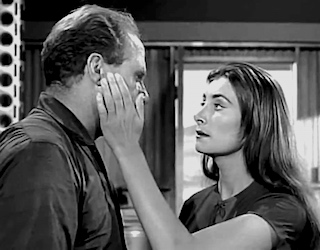
The LonelyFinally for now is The Lonely, which is ranked 10th on Paste (obv.) but only 105th on ScreenCrush (IMDb is much closer at 27th). Sorry to harp on about this, but here’s another episode that may’ve been great once but recent years have seen other films and TV series tackle similar themes in much greater depth, far surpassing the mere 20-odd minutes it’s afforded here. Indeed, this is the rarest of things in my experience: a Twilight Zone episode where 25 minutes isn’t enough to explore its concept. It’s about a man imprisoned in solitary confinement. His cell? An entire asteroid (filmed on location in Death Valley, which adds a magnificent grit and desolation to the visuals). He’s visited quarterly by a supply ship, and after a few years the captain takes pity on him and brings a robot woman to be his companion. It’s as good a setup as any, but the episode simply doesn’t have the time to dig into the questions and musings it throws up — though it’s not helped by wasting most of the first half on chatter between the prisoner and the captain, establishing their relationship more fully than the one between the prisoner and his robo-woman; a relationship the episode supposedly hinges on.

So if there’s one Twilight Zone episode that begs to be remade and expanded upon, it’s this one. It’s even ripe for someone to add one of the series’ trademark ironic twists — I thought of two or three while watching, but the episode itself doesn’t have one, exactly (I mean, it kinda does, but it’s more a plot development than a final, cruel twist of the knife like the series’ best). But then again, does it need remaking when other storytellers have already taken up this episode’s theme and expounded on it better? This is a forerunner to the likes of Her and Ex Machina and Blade Runner 2049 and the Westworld TV series. You’ll note those are all very recent works (the eldest, Her, has yet to reach its 6th anniversary), which perhaps shows how far ahead of its time The Twilight Zone was. But their thoughtfulness also really shows up how little The Lonely actually has to say about its subject matter.

Also watched…
  • Ghosts Series 1 Episodes 5-6 — Accidentally fell behind on this and only just finished it. My review of the first half of the series is here and still applies. Happily, it’s already been recommissioned for a second series.
  • How to Break into the Elite — This sounds like a bit of a “get rich quick” documentary or something, but it was actually far more insightful. Basically, about how class is the last great barrier to employment in the UK; the one thing recruiters still discriminate on (even if it’s subconsciously, or they don’t say it). To some (i.e. those who’ve struggled in the system) it might all feel obvious, but there’s evidence and proof to back it up. It’s available on iPlayer (for another 11 months) if you’re interested.
  • University Challenge Series 49 Episodes 1-3 — An excellent show for making you feel astoundingly unknowledgeable. I kill it whenever a film- or TV-related picture round comes up, though.

    Things to Catch Up On
    Stranger Things 3This month, I have mostly been missing Stranger Things season 3, which seems to have provoked controversy with some of its character decisions (I’ve been avoiding spoilers, but have seen news headlines that imply as much); and Veronica Mars season 4, which, er, seems to have provoked controversy with some of its character decisions (I’ve been avoiding spoilers, but have also seen news headlines that imply as much). As they’re only eight episodes apiece, hopefully I’ll have found time for them before next month’s column. (Veronica Mars still doesn’t have a UK broadcaster (in fact, I don’t think it has one anywhere outside of the US and Canada, I guess thanks to it being on Hulu (though other Hulu shows have international carriers, so who knows what’s going on here)), but where there’s a will there’s a way.) And if that wasn’t enough, Amazon also recently released subversive comic book adaptation The Boys, which also looks right within my wheelhouse. That’s also eight episodes, incidentally. I seem to remember reading a while ago that Netflix’s research suggested eight was the optimum number of episodes to have in a season nowadays. I guess everyone took that to heart.

    Next month… see above (with crossed fingers).

  • FernGully: The Last Rainforest (1992)

    2018 #99
    Bill Kroyer | 73 mins | streaming (HD) | 1.85:1 | USA & Australia / English | U / G

    FernGully: The Last Rainforest

    I remember ignoring FernGully when it came out (probably when it hit rental video rather than at the cinema) because it looked a bit rubbish. I mean, it was an animated movie but it wasn’t made by Disney — “could such things even exist?”, wondered little me (probably). As the years went by, I kinda assumed everyone else had ignored or forgotten it, leaving it as some curio I vaguely remembered from video shop walls. But fastforward to 2009 and suddenly everyone was talking about it, because it had been remade as a big-budget 3D sci-fi epic by James Cameron. Okay, Avatar wasn’t actually a FernGully remake, but the disparaging comparison came up a lot. Fastforward another decade to now (a time when Cameron’s fourfilm remake of FernGully 2: The Magical Rescue (yes FernGully got a sequel) is still over two years away (provided they don’t push it back again)), and on a whim I finally watched FernGully to see this supposed likeness for myself.

    So, what’s FernGully actually about? Well, not blue creatures on an alien moon, although it’s equally as fantastical. It’s set in the Australian rainforest, where fairies live in isolation, believing humans to have gone extinct… that is until loggers turn up to destroy their home. Fairy Crysta (Samantha Mathis) shrinks human Zak (Jonathan Ward) down to her size to save him from a falling tree, at which point he learns about their way of life — oh, right, Avatar here we are. Anyway, many years ago an evil entity called Hexxus (Tim Curry) was trapped inside a tree, which the loggers cut down, and suddenly everyone’s at threat.

    If it’s not obvious already, FernGully is pretty heavy on the environmental messaging (it’s even dedicated to “our children and our children’s children”, and there’s a note at the end of the credits about donating proceeds to the Smithsonian for environmental work). I seem to remember this was all viewed as being kinda-loony eco stuff back when the film came out. Now, of course, acceptance of those views is much wider, and what the film has to say seems a little obvious. Though we’re still destroying the planet, so I guess we’ve not learned that much in the three decades since.

    Batty, indeed

    Even more of-its-time are the musical numbers. They’re very 1992, and not in a good way. That said, although it’s a terrible song, If I’m Gonna Eat Somebody (It Might As Well Be You) is one of the best titles ever.

    One of the people lumbered with an awful tune is Robin Williams, playing a mentally-deranged rapping bat. Nonetheless, he’s definitely one of the best things in the film — not as much as his Genie was in Aladdin, but he does occasionally bring a similar irreverence. It’s needed when the rest of the film is being a bit po-faced about the magic of nature. The other vocal standout is Tim Curry, who always gives good villain. He’s supported by nice design and animation, with Hexxus visualised as a dripping oil-creature, plus a couple of other forms as the film goes on, all of which look pretty effective. Like the rest of the movie, his characterisation and motivation are very underdeveloped, and Curry’s given little to do after his initial birth/song sequence, but the character looks good.

    All in, FernGully is a decent little animated adventure — a tad earnest perhaps, but not too bad — but it’s held back by weak music and a thin plot.

    3 out of 5

    Review Roundup

    Even though my film viewing has slowed to barely a trickle recently (more about that on Thursday), my review backlog is still humongnormous (so I big I had to invent that new world to describe it).

    So, here’s another exceptionally random selection of quick reviews to help clear out a tiny fraction of it. They’re connected merely by being films I watched over a year ago. Three of them score 3 stars, one of them scores 4, and I suspect you won’t guess which that is…

    In today’s roundup:

  • American Assassin (2017)
  • Captain Underpants: The First Epic Movie (2017)
  • Wild Strawberries (1957)
  • Yes Man (2008)


    American Assassin
    (2017)

    2018 #79
    Michael Cuesta | 112 mins | streaming (HD) | 2.35:1 | USA & Hong Kong / English, Arabic, Italian, Polish, Turkish & Persian | 18 / R

    American Assassin

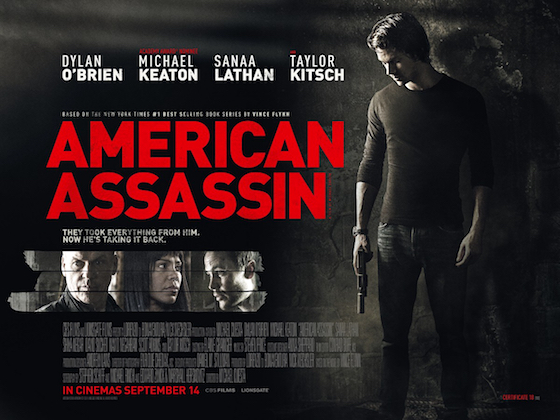
    Based on the Mitch Rapp series of novels by Vince Flynn (and, since Flynn’s death, Kyle Mills), American Assassin is an action-thriller about a CIA operative that’ll feel very familiar to anyone who’s ever seen a film starring Jason Bourne, Jack Ryan, or anything else along those lines. Indeed, it particularly reminded me of the last-but-one Jack Ryan reboot, crossed with something altogether murderier — you’ll notice this has an uncommonly high 18 certificate. I guess that was for some torture that goes on; although it also features a very intense opening scene, depicting an attack by terrorist gunmen on tourists at a beach resort. Considering this is no more than a dumb action-thriller, one might consider it a bit much to include such a viscerally-real-feeling sequence, inspired by relatively recent real-life attack(s), just to kickstart the hero’s journey…

    The film was made for just $33 million, which is chump change in modern Hollywood, and they’ve not done badly off it. The shooting locations do seem a little limited (the main sequence in Istanbul looks more like it was shot in a London shopping precinct (which, as I found out when I checked after, it was), and the bit in Poland is moderately familiar as London too (it’s Somerset House, recognisable to UK cinephiles as where Film4 host their outdoor summer screenings); but I’ve seen worse CGI in bigger-budgeted films, and the fisticuffs are decently staged.

    Altogether, it makes for quite an entertaining action thriller, with some decent scenes, but the story is wholly familiar — Mitch Rapp: Sum of All Shadow Recruits, if you will. Fans of the genre will likely get a kick out of it, especially if they’ve not seen some of the other films it feels so similar to (though if you’re a fan of the genre I don’t see how you wouldn’t’ve), but others need not apply.

    3 out of 5

    Captain Underpants:
    The First Epic Movie

    (2017)

    2018 #91
    David Soren | 85 mins | streaming (HD) | 1.85:1 | USA, Canada, France, UK & India / English | U / PG

    Captain Underpants: The First Epic Movie

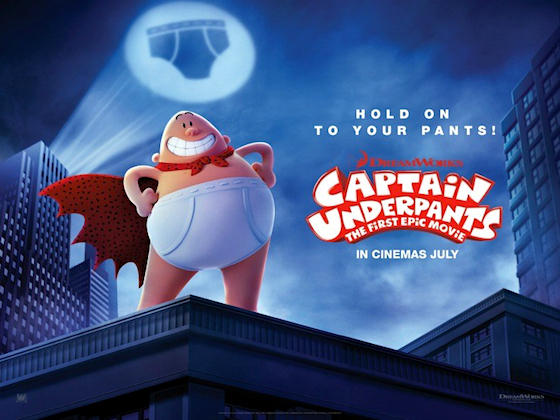
    Somehow I was vaguely aware of the existence of a series of books called Captain Underpants, but I’d paid them no heed because they’re for young kids, and also because they looked stupid. I thought the same thing of this movie adaptation, but then I started hearing good things about it and, well, here we are.

    It’s about two young boys who love nothing more than pranking teachers and creating superheroes. When their headteacher separates them because of the former, they manage to hypnotise him and convince him he’s the latter — the eponymous Captain Underpants. Initially that just makes their school life more fun, but then a supervillain turns up, so he’s handy for that too.

    Obviously it’s all thoroughly daft and primarily aimed at younger children — there are Messages without it being preachy, and it’s suitably irreverent and base at times. It’s the movie equivalent of mixing veg into, like, a burger, or something (I dunno, I’m not a parent. What food do you hide veg in?) But it also contains some good gags for the adults (satire!) and some clever bits of animation and stuff as well — it’s more inventive than you might expect in that regard.

    Indeed, I feel like it’s all-round better than you’d expect, given the title and overall style (the kiddie design and tone; the toilet humour)… but not so much better that it warrants 4 stars, so…

    3 out of 5

    Wild Strawberries
    (1957)

    aka Smultronstället

    2018 #90
    Ingmar Bergman | 87 mins | DVD | 4:3 | Sweden / Swedish | PG

    Wild Strawberries

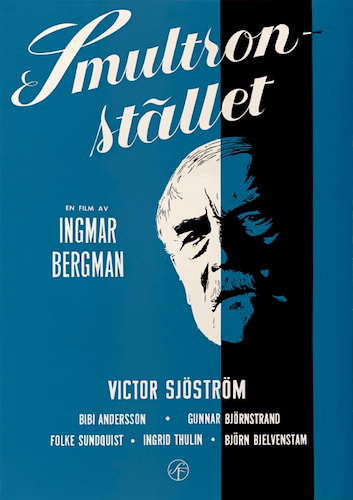
    “Wondrously warm, one of Bergman’s very finest achievements, and a landmark in the history of cinema,” says Geoff Andrew in the notes that accompany the UK DVD release of Wild Strawberries, one of Ingmar Bergman’s most acclaimed movies from a career filled with them. However, speaking for myself, I’m still struggle to get a handle on the director’s output.

    It’s about a grumpy old professor (Victor Sjöström) who sets out on a road trip to collect an honorary doctorate. Along the way he has various encounters with other travellers, which prompt daydreams and memories that cause him to reassess his life and its worth.

    Put like that, what it’s “about” seems obvious, though in my notes I wrote “I’m not sure I have any idea what it was about. Something to do with old age and looking back and maybe death,” so how effectively its themes come across on a first viewing is, perhaps, debatable. That said, I’m fully prepared to accept I was looking in all the wrong places, maybe focusing too much on the literal road-trip storyline and not the figurative exploration-of-self the trip was provoking.

    On the bright side, there’s some effective imagery in the dream sequences, and I found it less crushingly dull or obtuse than Persona, which is something. Maybe Bergman’s just not for me? Or not for me yet? Well, I didn’t dislike it, but at the same time I didn’t get much out of it. Maybe some day I will.

    3 out of 5

    Wild Strawberries was viewed as part of my Blindspot 2018 project.

    Yes Man
    (2008)

    2018 #86
    Peyton Reed | 100 mins | streaming (HD) | 16:9 | USA & UK / English & Korean | 12 / PG-13

    Yes Man

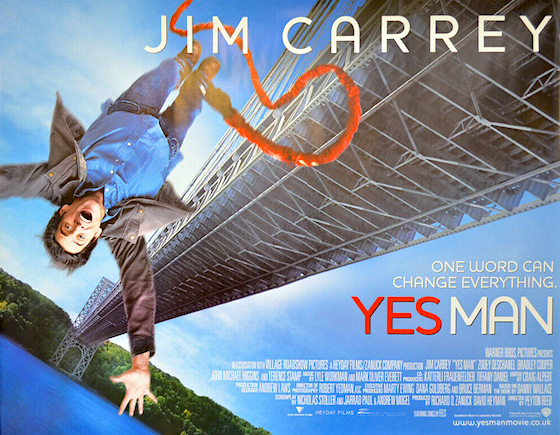
    Loosely based on Danny Wallace’s memoir of the same name, Yes Man stars Jim Carrey as a negative chap who attends a motivational seminar that encourages him to start saying “yes” to every opportunity that comes his way.

    On the first night, he says yes to a homeless guy who wants a lift across town, then yes to letting the guy use his phone, then yes to giving him all his cash. But it turns out the drive used all his fuel, the call used all his battery, so he can’t phone for help, and he has to trek miles in the dark to buy fuel… not that he has any cash. So much for saying “yes” to everything. But at the petrol station he meets Zooey Deschanel and they hit it off. So, yeah, point made with perhaps the most outsized karmic reward ever.

    I suppose everything about Yes Man is broadly familiar — the romcom story arc; the kooky supporting characters; Jim Carrey’s schtick (it feels very much in same vein as the high-concept ’90s comedies that made his name; although there’s no fantastic element this time, and the worst excesses of his ‘act’ are thankfully limited to one or two scenes) — but it carries it off with reasonable charm. I mean, if you have no time for Carrey’s comedies, and aren’t attracted to Deschanel being a MPDG again, then there’s nothing here that’s going to win you round. For fans of such shenanigans, however, this is a perfectly enjoyable experience. It’s a 3.5-out-of-5-er, but I had a nice time with it, so my score leans on the side of generosity.

    4 out of 5

  • Il blogger prodigo

    Aside

    Buongiorno, dear readers — the prodigal blogger has returned! (“Prodigal” being a word I’ve here misused, as I’m sure many of us do, thanks to that Biblical story. Though as it actually means “spending money freely and recklessly”, anyone who’s seen the size of my unwatched DVD and Blu-ray collection might consider it fitting after all.)

    So, I’ve just spent two weeks in Italy, much of it during a heat wave (Jesus wept, it was hot), so at least I got to laze about doing next to nothing. I certainly didn’t spend it learning Italian — almost the entirety of the vocabulary I picked up has already been used in this post. I didn’t spend it writing blog posts either, as it turned out (I favoured reading books instead) — so that’s why there are no new reviews just yet, but instead this brief post to note my return.

    Anyhow, I’ve got plenty of blog-reading and review-writing to catch up on now, so if you’ll excuse me again…

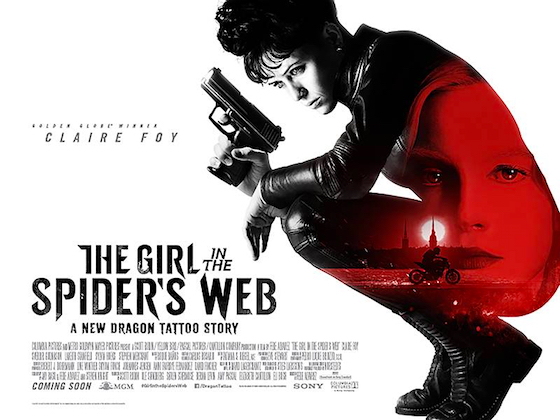
    The Girl in the Spider’s Web (2018)

    2019 #90
    Fede Alvarez | 115 mins | streaming (HD) | 2.39:1 | USA, Germany & Sweden / English | 15 / R

    The Girl in the Spider's Web

    I love a bit of context to frame a review, but crikey, I can’t be arsed to recap the turbulent history of this particular franchise. Heck, it doesn’t even have a proper name! Officially it was the Millennium Trilogy, but that didn’t seem to stick (especially when it went past three books). The original Swedish films have been bundled as “The Girl” trilogy, owing to the formula of their English language titles. For this latest incarnation, they chose to label it “A New Dragon Tattoo Story”, I guess reasoning that “Dragon Tattoo” was a more unique identifier than “The Girl” (not wrongly).

    The status of this film itself is equally confused. Is it a reboot? A sequel? If so, to what? I mean, it’s adapted from the fourth book, but only the first has been filmed in English (as is this movie), so is this now meant to be the second story? But as there doesn’t seem to be a Swedish language adaptation forthcoming, maybe this is intended to be a fourth one after all? Frankly, I suspect the filmmakers would rather we didn’t ask. The film makes little or no acknowledgement of any specific predecessors (aside from the fact that the recurring characters already know each other), instead diving headlong into a new, standalone story. Well, standalone-ish, because a lot of what occurs comes out of the past of Lisbeth Salander, the titular girl; and the events of her past were a key feature of some of the other stories as well, so…! Well, that you can’t escape your past, however much you might try, is sort of a theme here, I guess, so maybe we can kindly say it’s only appropriate.

    Whichever films or books you take in before this one, I don’t think Spider’s Web is a good jumping-on point. It assumes we have familiarity with the lead characters — hacker Lisbeth Salander (now played by Claire Foy) and investigative journalist Mikael Blomkvist (now played by Sverrir Gudnason), and their relationship, or lack thereof — which is a barrier to it being newcomer friendly. Anyway, the actual storyline sees Lisbeth being hired to steal a dangerous computer program from the CIA, which leads to all sorts of trouble with crime gangs and spies and whatnot.

    l33t h4x0r skillz

    Where the first three Millennium / Girl / Dragon Tattoo stories were all fundamentally crime thrillers, Spider’s Web opens up the storytelling world into much more fanciful realms. It’s a bit like they’ve tried to make Salander a kind of freelance female James Bond, using her l33t h4x0r skillz to stop evil cyber-terrorists. It also helps that she’s pretty handy on a motorbike and with a gun. How? Just because. Unfortunately, an element of ‘just because’ powers too much of the film, with fundamental flaws in even its basic setup: the computer program she has to steal is uncopyable, hence the reason she has to steal it, but that’s (apparently) not even possible. I guess the writers just thought “eh, it sounds plausible”, but, well, it didn’t sound plausible to me, and apparently it is indeed not possible to create a program that can’t be copied, so there we go.

    And yet, if you can suspend your disbelief, Spider’s Web is mostly enjoyable while it’s on. There are plenty of twists and turns in the plot — few, if any, are genuinely surprising, but it keeps it ticking over; as do the running about and shooting at things. It’s nothing special as action-thrillers go, but I’ve seen a lot worse. They’ve plumped for an R rating, in keeping with the darker adult themes the series is known for, but it’s a funny one: some of it feels tamed down as if they were aiming for a PG-13 (it’s scrupulous about never showing Lisbeth naked, even when she is), but there are some swears and the odd burst of violence that would never have got past at the lower certificate. Arguably that kind of half-heartedness extends to the whole experience.

    Yas Queen!

    Consequently, I feel kinda bad for Claire Foy in the lead role. After her acclaim in The Crown I can see she must’ve had big opportunities calling, but I imagine was also keen to show her range after becoming famous for such a particular kind of role. Lisbeth Salander is about as big a 180 from Queen Elizabeth II as you can get, right? However, she has big shoes to fill. Lisbeth is a potentially complex role, much desired by actresses keen for some meaty material (well, there was tough competition when they were casting the US remake of Dragon Tattoo, anyway), but both Noomi Rapace and Rooney Mara have put a firm stamp on it already (the latter even secured an Oscar nomination). I’d wager Foy is up to the task, although the screenplay doesn’t give her a whole lot to work with. Giving Lisbeth some (more) familial conflicts sounds potentially weighty, but the actual material doesn’t dig into it a whole lot.

    As for the rest of the cast, the fact they’ve cast someone you’ve probably never heard of as Blomkvist, the role previously played by a hot-off-Bond Daniel Craig, shows how he has a downgraded part to play here. The rest of the supporting cast includes a few somewhat more familiar faces, like Stephen Merchant, LaKeith Stanfield, and Sylvia Hoeks, all of whom are fine with what they’re given, but, as I say, it’s not exactly something to write home about.

    Burning down the franchise

    Once upon a time Dragon Tattoo was a darling of the pop culture world, the books attracting a tonne of attention, the Swedish films going down very well, and the star-studded US remake suitably hyped up. Its shine has waned since then (possibly as a result of said US remake underperforming at the box office, which is a whole other can of worms), and now Spider’s Web is probably too little too late to revive it — certainly, it fared poorly with both critics (40% on Rotten Tomatoes) and audiences (a paltry $35 million worldwide). To say it deserved better might be overselling it, but there is value here, at least for any undemanding fans of the action-thriller genre.

    3 out of 5

    The Girl in the Spider’s Web is available on Sky Cinema from today.

    The Karate Kid (2010)

    2018 #72
    Harald Zwart | 134 mins | streaming (HD) | 2.35:1 | USA & China / English & Mandarin | PG / PG

    The Karate Kid

    For some, The Karate Kid is one of the defining films of the ’80s, with a legacy so strong that, 34 years after the original film, YouTube launched a sequel/spin-off series — and it did well enough to get recommissioned twice (so far), so I guess they were right. I’m pretty sure I rented the original film on video when I was a kid, but my memories of it are incredibly vague, and I’ve no idea if I ever saw the sequels. Anyway, my point is that I don’t have a nostalgic attachment to the original, which seems to have coloured some people’s response to this remake (which is itself rapidly approaching being a decade old!) Maybe that’s for the best, because it seems to be a pretty thorough reimagining — heck, the kid doesn’t even learn karate!

    This version stars Jaden Smith (son of Will) as the eponymous child, Dre, who’s forced to move from Detroit to Beijing when his single mother (Taraji P. Henson) gets a job transfer. Struggling to find his place in a foreign country, Dre gets bullied by his schoolmates, including a young kung fu prodigy (Zhenwei Wang). During one particularly vicious beating, Dre is saved by his building’s unassuming maintenance man, Mr Han (Jackie Chan), who it turns out is a kung fu master himself. When the bullies refuse to apologise because they’re taught poor values by their master (Yu Rongguang), Han agrees to teach Dre so that he might enter a kung fu tournament and face them fairly.

    So, having a quick read through a plot summary of the original film, the actual story isn’t that different — set in China instead of the US, with different character names, and with kung fu instead of karate (apparently Sony considered changing the title to The Kung Fu Kid but producer Jerry Weintraub refused), but otherwise fundamentally the same narrative. Well, it is a remake — what do you expect?

    Everybody was kung fu fighting. I mean, it was a kung fu tournament; that's kinda the point.

    From reading other viewer reviews, I get the impression a lot of people dislike it just because they’re nostalgic for the original or because they’re annoyed by Jaden Smith’s parents trying to make him a movie star. But if you remove those external contexts, the film offers a decent storyline and some strong performances — it’s Jackie Chan, c’mon!

    Speaking of which, there’s an alternate ending which features Chan fighting the other teacher (something that doesn’t occur in the film as released, obviously). I can see why they wanted to get more of Jackie fighting into the movie, because his is a supporting role otherwise, but it would’ve kinda diluted what the film is really about right at its climax. That said, some versions of the film are perhaps already structurally comprised: apparently the Chinese release was re-edited to make it seem like the American kid started all the fights against those good Chinese boys. I can see why Chinese censors would force that on the film, but I don’t see how it quite chimes with an ending where Dre comes out victorious.

    As for the cut the rest of us get to see, I can’t speak for how it compares to the 1984 original, but it holds up pretty well as an enjoyable film in its own right.

    4 out of 5

    Witness (1985)

    2018 #74
    Peter Weir | 108 mins | streaming (HD) | 16:9 | USA / English | 15 / R

    Witness

    Witness is, I think, one of those (many) films that used to be pretty well-known but hardly anyone seems to talk about anymore. I guess it falls into that bracket of being “very good, but not great”, and, devoid of the kind of cult appeal that can keep good-not-great movies popular for decades, it’s kind of slipped off the radar.

    It’s the story of an 8-year-old Amish boy (Lukas Haas) who, while travelling with his mother (Kelly McGillis) through Philadelphia, happens to witness the murder of an undercover cop. The case is handed to Detective John Book (Harrison Ford), who manages to get the boy to ID the murderer, but that puts the trio in danger, so they hide out among the Amish community.

    With such a storyline, the film could descend into a culture-clash comedy — the big city cop chafing against historical rural life — but, while that clash is certainly in play, it’s not milked for laughs. Rather, the film is about Book experiencing a way of life so different to his own, and it changing his perspective on the world. Indeed, with the focus it gives to Amish ways, the film almost seems like it wanted to be a documentary about that community as much as a story. Certainly, the crime plot is a little rote, though it builds to a thrilling climax, with a definite touch of “modern Western” about the film’s style and structure. Additionally, the burgeoning romance between Book and the boy’s mother is touchingly and believably handled.

    Witness protection

    Ford gives a good performance, though I didn’t think it was that far outside his usual wheelhouse, actually. Sure, this is a drama where he plays a real-world cop rather than an adventure flick where he’s a dashing space smuggler or a swashbuckling matinee idol, but he’s still a bit of a charming rogue who eventually reveals his good heart. Or maybe Ford is just so effortlessly good that he makes it look easy. Among the rest of the cast, look out for a baby-faced Viggo Mortensen, popping up briefly with no lines.

    The film’s only significant downside is a horrible synth score by Maurice Jarre. Maybe it’d be fine in itself, if ever so ’80s, but it’s an ill fit with the film’s theme about the appeal of traditional ways of life.

    Otherwise, Witness is, as I said, a good-but-not-great kind of drama; a more-than-solid effort from all involved, but not so remarkable that it’s endured among Great Movies. There’s nothing particularly wrong with that, mind. Certainly, in our present era of Western cinema where that sort of dramatic movie is falling by the wayside as studios focus solely on mega-budgeted effects spectacles, this kind of film feels all the more wanted.

    4 out of 5

    Shaft (2019)

    2019 #98
    Tim Story | 111 mins | streaming (HD) | 2.39:1 | USA / English | 15 / R

    Shaft (2019)

    I wrote recently about Shaft 2000 (I’m gonna start calling it that, even if nobody else does), the turn-of-the-millennium attempt to reboot the ’70s blaxploitation classic. It didn’t really take off, for various reasons, but I think it’s a pretty solid thriller in its own right. Now, 19 years later, they’ve decided to try again, only this time they’ve thrown away the spirit of the original in favour of an intergenerational buddy comedy.

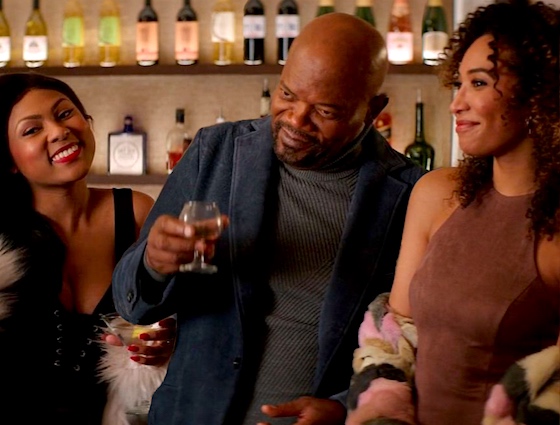
    John Shaft Jr (Jessie T. Usher) is a bookish FBI data analyst whose dad, John Shaft (Samuel L. Jackson), abandoned him when he was a baby so he could go off galavanting with other women and solving crime while looking cool. Down the years he’s sent Jr presents like condoms and a box of porn mags — he’s that kind of dad. (Is that a kind of dad, or is it just a caricature of one?) Anyway, after Jr’s former-junkie best friend dies of an apparent overdose, everyone else believes it was a relapse, but Jr isn’t convinced. Struggling to investigate on his own, he turns to his estranged father for help.

    Where Jackson’s Shaft was once a cool dude kicking ass and taking names (or whatever it is cool dude PIs did in the early ’00s), here they’ve turned him into a bit of a throwback dinosaur, spouting politically incorrect opinions with every other line of dialogue. This film does acknowledge the existence of the 2000 movie (an opening montage covering the last 30 years of the Shafts’ lives includes shots from that film to show Shaft Sr quitting the police), but it doesn’t feel like the same character we saw back then — he’s much more of a caricature of an outdated sex-obsessed oldie here. At times it’s like someone adapted one of those facile “millennials are to blame for everything” articles into a movie; or at least copy-pasted it into Shaft Sr’s dialogue.

    Still a sex machine to all the chicks

    This aspect has come in for much consternation among the film’s wider critical reception, but, eh, I dunno — the crap Shaft comes out with is definitely being played for laughs, with other characters eye-rolling (and similar) at most of what he says and does. At the same time, Jr’s character arc still comes down to “manning up” in the way his father wants him to. For instance: he hates guns, but when assassins attack at a restaurant, he borrows his date’s handbag-sized pistol and takes them out with expert marksmanship, before throwing the gun down in disgust. Put another way, the film is having its cake and eating it — it knows these old-fashioned ideals are, well, old-fashioned, but it’s gonna let them play out anyway. Even the plot pretends to be kinda modern by suggesting it might all have something to do with terrorism and radicalising Muslims — though as that’s been a plot driver for nigh on 20 years now, maybe it stretches the idea of “modern”. But it doesn’t matter anyway, because really that’s a red herring to cover up a standard drug smuggling affair.

    The film’s best bit comes at the end, when Richard Roundtree’s OG Shaft gets roped into things for no particularly good reason. But it doesn’t matter, because granddad Shaft’s antics, and the banter between all three generations, is the most entertaining part of the movie. It certainly helps cover for the TV-movie-esque quality of the action scenes. It’s a shame the film waited so long to get him involved.

    Shaft cubed

    So Shaft 2019 is antiquated in myriad different ways, be it the values espoused by its co-lead or the general tone and content of its story. It didn’t need to be like that — Shaft may’ve been born in the ’70s, but I don’t think the very nature of the character requires him to still embody ’70 values. Nonetheless, if you don’t let that stuff bother you too much, the result is a moderately entertaining watch — nothing special (the other two films with the same title are both better), but a passably humorous 110 minutes.

    3 out of 5

    Shaft is available on Netflix everywhere (except the US) now.

    Zatoichi Goes to the Fire Festival (1970)

    aka Zatôichi abare himatsuri

    2019 #80
    Kenji Misumi | 96 mins | Blu-ray | 2.35:1 | Japan / Japanese | 15

    Zatoichi Goes to the Fire Festival

    No, this isn’t a film about a samurai at a ‘luxury’ music festival (and that’s the extent of Fyre references you’ll get here, because I’ve not watched either documentary and don’t really know much about it). Rather, this 21st entry in the long-running Zatoichi series (once released on UK DVD as Zatoichi at the Fire Festival, and also known by sundry other variations of those words) sees the eponymous blind masseur-cum-swordsman clash with evil underworld boss Yamikubo (Masayuki Mori). This boss is as blind as Ichi, which he initially uses to claim a kinship with the masseur, but then Yamikubo engages in a series of schemes to kill our hero. Meanwhile, a nameless ronin (Tatsuya Nakadai) stalks Ichi too, intending to kill him for an imagined slight.

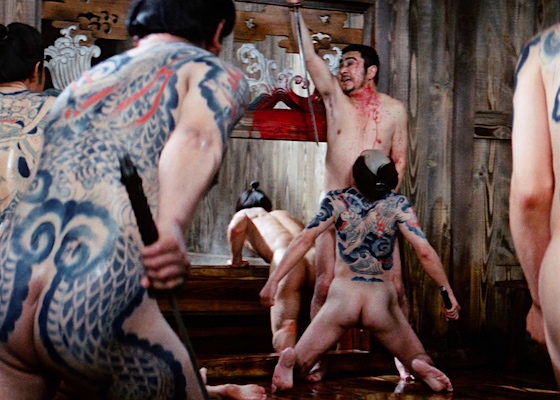
    More or less business as usual for a Zatoichi adventure, then. The blindness of the villain should really add an extra frisson of something — it’s a clear parallel with Ichi, after all — but I’m not sure it does, in actuality. More striking is that Fire Festival is pretty sex obsessed. Sex has been a factor of Zatoichi films before, but I’m not sure any other is as consumed by it as this one. It starts with a mistress auction and teases of nudity; the mystery ronin’s quest is to kill everyone who slept with his wife, which he thinks includes Ichi; the major set-piece is a fight in a bathhouse between Ichi and an army of assassins, all of whom are stark naked; Ichi spends an evening with five prostitutes; the villains decide the best way to kill our hero is with a honey trap (who winds up genuinely falling for Ichi, of course); there’s the roadhouse owners we randomly come across, who are casually perverse… and that’s all before the one-hour mark. Though if you’re expecting to see flashes of flesh, the nude scenes feature almost Austin Powers-level endeavours to make sure nothing explicit is shown.

    A sweet transvestite?

    There’s also an androgynous fellow called Umeji, who’s played be Peter, aka Pītā, aka Shinnosuke Ikehata — to quote his Wikipedia page, “one of Japan’s most famous gay entertainers, Peter’s androgynous appearance has enabled him to often play transvestite characters and he often appears on stage in women’s clothing.” He first gained attention the year before, as the lead in Funeral Parade of Roses, and later would have a supporting role in Akira Kurosawa’s Ran. Here he’s the pimp of those aforementioned five prostitutes, part of an attempt to prove he’s a “real man”. That doesn’t really work out, so his next attempt is to try seducing Ichi. It’s a startling, unexpected sequence in a genre film of this era, especially as he seems to get quite far — I mean, they end up under a bedsheet where we can’t see exactly what’s going on… until a knife slips out, anyway, with which Umeji was trying to kill Ichi. Naturally Ichi’s not impressed by that murder attempt, although he has nothing to say about the apparent homosexuality.

    Peter isn’t the only noteworthy face here. Easily missed by Western audiences are Utae and Reiji Shoji as that roadhouse couple I mentioned — apparently they came from family of famous comedians, which perhaps explains all the screen time they’re given. More recognisable is Nakadai, who would also later star in Ran, and also appeared in Yojimbo and The Human Condition trilogy, amongst many more. One of those others is another samurai movie, The Sword of Doom, in which he reportedly plays a very similar character to his role here — I’ve not seen it so can’t vouch for that myself, but many other reviews cite the comparison. Depending which of those you listen to, he’s either “comically bad” (DVD Talk) or “puts in a stellar performance” (Lard Biscuit Enterprises). His character is a bit of an odd one — his motivation is thin and decisions border on nonsensical — but Nakadai brings immense presence to the role nonetheless.

    Is that a katana or are you just happy to see me?

    Mind, most of the rest of the film’s plot is similarly confounding. It starts with a title sequence in which Ichi tries to run away from a little barking dog, ends with an out-of-nowhere scene where Ichi turns down a horse ride, and in between is almost as odd and randomly constructed as those two extremes. And yet it does tick most of the regular Zatoichi boxes, especially in terms of the action scenes. They’re as slickly choreographed and staged as ever, continuing to come up with fresh ideas even after all these movies. The nude bathhouse fight is the obvious standout, but there’s also a finale where Ichi faces down an army and a cunning foe with a hostage, but has a trick up his sleeve… literally! (Ho ho ho.)

    If you’re wondering where the titular festival has got to in all this, well, it never really turns up. The climax does begin with Ichi stranded in the middle of a lake that’s then set alight, but that’s not really a “fire festival”, is it? But it is a visually arresting sequence, just one of several throughout the film. This is the last contribution to the Zatoichi films from director Kenji Misumi, who directed the first and would end up tied for the title of the series’ most prolific director; and also for cinematographer Kazuo Miyagawa, who shot six of the films for various directors; and they both go out on a visual high with their work here. (I don’t like to over-clutter my reviews with pictures, so here are just a few additional memorable shots I grabbed. And this is really in a class of its own for images that evoke a sense of smell. Don’t say I didn’t warn you.)

    The film’s story, as I said, is less commendable. Altogether, it makes for a movie that I wouldn’t rank among the Zatoichi series’ finest achievements, but nonetheless has its share of entertainment value for fans.

    4 out of 5

    The Puny Monthly Review of June 2019

    All good things must come to an end, and so a half-decade-long streak has concluded… well, we now know said streak ended last month, but it was this month that actually put a stop to it.


    #95 Deadwood (2019)
    #96 Murder Mystery (2019)
    #97 Untouchable (2011), aka Intouchables
    #98 Shaft (2019)

    (That poster was so pathetically small, I almost felt I shouldn’t bother… but then I wrote this note, meaning I could embiggen the image to go alongside here too, at which point it became much more satisfactory. Yay formatting!)

    Deadwood: The Movie
    .


    • So, I only watched 4 new feature films in June.
    • On the downside, that ends a five-year streak of watching at least 10 films every month. (A streak that lasted exactly five years, by-the-way — I forgot to mention that last month.)
    • On the bright side, it means there’s some slightly different stuff to talk about in these stats. Like, for example, that June 2019 is the lowest-totalling month since June 2013, which was six whole years ago.
    • It’s the 150th month of 100 Films, by-the-by, but also the 15th with 4 or fewer films. That means it’s in the bottom 10% of all months, which is its own kind of achievement.
    • It takes the average for June down from 10.5 to 10.0, meaning it just keeps its head above the waterline for something I’ve been working on for a while now, i.e. getting every month’s average above 10. (The only remaining outlier is July, which is on 9.9, so that’ll be fun next month…)
    • It also takes the average for 2019 so far down from 18.8 to 16.3, and the rolling average of the last 12 months down from 19.3 to 17.8.
    • This month’s WDYMYHS film: true-story French comedy-drama Untouchable, aka Intouchables in its original language, aka The Intouchables in the US. It’s amusing and heartwarming, but its elevated position on lists like the IMDb Top 250 oversells it somewhat.
    • There’s no Blindspot film this month. If I hadn’t upped my goal to 12 films on both lists that’d be fine, but now I’ve got one to catch up.
    • I also watched nothing from last month’s “failures”, so I guess that makes them a double failure. Oh dear.


    The 49th Monthly Arbitrary Awards

    Favourite Film of the Month
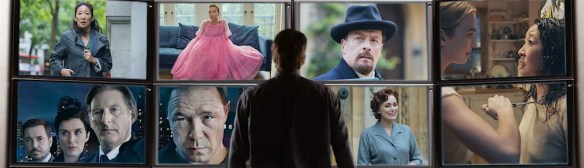
    Not much to choose from this month, obviously, so the belated TV movie revival/finale of Deadwood walks away with this one easily.

    Least Favourite Film of the Month
    It’s come in for a pasting from critics and box office figures alike, but I thought the new Shaft was passably entertaining, but as it’s fuelled by outdated gags and a buddy-movie tone that sits awkwardly with the franchise, it’s certainly the weakest of this meagre selection.

    Ranking All the Shaft Films I’ve Seen
    1) Shaft
    2) Shaft
    3) Shaft

    Look, I’m Struggling To Think of Categories For This Because I Only Watched 4 Films This Month, Okay?
    Er, I think that ‘award’ title just about covers it…

    The Audience Award for Most-Viewed New Post of the Month
    Adam Sandler’s latest film generated Netflix’s biggest ever ‘opening weekend’ viewership this month, being watched by almost 31 million accounts over its first three days. So it’s no surprise to see Murder Mystery easily top this month’s list of my most-visited new posts — it had almost 15 times as many views as the post in second place.


    Considering I couldn’t even keep up with my main list goals, it should come as no surprise that my Rewatchathon suffered — and suffered worse, too, as I didn’t rewatch a single film this month. Oh well.


    In a month where I watched so little, it should come as no surprise that I failed to watch plenty of stuff in particular. On the big screen, I missed the finale for this iteration of the X-Men, Dark Phoenix, as well as attempted franchise revival Men in Black: International (based on the poor reviews, I expect said revival will be short-lived), and the seemingly-unnecessary but now acclaimed Toy Story 4. That last one looks like it’ll be playing for a while, so maybe I’ll catch it yet.

    At home, a couple of things I missed at the cinema in February have now made it to disc, where I failed to watch them again — namely, How to Train Your Dragon: The Hidden World (which I bought) and The Kid Who Would Be King (which I didn’t, mainly because I couldn’t tell if its UK 4K release was actually happening or not (I suspect it’s not)). Other recent purchases fall into the Rewatchathon bracket: Glass, Annihilation, Schindler’s List, and the Mummy trilogy… although I never got round to seeing the third one, Tomb of the Dragon Emperor, so, er, that’s not a rewatch.

    Actually, between sales and limited edition new releases, I also added a bunch of older films to my unseen pile, including The Blood on Satan’s Claw; The Holy Mountain; John Woo’s Last Hurrah for Chivalry and Hand of Death; and Arrow box sets presenting trios of early Brian De Palma works (The Wedding Party, Greetings, and Hi, Mom!) and Jia Zhangke films (24 City, A Touch of Sin, and Mountains May Depart). I really ought to get on with watching some of them…


    I’m away on holiday for half of next month, so, along with everything else going on, there’s a very real chance July will continue this fewer-than-10-films streak — though hopefully it won’t be as disastrous as July 2009