Bohemian Rhapsody (2018)

2018 #230
Bryan Singer | 134 mins | cinema | 2.39:1 | UK & USA / English | 12A / PG-13
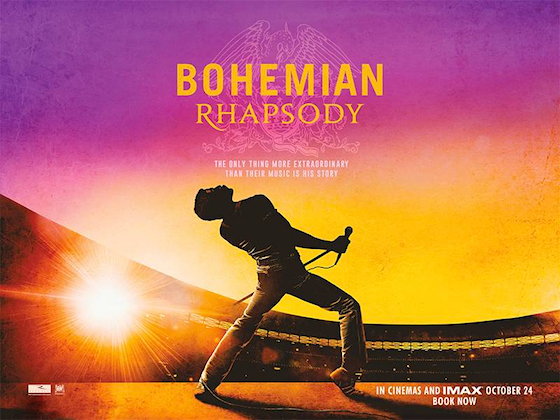
Bohemian Rhapsody

Is this the real life? Is this just fantasy?

So go the opening lines to the song Bohemian Rhapsody (Bo Rhap to its friends), Queen’s six-minute prog-rock suite that is one of the best-selling and most-acclaimed songs of all time. And those lines could hardly be more relevant to the film that’s borrowed its title, given that much of the discourse about the film has revolved around the issue of its truthfulness. This (in part) has led to a huge divide in the opinions of critics and audiences: whereas the former gave it a Rotten Tomatoes rating of just 55% when it released (it’s since climbed up to 61%), audiences have driven it to be the #1 film at the worldwide box office and placed it on the IMDb Top 250, where it’s actually rising up the chart (it was at #136 after I saw it last Thursday, but is at #126 as of writing). Well, there’s a scene in the film where Bohemian Rhapsody debuts on the radio, and as it plays the screen gradually fills with quotes from contemporary reviews, all of them mercilessly slagging it off — the irony, obviously, being that we all know what a ginormous hit the song would become. Some things never change, eh?

Bohemian Rhapsody: The Movie is, of course, a biopic of performer extraordinaire Freddie Mercury and the band he fronted, Queen. The film begins in 1970, introducing us to Farrokh Bulsara (Rami Malek) — Heathrow baggage handler by day, wannabe party animal by night, who prefers to go by the name Freddie. He’s been following the fortunes of student band Smile, and when their lead singer quits he offers his services to the remaining members, guitarist Brian May (Gwilym Lee) and drummer Roger Taylor (Ben Hardy); and with the addition of bassist John Deacon (Joe Mazzello), the line-up is complete. As he begins a relationship with shopgirl Mary Austin (Lucy Boynton), Freddie’s confidence as a performer grows: he changes his surname to Mercury and coerces the band into recording an album, where their unusual style gets them noticed by a record label and… well, you can imagine where it goes from there.
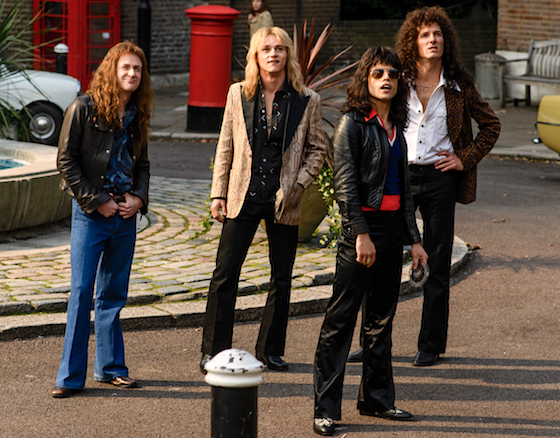
Killer Queen

And that’s another problem that critics have had with the movie: you can imagine where it goes from there not just because you know Queen are an incredibly popular and successful band, but because you’ve seen this story a dozen times before in any other music biopic you care to name. Many critics have favoured naming Walk Hard, a spoof of the genre, wondering how audiences can accept such familiar tricks after they’ve already been spoofed. Well, consider this: 2½-week-old Bo Rhap already has more IMDb ratings than 11-year-old Walk Hard.

Look, I’m trying not to gloat, but here’s a thing: I’ve been a fan of Queen’s music for as long as I can remember. I grew up listening to their first Greatest Hits album a lot. I’d wager a lot of British people have a similar affiliation, considering that’s the best-selling album of all time here. Heck, it’s only really Americans that should’ve been caught by surprise by the film’s success: it’s my understanding that Queen have always been something of a niche, cult group there, whereas in the rest of the world they’re pretty damn huge (some estimates put them among the top ten best-selling music artists of all time). As the aforementioned Bo Rhap reviews scene suggests, audiences have often been ahead of the critical curve when it comes to appreciating the band’s genius, and maybe it’s the same with their biopic.

That said, a lot of the film is made up of quite run-of-the-mill music biopic material. I don’t think it merits the level of vitriol some critics have hit, because it’s not executed badly, it’s just nothing particularly unusual either. But the film does have one big advantage: it’s about Queen. Some of their magic can’t help but rub off. We’re not watching any old band playing any old songs — it’s Freddie Mercury and Queen, creating Bohemian Rhapsody, We Will Rock You, Another One Bites the Dust; performing Killer Queen, Fat Bottomed Girls, Love of My Life, I Want to Break Free, Radio Ga Ga, We Are the Champions… The film itself may be not be a classic-in-waiting, but with these people, those songs, and the performances of both, fans of Queen’s music surely can’t help but be entertained. And when their fans number, well, most people, that’s when you get a crowd-pleasing #1-in-the-world box office hit.

We Will Rock You

Much of the film toddles along nicely, mixing some predictable plotting with other bits that really work. It does a good job of little things that make the band feel like a group of friends — the scenes where they’re conceiving songs, collaborating, teasing each other; just little touches that sell the atmosphere of mates working together. Any scene where they’re called on to perform on stage has all the strutting majesty of the real band (I’ll come to the biggest instance of that later). Inhabiting those roles, the actors playing Queen are superb. It’s never easy playing an icon, but Malek excels as Freddie, and an Oscar nomination may well be on the cards. In the less showy roles, Gwilym Lee and Ben Hardy are both likeable as the thoroughly decent Brian and more hotheaded Roger, respectively, though Joe Mazzello has less to do as quiet John Deacon, often just pulling silly faces in the background.

I also think the film makes a fair fist of depicting Freddie’s love life. We’ve had a fair few high-profile gay movies recently (Moonlight, Call Me by Your Name, Love Simon), and compared to those Bo Rhap clearly didn’t foreground his homosexuality as much as some viewers would like. Each to their own, but I reckon the film splits itself about 50/50 between Freddie’s personal life and the band’s story, and I don’t think it shies away from his gayness (albeit in a PG-13 way — no beach stroking or peach abusing here).

Even more of an elephant in the room has been the film’s directorial situation: planned and part-directed by Bryan Singer, he was eventually fired from production, with the rest of the shoot (reported to be about a third) and post-production completed by Dexter Fletcher. Singer gets the sole credit because the Director’s Guild of America specifies that only one director may be credited (that’s a whole kettle of fish we’ll leave for another day) and there seems little doubt Singer contributed more on balance than Fletcher, especially as Fletcher has said his job was to complete the work that had already been started. Bearing this situation in mind, it’s particularly interesting that, while much of the film is shot quite matter-of-factly, there are occasional bold directorial flourishes that make you query: who was responsible? Did Fletcher tart things up? Were they Singer’s idea (and so should there have been more)? Unless we ever get a breakdown of who did what, I guess we’ll never know.

Love of My Life

One thing that did intrigue me slightly is that the film isn’t in 3D. That format’s mainly reserved for post-converted blockbusters now, sure, but both Singer and Queen guitarist (and a producer of the film) Brian May are fans of stereography: Singer actually shot his last two X-Mens in 3D (as opposed to just post-converting, as most do nowadays), while May is something of an authority on the subject, even having designed a viewer for 3D photos and published several books (including one of his 3D photos of Queen). So, basically, I’m passingly surprised they didn’t choose to shoot in 3D. Maybe they asked and the studio just wouldn’t pony up the cost. Who knows. It doesn’t really matter… though, actually, I think the finale could’ve looked fantastic in three dimensions.

Ah, the finale. Earlier, I said the film begins in 1970 — that’s not quite true. It actually begins with a flash-forward to Live Aid, the 1985 charity concert that included a famous set by Queen, and which the rest of the film eventually leads us back to. It’s a natural place to choose to conclude the movie: it was a huge triumph for the band, their set regarded by many as among the greatest rock concerts of all time, and certainly a happier endpoint than Freddie’s death a few years later — it seems more fitting to end with him on top of the world than sadly fading away. But even knowing all these facts doesn’t prepare you for the power of what’s actually on screen. It’s truly an incredible set piece, especially when experienced on a huge screen with a thumping surround sound setup. It literally made my hair stand on end and almost brought tears to my eyes. The version in the film isn’t actually the whole set that was played, but they did film it all and it’s being cut together as a Blu-ray extra. I can’t wait. Even as it stands, though, it’s a barnstorming conclusion to the movie; a sequence of such power it justifies the film’s very existence.

We Are the Champions

And so we come to the rub: the rating. Can you give a film full marks for pulling off one key 20-minute sequence so exceptionally? Well, that’s sort of what I was just saying: by itself, the Live Aid scene is enough to tempt me to give the whole film full marks, I thought it was that good. But the rest of the movie isn’t at the same level — it ticks along decently and I enjoyed it all, don’t get me wrong, but it doesn’t really transcend its genre or subject matter. So, it’s a 4… but Live Aid may yet earn the film a spot on my best-of-year list nonetheless.

4 out of 5

Outlaw King (2018)

2018 #232
David Mackenzie | 121 mins | streaming (UHD) | 2.39:1 | UK & USA / English | 18 / R

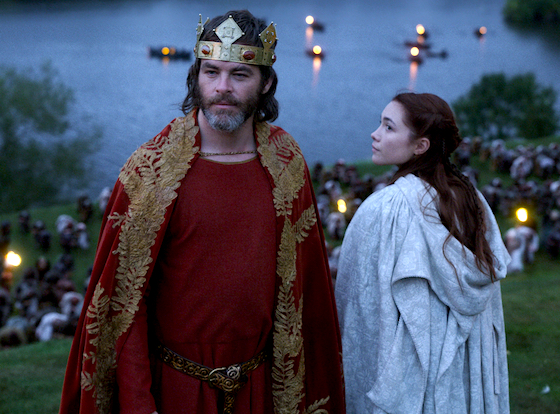
Outlaw King

If Netflix’s latest original movie is known for one thing, it’s for featuring a shot of Chris Pine’s penis. It’s no slight on the chap to say its appearance has generated more column inches than he possesses, though admittedly it’s hard to be certain when (penis spoilers!) it only appears for a split second in a long shot as he rises from a lake — who knows how far beneath the surface it may continue?

If the film is known for two things, the second would probably be the muted reception its premiere screening received at TIFF back in September. Director David Mackenzie scurried back to the edit suite, motivated as much by personal displeasure with how the film was playing as by the critics’ reaction, and chopped out around 20 minutes ahead of its wide Netflix debut. By the account of people who’ve seen both cuts, this has definitely improved the film’s pacing.

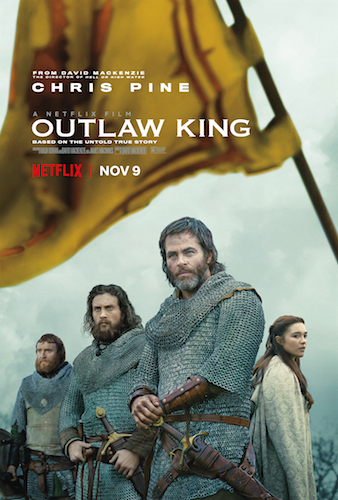
If the film’s known for three things, the next might actually be what it’s about. Picking up more or less where Braveheart left off, it’s the story of Scotland’s (possible) rightful king, Robert the Bruce (Chris Pine) — or, as the English king seems to keep calling him, Robert da Bruce (yo!) — and his attempt to unite the Scots and take back their land from the English (what else is new, eh?) Robert’s new English wife, Elizabeth (Florence Pugh), must decide whose side she’s on as King Edward I (Stephen Dillane) and his petulant son, the Prince of Wales (Billy Howle), employ any means necessary (with preference to brutally violent ones) to keep Scotland English.

Penis King. Er, I mean, Pine is King.

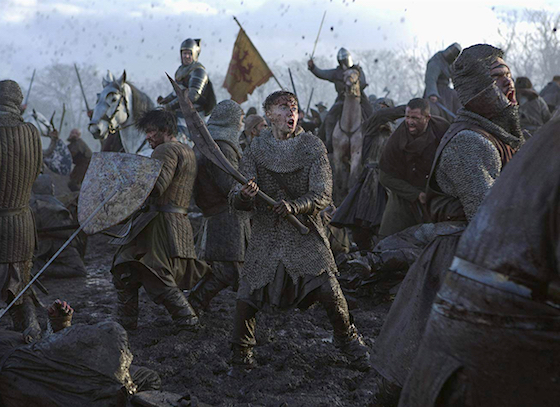
Outlaw King kicks off in style, with a superb eight-minute single-take that moves in and out of a candle-lit tent during daytime (a feat of camera operating to seamlessly handle the changing exposures required… assuming it wasn’t faked), during which we take in important scene-setting political discussions, a playful (but not really) sword fight, and the siege of a distant castle by a gigantic trebuchet. As opening salvos go, this is first rate. The whole movie is gorgeously shot by Barry Ackroyd, in particular some stunning aerial shots of wide-open scenery — all of it genuinely Scottish, too. In terms of individual sequences though, the opener is not challenged until the climactic Battle of Loudoun Hill, a bloody, muddy, sometimes confusing (deliberately, I think) scrap between the small Scottish forces and the huge English army. How can the Scots possibly win? Tactics. I love a good medieval-style battle with proper tactics (rather than just a free-for-all of troops running at each other), and I’d say this delivers.

In between these bookends, the film is almost a Robin Hood movie: after Robert has himself crowned King of the Scots, he’s declared an outlaw, and ends up on the run with a small band of followers, which leads them to use guerrilla tactics against occupied castles. There’s also a subplot about the relationship between Robert and Elizabeth, his second wife, forced upon him by the conquering English king at the start of the film. Apparently this is one thing that’s suffered from Mackenzie’s new cut, with less time given to seeing their relationship blossom early on. It didn’t feel fatally underdeveloped to me, but it might not’ve hurt to add an extra scene (one would probably do) to help connect the dots between their initial wariness and later trusting devotion.

The overall effect doesn’t feel rousing and celebratory in the way classical historic war epics (like, of course, Braveheart) normally do, but I also don’t think that’s Mackenzie’s goal. He’s talked about endeavouring to make it reasonably historically accurate, and real-life is seldom as clear-cut and triumphant as those movies would have us believe. That said, there’s no doubting who the heroes and villains are here, with the honourable Robert trying to regain his homeland and keep his people safe, while the ineffectual Prince of Wales flounders around, all bluster and no success, slaughtering people for kicks. Boo, nasty English!

Muddy; bloody

As that Robert, I thought Chris Pine made a more convincing Scotsman than Mel Gibson. I did praise the latter’s performance in my review of Braveheart, but nonetheless I never quite forgot that William Wallace was being played by American Movie Star Mel Gibson, whereas here Pine — and his (to my non-Scottish ears) perfectly passable accent — blends seamlessly with the rest of the cast. With supporting roles filled with quality performers like James Cosmo and Tony Curran, you can be assured there are no small parts. Stephan Dillane doesn’t grandstand as the villain, making him more genuinely threatening thanks to an air of calm menace, whereas Billy Howle as his son is a bit more outré, desperate to show his worthiness as heir to the throne, and failing.

Most memorable, however, is Aaron Taylor-Johnson as James Douglas. Even when the other Scottish nobles are being allowed to surrender and have their lands returned, Edward remains so disgusted by Douglas’ father’s traitorousness that he refuses to grant him the same. That makes him keen to sign up to Robert’s cause, where he’s a screamingly effective fighter. Taylor-Johnson, caked in mud and blood, wild eyed and screaming at the top of his lungs as he slaughters the English, is a sight to behold. “What’s ma fuckin’ name?” he bellows. No one’s going to forget.

Finally, a lot of praise has been reserved by others for Florence Pugh. She’s certainly a rising star, having attracted great notices in Lady Macbeth last year and currently leading the cast of the BBC’s Little Drummer Girl, but something felt off here. I don’t think it’s her fault, though. This Elizabeth feels dropped in from another time, with a very modern confidence and headstrong attitude. If Pugh was playing a woman from a few hundred years later, I’d buy it entirely, but in this setting, I’m not sure. But this is perhaps less her fault and more that of the five(!) credited screenwriters.

“What’s ma fuckin’ name?”

Another thing those scribes haven’t really included are gags. Some have criticised the film for being too serious, lacking in levity, which… I mean, have you not noticed what it’s about? I’m the first person to argue that a film about serious things doesn’t have to be 100% serious — that it’s always okay to include a variety of tones, just like real life — but it’s also okay to, well, not; to create a different experience. I don’t think Outlaw King is shooting for portentousness, which I guess is what those critics mean, but it does aim for a certain kind of intensity. After all, it’s about a small band of men trying to stand up to the greatest army in the world, and the stakes couldn’t be higher. And if Pine referring to someone as “ye cheeky wee shite” doesn’t raise a smile, well, you don’t know the Scottish well enough.

Even in its new tightened form, Outlaw King is not the outright-success Oscar-hopeful Netflix once touted it as. It’s unlikely to attain the crowd-pleasing success of Braveheart, a film that remains an obvious point of comparison but not an unreasonable one, though on balance I’d struggle to say which of the two I preferred. What this lacks in its spiritual predecessor’s grandstanding, it makes up with grit and guts (literally), making an historical war movie that frequently thrills.

4 out of 5

Outlaw King is available on Netflix everywhere now.

Darkest Hour (2017)

2018 #182
Joe Wright | 125 mins | streaming (UHD) | 1.85:1 | UK & USA / English & French | PG / PG-13

Darkest Hour

2017 was, for no readily apparent reason, a banner year for stories about Dunkirk making it to the big screen. In April there was Their Finest, a film about people making a film about Dunkirk (how apt). In July there was Dunkirk, Christopher Nolan’s high-profile telling of the evacuation itself. Finally, in January 2018 (because, when it comes to films, January and February are part of the previous year in the UK) there was this, the story of Winston Churchill becoming Prime Minister of the UK in May 1940 and immediately having to deal with the situation in Dunkirk, alongside calls from within his own government to negotiate peace with Hitler — something Churchill was not inclined to do, despite the odds of winning the war not being in Britain’s favour.

The Dunkirk connection was certainly played up in the film’s marketing (the trailers made it look like Dunkirk 2), but while that situation does have a significant role to play (and both films climax with a recital of the same uber-famous speech), it’s only part of what this film’s actually about. Which does actually make it quite a neat companion piece to Nolan’s movie: it expands on the political backdrop surrounding Dunkirk, placing those events in a wider context. In doing that, it presents a different perspective on familiar events. Churchill is widely remembered as a great and beloved leader who saw us through the war, but here his own party treat him as something of a lame duck Prime Minister, and spend most of their time trying to convince him to take a different course of action.

In this respect, Darkest Hour seems dead set on removing the rose-tinted memory of World War 2 which says that “of course we stood up to those evil Nazis”. The film reminds us, and reminds us hard, that there were many people in positions of power who thought the best course was to acquiesce to Hitler — to give in and seek peace with him — and that, in many ways, their opinion was not irrational. Certainly, the film makes the case that it was the safer route in order to both secure the lives of our troops and hold off invasion of our shores. It’s relatively mature to both not hide from that reality and present the arguments as at least somewhat reasonable.

Never surrender

That said, the film fails to maintain the veneer of unvarnished historical reality for its entire running time. In the third act, Churchill boards a train and encounters members of the public in a sequence that is shamelessly, manipulatively, almost tweely patriotic and sentimental… and yet I kinda got suckered in by it anyway. I think that’s got something to do with these dark days we live in — wouldn’t it be nice to believe The General Public would want to stand up for what’s right in the face of overwhelming odds? Whether it’s historically accurate (maybe everyone was just better back then?) or whether it’s a nostalgic view of what people were prepared to stand for, I don’t know; but either way, it’s effectively aspirational.

A film like this is powered by it performances, and obviously Gary Oldman — subsumed in makeup to turn his slender frame into the famously rotund Churchill — is the stand-out. He thoroughly disappears into the role. Obviously the prosthetics help a good deal with that, but it’s also the voice, the gait, the mannerisms. Naturally he dominates the film, but there’s still some space for quality turns in the supporting roles. In particular, Stephen Dillane as the film’s de facto villain, Halifax, gives a performance that, in its own way, is just as mannered as Oldman’s (the lisping voice), but also just as subtly believable and well measured. Pretty much the same thing could be said about Ben Mendelsohn as King Colin Firth George VI.

But then there are other roles that are less well served. The women, mainly. Lily James’ secretary seems to be present merely to give a significant role to a female character, and to try to humanise Churchill by charting a very familiar “he’s tough to work with at first, but he’s got a heart of gold and is just super once you get to know him” arc. Similarly, Kristin Scott Thomas very nearly has an interesting part as Churchill’s wife, his long-time partner who’s been consistently overlooked in favour of his dedication to the public, but that’s an underdeveloped thread.

Supporting role

So, Darkest Hour is a strong movie in many ways — the male performances; Joe Wright’s classy direction; the way it manages to be simultaneously a more-realistic-than-most depiction of the “maybe we should surrender” debates in the early days of the war and a patriotic “we shall never surrender” entertainment — but it’s also let down by some of those lapses into cliché and sentiment. How susceptible you are to the almost-propagandist “this was our finest hour in the face of terrible odds, both at home and abroad” narrative may dictate how much you like the end result. For me, the aforementioned successes outweigh the faults on balance, but there’s no denying there are problems.

4 out of 5

Darkest Hour is available on Sky Cinema from today.

Persepolis (2007)

2018 #27
Marjane Satrapi & Vincent Paronnaud | 92 mins | streaming (HD) | 1.85:1 | France & Iran / English | 12 / PG-13

Persepolis

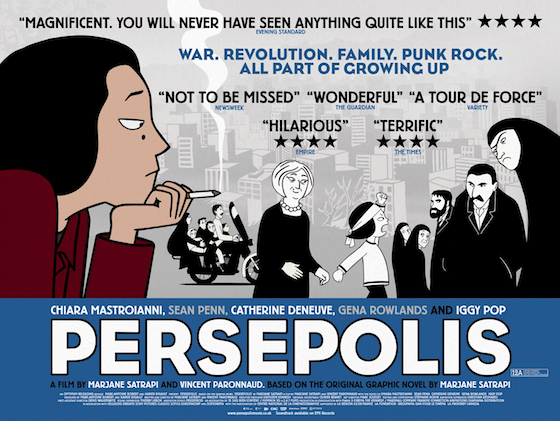
Adapted from co-director Marjane Satrapi’s autobiographical graphic novel, Persepolis is the story of an Iranian girl coming of age in the ’70s and ’80s, during and after the Iranian Revolution. Such a broad description is probably the only way to succinctly summarise it, because it’s kind of a sprawling film, about many different things — just like a life, I suppose. As well as being part biography, it’s also part history lesson, with a normal-family’s eye-view of the revolution and what followed.

Some of the events we’re shown are crazy-specific to her life (Satrapi has certainly lived a life!), and some of it is very specific to her background (i.e. all the Iranian Revolution stuff), but some of it is also very universal. For example, a sequence where she falls in love with a guy sees him depicted as a perfect, angelic boyfriend that she spends many magical times with… until he sleeps with someone else, then when she reflects on their relationship he’s an ugly ogre, and all those wonderful memories have a rotten mirror. Plenty of us have been through something akin to that, right?

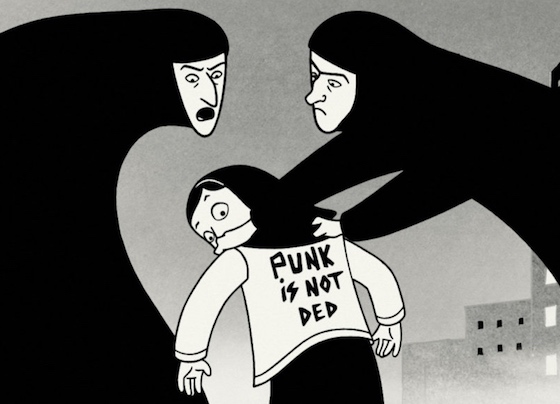
Such subjective depictions are one of the benefits of the film being animated. Drawn in a simple, cartoonish style and mostly presented in black-and-white, the visuals are striking and sometimes very effective, but can also have something of a distancing effect — the atrocities of the revolution don’t hit home in quite the same way when, say, they’re executing a black-and-white cartoon rather than a real girl. Conversely, it was Satrapi who insisted on adapting her novel in animated form, with the goal of keeping it universal — in her opinion, “with live-action, it would have turned into a story of people living in a distant land who don’t look like us. At best, it would have been an exotic story, and at worst, a ‘Third-World’ story.” I suppose there’s some truth to that.

Punk is probably ded in Iran

I believe the film was produced in French, but the copy I had access to only offered the English dub. Unfortunately, this is frequently quite poor — the actors sound like they’re reading out slabs of text as quickly as they possibly can, rather than really delivering the lines. I can only presume this was necessary to fit the animation, but the end result leaves the audio feeling like a bad school presentation. I don’t hold this against the film itself, but it’s a word of warning if you have a choice of audio.

Persepolis is only an hour-and-a-half, but it’s a long one thanks to the scope of what it covers. It’s a frequently dark and bleak film too, taking in not just a violent revolution but also things like depression and attempted suicide. Frankly, it’s the kind of film which I don’t know if I’ll ever bother to watch it again, but it’s also a fascinating and informative experience that I’m unquestionably glad I’ve seen.

4 out of 5

Jurassic World: Fallen Kingdom (2018)

2018 #225
J.A. Bayona | 128 mins | Blu-ray (3D) | 2.39:1 | USA / English | 12 / PG-13

Jurassic World: Fallen Kingdom

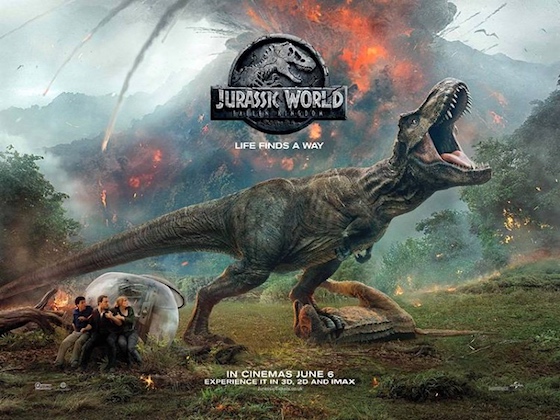
It’s three years after the events of Jurassic World and the dinosaurs who overran Isla Nublar have basically been left alone while the rest of the world goes about its business. But now there’s a problem: the island’s previously inactive volcano is about to erupt, wiping out the dinosaurs… again. Former director of the park Claire (Bryce Dallas Howard) now works for a charity struggling to convince people to save the dinos, where she’s contacted by Mills (Rafe Spall), a representative of Benjamin Lockwood (James Cromwell), the one-time business partner of park founder Hammond who helped initiate the whole bringing-dinosaurs-back-from-the-dead palaver. They’re sending people to the island to rescue as many dinosaurs as they can, but they need Claire’s help. Naturally she agrees, and so along with ex-velociraptor-wrangler Owen (Chris Pratt) and a motley crew of supporting cast members, they head back to the island… but it soon turns out Mills & co may have a nasty ulterior motive for wanting to save the dinosaurs…

Although there are shades of the first Jurassic Park sequel, The Lost World, in this setup, I think Fallen Kingdom does enough different that any similarities aren’t excessively problematic. Indeed, it’s got its own array of flaws for us to contend with first. It’s like someone assembled all the ingredients specified by a recipe, but instead of following the instructions they just bunged everything together haphazardly, and so the resulting dish seems like it should be right but is somehow just… wrong.

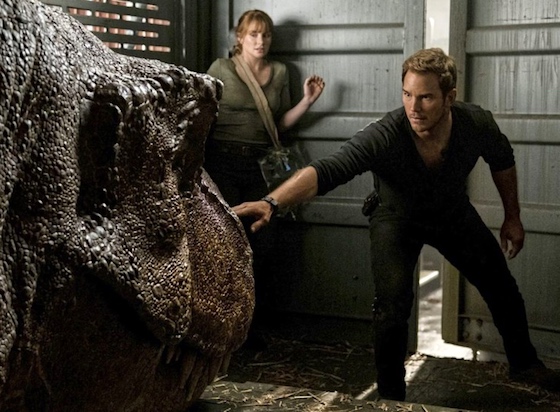
Letting sleeping T-rexes lie

To be less metaphorical, I think Fallen Kingdom is built on decent ideas and concepts, and it’s executed with some stylish direction by franchise newcomer J.A. Bayona (including a couple of particularly good sequences, like a tense oner in a sinking gyrosphere), but it’s all let down by a terrible screenplay from Jurassic World co-writers Derek Connolly and Colin Trevorrow. The story is poorly constructed — not in the sense that it’s unfollowable, but in that it’s wonkily put-together, frequently showcasing scenes that are nothing but exposition, with a pace and emphasis that feels unbalanced. Not unrelatedly, the quality of the dialogue is very weak, lacking in character or plausibility, or, failing the latter, memorableness. Sure, there’s the odd line the talented cast can make work (Howard gets a mini-monologue about the first time you saw a dinosaur that’s almost really good), but most of what comes out of their mouths is perfunctory. If they’d bothered to hire some solid writers, instead of just People Who Have Ideas, then maybe those ideas could’ve been turned into a cohesive whole that would be a worthy sequel. Heck, even getting someone in to polish up this draft could’ve helped a lot. Instead, Fallen Kingdom is a bunch of decent concepts for plots, subplots, themes, and visuals, haphazardly bunged together with half-arsed execution.

In terms of particularly egregious examples, the standout for me is the subplot with Lockwood’s granddaughter, Maisie. No spoilers, but her storyline is no more than a (too clearly telegraphed) twist and a thematic resolution, which is in need of an actual story to give it meaning and work it up to being an actual theme of the movie in the way they clearly want it to be. What could be a meaningful finale for her character is rendered moot by the fact it has no genuine build-up, not to mention they had to throw another lead character’s moral development under a bus in order to get there (for a more spoilersome discussion of this point, check out Andrew Ellard’s Tweetnotes).

Clawesome

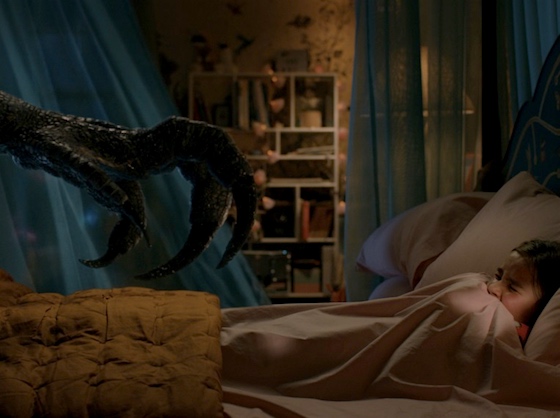
It’s not just subplots that falter: the inciting incident (volcano is going to wipe out dinos; do we have a responsibility to save what we created, or is this nature course-correcting?) is a very rich premise with potential for debate; but other than stating those two positions, the film does nothing with it. It’s just there, an excuse to go back to the island and get the dinosaurs out, ready for the next part of the plot. This is probably why many viewers seem to find the first half perfunctory, but the second half — where the film takes a sharp turn into a Gothic-ish ‘haunted’ house movie — to be something fresh. Like so many of the film’s other ideas, I think it’s a good concept bungled in execution. It coasts by on imagery alone, Bayona achieving the look he’s after, but without Connolly and Trevorrow backing it up by making the situation work as a story, or for the characters. One example from this section: the scene of Maisie hiding in bed as the the dinosaur inches closer, which was featured so widely in the trailers. It’s a great visual, combining childhood fears and notions of protection (“if I’m under the covers nothing can get me”) with genuine threat and terror… but the film has to jump through hoops to make it happen — it’s only there because someone had an idea for the visual and they shoehorned it in, not because it makes any sense in context.

On a similar level is Jeff Goldblum’s cameo as fan-favourite character Dr Ian Malcolm. He’s ostensibly contributing to that save-or-not debate I mentioned, but as that goes nowhere his appearance is equally pointless; no more than fan service — it feels like a tease; an excuse to put him in the trailer. A short featurette included on the Blu-ray gives some indication of what the filmmakers were actually trying for here (some of Malcolm’s dialogue is lifted from the writing of Michael Crichton, the goal being to link back to the franchise’s originator and reiterate his “science gone wrong” theme), but it doesn’t come off. Worst of all, I didn’t feel like Goldblum was actually playing Malcolm — it’s the same actor, obviously, but not the same character. Was he phoning it in? He was only on set for one day, after all. Or maybe it was just terribly written. I mean, on the evidence of the rest of the film…

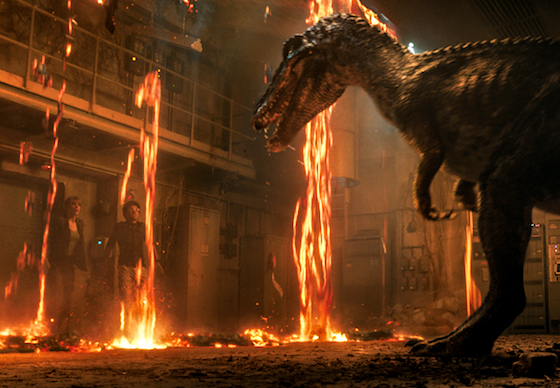
It's getting hot in there

Fallen Kingdom is not the outright disaster some have painted it as, but it could’ve been much better. There are so many things it almost gets right — for another example, it’s very much planned as Part 2 of a trilogy, but it feels like real effort has been made to make it a film that works on its own; that isn’t merely a two-hour exercise in getting us from where Part 1 ends to how they want Part 3 to begin. That’s admirable (not everyone seems to bother), but undermined by how much the film feels in need of major structural work at a screenplay level. Ultimately, I think your tolerance for “good ideas but poor execution” will dictate exactly how you feel about the finished movie.

3 out of 5

Jurassic World: Fallen Kingdom is released on DVD and Blu-ray (regular, 3D, and 4K UHD flavours) in the UK today.

Another Month Bites the Dust: The Monthly Update for October 2018

Another month gone and another month gone, another month bites the dust. Hey, I’m gonna get November too! Another month bites the dust!

(So, I didn’t actually get to see Bohemian Rhapsody this month, but I thought of this title and it was too good to miss.)


#207 The Twilight Saga: Breaking Dawn – Part 1 (2011)
#208 Prevenge (2016)
#209 Bridget Jones’s Baby (2016)
#210 TiMER (2009)
#211 Suspiria (1977)
#212 Jin-Roh: The Wolf Brigade (1999), aka Jin-Rô
#213 Matinee (1993)
#214 Zatoichi’s Pilgrimage (1966), aka Zatôichi umi o wataru
#215 The Night Comes for Us (2018)
#216 The Producers (1967)
#217 Rocky Balboa (2006)
#218 It’s Such a Beautiful Day (2012)
#219 Unsane (2018)
#220 The Lives of Others (2006), aka Das Leben der Anderen
#221 Phantom Thread (2017)
#222 Jennifer’s Body (2009)
Suspiria

Phantom Thread

.


  • This month I watched 16 new films. It’s not the best month of the year, but it’s not the worst, either.
  • It beats the October average (previously 13.8, now 14.0), but not the rolling average of the last 12 months (previously 21.0, now 20.4), nor the average for 2018 to date (previously 22.9, now 22.2).
  • One of those 16 was Rocky Balboa, which means I’ve now watched all the main Rocky films for the first time this year. That wasn’t the plan when Rocky scraped onto my WDYMYHS list in last place! But at some point I made the conscious decision to finish them (rather than let them spread out indefinitely, like many other series I’m in the middle of), and I’ve enjoyed them all (even Rocky V). With Creed II out at the end of November, I intend to get fully caught up on the entire Rocky legacy very soon.
  • This month’s Blindspot film: colourful and sonically bombastic horror in Dario Argento’s original Suspiria. I’ve been saving it all year for this month (for hopefully obvious reasons), and it didn’t disappoint.
  • This month’s WDYMYHS film: superb behind-the-Berlin-wall dramatic thriller The Lives of Others. And, as I only do ten of them, that’s the final WDYMYHS film for 2018!


The 41st Monthly Arbitrary Awards

Favourite Film of the Month
Lots of enjoyable films this month, including some high-quality Oscar winners… but it was October, aka horror month, which just tips the scales in favour of Suspiria. It was the first Dario Argento film I’ve seen, but I look forward to experiencing more.

Least Favourite Film of the Month

There’s no point beating about the bush: it was definitely The Twilight Saga: Breaking Dawn – Part 1.

Best Demonstration That Shooting On Film Is Still Better of the Month
Phantom Thread may’ve looked gorgeous in 35mm-derived UHD, but nothing reminds you of the beauty of film quite like Unsane’s fugly shot-on-iPhone visuals.

Most Gratuitous Nude Scene Without Any Nudity of the Month
Bella and Edward going skinny dipping before finally consummating their marriage was barely necessary, but at least the whole series had basically been building to the point when they finally do it. Megan Fox going for a completely unmotivated nudey dip in Jennifer’s Body, on the other hand, was… well, gratuitous.

The Audience Award for Most-Viewed New Post of the Month
For only the fifth time this year, the winner of this award is not my TV column. In fact, it’s the second most-viewed winner of this award in 2018 (behind Avengers: Infinity War’s huge tally back in April). That would be Netflix’s Indonesian actioner The Night Comes for Us.

Leaving aside new posts, my overall most-read post of the month by an absolute mile (much higher than any other post has ever managed in a single month, barring that time Cracked.com linked to me, which is mainly why I’m mentioning it) was last month’s TV review. Why? Well, it included my review of Bodyguard, which, following its phenomenal success in the UK, debuted on Netflix in the rest of the world last week. It previously won Most-Viewed New Post in September, but in October it received over six times as many hits!


My Rewatchathon continues apace…

#39 School of Rock (2003)
#40 Face/Off (1997)
#41 South Park: Bigger, Longer & Uncut (1999)

Face/Off was one of the films I put into my 100 Favourites without rewatching, but if I had… well, I’m not saying I wouldn’t’ve included it, but I wouldn’t’ve given it 5 stars. It’s sort of terrible… but it goes about its business so outrageously and so ridiculously that it’s also sort of glorious. If it didn’t star Travolta and Cage or wasn’t directed by John Woo, I think it would’ve been a disaster; but they all carry out their roles with OTT abandon, and that’s actually what makes the ludicrous material work.

The South Park movie was going to become the latest in my ongoing series of “films I’ve owned forever on a DVD that I’ve never played, but were available on a streaming service in HD so I watched there instead”. Not that South Park’s self-consciously simplistic animation is crying out for the extra detail of 1080p, but a bit of crispness never hurt. But then it turned out it was only available to stream in SD anyway (goodness knows why — an HD version definitely exists because there’s a Blu-ray available in several territories), so I decided to pop in the DVD after all. But then I couldn’t find where my DVD copy was, so I elected to just watch the streaming version after all. What a story, eh? Look out for the movie adaptation, coming soon…

Oh, and the film was pretty good. It’s nearly 20 years old and has dated somewhat, but the vulgar irreverence has its charms.


A new Coen brothers movie! A new Orson Welles movie! Chris Pine’s penis! And that’s just on Netflix…