What Ever Happened to Baby Jane? (1962)

2018 #153
Robert Aldrich | 128 mins | TV (HD) | 16:9 | USA / English | 12

What Ever Happened to Baby Jane?

Real-life rivals Bette Davis and Joan Crawford star as squabbling sisters forced together by circumstance in this slice of Hollywood Gothic. Both were once famous in their own way: as a child, bratty Jane Hudson (Davis) was a huge vaudeville star as the eponymous ‘Baby Jane’; later, her level-headed sister Blanche (Crawford) became a huge star of the silver screen, where Jane struggled to make a mark, employed only as a clause of her sister’s studio contract. A tragic incident ended both their careers, leaving Blanche paralysed and Jane her carer. Decades later, resentment has made Jane casually abusive of her invalided sister — and when she discovers that Blanche has been secretly plotting a major change to their situation, things only get worse…

What Ever Happened to Baby Jane plays out as a mix of overwrought melodrama, plausible real-life horror, and mature psychological thriller. It’s really driven by the acting of the two leads. Crawford gets a less showy role, having to play it straight as the reasonable, sensible older sister, struggling to do what’s right for her sibling even as she’s mistreated. Davis, on the other hand, is allowed to cut loose. Jane starts the film batty and only gets less mentally stable from there. It’s quite an extraordinary performance from Davis, which threatens to tip over into scenery-chewing at any moment but remains compelling.

Bette Davis and her preferred co-star

The film itself is less assured. Director Robert Aldrich manages a good line in generating tension from people almost finding out what’s going on in the Hudson household, and there’s a solid final-reel twist (even if the final act in general is a bit bizarre — no spoilers, but those beach users are seriously inattentive), but the film is allowed to run longer than the material really merits. A slow burn can be used to create atmosphere, of course, but that’s not really the case here. It could do with a little more drive early on.

But maybe it’s this looseness that has allowed so many different ways of viewing the film. As well as those I’ve already mentioned — sibling melodrama, psychological thriller, unnerving horror — people have taken it as a black comedy, or a cult camp classic. Whichever way you look at it, it’s certainly an experience.

4 out of 5

The TV series Feud: Bette and Joan, which dramatises the making of this film, begins a repeat run on BBC Four tonight at 10pm.

Happy Death Day (2017)

2018 #43
Christopher Landon | 96 mins | streaming (HD) | 2.35:1 | USA / English | 15 / PG-13

Happy Death Day

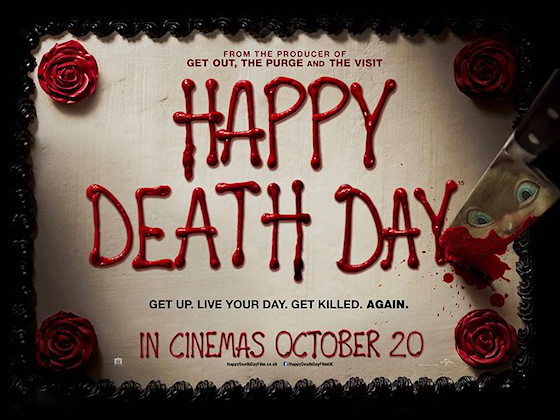
How much does pure originality matter? Happy Death Day is a high-concept slasher movie that could be described as Groundhog Day meets Scream via Legally Blonde. Normally those kind of “X meets Y” descriptions give a general sense of tone or some coincidental similarities, but if you could put those three films in a blender, Happy Death Day is almost certainly what would come out. (There’s probably a more apposite sorority comedy than Legally Blonde for the third ingredient, but that’s not my subgenre of expertise.) But while there’s no doubt that Happy Death Day is derivative, that doesn’t mean it’s not entertaining.

The film introduces us to college student Tree (Jessica Rothe), who wakes up hungover in a stranger’s dorm room on what turns out to be her birthday. Later that day, she’s murdered… after which she wakes up hungover in the same stranger’s dorm room on her birthday. Later that day, although she takes steps to avoid it, she’s murdered again… after which she wakes up hungover in the same stranger’s dorm room on her birthday. Yes, she’s in a time loop — one which, she theorises, can only be stopped if she finds and stops her killer.

It’s a clever conceit — yes, borrowed from Groundhog Day, but utilised in a different way. For me, the plot/structural similarity is easy to overlook because, hey, it’s a great idea, why not recycle it with a different kind of story? This variation is enjoyably done, too — not an outright comedy, but with enough wit to make for a fun movie. There’s a very real danger of it being repetitive — repetitiveness is baked into the very concept, obviously — but, like Groundhog Day, it dodges that with amusing variations and intelligent filmmaking. Okay, the logic is sometimes a little askew (for example: no matter how quickly or slowly Tree leaves the dorm room at the start, the same random events happen outside), but that’s storytelling expediency rather than a major problem with the film’s logic, in my opinion.

Screaming groundhog

In the lead role, Jessica Rothe is excellent. She fills what could’ve been a pretty standard slasher movie heroine with different levels of reconcilable personality and a surprising amount of heart. She’s a likeable, root-for-able character to spend the day with over and over (and over) again. And when you know how the movie was filmed (i.e. like almost every other movie: not chronologically, but by location, having to shoot scenes from different time loops side by side), the way her performance is accurately nuanced becomes even more impressive.

In my opening comparison I picked Scream specifically because Happy Death Day has the feel of those late ’90s / early ’00s teen horror movies — the heyday of franchises like Scream, Final Destination, I Know What You Did Last Summer, etc. Back then this surely would’ve been a huge hit, but I feel like very few people were talking about it when it came out last October. That said, it achieved a respectable Rotten Tomatoes score (70%), grossed $122.6 million (off a budget of just $4.8 million), and this week they made headlines by announcing the sequel’s title, Happy Death Day 2U, which seemed to go down rather well. So maybe I just missed everyone celebrating it first time round.

I hope it continues to find a wider audience, because I think it’s a lot of fun. It may be built from blocks borrowed from other films, but they’ve been arranged in such a way that I think it still feels fresh, and they’ve been assembled skilfully enough that it’s enjoyable either way.

4 out of 5

Happy Death Day 2U is scheduled for release on Valentine’s Day 2019.

The Past Month on TV #38

There are three major series for me to review this month, thanks to the UK’s highest-rated drama launch for a decade, Bodyguard; the debut season of Amazon’s heavily-promoted version of Jack Ryan; and a second season for the runt of the Marvel/Netflix litter, Iron Fist. Plus, shorter reviews of other stuff. All spoiler-free, of course.

So, without further ado…

Bodyguard  Series 1
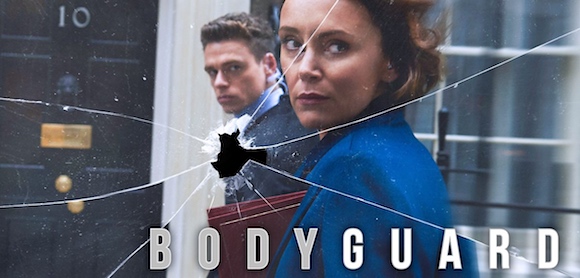
Bodyguard series 1
A massive hit for BBC One from writer Jed “Line of Duty” Mercurio, Bodyguard follows copper David Budd (Game of Thrones’ Richard Madden) as he’s assigned to protect Home Secretary Julia Montague (Keeley Hawes), who’s trying to push through a tough new anti-terrorism act. As multiple terrorist attacks begin to take place, and Montague cosies up to the intelligence services, the series quickly morphs into a conspiracy thriller, with Budd struggling to know who can be trusted as he hunts for the truth about what’s going on and why.

Like Line of Duty, Mercurio excels at Big drama: this is a busy, fast-moving story that churns through plot. Not much here of the gradual, slow, “it’s really more about these characters as people” stuff we usually get from British drama. That’s not to say there isn’t fine character work, mind: Budd, in particular, is a complex and nuanced hero, who starts out calm and capable and is revealed to be… well, something else; so much so that you begin to wonder if he’s an unreliable narrator… The other thing Mercurio is great at is set pieces. In Line of Duty they’re often lengthy, jargon-filled police interviews, although he’s pulled off a couple of big action ones too. Bodyguard kind of merges the two, in that they’re talky but also usually involve bombs and guns. The series is bookended by them: episode one boldly devotes its opening 20 minutes to what initially seems like a prologue (unsurprisingly, it has more relevance later), and a massive chunk of the middle of the finale is taken up with another.

David Budd and Julia MontagueSome have criticised the series for being OTT, implausible, or having too many plot holes. Well, individual mileage will vary on that. It’s not a slice-of-life drama, after all — the larger-scaled storytelling is a genre thing, not an inherent flaw. It’s no more implausible than hundreds of other thriller TV series and movies, just perhaps not the kind we make much in the UK anymore. I’m always wary of accusations of plot holes — it’s a term that gets thrown around too liberally nowadays by, frankly, people who either don’t know what they’re on about or have a failure of imagination (“we didn’t see that happen on screen so how can it have happened” is, genuinely, the root of one prominent complaint about Bodyguard’s finale).

Still, I think the series’ main aim was to be an exciting guessing game — it’s a whodunnit, really, with a multitude of suspects and motivations. As that, I thought it was a success; and, based on the ratings and chatter, it looks like the public at large agreed. No second series has been commissioned (and, anyway, Mercurio is busy on the next Line of Duty until sometime next year), but I’d be surprised if we don’t see more.

(If you’re outside the UK, it was announced last week that Netflix have snapped up the international rights, where it will be available from October 24th.)

Jack Ryan  Season 1
Jack Ryan season 1The latest reboot of Tom Clancy’s CIA hero sees him get the TV treatment, which is perhaps the best place for a hero who is more about solving problems with his mind than his gun, and a storytelling style that cuts between lots of concurrent plots before later revealing how they interrelate. That’s something this season has done rather well, incidentally — it’s an original story, taking Clancy’s characters but not directly adapting any of his novels, but they committed to trying to emulate his “mosaic storytelling style”. I’ve never read any Clancy, so I’m not an expert on this, but they seem to have evoked it well. (Considering there are multiple Ryan novels that haven’t been adapted, it seems a shame to abandon them entirely. Maybe in a future season.)

The actual plot concerns — what else — Middle Eastern terrorism. On the bright side, it devotes as much time to the villains as to the heroes, painting a more detail picture than just “some foreign-looking people want to blow us up”. I don’t know if it has anything deep or new to say about terrorists and those who hunt them (we’ve had ten seasons of 24, seven of Homeland, and goodness knows how many other shows on this theme since 9/11 — it’s well worn), but it’s still effective as an intelligent thriller, bolstered by having a desk-jockey analyst as a hero rather than a trigger-happy soldier. Nonetheless, episodes are packed with incident, tension, and excitement. It’s not quite “a thinking man’s thriller” because I don’t think it ultimately has enough to say about things, but it is a lot more measured and realistic than your usual action-thriller fare, while still creating exciting (but also plausible) sequences.

Naturally, the season takes the form of “an 8-hour movie” (to be precise, it’s actually 6.6 hours long), because that’s what’s popular with prestige TV nowadays, but it also works on an episodic level. Put another way, it’s in parts that build to a whole, rather than a whole sliced up because it has to be. That’s not to say the series isn’t heavily serialised, mind (for example, there’s a random murder in episode two that doesn’t seem to relate to anything else, but then pays off at the end of episode four), but this is only a problem if you dislike non-episodic storytelling. I tend to agree that some shows take this too far, seeming to go nowhere on an episodic level because everything’s designed to be “one long story”, but Jack Ryan is one of those serialised shows that strikes a healthy balance between the two — it is one long story, but each episode conveys a solid amount of plot.

Field analystAn advantage the show has in this regard is its short length: with just eight episodes, the plot moves at a fair lick. It gets better as it goes on, too, as the various plot lines and characters begin to build and resonate with one another. Indeed, it’s something very rare, possibly unheard of, in direct-to-streaming series: one where I wished the season was a couple of episodes longer. Not that it’s rushed per se, but one or two subplots might’ve been even better with just a little more room to breathe; the main stories might’ve been even better with just a beat or two more in them. But in an era where streaming/prestige series are gaining a reputation for being bloated and not having enough story to fill their running time, maybe it’s better to leave people wanting more.

And I certainly do want more — season two’s already in production, and I’m looking forward to it. Although I enjoyed this season a lot, I do hope the next one takes us somewhere a little more original (and therefore interesting) than Islamic terrorists. I mean, how about those Russians and the tech espionage shit they’re pulling nowadays? Now that sounds Clancy-esque.

Iron Fist  Season 2
Iron Fist season 2The first season of Iron Fist attracted a lot of criticism, and, thankfully, the people behind the Marvel/Netflix series have listened. This second season doesn’t suddenly revamp the show into the best thing on TV or something, but it is a big improvement. They were hamstrung to an extent — as new showrunner M. Raven Metzner has said in interviews, you can’t reboot something like this: it has to keep to the continuity of what happened in season one, and in The Defenders, and in the other Marvel/Netflix series, and go from there — but they’ve made a fair fist of it, (there’s a good piece about what changes they made here), and by the end of the season the show is in a much better place.

It starts a little iffily, mind. I mean, the hero is a rich, privileged white guy with anger issues who appropriated another culture for his own ends, while the villains are the Asian guy who wants back his birthright that the hero took, and a businesswoman who wants her due from the company she helped build. If I was confident the show was going somewhere with that it’d be one thing, but it also feels like it can’t’ve been deliberate (considering the heroes also include a Japanese-American woman investigating her heritage and, later in the season, a black female cop), but it’s a definite reading of episode one. I began to worry it was going to accidentally pan out like some kind of Men’s Rights / White Supremacist show. Well, it’s not that bad, thank goodness — the season does make some nods towards tackling these issues (there’s a scene in episode six where Davos specifically calls Danny out on his privilege meaning he values nothing), but I’m not sure it truly engages with it, more hopes that if it’s acknowledged and sort of moved on from (I won’t say too much because of spoilers!) then we’ll let it slide.

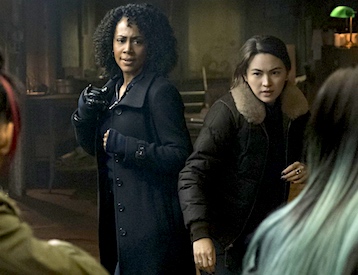
So, even with that, a lot of things are improved over season one. Most things, even. But the show is at its best whenever its title character is off screen. Every member of the supporting cast and their relationships to each other is more interesting than Danny. At best he’s a bit nothingy, at worst an irritant. In fairness, I also suspect the show knows this, given its focus on Colleen — look how she shares the marketing. She makes a better lead character than Danny — her conflictedness about being a vigilante is certainly a richer seam than his privileged certainty, and Jessica Henwick excels in some properly kickass fight scenes, too. Among the supporting cast, Ward and Joy Meacham get some interesting material as well, again developing from what they went through in season one. Where back then it was just Plot Stuff to provide a story and twists, here there’s a genuine attempt to explore what the psychological fallout of that might look like. Plus, there’s a lot less stuff about the running of Rand Enterprises, something I called out the first season for ballsing up.

VillainsIronically, while the MCU movies became renowned for their poor villains, that’s the area the Netflix series have always excelled in. This season the star turn comes from Alice Eve as a version of Daredevil villain Typhoid Mary, who (spoilers if you don’t know the character!) has dissociative identity disorder (DID), aka multiple personality disorder — so she can be both sweet, timid, kind Mary, and hard, stern, violent Walker. It’s the kind of role that’s a gift for any actor, of course, and Eve is fantastic. Similarly, Danny’s childhood friend Davos gets to combine many of the traits I’ve described in other characters: motivated by past events; complex relationships to other characters (not only Danny, but, as the end of season one teased, Joy). He’s the kind of villain whose goal is almost relatable; where you almost side with him over the hero.

Across all of the characters and storylines, I think the season wants to be about addiction, but it doesn’t execute it as a throughline particularly well. Early on we see Danny being a little bit out of control with the fist; then, many episodes later, he explains he was addicted to it; in between, there’s a subplot about Ward being in NA and struggling to stay on the wagon. These two plot threads should be mirroring each other, not tag-teaming — and in a way that sometimes leaves the theme untouched for an episode or two, at that. It’s a shame, really, because if they’d managed that kind of cohesion in what the show was “about”, it may have been able to lay claim to being a genuinely very good show, rather than just a marked improvement on season one. Don’t get me wrong, I quite liked a lot of it, and I do think it’s a big improvement; but you can see signs that maybe it could’ve been something even better. But hey, even if it can’t offer depth, at least it can offer thrills. And really, it’s a superhero show — good vs. evil punch-ups are the order of the day.

Marvel’s Netflix shows have often faced accusations of being too long, of not having enough story to fill their 13 episodes. That’s a problem of story, not episode count, as The Defenders proved by not having enough plot to fill eight episodes. Nonetheless, Iron Fist now only has ten episodes, and it seems to have helped. The plot moves so fast that by halfway it feels like it must be nearing its end, but instead of going in circles, it has some more twists and tricks up its sleeve. And to complete the indication that the show is making an effort to head in new directions, the finale devotes about half its running time to wrapping up the main plotDaughters of the Dragon (via a whole load of fighting, natch) and then the second half to what happens after — not just the necessary “wind down” type aftermath stuff, but also a fair chunk of time into establishing where things will go in season three. Netflix hasn’t commissioned that yet, but I hope they do because I’m actually looking forward to it. Wonders will never cease.
Upstart Crow  Series 3 Episodes 1-3
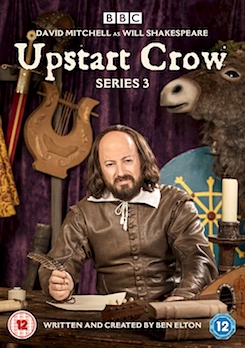
Upstart Crow series 3Ben Elton’s Shakespearean sitcom commences its third run as funny as ever, if not more so — I’ve always enjoyed it, but it feels particularly on point this series. I guess its on-the-nose satire of modern life by transposing it to Elizabethan society (e.g. Will’s woeful carriage journeys between London and Stratford are an unsubtle riff on the problems with British railways) won’t find favour with everyone, mainly because it seems a little easy and there’s a monologue about it pretty much every episode, but I still find that stuff amusing. When Elton applies the same strategy to other aspects of modern life, it’s similarly as rewarding/obvious, depending on your predilections. But there’s also a solid vein of mining Shakespeare’s own works for humour, the best one so far this series being an extended bit about how all of Will’s friends think Hamlet is a comedy due to its farcical plot. There’s also a running subplot about Will’s nemesis, Robert Greene, trying to discredit him by making people think he doesn’t write his own plays, which nicely pillories those ridiculous theories, and includes a guest appearance by Ben Miller doing an amusing riff on Mark Rylance.

Reported Missing  Series 2 Episode 1
Not normally my kind of programme, this — a fly-on-the-wall documentary that follows police as they search for missing persons — but the ‘plot’ description for the first case piqued my interest. A dad reports his five-year-old son missing after having not seen him for two years due to a custody dispute with the mother. When the police track her down, she says the boy doesn’t exist and she doesn’t even know the man who made the report. Who is telling the truth? What’s really going on? It plays out like a low-key thriller. If you have access to iPlayer (the episode is here), it only takes up the first half of the episode and I’d say is worth half-an-hour of your time.

Also watched…
  • Daniel Sloss: Live Shows — A pair of live stand-up shows, recorded at different times and places, that Netflix have lumped together as a ‘series’. The first, Dark, is a masterpiece; it lives up to its name though, so avoid if pitch black humour isn’t your thing. The second, Jigsaw, isn’t quite as exceptional, but is still excellent. A definite cut above most other stand-up specials I’ve watched.
  • Hang Ups Series 1 Episodes 4-6 — I was praiseful of Hang Ups last month, but if anything it improved as it went on, with the finale a riotous farce.
  • The Imitation Game Series 1 Episodes 1-3 — ITV’s impression-based panel show is a bit odd (everyone’s busy pretending it’s improvised when much of it is clearly scripted) and dependant on the skills of the guests (some of these so-called impressionists should find a new job), but it’s pleasantly diverting. Plus it gave us this skit of Andy Murray singing I’m So Excited, which is spot on.
  • Magic for Humans Season 1 Episodes 4-6 — Like Hang Ups, there’s even better stuff here than in the first half of the season (which I also wrote about last month). Episode four, Seeing is Believing, is not only a fun magic show but also kinda profound.

    Things to Catch Up On
    Killing EveThis month, I have mostly been missing Killing Eve, BBC America’s critically-acclaimed, Emmy-nominated thriller about an MI5 officer hunting for an assassin. It aired in the US back in April, and it feels like ever since I’ve been hearing praise for it flowing across the Atlantic. It finally made its way to this side of the pond this month (for an organisation with “BBC” in their name, BBC America productions do take their time getting over here). As I’ve only just (as in “as of last night”) finished making my way through 24 episodes of Jack Ryan, Iron Fist, and Bodyguard back-to-back, maybe that’ll be up next.

    Although likely to get in the way is Maniac, Netflix’s miniseries starring Jonah Hill and Emma Stone that looks inherently interesting (based on the trailer — like Inception made by someone with a wilder imagination than Christopher Nolan) and is directed by Cary Joji Fukunaga, aka the recently-announced director of Bond 25. I’ve never seen anything he’s done, despite almost all of it being on my “to watch” list, so it’s about time I started. Expect reviews of both of those next month, then, alongside the return of a certain time traveller…

    Next month… Jodie Whittaker is the Doctor!

  • Gods of Egypt (2016)

    2018 #198
    Alex Proyas | 127 mins | download (HD+3D) | 2.40:1 | USA & Australia / English | 12 / PG-13

    Gods of Egypt

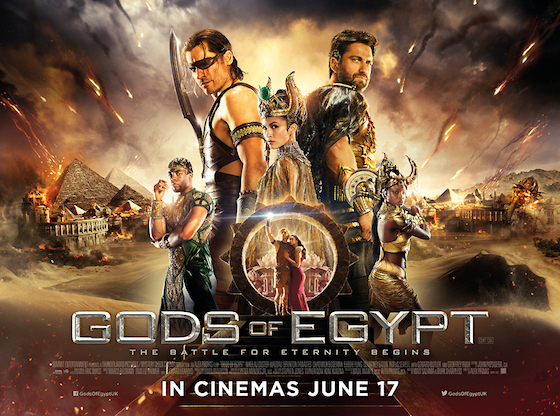
    If you remember Gods of Egypt, it’s likely because it was excoriated on its release back in 2016.* Many were predisposed to hate it before it even came out thanks to its whitewashed cast: as the title might indicate, it’s set in Ancient Egypt and many of the characters are Egyptian gods, but most of the lead cast are white; and of those that aren’t, none are Egyptian. Even if that didn’t bother you, it was slated for its poor dialogue, flat performances, bland direction, reliance on green screen, and cheap-looking CGI. Oh dear. But every film is for someone and there’s someone for every film, and it turns out I’m one of the few (the very, very few) who actually rather enjoyed Gods of Egypt.

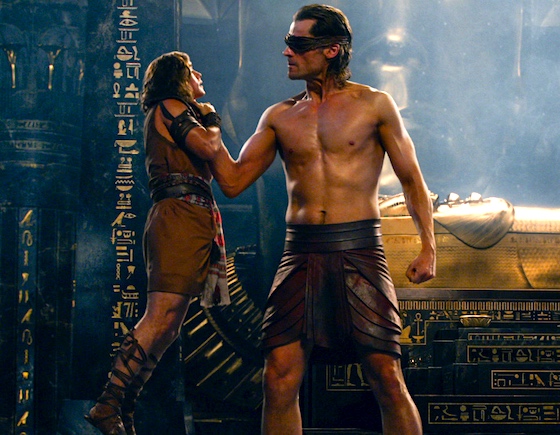
    Based more on legend than any relation to history whatsoever (in one rather stunning sequence, we see that the world is, in fact, flat), it’s set in a time when super-powered gods walked the Earth among humans. Well, less “among”, more “ruling over”. A squabble between the gods sees nasty-piece-of-work Set (Gerard Butler) steal both the throne and eyes of heir-apparent Horus (Nikolaj Coster-Waldau), before going on to steal the abilities of other gods to make himself more powerful. Human thief Bek (Brenton Thwaites — between this and Pirates 5, dude must’ve thought he was gonna be a star… ’til they came out) doesn’t care for the gods, but he wants to free the love of his life (Courtney Eaton and her cleavage — I don’t want to be lecherous, but seriously, her costumes are all boobs, boobs, boobs), and the only way to do it involves stealing back one of Horus’ eyes and using it to persuade the god to take on Set.

    Gods and men

    And that’s the part of the plot that’s kinda reasonable. No, really: it gets a whole lot madder as it goes on. In fact, everything about it is so consistently batshit crazy — the concepts, the plot, the visuals — that it wins you over with its utter barminess. Or maybe it won’t win you over. Maybe you’ll think all those things make it utterly awful. As I said at the start, you certainly wouldn’t be alone. But the “you couldn’t make it up (except someone did)” mentalness of it will win over a certain kind of viewer. A viewer like me.

    I’m not really going to deny any of those criticisms I cited in the opening paragraph, because it is kind of a terrible film… but if you embrace it, it’s also campy fun. It’s a film where the men are burly, the women are breasty, and the CGI is blurry, but there’s a certain irreverence that stops it from being stodgy, and a light-hearted tone to the dialogue that occasionally hits home. For all the whizzy video game-ish visuals, it’s an old-fashioned adventure quest at heart, capable of pulling off the occasional thrilling sequence or amusing verbal exchange.

    All of that said, one does have to wonder how director Alex Proyas ended up here. If you don’t recognise the name, he was once known for visionary noir-ish filmmaking in the likes of The Crow and Dark City. At some point he wound up sidelined into less invigorating fare, like Will Smith vehicle I, Robot and Nic Cage vehicle Knowing, but while neither were groundbreaking they had a certain something (and, personally, I quite liked them both). Here, though, the direction is so… uninspired. Anyone competent could’ve made it. And people say filmmaking is collaborative and directors don’t deserve all the credit, but bear this in mind: Gods of Egypt and critically-beloved Oscar winner Mad Max: Fury Road share 295 cast & crew members.

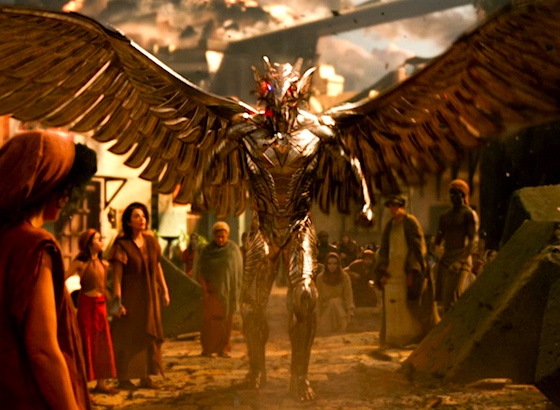
    Robot god... on a budget

    I don’t know who deserves credit for the film’s 3D, but it’s consistently excellent and occasionally spectacular. That’s the benefit of almost all the film being created in a computer, I guess. But still, the colourful visuals and wide-open locales really help with the effect — what looked gaudy and ludicrous in 2D trailers… still pretty much is, let’s be honest. But it’s less bad when it’s doing so much to help create an epic-scaled dimensionality.

    I know I should hate this silly, cheap-looking, over-CGI’d, whitewashed hot mess… but I actually thought it was a lot of daft, campy fun. There are plenty of very good movies that I’ll likely never get round to watching again — probably some great ones, even — but I’d wager Gods of Egypt is going to end up in my Blu-ray collection someday. In 3D, of course.

    3 out of 5

    The UK network premiere of Gods of Egypt is on Channel 4 tonight at 9pm.

    * I was going to say “summer 2016”, but that wouldn’t be entirely correct: weirdly, although it was a February/March release in much of the world, it somehow got given summer status in the UK and Ireland (and, er, Spain…?) ^

    Zatoichi and the Chess Expert (1965)

    aka Zatôichi jigoku-tabi

    2018 #181
    Kenji Misumi | 87 mins | Blu-ray | 2.35:1 | Japan / Japanese

    Zatoichi and the Chess Expert

    A more literal translation of the 12th Zatoichi movie’s title would be something like Zatoichi’s Trip to Hell. I can see why they changed it, though, because that seems a bit melodramatic: this is far from Ichi’s darkest, or most personally-threatening, adventure. Choosing to focus on the chess expert in the English-language title in some ways feels a little misleading — there’s a lot of other stuff going on in the story here — but, when it comes down to it, he is the film’s defining character.

    Said chess master is Jumonji (Mikio Narita), a samurai Ichi bumps into on a sea voyage. Although they have mutual respect for each others’ skills and end up travelling together, it’s clear they have some differences in their moral codes. Meanwhile, Ichi is being pursued by a group of men — well, when isn’t he? A fight results in the injury of a little girl, and Ichi insists on helping her and her aunt, Otane (Kaneko Iwasaki). The four travel to a spa, where they encounter a young lord hunting for the man who killed his father.

    After a lot of time spent moving pieces into place (appropriate for a chess-themed story, I suppose), the film almost takes a swerve into murder mystery territory — except it’s less of a whodunnit (we know that pretty quickly), more of a whydunnit, as both victim and perpetrator are people Ichi is on good terms with. And that’s only the half of it, because there’s more to Otane than meets the eye, too.

    Board game expert Jumanji... sorry, Jumonji

    The way all this plays out is a change of pace for the series. There’s still a peppering of the usual elements (Ichi-vs-hordes fight scenes; comical gambling bits where Ichi one-ups those who underestimate him), but around that it’s kind of slower, more emotional (there’s a very effective scene where Ichi recalls another Otane, his love interest from several of the early movies), and all gets a bit melancholic — it seems jovial enough at first, but that undercurrent of sadness is waiting to pounce. It also shows Ichi as more fallible than usual, with some of his usual tricks failing (he actually loses a dice game; later, he drops something important during a fight and has to fumble around on the ground), and the finale pits him against an adversary and dilemma the likes of which he hasn’t faced since perhaps even the first movie.

    It also reminds a little of the fourth film, Zatoichi the Fugitive — which is appropriate, as a key sequence here contains a callback to the events of that movie. But the actual similarity comes in its effectiveness: when it’s working, it’s among the finest material in the whole series. Specific great sequences include the discovery of a murder in the rain, which is intensely atmospheric, while another where violence almost erupts between two friends plays out in complete silence and is all the more tense because of it. However, the consistency isn’t quite there across the whole film for me to count it among the series’ very best. There are a few too many major elements introduced late in the game, and, in balance to that, too much early stuff that doesn’t quite go where it needs to in order to feel justified. Perhaps this is a side effect of them churning out so many of these movies every year: with a couple more rounds of polishing to the screenplay, to streamline and coalesce all the plots appropriately, it might’ve been top drawer.

    Sore loser

    But I don’t want to be too harsh. Even if Chess Expert doesn’t thrill as much as some of the other movies, nor differ from the formula as thoroughly as some others, it does have its own charms for those prepared to indulge a somewhat more contemplative and chewy Ichi tale. Director Kenji Misumi previously helmed the original Tale of Zatoichi and Fight, Zatoichi, Fight, which are (best as I can ascertain) commonly regarded as being among the top two Zatoichi films. Many a fan would rank Chess Expert in close proximity to them. For me, it doesn’t crack the very top tier of Ichi flicks, but is still an above-average adventure for everyone’s favourite blind masseur swordmaster.

    4 out of 5

    Announced late last month, Criterion are bringing their fabulous Blu-ray box set of the Zatoichi series to the UK in November.

    The Post (2017)

    2018 #125
    Steven Spielberg | 116 mins | Blu-ray | 1.85:1 | USA & UK / English | 12 / PG-13

    The Post

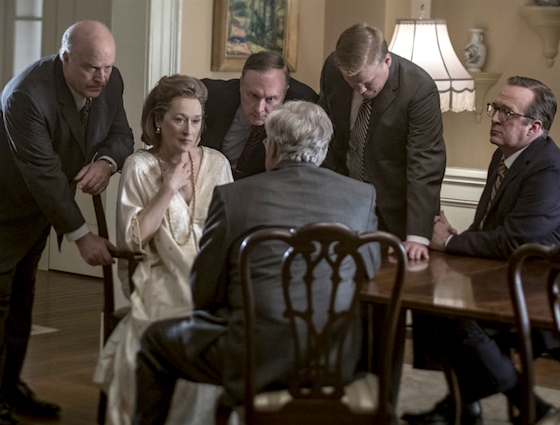
    Perhaps the timeliest historical movie ever made, The Post is, in its plot, about the publication of the ‘Pentagon Papers’, a leaked report that examined decades of US government decisions about the Vietnam war; but, thematically, it’s about press oversight of a government lying to its people to cover up their own wrongdoing, including trying to forcibly stop the press from performing that role — sounds familiar, doesn’t it? Not to mention that it also concerns itself with matters like whether sources who leak classified information are whistleblowers or traitors, and attitudes towards women in positions of power in the workplace.

    For various reasons related to these elements, it’s attracted a lot of comparisons and accusations. For example, some have criticised it for being about a case in the ’70s rather than one in the present day. I guess allegory is tricky for some people to understand… Or, alternatively, that any such parallels were accidental, as if experienced director Steven Spielberg wasn’t aware of them. I think the film went from script to screen in just nine months for a reason…

    Then there’s the inevitable comparison to Spotlight, another recent newspaper journalism-themed true-story movie, and a Best Picture winner to boot. Those who thought Spotlight was exceptional tend to think The Post doesn’t measure up. Personally, I thought Spotlight was good, but I didn’t love it as much as some others. I would hesitate to say The Post is better than it, but I would be equally as hesitant to say it isn’t as good. Arguably Spotlight is a better movie about journalism, focusing as it does on the everyday legwork and procedure that go into putting together a major story, whereas The Post has more on its mind than just the facts of how reporting works. There are also many comparisons to All the President’s Men, but I’ve still not seen that so can’t comment fairly (there is this rather excellent trivia/connection, though).

    Reading the papers

    Relatedly, some people think this film should’ve been about the New York Times, as they were the paper that first broke the Pentagon Papers story and initiated the legal case it all led to (and, later, they were the only paper awarded a Pulitzer Prize for the publication). There’s certainly an argument for that being the real story, but, conversely, that would be to assume the focus of this movie is solely the publication of the Pentagon Papers. In fact, The Post is the story of Katharine Graham and the Washington Post, and how the Pentagon Papers changed them both. It’s the story of an underdog-like local paper making an (inter)national mark by doing something at odds with a legal ruling — the fact they chose to back-up the Times by publishing too (even if the action was instigated as much by friendly rivalry/jealousy as it was by “freedom of the press” ethics) is an important point in itself.

    It’s also the story of a woman — a business owner at a time when women didn’t hold such roles; and not a woman who confidently elbowed her way in either, but one who found this position thrust upon her — going from meek and overpowered to confident in her own mind and running the show. I’ve read reviews that think this latter element is somehow forced on the film, as if the makers didn’t notice it until halfway through and only decided to draw it out when they reached a shot near the end where Streep walks past a crowd of other women with admiring expressions. That’s not the case, obviously — that’s simply not how movies are made — and that arc is clearly in mind from the very first scene where we meet Graham. Meryl Streep is excellent in the role, which is easily the film’s most fully-realised character. Everyone else is certain of themselves and what they believe is the right thing to do, but over the course of the film she goes from quiet, uncertain, and reliant on her trusted advisor, to believing in her own instincts and standing up for them. It’s a clearly-charted but believable journey.

    A man's world

    Nonetheless, it’s somewhat hard to divorce The Post from the context of when it was made — the way it reflects the current climate in American politics and the news coverage thereof. But then, is that a problem? Are works of art not as much about the time in which they were made as the time in which they’re set? I guess that’s a whole other debate. That said, it carries a message that would be important in any era, about the need for reasoned, responsible, independent oversight of those who govern us.

    4 out of 5

    The Post is available on Amazon Prime Video UK from today.

    All the Money in the World (2017)

    2018 #121
    Ridley Scott | 133 mins | streaming (HD) | 2.39:1 | USA, Italy & UK / English, Italian & Arabic | 15 / R

    All the Money in the World

    All the Money in the World does not star Kevin Spacey. But I expect you knew that. Indeed, if you only know one thing about the film, I expect that is what you know. Spacey’s firing, and his speedy replacement by Christopher Plummer, was such a big news story that it instantly became what the movie was most famous for — and, I suspect, is what it will always be most famous for, because the film itself isn’t good enough to transcend its own reputation.

    Before I get into that, let’s do the film the courtesy of describing what it’s actually about. Based on true events, it tells the story of the kidnapping of teenager John Paul Getty III (Charlie Plummer, no relation) in 1973 thanks to his family ties: his grandfather, J. Paul Getty (Christopher Plummer), was the richest man in the world. He was also a miserly old codger who refused to pay his grandson’s ransom, and the film follows his daughter-in-law Gail (Michelle Williams) as she desperately tries to arrange to get her son back, aided by the employee Getty assigns to investigate the case, former CIA operative Fletcher Chase (Mark Wahlberg).

    Even before the point of contention that drives the plot, various examples are given of what a piece of work Getty was. Whether these are based on true stories or not, I don’t know, but the film seems almost heavy-handed in creating this impression. For instance, although he’s the world’s first billionaire, he’ll do his own laundry in his hotel bath rather than pay the hotel $10 to do it for him; or he’ll spend an hour haggling a poor beggar down from $19 to $11 for an item that’s actually worth $1.2 million — although it later turns out there’s another side to that story… not that the it paints Getty in any better a light. Anyway, it’s to Plummer’s credit that he can take this kind of material and make it work, especially considering it was captured in just nine days of shooting with very little prep time.

    Can you put a value on a child's life? J. Paul Getty can.

    When those reshoots were first reported, it was said to be possible because Getty wasn’t actually in the film much, so it wouldn’t take long to remount just his scenes. Then the film started screening, and critics said he was in a lot of the movie and the amount they must’ve reshot was phenomenal in such a short space of time. Personally, I think the truth is somewhere in between: Getty pops up throughout the film, and his presence is huge, but I’d wager his actual screen time is smaller than you’d think — similar to Anthony Hopkins in Silence of the Lambs, who notoriously won Best Actor from less than 25 minutes on screen, it feels like Plummer’s in it more than he actually is. That’s partly the film’s structure, but also the quality of his performance.

    In discussing the reshoots, director Ridley Scott has commented on the differences between the two actors’ takes on the character (Plummer wasn’t shown any of Spacey’s performance before he filmed). According to IMDb, Scott felt Spacey portrayed Getty as “a more explicitly cold and unfeeling character”, while Plummer found “a warmer side to the billionaire, but the same unflinching refusal to simply pay off his son’s kidnappers.” I can’t help reading between the lines to infer that Scott felt Plummer’s performance was more nuanced, and therefore better. It beggars belief that Spacey was cast at all, really: Scott wanted Plummer, who was 88, to play the 80-year-old Getty, but the studio insisted on 58-year-old Spacey, who then had to be caked in prosthetics. Supposedly it’s because Spacey was a bigger name, but that much bigger? Really?

    Anyway, it turned out for the best, because Plummer is probably the strongest element of the finished product. Although Michelle Williams is top-notch as ever, too. Mark Wahlberg has been worse than this, but he still seems slightly miscast. Ridley Scott, also, is not on top form, his direction merely unremarkable. Oh, it looks nice enough — it’s well done — but there’s little beyond glossy competence.

    Negotiations

    Arguably its biggest sin is that, for a movie about a high-stakes kidnapping, it’s remarkably free of tension. The closest is the climactic manhunt around a village at nighttime (an event which is an entirely fictional invention, incidentally), but even that doesn’t seem to ring all that’s possible out of proceedings. The blurb sells the film as a “race against time”, but it’s almost the opposite of that: the kidnappers hold the kid for literally months while the Gettys bicker. But maybe Scott wasn’t going for thrills? There’s definitely a thematic thing in there about wealth and power and what it does to people, and what that represents versus the importance of family or morals. But I’m not sure those issues are really brought out or explored either.

    It leaves the film feeling not tense and on-edge enough to be a thriller, nor thoughtful and considered enough to be a message-driven drama. The real-life story behind the film is a compelling hook and definitely sounds like it’d make a great movie, but the conversion process has perhaps not done it justice. Maybe someone else should have a crack at it…

    3 out of 5

    Trust, a miniseries from Danny Boyle and Simon Beaufoy retelling the same events, begins its UK airing on BBC Two tonight at 10pm.

    The Tree of Life (2011)

    2018 #192
    Terrence Malick | 139 mins | Blu-ray | 1.85:1 | USA / English | 12 / PG-13

    The Tree of Life

    Writer-director Terrence Malick made just five films in the first 38 years of his directorial career, this being the fifth. In the seven years since it came out, he’s made five more. Why the long gaps before, or the sudden increase now? Who knows — Malick is notoriously interview-shy. But the answer may indeed lie with this film, sitting as it does at the fulcrum of his career. It was a project Malick had on his mind for decades (he shot material for it as far back as the ’70s), which for various reasons — primarily funding and technology, I think — it took him until this decade to achieve. Many think it was worth the wait: lots of people love it, including the Cannes jury, who awarded it the Palme d’Or. Many others… don’t: plenty of people regard it as pretentious, or at least too abstruse to care about. It’s a film that, I think, can only elicit an entirely personal reaction. So here’s mine.

    The Tree of Life is about… um… oh dear, we’ve hit a snag already. Well, once it settles down (which takes the best part of an hour), what it’s literally about is a family living in Waco, Texas, in the 1950s — dad (Brad Pitt), mom (Jessica Chastain), and their three sons, Jack (Hunter McCracken), R.L. (Laramie Eppler), and Steve (Tye Sheridan). The kids play around doing the kind of thing young lads did in the ’50s — running around in the woods, swimming in rivers, throwing stones through windows, murdering frogs — while being torn between the influences of their parents: their kind, gentle, caring mother, and their strict, authoritative, borderline abusive (or just straight abusive?) father.

    But the film also occasionally shows us Sean Penn as grown-up Jack, working some high-level job in a present-day city. And it also shows us an extended sequence about the birth of the universe and the evolution of life on Earth. And that’s to say nothing of the epilogue… Or, indeed, the prologue, which introduces a massive event in the family’s life that is then, arguably, unreferenced by the rest of the movie.

    So… yeah.

    Pondering or ponderous?

    Much of The Tree of Life is more like visual poetry than a traditional narrative film. Beautiful images glide before our eyes, some with obvious meaning, others less so. Some of the images resonate or rhyme with each other, urging us to infer our own interpretation of what we’re seeing, and why, and what it signifies. This is mostly true of the opening chunk — which lasts a good 45 to 60 minutes — and the ending. In between, more of a narrative is discernible — the stuff about the young family — although it’s constructed in a poetic fashion, with minimal dialogue, lots of vignettes, fragments of day-to-day life that don’t necessarily have an immediate significance.

    To me, it felt like we were watching someone’s dreams or memories, presented as we really remember things: random fragments from our lives. If you think about your memories of childhood, they don’t take the form of a neat narrative in concise scenes with all the important landmarks accounted for. We do remember big events, of course, but also many small things; and some things we remember extensively, but others only fragmentarily. If you could view a person’s memories, they’d create, not a biopic, but an impressionistic collage or our lives — and this film is that, I think.

    But that can still leave the viewer to question what it’s all about, especially given the extended sequence of space gases, forming planets, burgeoning microscopic lifeforms, and dinosaurs. Yes, in arguably the film’s most baffling sequence (there are many contenders), we see an event in the life of some dinosaurs. Actually, I say it’s the most baffling, but only if you stick to the film itself: of all the confusing things herein, that’s the one with the most concrete explanation, thanks to visual effects supervisor Michael L. Fink having a little chat with critic Jim Emerson about Malick’s intentions for the scene. Not everyone likes firm answers to this kind of stuff, so I’ll just link to where you can read it if you want to.

    Motherly love

    That said, some of the stuff I’ve already mentioned in passing I only know definitively thanks to extra-textual sources. Well, if you count the film’s end credits as extra-textual, which I suppose they’re not. But it’s only thanks to those that I know for certain which of the boys Penn was supposed to be, or that the creation-of-the-universe stuff is indeed meant to be that (based on genuine science, donchaknow), and that these scenes show us the “astrophysical realm”, because there are effects credits for that. And more still can be learnt from, of all places, the Blu-ray’s chapter menu: the long creation sequence is indeed called “creation”, in case you weren’t sure. The ending is “eternity”, followed by “was it a dream?” Others include “grief”, “innocence”, “mother”, “father”, “I do what I hate” — all showing us the way towards important themes… maybe. Or perhaps they’re just convenient chapter points…

    Praise for the film’s imagery is due not only to Malick, but also cinematographer Emmanuel “Chivo” Lubezki. And it’s not even the guy’s best work — I’d argue for consistent beauty he’s surpassed it with some of the stunning, Oscar-winning stuff he’s done since — but you can see how he got from here to there: the very best shots in The Tree of Life are kind of what he does all the time in films like The Revenant. As for constructing those images into a meaningful flow, I’m never sure how much is down to an editor’s own creativity and how much is them operating machinery under the director’s instruction — I guess, like most things in the movies, it’s a collaborative mix of both. Anyway, the film has five credited editors — Hank Corwin, Jay Rabinowitz, Daniel Rezende, Billy Weber, and Mark Yoshikawa — who I’m sure must’ve been vital to the process. (Relatedly, here’s a fun anecdote from IMDb: “an Italian cinema showed the film for a week with the first two reels switched. Even though the film starts with production logos, no one in the theater noticed and thought it was all part of Terrence Malick’s ‘crazy editing style’.”)

    Creation

    There’s a lot of really great music and sound design as well — something Malick clearly considered important to a Lynchian degree, given that before the film plays the Blu-ray flashes up a notice advising you to “play it loud”. Alexandre Desplat is credited for the music, but a very, very long list of sourced tracks too hints at what actually happened: most of his music went unused in the final cut, with only a few minutes making it in. I imagine that feels quite unedifying, to have your work sidelined; but maybe it’s better than being ditched entirely in favour of a new score, as has happened to plenty of other composers in the past.

    It’s easy to get hung up on all this filmmaking when thinking about The Tree of Life, because that’s where its own focus seems to be, as opposed to the usual things a reviewer might think to discuss first, like the screenplay or performances. But there are still actors here, and good ones at that. The movie is really centred around Hunter McCracken, and he’s very good. The casting directors saw thousands of Texan school kids while trying to cast the boys, and the effort paid off; though McCracken hasn’t done anything else since, so maybe not for him personally. The other two brothers don’t have so much to do; in fact, I kept almost forgetting one of the trio existed, so little is he on screen or relevant to events. Ironically, he’s the only one of the three who’s gone on to have a career: it’s Tye Sheridan, most recently seen as the lead in Ready Player One.

    As for the adults, Sean Penn is one of the many lead actors in a Malick film whose performances have wound up on the cutting room floor. According to Lubezki, there’s enough deleted footage to make a whole movie focused on Penn’s character. Yep, sounds like Malick! Obviously such a movie would be completely different to this one, but I’d be curious to see it. More screen time is devoted to Jessica Chastain and Brad Pitt, who both achieve a lot with comparatively little. Chastain is the focus early on, but it later becomes apparent that Pitt has a showier role, in a way, because of his character’s arc. There’s a pullquote on the back of the UK Blu-ray that calls it “the strongest performance of his career”, but considering his performances in the likes of Se7en and The Assassination of Jesse James, or that he’s been Oscar-nominated for his turns in Twelve Monkeys, Benjamin Button, and Moneyball, I thought that was a bit of an outlandish claim to make. To each their own, though.

    Affection or headlock?

    Anyhow, all this is “technical” stuff quite apart from what The Tree of Life is really about. Not that I’m totally clear on what that is, still. I guess maybe it’s there for us to infer what we like from it, be that religious, scientific, humanistic, or, for many a viewer, just boredom. Whether you love it or hate it — and there are certainly plenty of perfectly reasonable people at both extremes — it’s definitely an Experience; one every person who considers themselves serious about film appreciation needs to have.

    4 out of 5

    A new edition of The Tree of Life, which includes a different cut that’s 50 minutes longer (but, intriguingly, is not an extended cut), is released by Criterion in the US tomorrow and in the UK on November 19th.

    The Disaster Artist (2017)

    2018 #82
    James Franco | 99 mins | streaming (HD) | 2.39:1 | USA / English | 15 / R

    The Disaster Artist

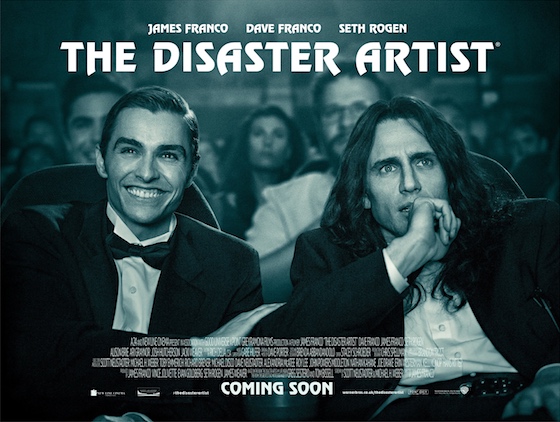
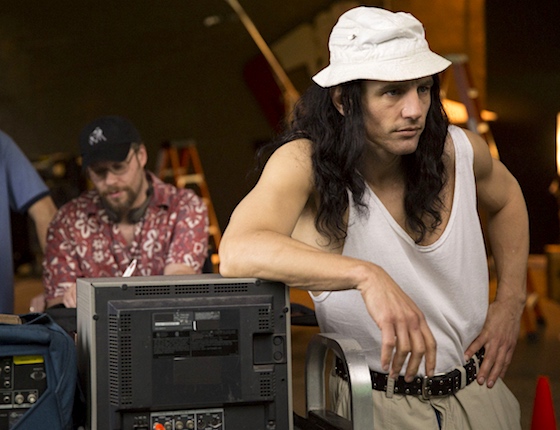
    James Franco’s 18th feature as director* is the story of the making of The Room, the cult favourite “Citizen Kane of bad movies”. Franco also stars as the bizarre Tommy Wiseau, a figure of mysterious background who one day decides to make a movie, funded out of his own inexplicably wealthy pocket. Along for the ride is Greg (Dave Franco), a wannabe actor who befriends Tommy at acting class before inspiring Wiseau’s divergence into auteurism. So unfurls a crazy tale of ultra-independent moviemaking by someone who doesn’t seem to know how to be human properly, never mind produce a movie. By which I mean Wiseau, not Franco.

    Franco and friends (the lead cast includes his brother, his brother’s wife, and his best mate) seem to be having a jolly old time recreating their favourite bad movie, and they’re certainly not above patting themselves on the back for how well they’ve done it (there’s a self-congratulatory “look what a good job we did recreating the film!” montage at the end that lowered my opinion of the film somewhat. By all means put that as a Blu-ray special feature, but putting it in the film itself feels boastful). Of course, for aficionados of The Room such dedication pays off: there are lots of fun references — not just the obvious stuff (the recreation of actual scenes), but scattered lines and nods throughout the movie.

    For those of us uninitiated, The Disaster Artist provides mixed results. For example, the sequence about the shooting of the famous “Oh hi Mark” line, which played so well as the teaser trailer, is more long-winded in the final film (unsurprisingly), but consequently it doesn’t work as well — it’s lacking the conciseness of the trailer, which emphasised the ludicrousness of the process and therefore made it funny. But, hey, if you haven’t seen the trailer…

    Artists at work

    Where the film manages to surprise is that it kind of has something serious to say. Obviously it’s funny — the premise, the very fact of Wiseau’s existence, inherently calls for that — but around the laughs it wants to comment on the worthiness of dedication to artistic endeavour. Wiseau may be a weird guy who made a terrible movie, but he still made that movie — when Hollywood rejected him, he had the dedication to write and produce his own film, following his own vision. His weird, terrible vision. It’s little surprise that Franco — the guy who’s somehow made 20 feature films (including another two since this came out less than a year ago, with three more beyond that completed or in post) — should be on board with that as a worthwhile achievement.

    The trailers mismanaged my expectations for The Disaster Artist. They promised more hilarity than the film delivers — it’s played a little straighter than you might assume, especially given the people involved. But while it’s not consistently funny enough to land as a pure comedy, it’s also not quite heartfelt and meaningful enough to sing as a drama. It’s good, but I felt like it could’ve been better.

    3 out of 5

    The Disaster Artist is available on Sky Cinema from today.

    * That’s not a typo — James Franco has directed 17 other movies that you’ve probably never heard about. And now you’re probably wondering, “how can someone as famous as James Franco have directed 17 movies without me ever hearing about it?” I know, because I’ve been there. ^

    The Room (2003)

    2018 #81
    Tommy Wiseau | 99 mins | download (HD) | 16:9 | USA / English | NR / R

    The Room

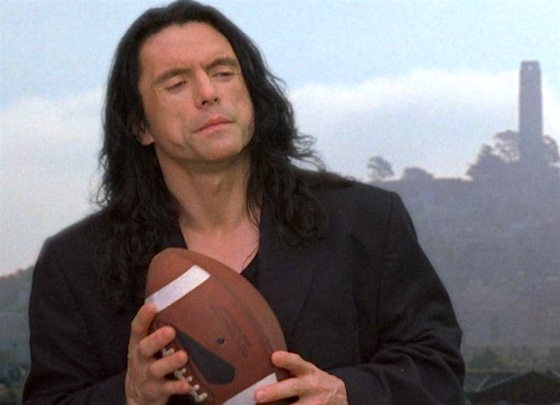
    I did not enjoy it, it’s not true, it’s bullshit, I did not enjoy it, I did naht!

    Oh hi reader.

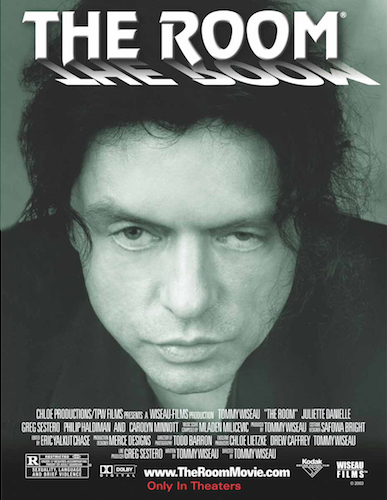
    You’ve heard of The Room, right? Well, if you hadn’t before last year’s awards season, you probably have now, thanks to James Franco’s fictionalised account of its making, The Disaster Artist. I can’t remember when I first heard of The Room, but it was certainly after it had already gained a reputation among some people for being (as someone once put it) “the Citizen Kane of bad movies”; the kind of movie where its fans attend midnight screenings in costume, shout out phrases, throw items in the air, and all that palaver.

    Ostensibly the story of the relationship woes of twentysomethings in San Francisco, there is nothing wrong with The Room… for the first two minutes. Then Tommy Wiseau enters a room and opens his mouth. There are no words to accurately describe Wiseau — he has to be witnessed to be believed. From there out, the film is so distractingly ridiculous that it’s easy to forget what any of it is supposed to be about. For the first half-hour it feels like they’re making a soft-core porno: the plot seems designed purely to facilitate sexual encounters (at one point a couple walk into a room and start getting it on before we’ve learnt anything else about them), most of which last several minutes to the sound of cheesy pop music (though they’ve cut out any explicit bits, so don’t go watching it just to get your jollies).

    Room for a threesome?

    From there, stuff just… happens. Characters come and go at random (three actors quit the project midway through shooting, so Wiseau sometimes just invented a new character rather than reshoot existing scenes); subplots about nothing pop up now and then; and people generally behave like no human being has ever behaved. Production values are all over the place, like the sets: many are amateur-theatre-level under-designed, yet some scenes take place on a rooftop where the view has been green-screened in fairly well. It’s also awfully misogynistic… but when it’s so awful generally, does that even matter? And yet some parts almost transcend the horror: the scene on the rooftop after they save Denny from being shot is like fucking poetry, with all its repetition and… stuff. I mean, it’s really bad poetry… but really funny poetry.

    I guess some people would say you have to watch The Room at one of those cinema screenings packed with die-hard fans to get the most out of it, but they also say that about Rocky Horror and I’ve never found that to be true. Of course, Rocky Horror is actually a good film, whereas The Room is only entertaining because of how bad it is. The full 99-minute experience is a bit of a drag at times, waiting for the really funny bits to roll round, but the level of incompetence is so consistent that it remains fascinating throughout.

    A real human being?

    However, that does make it almost impossible to rate accurately. As what it sets out to be — a serious drama about the love lives of a group of friends — it’s irredeemably awful. But that’s not why we watch it. As a so-bad-it’s-good film to laugh at… yeah, it’s pretty funny. And as that’s why I watched it, that’s how I’ll mark it: for the level of enjoyment I got out of it, irrespective of what was intended.

    4 out of 5

    James Franco’s dramatisation of the making of The Room, The Disaster Artist, is on Sky Cinema from today. My review is here.