Suicide Squad (2016)

2016 #178
David Ayer | 123 mins | download (HD) | 2.39:1 | USA / English, Japanese & Spanish | 15 / PG-13
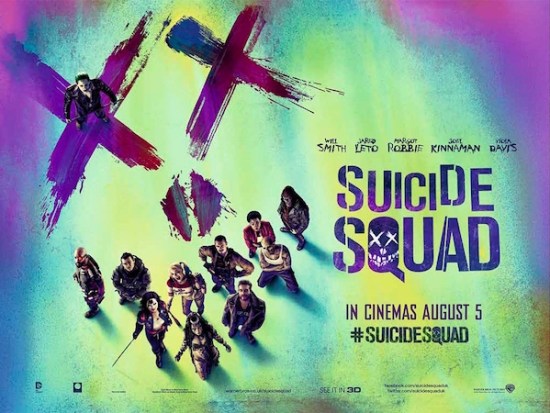
Suicide Squad

Oscar statue2017 Academy Awards
1 nomination — 1 win

Won: Best Makeup and Hairstyling.


The third movie in DC’s attempt at a shared cinematic universe always seemed like an odd choice — why adapt a minor title starring second- or third- (or even fourth-) string villains when you’ve yet to bring several of your better-known heroes to the screen? Then the trailers came out and the apparent darkly comical tone seemed to click with viewers. But apparently that wasn’t what the movie was like at all, so then the studio ordered reshoots and hired the trailer editing people to re-cut the whole movie.

That did not end well.

The final version of Suicide Squad definitely feels like a film that was messed around in post. I imagine the basic plot remains the same, however: sneaky government operative Amanda Waller (Viola Davis) comes up with a Cunning Plan to use locked-up super-villains — including the likes of Deadshot (Will Smith) and Harley Quinn (Margot Robbie) — to undertake dangerous and/or secret missions, on the basis that these prisoners are totally expendable. Why would the villains agree? They don’t have a choice: little bombs in their head will go off if they don’t comply. Almost immediately after getting approval for her initiative, a crisis breaks out in Generic Skyscraper City that requires the Squad’s expertise — how handy! Meanwhile, the Joker (Jared Leto) is concocting a plan to free his girlfriend…

Skwad!

That there were editing tussles over Suicide Squad’s final cut becomes evident almost immediately: the way it introduces Deadshot and Harley before cutting to Waller pitching her plan is a little clunky, surely a re-ordering to get the big-name characters on screen ASAP, which becomes obvious when they’re later introduced again alongside the other candidates. However, it really goes awry when Waller’s pitch and introduction of the Enchantress is immediately followed by another meeting where Waller makes her pitch and introduces the Enchantress. Maybe the screenplay was that clunkingly constructed to begin with, or maybe they just made a ham-fisted job of the restructuring.

On a shot-to-shot level the editing is fine, but various events aren’t allowed the necessary room to breathe, the endless character introductions are a jumble, the narrative is fitfully revealed, and the overall pace is a disaster. It’s easy to believe that it was cut by trailer editors because the pace and style with which it handles some sequences is reminiscent of the storytelling economy applied in trailers. Problem is, what works in a 120-second advertisement doesn’t in a 120-minute narrative. There are bits that are well put together — the occasional strong scene or impressive visual idea — but there’s a nagging awareness that someone felt the need to mess things around.
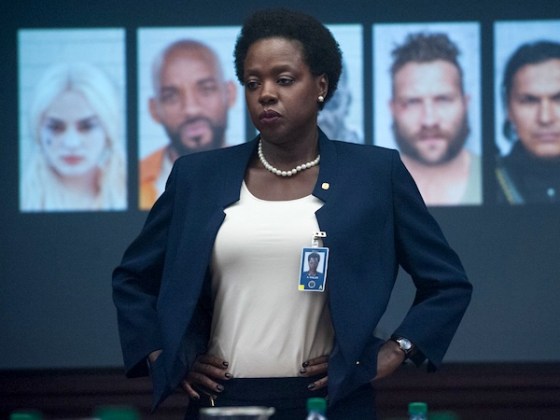
And nobody messes with Amanda Waller

Similarly, the use of songs on the soundtrack is scattershot. Some are eye-rollingly on the nose, while others seem chucked in at random, the apparent intent to be ‘quirky’ by throwing on discordant tracks. Parts of the film are the same, like Captain Boomerang’s pink unicorn: it’s a self-consciously Funny bit that’s deployed a couple of times early on and then completely disregarded. I mean, I’m not going to argue that the lack of reference to pink unicorns after the halfway point is Suicide Squad’s biggest flaw, but it’s indicative of its sloppy handling of material.

Examples of this disjointedness are almost endless. Like, during the climax the squad have a specific plan to deal with Enchantress’ brother, who they are aware of thanks to earlier seeing him on a ‘spy boomerang’ (don’t ask). But when the big fella comes out, their reactions are all “who the hell is this?!” and “we’re in trouble now!” It’s not a major flaw, it just doesn’t quite make sense — and when that keeps happening, I’d say the cumulative effect is a problem.

Suicide stars

On the bright side, Margot Robbie and Will Smith work overtime to both make their characters function and bring some entertainment value to the film, and they largely succeed. Viola Davis makes for a great love-to-hate character as the endlessly cunning Waller. I don’t even dislike Jared Leto’s loony take on the Joker. The rest of the cast… well, okay, the less said about them the better. For one thing, there’s a lot of them, and some don’t even need to be there. Slipknot and Katana barely serve any function, for instance, and the film only emphasises this by giving them clumsily offhand introductions.

There’s a definite sense that this version of Suicide Squad was created based on either audience feedback or the perception of what the audience wants, rather than what was actually designed to be the structure of the movie. It hasn’t worked. Scenes butt against each other in ways that surely weren’t intended, and the longer it goes on the more it feels like bits and pieces have been dropped in or taken out all over the place. It is possible to restructure a film in post, especially when you have reshoots to smooth the joins, but Suicide Squad absolutely feels like the hash job it was reported to be. Its legacy will be the lesson of what happens when you attempt a last-minute chop-and-change re-cut.

Theatrical Cut
2 out of 5


So, is the extended cut better?

2016 #195a
David Ayer | 135 mins | Blu-ray | 2.40:1 | USA / English, Japanese & Spanish | 15

Please sir, can I have some more?

Well, firstly, this isn’t a Batman v Superman-esque situation, where the extended cut puts the film back together how it was originally meant to be and suddenly makes it work. This is exactly what it says on the tin: extended. It’s the same movie, with 13 extra minutes.

I did enjoy it more on second viewing, but I’m not sure that was because of the new material. There’s extra stuff with Harley and the Joker, which feels like it’s been shoehorned in — but then, so did their scenes that were there before. The bar scene was one of the highlights of the theatrical cut and is improved by adding back some material that was only in the trailer. Otherwise, I suspect it’s just the rewatch factor, under which circumstances familiarity can allow the brain to make connections or invent explanations that the film may not contain, but through their existence (even if it’s just in your head) the film makes more sense. Even that doesn’t absolve all of Suicide Squad’s numerous faults, but it’s something.

It’s still not a good movie, really, but at least second time round I (overall) enjoyed watching it.

Extended Cut
3 out of 5

And finally, lest you ever forget…
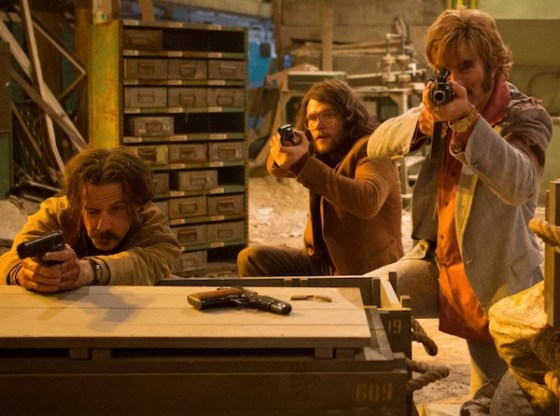
Free Fire (2016)

2017 #105
Ben Wheatley | 91 mins | Blu-ray | 2.39:1 | UK & France / English | 15 / R

Free Fire

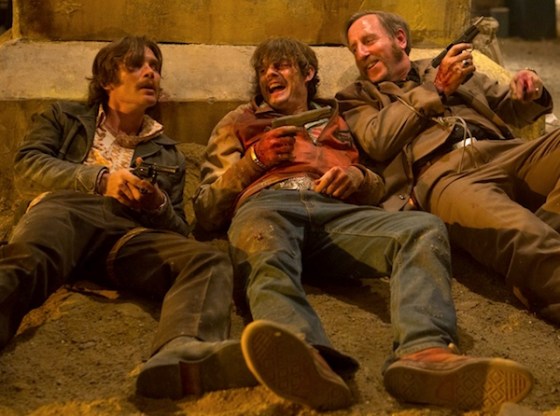
The latest film from director Ben Wheatley (he of Kill List, Sightseers, A Field in England, High-Rise, and the rest) is by far his most accessible movie yet. Set in Boston in the ’70s, it sees two IRA fellas (Cillian Murphy and Michael Smiley) arranging through a pair of black market brokers (Brie Larson and Armie Hammer) to purchase guns from some arms dealers (Sharlto Copley and Babou Ceesay), with each side bringing along a couple of chaps to carry boxes (Sam Riley, Jack Reynor, Noah Taylor, and Enzo Cilenti). But things go sideways when a couple of those minor participants have a falling out, leading to a protracted shoot-out. “Protracted” as in “two-thirds of the movie”.

If an hour-long gunfight doesn’t sound like your cup of tea, maybe Free Fire isn’t the movie for you. Conversely, this isn’t a Jason Statham flick: instead of an hour of highly-choreographed gunplay, most of the participants get injured early on and end up seeking cover around the rubble-strewn floor of an abandoned factory, occasionally taking potshots at each other. Most action movies are defined by their characters sprinting about — in this one, they crawl. The screenplay was partly inspired by FBI ballistics reports from real gunfights, so there’s actually some veracity to how things go down.

Guys with guns

So, on the one hand, it has a definite grit and reality. Bullet wounds actually hurt, leaving characters dragging themselves around in the dirt. Although there are occasional bullet-flying free-for-alls, just as often every shot counts. Similarly, their guns run out of bullets — frequently. Sometimes, permanently. On the other hand, however, it’s a bit like something Quentin Tarantino or Guy Ritchie might once have made, although thankfully without slavishly duplicating either of their overfamiliar styles. Without being an out-and-out comedy, it’s often pretty funny, thanks to the ludicrous situation and outrageous characters — all while remaining just this side of plausible, that is.

Unfortunately, the thin premise means it lags a bit in the middle. It feels in need of a clearer overall purpose and one or two more ideas. A better sense of space would help, too. We know who’s shooting at who, but for a long time we don’t really know where they all are in relation to each other. That’s not a deliberate choice to evoke the confusion of a gunfight or something — the characters all seem to know where they need to point their weapons. It’s a lack of filmmaking clarity, exposed in the Blu-ray’s behind-the-scenes featurette when it’s revealed how meticulously and thoroughly the whole thing was mapped out — it’s a real shame that doesn’t translate on screen.

More guys with guns

These are flaws that hold Free Fire back from perfection, mind. It’s still a fitfully funny, sporadically tense, gleefully violent hour-long shoot-out. And events occur in real-time, too, which I always have a soft spot for. When all is eventually said and done, I doubt critics and scholars are going to hold it up as a key film of Wheatley’s career, but I’d wager it’s the one most people will get the most enjoyment from.

4 out of 5

Free Fire is released on DVD and Blu-ray in the UK today.

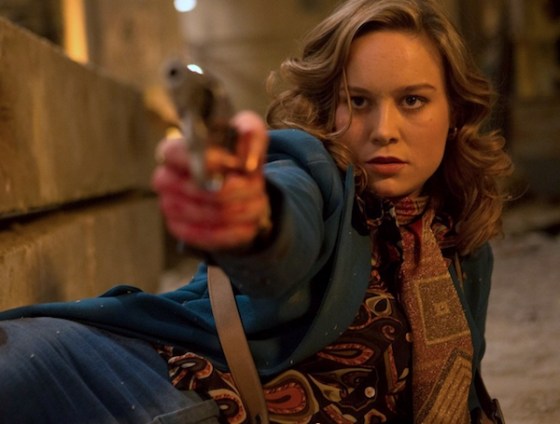
She isn’t pictured in the review, so here’s a bonus one of Brie Larson being badass:

Badass Brie

22 Jump Street (2014)

2017 #99
Phil Lord & Christopher Miller | 112 mins | Blu-ray | 2.40:1 | USA / English | 15 / R

22 Jump Street

After the genuinely surprising success (both critically and financially) of the 21 Jump Street movie, a sequel was inevitable. This is that sequel — and it won’t let you forget it.

In the first movie, best-buddy cops Jenko (Channing Tatum) and Schmidt (Jonah Hill) went undercover in a high school to unearth a drug ring. Now, they go undercover in a college to unearth a drug ring. Sequels, eh? But it’s okay because the film makes a running joke out of how it’s just rehashing what worked in the first movie. I say “it’s okay” — some people seem to fundamentally object to this, saying that acknowledging that it’s a copy doesn’t stop it being a copy. Personally, I give the film a bit more credit than that. It’s a copy because it’s funny when it’s a copy, not because it has absolutely no new ideas.

In part, it knows when to improve on itself: they’ve taken one of the most memorable and likeable bits of the first movie — the meta-jokes at the expense of the film itself — and ramped them up to 11. And it works. Or, at least, it did for me. Is this the most meta comedy ever? I dunno, but I can’t think of another that so relentlessly riffs off both the expected tropes of its genre and its own status as a sequel. It broadens the remits to movies in general, too — when it finally paid off, the meticulously over-constructed ‘meet cute’ gag elicited one of the biggest laughs I’ve had at a film in a long time. I’m almost loathe to mention it, because it works best when you have no idea that’s where it’s going, but oh well. Similarly, the widely-discussed end credits must’ve been a real hoot when they were a total surprise. Fortunately, they’re still a ton of fun even if you’ve had the joke ruined. (As I’ve already half-spoiled one moment, and the credits were pretty widely covered back when the film first came out, I shall say no more.)

Crash helmet

The one shame in all this is that it rehashes the last movie’s relationship arc for the leads. Gags about it being exactly the same movie are funny when they’re overt, like with the main drug investigation plot, but it’s like no one in production noticed that they’d reheated the character arcs. It does kind of go somewhere new with it, but only in the sense that it’s inverted which of the pair soars and which feels left out. Nonetheless, it stills leads to some funny scenes, like the “break up” and a counselling session, so at least it’s not a complete loss.

When a movie nobody expected anything good of becomes a hit and they rush to produce a sequel, you’d expect nothing more than a lazy rehash. 22 Jump Street takes that ball and runs with it, turning its lazy rehashery into meta-humour that makes the movie more-or-less the equal of its predecessor.

It’s a shame the threequel seems to have become lost down the dead-end of making it a Men in Black crossover because I wouldn’t mind seeing trilogies given the Jump Street treatment. But you never know, maybe that’ll become the silver lining to the Han Solo fiasco.

4 out of 5

Channing Tatum stars in another spoof cop series, Comrade Detective, available on Amazon Prime from today.

The Driven Monthly Update for July 2017

It may be the silly season in cinemas, the time when summer blockbusters are at their most prolific, but July is traditionally one of my worst months for viewing — it has the lowest average (just 7.1) and is also the only month in 10½ years of 100 Films when I’ve failed to watch a single film (back in 2009). The story’s a little different this year, though…


#91 Big (1988)
#92 Headshot (2016)
#93 Inferno (2016)
#94 Spider-Man: Homecoming (2017)
#95 ’71 (2014)
#96 Planet of the Apes (1968)
#97 Jersey Boys (2014)
#98 War for the Planet of the Apes 3D (2017)
#99 22 Jump Street (2014)
#100 City of God (2002), aka Cidade de Deus
#101 The Driver (1978)
#102 Dunkirk (2017)
#103 Lion (2016)
#104 Get Out (2017)
#105 Free Fire (2016)
#106 Drive (2011)
#107 Sing 3D (2016)
War for the Planet of the Apes

The Driver

.


I observed lots this month, as you can see…

  • 17 new films watched makes July the second best month of 2017 so far (behind February’s 20) and by far my best July ever (beating the 12 of both 2015 and 2016).
  • Obviously that surpasses the July average, increasing it from 7.1 to 8.1 — still the lowest of any month. It also beats the rolling average of the last 12 months (previously 14.2, now 14.6) and of 2017 to date (previously 15.0, now 15.3).
  • As you may’ve noticed, one of those was #100. I know it’s the title of the blog ‘n’ all, but, frankly, this is the fifth consecutive year that I’ve passed #100 before even reaching December — it hardly feels worth commenting on in depth. That said, its the second earliest I’ve got there, behind 2016’s May 28th and, having watched it on July 15th, just ahead of 2015’s July 27th.
  • Also: the #100 club is still a small group with just nine previous members (including one #200), so I did bother to try to pick a worthy film. City of God has been on my must-see list for almost 14 years, ever since it topped Empire’s “best of 2003” list, and was included in my 2015 WDYMYHS selections too, so it seemed a good pick.
  • This month’s proper WDYMYHS film: as if watching both Baby Driver and The Driver in the space of a month wasn’t enough, I also flung in Nicolas Winding Refn’s modern classic, Drive.
  • This month’s Blindspot film: in honour of the franchise’s latest instalment arriving in cinemas, I finally watched the original Planet of the Apes. It’s good, but I must admit I prefer the new ones. I still intend to watch the remaining four originals.
  • Weird coincidences: last July I watched Zootropolis, this July the broadly similar Sing; last July was when I last watched a new Ben Wheatley film, High-Rise, while this July it was Free Fire; and last July I watched the archetypal heist movie, The Sting, while this July I rewatched all three Ocean’s movies. None of those were intentional. Good thing I’d already watched Split (which shares a director with The Visit) and haven’t got round to Passengers (which shares a director with The Imitation Game), otherwise this would be going beyond a coincidence.
  • Finally: it’s the first time since records began (i.e. June 2008) that I’ve watched a film on July 12th. Yes, I have records of funny things like that. The fact I’m mentioning it now when I don’t normally shows how rarely this happens. Relatedly, then: how many days are there on which I’ve ‘never’ watched a film? Eight. That’s 2.2% of the year. Those dates are January 5th, May 23rd, June 29th, July 16th, July 19th, September 2nd, November 4th, and December 22nd. There’s no special significance to any of those (not that I can think of, anyway), it’s just random.


The 26th Monthly Arbitrary Awards

Favourite Film of the Month
It was a pretty good month all round, looking back on it. Still, apes together strong — so strong that War for the Planet of the Apes is my pick this month.

Least Favourite Film of the Month
No outright stinkers this month, so, living up to the category name, I think my least favourite film of the month was also my last: Illumination Entertainment’s Sing, which is decent fun but no Pixar movie.

Greatest Meet Cute of All Time
If the rest of 22 Jump Street was humourless dross (which it isn’t), it would’ve all been worth it for the sublime ‘meet cute’ gag.

Best Death Involving a Motor Vehicle of the Month
Sure, The Driver and Drive may be all about using cars for action, but generally that’s for escaping. For murderousness, you have to turn to Free Fire, which (spoilers, cos it happens near the end) uses a van to go all Oberyn Martell on one of its characters.

The Audience Award for Most-Viewed New Post of the Month
Everyone has something to say when there’s a new Christopher Nolan film, and it appears people like to read what other people say too: the clear victor this month was my review of Dunkirk.


I’m still more than a month behind on my Rewatchathon, but hopefully now that I’ve passed #100 I’ll be able to drag myself away from new stuff a little more often. I’ve got a long list of “must rewatch”es raring to go, so it shouldn’t be so hard.

#21 Ocean’s Eleven (2001)
#22 Finding Nemo 3D (2003)
#23 Ocean’s Twelve (2004)
#24 Ocean’s Thirteen (2007)

Rewatching the Ocean’s trilogy, I came to the conclusion that Twelve is a much better and more interesting film than Thirteen, though the first is clearly the best of all. Anyway, as seems to be becoming my MO with these rewatches, I wrote a little bit about Eleven, Twelve, and Thirteen on Letterboxd.


has already begun.