It’s 100 Films’ 10th birthday at the end of the month. To mark the occasion, I thought in the run-up to it I’d publish some lists based on the last ten years of my blog, because who doesn’t love a list?
How many lists have I got? Why, 100 of course!
…haha, no — that would be ridiculous. There are ten — one for each year of 100 Films. And each one has ten items on it. Ten times ten is… why, it’s 100! What a coincidence.
For the first list, I’ve put opinion aside for pure facts: these are the ten directors who’ve been most-reviewed on this blog. That excludes films only featured in my 100 Favourites series — this is just their work that has been covered as part of my ‘main’ blog.
It may be worth noting that, because it’s purely based on statistics, this isn’t a list of my ten favourite directors… though as they’re ones I keep watching movies by, I guess it’d be a fair starting point.
10 Christopher Nolan
Christopher Nolan has made nine feature films, and seven of them are reviewed here. Throw in an extra one for the IMAX version of The Dark Knight and his short documentary, Quay, and he edges ahead of runners-up John Carpenter, Ernst Lubitsch, George Miller, and Billy Wilder.
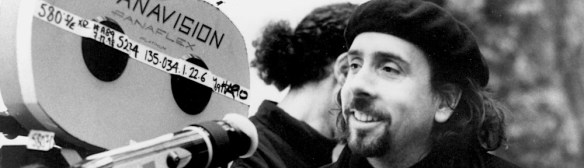
9 Tim Burton
The next four directors are technically tied, but I’ve found a way to differentiate them. First: the Burtonesque Tim Burton, whose eight entries can be split into six main-list films and two reviews of things I’d already seen (Batman and Batman Returns).
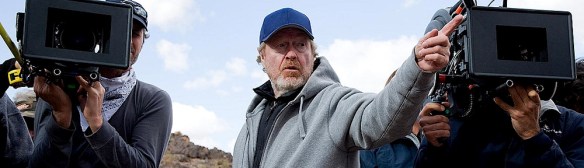
8 Ridley Scott
Next, the man we can probably thank for all the Director’s Cuts we get these days, the more classical of the two Scott brothers, Sir Ridley Scott. He also has eight, of course, which factors in six main-list films, one alternate cut that I nonetheless counted on my main list (Blade Runner: The Final Cut), and one non-main-list film (Alien: The Director’s Cut).
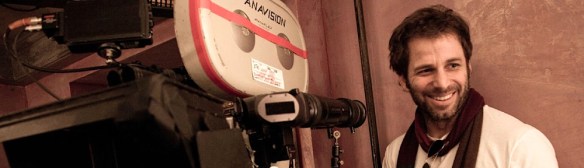
7 Zack Snyder
Our third eight-film filmmaker is everyone’s favourite “visionary” director of superhero movies (right?), Zack Snyder. All eight of his films were on the main list, though two of them were alternate versions (the extended cuts of Batman v Superman and Watchmen).
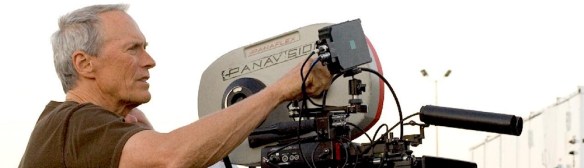
6 Clint Eastwood
Simple and straight-up, much like the man himself, Clint Eastwood has a pure eight films.
5 Steven Soderbergh
The top five heads into double figures, with ten films for one-time enfant terrible and now retiree Steven Soderbergh.
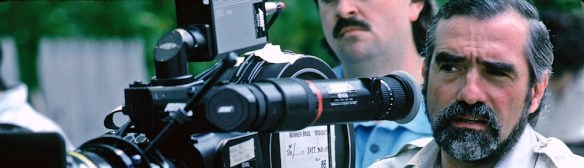
4 Martin Scorsese
Perpetual awards season snubee, Martin Scorsese also has ten feature films, but edges ahead thanks to his part in anthology film New York Stories.
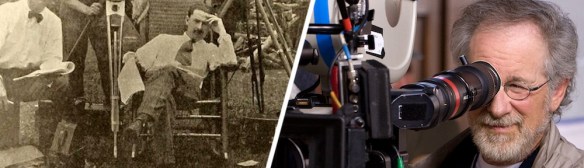
=2 Roy William Neill / Steven Spielberg
Unlike other directors on this list, there’s no reasonable way to differentiate this pair. You may not know the name Roy William Neill, but he helmed eleven of the fourteen Sherlock Holmes films starring Basil Rathbone, and those four years of work have landed him near the top of this list. Conversely, Steven Spielberg is probably the most famous film director working today, if not ever, and his eleven films span 44 years, stretching from his first (1971’s Duel) to his most recent Oscar nominee (2015’s Bridge of Spies).
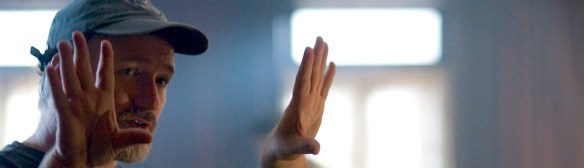
1 David Fincher
Topping the list is my go-to pick for favourite director, David Fincher. He’s helmed ten movies, but I’ve reviewed twelve — that’s eleven main-list features (including the Assembly Cut of Alien³) and one extra for the marginally-extended director’s cut of Zodiac.
2017 #20
Ti West | 104 mins | download (HD) | 2.35:1 | USA / English | 15 / R
The spirit of the Spaghetti Western is alive and well in writer-director Ti West’s shoot ’em up; though where they once took inspiration from samurai movies, now Mr West has his sights set on modern-day gun-fu movies — specifically, here he retrofits John Wick into a familiar Old West narrative.
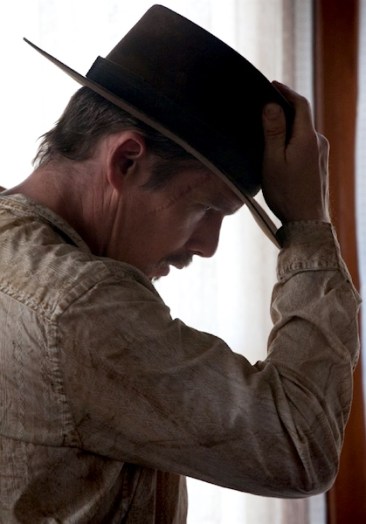
On his way to Mexico with just his horse and dog Abby for company, drifter Paul (Ethan Hawke) passes through an almost-deserted town, where he ends up in a fight with wannabe-tough-guy Gilly (James Ransone). It turns out Gilly is the son of the local Marshal (John Travolta), but he considers the matter settled and lets Paul move on, ordering his son to leave it be. A shamed Gilly has a different opinion, however, leading his gang of friends to assault Paul in the dead of night. But as is the way with halfwit villains, they leave our hero alive, ready for him to ride back into town and exact his vengeance.
If you come to movies looking for an original storyline, you’ll be disappointed here — as I say, it’s basically John Wick in the West (if you’ve seen that Keanu Reeves actioner, you’ll already know the outcome of Gilly’s revenge on Paul). The devil is in the details, however, and in that respect In a Valley of Violence is rather enjoyable. Perhaps the biggest mark in its favour is its sense of humour. It’s not a comedy by any means, but Gilly’s gang are borderline incompetent in a way that’s increasingly laughable.
Travolta gets in on the act as a man who seems very much in control of his own little kingdom, but when things truly kick off he’s somewhat caught in the middle. Thankfully he’s not just the bullying villainous type, instead getting a nicely balanced reaction to events: he knows Gilly’s done wrong, but stands by him because he’s his son; but when Paul’s pushing comes to shoving… well, familial loyalty only gets you so far.
As Paul, Hawke finds some degree of complexity in the (anti-)hero, but this isn’t exactly a movie built for psychological complexity. Taissa Farmiga is positioned as the love interest, but thankfully isn’t entirely reduced to such a thankless role. As her sister, Karen Gillan reminds us that, while she may be best known for brightly-coloured sci-fi on screens both big and small, her roots are in comedy. But the biggest star is, of course, the dog. You can’t help getting attached, even when you know you’re watching John Wick of the West.
The film offers many stylistic nods to remind us of its Spaghetti inspiration, like the starkly animated title sequence, or Jeff Grace’s Morricone-riffing score, which some criticise for its obviousness but I thought was fun. It even comes through in the film’s structure, with a slow-burn first half that reminded me of Leone’s attitude to action. Some complain of the pace there, or lack of it, but I rather liked that. It partly functions as a deliberate delaying of gratification: the main reason we’re here is for the bloody vengeance we know will eventually be coming, but West carefully sets the scene and gradually puts characters in place early on so that the second half can more fully concentrate on the violence. The wit is kept alive even then, with more than one of the deaths provoking at least some laughter.
The more I write about it, the more I wonder if this film is something of an acquired taste. It’s not out-and-out comical enough to be classed as a comedy, but action die-hards may feel the lighter elements undermine the violent thrills they seek. I thought it worked, but experience has taught me that I’m more accepting than most of such tonal mash-ups.
Despite the plot similarities, In a Valley of Violence isn’t going to challenge John Wick for ultra-choreographed action satisfaction, but it has many aspects to recommend it for those who like a chuckle alongside their bloodshed.
In a Valley of Violence is released direct to DVD & Blu-ray in the UK on 6th March.
John Wick: Chapter 2 is in UK cinemas from today.
After last month’s bumper-bonus TV review (with three major series to review, plus a couple of big specials), the past four weeks have been pretty quiet. I’ve certainly watched stuff, just very little of it feels worthy of comment.
Nonetheless, there was this:
The Missing(Series 2) While everybody’s busy fawning over Happy Valley (never watched it) and Line of Duty (series one was quite good; I need to catch up), I reckon The Missing is one of the best dramas British TV has produced in a good long while. The second series (which aired towards the end of last year over here and, coincidentally, started last Sunday in the US) is every bit the equal of the first, and possibly even better — and considering how good the first was, that really is an achievement.
Featuring a brand-new case (what with the first one having been resolved), sibling screenwriters Harry and Jack Williams have this time made their story and scripts even tighter, partly in awareness of the scrutiny fans exacted upon the first run. What that means in practice is every mystery has an answer; nothing is thrown away, nothing is a mistake. That’s even more impressive given some of the audacious twists they pull off, which I shan’t spoil here.
As well as the enjoyable plot theatrics, the emotional lives of the characters are as on point as ever. Maybe none are quite as effective as the toll exerted on James Nesbitt’s character in series one, but the cast is arguably more well-rounded beyond a sole lead. Talking of which, the only major returning character, Tchéky Karyo’s detective Julien Baptiste, is even more central this time, which can only be a good thing because he’s a top character expertly brought to life. The writers agree: while a third series of The Missing is contingent on them having a good idea for a story, they’ve talked about potentially conjuring up a Baptiste spin-off instead.
I’ve recently been thinking about my favourite TV series of the last ten years. There are rather a lot of contenders, considering the golden age of “peak TV” we’re currently living through. Frankly, I’m not sure if The Missing will quite crack the top ten, but it’s definitely in the conversation.
The British Academy Film Awards 2017 aka the BAFTAs, obv. I have to say, I thought it was a pretty dull show this year. For starters, Cirque du Soleil — impressive, but what’s it got to do with the last year in film? Why did no one write Stephen Fry some good material for his opening monologue? Then there were the awards themselves. Short on surprises — the big prizes went where expected, the smaller ones erred British. None of the American winners are committed to giving a decent speech here because they’re saving it all for the Oscars. Well, apart from the Kubo guy — he knows his award is going to Zootropolistopia next fortnight and so he gave us his best stuff. Good on him.
Also watched…
Death in ParadiseSeries 6 Episodes 2-6 — Caribbean murder.
The FlashSeason 3 Episodes 10-11 / ArrowSeason 5 Episodes 9-11 — not much need to investigate the murders here, as the heroes are doing them half the time.
Who Dares WinsSeries 9 Episodes 5-6 — they’ve had to cut out the National Lottery bits now they’ve dropped that from TV, and they’re shunting it around the schedule like an unloved heirloom they’ve committed to display but really rather wouldn’t… and it is a kind of terrible show, really… but the lists, man, they keep me coming back. #addict
Things to Catch Up On It must be a slow time for TV — I don’t even feel like I’ve been missing all that much. Well, X-Men spin-off Legion recently started and I haven’t got round to that yet, and 24 spin-off / sequel / continuation 24: Legacy started in the UK last night, so I’ve barely had a chance to watch it (I’ll have something to say about that next month, then). So I really have no excuse for not watching Westworld yet. Oh, and I need to get on with starting my long-planned re-watch of Twin Peaks, because there are only…
94 days until new Twin Peaks.
Next month… the final series of Broadchurch begins.
2016 #173
Whit Stillman | 94 mins | streaming (HD) | 1.78:1 | Ireland, France & Netherlands / English | U / PG
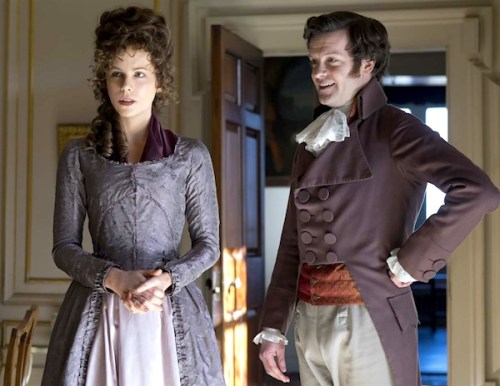
Adapted from Jane Austen’s early novella Lady Susan, writer-director Whit Stillman’s arch comedy concerns one Lady Susan Vernon (Kate Beckinsale), a widow with a certain reputation in polite society, which she endeavours to hide from while engaging in matchmaking machinations for both herself and her daughter.
That’s the vague version, anyway. The details of the plot are occasionally a mite too intricate to follow, especially as explanations tend to come after the fact, if they do at all. However, for those prepared to go along with it, the reward is a film that is at times hilariously funny.
Stillman’s writing and direction are both a little mannered, which will surely turn off some viewers, but the real stars are, indeed, the stars. Kate Beckinsale is phenomenal — funny, dry, biting, witty, but also conveying that Susan is making it all up as she goes, despite pretending to be in control. The other standout is Tom Bennett as the dimwitted Sir James Martin. His knowledge of the commandments and opinion of peas are particularly delightful.
Love & Friendship may be something of an acquired taste thanks to its stylistic affectations, but couple that with its wry sense of humour and it makes a likeable change from the heritage ambitions of most Austen adaptations. Perhaps, too, that makes it the Jane Austen film for people who don’t normally like Jane Austen films.
2017 #19a
George Miller | 120 mins | Blu-ray | 2.40:1 | Australia & USA / English | 15 / R
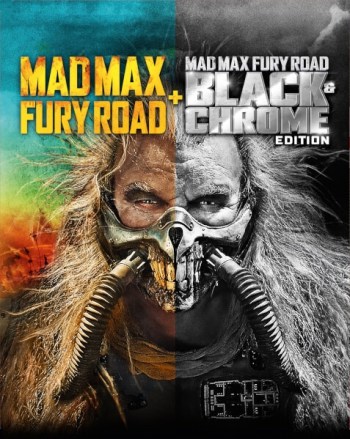
During post-production on Mad Max 2, aka The Road Warrior, director George Miller had a chance to watch composer Brian May (not that one) at work. As was standard practice, May was working with a ‘slash dupe’ copy of the film — a cheaply-produced duplicate print, which has the defining characteristic of being in black and white. Miller was instantly smitten, believing this was the best-looking version of his film. 30-something years later, during post-production on the fourth Max movie, Fury Road, Miller had the film’s colourist convert some scenes into black and white, and he once again discovered his preferred version. Only this time he mentioned it publicly and promised it would be released, which is more or less how, about 18 months after the film’s theatrical release, we ended up getting the so-called Black & Chrome Edition on Blu-ray. It finally makes its way to UK shores today… though only in a Zavvi-exclusive Steelbook edition, which has both already sold out and was dispatched to purchasers (like me!) last week. So, uh, so much for that.
Let’s start by getting some people’s obvious complaint out of the way: “Why do you need to buy it again? Why not just turn down the colour on your TV?” Well, you could, and you’d get an approximation of the effect; but if you have an appreciation for the fine details of film photography and colouring, that doesn’t cut it. The Black & Chrome version isn’t just the existing colour turned off — other things have been tweaked to heighten the experience, most obviously the contrast. Here’s a video that handily compares a selection of shots from the colour version, the Black & Chrome version, and the colour version simply desaturated:
If you’re thinking “but the two black & white ones look the same!” then maybe this isn’t for you. And that’s OK — it’s an alternate version, after all.
In his introduction (the only new special feature on the Blu-ray), Miller admits that at times you lose some information by not having the colour; however, at other times it looks even better, and he reiterates that he thinks this is the best version of the movie overall. Somewhat famously, the theatrical version of Fury Road has hyper-saturated colours as a reaction against the usual post-apocalypse movie look of heavy desaturation. It’s somewhat ironic, then, that Miller’s preferred version is the opposite extreme — but can you imagine any studio exec agreeing to release a $150 million black & white movie?
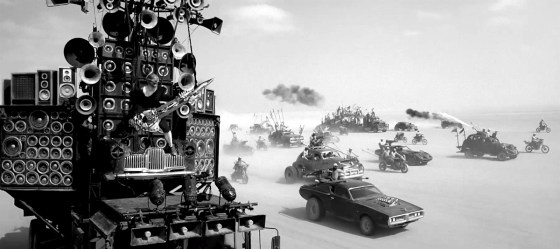
Also in that introduction, Miller expands on the appeal of the desaturated version: “Something about black and white, the way it distills it, makes it a little bit more abstract, something about losing some of the information of colour, makes it somehow more iconic.” He’s got a point. The starkness of the imagery really heightens the effectiveness of some shots and sequences. Indeed, taking a look at some parts of the colour version afterwards, it all felt so ‘busy’ thanks to the additional visual information. You may remember that, a few years ago, Steven Soderbergh shared a black and white version of Raiders of the Lost Ark, the point being to highlight the shot composition and editing, easier to focus on with the distraction of colour removed. And he’s right. Not in the sense that this feels like watching an assignment for film school, but in the sense that the point of the framing and focus is emphasised further without colour.
And it does look beautiful. Cinematographer John Seale is clearly a master of lighting, something that’s only more apparent without colour. Indeed, Soderbergh said the same thing of Douglas Slocombe’s work on Raiders: “his stark, high-contrast lighting style was eye-popping regardless of medium.” Most of the movie looks like it’s been etched from silver — or, of course, chrome. The greys and whites are metallic, the blacks deep points of contrast. It looks gorgeous. It’s let down slightly by the nighttime scenes, however. They weren’t so hot in the colour version either, having been clearly shot in daytime and aggressively graded blue. Presumably that finished version was used for this, because rather than the stark imagery of the rest of the film, the nighttime stuff is kind of murky, the blacks kind of blue-ish, and it’s far less pleasing. (If you want to see for yourself, compare this screenshot to the others here.) Fortunately, that doesn’t make up much of the film.
Separate to the colour issue, Miller has expressed the influence of silent movies over Fury Road, including cutting the film without its soundtrack to make sure that it worked on a purely visual level. When he first promised the black and white edition would be released, he also said there’d be an isolated score option, to give the viewer the option of seeing the most stripped-back version possible. Sadly, that hasn’t happened. (He also promised a commentary and additional special features, which aren’t there either.) At times I tried to imagine how it would work in relative silence, and aside from a couple of places where you might want an intertitle or two, and the pre-climax scene where Max explains the new plan to Furiosa, it’d get by fine. So thoroughly committed is Fury Road to visual storytelling that even many of the dialogue scenes don’t actually need their dialogue — think about the early bit where Hux and Slit argue about who’s going to drive, for example. Sure, the dialogue makes explicit that Hux is normally the driver and Slit is taking his steering wheel because Hux is semi-incapacitated, but their body language conveys the gist of their disagreement clearly. It’s a shame Warners didn’t go the whole hog and let us have the option to experience the film with just the score, or score and effects, because I think it would’ve been equally interesting.
Obviously Fury Road: Black & Chrome is always going to be a curiosity for the dedicated fan rather than the primary way of viewing the film. Next time I watch it I imagine I’ll go back to the full colour version… but that’s mainly because I’ve only seen that version once anyway, so I want to re-experience the full impact of its wild colourfulness. However, for appreciating the quality of the photography, and for emphasising the legendary iconicity of Max and Furiosa’s story, I think Black & Chrome may well be the way to go.
Mad Max: Fury Road – Black & Chrome Edition is theoretically released on UK Blu-ray today. It’s also available to own digitally from Amazon, iTunes (as an extra on the regular edition), and presumably other retailers (if they still exist) too.
Steven Soderbergh’s variation of Raiders of the Lost Ark will probably be reviewed at a later date, because I really want to watch that now.
2016 #142
John Huston | 96 mins | DVD | 1.33:1 | USA / English | PG
Humphrey Bogart is private dick and consummate bullshitter Sam Spade in this (re-)adaptation of Dashiell Hammett’s novel, considered the first major film noir.
The twisty plot of murder and thievery is enlivened by duplicitous performances from femme fatale Mary Astor, an effeminate Peter Lorre, the always welcome Elisha Cook Jr., and the humungous presence of Sydney Greenstreet, making his film debut at 60 and stealing every scene.
It’s also the directorial debut of John Huston, whose work alongside cinematographer Arthur Edeson is the greatest star: the low-key lighting and dramatic angles are (like the rest of the film) archetypal noir.
2016 #148
Matteo Garrone | 134 mins | streaming (HD) | 2.35:1 | Italy, France & UK / English | 15 / R
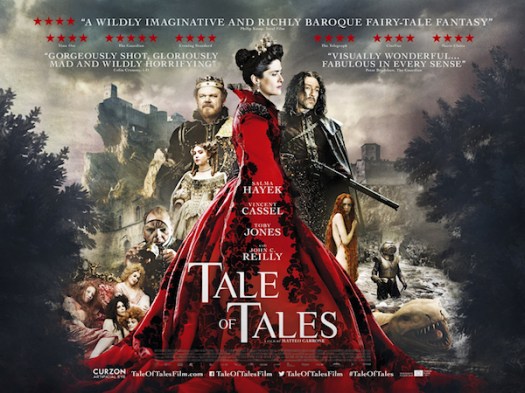
Based on 17th Century Italian fairytales by Giambattista Basile, Tale of Tales relates three interlocking stories of dark fantasy. If there’s one thing that really connects them, it’s thematic: essentially, “be careful what you wish for”; or maybe “be grateful for what you’ve got”. There are primary characters in each tale who go to disgustingly extraordinary lengths to achieve what they desire — eating a sea-monster’s heart raw, breeding a giant flea, self-flaying — and it rarely turns out for the best.
If you can stomach the contents, there’s a quality cast, and the locations, production design, and cinematography are simply gorgeous.
4. Mention the creator of the award and provide a link as well.
The Mystery Blogger Award was created by Okoto Enigma.
5. Tell your readers 3 things about yourself.
1) The last five Blu-rays I bought were: the new remastered release of Heat, The Last of the Mohicans, The King of Comedy, The Mask of Zorro, and… Red Sonja. Yep.
2) I spend most of my spare time… writing this blog. I really should get some other hobbies.
3) I have to sign a non-disclosure agreement for my job, which means I can’t tell you what I recently learned about a certain rodent abode and their plunderous pentalogy. (It’s not that exciting really, just more interesting than the stuff I usually know about.)
6. Nominate 10 – 20 people.
That’s… quite a lot of people. As these awards sometimes have a tendency to go round and round, and I know not everyone’s interested in doing them, feel free to consider yourself invited if you’re reading this. Reply in the comments or on your own blog, the choice is yours!
7. Notify your nominees by commenting on their blog.
See above.
8. Ask your nominees any 5 questions of your choice; with one weird or funny question (specify).
1) Which film haven’t you seen that you most feel you should’ve seen?
2) R2-D2 or BB-8?
3) With the Oscars imminent, which previous Best Picture winner do you think was the least deserving?
4) Tea or coffee?
5) What’s in the box? What’s in the box?! (This is the weird and/or funny question.)
9. Share a link to your best post(s).
I mean, they’re all pretty great, amiright? Thanks to that bracketed S, I’m going to mention a regular feature rather than one specific post: the Arbie awards that I hand out each month.
As you can see, the rules don’t actually mention answering the nominator’s five questions, which I can’t help but feel is an itty-bitty oversight on the part of the creator. Nonetheless, here are my answers to sgliput’s queries…
What film(s) do you love that others seem to ignore or not even know about?
I’m sure there are loads, but I’m going to go with Josie and the Pussycats.
If you had to eat one food (or kind of food) for the rest of your life, what would it be?
Pizza is the food of the gods. Also, flexible.
If technology allowed us to live in an ideal virtual Matrix-world, would you choose that over reality?
I mean, if I could do all that cool kung fu stuff, maybe. But as it’s other people who contribute an awful lot to making the world a shitty place at times, how ideal would a virtual world with those people in it really be?
What one film do you think is vastly overrated?
I’m sure there are loads of these as well, but the one that always springs to mind is No Country for Old Men.
For a fun question, you have three paradox-free wishes that won’t come back to bite you (says a genie). What would they be?
Paradox free? Well, I’d have to wish my old dog, Rory, back to life; I’d wish for, like, a billion pounds, because then I’d be pretty well set; and I’d wish for a thousand more wishes, too.
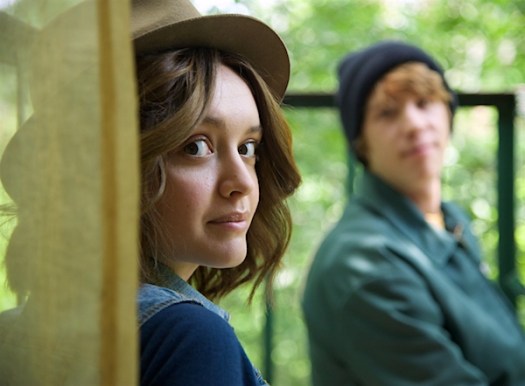
2016 #137
Alfonso Gomez-Rejon | 101 mins | streaming (HD) | 2.35:1 | USA / English | 12 / PG-13
This is a film about a high school student who makes movie parodies for fun, who befriends a dying girl. It won the Audience Award at Sundance. I’m not sure there’s any other knowledge you need to judge if you’ll like this movie or not. Except normally that’d have me thinking “oh God, here we go,” but I liked it enough to put it in my Top 20 of last year.
So, I admit, I went into the film feeling pretty cynical about it. I was expecting to find a movie tailor-made to be an indie cinephile’s dream comedy-drama. There are elements of that about it, but I must also admit I ended up being won round and affected by the film, to the point of feeling quite emotional and often a little teary for, ooh, most of the second half. Was I just manipulated into feeling that way? Well, that question is a fallacy. All film is emotionally manipulative, because it has been constructed to achieve a purpose, and the people who complain about feeling manipulated by sappy dialogue or heavy-handed music or whatever have just seen behind the curtain, as it were. For these reasons it kind of annoys me when critics or ‘film fans’ get annoyed about a film being “manipulative”, but maybe that’s a rant for another time.
Anyway, as I was saying, I kind of didn’t want to like Me and Earl and the Dying Girl because I didn’t want to fall into the obvious trap of “this movie totally gets me because I love Criterion editions too!” But I thought it worked in spite of those pandering affectations. Or maybe I just couldn’t resist them on a subconscious level? In some respects it doesn’t matter how it achieved it: the film wanted to make me feel a certain way, and I did feel that way — success.
Perhaps another reason it worked for me was the positioning of Greg (the titular “Me”) as a high school “Everyman”, not affiliated with any of the school’s multitudinous social groups. I don’t think I’ve seen that in a film before. What movies (and TV) have taught us about American high schools is that they are chocka with rigid cliques, and everyone belongs in one group or another. Is that true? I have no idea — but as far as movies (and TV) are concerned, yes it is. I don’t think it’s the case out in the rest of the world (well, at least not in the UK); not so rigidly and antagonistically as it’s depicted as being in US high schools, anyway. Nonetheless, I could identify with Greg’s status as someone able to drift around groups being generally well-liked but also almost entirely unnoticed, which perhaps helped me buy into him and his emotional journey a little more, thereby explaining the film’s ultra-effective emotional manipulation effect.
A lot of what works lies in the performances. As “the dying girl”, Rachel, Olivia Cooke is fantastic. She’s got the showy role, but manages to play it with subtlety. Instead of the usual indie movie Manic Pixie Dream Girl, the lead character / narrator is the Quirky one and she’s a cynical girl who undercuts him, which is kinda fun. Nonetheless, as the film’s “Me”, Greg, Thomas Mann has a less obviously showcasing part, but the way he handles it — especially as the film moves away from the “he’s a Quirky film fan who’s uncomfortable in high school just like you” aspect — is essential to how the film’s relationships and emotions function.
Nowhere is this better exemplified than in a two-hander between the pair: achieved in a single static shot that lasts five minutes, they don’t look at each other while they argue and their friendship struggles. It’s a frankly stunning scene from all involved: kudos to Jesse Andrews (who wrote both the original novel and the screenplay) for the plausible and complex dialogue; kudos to Alfonso Gomez-Rejon for the confident blocking of both actors and camera; kudos to both of the actors for their layered, emotive, but not grandiose, performances.
Several supporting cast members are also worthy of note: Jon Bernthal as a cool teacher; Molly Shannon as Rachel’s mom; and Nick Offerman for once again perfectly judging the level of funny his character needed to hit to be comic relief but also stay tonally consistent with the rest of the film.
A final stray thought before I wrap up this rather bitty review: I’ve read a few comments that make a point of mentioning this is not like all those other “teen death” movies, or that if you’re sick of all those then this one’s still good, and so on. I’m kind of aware these “teen death” movies exist and that there’ve been a few, but I’ve never bothered to watch one (because, frankly, they’ve all sounded rubbish), so I am immune to any overkill other viewers may experience. But if there’s a lesson here (and I’m not saying there is) it would be that you don’t have to watch every high-profile film that comes out (unless you’re a critic and being paid to do it).
Me and Earl and the Dying Girl placed 14th on my list of The 20 Best Films I Saw For the First Time in 2016, which can be read in full here.








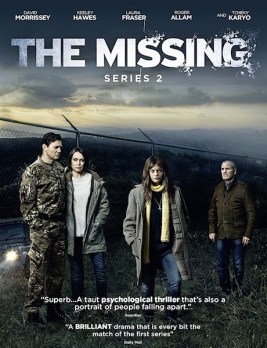 While everybody’s busy fawning over Happy Valley (never watched it) and Line of Duty (series one was quite good; I need to catch up), I reckon The Missing is one of the best dramas British TV has produced in a good long while. The second series (which aired towards the end of last year over here and, coincidentally, started last Sunday in the US) is every bit the equal of the first, and possibly even better — and considering how good the first was, that really is an achievement.
 aka the BAFTAs, obv. I have to say, I thought it was a pretty dull show this year. For starters, Cirque du Soleil — impressive, but what’s it got to do with the last year in film? Why did no one write Stephen Fry some good material for his opening monologue? Then there were the awards themselves. Short on surprises — the big prizes went where expected, the smaller ones erred British. None of the American winners are committed to giving a decent speech here because they’re saving it all for the Oscars. Well, apart from the
  It must be a slow time for TV — I don’t even feel like I’ve been missing all that much. Well, X-Men spin-off Legion recently started and I haven’t got round to that yet, and 24 spin-off / sequel / continuation 24: Legacy started in the UK last night, so I’ve barely had a chance to watch it (I’ll have something to say about that next month, then). So I really have no excuse for not watching Westworld yet. Oh, and I need to get on with starting my long-planned re-watch of Twin Peaks, because there are only…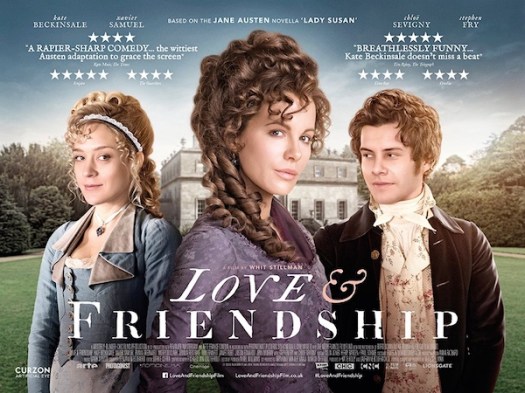






 100Films.co.uk