Back from the U.S. of A.

I have returned, dear readers! (If you’re thinking “returned from where?”, the last section of this post may be enlightening.)

I left dear old Blighty behind to travel halfway around the world to visit…

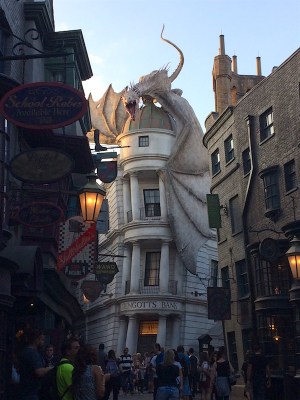
London

London

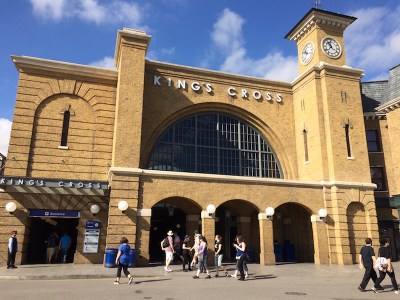
But it’s not like the real London, oh no! Partly because its sense of our capital’s geography is entirely fictional, partly because that frontage hides…

Diagon Alley

Diagon Alley

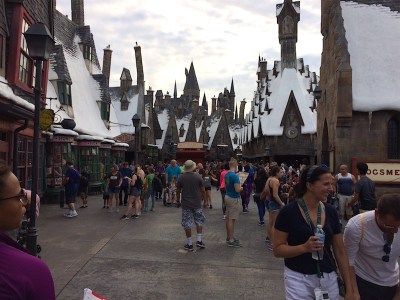
Also because apparently Scotland is both covered with snow and warm enough for shorts…

Hogsmeade

Hogsmeade

If you’ve enjoyed these few holiday snaps, that’s fantastic, because I’ll be sharing 372 more in a series of posts beginning next week!

(Not really.)

Anyway, I’m relatively freshly back, so have a whole pile of comments and posts to catch up on, not to mention actually writing some of my own backlog of reviews. And getting on with wrapping up 100 Favourites — indeed, #100 is tomorrow.

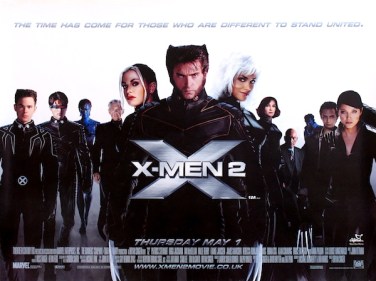
X2 (2003)

100 Films’ 100 Favourites #99

The time has come for those who are different to stand united.

Also Known As: X-Men 2 (promotional/DVD title), X2: X-Men United (US promotional title)

Country: USA & Canada
Language: English
Runtime: 134 minutes
BBFC: 12A
MPAA: PG-13

Original Release: 25th April 2003 (Lithuania)
UK Release: 1st May 2003
US Release: 2nd May 2003
First Seen: cinema, May 2003

Stars
Hugh Jackman (Van Helsing, The Prestige)
Patrick Stewart (Dune, Hamlet)
Ian McKellen (Gods and Monsters, Mr. Holmes)
Brian Cox (Braveheart, Troy)
Alan Cumming (Emma, Josie and the Pussycats)

Director
Bryan Singer (Apt Pupil, X-Men: Days of Future Past)

Screenwriters
Michael Dougherty (Superman Returns, Trick ‘r Treat)
Dan Harris (Superman Returns, Imaginary Heroes)
David Hayter (X-Men, Wolves)

Story by
David Hayter (The Scorpion King, Watchmen)
Zak Penn (Last Action Hero, The Incredible Hulk)
Bryan Singer (X-Men, The Triangle)

Based on
The X-Men, comic book superheroes created by Stan Lee and Jack Kirby. In part inspired by the graphic novel God Loves, Man Kills by Chris Claremont and Brent Anderson.

The Story
When a mutant attempts to assassinate the president, military scientist William Stryker uses it as a pretext to step up his persecution of mutants. With the X-Men occupied hunting for the would-be assassin, the school is attacked and the remaining students flee with Wolverine — whose still-mysterious past has some connection to Stryker.

Our Heroes
The X-Men, a team of mutants — humans who have evolved superpowers — organised by Professor Charles Xavier. As well as returning heroes Wolverine, Cyclops, Jean Grey, Storm, and Rogue (see X-Men), the roster this time includes Bobby Drake, aka Iceman, who can generate and manipulate ice, and John Allerdyce, aka Pyro, who can control fire. Plus Kurt Wagner, aka Nightcrawler, a demonic-looking blue-skinned German teleporter.

Our Villains
Col. William Stryker, a military scientist who wants to eradicate mutants, and plans to use Xavier’s mutant-finding Cerebro machine to do so. Has a role in Wolverine’s mysterious past…

Best Supporting Character
Imprisoned at the end of the last film, Magneto is tortured by Stryker for information on Cerebro… until he escapes and teams up with the X-Men to stop the new threat.

Memorable Quote
“Have you ever tried… not being a mutant?” — Bobby’s mom

Memorable Scene
When Stryker launches a military assault on the school, Wolverine goes full berserker to defend the students, before he comes face to face with Stryker — as it turns out, not for the first time.

Write the Theme Tune…
I’ve always loved John Ottman’s main theme for X2, so I’ve been very pleased that Bryan Singer has made it the recurrent theme for the X-Men series since he retook the directorial reins for Day of Future Past. Its appearance there is quite short, but Apocalypse has two fantastic renditions.

Making of
The set for Stryker’s underground base was the largest in North America at the time — so large that cast and crew used bicycles to get to the bathroom as quickly as possible. Some areas of the set weren’t even used in the film, such as a room that was to be the setting of a Nightcrawler vs. Toad fight. (Several other sets were built and not used, including the X-Men’s famous Danger Room training centre. After also dropping its inclusion from the first X-Men, it finally turns up in The Last Stand.)

Previously on…
The film that started the modern era of comic book movies, X-Men.

Next time…
The trilogy was rounded out by X-Men: The Last Stand, though answers about Wolverine’s past were saved for spin-off movie X-Men Origins: Wolverine. More history was revealed in prequel X-Men: First Class, before time travel adventure X-Men: Days of Future Past combined both casts. The prequels continued with this summer’s ’80s-set X-Men: Apocalypse, with a ’90s-set follow-up in the works. Spin-offs include The Wolverine and next year’s third Wolverine movie, Logan, as well as Deadpool, the perpetually delayed Gambit, and X-Men: The New Mutants. TV series Legion is based on the X-Men licence but may or may not be connected to the films, and other connected (or not) TV series are in development.

Awards
1 Saturn Award (Science Fiction Film)
6 Saturn nominations (Director, Writing, Music, Costumes, Make Up, Special Effects)
Nominated for the Hugo for Best Dramatic Presentation, Long Form
2 Kids’ Choice Awards nominations (including Favorite Female Butt Kicker (Halle Berry))
1 MTV Movie Awards Mexico nomination (Sexiest Female Villain (Rebecca Romijn) — she lost to Demi Moore in Charlie’s Angels: Full Throttle)

What the Critics Said
X2 is also possessed of an emotional complexity that won’t surprise comics fans, but will delight connoisseurs of the summer blockbuster. […] The plot, in which hatred of a minority group threatens to spark a global war, is frighteningly topical and Singer doesn’t flinch from showing that resolution often comes at a bitter price — albeit one which paves the way for a pleasingly inevitable X3. Yet it’s not all FX-augmented naval-gazing. Though it does get very dark, X2 is unashamedly entertaining, with crowd-pleasing moments for geeks (the appearance of metal-skinned muscle man Colossus in full armoured form should benefit upholsterers everywhere) and non-geeks (a Nightcrawler-led mid-air rescue is exhilarating) alike.” — William Thomas, Empire

Score: 86%

What the Public Say
“it was the perfect superhero film sequel, the one that truly set the bar for all future sequels (and many managed to match it, thankfully.) Singer understood what worked about the first film, he understood that the audience wanted ‘more of the same’ but not just the same story over again. The core elements were preserved. The team’s personalities, diversity, and relationships that formed the emotional core of the first film, and were the most faithful thing about Singer’s adaptation, were carried on, as was the emphasis on Magneto (Ian McKellen) and Charles’ (Patrick Stewart) relationship and contrasting philosophies. The driving elements of the plot, though different than the driving elements of X-Men‘s plot, didn’t feel like they ‘came out of nowhere.’ Everything felt familiar without necessarily being the same. The ‘new’ elements that were introduced really did broaden the world, but were based in elements X-Men had already established. […] Although I, unlike many fans, didn’t consider this an improvement over Singer’s first X-Men film, I also don’t think it needed to be. And despite my preference for the first film, X2 was to a certain extent really when the series hit its stride and showed that it had staying power.” — Kat, Love. Think. Speak.

Verdict

If there’s one trend in the modern superhero era that’s gone under-analysed (at least as far as I’m aware), it’s this: sequels that are better than their predecessor, upending the accepted order of things. It’s not a universal occurrence (Iron Man 2, anyone?), but it happens often enough that many reviews of first films now note they’re setup for a sequel. And as with so many things in the current superhero epoch, it started with the X-Men.

Personally I’ve always slightly preferred the first movie, but X2 does polish up the action sequences, engages with the series’ thematic subtexts in an effective manner, and adds significantly to the ongoing mystery of Wolverine’s past. Coupled with a shock ending that teased a big plot to come, everything looked so good for the third movie. Sadly, the whole “sequels are better” thing still doesn’t regularly extend to third movies. (Suffice to say, The Last Stand will not be next week’s #100.)

#100 is the moment when… Ewan McGregor drops his Jedi knickers and pulls out his real lightsaber.

X-Men (2000)

100 Films’ 100 Favourites #98
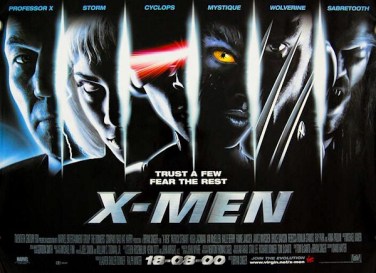
Trust a few.
Fear the rest.

Country: USA
Language: English
Runtime: 104 minutes
BBFC: 12
MPAA: PG-13

Original Release: 13th July 2000 (Australia)
US Release: 14th July 2000
UK Release: 18th August 2000
First Seen: cinema, 2000

Stars
Hugh Jackman (Oklahoma!, Les Misérables)
Patrick Stewart (Star Trek: First Contact, Green Room)
Ian McKellen (Richard III, The Lord of the Rings)
Anna Paquin (The Piano, Margaret)
Famke Janssen (GoldenEye, Taken 2)
James Marsden (Gossip, The Box)
Halle Berry (B*A*P*S*, Catwoman)

Director
Bryan Singer (The Usual Suspects, Superman Returns)

Screenwriter
David Hayter (The Scorpion King, Watchmen)

Story by
Tom DeSanto (producer of Apt Pupil & Transformers)
Bryan Singer (Public Access, Superman Returns)

Based on
The X-Men, Marvel comic book superheroes created by Stan Lee and Jack Kirby; and in particular Wolverine, a comic book superhero created by Roy Thomas, Len Wein, and John Romita, Sr.

The Story
In a near future where some humans have mutated to have extraordinary powers, and consequently are hated and feared by the general population, a runaway teen comes under the protection of a mysterious stranger. As a radical leader hunts them for his world-changing scheme, they encounter a school for mutants — and the superpowered team who teach there.

Our Heroes
The X-Men, a team of mutants — humans who have evolved superpowers — organised by Professor Charles Xavier, a wheelchair-bound telepath. There’s team leader Scott Summers, aka Cyclops, who shoots force beams from his eyes; Dr. Jean Grey, potentially an even more powerful telepath than Professor X, who can also move things with her mind; Ororo Monroe, aka Storm, who can control the weather. We’re led into their world by teen runaway Marie, aka Rogue, who can absorb people’s energy, and her reluctant protector, Logan, aka Wolverine, who has metal claws in his hands, can heal really fast, and can’t remember most of his past.

Our Villain
Erik Lehnsherr, aka Magneto, who can manipulate metal. A one-time friend of Xavier’s, they parted ways over his beliefs that mutants and humans couldn’t coexist, which leads him to violently oppose mutant oppression.

Best Supporting Character
Mystique, one of Magneto’s gang, who runs around naked — but that’s because her skin’s blue and bumpy and stuff, so it’s OK. She can shape shift into the form of anyone she’s made contact with, which is very useful for her and very tricky for our heroes.

Memorable Quote
Magneto: “Does it ever wake you in the middle of the night, the feeling that one day they will pass that foolish law, or one just like it, and come for you and your children?”
Xavier: “It does indeed.”
Magneto: “What do you do, when you wake up to that?”
Xavier: “I feel a great swell of pity for the poor soul who comes to that school looking for trouble.”

Memorable Scene
As Magneto, Sabretooth and Toad exit a train station with a kidnapped Rogue, they’re greeted by a sea of policemen. With his powers, Magneto takes all their guns and turns them on their owners. Then Sabretooth grabs Magneto’s throat — he’s being mind-controlled by Xavier. Magneto fires all the weaponry in his control, but stops the bullets just short of their targets — unless Xavier lets him go…

Truly Special Effect
Superheroes really needed the modern era of CGI to make them possible — and, as with everything else, X-Men led the way. Probably the most memorable are Mystique’s skin-changing transformations, which involved 8,000 scales animated in different directions.

Making of
Stanley Kubrick is responsible for the casting of Wolverine. No, really. Well, sort of. Here’s how it goes: Kubrick’s famous perfectionism meant the filming of Eyes Wide Shut overran; that meant star Tom Cruise had to delay his next project, Mission: Impossible II; that sequel finishing later than scheduled meant Dougray Scott — who played the lead villain in M:I-2 and was originally cast as Wolverine — had to drop out of X-Men, which was already on an insanely tight schedule to make its release date. Hugh Jackman was cast on the recommendation of his friend Russell Crowe, who had been sought for the role, and only joined the production several weeks into filming. Apparently if you look closely you can see Jackman’s physique change in various scenes because he was working out extensively while filming continued.

Previously on…
Although this is the first X-movie, I’m sure the enduring popularity of the 1992-1997 animated series can’t’ve hurt the film’s success.

Next time…
In an immediate sense, X2. After that, multiple direct sequels, prequels, and spin-offs. Plus the entire current multitude of comic book movies owe their existence to this film being (a) good, and (b) a hit. Whether that’s a mark for or against X-Men is up to you.

Awards
6 Saturn Awards (Science Fiction Film, Actor (Hugh Jackman), Supporting Actress (Rebecca Romijn), Director, Writing, Costumes)
4 Saturn nominations (Supporting Actor (Patrick Stewart), Younger Actor (Anna Paquin), Make-Up, Special Effects)
Nominated for the Hugo for Best Dramatic Presentation
1 World Stunt Award nomination (Best Speciality Stunt for “Wolverine blown out of truck”)

What the Critics Said
“After trying for decades, Marvel Comics finally may gain the kind of pop-cultural cachet that only comes from a major leap into movies. That movie is X-Men, a fully realized translation of comics’ adolescent power fantasies to adult-level, big-screen entertainment. It’s a film X-Men fans can embrace and action fans in general can appreciate. It has emotion and a solid story to go with its mayhem, and the comics’ central themes aren’t betrayed. Director Bryan Singer gets bang for his buck. At $75 million, X-Men was a modest and rushed shoot for an action showcase, yet its computer generated imaging effects are handsome, and it gleams with polished production design.” — Bruce Westbrook, Houston Chronicle

Score: 81%

What the Public Say
“this is a superhero movie with ideas, fully aware of the potential social commentary inherent in its source material. It paints simplistically, in broad strokes, but elegantly. It feels small-scale but full-bodied, and it takes storytelling risks. I mean, the damn thing opens on a concentration camp. The main characters being mutants, discriminated against by ‘normal’ people, gives the screenplay the opportunity to use this as a catchall allegory. Any feared or shunned group of people can find familiar themes at work in the world of the film. […] reflecting on the first X-Men solidifies its status as not just a prelude of better things to come, but as quite a strong movie in its own right. After seeing the franchise move the Golden Gate Bridge, travel decades in time, and resurrect an Egyptian god, it’s refreshing to rewind to this one humble tale of ‘the not too distant future’. The 2000 film has a great lo-fi charm to it, while at the same time being lent gravitas by McKellen and Stewart’s war of wills. It holds up not just as a curiosity, but also as a well-told story of mutants and morals.” — Paul Stanis, A Voyage through Film

Verdict

I’ve written before (several times) of my near-lifelong fandom of the X-Men. This isn’t where it started (that’d be the classic ’90s animated series), but it certainly helped cement it. Its significance to the current movie landscape is hard to underestimate: it took the superhero subgenre, which hadn’t actually produced that many major movies and had nonetheless reached a comedic nadir with Batman & Robin, and made it respectable blockbuster fodder, which leads directly to where we are today. And the reason it sparked all that is because it’s a quality entertainment in its own right, mixing superpowered action with weighty themes and top-drawer performances from a cast who are almost all better than this, elevating the material rather than besmirching themselves with it. I mean, even without the witty lines and tightly choreographed fisticuffs, anything that has Patrick Stewart and Ian McKellen verbally sparring over a game of chess is bound to bring satisfaction.

#99 will be… X-Men united.

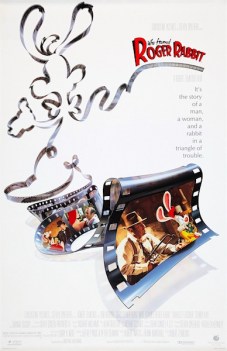
Who Framed Roger Rabbit (1988)

100 Films’ 100 Favourites #97

It’s the story of a man, a woman,
and a rabbit in a triangle of trouble.

Country: USA
Language: English
Runtime: 104 minutes
BBFC: PG
MPAA: PG

Original Release: 22nd June 1988 (USA)
UK Release: 2nd December 1988
First Seen: VHS, c.1991

Stars
Bob Hoskins (The Long Good Friday, Super Mario Bros.)
Christopher Lloyd (Back to the Future, Addams Family Values)
Charles Fleischer (A Nightmare on Elm Street, Gridlock’d)
Kathleen Turner (Romancing the Stone, The Virgin Suicides)

Director
Robert Zemeckis (Back to the Future, Beowulf)

Screenwriters
Jeffrey Price (Doc Hollywood, Dr. Seuss’ How the Grinch Stole Christmas)
Peter S. Seaman (Wild Wild West, Shrek the Third)

Based on
Who Censored Roger Rabbit?, a novel by Gary K. Wolf.

Animation Director
Richard Williams (Raggedy Ann & Andy: A Musical Adventure, The Thief and the Cobbler)

The Story
When cartoon movie superstar Roger Rabbit is accused of murder, rundown private detective Eddie Valiant overcomes his dislike of toons to take the case — which masks a much bigger conspiracy…

Our Heroes
Eddie Valiant is an alcoholic Hollywood PI who used to work high-profile cases involving toons, but now dislikes them because one killed his brother. Nonetheless, an innate sense of justice (and a pair of handcuffs) brings him to the aid of Roger Rabbit, the manic major cartoon star who’s accused of murder and on the run for his life.

Our Villain
The cheerily named Judge Doom, the sinister and literally-black-hatted judge responsible for Toontown who has developed a special substance especially for killing toons, called “Dip”. Very keen to introduce Roger to it.

Best Supporting Character
Jessica Rabbit, Roger’s human (well, cartoon human) wife. A slinky, sexy, 2D femme fatale, she’s the cartoon character even people who aren’t attracted to cartoon characters are attracted to.

Memorable Quote
“I’m not bad, I’m just drawn that way.” — Jessica Rabbit

Memorable Scene
When Judge Doom and his henchmen discover Roger in hiding, he and Eddie escape in a cab — an anthropomorphic toon cab called Benny. Cue a chase involving a real human in a cartoon vehicle, which exemplifies the film’s technical chutzpah.

Technical Wizardry
The whole film is a technical marvel, what with many of the lead characters being created in 2D animation integrated into live-action footage. What’s even more impressive is that they’re 2D characters who exist convincingly within a 3D space. Production went to a lot of effort to pull this off, including using life-size models on set. (And if you need proof of how hard it is to do right, watch Cool World.) In total, 326 animators worked full-time on the film, drawing and painting 82,080 frames of animation. Animation director Richard Williams estimates that, after including storyboards and concept art, well over a million drawings were completed for the film.

Making of
With a production budget estimated at $70 million, Roger Rabbit was the most expensive film produced in the ’80s. Animation is expensive, of course, and the team were dedicated: when Eddie takes Roger Rabbit into the backroom of the bar to cut the handcuffs, the ceiling lamp is bumped and swings around, meaning lots of work for the animators to match the shadows between the live-action footage and the animation — something most viewers aren’t even going to notice, at least not consciously. Apparently “bump the lamp” has since become a term used by Disney employees to mean going the extra mile to make something special even when most viewers won’t notice.

Next time…
Three short animations starring Roger Rabbit were made to promote the film and screened with other movies (they’re all available on the DVD/Blu-ray release). Although the original book is very different (and therefore any sequels to it are presumably unlikely to provide suitable movie material), Gary K. Wolf has nonetheless penned two follow-ups: 1991’s Who P-P-P-Plugged Roger Rabbit? and 2014’s Who Wacked Roger Rabbit? Talk of a movie sequel has occurred ever since the original film was a hit — J.J. Abrams met with Spielberg in 1989 to work on an outline and storyboards, for example. Nat Mauldin wrote a prequel titled Roger Rabbit: The Toon Platoon, about Roger and his animated friends having to rescue Jessica from the Nazis in 1941, but Spielberg decided he couldn’t satirise the Nazis after directing Schindler’s List. Retitled Who Discovered Roger Rabbit, the screenplay was reworked to cover Roger’s rise to fame on Broadway. That version got quite far: Alan Menken wrote five songs and test footage was shot that mixed live-action, traditional animation and CGI, but it was abandoned when the budget spiralled over $100 million. Nonetheless, various people involved have expressed their interest ever since, with numerous scripts supposedly in the works. Even Bob Hoskins’ death hasn’t stopped such talk, though it seems to have led to a definite focus on any follow-up being a prequel.

Awards
4 Oscars (Editing, Sound Effects Editing, Visual Effects, Special Achievement Award to Richard Williams for “animation direction and creation of the cartoon characters”)
3 Oscar nomination (Cinematography, Art Direction-Set Decoration, Sound)
1 BAFTA (Special Effects)
4 BAFTA nominations (Adapted Screenplay, Cinematography, Editing, Production Design)
1 Annie Award (Technical Achievement)
3 Saturn Awards (Fantasy Film, Director, Special Effects)
5 Saturn nominations (Actor (Bob Hoskins), Supporting Actor (Christopher Lloyd), Supporting Actress (Joanna Cassidy), Writing, Music)
Won the Hugo for Best Dramatic Presentation

What the Critics Said
“This splendidly entertaining film, which craftily combines live action with cartoon animation, […] is an absolutely new and novel motion-picture concept. Illusion on the big screen has never been better executed or more uproarious in effect. Assuming you can withstand the laughs during the first 10 minutes of the film — with its dazzling, breakneck animated sequence and introduction of the goofy star, Roger — then brace yourself; you`re in for the ride of your life, disbelieving all you will see and hear.” — Roger Hurlburt, Sun Sentinel

Score: 97%

What the Public Say
Who Framed Roger Rabbit is not a children’s film; it’s too noir for that; there’s scenes of drinking, smoking, sexual intrigue and murder. The strong animated aspect, however, draws children into the film and these dark overtones engage them in a completely different way. That’s one of the things that’s so special about Roger Rabbit; you feel as if you’re watching a film made for an adult audience using elements that appeal to one’s more childish side. The USA and UK ratings of the film are a PG, so younger audiences can still watch. However, the twisting noir-esque plot focusing on Judge Doom’s attempt to destroy The Red Car trolley service and ToonTown in order to build a freeway can be hard enough for adults to follow. […] This is why the film works so well; everyone is committed and the characters show no awareness that they’re in a PG rated noir with elements of comedy; they commit as if they are in a 1940s, life-or-death, grown-up movie.” — queenieem, the6fingeredblog

Verdict

“Effects movies” used to mean lots of model work and now of course means non-stop wall-to-wall CGI, but you could also apply it to Roger Rabbit, considering the monumental effort involved in animating half the cast, not to mention props and locations. But that would undersell it, because while the technical achievement remains impressive today (bearing in mind the limitations of the time) it’s all in service of the characters and the story. Even as you marvel at the visuals, you’re engrossed by the mystery and kept amused by the gags, including clever and witty references to cartoons and film noir.

I’ve always liked Roger Rabbit, but I re-watched it recently for this project and discovered I really love it. I think it’s underrated, even — it’s a masterpiece.

#98 will be… the beginnings of another stage of human evolution.

Midnight Special (2016)

2016 #145
Jeff Nichols | 112 mins | streaming (HD) | 2.35:1 | USA & Greece / English | 12 / PG-13

Midnight SpecialI’m not sure I’d even heard the name Jeff Nichols before Midnight Special came along, at which point most of the gushing reviews that followed seemed to mention him with cult-like reverence. He’s the writer and director, by the way, for anyone still in the dark, and unbeknownst to me (and, I rather suspect, most people outside certain cinephile circles) he’d amassed something of a following over his first three movies (Shotgun Stories, Take Shelter, and Mud, two of which I’d at least heard of). It’s kind of odd to feel like everyone else loves this guy and has been eagerly anticipating his next work and is now discussing how it chimes with his existing canon, when you’ve not even heard of him.
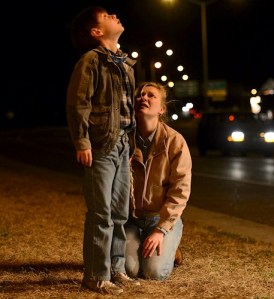
Anyway, his latest film* has a plot that makes me want to dub it Starman: A World Beyond… though that might indicate something about the ending, so, uh, shh! Anyway, the story concerns a dad (Michael Shannon) who’s kidnapped his son (Jaeden Lieberher) from some kind of cult, and is now on the run from both the authorities and the cultists who want the kid back. All the furore stems from the fact that the kid has some kind of special abilities, one of which has given them a destination to head for and time to be there…

The story’s style has made a comparison to Spielberg the go-to, not only for reviewers but for the writer-director himself, who’s labelled the film an homage to E.T. and Close Encounters. You can see that influence, certainly, but it lacks the effortless charm that Spielberg brings to his movies. If this is Spielberg, it’s by way of more indie arthouse fare. Is that a bad thing? Not necessarily. You could argue that it’s more refreshing than any of the I want to believestraight-up Spielberg rehashes we’ve seen over the past four decades; conversely, a strand of wilful obscurity means it may be ultimately less satisfying. Again, some people derive satisfaction explicitly from that lack of resolution or explanation, while others will find it damagingly frustrating. Even more than Spielberg, I felt the thing most evoked by this structure was The X Files: intriguing sci-fi mysteries that eventually lead to semi-reveals which don’t quite satisfy in themselves in part because they’re trying very hard to remain open-ended.

In that regard, it’s arguably a little too woolly on its sci-fi elements, and executes the chase-thriller aspect of its plot too slowly, to be fully considered a genre movie; but it’s also too indistinct on its cast to fully convince as a character-driven drama. You can certainly begin to infer some things about what their exact motivations are, what they’re thinking and feeling and why they’re doing what they do, but I’m not sure if it’s actually there or if I’m endeavouring to build something out of the little that we’re given. That said, if I’m prepared to do Zack Snyder the courtesy of reading something into his work that may or may not be there (cf. Sucker Punch), then Jeff Nichols deserves at least the same level of kindness. But for the kind of movie whose style makes it seem like it should be about Character or Theme over more genre- and/or narrative-focused concerns, it feels there’s an awful lot of attention paid to plot over anything else. Speaking as a fan of sci-fi and high-concepts and B-thrillers and blockbusters, I actually think I’d’ve liked it more if it toned down the sci-fi and the plot, and instead focused on the characters’ soul-searching and the unusual family dynamics.

That said, there’s some great imagery. Mainly the sci-fi stuff at the end — I don’t think it’s unfair to describe most of the movie as looking solidly unremarkable, but the climax is pretty darn good. However, I’ve read many reviews that criticise the effects. Are we not past that yet? Especially when it comes to a film of this budget and scale. Nuclear familyI thought they perfectly conveyed what they were intending to convey — usually, just a kind of otherworldly light. It’s not like it’s even over-stretching its means, like so many network TV series or Sharknado-esque movies do when they try to emulate a $200 million blockbuster on a TV budget. If you’re expecting some grand CGI, maybe go watch one of those $200 million blockbusters instead of an $18 million drama.

Midnight Special seems to provoke a wide range of responses — I mean, you can say that about most films, ultimately; but some more so than others, and skimming across reviews and comments online, this is definitely one of them. Fans of American indie-ish drama-driven semi-genre movies, or of more thoughtful science-fiction, will surely want to give it a go, but how much you’ll connect with its characters or its ideas seems to be a roll of the dice. I liked it well enough, but I don’t remember seeing any particular indication of what’s inspired the notion that we should all be fawning over Jeff Nichols as the best auteur to happen to cinema since sliced bread. (Sliced bread’s early movies were great, weren’t they?)

3 out of 5

Midnight Special is on Sky Cinema from today.

* In a coincidental similarity to when I started viewing the work of another much-hailed star-to-be indie director (Ben Wheatley), I’m beginning with his fourth film. ^

V for Vendetta (2005)

100 Films’ 100 Favourites #96

Freedom! Forever!

Country: UK, USA & Germany
Language: English
Runtime: 132 minutes
BBFC: 15
MPAA: R

Original Release: 23rd February 2006 (Finland)
UK Release: 17th March 2006
US Release: 17th March 2006
First Seen: cinema, 2006

Stars
Natalie Portman (Léon, Thor)
Hugo Weaving (The Matrix, Captain America: The First Avenger)
Stephen Rea (The Crying Game, Underworld Awakening)
Stephen Fry (Wilde, The Hobbit: The Desolation of Smaug)
John Hurt (Alien, Hellboy)

Director
James McTeigue (Ninja Assassin, The Raven)

Screenwriters
The Wachowski Brothers (The Matrix, Speed Racer)

Based on
V for Vendetta, a graphic novel by Alan Moore & David Lloyd.

The Story
In the near future, Britain is ruled by a tyrannical fascist government — considering the film was made in 2005, it’s probably set in about 2016 right? Anyway, masked freedom fighter V has his sights set on overthrowing the oppressive regime, partly in revenge for what they did to him…

Our Heroes
In lieu of the more commonplace sobriquet, permit me to suggest the character of this dramatis persona. Voilà! In view, a humble vaudevillian veteran, cast vicariously as both victim and villain by the vicissitudes of Fate. His visage, no mere veneer of vanity, is a vestige of the vox populi, now vacant, vanished. However, this valorous visitation of a by-gone vexation, stands vivified and has vowed to vanquish the venal and virulent vermin vanguarding vice and vouchsafing the violently vicious and voracious violation of volition. The only verdict is vengeance; a vendetta, held as a votive, not in vain, for the value and veracity of such shall one day vindicate the vigilant and the virtuous. Verily, this vichyssoise of verbiage veers most verbose, so let me simply add that you may call him V. Also Evey, a young woman V rescues and subsequently takes under his wing as a kind of protégée.

Our Villains
The fascist regime ruling near-future England, led by Supreme Chancellor Donald Trump Adam Sutler and enforced by numerous toadies.

Best Supporting Character
Gordon Deitrich is a TV host who delivers government-sanctioned comedy to the masses, despite his distaste for the regime. Could something inspire him to stand up for what’s right? But at what cost?

Memorable Quote
“People should not be afraid of their governments. Governments should be afraid of their people.” — V

Memorable Scene
Bit of a spoiler, this, but the film’s most memorable imagery comes at the end: after V successfully blows up the Houses of Parliament, there is a massive crowd of onlookers, all wearing V’s Guy Fawkes mask. Then they take the masks of, revealing hundreds of ordinary people — including deceased characters. It’s allegorical, see.

Technical Wizardry
The fight between V and a group of government agents in Victoria Station was shot at 60fps to play in slow motion, but the effect was emphasised further by having the stuntmen playing the agents actually move in slow motion, while stuntman David Leitch (later co-director of John Wick, fact fans) as V moved in real time, making it seem as if he was moving much faster than them.

Truly Special Effect
The scene where V is ‘born’ from fire isn’t CGI: stuntman Chad Stahelski (later co-director of John Wick, fact fans) actually walked through fire wearing nothing but fire-resistant gel and a g-string. His body temperature had to be lowered before the scene was shot. Fortunately, it was -3°C on the night of the shoot; then, 15 minutes before a take, Stahelski put on ice-cold flame-resistant clothing; when he took that off, he was covered with the fire-resistant gel, which had been on ice all day. Each to their own, eh?

Making of
James Purefoy was originally cast as V, but pulled out four weeks into filming and was replaced by Hugo Weaving. Because V wears his mask at all times, his dialogue is dubbed throughout (they tried attaching mics to the mask, but they didn’t work well), so the footage starring Purefoy was retained and Weaving’s voice was placed over it. Director James McTeigue later commented, “Can I tell the difference? Yeah. Can the audience tell? I doubt it.”

Awards
1 Saturn Award (Actress (Natalie Portman))
3 Saturn nominations (Science Fiction Film, Writing, Costume)
Nominated for the Hugo for Best Dramatic Presentation Long Form

What the Critics Said
“Just when we were ready to give up mainstream movies as braindead, along comes the controversial and gleefully subversive V for Vendetta, a piece of corporate-sponsored art that will have audiences rooting for a bomb-throwing anarchist. […] Much to the film ‘s credit, and to the exasperation of its critics, the audience is left to decide for itself whether V is a terrorist, freedom fighter, vengeance-seeking psychotic, or maybe all three simultaneously – and whether his extreme actions are a justifiable response to government repression. This pretty heady stuff for a big-budget comic-book movie” — Lou Lumenick, New York Post

Score: 73%

What the Public Say
“Halfway through it occurred to me that ten years had passed since the film’s release. TEN YEARS. And yet the film’s overriding themes: the dangers of fascism, how fear can affect our actions, privacy versus the oft used term ‘national security,’ freedom of speech, intolerance of members of the LGBT community, and the manipulation and dissemination of information, are still very relevant today. Maybe even moreso. What separates good movies from great movies, often comes down to social relevance throughout the decades. Can it stand the test of time? Does it mean something similar in today’s society as it did when the film was first released? This is why films like Metropolis and Citizen Kane and In the Heat of the Night are still studied in film classes. Their themes are universal, something that can apply to most decades. V for Vendetta fits that category to a T.” — Darth Gandalf, Funk’s House of Geekery

Verdict

Alan Moore and David Lloyd’s dystopic graphic novel was a reflection of the 1980s England in which it was originally published; then the film adaptation became a reflection of the mid-’00s world in which it was produced; and then it began to influence that world, with V’s Guy Fawkes mask becoming widely recognised as a symbol for certain protest groups. Although dressed up as part of an entertaining action movie, the story’s real topic is the rights and wrongs of government, and our attitudes and responsibilities towards it as citizens. That message feels as relevant as ever after the events of this year. Perhaps it always will — like George Orwell’s 1984, an enduring warning against things going too far. Let’s pray it’s heeded.

#97 will be… an animation investigation.

Unbreakable (2000)

100 Films’ 100 Favourites #95

Are you ready for the truth?

Country: USA
Language: English
Runtime: 107 minutes
BBFC: 12
MPAA: PG-13

Original Release: 22nd November 2000 (USA)
UK Release: 29th December 2000
First Seen: DVD, 2001

Stars
Bruce Willis (Armageddon, Looper)
Samuel L. Jackson (Pulp Fiction, Avengers Assemble)
Robin Wright Penn (The Princess Bride, The Conspirator)

Director
M. Night Shyamalan (The Sixth Sense, The Village)

Screenwriter
M. Night Shyamalan (Stuart Little, The Visit)

The Story
When security guard David Dunn is the only survivor of a train crash, and without a scratch on him, he encounters comic book fan Elijah Price, who has an unusual theory: that David is indestructible, a real-life superhero.

Our Hero
David Dunn is just an ordinary guy, with a low-key job and a wife and kid, but after his near-impossible feat of survival he begins to test himself. Could he be more remarkable than he ever imagined?

Our Villain
Spoilers! Which, considering this is an M. Night Shyamalan movie, is basically a red flag saying “here’s where the twist is”. All I’ll say is, keep an eye on David’s kid, Joseph. I mean, pointing a gun at your parent is never innocent, is it?

Best Supporting Character
Comic book art dealer Elijah Price was born with Type I osteogenesis imperfecta, a rare disease that makes his bones extremely fragile and prone to fracture. Losing himself in the world of comic book superheroes throughout his childhood, he develops a theory: that if he represents an extreme of human weakness, there must be someone at the opposite extreme…

Memorable Quote
Elijah: “Why is it, do you think, that of all the professions in the world you chose protection?”
David: “You are a very strange man.”
Elijah: “You could have been a tax accountant. You could have owned your own gym. You could have opened a chain of restaurants. You could’ve done of ten thousand things, but in the end, you chose to protect people. You made that decision, and I find that very, very interesting.”

Memorable Scene
As well as his indestructibility, David comes to believe he may have a form of ESP, that allows him to glimpse people’s criminal acts when he touches them. Encouraged by Elijah, he goes to a bustling train station, stands in the middle of the crowd, and holds out his arms…

Next time…
Reportedly the plot of Unbreakable was merely Act One of Shyamalan’s original concept, until it wound up expanding into an entire movie. Talk of a sequel and/or trilogy used to occur regularly, but Shyamalan made a bunch of crap no one liked instead. 16 years on, I guess hopes of a continuation are long dead.

Awards
1 Saturn nomination (Action/Adventure/Thriller Film)

What the Critics Said
The Sixth Sense was no fluke. Unbreakable, writer-director M. Night Shyamalan’s dazzling reunion with Bruce Willis confirms he’s one of the most brilliant filmmakers working today. […] The deliberately paced Unbreakable, make no mistake about it, is a vehicle form-fitted to Bruce Willis’ burgeoning gifts as an uncommonly subtle and affecting actor. Willis should get the Oscar nomination he deserved for The Sixth Sense, and Jackson’s enigmatic Elijah – who has devoted his life to searching for the sole survivor of a disaster, for reasons that won’t be explained here – is equally commanding in a difficult if somewhat underwritten role.” — Lou Lumenick, New York Post

Score: 68%

What Quentin Tarantino Says
“The final film, alphabetically, on my top twenty list is M. Night Shamalamadingdong’s Unbreakable, which I actually think, 1) not only has Bruce Willis’ best performance on film that he’s ever given. I think he’s absolutely magnificent in the film. It also is a brilliant retelling of the Superman mythology. In fact, so much so that, to me, the film was very obscure when it came out as far as what it was about. I actually think they did themselves a disservice, because you can actually break down what the film is about by basically one sentence, that I should think would’ve proved far more intriguing than their ad campaign, which is basically, “what if Superman was here on Earth and didn’t know he was Superman?”, which is what the film is about. Course, you don’t know that until actually you see the movie. Anyway, Unbreakable is, I actually think, one of the masterpieces of our time.” — Quentin Tarantino’s Favourite Movies from 1992 to 2009

What the Public Say
“The story is unique… I mean we see stories about superheroes everywhere… everywhere, and despite things here and there changed, they are still the same stories we have heard a thousand times before. This film had an original story that was both compelling and intense. The use of the camera angles is so well done it is a shock that Unbreakable is not at the top of everyone’s favorite Shyamalan film. It is masked under the presumption that it is moving slowly, because in reality… a lot is going on.” — Dave, Dave Examines Movies

Verdict

Some people view Unbreakable as the start of M. Night Shyamalan’s inexorable quality slide after the debut peak of The Sixth Sense (not that it was his debut). Those people are wrong. Partly because that degeneration doesn’t really start until the final act of The Village; partly because Unbreakable is Shyamalan’s best film. We’ve now had countless big-screen takes on superhero mythology, but none are quite like this. Man of Steel may have attempted to ask “what would happen if Superman were real?”, but it’s Unbreakable that better answers that question. With subtle performances, including arguably a career-best turn from Bruce Willis, and a plausible handling of its fantastical material, which nonetheless develops into a satisfying climax, Unbreakable is still one of the most original and best superhero movies ever made.

#96 will be… gunpowder, treason, and plot.

The Past Fortnight on TV #11

As discussed yesterday, I’m out of the country for a fair chunk of December, including when my regular monthly TV review is due. So to placate the ravenous need for my opinions about television that you will surely feel if such thirst goes unquenched for six-to-eight-weeks, here’s what I watched in the fortnight since my last TV post.

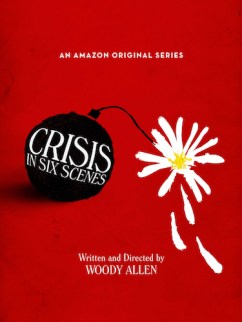
Crisis in Six Scenes
Crisis in Six ScenesWhen Amazon started making a serious effort to challenge Netflix in the field of streaming original series, one of their early moves was the headline-grabbing signing of Woody Allen to create his first TV series. As has since become clear, Allen didn’t know what he was letting himself in for. To summarise his comments from various interviews (and read between the lines a little), it seems he had a view of TV that’s about 20 years out of date, and thought he’d be able to dash off something suitable between two of his annual movies. At some point he obviously realised how much more sophisticated TV has become, and coopted a movie idea he’d had on the back-burner to expand into a short TV season. Allen’s been vocal about how miserable he found this process, but I’m not sure if he’s aware that he made a rod for his own back: he essentially made three movies in two years instead of his usual two. It probably would’ve been wise to swap out one of the films for the TV series, but you get the sense that, despite having been shown TV’s burgeoned respectability, Allen’s still something of a film snob. Rather than the potential of TV coming as a revelation to him, he’s declared he won’t be making any more.

On the evidence of the single six-episode season we did get out of him, that’s neither here nor there: Crisis in Six Scenes is just a slightly-longer-than-average Woody Allen film split into instalments. The first episode is the worst offender in this regard — it doesn’t reach a climax of any description, it just stops. The rest of the episodes aren’t as blatant (episode five’s ending even feels like it’s genuinely meant to be the end of an episode!), but none of them are particularly satisfying as a discrete segment. I’m not really one for binge-watching — I get fidgety and want a change; or if a show’s too good, I want to savour it rather than race on — but I watched all of Crisis in one sitting, because at heart it’s just a chopped-up movie. Some characters or events are confined to a single episode, but you get the impression that’s almost incidental rather than a deliberate attempt to make six finite units. The main storylines flow between episodes like the boundaries are artificially imposed — which, in a medium without the constraints of broadcast time slots and where all the episodes are released at the same time, they are.

A scene of CrisisBut enough of the form — what of the content? This is not prime Allen, that’s for sure. At times it makes for uncomfortable viewing, when it’s hard to tell if it’s half improvised or if half the cast are just a bit doddery (and I suspect it’s the latter). Other bits do work, though, and while it isn’t massively rewarding it is amusing at times. Even less assured are some broadly political points that it seems like Allen is trying to tap into, or maybe it’s just incidental. He appears to be using the series’ 1960s setting as a mirror of the present: the plot concerns a twenty-something anti-government protestor, and there’s lots of talk about unnecessary wars, campus demonstrations, young people staging protests, rights for women and black people, etc, etc. At first blush these parallels are all well and good, but I’m not sure they develop into much more than wry observations. The best I can take from it is a result of the particularly farcical last episode, where it may be that he’s trying to say people in general should be more aware and active, like the young are — to walk the walk of political change rather than just talking the talk.
If he was trying to spread such a message, it’s a bit buried. Maybe he was just picking on some low hanging fruit. Considering Allen’s half-arsed attitude to the whole endeavour, I guess that’s more likely. Oh well.

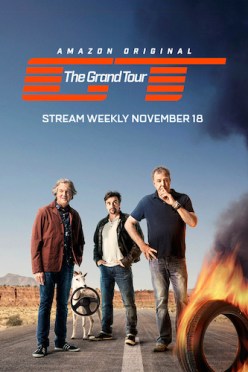
The Grand Tour (Season 1 Episodes 1-2)
The Grand TourAnother big gun in Amazon’s streaming mission, their £160 million “Not Top Gear, Honest” original series kicked off last month to widespread positive reviews and, apparently, big ratings (relatively speaking). I’m not really a ‘car person’, but like millions of others I wound up watching Top Gear during the height of the Clarkson / Hammond / May era for all the other hijinks. I thought it was going off the boil a bit even before their semi-enforced departure — I didn’t even get round to watching their last series. They come to Amazon after a short break (a long break for us, but it takes time to film these things, so, short break), and I think reinvigorated — possibly by the rest, possibly by the change of management, possibly by the huge budget.

There’s no denying that this is their Top Gear with just a few tweaks… unless you’re an Amazon lawyer, in which case it’s a completely different show. But the freedom from being a motoring programme on a public service broadcaster means they’re not quite so constrained by that remit. Episode 2, for instance, is half given over to them attacking a military training course in Jordan, a riff on Edge of Tomorrow in which they get to play at being action movie stars, and which features cars because action movies feature car chases, not because they’re actually reviewing how the motor performs while in a high-speed chase. There are still genuine car reviews, and they’re as dull / interesting (delete as applicable) as they always were. At least they’re excitingly shot and scored (still using cues from film music, as they always have).

Some bits are improved: the famous Star in a Reasonably Priced Car segment was always one of the weakest parts of the show (the track times were fun, but Clarkson is no interviewer), but here the need for celebrity guests is neatly pilloried. Conversely, a couple of things are weaker: their blatant attempt at a Stig replacement, The American, doesn’t really work. It’s also one of the bits that most feels “changed just enough to avoid a legal challenge”. I imagine there are only so many different ways to do a car show, so of course there are going to be similarities, but you could imagine them having done this as their next run of Genuine Top Gear (well, aside from the expense) without people thinking, “wow, they’ve completely changed the show!”

Still, it is what it is, and if you liked it before I can’t imagine you wouldn’t like it now, maybe even a little more.

Class (Series 1 Episodes 6-7)
ClassThe Doctor Who spin-off that no one’s watching continues with two of its strongest episodes. A two-parter that isn’t, the first is a “bottle episode”, with most of the cast stuck in detention and forced to confess their secret feelings by an alien rock. Cue arguments. Not Class’ strongest instalment — it’s a good idea, but the characters haven’t amassed quite enough secrets over just five episodes to make it feel as cathartic as it should — but it’s considerably better than the weaker ones. Even better is the next episode, which shows what Quill was up to while the kids were bickering. A world-hopping quest (presumably paid for by saving so much money on episode 6), it has several good ideas that it burns through like they’re going out of fashion. It feels most like Doctor Who, too, which provokes no complaints from me.

Next time: the Shadow Kin are back, again. Ah well.

Also watched…
  • Castle Season 7 Episodes 16-21 — by sheer bloody coincidence, the night before flying from London to the US I watched the episode where Castle flies from the US to London and has to deal with a murderer and possible terrorist on his flight. Super timing.
  • The Flash Season 3 Episodes 3-5 / Arrow Season 5 Episodes 3-5 — the much-anticipated four-way crossover between The CW’s superhero shows finished last night in the US, which means it’s at least a few weeks away over here. I’ll say something about it next time, then. Or the time after.
  • Junior Bake Off Series 4 — the main thing I take from this is that all kids are incredibly clumsy and slapdash.
  • The Moonstone — the recent BBC adaptation of Wilkie Collins’ novel, which is generally regarded as the first full-length English-language detective novel. This decent miniseries version was produced for daytime, and was the kind of series certain viewers proclaimed was good enough for prime time. It wasn’t.

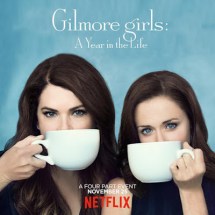
    Gilmore GirlsThings to Catch Up On
    This fortnight, I have mostly been missing Netflix’s Gilmore Girls revival, subtitled A Year in the Life. Rather than race through the four feature-length instalments between their release last Friday and our departure yesterday, we decided to save them for when we’re back, like a Christmas treat. Maybe we’ll just watch them in four days then instead, but at least we’ll feel like we have a choice.

    Next time… a festive special, looking at what seasonal delights the tellybox has provided us with this year. As far as December 29th or so, anyway.

  • The Up-to-Date Monthly Update for November 2016

    The penultimate monthly update for 2016 has a higher-than-usual compliment of films from 2016. How up-to-date of me.


    #172 Bridesmaids (2011)
    #173 Love & Friendship (2016)
    #174 Batman: Return of the Caped Crusaders (2016)
    #175 The Pianist (2002)
    #176 Kung Fu Panda 3 (2016)
    #177 Swiss Army Man (2016)
    #178 Suicide Squad (2016)
    #179 Arrival (2016)
    #180 10 Cloverfield Lane (2016)
    #181 The Deer Hunter (1978)
    #182 Fantastic Beasts and Where to Find Them (2016)
    #183 Star Trek Beyond (2016)
    #184 Napoleon (1927), aka Napoléon vu par Abel Gance
    #185 Jason Bourne (2016)
    Arrival

    Fantastic Beasts and Where to Find Them

    .


    • I watched 14 new films again this month (same as last). That makes this my 30th consecutive month with 10 or more new films.
    • As I mentioned, there were quite a few films from 2016. The total is ten, to be precise, or 71.4% of this month’s viewing. I’ll rate them when I review them, but scroll down to the Arbies for more about which I liked and disliked.
    • I spent three nights watching the 5½ hours of Abel Gance’s Napoleon, which made its hotly-anticipated Blu-ray debut this month. Still only counts as one film, though.
    • Making up for last month, I found time for two WDYMYHS films. Both are excoriating depictions of wartime: Roman Polanski’s story of life in the Warsaw ghettoes during World War 2, The Pianist; and Michael Cimino’s controversial take on the Vietnam war and its effect on (American) combatants, The Deer Hunter.


    The 18th Monthly Arbitrary Awards

    Favourite Film of the Month
    Quite a few enjoyable films this month, particularly among all those 2016 ones, but the one of the highest quality was definitely Denis Villeneuve’s venture into science-fiction drama, Arrival.

    Least Favourite Film of the Month
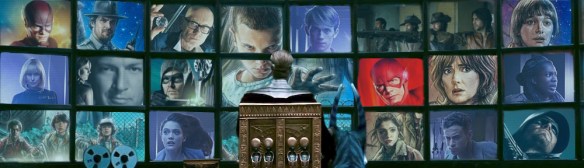
    Conversely, the weakest film this month also comes from 2016. I wanted to find the critics were wrong and side with the audiences who boosted it into the top 75 highest grossing films of all time, but no, Suicide Squad is a disappointing mess.

    Longest Film of the Year (So Far)
    I watched the ’59 Ben-Hur back in September, a film whose notoriously epic running time — 222 minutes, or 3¾ hours — would, most years, stand as unlikely to be surpassed. Thanks to the BFI, however, it has: Abel Gance’s silent epic Napoleon is a full 111 minutes longer at 333 minutes, aka 5½ hours.

    Most Consistent Use of a Song
    They’re back again: after 14 years and five films, Jason Bourne still ends with Moby’s Extreme Ways, just like every other film in the series. Never may it end.

    The Audience Award for Most-Viewed New Post of the Month
    I confess to being slightly surprised by this month’s most-seen post. Besting several new releases (Batman: Return of the Caped Crusaders was 2nd) and all-time favourites (Star Wars was 3rd), this month’s victor was my review of Denis Villeneuve’s arty psychological thriller Enemy.


    Films that broke new ground rub shoulders with ones that settled into comfortable grooves, with everything from children’s movies about toys to adult movies about puppets.


    As regular readers may have ascertained from the occasional reference I’ve made, I’m going to be away for a chunk of December. It’s not actually some big secret, it just wasn’t especially pertinent ’til now. We’re off on a family holiday to Hogwarts… in sunny Orlando, Florida. And all the other stuff, like Disney World and the Kennedy Space Center, all that jazz; but it was inspired by, as grown-up adult human beings, wanting to go to the Harry Potter theme parks. Something something for all ages, something something young at heart, etc.

    So as this is posted, I’m currently… sat at home in the UK, because we fly tomorrow. Anyway, that means this blog will be quieter than normal for a bit — and as I’m away for 72% of the time it would cover, no advent calendar this year. I know I’m severely damaging your enjoyment of the holiday season, but it can’t be helped. Sorry. I’d love to tell you that I nonetheless have a mass of reviews scheduled to post so it’ll be like I’m not even gone, but I don’t. However, my 100 Favourites will continue as advertised (next up: #95 on Sunday), and there will be a couple of other reviews scattered in between, too. I may check in on comments from time to time as well, what with the connectivity of our modern world — so don’t be a stranger, y’hear?

    It’ll undoubtedly have an effect on how many films I watch, though — will December destroy the 30-month run of 10+ films?!