

Country: France & USA
Language: English, French & Mandarin
Runtime: 92 minutes
BBFC: 15
MPAA: PG-13

Original Release: 11th October 2002 (USA)
UK Release: 17th January 2003
First Seen: DVD, c.2003
Stars
Jason Statham (Snatch., Crank)
Shu Qi (The Storm Riders, The Assassin)
Matt Schulze (Blade II, Fast Five)
François Berléand (Au Revoir Les Enfants, The Chorus)
Directors
Louis Leterrier (The Incredible Hulk, Now You See Me)
Corey Yuen (The Legend of Fong Sai Yuk, DOA: Dead or Alive)
Screenwriters
Luc Besson (Léon, Lucy)
Robert Mark Kamen (The Karate Kid, Taken)
The Story
Frank Martin is “The Transporter”, a driver for hire who moves people and goods, no questions asked. He never looks inside the package… until, on one job, the package moves. Finding a young woman gagged inside, Frank winds up embroiled in her rescue from some very bad men.
Our Hero
Frank Martin, expert driver (he’s the titular transporter after all) and martial artist, as handy with his fists as he is with a steering wheel. Lives by a simple set of rules… which he breaks, because it’s a movie and it needs a plot.
Our Villain
Darren “Wall Street” Bettencourt, an American gangster who initially hires Frank, then tries to kill him — even though he did a good job! And you thought people who left unnecessarily low feedback on eBay were a pain.
Best Supporting Character
Inspector Tarconi, the local police detective who’s on to Frank but can’t prove anything. Comes through in the end, becoming Frank’s ally in the sequels.
Memorable Quote
“Rule #1: never change the deal.” — Frank
Memorable Scene
Oil everywhere + people wanting to fight = ingeniously slippery combat. Seriously, that one scene is the main reason the entire film is here.
Technical Wizardry
Jason Statham did most of his own stunts, fighting, and driving. That included learning martial arts to supplement his kickboxing abilities and, for one sequence, actually hanging off the bottom of a truck with just a wire up his leg for safety.
Letting the Side Down
The trailer showed Frank deflecting a missile with a tea tray. A missile. With a tea tray. It was removed from the final cut because Statham didn’t think audiences would believe it, but c’mon, this is an action movie, and that’s silly-awesome. I mean, deflecting a missile… with a tea tray!
Making of
The oil in the famous fight scene is actually molasses syrup. Apparently it was very sticky, which is kind of the opposite to its purpose in the film, but that’s movie magic for you.
Next time…
Two direct sequels of typically decreasing quality; a spin-off TV series that ran for two seasons; and a reboot movie last year, which went down badly but I quite enjoyed (for what it was). Plus: a mini-empire of similarly-styled Euro-produced English-language action movies masterminded by Luc Besson, the most famous of which is the Taken series.
What the Critics Said
“Post-Ghosts Of Mars, if anyone had suggested that big, bald, brusque Jase could hold his own as an action hero, they’d have been laughed out of town. And while he doesn’t exactly deliver an acting masterclass (his ‘American’ accent doesn’t quite stand up to the rigours of actually opening his mouth and talking), this is all about kicking ass and taking names. […] The spirit of Hong Kong action movies hangs heavily over The Transporter, most notably in the CG-free fight scenes which, thanks to former fight choreographer Yuen, have enough zing and originality to satisfy even Hong Kong aficionados. […] simultaneously the best (the fight scenes) and worst (everything else) action movie of the year. Destined for drunken Friday night rental heaven.” — William Thomas, Empire
 Score:
 54%
54%What the Public Say
“The Transporter doesn’t hold up as well on a rewatch as I would have hoped. It’s a bit stop-start and the ending didn’t feel as BIG as it should have been. At the same time, it has a couple of outstanding scenes and no review of this film is complete without a reference to and expression of WTF?! about the now infamous oil-slick fight scene. Truly a marvel of film thinking, then perfectly executed. […] The Transporter is exactly the kind of daft film that Hollywood became ashamed of making — and it really shouldn’t have.” — Steve G @ Letterboxd

The Transporter is neither big nor clever. In terms of the former, it’s a relatively small-scale, low-key action movie, not some Hollywood extravaganza; and in terms of the latter, it’s a relatively small-scale, low-key action movie, so of course it’s not been pumped full of brains. Instead it’s pumped full of adrenaline, with a brisk running time that serves up impressively choreographed action at a solid rate, with an amenably light tone in between the combat. It also made an action star of Jason “The Stath” Statham, which I’m sure some people would thank it for. It certainly brought down the average age of participants in The Expendables.

#95 is… indestructible.
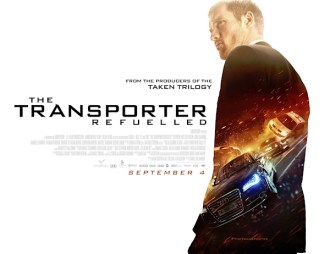 I kind of knew The Transporter Refuelled was going to be bad before I even began, but I watched it anyway because, well, I watched the
 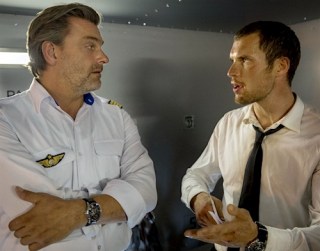 Unfortunately I wasn’t wrong about the acting, which is indeed pretty shit. Ed Skrein was truly dreadful in
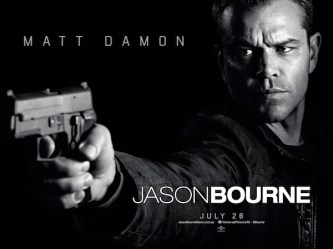 Much like the Bond films to which they’re so often compared, the Bourne movies have their devotees while only fitfully pleasing the critical establishment. This fifth movie — which is notable for marking the return of star Matt Damon and director Paul Greengrass after the semi-reboot of
 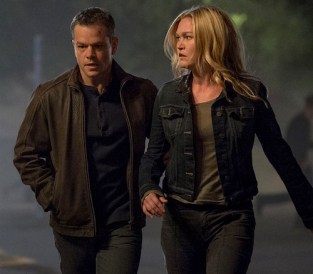 Action sequences ensue, shot with all the ShakyCam you’d expect from Greengrass. By now I imagine you have your own view on whether his style works or not. Personally, I think it’s considerably less bamboozling than when it made its debut in
 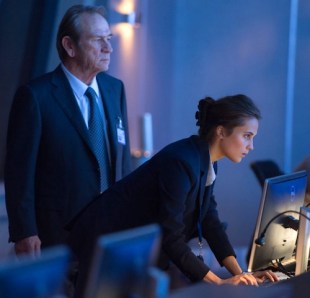 Frankly, Jason Bourne is at pains to mix in hyper-current iconography; the reasoning for Damon and Greengrass’ return now being that the world has changed and how does Bourne fit into that? So as well as social media and Greek riots we’ve got references to and riffs on hacking, Edward Snowden, government surveillance of its own citizens, the prevalence of Facebook/Twitter-esque tech companies, and so on. Sadly, I’m not sure the film’s actually got anything to say about any of these things. Greengrass and his co-writer, editor Christopher Rouse, have appropriated all these zeitgeisty concepts to make the film feel very Now, but that surface sheen is more or less where it ends. I mean, there’s a whole subplot starring Riz Ahmed as the Zuckerberg-like CEO of a social media company that I didn’t even mention in my plot summary because it’s kind of an aside. It’s kind of ironic, really, that it always seemed as if Greengrass’ more natural stomping ground was his documentary-ish real-world-exposé type movies, with his contributions to the Bourne series an unusual sideline; yet when he finally marries the two halves of his filmmaking career, it’s the action rather than current-affairs commentary that takes precedence.
 The end result is that Jason Bourne does thrill as an action movie, which seems to have been the primary goal of its makers, at the end of the day. As an action-thriller, however, the rinsed-and-repeated plot is a slightly faded imitation of former successes; a through-the-motions way to provide those impressively staged chases and punch-ups. It’s not the definitive Bourne movie one might’ve expected from the returning star/director combo (why else come back if not to perfect, or at least add to, the formula?), but instead means the film ends on an odd note: even though it wasn’t a wholly satisfying experience, and even though it doesn’t end with questions still blatantly hanging (as every Bourne movie bar Ultimatum has done), I want Damon and Greengrass to come back and do it all again, please. Only do it properly next time, yeah guys?



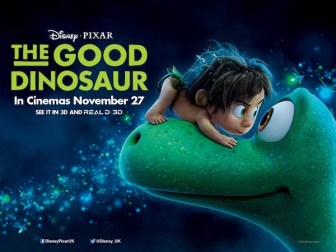 Once upon a time, Pixar could do no wrong. Then
  Pixar have on several occasions produced films with an innovative opening act that descends into derivative kids’ animation runaround territory.
 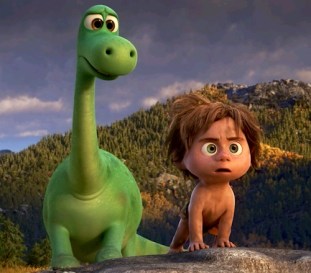 Perhaps most powerful of all is the relationship it creates between Arlo and a young human child he befriends, Spot. With humanity in a much earlier state of evolution, Spot is basically characterised as a dog — the way he moves, comes to his name, follows scents, shakes, scratches and enjoys being scratched, and so on — so of course I warmed to him. Nonetheless, though the building blocks used to create their friendship are very familiar, the way the film sells its emotional arc is ultimately immensely effective. Its resolution may even bring a tear to the eye.

 Set in Chicago during the Great Depression, The Sting follows a young street-level con artist (Robert Redford) as he seeks revenge for his murdered partner by teaming up with a seasoned big-con pro (Paul Newman) to scam the mob boss responsible (Robert Shaw).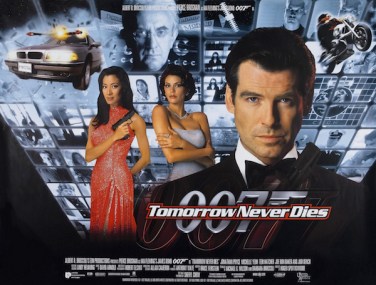

 Between his popular English-language debut
 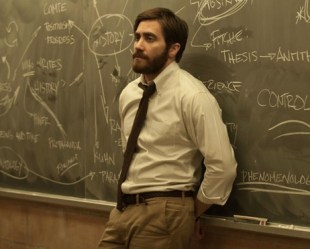 While looking up those various explanations, I read at least one review that asserted it’s a good thing that the film doesn’t provide a clear answer at the end. Well, I think that’s a debatable point. I mean, there is an answer — Villeneuve & co clearly know what they’re doing, to the point where they made the actors sign contracts that forbade them from revealing too much to the press. So why is it “a good thing” that they choose to not explain that answer in the film? This isn’t just a point about Enemy, it’s one we can apply more widely. There’s a certain kind of film critic/fan who seems to look down on any movie that ends with an explanation for all the mysteries you’ve seen, but if you give them a movie where those mysteries do have a definite answer but it’s not actually provided as part of the film, they’re in seventh heaven. (And no one likes a movie where there are mysteries but no one has an answer for them, do they? That’d just be being mysterious for precisely no purpose.) But why is this a good thing? Why is it good for there to be answers but not to give them, and bad for there to be answers and to provide them too? If the answers the filmmakers intended are too simplistic or too pat or too well-worn or too familiar, then they’re poor for that reason, and surely they’re still just as poor if you don’t readily provide them? I rather like films that have mysteries and also give me the answers to those mysteries. Is that laziness on my part? Could be. But I come back to this: if, as a filmmaker (or novelist or whatever) you have an answer for your mystery and you don’t give it in the text itself, what is your reason for not giving it in the text? Because I think perhaps you need one.
 Fortunately, Enemy has much to commend aside from its confounding plot. Gyllenhaal’s dual performance is great, making Adam and Anthony distinct in more ways than just their clothing (which is a help for the viewer, but not for the whole film), and conveying the pair’s mental unease really well. It would seem he errs towards this kind of role, from his name-making turn in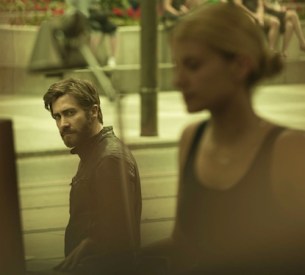
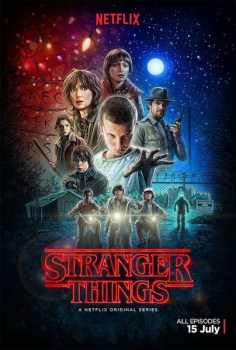 Hype — it’s a funny old business. It’s hard to have avoided hearing something about Stranger Things, Netflix’s summer hit that went down like gangbusters, its ’80s nostalgia perfectly calibrated to target the kind of people who run entertainment news websites these days — just to be cynical about it. Or truthful. Then there came the backlash, which attested there was nothing more to the show than those callbacks and tributes; a hollow experience of copying and “hey, remember this? That was good, wasn’t it?”
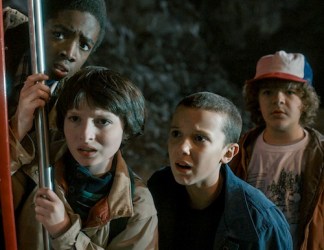 Without wanting to get into spoiler territory (despite what the media would have you believe, not everyone has Netflix all the time and not everyone watches every new zeitgeisty series immediately. Apologies if you write for an entertainment site and I’ve just given you palpitations), everything comes together nicely for a barnstorming pair of climactic episodes. For my money, the penultimate chapter is the best one: with a bunch of revelations out of the way (some of them easily guessed but finally confirmed), the series kicks off a run of long-awaited fan-pleasing events (as in many a drama, it takes this long for everyone to finally start talking to each other; also, the bit with the van!) The finale is less accomplished, with some characters wandering around for a bit in a way that feels designed to pad the running time. Still, it’s a satisfying conclusion… to season one, anyway.
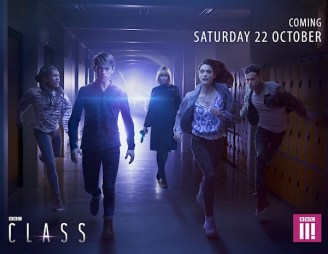 Ten years to the very day since the launch of the original dark, sexy BBC Three Doctor Who spin-off,
  The CW’s raft of superhero shows restarted on UK TV this month. I’ve given up on Legends of Tomorrow and am still not joining Supergirl (though I got hold of the opening episodes, co-starring Superman, to maybe make time for at some point); but, five seasons in, Arrow has me suckered for the long-haul, and The Flash tempted me back with the intrigue of adapting Flashpoint. I’ve never got on the bandwagon with Flash, which attracted a lot of praise during its first season that I simply didn’t agree with, leading it to outshine Arrow in ratings and people’s affections. Arrow has long been off the boil, and season five certainly hasn’t got it back up to temperature so far, but The Flash had plenty of issues of its own. It’s not problem free now, but I actually really liked the first couple of episodes of the new season. It’s still a long way from the top tier of TV superheroes (Netflix have that sewn up), but it’s likeable.
 This month, I have mostly been missing the most expensive TV show ever made*, Netflix’s much-discussed The Crown. I don’t know if they’ve been pushing it as much in the rest of the world as they did in the UK, but it certainly felt like it was everywhere… for about a week, as is usually the way with Netflix series. Also missed: the equally-discussed Netflix-exclusive new run of Black Mirror. Both of these are because I don’t keep up a permanent Netflix subscription, but between them, the forthcoming Gilmore Girls revival, and the Series of Unfortunate Events remake in January, I will be signing up again late in December (using the free month voucher they had in the Radio Times, hurrah!)
 100Films.co.uk