
Superheroes, spies and Sherlock in this month’s spoiler-free TV round-up.

Daredevil (Season 2)
 It’s certainly the summer of good-guy-on-good-guy dust-ups in the superhero subgenre this year, with Batman v Superman lighting up the box office last month and Captain America v Iron Man set to do the same next week (in the UK and 41 other countries, anyway; “next month” everywhere else). First out of the gate, however, was Daredevil v Punisher, in the second season of Netflix’s initial Marvel-derived success. Also throwing love-of-his-life Elektra into the mix, plus some additional plot elements teased in season one, meant Daredevil had more to do this year. However, far from feeling overstuffed (like so many a weak superhero sequel), it rose to the occasion, with a second run that was arguably even better than the first. Charlie Cox continues to be a real star as Matt Murdock, Jon Bernthal gave an excellent rendition of Frank Castle as a genuine human being, and supporting players like Deborah Ann Woll and Rosario Dawson shine too. Also, less widely praised but one of the season’s subtle successes for me, was Geoffrey Cantor stepping ably into the series’ Ben-Urich-shaped hole. And the fights were both plentiful and eye-poppingly choreographed, even more so than the first season’s. Exciting stuff all round.
Elementary (Season 4 Episodes 14-16)
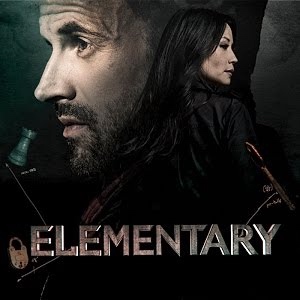 I’m a little surprised I’m still with this “Sherlock Holmes in modern day America with a female Dr Watson” series, because it was never a particularly good version of Sherlock Holmes and it still isn’t. What it has turned out to be is a decent show in its own right (for a US network procedural, anyway), with sometimes-interesting characters who happen to share the names and the odd characteristic of Sir Arthur Conan Doyle’s famed creations. It’s so much its own show that it’s never really bothered adapting the canon, so it was very odd when episode 16, Hounded, didn’t just use a few names from The Hound of the Baskervilles (as the series has in the past), but actually had a passable swing at modernising the entire plot. It doesn’t seem to have gone down too well with critics and viewers, though for my money it did a much better job than Sherlock’s disappointing attempt.
The Night Manager
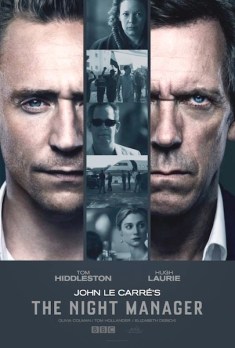 A lavish, all-star, ultra-hyped John le Carré adaptation that, thank goodness, lives up to its reputation. Although it wrapped up in the UK a couple of weeks ago, it only started in the US last night, and I recommend any America-based readers who enjoy a good thriller to get on board tout suite. The Night Manager doesn’t have a Tinker Tailor-style twisty-turny plot, but fills that gap with tension and suspense. Tom Hiddleston is a likeable hero, dragged in to something that might seem over his head, but which it emerges he has an affinity for. Hugh Laurie is a personably chilling villain, Olivia Colman kicks Whitehall ass, Tom Hollander perfectly judges a part that could’ve been caricature, and Elizabeth Debicki shows a very different side after her ice-cold villainess in The Man from U.N.C.L.E. As for talk of Hiddleston being the next Bond… initially his character here couldn’t seem further away from 007, lending credence to my presumption that everyone declared “he could be Bond!” just because he was in a spy series. But as it goes on, he gets to be suave, cunning, and sleep with pretty much every female character that isn’t his boss. So, yes, he could be Bond. At this point he’s certainly a better pick than too-old-for-it-now Idris Elba.
Things to Catch Up On
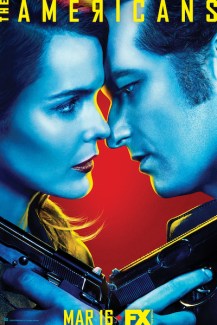 This month, I have mostly been missing season four of The Americans, aka the most underrated drama on television. Well, apart from with critics, that is, who’ve given this run 100% on Rotten Tomatoes. I don’t know if anyone bothers to air it over here anymore (ITV ditched it after the second season), but I’ve always got it via other means anyhow, so it’s a moot point for me. I also save it all up and binge over a couple of weeks, because it really suits it — in the same way it suits, say, Game of Thrones, but as no one watches The Americans it’s much easier to avoid spoilers. This year, that means I won’t get stuck into it until sometime in June. Can’t wait. Well, I can, because I am. But you know what I mean.
Next month… Game of F***ing Thrones returns!
 Score:

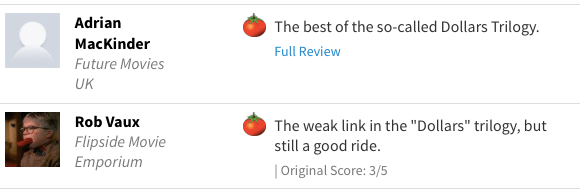


 “Tom Hardy goes for a drive and makes some phone calls” is the plot of this film, which is often mislabelled as a thriller. That’s not to degrade its thrillingness, but rather to say that if you’re expecting a single-location single-character phone-based thrill-ride like
 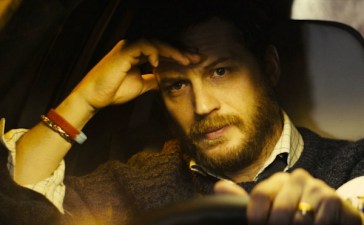 and in the process turning his life upside down. Another part was to tell a story about an ordinary guy dealing with events that aren’t going to change the world, aren’t even going to make the papers, but are a big deal in his life. Something like this could happen to any of us, and how would we deal with it?
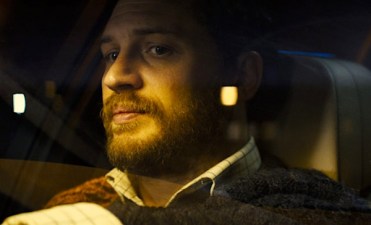 The rest of the cast appear as voices only on the other end of the phone, and in their own way are quite starry — faces that you may recognise, mainly from British TV, in even some of the smaller roles. Not that you see their faces, so, you know, you might have to look them up, or watch the making-of. Some of the performances err a little towards radio acting for me, which is kind of understandable seeing as how that’s basically how they were recorded, but there are particularly good turns from Andrew “Moriarty in
 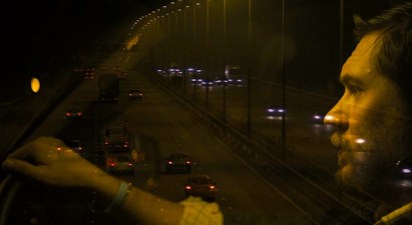 this is about what’s happening on Hardy’s face, not with his whole body. And in either form you’d lose all the photography of nighttime motorways, which have their own kind of hazy beauty. For a movie about someone making phone calls, it is intensely cinematic.
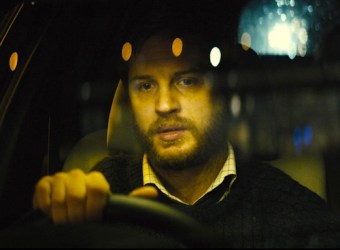 the supporting cast are so much more than “voices on the phone” (listen out, too, for Tom “
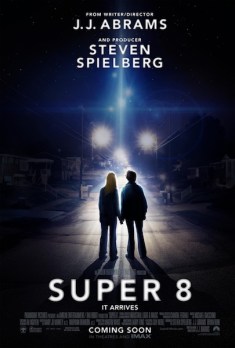 Before he started star warring and between bouts of star trekking, director J.J. Abrams teamed up with producer Steven Spielberg for this homage to the kind of movies Spielberg produced in the ’80s. Those films have endured down the decades; I’m not sure Super 8 endured as far as Abrams’ next
 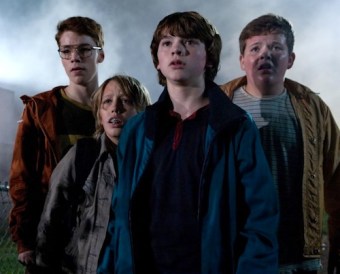 Unfortunately, the longer the film goes on the more it runs away with itself, as characters dash back and forth all over the place, sometimes in credibility-stretching fashion (we never do see how a group of kids manage to escape a heavily-guarded military base and drive back to an evacuated and blockaded town). The adults stumble through the story to little dramatic effect; Joe’s dad even has to be secretly locked up for a good chunk of the film (with no other characters noticing his disappearance) so that his storyline can be paused until he’s wheeled out for his part in the climax. The grown-ups do serve a role — giving us a perspective on events that the kids lack, and being tied to the emotional arcs of the leads — but it wouldn’t have harmed anything to limit them to those functions, rather than trying to half-heartedly give them stories of their own.
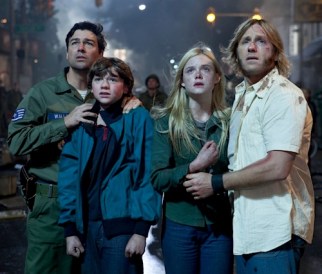 In some respects, the kids’ short film (which plays during the end credits) encapsulates the whole movie: a semi-thought-through SF/F plot, a tacked on emotional arc, the apexes of both tied together in the climax, and a couple of sometimes-shoehorned effects set pieces along the way. Yet for all that, it does enough right that I’d quite like to see Abrams attempt more work along these lines.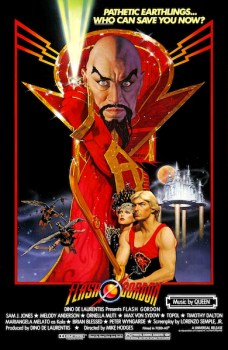

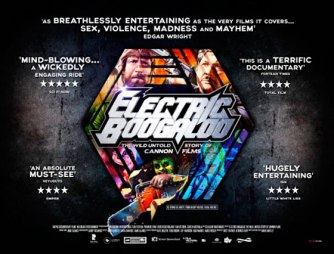 The director of
  (unless you’re a Cannon aficionado, perhaps), but they were there, they lived it, and they have first-rate insights into the craziness. Craziness like the story of the competing Lambada movies, which ended up being released on the exact same day. I mean, you’d think one Lambada movie would be more than enough, but two, competing… If you wrote it in a fiction, the audience would laugh at the ridiculous contrivance of it, but it happened. Elsewhere, there’s a chunk where they just slag off Michael Winner for a bit (awesome), and director Franco Zeffirelli describes them as the best producers he ever worked with and the only ones he ever liked. Like I say, you couldn’t make it up.
 (and if it’s told effectively, rather than the issue of if its telling is effective) is all that really matters.
 When a warrior family are betrayed and killed, the surviving siblings seek vengeance.
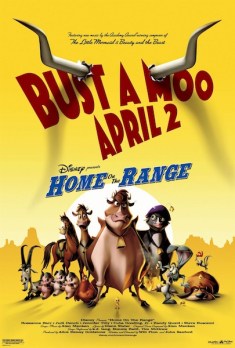 I have many goals within my film viewing, quite apart from trying to watch 100 films every year. Some I’ve completed (the Rathbone Holmes series), others are almost done (every Spielberg film), others not so much (every Hitchcock film), and others I’ve barely begun (the Zatoichi series). One of these goals is to watch every Disney Animated Classic, their canon of feature animations that currently sits at 55 titles (with another scheduled for later this year, in the US at least). I did a pretty good job on the real classics while growing up, and have since filled the gaps of the modern classics, so I’m left ploughing through their lesser periods: the content they pumped out in the war-affected ’40s, and the post-Renaissance pre-Lasseter clusterfrack that was their ’00s produce. My best hope is to uncover a hidden gem while I mop up this dross.
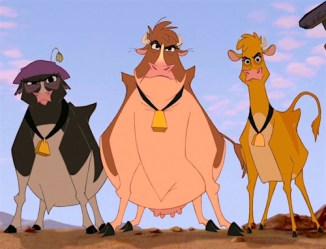 but only because it has a moderately amusing reveal in the middle of it. The animation is unremarkable, besides some terrible CG intrusions. It seems to be under the impression that “hog” is a word for “cow”, based on the number of puns. A couple of gags do land — I even laughed out loud once, though I’ve forgotten why — but the majority is resolutely uninspired.



 The first US feature from the director of
  100Films.co.uk