Hideaki Anno, Masayuki, Mahiro Maeda & Kazuya Tsurumaki | 97 mins | Blu-ray | 2.35:1 | Japan / English | 15
 Well now, hasn’t this been a long time coming? Just over two years since its western disc release was first announced, just over three years since it debuted in Japanese cinemas, and just over four-and-a-half years since the previous instalment’s English-language release, those of us in the UK who don’t attend anime conventions (where it’s had a few screenings in that time) are finally able to see the penultimate part of creator Hideaki Anno’s Rebuild of Evangelion tetralogy. As to whether it’s worth the wait… well, your mileage will vary.
The “rebuild” movies started out with a literal interpretation of that moniker: the first movie is a faithful (though condensed and sometimes slightly rearranged) retelling of the series’ early episodes, even using the original art from the show. The second movie deviated much further: familiar characters were introduced in completely different ways, wholly original characters appeared, and some subplots became more prominent. It culminated in a climax that was a drastic departure from the series, and now this third movie forges into entirely new territory — so new that I’m not going to give any kind of plot summary, for the sake of readers avoiding any spoilers. Good luck to you if so: not only do most reviews divulge the first major divergence, but so does the film’s own blurb.
Maybe that’s for the best — I’ve read more than one review bemoaning the confusion at the opening of the film, which stems from not knowing that thing I’m not telling you that the blurb does tell you. It’s surely deliberate, though: hero Shinji is in a similarly confused position, and we’re clearly being aligned with him in this strange new situation. Besides, for me this was the most engaging and exciting segment of the movie. As well as a couple of thrilling action scenes, it juggles character relationships in interesting ways, establishing a new status quo unlike that we’ve seen before in the franchise. It culminates in a fantastic stand-off between former allies — indeed, former friends. How times change.
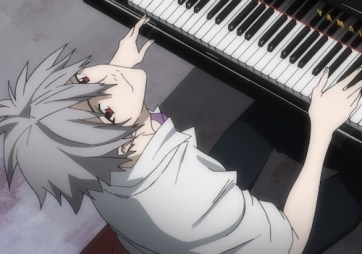
 Change, and the embracing or rejection of it, is surely one of the major themes of Evangelion. This is more explicitly debated as 3.33 moves into its middle section, where we get an extended dose of Shinji’s traditional insecurities. Hey, it wouldn’t be Evangelion without Shinji having a self-pitying whinge, right? Fortunately there’s more going on than that, but this is a section light on action and heavy on the series’ more thoughtful elements. There are answers to some of the mysteries, but it again wouldn’t be Evangelion if it all made easy sense. At the same time, Shinji bonds with new Eva pilot Kaworu. A controversial character, apparently, and not just because of the homosexual overtones (which some reviewers claim to miss, presumably because they’re blind), but the scenes where they harmonise by playing piano together are quite fantastically animated.
Indeed, whatever else you can say about 3.33, it looks glorious. The choice of a 2.35:1 aspect ratio for the first time helps emphasise the story’s epic qualities, but that’s incidental to the fantastic images conjured up by the animators. Various techniques are hurled at the screen — there’s a lot of CGI as well as traditional hand-drawn art, and they even used motion-captured stuntmen for one scene — but it marries perfectly, allowing camera angles and moves that are incredibly filmic and more dynamic than you normally find in 2D animation. The makers of the Rebuild have always talked about wanting to create innovative, memorable imagery, and they’ve once again succeeded here.
 3.33 divides quite neatly into three half-hour sections. I guess that should be expected, as the whole tetralogy has been based in traditional Japanese ideas of narrative/musical structure, hence the films’ Japanese titles incorporating the names for the three movements: jo, ha, and kyū (序破急), which roughly equate to “beginning”, “middle”, and “end”. As discussed, the first is fantastic, some of the best material in the entire series, in my estimation. Also as discussed, the second is a lot slower, but has its plus points too. The third… ah, the third. Here we get some more action, which will please anyone who thrills to Eva combat, but it is also utterly mind-boggling. I’ve been reading up on a few fan sites since watching, and I’m still not absolutely sure what was going on or what it signified. You won’t find any enlightenment in the disc’s special features, which present a long list of extras at first glance, but turn out to be 19 repetitive trailers, TV spots, and promo reels. Yes, nineteen.
After all that, it ends on a rather low-key cliffhanger, making it feel like one of those two-part finales that Hollywood YA adaptations are so fond of at the moment (cf. Harry Potter, Twilight, Hunger Games, etc). In some respects that’s actually true: it was originally said that films 3 and 4 would be half-length movies released together. Obviously that plan disappeared a long time ago. Still, it does make you wonder if that confusing third act will play better when paired up with the tetralogy’s concluding instalment. In the meantime, it’s hard to call 3.33 a completely effectual film in its own right. It quite successfully introduces us to an entirely new era for Evangelion, and teases that various groups’ plans are entering their final stages, but a possibly-indecipherable climax and a “we’ll just have to pause here”-level “to be continued” leave you wanting the next part more than feeling that was a fulfilling, finite experience.
 So when will that conclusion come? Well, a few years ago Anno ‘joked’ that the finale might be released “four to six years” after 3.33. As we’re already almost at four years with no sign of a release date, I guess it wasn’t so much of a ‘joke’ after all. An English-friendly DVD/Blu-ray will inevitably take an additional couple of years, too. So an indefinite, but undoubtedly lengthy, wait begins…

Evangelion: 3.33 is out today on DVD, Blu-ray, and dual format Collector’s Edition.


 Score:



 2016 Academy Awards
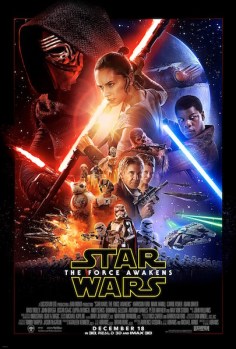 Star Wars: The Force Awakens is not the best film of 2015. Not according to the Academy of Motion Picture Arts and Sciences, anyway, who didn’t see fit to nominate it for Best Picture at tomorrow’s Oscars. Many fans disagree, some vociferously, but was it really a surprise? The Force Awakens is a blockbuster entertainment of the kind the Academy rarely recognise. Okay, sci-fi actioner
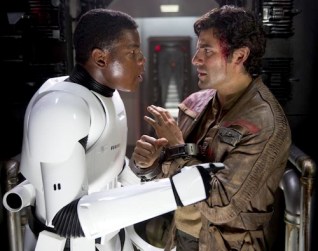
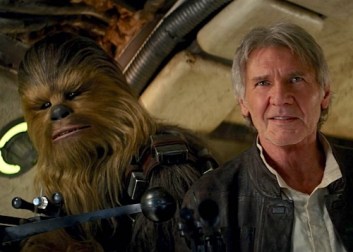
  I too could talk about the likeable new heroes; the triumphant return of old favourites; the underuse of other old favourites; Daisy Ridley’s performance; John Boyega’s performance; the relationship between Rey and Finn; the relationship between Finn and Poe; the success of Kylo Ren and General Hux as villains (well, I thought they were good); the terrible CGI of Supreme Leader Snoke; the ridiculous overreaction to the alleged underuse of Captain Phasma; that awesome fight between the stormtrooper with that lightning stick thing and Finn with the lightsaber; the mystery of Rey’s parentage; the mystery of who Max von Sydow was meant to be (and if we’ll ever find out); some elaborate theory about why Ben wasn’t called Jacen (there must be one — elaborate theories that will never be canon are what fandoms are good for); the way it accurately emulates the classic trilogy’s tone; the way it’s basically a remake of
 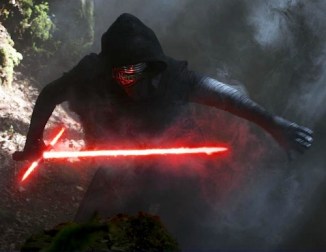 J.J. Abrams seems to have tricked some people into thinking he’s a great director with The Force Awakens (rather than just a helmer of workmanlike adequacy (when he’s not indulging his lens flare obsession, at which point he’s not workmanlike but is inadequate)), and I think that’s partly because it’s quite classically made. Yeah, it’s in 3D, but the style of shots used and — of most relevance right now — the pace of the editing help it feel in line with the previous Star Wars movies. Some of the more outrageous shots (often during action sequences) stand out precisely because they’re outside this norm. Perhaps we take for granted that Abrams delivered a movie in keeping with the rest of the series, because that’s The Right Thing To Do, but that doesn’t mean he had to do it. And the transitional wipes are there too, of course.
 No one knows what the difference is between these two categories. I’m not even sure that people who work in the industry know. As a layperson, it’s also the kind of thing you tend to only notice when it’s been done badly. The Force Awakens’ sound was not bad. It all sounded suitably Star Wars-y, as far as I could tell. That’s about all I could say for it. It feels like these are categories that get won either, a) on a sweep, or b) on a whim, so who knows who’ll take them on the night?
 “restraint […] applying the basic filmmaking lessons of the first trilogy,” according to
  those elements aren’t gone about in an awards-grabbing fashion anyway. In the name of blockbuster entertainment, however, they’re all highly accomplished.
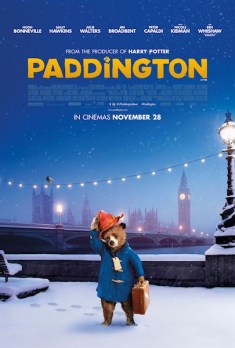 The signs weren’t good for Paddington as it geared up for release: its star voice actor, Colin Firth, pulled out late in production; on posters, the CGI lead character looked like the personification of the uncanny valley; and the BBFC rating that cited “sex references” made it sound like it had entirely the wrong tone for an adaptation of a beloved classic children’s book. But these portents were quickly consigned to history when the film received an adulatory response from critics and audiences alike.
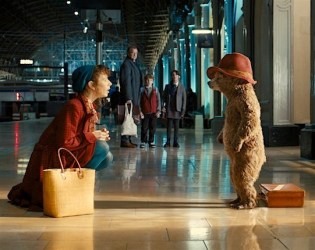 The rest of the cast are all very safe pairs of hands, meaning viewers can rest easy that, if there is a weak link, it won’t come from the performances. This is further cemented by supporting turns from the likes of (in order of appearance) Geoffrey Palmer, Imelda Staunton, Michael Gambon, Matt Lucas, Peter Capaldi, and Jim Broadbent, plus a host of faces viewers may recognise from British TV comedy.
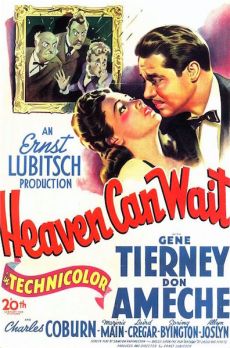 My first experience of Lubitsch’s US output concerns a man who arrives on Hell’s doorstep and reflects on his life to explain why he’s there.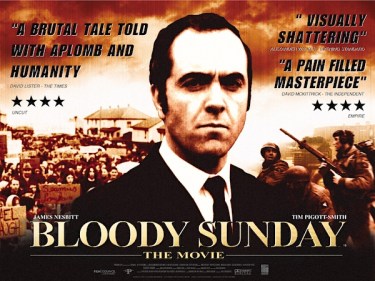

 A woman wakes up on a beach in the middle of the night. Stumbling away, she comes across a beach house with three strangers inside. They establish that the last thing they remember was being in a nightclub when there was some kind of accident, and then they woke up here. Fortunately, they’re not stupid and quickly twig this place is some kind of afterlife, then begin to work out how to get out — not that they’re helped by the lighthouse beam which causes immense pain, or that if they run away from the house they end up back at the house, or the vicious smoke-monster that’s flying around…
 AfterDeath is billed in part as a horror, emphasised by the skull imagery used on the poster. It’s not particularly scary though, so if you’re after that kind of thrill then it’s one to miss. As single-location mysteries go, it’s not remarkably original or exceptionally engaging, but the story and its revelations are solidly executed and the whole is decently performed, providing you don’t strain your eyes trying to see what’s happening.
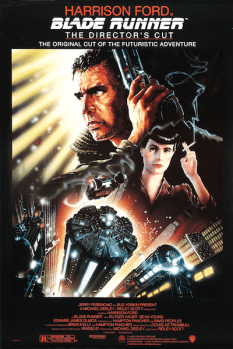

 The 24th official James Bond movie had a funny old ride on its cinema release a few months ago. It started well, with near-universal praise from UK critics; audience reaction was more mixed but erred towards the positive; then US critics tore into it, and US audiences (as usual) followed suit. The latter seems to have become the more accepted view, with the consensus seemingly that it’s decent enough, but a definite step down from the high of
 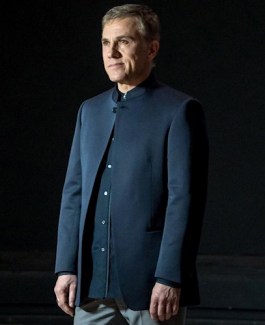 Spectre, to put it bluntly, pulls a
 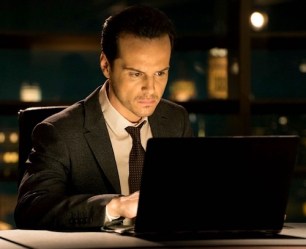 retaining the same general thrust. I still don’t think it works. There’s too much of M, Q and Moneypenny sat in an office trying to stop a man typing something into a computer (more on this in a minute), while Bond is busy running around a building and shooting at a helicopter. Personally, I’d’ve thrown it out and started again, but I guess they’d run out of time, and maybe it was better than the alternative.
 No, of course it isn’t, and it never was; but the point of Bond has never been realism. And besides, the reason you cast quality actors in minor roles is so they can pop in for a day or two and make their one scene exceptionally good. Bulk their part up if you’ve got a story to tell, by all means, but don’t shoehorn them in just because you’ve got them. For my money, Spectre is too much doing the latter.
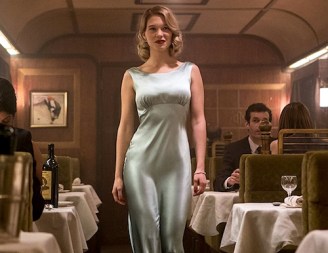 Or perhaps they’re just planning to go
 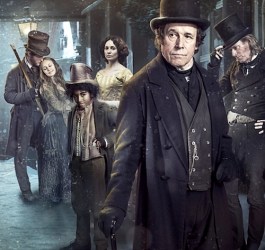 The BBC’s Avengers-style mash-up of characters from the work of Charles Dickens is an interesting mishmash of a show — part soap, part sitcom, part murder mystery — probably quite like Dickens’ originals, to be honest. It’s also an interesting case study in dramatic irony: every major storyline is a prequel to one of Dickens’ works, so how much do you rely on the audience knowing where everyone ends up? We surely all know where Miss Havisham is headed, but do you remember exactly what roles Compeyson and Pocket have to play? And is anyone but a Dickens expert (or someone who’s read Wikipedia, obv.) aware of who Honoria Barbary grows up to be? As a show, it’s not as classy or accomplished as the Beeb’s peerless Bleak House (from a decade ago now!), but it’s considerably more entertaining than their version of Little Dorrit that followed (both apt comparisons, because they’re Dickens adaptations in 15+ parts). It’s designed to be a returning series, and I hope it gets recommissioned.
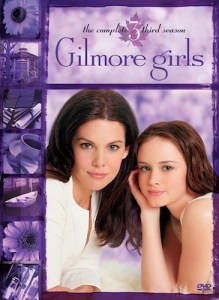 Oh, it’s a Woman’s Show — or, worse, a Teen Girl’s Show. There’s more to Gilmore Girls than that (stupidly reductive, anyway) description. OK, I’m not that fascinated by the ins and outs of Rory’s relationship dramas, and life would be simpler if Lorelai and Luke would just bloody well get together, but it’s endurable due to the fast*, witty, intelligent dialogue (seriously, these characters are impossibly well-read and -watched), the depiction of quirky small-town life and all its crazy characters, and the realistically antagonistic relationship between independent daughter and old-fashioned parents. I got quite far through watching Gilmore once before, many years ago, and then a while back started re-watching with a view to finishing it off. With Netflix’s four-movie revival coming later this year, it’s become time to get a wriggle on. So expect this to keep popping up — I’ve got 100 episodes to go…
 This is a few episodes in over the pond, I know, but it only started here on Monday (see also: The X Files). I’ve never seen one of Ryan Murphy’s other shows (Nip/Tuck, Glee, American Horror Story, etc), except for the Rocky Horror episode of Glee, which I hated. He seems to be quite a divisive creator, so maybe it’s for the best that here he’s only acting as producer and occasionally director. For people like me, who were too young to follow the O.J. case, this is a potentially-fascinating insight into a famous bit of… I was going to say “recent history”, but it’s 22 years ago now. Reportedly the series will focus on how the apparently open-and-shut case we witness in this episode goes astray at trial, which I guess makes this first part all about setting things up. If that is the case, I think there’s a lot of promise.
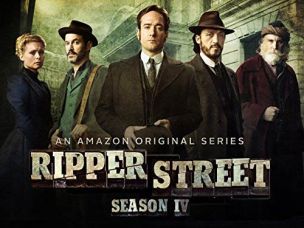 The Amazon-saved Victorian murder drama returned with a 130-minute episode shot in 2.35:1 widescreen — in other words, it was basically Ripper Street: The Movie. In truth, it was clearly designed as a two-parter, and would perhaps have played better in that form. The cinematography of that first episode is glorious though, so rich and well-designed, it’s practically worth watching just for that. Series 3 was the show’s strongest run so far, and for me the new series isn’t quite matching it yet, but it’s still a quality drama about dark deeds in dark places.
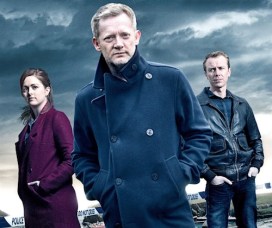 I don’t watch that much crime drama… says the person who’s already highlighted Dickensian, American Crime Story, and Ripper Street, and is also watching Death in Paradise, Elementary, and Vera right now. (I need to cut back on these.) One thing that works in Shetland’s favour is its remote, somewhat desolate setting. I suppose that makes it feel tapped into the Nordic Noir craze a little bit, though that’s probably where the comparison ends. This latest series is also telling a single story over its six parts, which is a change of pace for the show. It’s still in the “intriguing start” phase — there’s clearly something much bigger going on than these small-island cops are used to dealing with.
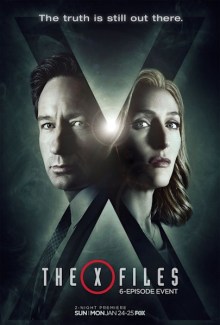 The X Files revival only has one episode left to air in the US now, but over here it’s barely begun (episode two went out on Monday). Despite the general apathetic reaction to the first episode (My Struggle), I largely enjoyed it. Only having dipped in to the original series meant I was thoroughly lost at times, but the Mulder and Scully reunion was suitably nostalgic and it threw around ideas with abandon. Episode two (Founder’s Mutation) seems to have been better received, but I can’t say I noticed a massive up-tick in quality. Ostensibly a “monster of the week” episode, it’s decent in that regard, though I also liked how it tapped into storylines from the past — when you’ve only got six episodes, making any of them completely cut-off and standalone feels somehow wasteful.
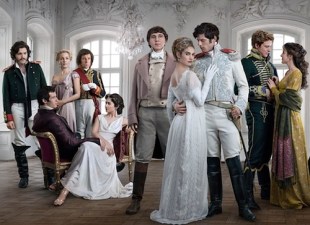 This month, I have mostly been missing the BBC’s new War and Peace — aka Phwoar and Peace, according to social media and/or journalists wanting to have influence on social media. It seemed like the kind of thing (i.e. lots of characters with Russian names) that would benefit from being watched intensively, rather than spread thin over a month and a half, so I’ve got it all saved up. Maybe next month, then.
 100Films.co.uk