September 2015 has passed targets, smashed records, and wound up as the biggest month of 100 Films in a Year ever!
…maybe.
All will become clear…


When I started this year’s WDYMYHS theme, I was worried I would quickly watch the six “populist” films (due to them being accessible and easy viewing), and be left with all six “critical” films to squeeze in (due to them being Worthy and Arty and stuff). Things have panned out quite differently, however: after this month’s viewing, I’ve accounted for all but one of the “critical” films, while four of the “populist” ones remain. They’re mostly the Worthier end of populist though, so go figure.
Anyway, this month’s film was one that’s sometimes cited as being among the greatest ever made. I confess I wasn’t so enamoured with it, though it had its moments. It was Jean Vigo’s only full-length feature, L’Atalante.

 #119 Go (1999)
#120 Murder by Death (1976)
#121 One-Eyed Monster (2008)
#122 The Swimmer (1968)
#123 They Live (1988)
#124 The Dark Crystal (1982)
#125 Mad Max Beyond Thunderdome (1985)
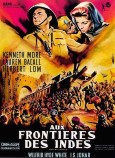
 #126 North West Frontier (1959), aka Flame Over India
#127 The Hunger Games: Mockingjay – Part 1 (2014)
#128 Superbad (2007)
#129 What Dreams May Come (1998)
#130 Avengers: Age of Ultron (2015)
#131 American Sniper (2014)
#132 Willow (1988)
#133 The Informant! (2009)
 #134 Ed Wood (1994)
#135 Filmed in Supermarionation (2014)
#136 Foxcatcher (2014)
#137 Boyz n the Hood (1991)
#138 L’Atalante (1934)
#139 Spooks: The Greater Good (2015)
#140 Terror by Night (1946)
#141 The Falling (2014)

- Most months I watch a selection of films from the 2010s, topped up with a couple of films from the 2000s, and maybe an earlier decade getting a look in or two. That’s not a conscious choice, just how things usually pan out. September has gone quite differently, though: this month I watched films from the ’30s, ’40s, ’50s, ’60s, ’70s, ’80s, ’90s, and 2000s, as well as the 2010s (of course). Ooh, get me, right? But it’s notable for this reason if no other: that’s a better temporal spread in one month than I’ve managed in some entire years!
- For what it’s worth, the 2010s still took the biggest share, with seven films — though in this particular month, that’s only 30.4%. Although they’re all Blu-ray or streaming views, five of them were only released to UK cinemas earlier this year… though two of those five were also big awards contenders from last year, so, you know, swings and roundabouts.
- I’ve started so I’ll finish: to summarise the other decades, there were four apiece from the ’80s and ’90s (17.4% each), three from the 2000s (13%), and then one each for the rest.
- #140, Terror by Night, is the penultimate Basil Rathbone/Nigel Bruce Sherlock Holmes movie. I’ve been slowly making my way through that series for most of this blog’s lifetime, and may now finish it this year. Maybe.

Even before we get into the regular “how does this compare to previous Septembers” and “what does this mean for the rest of the year” type stuff, there’s a lot to say about this month — multiple milestones have been passed.
So to tackle that claim from the introduction: last month, I’d’ve told you that December 2008 was my “best month ever” with 19 films. Now I’d tell you it’s my third best. What dark magic is this?! Well, with 23 films watched this month, September 2015 beats it and then some. However, I finally got round to going back through 2007, when I recorded such things in weeks / clumps of weeks (rather than monthly), as anyone who followed this month’s reposts will have seen, and tried to estimate what each month’s viewing was. That’s why September 2015 may be the highest month ever, because I can only say with certainty that in August 2007 I watched somewhere between 21 and 29 films. My best guess is (coincidentally) exactly the mid-point of that range, 25, which leaves September 2015 in second place. Either way, it’s undoubtedly my most film-filled month for almost eight years.
Such a strong month coming at this point also helps 2015 pass all kinds of yearly markers, too. So at #123 it became my blog’s third most successful year; at #130 it slipped into second place; and at #137 it took the crown of my blog’s most proliferative year. (That’s a good word, isn’t it? Thank you thesaurus.) Plus, at #136 it became my highest overall-totalling year — that’s also counting the alternate cuts, shorts, and the like — with a grand tally of 142; as of month’s end, it’s up to 147. With three months remaining, in which I should watch a minimum of 30 films (for this year’s ten-per-month target), 2015 will be well established as my largest year.
I suppose it now goes without saying that all the regular monthly and yearly goals and records were achieved or surpassed, too: it’s the 16th month in a row with 10+ new films; it single-handedly raised the September average from 9.71 to 11.38; it passed the 2015 monthly average of 14.75 (now 15.67 — the first time it’s been over 15 this year, and certainly the first time it’s been nearer 16… excepting January, that is, which by itself was 16); and it’s the 11th month in a row to beat its equivalent from last year.
I do like statistics.
Looking ahead, then, there are no more records left to topple (well, unless I have another exceptionally large month — you never know), only new ground to tread. The aforementioned “at least 30 more films” finds the year ending with #171; if I can continue besting the same months last year, it’ll make #183; if I slip back to the previous 2015 monthly average I’ll make it to #185, though if I can maintain that freshly-established one it takes me all the way up to #188.
188! That’s exactly double what I managed in my worst-ever year (2009). Insane.
 The 4th Monthly Arbitrary Awards
 Favourite Film of the Month
A tough call this month, but the joyous and information-packed Filmed in Supermarionation is pipped by the lovely surprise of unexpectedly discovering a marvellous Boy’s Own adventure in North West Frontier.
Least Favourite Film of the Month
I wasn’t sure what I’d make of L’Atalante, so wasn’t too saddened when I didn’t care for it all that much. However, I was quite disappointed by how much I didn’t enjoy cult favourite The Dark Crystal.
Film Where They Most Obviously Started with a Title and Went From There
One-Eyed Monster.
Award For Taking an Accidental Trope and Doing Something Ridiculous With It
“All our films end with huge flying things crashing into cities, but what if the huge flying thing was a city?!” Ah, Avengers: Age of Ultron, you were certainly… different.
The Audience Award for Most-Viewed New Post of the Month
It’s Keanu Reeves again, though this time without the aid of a retweet. I guess that’s the sheer popularity of the film in question: John Wick.

I’ve made a poor fist of reading others’ blogs this month, I’m afraid (clearly it’s all that time spent watching so many more films), but here’s a couple (literally) of things nonetheless:
Invictus (2009) @ Films on the Box
We’re still halfway through the Rugby World Cup, so there’s still much relevance in Mike’s praise for Clint Eastwood’s somewhat-overlooked true story drama about Nelson Mandela and the South African team’s success when their nation hosted the 1995 competition.
Top That: Five of My Favorite Directors @ Digital Shortbread
I feel like, recently, I keep reading about how Ron Howard is an average, journeyman kind of director, so it’s interesting to come across a short list of favourite directors that includes him — which Tom’s selection does, of course. For the other four worthy picks, take a look. (I really must come up with a list of my favourite directors someday…)

Not so many new reviews as I’d like this month (clearly it’s all that time spent… yeah, you know the story now).

This month’s repostathon updates can be split into two sections. First, the final editorials:
With those complete, it was time for an entire week-by-week recap of Year 1, aka 2007:
Next month, daily double bills will see us race through all of 2008, 2009, and half of 2010 in just one week, before slowing down slightly to cover the rest of 2010 and all of 2011. Exciting times.

At the risk of making this a semi-regular feature, this month we had to quite suddenly bid farewell to my partner’s mother’s dog, Lupa. She was an Irish Wolfhound, a giant breed with an average life expectancy of seven years. Sadly, Lupa was just four — what initially seemed to be some kind of sprained ankle turned out to be aggressive bone cancer and, a little over a week later, she passed away.
 Rory and Lupa.
Getting an Irish Wolfhound fulfilled a lifelong ambition, so Lupa was a little bit indulged. When she was younger she was boisterous, especially when it came to saying hello with the whack of a paw — we all endured some scratches and bruises to attest to that — but she was sweet-natured (the whacks were friendlily meant) and matured into a dopey softie. Once she realised Rory was old and doddery, she was always very careful around him. I know some people think dog owners confer too much intelligence on their pets, but as she played riotously with other little dogs (including our Poppy) she certainly knew the difference. She will be sorely missed.
Finally: I jest about this becoming a regular feature, but their other dog, Millie, is 15 and looking every day of it, so 2015 may not be done with us yet.

…will almost certainly not be as good as this month. Let’s just expect that now, then we won’t be disappointed.

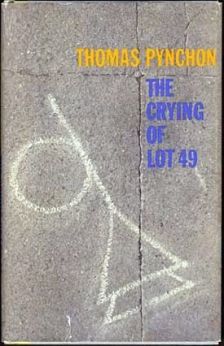 After watching Inherent Vice back in August, I was inspired to re-read the only Thomas Pynchon novel I’d ever read, which I’d liked very much and been meaning to take another run at for years. That was, as you might guess, The Crying of Lot 49, a ’60s tale of possible conspiracy and definite paranoia. Reading about it afterwards, I came upon thomaspynchon.com — not an official site, despite the straightforward name — which linked to their series of Wikis on each of his novels; and right at the top of the Crying of Lot 49 one was a subsection entitled “And now… The Movie…”, complete with a YouTube link. So I watched that and now I’m reviewing it because, you know, that’s what I do.
 It’s probably not fair to judge The Crying of Lot 49 by normal moviemaking standards. As a high school project to summarise a novel in a few minutes of video (which it may or may not be), it’s probably alright. Otherwise, though, it’s not worth the seven minutes; not even for die-hard fans of the author and/or novel. It is, you might say, a W.A.S.T.E. of time. #injoke
 Screened at the London Film Festival earlier this month, then made available on MUBI in the UK (where you can, if you want,
  That’s the whole movie, more or less. I haven’t spoiled it for you because you’re not going to watch it because why would you? There is no discernible story or meaning; there is no characterisation; there is nothing but imagery and snippets of moments that signify nothing. It is a movie that has deliberately left out any explanations. Apparently the director has said it’s all a criticism of global capitalism, or something. Even with that extra-filmic information, it’s still difficult to ascertain much meaning. This isn’t realism — this isn’t avoiding “hello, person who is my brother” dialogue — this is obtuseness for obtuseness’ sake.
 In 2006, the body of 38-year-old Joyce Vincent was found in her London bedsit, surrounded by Christmas presents and with the TV still on. Sad, but largely unremarkable, were it not for the fact that she’d been dead for three years.
 Some people seem to view this as little more than a detective mystery, and are frustrated that Morley ‘chose’ to leave out details. I guess such critics have no understanding of things like confidentiality (when it comes to why Joyce was in a women’s refuge and what she disclosed there), rights to privacy (if the family don’t want to be interviewed, you can’t force them), the realities of investigating a real-life case (maybe some people who knew her in those final years just don’t want to be found), or human decency (Joyce led a fragmented life that came to a terribly sad end, and all you can think about is why she didn’t leave a few more clues around for you to deduce what happened and why?!)
 On the more considered side of the internet, there’s a reasonable debate to be found about the filmmakers’ right to tell the story at all. Joyce kept her life story secret even from some of her closest friends, and yet here it is being picked over in a movie for anyone to see. Is it moral to do such a thing? Should she not just be left in peace? Are the extraordinary circumstances of her death a good enough reason for this level of prying? Surely her death and how it came to occur needs to be understood, though, and surely the only way to do that fully is to examine her life. But is that not the business of inquests and the like, not films? But then, the filmmakers seem to have dug up information the inquest didn’t get close to unveiling. Perhaps the question is, when does society’s interest justifiably overtake the rights of the individual? Does it here? I’m not sure. Maybe.
 Nonetheless, these flaws can’t detract from the fundamental power of the story being told. If you come away from this thinking not about how sad it was for both Joyce and the people who knew her (especially Martin, especially in the film’s final moments), or what you should or could perhaps be doing better in your life, but instead being angry that it didn’t satiate your ghoulish need for full and frank revelations… well, I don’t know what to say about you, but it wouldn’t be very nice. Through this incident, Morley and her interviewees are really making bigger points about our society and our relationships. It’s no one’s fault, per se, that this happened to Joyce, but that it can happen is horrendous.
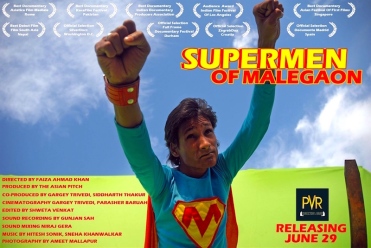 In the impoverished Indian town of Malegaon, everyone either works on the power looms and is paid a pittance, or is unemployed and so has even less; apart from the women, who are squirrelled away out of sight at home. The population is 75% Muslim, the remainder Hindu, and that leads to tension. Outside of work, there is nothing to do for entertainment… except go to the movies. And Malegaon loves the movies.
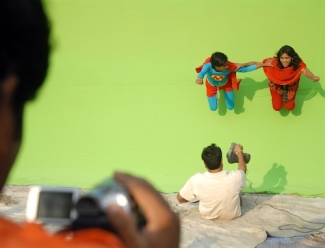 Supermen of Malegaon is the making-of story of Nasir’s most ambitious production to date. Having seen the use of greenscreen in one of those behind-the-scenes outtakes, he realised he could use the process to make a special effects movie — specifically, to make Superman fly to Malegaon. This documentary follows the trials and tribulations of Nasir and his band of hobby filmmakers through their film’s writing, planning, and its sometimes troubled shoot, until it’s completed. In the process, we meet some genuine characters, learn something of the unique lifestyle of Malegaon itself, and maybe even learn something about ourselves too.
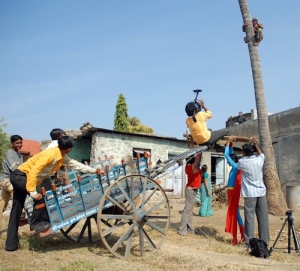 Even if it doesn’t, the situation in ‘Mollywood’ is an interesting one. This is a cottage industry: everyone involved has day jobs, funding the movies out of their own pocket, or by borrowing cash, or with favours, or by selling in-film adverts to local businesses — yes, that’s right, product placement, not that anyone involved would know that term. Women from Malegaon cannot appear in or work on the films due to local attitudes, so actresses are hired from nearby villages; the screenplay is written and shooting schedule arranged so that the actress only needs to be involved for the minimum number of days, to save money. Bicycles and motorbikes are used to create tracking shots; the director gets a piggyback for a high angle, or is raised and lowered on the arm of a cart to create a crane shot. The ingenuity and inventiveness of these literally-self-taught moviemakers is astonishing.
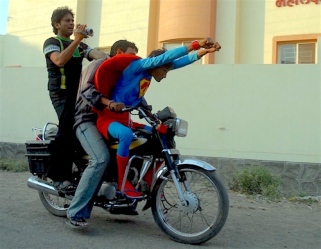 which he turns down because he could make four whole films for that much money. Even that little is scraped together. Mollywood moviemaking isn’t a money spinner, it’s a hobby. Still, one of the writers wants to make it as a proper writer; wants to go to Bombay and do it as his career. This has been his aim for 15 years, he says, and Bombay is no closer.
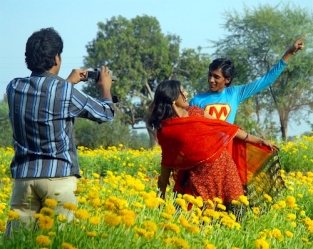 It’s an incredible, one-of-a-kind film; more powerful and life-affirming than it perhaps has any right to be. But then the filmmakers of Malegaon don’t really care about such things. They make movies because they want to, whether they ‘should’ or not; they make them better than you might expect; and it enriches their lives. Their story may do the same for you. In my opinion, it’s an essential film; a true must-see.
 After the
  Perhaps it’s just because she’s clearly struggling with an atrocious variable accent, the quality of which makes it rather distracting whenever she opens her mouth. Having used Moriarty plenty, the series finally accepts that he’s dead and moves on to his right-hand man, Col. Sebastian Moran. Considering the identity of the conniving colonel is a mystery for most of the movie, however, his involvement is perhaps no great shakes.
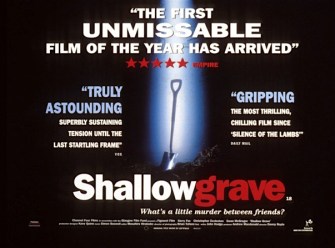 The debut feature of director Danny Boyle was hailed on release for being a British film that wasn’t another period-piece literary adaptation. Instead, it concerns three ultra-chummy flatmates in contemporary Edinburgh (Ewan McGregor, Christopher Eccleston, Kerry Fox) who take in a fourth lodger, who promptly dies, leaving behind an insane amount of cash. Rather than report it, they dispose of the corpse and keep the cash. You don’t get much further from Merchant-Ivory than that.
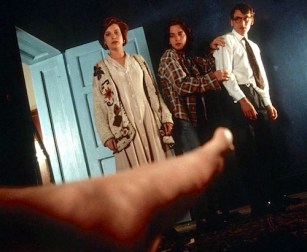 Consequently, it has that great discussion-generating feature of many a zeitgeist-y ‘watercooler’ film: what would you do?
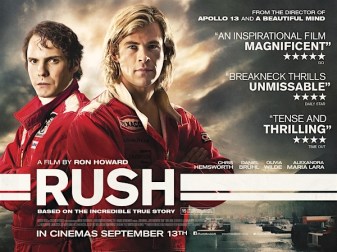 Screenwriter Peter Morgan (of
 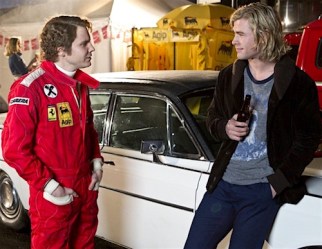 I presume the point of engaging with their personal lives away from the track was to add depth; to make sure it was a two-hander, rather than just about one or other of the drivers, and to ensure Hunt wasn’t just two-dimensional. However, without any growth on his part, or even some kind of active change, he’s just as flat, only now the star of some pointless scenes.
 If that narrative fits snuggly into familiar plot beats, what are you meant to do? Change the truth to make it less like fiction? That’d be a first. Saying that, I’m taking it on faith (based on comments in the making-of) that the true story was so perfect you wouldn’t believe it if it had been fiction. Maybe they did streamline it. But assuming it’s real… well, it’s not the filmmakers’ fault if life imitates art.
 All in all, I’m a little surprised how well-liked Rush is. I mean, as of posting it’s at #162 on


























 100Films.co.uk