
Catherine Hardwicke | 122 mins | download (HD) | 2.35:1 | USA / English | 12 / PG-13
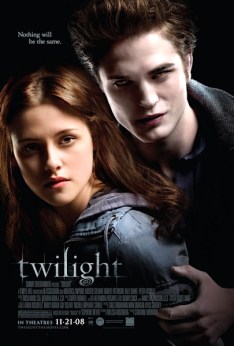 I’m not a big one for Halloween, but I’ve acknowledged the horrific holiday on a couple of occasions now. For 2015, I decided to review one of the most notorious supernatural films of recent times. A movie so horrific, it sent critics cowering behind their sofas. A film so evil, it’s perverted the minds of children — and some adults — the world over. A movie so renowned, it strikes fear into the hearts of even hardened movie lovers.
I speak, of course, of Twilight.
(That was more surprising when it was in a generically-titled post as an introduction to a whole week of reviews for the entire saga, but then it turned out I had better things to watch in October than four more Twilight films, so you’re only getting this one for now.)
For thems that don’t know, Twilight is the story of Bella Swan (Kristen Stewart), a teenager who moves to live with her father in the small town of Forks, Washington (apparently it’s actually a city, but the film would have you think it’s almost a village). Attending the local high school, she’s intrigued by the introverted Cullen siblings, in particular Edward (Robert Pattinson). To cut a long ramble short, it turns out they’re vampires, but friendly vegetarian vampires. Bella instantly falls in love with Edward in all of three seconds, because he’s kinda dangerous but pretty and sparkles in sunlight (we shall come back to this), though his lust for her brings out his blood-drinking side. Just to make things complicated, there are some other vampires visiting the area who have fewer qualms about drinking human blood…
Twilight is adapted from a young adult novel by Stephenie “one too many Es in her name” Meyer that no one had heard of (bar its legion of bloodthirsty fans) before someone thought it would make a good movie. It would probably have been better if things had stayed that way. There are many reasons for that, but let’s take them in the order they must’ve occurred. First: the story, which is also the worst part.  Edward is an odd, creepy stalker — turning up in Bella’s bedroom and staring at her while she sleeps, that kind of thing — who she then finds out is a century-old man (bit of an age gap) and, literally, a predator… but she instantly unconditionally loves him. What the merry fuck? She’s given no reason to even like the guy, and plenty of reasons to run away scared of him, but no, she falls in love. What message is this sending to young girls? That the guy who follows you around everywhere just staring at you and then confesses he’s having trouble controlling his impulse to murder you (yes, he says that) is the perfect soulmate? Not to mention that he’s 100-and-something years old and dating a 17-year-old. He shouldn’t be pre-teen girls’ idol, he should be Hugh Hefner’s!
All of the characters are this poorly drawn. Their motivations, actions, and reactions often make little sense. The number of times one of them does something because Plot are incalculable. That’s without even mentioning Bella’s almost total inability to do anything for herself, except use Google to find some tiny second-hand bookshop in a rarely-visited town to buy a book about something she wants to research, rather than, say, use Google to read up a bit first. Then she gets the book, looks at one illustration and its caption, and it’s back on Google to find out more. Nice work, Bella.
All of this is Meyer’s fault, faithfully translated to the screen by adapter Melissa Rosenberg. This is a woman with quality TV form: she was a lead writer on Dexter back in its first four seasons, when it was really, really good; now she’s showrunner on the forthcoming Marvel/Netflix series Jessica Jones, which has promising trailers and a well-reviewed first episode,  in particular its treatment of female characters. Yet she also wrote this. Even if you allow for her being hamstrung by the novel in story terms, the dialogue is appalling, in every respect. Characters bluntly state their own and each other’s emotions at each other. We’re always being told stuff instead of shown it. Scenes heavy with exposition are shot with frenetic camerawork and underscored with driving music as if that somehow makes it filmic and exciting.
Ah, the acting and direction! Nearly every performance is poor. Pattinson and Stewart spend the entire film appearing uncomfortable and puzzled — by themselves, with each other, with everyone else. Her only other emotion is “moody loner”; he at least manages a smile, maybe twice. Some of it is unbelievably cheesy, like an ’80s genre B-movie by a music video director. That kind of thing can work, a) when it’s from the period, or b) when it’s done knowingly. Twilight is neither. The Pacific Northwest location is inherently atmospheric, which is handy because Catherine Hardwicke’s direction does nothing to conjure up any such feeling itself.
And then we have vampires who sparkle. Sparkly vampires. Sparkly. Vampires. Just… why?! The whole traditional mythology of vampires is played fast and loose with, which is fine, that’s what many vampire flicks do; and there are even some borderline-neat subversions… but golly, that sparkliness is silly.
Some of these points are definitely just niggles, but the film is so laden with them that it all becomes ripe to cause either laughter or frustration. Better the former than the latter, which is why the Honest Trailer is so entertaining. See for yourself:
Believe it or not, I didn’t actually hate Twilight as much as I thought I might. Occasionally there are shots or moments that work, maybe even the odd whole scene. Bella’s dad is pretty good, both their relationship and Billy Burke’s performance. I quite liked some of the aggressively-blue cinematography, but then I do like the colour blue. There’s almost a nice element of melancholic “leaving a fun ordinary life behind for this fantastic but dangerous new one”, but I think that might be limited to literally one shot-reverse-shot of Bella seeing her friends leaving a café.
So it’s not a good film, but it’s not a “worst film ever made”-level disaster either. I mean, it’s not so bad that I can’t even bear the thought of watching the sequels. Actually, they kind of intrigue me, because (spoiler warning!) it hasn’t even got to the Jacob/werewolves stuff yet, and that whole Team Edward / Team Jacob aspect seemed to be such a big thing. And I want to see what Michael Sheen has to do with anything. And I kinda wanna see if Breaking Dawn is as batshit crazy as the plot description I once read made it sound. And maybe there’ll be more of Anna Kendrick’s cleavage, because wow, who knew that was there? (Look, it’s a movie about a creepy stalker romance between a 100-year-old man and a 17-year-old girl — 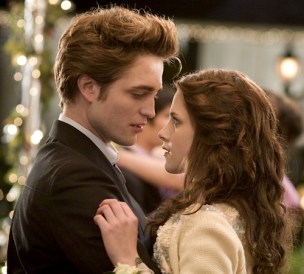 a little light ogling of someone around my own age pales in comparison.)
So that’s Twilight for you: poorly plotted, poorly written, poorly acted, poorly directed, teaching poor life lessons to its target age group, and yet still somehow so compelling that I’m prepared to sit through another eight-ish hours of the stuff. Never has the phrase “your mileage may vary” been so apt.*

* Unless someone used it in reference to the Fast & Furious films.
 2015 Academy Awards
 I started the week by reviewing
 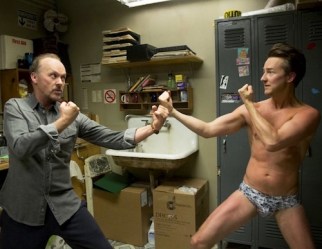 In part this is thanks to Keaton, who gives quite an immersive performance as the numbed, self-deluded star. Some people were very much behind him for the Best Actor gong, but I think it found its rightful home: Eddie Redmayne’s performance
 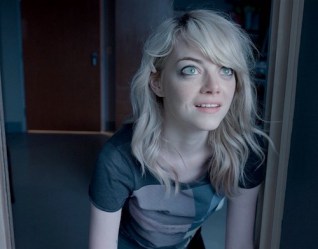 Famously, almost the entire film takes place in a single take. A fake one, of course. Well, I say of course —
 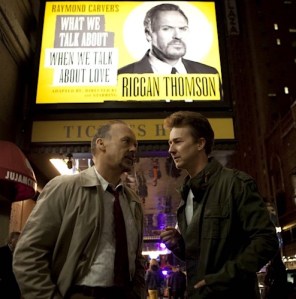 Birdman is an entertaining film, both funny enough to keep the spirits up and dramatic enough to feel there’s some depth there. It’s also a mightily impressive feat of technical moviemaking, but then I do love a long single take (even a fake one). Is it the Best Picture of 2014? Well, from the nominees, it’s not the funniest (
 Director Chan-wook “
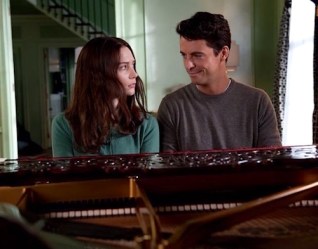 I’m sure the story could be shunted back to a crumbling pile in 19th Century England. So precise is the mood of this secluded household, it’s kind of weird when, a little while in, we get to see India’s place of education: a typical US high school. In another film I might call this sudden change of locale a misstep, a breaker of tone, but in the world Park has created it just feels like a point of contrast.
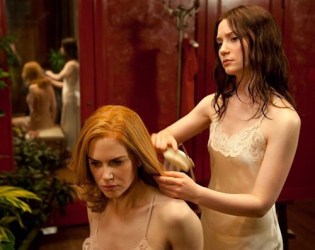 not a soul-bearing artistic portrait of humanity. And as for the style… well, I’ve already talked about that. Whether you can have “style” for style’s sake, or whether it needs to be in aid of something, is a debate for another day. Here, it is in aid of something: amping up the Gothicism of the inherently Gothic story, which in other hands could have just became any-old present-day-set family thriller.
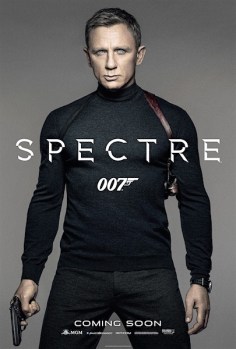 It’s been quite the year for spies on the big screen: mega-success for
 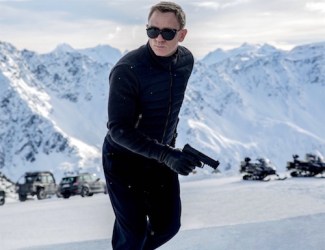 or, “they’ve merely brought back the classic Bond formula, albeit in the Craig-era style — what a regression”. You only have to look at the
  Craig’s films have stuck to the older formula of casting a respected/famous European: Dane Mads Mikkelsen, Frenchman Mathieu Amalric, Spaniard Javier Bardem, and now German “European actor du jour” Christoph Waltz. The double Oscar winner is on fine form at times, but there aren’t quite enough of those times. Again, without aiming to spoil anything, I’d say he’s not so much underused as misused.
 Well, I did too. Now I want a cake. And if you’d like to watch someone eat a Madeleine, check out
 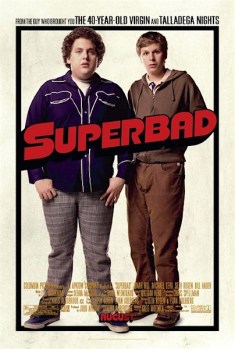 Seth Rogen and Evan Goldberg’s semi-autobiographical comedy sets Seth (Jonah Hill) and Evan (Michael Cera) (see what they did there?) on a quest to obtain booze for a party where they hope to copulate. Or, “every American teen comedy.”
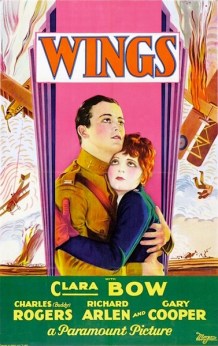 Students of the Oscars well know that, technically speaking, there wasn’t a single “Best Picture” award at the inaugural Academy Awards ceremony in 1929. Instead, there were two awards that covered that ground, seen (at the time) as being of equal significance. One was for “Unique and Artistic Production” — which I’d argue is more or less what most people think Best Picture represents today. That was given to F.W. Murnau’s
  he learnt to fly just for the film), and, mid-flight, had to film their own close-ups by switching on battery-operated cameras mounted in front of them. You wouldn’t know it from watching the film itself, though: even today, the action sequences carry a palpable air of excitement, aided (perhaps even created) by the knowledge that it was all done for real — including the crashes.
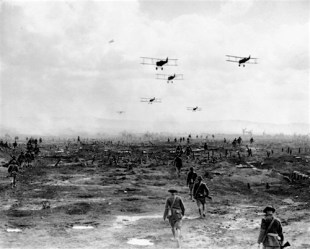 bomb-pockmarked battlefield. Those bomb craters were, in fact, genuine: the military spent a few days before filming using the location for target practice. The climactic battle that occurred on this site was filmed with up to 19 cameras at once, including some mounted on four towers, the highest of which reached 100ft. I know this is a review, not a catalogue of production numbers, but it’s quite incredible.
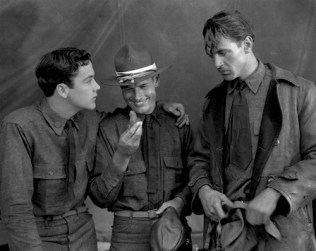 How much these factors affect the film’s quality seems to be very much a personal matter. Wings set the stall for many a Best Picture winner to follow by being not that well regarded by critics; indeed, more time and praise is given to its top-award compatriot, Sunrise. For the most part, I found the personal dramas passable enough, with a few outstanding scenes — David’s farewell to his stoical parents; Cooper’s scene; the bubbles (at first). However, the combat sequences, and in particular the aerial photography, are stunning; so impressive as to easily offset whatever doubts the other elements may engender.
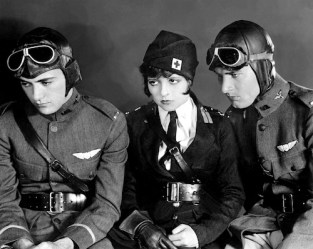 But I digress. Wings is a film that deserves to be remembered as more than a mere footnote. It’s not just a trivia answer to “what was the first Best Picture?”, but a worthy winner of that prize; a movie that, almost 90 years after it was produced, still has the power to elicit excitement and awe. Wellman’s picture may not have been deemed unique or artistic, even though it’s definitely the former and possibly the latter, but it was deemed outstanding, and it’s definitely that.
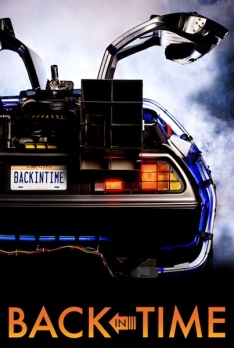 If you’re on social media (or even just frequent pop culture news sites), you can’t fail to have noticed that Wednesday just passed was “Back to the Future Day”, the exact date Marty McFly and Doc Brown (and Marty’s girlfriend) travel to in
 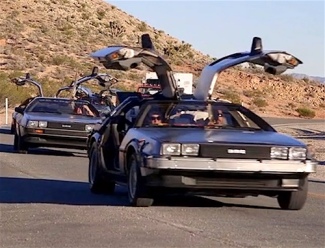 Then it moves on to the fans — what the film means to them, and what that’s led them to do. Those we meet include a couple who travel around the US in a DeLorean fundraising for Michael J. Fox’s charity; the team of aficionados who restored Universal Studios’ decrepit display DeLorean; the family of collectors who own the only film-used DeLorean that will ever be in private ownership; a guy who built a mini-golf course in his yard with a Back to the Future-themed hole that he’s used for charity events with some of the films’ cast; the people who have had some success developing a real-life hoverboard; and the guy who set up a fansite that was so good it became the official site, and is now regularly employed as an official consultant about the films, not least for the rafts of merchandise that comes out these days. We also get a look at the Secret Cinema event in London from a year or two ago that made headlines for all the wrong reasons. Naturally, none of that gets mentioned here (in fairness, because it has nothing to do with Back to the Future itself).
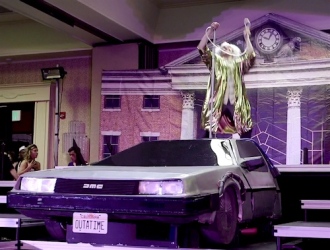 That glaring error aside, Back in Time is not a bad film, provided you know what to expect. It’s a shade too long and the storytelling is occasionally a little jumbled, but there are some nice interviews and stories — hearing Michael J. Fox recount the Royal Premiere where he was sat next to Princess Diana pretty much makes the whole exercise worthwhile.
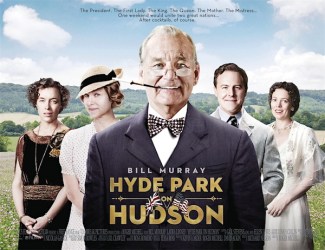 Wannabe-prestige picture Hyde Park on Hudson is like two films playing at once: the dramatic/romantic story of President FDR’s (Bill Murray) burgeoning affair with his distant cousin Daisy (Laura Linney), and the comedy-drama of his meeting with King George VI (aka “the one Colin Firth played in
  For what it’s worth, the film was born of the discovery of Daisy’s letters and diaries, which told of the relationship. Apparently the screenwriter was one of the people who found these, so I guess that’s where his interest lies. The film is a UK production from Film4, however, and made in the wake of the global success of The King’s Speech, so perhaps that explains the root of the royal involvement. While both stories have some potential, they aren’t made to gel, switching back and forth as if in some kind of narrative relay that enables the film to run a theatrical distance.
 with vibrant colours evoking a place of sunny happiness, but anything set at night is graded with a terribly extreme, not to mention awfully rote, case of teal-and-orange.
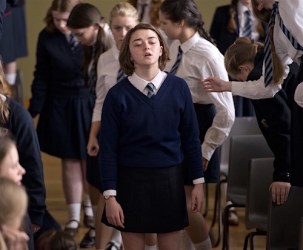
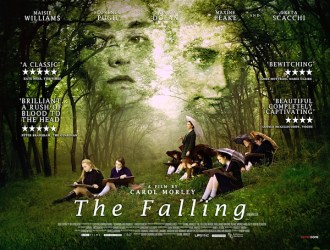 Inspired by real events, The Falling stars
  Writer-director Carol Morley has kept the pace and tone slow, in an enchanting rather than ponderous fashion, but it’s a “not for everyone” pace nonetheless. For me, it only really lost its way as it moved into its final stages. Without wanting to spoil where it goes, in my opinion too much was explained, but at the same time it explained nothing.
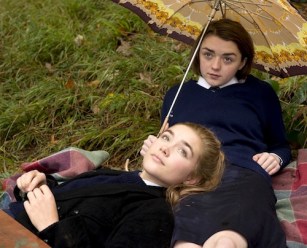 An element I do think was at the forefront of consideration is sensuality and sexuality, which plays a large and significant part in the film. Pretty much any movie bar “bawdy high school comedies starring obvious twentysomethings” seems to veer away from schoolgirl sexuality these days, wary of inevitable “OMG u a pedo” reactions, I guess. Sexuality does not equal pornography, though; and, as I alluded, here it’s played out as much through a heightened, tactile sensuality. It does probably ‘help’ that it’s a film written and directed by a woman — it would carry a very different, more Lolita-ish air if it had been written or directed by a man. What exactly it’s saying with all this is arguably as mysterious as the cause of the fainting epidemic, but then it’s all tied together: teenage years are a period of sexual awakening, of course, and if you’re in an environment where nearly everyone is of the same gender, and where such things are massively repressed… well, how is it going to manifest itself? If “sex” is somehow the cause of the fainting, it’s not because sex is bad, it’s because there’s no other appropriate outlet for it.
 Best of the lot, however, is Florence Pugh. Reportedly discovered when The Falling’s casting directors visited her school, you can see why she’s quickly been snapped up for a leading role. I wouldn’t be surprised if Hollywood come knocking looking to make her the next Kate Winslet/Keira Knightley/Gemma Arterton/etc “English rose”-type lead in some blockbuster or other.
 For me, it’s the kind of film that, with time and subconscious reflection, I may come to remember more fondly and be keen to see again, or all but forget. It’s the kind of film I could, without even re-watching it, re-evaluate and want on my year-end top ten, or could see on my top ten contenders long-list come January 1st and wonder, “dear God, what was I thinking?!” It’s the kind of film I’m not sure I wholly liked, but I’m glad I’ve seen.
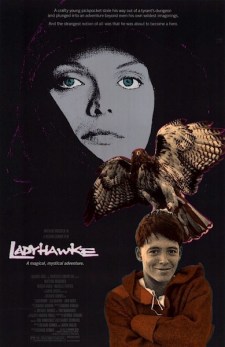 This is one of those films that crops up in the daytime TV schedules now and then and I’d always paid little heed to, because no one else seemed to. Then I read
  Here, there’s a good 45 minutes or so of mystery before said reveal. Obviously, therefore, it would work better as a fresh viewing experience if you didn’t know that going in; but it’s so fundamental to the setup (despite the focus on Philippe, it’s their story) that I wonder if anyone has ever seen it without knowing? On the bright side, it doesn’t really matter: this is not a film where the ‘big twist’ is the point.
 but Philippe occasionally addresses amusing asides to God, for example. It even wisely dodges special effects… most of the time. The few occasions on which it does make motions in that direction, it demonstrates why it was wise not to attempt them more thoroughly. These days they’d slather on the CGI, but shying away from such things is not just due to a lack of technology: it’s far more magical to not be too explicit.
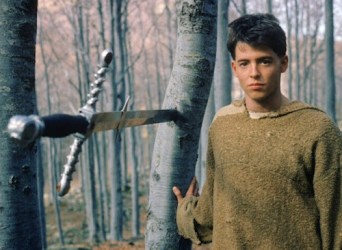 That’s the kind of age when one might be liable to fall in love with it; or, at least, people of (very roughly speaking) my generation would — I suppose Kids These Days fall in love with copious CGI, be that animated or ‘live action’. Anyway, I think it deserves to be less overlooked, and if you’ve never caught it (or not for a while) it certainly merits a chance.
 100Films.co.uk