
M. Night Shyamalan | 99 mins | TV | 2.35:1 | USA / English | PG / PG
 Consensus holds that the work of once-acclaimed director M. Night Shyamalan has managed a near-perfect trajectory of decreasing returns. I’m not talking about box office — I have no idea (or much interest) in how that’s gone for him — but quality, starting with supernatural chiller The Sixth Sense and sliding gradually to the nadir of The Happening. I’m not as convinced (I quite liked some of his efforts along the way), but it’s fair to say The Happening was pretty awful and certainly his worst… until this.
Adapted from a US animated series (but having to drop the series’ Avatar prefix thanks to a certain other 3D blockbuster), Shyamalan’s live-action rendition condenses the storyline of the first season into a 90-something-minute movie. You can immediately see some problems are going to arise just from the maths involved. I should say, I’ve never seen the original series, so I have no idea how Shyamalan succeeds in translating it. There was plenty of controversy in his casting, which included Caucasians in the roles of apparently-Asian characters in the original, but happily using them for the villains. I don’t know that that bothers me so much, but it seemed to be a watershed moment for some.
Even ignoring the inevitable prejudice of an adaptation not living up to fans’ expectations, however, The Last Airbender is a mess. You don’t even need to see it in the notoriously too-dark post-production 3D to find yourself confused about what’s going on. The plot pings back and forth between locations and characters, basing itself in a heavy mythology that isn’t adequately explained. 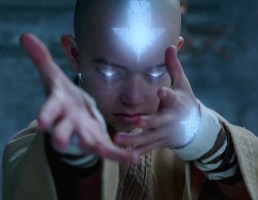 Chunks of it seem to be missing, conveyed through clunky voiceover rather than on-screen action. The first rule of screenwriting — literally, the first — is Show Don’t Tell, but Shyamalan does exactly the opposite.
In fairness to him, there’s some defence to be found in the trivia section of IMDb: “Almost 30 minutes of footage was cut from the theatrical release because Paramount Pictures wanted the film converted to 3D as quickly as possible, in an effort to save money.” That certainly might explain some of the awkward jumps in plot, and at times we can see a conversation taking place but only get to hear a narrated summary. Still, I don’t think these edits cover all of the film’s flaws — not even close — but it explains some of them.
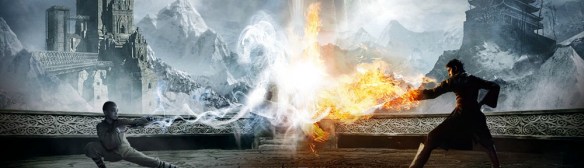
About the only good thing I can recall is the CGI, which is fine. But you get good CGI everywhere these days, so it’s far from a reason to watch. The action sequences it’s employed for are largely uninspiring, their style stolen from 300 or other equally familiar sources. The acting is routinely appalling too — Dev Patel, for instance, is more like his lacklustre first role in Skins than his BAFTA-nominated, worldwide-attention-grabbing turn in Slumdog Millionaire.
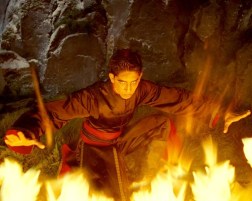 I wouldn’t call myself a Shyamalan apologist, but I think he has at times suffered harshly at the hands of critics and audiences disappointed that he’s never re-reached the heights of The Sixth Sense (though, personally, I prefer Unbreakable anyway). Unfortunately, The Last Airbender is more fuel to the fire. It’s not only Shyamalan’s worst film, it’s a plain bad film by any reasonable measure. Laughably awful, even.

This review is part of the 100 Films Advent Calendar 2012. Read more here.
The Last Airbender featured on my list of The Five Worst Films I Saw in 2012, which can be read in full here.
 Michael Mann is arguably best known for his modern, urban, slick, intricate crime thrillers — films like
 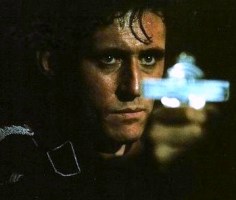 Should we long for a Director’s Cut, then? Maybe that would be an improvement, but I’m not convinced it would be good per se. You see, the film doesn’t just stick to giving us Nazis vs Whatever The Keep Contains, oh no. First the SS turn up, led by a Properly Evil Nazi, played straight by Gabriel Byrne. Escalation, great. Then there’s Ian McKellen as a professor drafted in to make sense of the keep’s mysteries. Also great — even the Good Nazi is going to have to die, right? Who better to root for than a saved-from-a-concentration-camp Jewish professor.
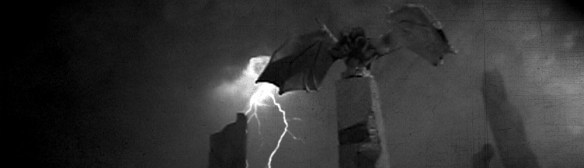
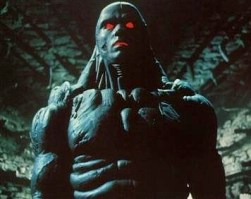 There are plus points, but they all come with a commensurate downside. The creature is well-realised at first, with some nice animated effects that are more effective than much of the over-cooked CGI spectacle we’d get today. The more we see of him, however, the less power he holds — he ends up essentially a very tall man. OK, it’s a bit better than that makes it sound, but the mysterious billowing smoke was spookier. The film on the whole is nicely shot, with some real standout moments of cinematography. But slow-mo and a smoke machine both get overused by the end, lending many of the visuals a tacky ’80s edge.
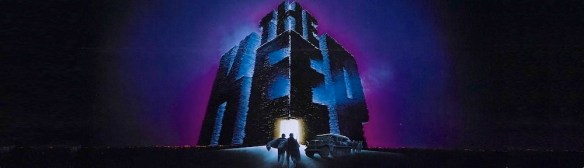
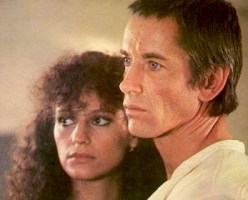 One thing the film never manages to be is remotely scary. It’s not aiming for cheap jump- or gore-based shocks (although there is a little goriness, it’s quite light; triply so by today’s standards), but it doesn’t manage any significant senses of dread or creepiness. As noted, early on it seems to be heading in the right direction — even the secluded mountain village, nestled in a harsh landscape but with greener-than-green grass and garishly painted houses, and towered over by the foreboding slab of stone that is the titular structure, is an uncanny start — but it never makes good on the promise.
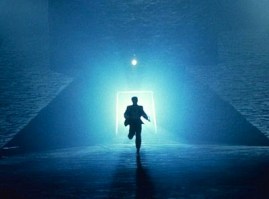 I would love to join their ranks, because there are numerous exciting ideas and moments of quality filmmaking to be found here; but I won’t be, because there’s too much muddled dross packed in around them. The result is that quite-rare thing: a decidedly mediocre film that I’m actually glad I’ve seen. But, unless someone wants to hire me for that remake, never again.
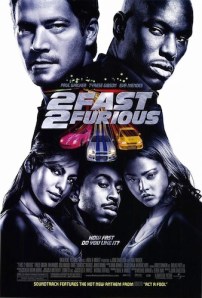 I never thought I’d watch, and certainly not enjoy, the Fast and the Furious series, but a few years ago (after the second film hit cinemas, I think — which would be almost a decade!)
  It’s worth noting it was directed by John Singleton, who started out with the acclaimed social drama
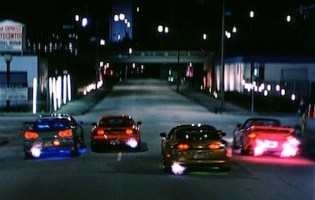
 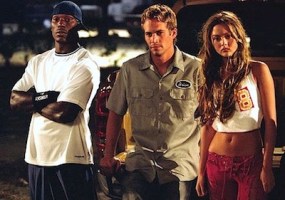 Ultimately, 2 Fast 2 Furious is like cheap fast food: you know it’s made of trash, high in fat and sugar, liable to rot something in your head — and just really bad for you fullstop… yet it’s an enjoyable guilty pleasure once in a while. If you don’t identify with that feeling then you’re a better man than me, and you’ll probably never like this film.
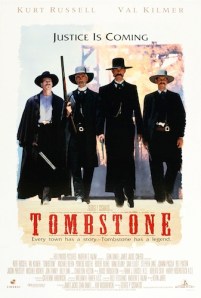 The story of the OK Corral is one I know by name only; I haven’t even seen the
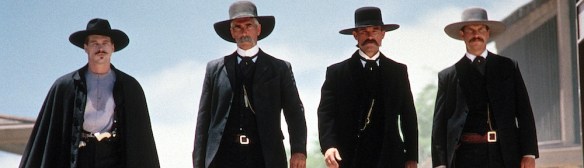
  That may be down to historical accuracy. There’s a distinct feeling of veracity to proceedings, and as I understand it a concerted effort was made in that regard. The Movies perhaps shouldn’t worry about sticking too closely to fact (if you want an accurate lesson, read a textbook), but when they can manage to be both factually accurate and entertaining, it’s all the better. Cosmatos & co appear to balance this well.









 100Films.co.uk