2010 #68
John Crowley | 91 mins | TV (HD) | 12 / PG-13
 Is Anybody There? has been described as “lightweight” in some reviews. Tosh and piffle — I don’t think that’s true in the slightest, and it’s left this rather excellent film to be distinctly underrated.
Far from being “lightweight”, it’s a subtle tale that covers a lot of ground in an unshowy way. Aside from the main plot, which is very worthwhile in itself — about how a lonely, slightly odd 10-year-old boy and a lonely, stubborn old man accidentally wind up bringing out the best in each other and helping each other to move on from the troubles they’re stuck in — the supporting characters are used to paint succinct pictures of old age, abandonment and regret.
And so it’s actually about a lot of things: primarily loneliness, in all its forms, from a boy who can’t get on at school and is half ignored by his parents, to a strained marriage, to abandonment at old age; but it’s also about regret, for missed opportunities and for not setting things right; and that particular point in childhood when you’re obsessed with death and what lies beyond; and hope for the future, even when there’s not much future to be hopeful about; and how there’s happiness to be found even when it seems it’s too late for any. And it’s about all of these things in a much better way than it might sound — I’m hitting them on the nose here, something the film never does.
The cast are excellent, particularly the central pairing of Michael Caine and Bill Milner. Both give excellent, nuanced performances, and it’s credit to not only their skills but also those of writer Peter Harness and director John Crowley that the 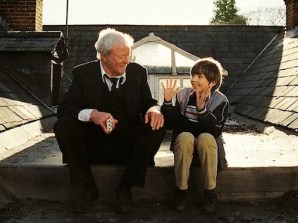 initially antagonistic relationship merges seamlessly into a deep friendship and respect; one that doesn’t go unchallenged, but survives it all to make them both better people.
Milner captures perfectly that almost-teenage state of naivety-and-knowledge; of extreme stomping anger and beautiful helpfulness, each just a flip of the coin away from the other; where a blazing row is followed by everything being fine just seconds later. And Caine, at the other end of life, is almost the same, in the way that youth and old age always seem to align so perfectly. He starts off grumpy and unappeasable, but places himself willingly into a grandfather-like role, teaching Milner the wonders of magic and trying to bring him out of his shell, to find friends his own age, to move on with his death-obsession, to not let his life disappear into regret; and, at the same time, coping with his own heavy burdens of a life thrown away, that unique type of regret when it’s far too late to ever possibly put it right.
While it is clearly Milner and Caine’s film, that doesn’t mean the supporting cast can’t excel also. In particular, Anne-Marie Duff as the snowed-under mother and manager, with her heart in the right place but a family life that’s severely suffering because of it, something she doesn’t even notice until it’s (almost) too late. It’s Duff, David Morrissey, and the rest of the elderly main cast, who round out the film’s themes with subplots and vignettes conveyed through understated, often dialogue-light/free, scenes and performances.
If this all sounds heavy going… well, some of it is, relatively, but there’s also plenty of comedy — much of it quite dark, true — to lighten the mood. 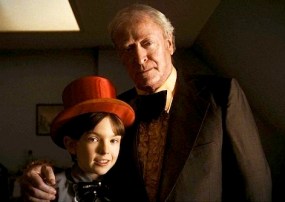 It’s a well-balanced film that hits that genuinely realistic note: life is rarely all comedy or all tragedy, and more often than not the most hilarious moments are locked up inside the most unbearable. It’s a truth a few more drama writers could productively learn, instead of remaining so insufferably po-faced because they’re creating a Serious And Meaningful Dramatic Work.
Is Anybody There? seems to garner middling reviews most places, which I think is massively unfair. Perhaps it didn’t speak to those reviewers, for whatever reason, but it did to me and the person I watched it with. Perhaps if you’ve ever been that child who wondered and worried about what comes after death, or struggled to find your place in the world, or become stuck in a situation where you feel you may as just give up, or known people who’ve been abandoned as they grew old, or who have suffered that horrible, sometimes slow, sometimes all too fast, loss of their mental faculties, then this film will engage you too. It is, in three words, excellent, underrated, and affecting.
Is Anybody There? placed 9th on my list of The Ten Best Films I Saw For the First Time in 2010, which can be read in full here.

 #65 Get Smart (2008)
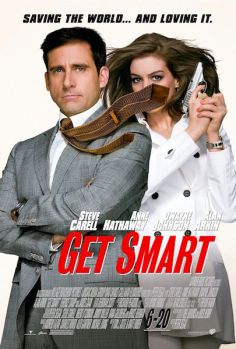 Get Smart, as you likely know, was a TV series in the ’60s, which makes one wonder how it’s taken so long to get to the big screen. I guess it didn’t have the same fanbase or perceived relaunchability that led to an endless array of big-screen versions of ’60s/’70s series in the last decade or two —
 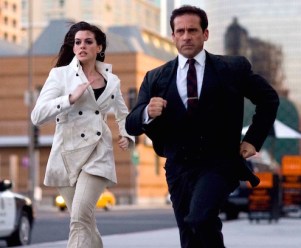 there’s a few action sequences that are surprisingly decent too, considering this is still primarily a comedy.
 to be the smarmy big shot who either ignores or specifically brings down a character like Carrell’s, but instead he’s one of his biggest supporters. (That he turns out to have been A Bad Guy All Along, Gasp! is beside the point.) The office bullies don’t actually have any power at all and are frequently brought down to size. It makes a nice change from the stock sitcom clumsy-hero-who-eventually-comes-good with irritating-and-condescending-higher-ups on the side, the pedestrian and unenjoyable fallback of too many comedy writers.
 but it’s asking a little too much from not necessarily sympathetic viewers.
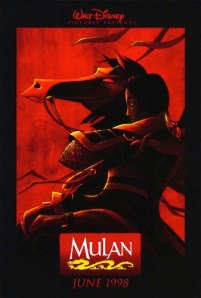 I realised recently that I haven’t seen an animated Disney film produced after
  (It’s this kind of thing that has caused uproar for
  “Oh my God, what have they done to Sherlock Holmes?!” Etc etc. By this point you’re likely to have heard the arguments that Guy Ritchie’s blockbuster re-imagining of the Great Detective is actually based on all sorts of references and allusions in Sir Arthur Conan Doyle’s original works, so I won’t go over them again here. Indeed, I’m not even convinced they’re relevant in the first place.
 The way to this climax offers a good mix of detecting, action and humour. It’s not pure Holmes then, but it’s not pure blockbuster either. Downey Jr brings some of his Tony Stark magic, but his take on Holmes is still distinct, not just because of his faultless English accent. His madness, obsession and genius are all well portrayed, and Ritchie’s direction matches it beautifully.
 Mark Strong’s villain is suitably chilling, aided by the film’s irreverence: if they can make Holmes into a quip-dealing action man, maybe there really is something supernatural at work? To reveal the truth would spoil that proper climax. The closest to a weak link is Rachel McAdams’ Irene Adler. I like McAdams well enough generally, and here too, but she may still be a little out of her depth — they’ve gone for a Pretty Young Thing when someone a little older may’ve suited better.
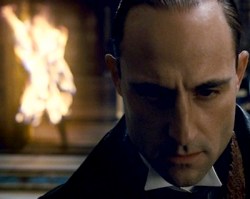 Ritchie brings something special to the director’s chair too, believe it or not — you may think he’s sold out into blockbusterdom to revive his flagging and repetitive career, but the touches he brings suggest the mind of someone who has control of his material, his camera and his edit, and wants to use them all to try something a bit different, not just another hack-for-hire who could churn out any old template-hewn action/adventure flick.
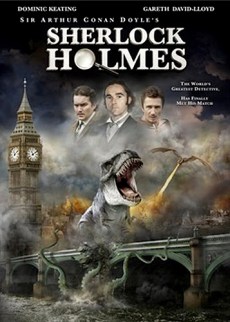 From the company that brought you such pinnacles of cinematic excellence as
 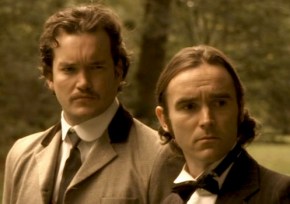 But, in The Asylum’s favour, their Sherlock Holmes doesn’t hide what it is. Yes, it’s called simply Sherlock Holmes rather than Sherlock Holmes and the Implausible CGI Monsters, but at least said monsters are plastered all over the DVD cover (both US and UK). If you see that and still expect something faithful to Conan Doyle, more fool you. That said, at times it’s surprisingly faithful to Doyle’s spirit. There’s some decent-ish investigation and deduction, the story structured like a mystery rather than an action-adventure.
 Anachronisms abound, the best being the first: the film opens in London, 1940, the middle of the Blitz, and the opening shot foregrounds the Millennium Bridge. I don’t think you have to be too familiar with London to know when that was built. Elsewhere we get intercoms on houses, incongruous light switches and period inaccurate telephones, just to mention a couple. It’s shoddy, yes, but almost part of the fun.
 Is 1945-1998 actually a film? Or is it a piece of video Art? Or just another online video?
 attention didn’t already wander, that is). There are ultimately so many flashes and bleeps, and the effect is so lulling, that I had to force myself to remember these represented Big Nasty Bombs that were Not A Good Thing. Perhaps something more aurally grating would’ve been appropriate; the counter argument going that this would cause even more viewers to abandon the work.
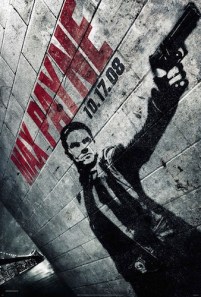 I was a bit of a gamer once. Not an especially hardcore one, but certainly a gamer. And I remember Max Payne, and I remember enjoying it, and I remember thinking it would make quite a good film, and I remember one of the biggest problems being that what made it so unique as a game was the bullet-time feature and what would make it so derivative as a film would be to use bullet-time. But it also had lots of other things going for it: the snow-bound nighttime New York setting, the dark revenge plot, the hard-boiled gravel-toned voiceover.
 Unfortunately, he seems to be under the illusion that a couple of barely-moving slow-mo moments also stand in for a full action sequence. When an action movie can’t deliver any action, there’s a problem.
 The ‘harder’ bit merely comes from a couple of frames (literally) of violence and the odd bit of CG blood. Presumably the extra walking around is to artificially lengthen the running time and persuade the more gullible that they’re getting a tougher experience.
 At least some of it looks quite nice. The drifting snow-laden exterior shots are among the few bits of the film that might genuinely be considered good. But when you can get pretty images elsewhere, why suffer through this?
 In the special features on The International’s Blu-ray, director Tom Tykwer comments that architecture is a focus of his when making a film. It certainly shows here: there are many, many lingering shots of buildings (and just about everything else, actually), all very modern, with straight, clean, crisp lines. The cinematography matches it in pin-sharp perfection, which at least means the Blu-ray image is a pleasure to watch. The film itself, however, is a little dull.
 Not that her continued presence would’ve improved the film’s final act. The ultimate resolution is half brave and half cop-out: the goodies fail in bringing the baddies down, the film explicit in the fact that such business will always continue; and yet most of the baddies are dispatched, one way or another, and a closing array of newspaper headlines serves to imply that the law got the Big Bad Bank after all. As “have your cake and eat it” endings go, it’s a damp squib.
 The filmmaking skill Tykwer exhibits during this one action sequence, plus the beauty with which he shoots international scenery, suggests he’s the perfect director to take over the Bourne franchise (should that rumble on). He already seems to be borrowing from it, including the choice to underscore all his long, slow shots with punchy, driving music, as if this in itself will give the film some dynamism. It doesn’t. Though The International may occasionally remind you of that trilogy, then, it doesn’t come close in the entertainment stakes.
 So many consumers hold off for the DVD these days, especially with the added quality offered by Blu-ray, that the old answer of “what was released in the cinema” doesn’t necessarily hold true any more. Filmmakers know some will be waiting for the DVD, so are less concerned with releasing a studio-mandated, shorter, mass audience friendly cut into cinemas when their fuller vision can be found on DVD. Equally, the PR people know that “longer cut!” and “not seen in cinemas!” and other such slogans can help sell DVDs, and so may be forcing needless and unwelcome extensions onto filmmakers. Then there’s all those older directors who think they’re doing a good thing finally getting to tamper with their film 30 years on, who may well be misguided.
 There remains one argument for clarity, I think. How does one guarantee that, in the future, the ‘correct’ version remains accessible? With new formats always coming along, there’s no assurance that every cut of a film will be released; with TV showings, there’s no assurance the preferred version will always be the one shown (though there’s another argument for how much the latter matters considering they already mess around with aspect ratios and edits for violence/swearing/sex/etc.) But then, even if a filmmaker makes it clear that their preferred version is the one that only came out on DVD/Blu-ray, what chance is there that unscrupulous disc / download / unknown-future-format producers or TV schedulers won’t just revert to the theatrical version by default?
 100Films.co.uk