
Dan Gilroy | 112 mins | streaming (UHD) | 1.85:1 | USA / English | 15 / R
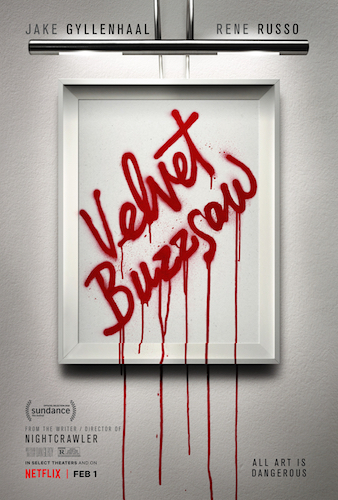
The team behind neo-noir modern classic Nightcrawler (writer-director Dan Gilroy, stars Jake Gyllenhaal and Rene Russo, cinematographer Robert Elswit, among others) reunite for this direct-to-Netflix genre mash-up — it’s part art-world satire, part mystery-thriller, part horror. The Verge described it as “Robert Altman’s Final Destination”, and that so succinctly articulates what the film reminded me of that I decided to just lift it. Well, just pilfering someone else’s work is in-keeping with the film’s themes, at least.
Set in the world of high art, it stars Gyllenhaal as all-powerful critic Morf Vandewalt, whose reviews can make or break sales worth millions of dollars, plus the careers that go along with that. One person his tastes always align with is prominent dealer Rhodora Haze (Rene Russo), whose assistant Josephina (Zawe Ashton) is falling out of favour due to relationship woes. But when her reclusive neighbour dies, she finds his apartment full of striking and original artwork, which she promptly steals. Mort is bowled over by their quality, Rhodora muscles in on the sales, and soon the deceased artist is a sensation. But there’s more to his disturbing work than meets the eye, and soon people start dying…
So far so Final Destination, but not very Robert Altman, I know. The latter comes more in the execution than the subject matter, in particular that this is really an ensemble piece — the marketing pitched Gyllenhaal as the lead, I guess because he’s the biggest and most marketable name, but Ashton’s role is at least as large and central, if not more so, for example. Plus, as well as those two and Russo that I’ve already mentioned, there are significant roles for Toni Collette (as an art buyer for a museum), John Malkovich (as an uninspired elder-statesman artist), Natalia Dyer (as an intern struggling to break in), Billy Magnussen (as a handyman who wants to be an artist), Tom Sturridge (as a rival dealer), and Daveed Diggs (as an up-and-coming artist everyone wants to sign). Before the thriller and horror elements come into play, this spread of characters makes the film seem much more like a portrait of the art world from multiple different perspectives.

Gilroy has specifically cited Altman’s Hollywood satire The Player as an influence on how he approached things. By complete coincidence, I watched The Player just a few days before this, and so that similarity was very clear to me. That said, Gilroy’s lack of experience relative to Altman perhaps shows through. Where The Player was very pointed and effective in its satire, Velvet Buzzsaw takes more of a vague, scattershot view of the contemporary art scene. Gilroy does have a specific theme in mind — the disjunct between art and commerce, and their negative effects on each other — which manifests in various ways (it’s part of the film’s horrors as well as its satire), but that seems slightly disconnected from the Altman-esque “different perspectives” approach. Having so many key characters does lend a slightly different feel from what you might expect, but it doesn’t lead to the same kind of forensic dissection that Altman was capable of.
It’s just one aspect of the film that seems somewhat muddled. It’s not fatally flawed, but there are things about it here and there that just don’t seem to add up. It’s almost as if scenes had been arbitrarily removed; not ones that particularly affect the plot, but maybe ones that affect the details. For example, at one point Mort exclaims that he’s been seeing strange things recently, but the only evidence we’ve seen of that came with the thing that prompted his exclamation. These kind of vague, not-quite-right bits pop up now and then. You’d almost wonder if it had something to do with the film’s horror side, like it was trying to be disquieting, but it doesn’t correlate or connect up to the actual horror bits.

And yet, despite that, it’s so good in places. In particular, it looks gorgeous, especially in UHD. That’s how Elswit has shot it, of course, but also some of the striking visual ideas Gilroy throws into the mix. His screenplay definitely has its moments also. One of Mort’s first reactions to the startling work Josephina has unearthed is that “critique is so limiting and emotionally draining,” which is just begging to be quoted in reviews. That line was in the trailer, so it’s already threatened to take on a life of its own outside the film, but it’s certainly not the only meme-in-waiting that’s thrown up. “The admiration I had for your work has completely evaporated” is another choice example. Heck, about half the rest of the dialogue is as well, never mind some reaction shots.
Sometimes, star ratings really aren’t nuanced enough to represent one’s reaction to a film. There are bits of Velvet Buzzsaw I adored — performances, scenes, individual lines, the cinematography — at a level normally found in a five-star film. But there are other things it fumbles, like the way the story sometimes jumps as if scenes have been deleted, or the way it doesn’t seem to have an answer for some of its mysteries, or the way the trailer spoilt pretty much everything (not a fault of the film itself, I know, but still a grievance). Some of those err down towards a three-star experience. It’s quite frustrating in that respect. Overall, there’s enough I liked that I’m going to give it a four, albeit a cautious one.

Velvet Buzzsaw is available on Netflix now.
 In 2006, the body of 38-year-old Joyce Vincent was found in her London bedsit, surrounded by Christmas presents and with the TV still on. Sad, but largely unremarkable, were it not for the fact that she’d been dead for three years.
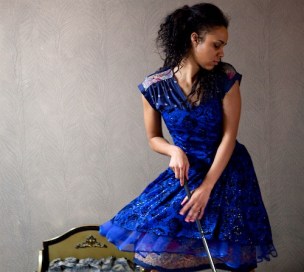 Some people seem to view this as little more than a detective mystery, and are frustrated that Morley ‘chose’ to leave out details. I guess such critics have no understanding of things like confidentiality (when it comes to why Joyce was in a women’s refuge and what she disclosed there), rights to privacy (if the family don’t want to be interviewed, you can’t force them), the realities of investigating a real-life case (maybe some people who knew her in those final years just don’t want to be found), or human decency (Joyce led a fragmented life that came to a terribly sad end, and all you can think about is why she didn’t leave a few more clues around for you to deduce what happened and why?!)
 On the more considered side of the internet, there’s a reasonable debate to be found about the filmmakers’ right to tell the story at all. Joyce kept her life story secret even from some of her closest friends, and yet here it is being picked over in a movie for anyone to see. Is it moral to do such a thing? Should she not just be left in peace? Are the extraordinary circumstances of her death a good enough reason for this level of prying? Surely her death and how it came to occur needs to be understood, though, and surely the only way to do that fully is to examine her life. But is that not the business of inquests and the like, not films? But then, the filmmakers seem to have dug up information the inquest didn’t get close to unveiling. Perhaps the question is, when does society’s interest justifiably overtake the rights of the individual? Does it here? I’m not sure. Maybe.
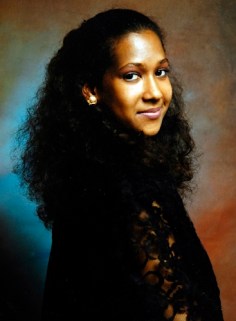 Nonetheless, these flaws can’t detract from the fundamental power of the story being told. If you come away from this thinking not about how sad it was for both Joyce and the people who knew her (especially Martin, especially in the film’s final moments), or what you should or could perhaps be doing better in your life, but instead being angry that it didn’t satiate your ghoulish need for full and frank revelations… well, I don’t know what to say about you, but it wouldn’t be very nice. Through this incident, Morley and her interviewees are really making bigger points about our society and our relationships. It’s no one’s fault, per se, that this happened to Joyce, but that it can happen is horrendous.
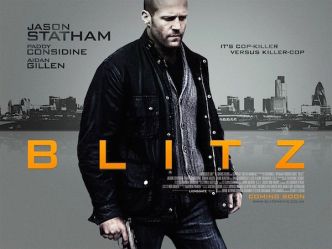 Jason Statham plays the kind of copper who wakes up on his sofa in the middle of the night, immediately pours himself a whiskey in a mug, then goes out and beats up three youths who were trying to nick a car, in this godawful crime novel adaptation.
 At least it has some so-bad-they’re-good one-liners — “Aren’t you going to take any notes?” “Do I look like I carry a pencil?” Unfortunately, their presence meant the thing Blitz most reminded me of was
 100Films.co.uk