
Cinemas are back! And in the two weeks (and a bit) since they reopened here in the UK, I’ve been… not at all. Well, I have something of an excuse: I started a new full-time job halfway through this month — on the same day cinemas were allowed to reopen, in fact — which means I can no longer go slipping off there on a quiet weekday afternoon. I shall miss that. Anyway, there’s still evenings and weekends, once I’ve finally settled into my new routine and can motivate myself to get out. Indeed, it’s also affected my viewing at home: the record-setting pace I established earlier in the year, which had slipped slightly by the end of April, has not been regained. All is not lost, however, as May 2021 still managed a couple of firsts. More on those in a minute. First, my viewing list…

#96 Page Eight (2011)
#97 Carefree (1938)
#98 Baby Done (2020)
#99 An American Pickle (2020)
#100 Cinema Paradiso (1988), aka Nuovo Cinema Paradiso
#101 I Care a Lot (2020)
#102 Strange Confession (1945)
#103 Twister (1996)
#104 Spontaneous (2020)
#105 Sonic the Hedgehog (2020)
#106 Stuart Little (1999)
#107 Drop Zone (1994)
#108 The Aeronauts (2019)
#109 Good Boys (2019)
#110 Crank (2006)
#111 Official Secrets (2019)
#112 Plan 9 from Outer Space (1959)
#113 Defending Your Life (1991)
#114 Testament of Youth (2014)
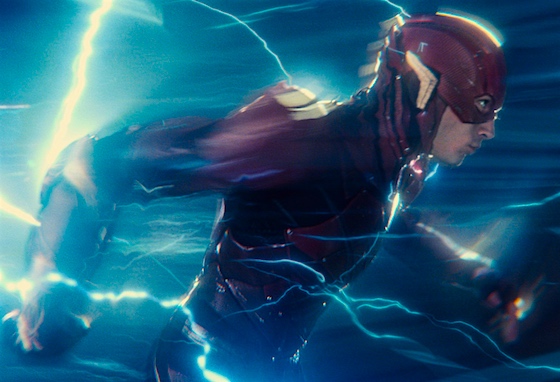
#115 Zack Snyder’s Justice League (2021)


- I watched 21 new feature films in May.
- Those included reaching eponymous goal, with #100 being this month’s Blindspot film (more on that in a mo). I got to it on the 5th, which ties with last year for the earliest ever… except 2020 was a leap year, meaning May 5th was the 126th day of the year then, whereas in 2021 it’s the 125th — so, in that respect, this is a new record. Hurrah!
- I didn’t make it to my new goal of 120 films, though, so May 2020 clings on to that record for the time being.
- May 2021 has some other achievements to its name, however. For instance, it makes 2021 the first year where I’ve watched over 20 films in each of the first five months of the year. Coincidentally, it’s also my 30th month ever with 20+ films.
- In terms of averages, that figure surpasses the May average (previously 16.1, now 16.4), but falls just short of the rolling average of the last 12 months (previously 21.8, now 21.0 — so, er, it’s actually bang on it now), and of the average for 2021 to date (previously 23.5, now 23.0).
- But back to achievements, because, as regular readers may remember, since July 2017 I’ve been tracking the days of the year on which I’d never watched a new film as part of this blog. When I began, I had eight still to check off. It’s taken almost four whole years, but the quest is finally complete: I watched a film on the last outstanding date, May 23rd. What did I choose to mark the auspicious occasion? Plan 9 from Outer Space. A silly film for what is, frankly, a fairly silly achievement. But it’s done now, so I can move on… to making sure I’ve seen at least two films on every date! (Not really.) (But now that I’ve mentioned it… Oh dear.)
- This month’s Blindspot film: an appropriate choice for this year’s #100, because Cinema Paradiso is all about the love of cinema. Doubly appropriate this month, then, with them reopening.
- Unfortunately, I watched nothing from last month’s “failures”. A double failure!

The 72nd Monthly Arbitrary Awards
 Favourite Film of the Month
There’s a few different options this month: films I admired a lot, but would come up short of saying I loved; films I enjoyed a lot, but can certainly recognise their flaws. In the end, I’m coming down in favour of Official Secrets, if nothing else because I think more people should see it. It arguably comes up a little short to be a ‘great movie’, but it’s an important story, well told.
Least Favourite Film of the Month
Sometimes you watch a “bad movie” cult classic and, even though it is technically a terrible movie, you have a great time — I’m thinking of The Room or Love on a Leash here. Theoretically, Plan 9 from Outer Space should fall into that camp. For some people, it does. But not for me — I just thought it was rubbish.
Best Recycling of a Musical Theme of the Month
Okay, the recycling wasn’t actually done by this film — this is the original. But Drop Zone features a throwaway music cue by Hans Zimmer (it plays over a minor bit of action business) that would later be repurposed to much great acclaim: it’s the main theme to Pirates of the Caribbean. That’s become a very popular bit of film music, which is in part thanks to the film being so popular, thereby widening it’s audience, but it’s a great cue in and of itself. It’s far and away the best bit of score in Drop Zone — the rest is wholly forgettable; indeed, it’d be better if they just played “the Pirates theme” over everything… which is kinda what they eventually did in Curse of the Black Pearl, so I guess Zimmer and co learnt their lesson.
Special Award for Achievement in Director’s Cut-ing
Normally when I view a variant cut of a movie — be it a Director’s Cut, an Extended Edition, or whatever — it’s not really that different to the original version; and when that’s the case, it doesn’t get a new number in my viewing (because I’m counting how many new films I’ve seen, obv). But, now and then, one of these cuts does manage to be different enough that I feel it warrants being counted as a new film. I suppose some people would always argue with that, but I feel that if you’ve added or changed enough material that the viewing experience feels different (for good or ill), then that makes the viewing more than just a rewatch. Now, some filmmakers are more prone to revised cuts than others — Ridley Scott, famously, or Peter Jackson — and I notice this when I work out which directors I’ve reviewed the most films by on this blog, because I count those different-but-not-that-different cuts as “bits”. So, for example, Ridley Scott tallies “14 and 3 bit” films; or Peter Jackson has “8 and 3 bits”. But one director has avoided “bits” with impressive regularity, and that person is Zack Snyder. Although I’ve covered extended cuts of three of his movies now (Watchmen, Batman v Superman, and Justice League), his tally has “0 bits”. When Snyder does a variant cut, he really makes it matter.
The Audience Award for Most-Viewed New Post of the Month
It’s a true rarity this month: the victor was April’s monthly review! I’ve been published one of these every month for many years now, but I’m not sure one has ever topped the chart before (but I can’t be bothered to dig through 71 previous Arbies to find out right now).












My Rewatchathon continues to slip behind target, from four short at the end of April to five now. I had intended to finish the Indiana Jones series this month, and also to see Godzilla vs. Kong on the big screen when cinemas reopened, which combined would’ve left me considerably less far off target… but neither of those things happened, so here we are. Maybe next month.
#14 Singin’ in the Rain (1952)
#15 Raiders of the Lost Ark (1981)
#16 Indiana Jones and the Temple of Doom (1984)
A selection of things I’ve been meaning to rewatch for a very long time, here. First up, Singin’ in the Rain, a musical classic that often sits surprisingly high in polls like Sight & Sound’s — not that it’s not a great movie, but it doesn’t seem to fit with the sorts of things around it at the top end of those kinds of polls. For me, as great and lovely as the film certainly is overall, it still has the occasional minor longueur; and, sure, there are three or four or maybe even five great songs, but also a handful of minor, very forgettable ones; and I’m never a big fan of an extended ballet interlude, although this is definitely one of the better ones. But, as I said, overall it is really good — I’m focusing on the drawbacks because it was a film that I’d wondered if it should’ve been in my 100 Favourites, but I think it was right to just miss out.
As for films that did make my 100 Faves, I’ve been meaning to rewatch the Indiana Jones movies for years. I’m not entirely sure when I last saw them, but it’s been over 13 years, minimum (did I re-watch the trilogy in the run-up to Crystal Skull’s May 2008 release? Maybe (that sounds like the kind of thing I might’ve done), but I can’t remember). I even bought the Blu-ray set when it first came out, which was 8½ years ago, but I’ve never got round to playing it. Now, the series is out in 4K next week, so I thought I ought to watch my darn 1080p discs before I inevitably upgrade (I’m a hopeless case). I grew up loving the Indy films, which is perhaps why I haven’t rewatched them a lot in recent years — they’re so familiar, it’s not ‘necessary’ — but, actually watching them again after so long, it’s reminded my why I should watch them more often: they’re really great.
Also, that long gap means this is the first time I’ve seen Temple of Doom uncut: on its original release in the UK, they cut out over a minute to secure a PG certificate from the BBFC, and that shortened version persisted even until the DVD release, with the uncut version (now rated 12) only debuting on Blu-ray. Temple is the only Indy film not already covered on this site (I reviewed Crystal Skull (twice) while it was still in cinemas, and Raiders and Last Crusade were part of my 100 Favourites series in 2016), so I’ll give it the Guide To treatment sometime. In the meantime, my Letterboxd post is likely a preview of my summary and score.

For the first time in a fair old while, we begin with new releases on the big screen — though, of course, none of these were interesting enough to tempt me out. But, c’mon, Peter Rabbit 2? No thanks. As for the rest of the newest releases, things like Mortal Kombat, Spiral: From the Book of Saw, and Cruella are all movies I’ll happily watch in a few months — or maybe a few years — at home. There was also The Conjuring: The Devil Made Me Do It, which is apparently the seventh film in the Conjuring universe, something which has apparently sprung into existence without me even noticing. I don’t intend to play catchup.
Netflix continued to offer some at-home alternatives, of course, include Zack Snyder’s zombie/heist mashup Army of the Dead and Amy Adams thriller The Woman in the Window. The latter slipped down my viewing pecking order thanks to all the negative reviews, while the former, I kinda want to make time to see Snyder’s first zombie flick first. Maybe soon. Also on Netflix, Oxygen sounds up my street as a single-location sci-fi thriller, and, from the back catalogue, Sam Raimi’s Drag Me to Hell made what I feel is a rare streaming appearance — I’ve been meaning to try to see that for years. Amazon Prime didn’t have quite the same calibre of additions, it must be said. I mean, another Liam Neeson actioner, Honest Thief — at this point I don’t even know if that’s a genuine premiere or just one I hadn’t heard of finally landing on streaming. They did add Upstream Color, though; which, like Drag Me to Hell, I’ve been waiting a long time to appear on a streamer. And now that they have, I haven’t watched them. Typical.
I’ve still got a MUBI subscription ticking over, even though I don’t really watch it — there’s a pile of stuff on there I want to see, and I keep telling myself if I don’t cancel then I might watch it eventually, but it’s all, y’know, MUBI-type stuff, so I’m not often in the mood. But additions of particular interest during May included Park Chan-wook’s Thirst and a trio of Francis Ford Coppola movies in The Outsiders, Youth Without Youth, and Tetro. And talking of things I should cancel, I still have Sky Cinema lingering from the Oscars. Like MUBI, they have a bunch of stuff I kinda want to see, although, frankly, it’s mostly lower brow — Angel Has Fallen, Scoob!, the new versions of Charlie’s Angels and The Witches, and so on. Their most recent additions haven’t been up to much, either — Riverdance: The Animated Adventure, anyone?
Over on the free streamers, something else that I’ve wanted to see for a very long time but is never available to stream: a perennial feature on the mid- to lower-end of “greatest film of all time” lists, Paris, Texas, which is currently on All 4, alongside Capernaum (which is on the IMDb Top 250) and One Cut of the Dead (which I’ve seen but really should’ve reviewed). As for iPlayer, the most interesting stuff has been films they’ve had on before that I’ve never quite got round to — Margin Call, Guys and Dolls, the 1958 version of Dunkirk, and so on.
Finally, purchases. A smaller haul than has sometimes been the case, but that’s only by relative standards: I could still name 16 films I’ve bought on disc this month but not watched yet. They include the six titles in Indicator’s third Columbia Noir set; their release of Ridley Scott’s Someone to Watch Over Me; a bunch of classic French films that were randomly cheap on Amazon: Le Corbeau, Quai des Orfevres, and Le Trou, the latter of which is on the Letterboxd Top 250; as is The Ascent, a Criterion title that I also picked up randomly cheap on Amazon. Also randomly cheap on Amazon: the highest grossing film of 2020, Chinese war flick The Eight Hundred; and cheaper than elsewhere, Arrow’s Tales from the Urban Jungle, a two-film set that I was glad to get for a bargain because I already own one of them (The Naked City, although it’s a better transfer here) and didn’t especially like the other (Brute Force, which I do owe a rewatch). Rounding out the aforementioned 16 were two new Eureka releases of Eastern actioners, from very different eras: 1972’s One-Armed Boxer (a riff on The One-Armed Swordsman, a film I loved, with the same star, Jimmy Wang Yu, also serving as writer and director); and, from 2000, Tsui Hark’s Time and Tide. (And, though technically not relevant to this section, I’d like to point out that I actually watched a couple of things I bought this month, too; namely, Defending Your Life and Zack Snyder’s Justice League.)

We’ll be halfway through the year already!







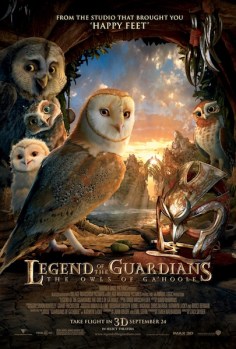 Legend of the Guardians is pretty odd.
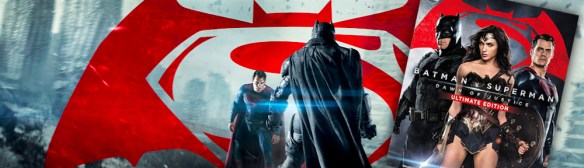
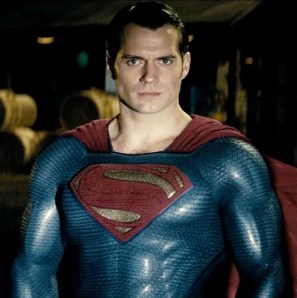
 The Batman v Superman Ultimate Edition has been available via various means for a month or more now, but has only hit disc in the UK this past week (and I waited for it, because I’m a good boy). This extended cut adds half-an-hour of material, give or take (comparing the two Blu-rays tells me the difference is just under 31 minutes;
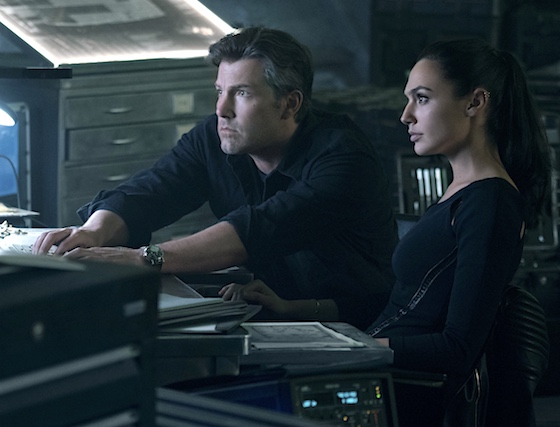
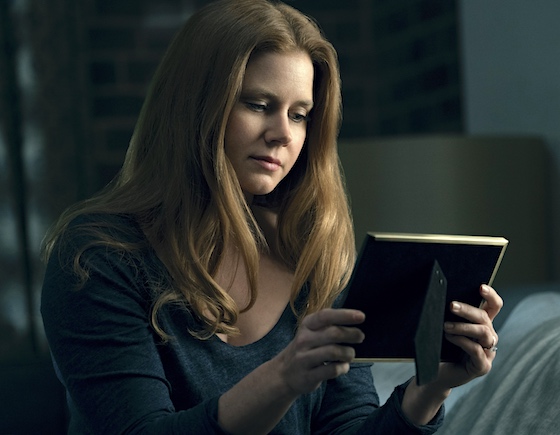
  You may have read that the photographer with Lois in Africa is Jimmy Olsen, identified in the credits but not on screen in the theatrical cut. In this version he is named on screen, but that’s not the important part. More is done to establish why Lois is in Africa, what she’s hoping to achieve, and lay the seeds for why it’s all going to go wrong. This is achieved in such a short space of time that it seems ludicrous it was cut out, leaving theatrical viewers playing catch-up when a couple of extra moments would’ve explained it clearly. (Of course, there may be an element of re-viewing bias in this: I already know what’s happening so of course I cottoned on to everything sooner.) When things do go south, more material makes it explicit what happened — what the bad guys do to frame Superman, essentially. It’s possible some of this material was cut to achieve the PG-13 rating, but in doing so they left out bits and pieces that are referenced later, heightening the sense of confusion for theatrical viewers — how are we meant to know a woman testifying to a congressional hearing about “burned bodies” is a reference to events we just witnessed if we don’t see anyone burning any bodies?
 Less vital to the overall plot, but which certainly contributes to the titular conflict, is that Clark’s investigation into the Batman is seriously beefed up. It makes Clark/Superman feel like more of a leading character in a film that was, at least as originally conceived, his sequel. In some respects this storyline is a more understandable excision, because Superman’s dislike for the Batman and his methods isn’t entirely unclear in the theatrical cut. Equally, it does flesh it out better and connect up some of the dots, like why he intervened when Batman was trying to steal the Kryptonite at the docks (essentially: a Bat-victim’s girlfriend said Batman needed stopping. Maybe not a great reason, but hey, it’s a reason). It’s a case in point of how this film simply has too much going on. To create a workable version it’s had to be three hours long — that’s the length of two movies, and it does feel like two movies’ worth of material. Not back-to-back movies — you couldn’t cut it in two at the middle and be left with two independent films — but two movies that occur concurrently; intercut. I mean, there are even two big action climaxes, back to back.
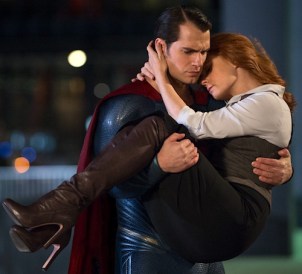 I don’t think it sinks to the level of spelling it all out slowly and carefully in case you missed it, but it does make it more explicit; and, as discussed, it does that by showing more of Lois’ investigation, so it feels like her role is more substantial too. She felt a little cursory in
 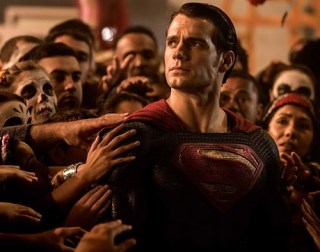 One thing that is pretty apparent about Snyder’s intentions is that he really wanted to make a Batman movie, and I suspect Man of Steel was his way in to getting to do that. Despite launching out of the events of Man of Steel, and engaging with issues of what it means to be Superman (therefore continuing MoS’s theme of “what would it be like if Superman was real?”), and having Lex Luthor as the main antagonist, BvS feels like a Batman-driven movie more often than it does a Superman one. Personally, I get it — I’m more of a Batman fan than a Superman fan too, so that approach warrants little complaint from me — but I can see why Supes’ fans would be miffed.
 Other, more minor changes in this cut include increased violence, though personally I barely noticed it. Some people seem adamant this should’ve upped it to a 15 certificate, but I think you can justify saying it stops just short of that. Quite what the MPAA saw that merited an R, I’m not entirely sure. More interesting to my weirdly-obsessed mind is that the film actually includes the “Ultimate Edition” title on screen, both during the opening credits and at the end (where it’s technically titled “Batman v Superman: Dawn of Justice Ultimate Edition” without any additional punctuation). How many other extended cuts actually change their title card to reflect that fact? Off the top of my head, I can’t think of any.
 With Warner Bros’ universe-launching superhero epic now in its second weekend (unless you live in Myanmar or Poland, anyway), you’ve probably more than had your fill of spoilerphobic reviews. So allow me to provide a spoiler-filled one. (There are a fair few of those around too, of course, but not all reviews can be beautiful or unique snowflakes.)
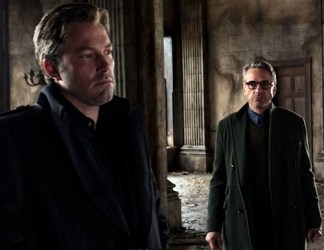
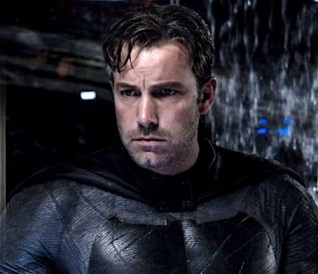 to good people turning bad; the Joker-graffitied Robin suit… This isn’t fan-pleasing/teasing background detail, it speaks to Bruce’s mindset. He’s become the kind of person who believes lines like, “if there’s a 1% chance he’s our enemy, we must take it as an absolute certainty.” He’s a bit of a right-wing nut, basically. If you want to find a character or emotional throughline to the movie, it’s Bruce learning to be a better hero again.
 But if we are criticising the screenplay, let’s turn our attention to the story and its structure, which leaves something to be desired. This isn’t just the writers’ fault, of course, because myriad things affect a film once the screenplay is signed off. In the case of story structure, editing seems a likely culprit — not the actual cutting together of individual shots to craft a sequence or scene, which is as good here as in any action blockbuster, but in terms of storytelling. Frankly, that’s a bit of a mess. Or a lot of a mess, maybe. Whole scenes serve literally no purpose or are clearly in the wrong place — the bit where Perry wanders up to Clark Kent’s desk and wonders if he’s clicked his heels and disappeared back to Kansas, for example. What purpose does it serve? None. But where it might have a role is where it clearly belongs: a couple of minutes later, right before the scene where Superman is in Kansas, chatting to his mom. Why is it not right before that scene? It’s like someone accidentally dragged it out of place on their computer editing timeline and never noticed. Sure, this is a minor point in the grand scope of the film, but it belies a sloppiness to the entire storytelling.
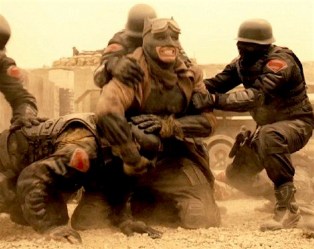 The only purpose it might serve is teasing the future — what is the giant Omega symbol? What are those flying devil-creatures? DC fans know that’s all related to alien supervillain Darkseid, and late in the film Lex Luthor makes a veiled reference to imply that some such alien badass is on the way. Yep, it’s Marvel-style foreshadowing, where every film is just a stepping stone to the next. Except BvS does it even more heavy-handedly than Marvel. As I said, the dream/vision is utterly unnecessary; Lex’s line is nonsensical (how does he know?); and the way other members of the Justice League are teased… You know, I don’t even want to discuss it. It’s a bad Marvel post-credit scene shoehorned into the middle of the movie. It feels like someone accidentally cut a teaser trailer into the actual print of the film. It’s not even so bad it’s good, it’s just tacky. And, I have to say, though I’m not the biggest fan of
 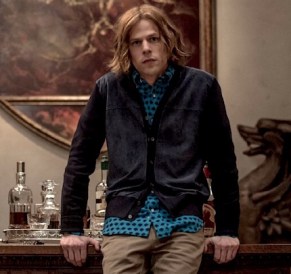 to look for clues you missed, not rethink to see if that even fits with everything we’ve seen. That’s because even if you do latch on to the almost-throwaway sliver of dialogue that indicates Lex put all of this together, the way it’s presented in this cut makes it come a little out of nowhere. However, I believe it’s a plausible explanation of events (within the realms of the version of the genre these films are in), and would tie the whole thing together neatly, were it just a little clearer.
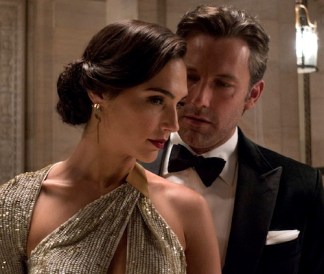 “Give audience an idea what future film(s) will be about while saying absolutely nothing concrete about what future film(s) will be about.” But in that mess (the mess I mentioned at the start of that last really long sentence, remember? OK,) there is stuff going on; there are ideas the filmmakers want to put across, possibly with the intention that they’ll actually be thought about.
 As I was saying: not a perfect movie, but one with a lot of material to provoke thought about both the inherent concepts of superheroes and, external to that, the genre itself, especially the way it’s presented in cinema. I’m not going to slag off the Marvel movies, because they are fun, but the entirety of the big-screen MCU
 So many consumers hold off for the DVD these days, especially with the added quality offered by Blu-ray, that the old answer of “what was released in the cinema” doesn’t necessarily hold true any more. Filmmakers know some will be waiting for the DVD, so are less concerned with releasing a studio-mandated, shorter, mass audience friendly cut into cinemas when their fuller vision can be found on DVD. Equally, the PR people know that “longer cut!” and “not seen in cinemas!” and other such slogans can help sell DVDs, and so may be forcing needless and unwelcome extensions onto filmmakers. Then there’s all those older directors who think they’re doing a good thing finally getting to tamper with their film 30 years on, who may well be misguided.
 There remains one argument for clarity, I think. How does one guarantee that, in the future, the ‘correct’ version remains accessible? With new formats always coming along, there’s no assurance that every cut of a film will be released; with TV showings, there’s no assurance the preferred version will always be the one shown (though there’s another argument for how much the latter matters considering they already mess around with aspect ratios and edits for violence/swearing/sex/etc.) But then, even if a filmmaker makes it clear that their preferred version is the one that only came out on DVD/Blu-ray, what chance is there that unscrupulous disc / download / unknown-future-format producers or TV schedulers won’t just revert to the theatrical version by default?
 100Films.co.uk