
Zack Snyder | 120 mins | cinema | 1.85:1 | USA / English, Russian & Icelandic | 12A / PG-13

DC’s answer to Avengers Assemble begins with a doom-laden cover of Leonard Cohen’s Everybody Knows (a Zack Snyder music choice if ever there was one), and there’s a lot that “everybody knows” about the troubled production of this long-awaited superhero team-up. Everybody knows that the so-called DCEU was deemed to be in need of a course-correction after Batman v Superman. Everybody knows that this was to take the form of making this film tonally lighter, something Snyder and co said was always the plan. Everybody knows Snyder eventually had to leave the project for personal reasons. Everybody knows Joss Whedon was brought in as his replacement. Everybody knows that meant reshoots and an attempt to lighten the tone further. Everybody knows that was a recipe for a conflicted movie…
For those who are thinking “I didn’t know any of that” and aren’t so familiar with superhero things on the whole anyhow, Justice League is set in the aftermath of Superman’s self-sacrifice at the end of Batman v Superman, which has given Bruce Wayne aka Batman (Ben Affleck) a change of heart: he wants to make the world a better place. When he discovers than an alien invasion is imminent, he teams up with Diana Prince aka Wonder Woman (Gal Gadot) to put together a team of metahumans (read: people with superpowers) to fight it. That team includes Barry Allen aka the Flash (Ezra Miller), Arthur Curry aka Aquaman (Jason Momoa), and Victor Stone aka Cyborg (Ray Fisher) — and, following an opportunity to revive his cold dead corpse, Clark Kent aka Superman (Henry Cavill).

Justice League has certainly provoked a mixed reaction from critics and opening weekend audiences. It was always going to: Batman v Superman has been very divisive, with critics largely hating it but a dedicated fanbase to be found without too much digging. Justice League compounds that issue by trying to appease critics, risking alienating fans in the process. The end result inevitably falls somewhere between the two stools, which means there’s no predicting what any one person will make of it — following social media the past couple of days, I’ve seen every possible combination of people who loved, liked, hated, or were indifferent to previous DCEU films and now love, like, hate, or are indifferent to Justice League.
So, my personal reaction is that I enjoyed it. On the whole it’s not as thought-provoking as BvS, but is instead a fun time with some good character bits thrown in. From early reviews I feared the whole story would be choppily edited, and the opening act is indeed a bit disjointed and jumpy, but the closer it gets to the team being assembled the more it settles down. Once they’re together, it’s a fairly straightforward action-adventure movie, with the heroes in pursuit of the villain to stop his world-ending plan. Unlike BvS it’s not full of portentous (or, depending on your predilections, pretentious) themes to ponder, but it’s still a reasonably entertaining action movie.
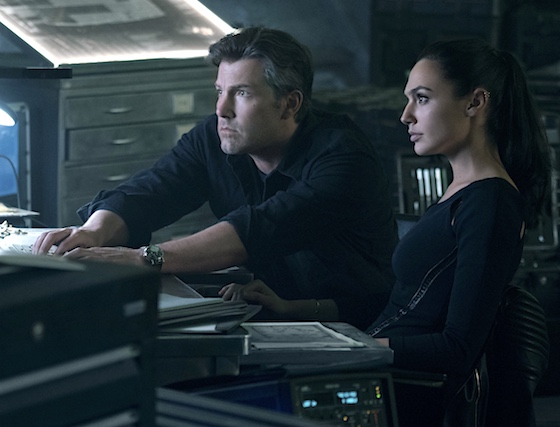
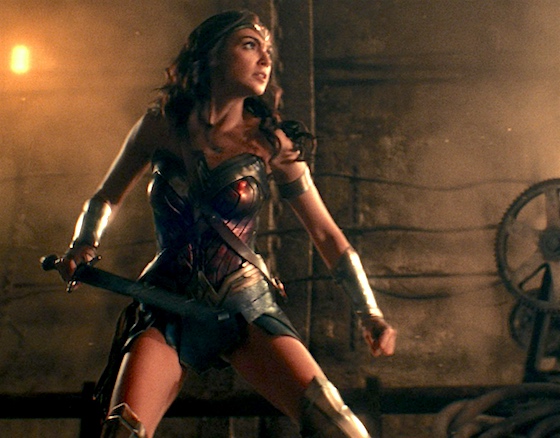
As for those character bits, it completes arcs for Bruce and Diana that have played out over their past couple of movies, both of them opening up to the world and their place in it. Moments that emphasise Bruce being old and tired and Diana stepping into the role of leader seem to have been added during reshoots, no doubt indicating the future direction the DCEU is now reported to go in — Affleck stepping away in the not-too-distant future; the popular Wonder Woman becoming central to the universe. (As a Batman fan, I hope this doesn’t kill off the raft of Bat-family films they’ve been planning. We’ll see.)
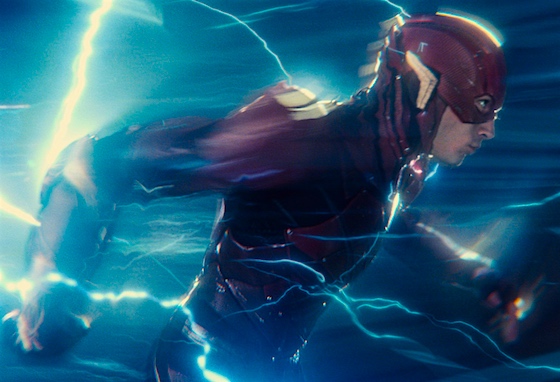
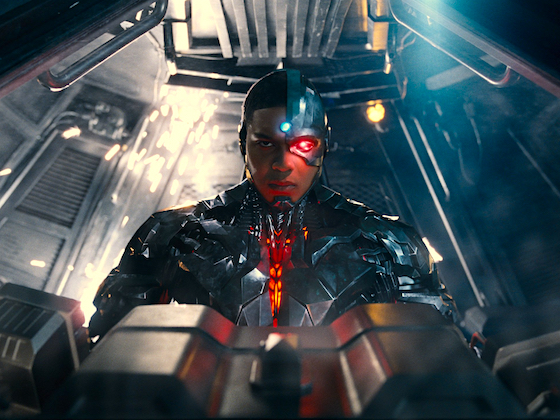
For the new team members, it does a solid job of introducing the Flash and making him likeable — he’s under-confident but good-hearted and funny. Fans of the currently-running TV show may find he’s “not their Flash”, and his costume is one of the worst ever designed, but I’ve never been that big a fan of the series and I can live with the costume. Cyborg gets a mini-arc that works well enough, considering he’s mainly there to be a walking talking plot resolution. Aquaman’s also OK, but a good chunk of his part feels like a tease for his solo film — which, by total coincidence, is the next DCEU movie. This all might’ve been more effective if DC had gone the Marvel route of introducing everyone in solo films first, but the film makes a fair fist of the hand it was dealt.
And as for Superman… well, that’s a whole kettle of fish. Firstly, it’s the worst-kept open secret in the history of movies. The final shot of BvS was a clear hint he’d return, so there’s that for starters. Then early promotional materials included him; behind-the-scenes photos referenced him; when reshoots rolled around, the fact they’d have to deal with Henry Cavill’s Mission: Impossible 6 moustache was big news. Despite all that, they left him off all the posters and out of every trailer. Would it have made a difference if they’d publicly acknowledged he was back? Who knows. Let’s judge what we were given.
In short, he’s not in it enough. The story of his resurrection is a decent idea, but the film has to rush and condense the arc of his return, presumably because Warner were pushing for a lighter tone and brisk running time. How his return affects him does complete the overall story that started in Man of Steel and continued through BvS — the story of how an ordinary young man with extraordinary abilities develops into the paragon of virtue that Superman is to many people. Honestly, I believe this was (more or less) Snyder and co’s plan all along, and those haters of Man of Steel and BvS who now say that “Justice League finally got Superman right” have perhaps misunderstood how something like character development works. (Should that entire character arc have been contained in the first movie? I think that’s a different argument — in our current franchise- and shared-universe-driven blockbuster era, character arcs are routinely designed to play out across a trilogy.)

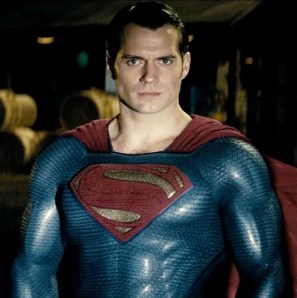
There are no official photos of Superman from this movie,
so here’s a photo of Lois Lane looking at a photo of Superman.
Much attention has also been focussed on the ridiculousness of the moustache removal — both how funny it always was, and how poor the end result is. Honestly, I don’t think it’s as bad as you may’ve heard. I’d wager most people won’t even notice, especially if they’re not looking for it. It’s the kind of thing film buffs see because they’re looking and, yeah, sometimes it’s not great. Personally, I didn’t even think it was the worst computer-generated effect in the movie. Main villain Steppenwolf looks like a character from a mid-range video game, and has about as much personality as one too. There’s terribly obvious green screen all over the place, which is undoubtedly the result of reshoots — sometimes it crops up mid-scene for no obvious reason, other than because they’ve dropped in a new line. Other effects — stuff they’ve probably been working on since principal photography — look fine.
Naturally the effects drive all of the action, for good or ill. Some have said these sequences are entirely forgettable, which I think is unfair. There’s nothing truly exceptional, but how many movies do manage that nowadays? I’d say what Snyder offers up is at least as memorable as your typical MCU movie, which is presumably what critics are negatively comparing this to. The everyone-on-Superman punch-up is probably the high-point, with an effective callback to “do you bleed?” and a striking moment when Superman looks at the Flash (that sounds completely underwhelming out of context…) I also thought the desperate escape with the Mother Box on Secret Lady Island was a strong sequence. The big tunnel fight has its moments, but needed more room to breathe and a clearer sense of geography. The climax is a great big CGI tumult, which clearly aims for epic but is mostly just noise — again, with one or two flourishes.

Another late-in-the-day replacement was Danny Elfman on music duties. It’s proven controversial — turns out there are a lot of fans of Hans Zimmer and Junkie XL’s work on the previous Snyder DCEU films. Personally, I think Elfman’s score largely works — its numerous callbacks to classic themes are better than Zimmer’s musicless thrumming. There’s a massive thrill in hearing Elfman’s iconic Batman theme again, and John Williams’ even-more-iconic Superman theme. In his work on Man of Steel and BvS, Zimmer never produced anything even close to that memorable. Elfman’s style works other places too: an early scene where a bunch of criminals take a museum hostage immediately brought to mind the feel of Tim Burton’s Batman for me, mainly thanks to Elfman’s score. That’s no bad thing in my book.
The biggest point of discussion swirling around the film this weekend, in many circles at least, has been “which bits were Snyder and which were Whedon?” According to one of the producers, the final movie is 80-85% what Snyder shot during principal photography, making 15-20% what Whedon added during reshoots. Not a huge amount, but also not inconsiderable. Personally, while I felt some Whedon additions were glaringly obvious, it also felt to me like a shot or line here and there rather than whole chunks of the movie. I think they’ve done a better job of integrating it than some have given them credit for. I put this down to some people thinking any humourous line must be a Whedon addition, but we know that isn’t the case — they were showing off lighter stuff during press set visits and in the initial footage previewed at conventions, both of which were long before Whedon became involved in re-writes, never mind reshoots. The lighter tone was intended from the off, Whedon just added even more of it.
For those interested, someone who worked on the film has posted a very long list of changes, attributing various bits to Snyder and others to Whedon. There’s also this tweet, which says Snyder’s original cut went down badly with WB execs (hence why Whedon was sought out) and that the vast majority of Superman’s role was reshot to change it entirely — supposedly all that remains of Snyder’s Superman are his action beats (though Whedon added some more), the final scene with Bruce (“I bought the bank”), and maybe one or two other individual shots. This, then, would be Whedon’s biggest contribution to the film. Some love him for it, others not so much. There seems little doubt this is a lighter, more fun Superman. I liked him, though it can’t hurt that I have a bit of a soft spot for Henry Cavill.
Generally speaking I’m a fan of Whedon — I grew up with Buffy; I’m certainly a Browncoat — but I think his additions (assuming those accounts are accurate) are a mixed blessing. Most vital is all the character stuff he’s slotted in, some of which really adds to the movie — Batman’s pep talk to the Flash about “save just one person” was a highlight, I think. The jokey dialogue sometimes lands, sometimes feels forced — the obvious insert of Batman complaining “something’s definitely bleeding” feels incongruous. I’ve seen some complain that he added too many pervy shots of Diana’s ass in that short skirt or those tight trousers, but then whenever I noticed such shots they were in footage that’s been attributed to Snyder, so who knows.
Everything to do with the Russian family was certainly Whedon, which I’d rather suspected. I mean, there are civilians there to add stakes to the final battle, so that it’s not just the villain being villainous in the middle of nowhere, but why is it that just one family lives there? Because they were added during reshoots and there was probably neither time nor money for crowds of people, that’s why. Their subplot could’ve been integrated better (it felt like they kept just popping up for no reason), but I liked the eventual pay-off with the Flash and Superman saving them — the Flash saving one carload while Supes flies past with an entire building is the kind of humour I think works in this film.
Justice League is a different movie for Whedon’s involvement, that seems unquestionable. Is it better or worse? That’s partly a matter of personal taste. As my taste stretches to include both directors’ works, I can see positives and negatives every which way. My ideal cut of the movie would likely keep some of Whedon’s additions but lose others, as well as reinsert some Snyder stuff they cut. There’s no pleasing everyone, eh? (If you want to see some of what was definitely cut, there are various shots in the trailers, and someone’s leaked eight short clips from Snyder’s version — mostly of unfinished CGI, but one reveals what Iris West’s role was. (If those clips are even still there by the time you read this, of course…))
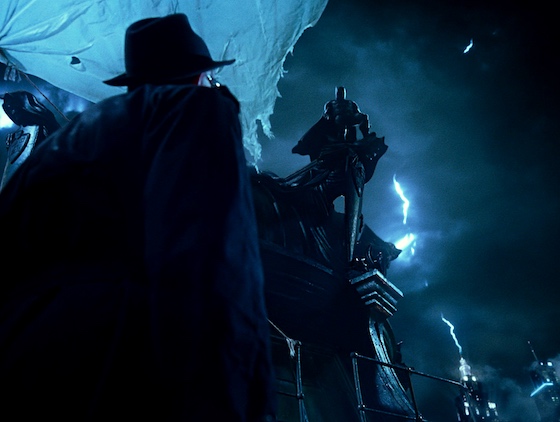
Finally, the post credits scenes. It’s obvious that the first is a Whedon addition (confirmed by the above breakdown) — it’s just a little coda that doesn’t add anything other than some fun. The second scene, however, is an odd one, because it feels like it’s teasing a movie that’s been uncertain for a long time. If it’s setting up The Batman (because Deathstroke was meant to be that film’s villain), well, we know director Matt Reeves is massively reshaping whatever Affleck had planned, quite possibly ditching Deathstroke altogether. If it’s setting up Justice League 2 (because Lex Luthor’s back with a team-building plan of his own), well, who knows if that’s even happening anymore? It was originally planned this movie would be Justice League Part 1 and be closely followed by Justice League Part 2 — presumably that’s why Steppenwolf is the villain, because he was meant to lead into Darkseid (it’s long been reported that a cliffhanger ending to set up just that was cut by Whedon) — but I believe Part 2 has gone MIA from the schedule, and with Affleck now making definitive noises about wanting out of the franchise… Well, who knows what’ll happen.
Back in the present day, Justice League is set to underperform at the box office this weekend: predictions have been revised ever downwards over the past few days, to the point where it’s now at under $100 million — which is kinda funny because it feels like everyone’s talking about it. I guess that’s the difference between “film Twitter” and movie blogs compared to regular folks. Movie Nerds v Regular People: Box Office of Justice, or something. Funny thing is, for all the hatred these DC movies have attracted, they don’t half get people talking. As I saw someone point out on Twitter the other day, you may not’ve liked Batman v Superman, but it’s more than 18 months later and you’re still talking about it. I can’t even remember which Marvel movie was out 18 months ago without looking it up. This is no doubt a simplification — not everyone’s still arguing about BvS, and one of the reasons Marvel movies don’t stick so long is that they produce so darn many of them — but I do think Marvel films give you fun for a couple of hours, and you can call them to mind again if prompted, while DC films stick around, turning over in your mind, love it or hate it. At least for some of us, anyway.

With Justice League, there’s the added complications of its multiple directors and fraught production. Should we judge a film for what it could have been or for what it is? The latter, surely. The former is definitely an intriguing proposition, but not what’s in front of us (and, as the likes of Blade Runner, Alien³, and Superman II have shown, maybe one day we’ll get a chance to judge that movie anyway). Nonetheless, how much should we take into account the behind-the-scenes issues? Should we just pretend they don’t exist? I guess for a lot of regular moviegoers this isn’t even an issue, but for many of us film-fan types it’s hard to put aside the knowledge that this movie was the product of two directors with very different styles and very different production timeframes.
I don’t have any easy answers, I’m afraid. All I know is that Justice League is far from perfect, but I enjoyed it nonetheless.

Justice League is in cinemas everywhere now.


 With Warner Bros’ universe-launching superhero epic now in its second weekend (unless you live in Myanmar or Poland, anyway), you’ve probably more than had your fill of spoilerphobic reviews. So allow me to provide a spoiler-filled one. (There are a fair few of those around too, of course, but not all reviews can be beautiful or unique snowflakes.)
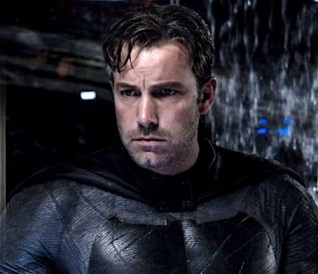 to good people turning bad; the Joker-graffitied Robin suit… This isn’t fan-pleasing/teasing background detail, it speaks to Bruce’s mindset. He’s become the kind of person who believes lines like, “if there’s a 1% chance he’s our enemy, we must take it as an absolute certainty.” He’s a bit of a right-wing nut, basically. If you want to find a character or emotional throughline to the movie, it’s Bruce learning to be a better hero again.
 But if we are criticising the screenplay, let’s turn our attention to the story and its structure, which leaves something to be desired. This isn’t just the writers’ fault, of course, because myriad things affect a film once the screenplay is signed off. In the case of story structure, editing seems a likely culprit — not the actual cutting together of individual shots to craft a sequence or scene, which is as good here as in any action blockbuster, but in terms of storytelling. Frankly, that’s a bit of a mess. Or a lot of a mess, maybe. Whole scenes serve literally no purpose or are clearly in the wrong place — the bit where Perry wanders up to Clark Kent’s desk and wonders if he’s clicked his heels and disappeared back to Kansas, for example. What purpose does it serve? None. But where it might have a role is where it clearly belongs: a couple of minutes later, right before the scene where Superman is in Kansas, chatting to his mom. Why is it not right before that scene? It’s like someone accidentally dragged it out of place on their computer editing timeline and never noticed. Sure, this is a minor point in the grand scope of the film, but it belies a sloppiness to the entire storytelling.
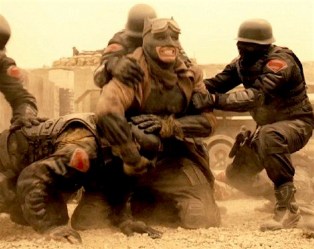 The only purpose it might serve is teasing the future — what is the giant Omega symbol? What are those flying devil-creatures? DC fans know that’s all related to alien supervillain Darkseid, and late in the film Lex Luthor makes a veiled reference to imply that some such alien badass is on the way. Yep, it’s Marvel-style foreshadowing, where every film is just a stepping stone to the next. Except BvS does it even more heavy-handedly than Marvel. As I said, the dream/vision is utterly unnecessary; Lex’s line is nonsensical (how does he know?); and the way other members of the Justice League are teased… You know, I don’t even want to discuss it. It’s a bad Marvel post-credit scene shoehorned into the middle of the movie. It feels like someone accidentally cut a teaser trailer into the actual print of the film. It’s not even so bad it’s good, it’s just tacky. And, I have to say, though I’m not the biggest fan of
 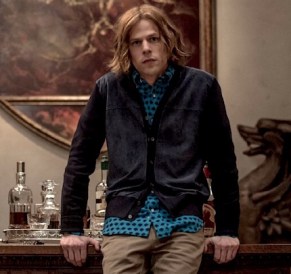 to look for clues you missed, not rethink to see if that even fits with everything we’ve seen. That’s because even if you do latch on to the almost-throwaway sliver of dialogue that indicates Lex put all of this together, the way it’s presented in this cut makes it come a little out of nowhere. However, I believe it’s a plausible explanation of events (within the realms of the version of the genre these films are in), and would tie the whole thing together neatly, were it just a little clearer.
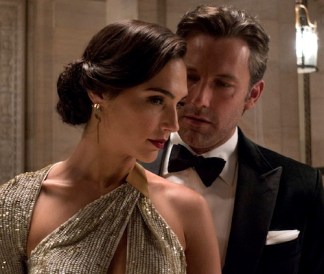 “Give audience an idea what future film(s) will be about while saying absolutely nothing concrete about what future film(s) will be about.” But in that mess (the mess I mentioned at the start of that last really long sentence, remember? OK,) there is stuff going on; there are ideas the filmmakers want to put across, possibly with the intention that they’ll actually be thought about.
 As I was saying: not a perfect movie, but one with a lot of material to provoke thought about both the inherent concepts of superheroes and, external to that, the genre itself, especially the way it’s presented in cinema. I’m not going to slag off the Marvel movies, because they are fun, but the entirety of the big-screen MCU

 #45 Chappie (2015)
 #53 Beverly Hills Cop II (1987)
 #60
#60 




























 Favourite Film of the Month
 The second release in Warner Premiere’s series of direct-to-video DC Universe Animated Original Movies (which now stretches to
 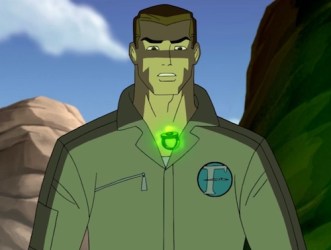 However, there are definitely bits that could’ve been sacrificed or abridged further (the Flash’s two early action sequences, for instance) to make more room to tell the story in full.
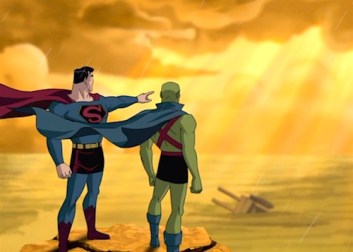 I really wanted to like The New Frontier, for all sorts of reasons. It does start well, with moments of promise sparkling here and there, but the longer it spends juggling so many balls, the fewer it can keep flying smoothly. (Do balls “fly” when juggled? Anyway, you get my point.) Considered as a whole, the overall result is fairly disappointing.
 100Films.co.uk