
Charles Laughton | 93 mins | Blu-ray | 1.66:1 | USA / English | 12
“The [box office] failure of The Night of the Hunter was not, forty-five years ago, much remarked upon: it was a modestly budgeted picture, a little thing in Hollywood terms. But it has drifted slowly, steadily down the river of the years between then and now, and the long flow of time has brought it to a better place, where critics and filmmakers and moviegoers honor it”
 Box office gross is one of the methods most often used to summarise a film’s success and standing, and yet it’s one of the most useless markers of quality — and quotes like the above, from Terrence Rafferty in his article “Holy Terror” for Criterion’s Blu-ray release of Night of the Hunter (and available online here), prove why. This is an exceptional film, by turns beautiful, funny, and not merely scary, but terrifying. If Hollywood movies can be art — and I think we know they can — then this is surely a foremost example.
Based on the 1953 Southern Gothic novel by Davis Grubb, The Night of the Hunter sees convict Harry Powell (Robert Mitchum) attempt to find the hidden robbery haul of his former cellmate, by inveigling his way into the man’s family posing as a preacher. While the mother (Shelley Winters) falls for the lies, her young son John (Billy Chapin) is more suspicious, and tries to protect himself and his little sister Pearl (Sally Jane Bruce), while keeping the money hidden.
The story is largely told from John’s perspective. It’s a big tale to put on small shoulders, full of complex emotions and sometimes difficult themes (per Rafferty, “those venerable American subjects: fear, sex, money, and religion”), but Chapin bears it well. I guess this is one of the reasons why groups including the BFI recommend it as a must-see for kids. Although it’s dark and grim, it rarely wavers from the John’s point of view — it’s an induction into the harshness of the adult world for the two young siblings; a harshness the sweet, innocent community they come from does nothing to prepare them for.
 In another piece in Criterion’s booklet, “Downriver and Heavenward with James Agee” (online here), Michael Sragow reckons the film is a “meshing of adult sensibilities with childhood perceptions”. I couldn’t have put it better myself (hence the quote). John is also the only one to see the truth of Powell — as, of course, do we — which completely ties in to how it can feel to be both a child and an older sibling: adults are dumb and don’t see the truth that children do; and younger siblings need protecting because they can be easily persuaded to the adults’ side (as Pearl almost is). Although it’s a tough film in many ways, this depiction of childhood, and at least one aspect, the loss of innocence that comes when you realise the world isn’t all fluffy and safe, is well captured.
Don’t think it’s too kid-friendly, though. Rafferty asserts that it’s “among the greatest horror movies ever made”, while Sragow thinks it’s the “intimate observations of the children’s psychology” we just discussed that “make the suspense almost unbearable.” Without once resorting to blatant horror techniques, the film builds a quiet and implacable sense of fear. The overall effect is one less of terror and more dread. It’s best described as chilling, which is so much scarier than the occasional jump.
 And yet, as Rafferty explains, “the most radical aspect of The Night of the Hunter… is its sense of humor. More conventional horror movies overdo the solemnity of evil. The monster in The Night of the Hunter is so bad he’s funny. Laughton and Mitchum treat evil with the indignity it deserves.” I wouldn’t say that humour is one of the film’s defining characteristics, to be honest, but it does undercut its villain. He’s not some unstoppable supernatural creature, but a man who can trip over while chasing you up the stairs, and so on. In some respects it’s this very ordinariness that makes him so scary: however much they creep you out during the film itself, you know there’s no such thing as vampires or werewolves or ghosts. There are Powells in the world, though; an everyday evil that you might not see coming, but can still get you. Brr.
It’s also stunningly shot — not just beautiful, but routinely incredible. It has imagery that instantly sears itself on your brain, with gorgeous lighting and perfect composition. Whatever else the film has to offer (and that’s a lot), it’s exceptional just to look at. That it’s the sole directorial effort from Charles Laughton may be a crying shame, because on this evidence — not just the pictures, of course, but the entire picture — we’ve missed out.
 In my 2013 top-ten, I described The Night of the Hunter as “darker than a long night of the soul”. That’s too good an expression to not repeat, partly because I think it sounds good, and partly because I can’t think of another way to succinctly summarise the film’s unique feel. I’m not convinced it’s a great film for children, not because they need protecting from the darkness of the world, but because it’s almost too good — it’s a great portrait of childhood, but perhaps one best appreciated in hindsight. Maybe that’s just because I haven’t seen it until adulthood. Whenever you catch it, this is a film of dread, fear, cruelty, and near-peerless beauty.

The Night of the Hunter was viewed as part of my What Do You Mean You Haven’t Seen…? 12 for 2013 project, which you can read more about here.
It placed 7th on my list of The Ten Best Films I Saw For the First Time in 2013, which can be read in full here.
This review is part of the 100 Films Advent Calendar 2014. Read more here.
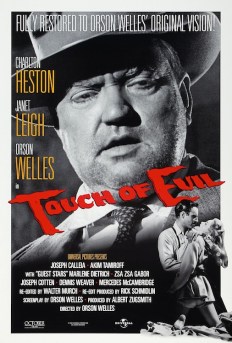 A bomb is stuck to the underside of a car. As the vehicle pulls away, the camera drifts up into the sky, and proceeds to follow the automobile through the streets of a small Mexican border town, until it crosses the border into the US… and explodes. It’s probably the most famous long take in film history, and probably the thing Touch of Evil is most widely known for; that, and it being one of the most commonly-cited points at which the classic film noir era comes to an end.
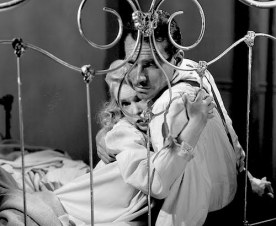 It’s like a terrible fever dream, with events and characters that sometimes seem disconnected, but nonetheless interweave through a dense plot. In this sense Welles puts us quite effectively in the shoes of Vargas and his wife — out of our depth, out of our comfort zone, out of control, struggling to keep up and keep afloat. It might be unpleasant if it wasn’t so engrossing.
 Quinlan at all… there is not the least spark of genius in him; if there does seem to be one, I’ve made a mistake.” You can get pretentious about it all you want, and bring to bear political views that the film doesn’t support (after all, within the film Quinlan is punished for his crimes and the “mediocre” (Truffaut’s word) moral hero triumphs), but sometimes a spade is a spade; sometimes a villain is a villain; sometimes your disgusting moral perspective isn’t being covertly supported by a film that seems to condemn it.
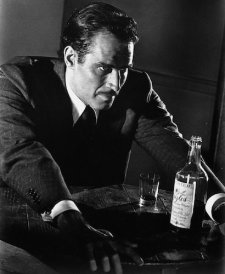
 Notably and obviously absent from that list is Touch of Evil. It was taken away from Welles during the editing process, and though he submitted an infamous 58-page memo of suggestions after seeing a later rough cut, only some were followed in the version ultimately released. Time has brought change, however, and there are now multiple versions of Touch of Evil for the viewer to choose from; but whereas history often resolves one version of a film to be the definitive article, it’s hard to know which that is in this case. Indeed, it’s so contentious that Masters of Cinema went so far as to include five versions on their 2011 Blu-ray (it would’ve been six, but Universal couldn’t/wouldn’t supply the final one in HD.) The version I chose to watch, dubbed the “Reconstructed Version”, tries to recreate Welles’ vision, using footage from the theatrical cut and a preview version discovered in the ’70s to follow his notes. Despite the best intentions of its creators, this can only ever be an attempt at restoring what Welles wanted. Equally, although it was the version originally released, the theatrical cut ignores many of the director’s wishes — so as neither version was finished by Welles, surely the one created by people trying to enact his wishes is preferable to the one assembled by people who only took his ideas on advisement?
 To quote from Master of Cinema’s booklet, “the familiar Wellesian framing appears in 1.37:1: indeed, the “world” of the film setting emerges with little or no empty space at the top and bottom of the frame, almost certainly beyond mere coincidence.” There are things to recommend the widescreen experience (“a more tightly-wound, claustrophobic atmosphere”), and undoubtedly the debate will continue… and such is the wonders of the modern film fan that, rather than having to make do with someone else’s decision on what to put out, all the alternatives are at our fingertips.
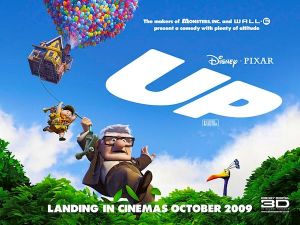 You know Up: it’s the Pixar movie where everyone talks about how amazing the first 10 minutes are, and never seems to have anything to say about the rest of the film.
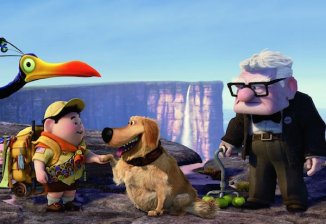 the best bits were shown off in advance. The special features reveal the extent the animators went to when researching real-world locations to influence the film’s strange, alien landscape; sadly, the fact the bizarre rock formations are actually a real thing somewhere in the world is more interesting than how they’re used in the film.
 I figured I ran the risk of affecting the outcome of the Scottish independence referendum if I posted this review yesterday (because of course I have that kind of reach and influence), but after Mel Gibson’s historical(ly-dubious) epic wound up on
  Judged as that, Gibson’s three-hour (near as damn it) movie is a pleasingly traditional epic. Many big films these days are just long, but the story here has scope too — it’s about a war, essentially. And war means battles, which are a particular highlight. The standout is surely the famed Battle of Stirling Bridge — you know, the one where the Scots moon the English. Funny and all, but just a small part of a larger sequence. Gibson has the confidence to show the build-up to the fighting, outline the tactics that will be used, and only then launch into the fray. It’s this measured approach that makes it so effective, rather than the crash-bang-wallop straight-to-the-slaughter style of more recent movies. Due to its notoriety I’d assumed the aforementioned clash was the film’s climax, but it’s actually the centrepiece, pretty precisely in the middle of the film. Fortunately there’s enough else going on (because this isn’t actually An Action Movie) that it doesn’t make things feel lopsided.
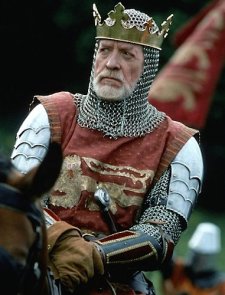 It also doesn’t suffer from that film’s accent issues. Mel Gibson isn’t an American-Scot (or an Australian one), instead delivering an accent that sounds passable to this Englishman. He believed he was too old for the part, which may well be true, but when the rest of it is so inaccurate what does that matter? He’s a solid leading man and a commanding-enough presence. The supporting cast are an array of recognisable Celtish faces — including at least one Irishman playing a Scot and a Scot playing an Irishman — and, because they’re from our fair isles, of course they’re all brilliant. Best of all, however, is Patrick McGoohan. He makes for a fantastic Evil King, given some juicy lines that are even juicier thanks to his delivery. He may not be moustache-twirling-ly memorable like an Alan Rickman creation, but any scene is enlivened by his presence.
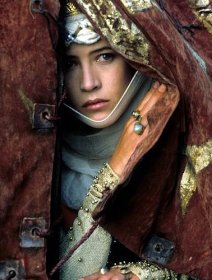 Then there’s that issue of historical accuracy. I know I said we should ignore it, but even if you accept fiction films shouldn’t be slavish history lessons (and not everyone does), how far can they ignore the facts? Often with such films the viewer assumes they’re true until someone says, “actually, I think you’ll find in reality…” Not so with Braveheart: you don’t have to know anything of Scottish history to guess that the face-to-face chats (and more, wink-wink-nudge-nudge) between Wallace and the future-Queen must be almost entirely poppycock (and, in fact, you can drop that “almost”).
 Quirky director Jeunet uses quirky cinematography and quirky special effects to tell the quirky story of a quirky girl, who had a quirky upbringing by quirky parents, and now lives a quirky life with quirky friends. A quirky coincidence leads her into the quirky hobby of cheering up strangers in quirky ways, during which she meets more quirky people who do quirky things, and she quirkily falls for the quirkiest.
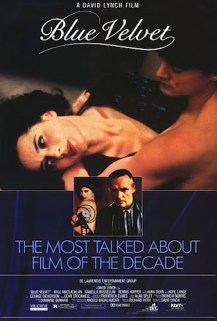 Before he brought the disquieting underbelly of small-town America to television audiences with
 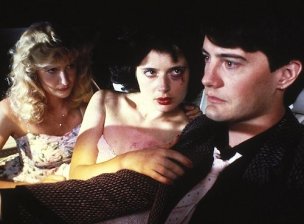 But… is it, really? The white-picket-fence-dwellers are pretty clean; it’s the people inhabiting the scuzzy apartment blocks and industrial estates nearby who are the problem. Those characters are as corrupt and degenerate as their abodes might lead those with regular prejudices to suspect. It’s a less subversive point of view, and I don’t think it’s what Lynch was actually going for. Anyway, the entirety of his moviemaking technique is so outré that you can’t help but find the whole twisted nonetheless.
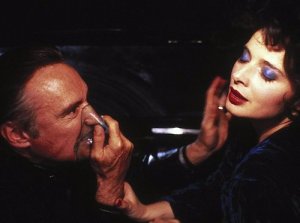 “It’s not a movie for everybody,” Lynch himself said (to Chris Rodley for the book
  100Films.co.uk