
Six of One & Half a Dozen of the Other
My challenge-within-a-challenge (in which I must attempt to watch 12 renowned films within the next 12 months) returns for a third year, this time with a natty subtitle — or for short, WDYMYHS:SoOaHaDotO.
Yeah, let’s not call it that.
Why the unwieldy subtitle? Well, since its inception (in the distant past of two years ago), WDYMYHS has been torn between recommending critically-acclaimed must-sees and widely-popular must-sees — the first year erred towards the former, in reaction the second year skewed to the latter. This year, I had an epiphany: why make a list that tries and fails to serve two masters, when you could just make two lists?
No, I’m not going to try to watch 24 specific films (I know my own limits. Well, I don’t, but that’s one I know is doomed), but rather two lists of six — one of critically-acclaimed films, one of more populist movies. Hence the Clever subtitle.
As with last year, we’ll get straight to the two lists, and follow it up with not-for-everyone analysis of how they compare to previous years and an overlong explanation of how they were devised.
Raging Bull (1980)
Score: 608
TSPDT #21 | Sight & Sound 2012 #29 | featured on 1001 Movies to See | Academy Awards Best Picture nominee
The Passion of Joan of Arc (1928)
Score: 599
TSPDT #15 | Sight & Sound 2012 #12 | featured on 1001 Movies to See
L’Atalante (1934)
Score: 589
TSPDT #17 | Sight & Sound 2012 #14 | featured on 1001 Movies to See
Persona (1966)
Score: 587
TSPDT #24 | Sight & Sound 2012 #16 | featured on 1001 Movies to See
Le Mépris (1963), aka Contempt
Score: 554
TSPDT #38 | Sight & Sound 2012 #27 | featured on 1001 Movies to See
The General (1926)
Score: 553
TSPDT #36 | Sight & Sound 2012 #43 | featured on 1001 Movies to See
A Clockwork Orange (1971)
Score: 1,116
IMDb #75 | Empire 500 #37 | Empire 301 #54 | iCM Most ✓ed #83 | Reddit #50
City of God (2002)
Score: 782
IMDb #22 | Empire 500 #177 | Empire 301 #132 | Reddit #58
To Kill a Mockingbird (1962)
Score: 587
IMDb #81 | Empire 500 #180 | Empire 301 #132 | Reddit #121
The Thing (1982)
Score: 501
IMDb #167 | Empire 500 #289 | Empire 301 #64 | Reddit #118
Brazil (1985)
Score: 483
Empire 500 #83 | Empire 301 #106 | Reddit #154
Princess Mononoke (1997)
Score: 480
IMDb #72 | Empire 500 #488 | Empire 301 #203 | Reddit #91
(All rankings were correct at the time of compiling and may have changed since.)
Good lists? Bad lists? Please do share any and all opinions. As per normal, my progress will be covered as part of the monthly updates.
Now then:
I’ll come to how all of that was compiled in a minute, but first a few (well, quite a lot, because you know I like these bits) observations.
First, those scores — pretty meaningless without knowing the method, I know (we’ll come to that, jeez!), but you can’t help but notice how high A Clockwork Orange’s is. Here’s the best I can do for perspective: what I’m calling “the theoretical maximum” for the Populist List is 1,636 points (it’s actually possible to score more, but let’s not get into that). Compared to that, A Clockwork Orange scored 68.2%. Sound low? The film in second place, City of God, comes to 47.8%, while the last included film, Princess Mononoke, has just 29.3%. The world really wants me to watch A Clockwork Orange. The Critical List is much closer: the “theoretical maximum” there is 908, from which Raging Bull has 67%, whereas last-place The General has 60.9%.
Long-time readers will surely have remarked on the inclusion of Raging Bull. It was part of 2013’s inaugural list, but I failed to watch it. It was excluded from re-inclusion in 2014’s, but I intended to watch it of my own accord (as it were)… and failed. I decided a year was long enough to hold out — especially as it topped the Critical List and came second on the Populist List — so it’s back in. I think this will be a new rule going forward: if I fail to watch a film, it has to ‘sit out’ the next year, but is eligible for inclusion the year after.
I have to say, the Populist List didn’t really turn out the kind of films I was expecting — I thought it would be an entire list of movies like The Thing and Brazil. I suppose it proves a point I’ve made in the past: despite their reputation among cineastes, lists like the IMDb Top 250 and Empire’s reader polls aren’t completely stuffed with blockbusters. OK, you’re not getting the depths of arthouse on there (i.e. the stuff the Critical List has selected), but A Clockwork Orange and City of God are hardly Transformers 4. Well, I haven’t seen them, so I suppose maybe they are…
I actually tried to make both lists skew ‘newer’ (not because I dislike older films, but because some of these lists tend to be a bit biased against them — TSPDT admits they ‘punish’ newer films), but it barely came out at all in the final 12: the newest film is 2002’s City of God, which is 13 this year; the next is Princess Mononoke, which is 18. I suppose that’s better than 2013, when the most recent film was from 1984. The effects were felt further down the chart, but that’s of little relevance to me now; though if I’d locked out Raging Bull entirely, 2011’s The Tree of Life would have nipped in. (More on this later.)
For what it’s worth, The General and The Passion of Joan of Arc are the two oldest films to have featured in WDYMYHS, and L’Atalante is fourth (third being City Lights from 2013’s lot). That extreme aside, this year’s list are quite spread around: whereas 50% of 2013’s were from the 1950s and 50% of 2014’s were from the last 20 years, no such pithy evaluation can be made this year. The ’60s and ’80s present three films each; there’s the two from the ’20s already mentioned; and then one apiece from the ’30s, ’70s, ’90s and ’00s. The 76 year gap between the oldest and newest pips 2013’s 53 years and 2014’s 73 years.
It’s also worth noting that there’s a greater variety of languages and countries of production included this year. Non-English films made up three in 2013 and two in 2014, but this year it’s six — half the list! That said, The Passion of Joan of Arc is actually silent, and I may well watch the Neil Gaiman-penned English dub of Princess Mononoke, both of which would take the wind out of these sails a bit.
The countries of origin are undeniably spread, though. Ignoring co-production technicalities, last year only offered two non-American movies, and the year before four (the three foreign language ones plus Lawrence of Arabia, which I’ve got down as a US/UK co-production but am counting as British). This year, the US is still highest, but only with four films — there’s France thrice and the UK twice*, as well as Brazil, Sweden, and Japan.
As for directors, Kubrick’s back again, in the form of A Clockwork Orange (obviously). No surprise there, as it was ranked very highly in each previous year but eliminated under the “no repeat directors” rule. Full Metal Jacket and Barry Lyndon also made their way into the Top 6s (the former for Populist, the latter for Critical), but were similarly eliminated. I guess one will end up on 2016’s list (unless I drastically change how I do this… which I might). After sitting out last year, there’s a return for Bergman, in the shape of Persona. For the first time, no Hitchcock or Charlie Chaplin — they both had multiple entries near the top in previous years, but this time Chaplin managed 18th on the Critical list with The Gold Rush, while Hitchcock’s first appearance is on the same but way down at 70th. 70th! On the Popular list, it’s not until 84th. Have I seen all the great Hitchcock movies already? There’s an awful lot of his films I’ve not seen, and I thought some were well-liked (whither The 39 Steps?**), so I’m quite disappointed about that.
Other noteworthy directors included are John Carpenter, Carl Theodor Dreyer, Terry Gilliam, Jean-Luc Godard, Buster Keaton (taking Chaplin’s place?), Hayao Miyazaki, Martin Scorsese (for the second time… with the same film), and Jean Vigo. The list is rounded out by City of God’s Fernando Meirelles, who made the excellent The Constant Gardner before seeming to slip back into obscurity, and To Kill a Mockingbird’s Robert Mulligan, who I don’t know anything about and (to be frank) doesn’t seem to have helmed anything else noteworthy.
The curious among you may be wondering (by which I mean, I wanted to know so thought I may as well tell you) what other films would have been included if I’d taken all 12 from either list? Well, the next six eligible films on the Critical List would have been, in rank order, Barry Lyndon (re-included because of no Clockwork Orange), The Tree of Life (as mentioned), Ugetsu Monogatari, Shoah, The Wild Bunch, and The Magnificent Ambersons. (Fanny and Alexander and Wild Strawberries also scored enough to qualify, but Persona rules them out.) On the Populist List, what I was saying about “films like The Thing and Brazil” would have been borne out: the extra six would have been Raging Bull (having not been blocked by the Critical List), Drive, Rocky, District 9, The Sting, and Black Swan. (I know those films aren’t like the others, per se, but hopefully you see what I’m driving at.)
This year’s scoring system is heavily based in last year’s, with some tweaks and changes, for various reasons.
The most obvious is that there are two lists, using two completely separate sets of contributing lists. The basic principles are the same for both, though: I took the top 250 entries on each contributing list and those films received a score out of 251 for their position — so #1 would score 251 points, #2 would score 250, and so on down to #250 scoring 2 points. Many of the lists go past 250 entries, however, so any film lower than that (but which came to my attention by being in the top 250 of a different list) received a single bonus point just for appearing.
There was a further 50 point bonus for appearing in the top 250 of more than one list. Last year that was an extra 50 points for each additional list; this year it’s a one-time deal. As with last year, there was an additional bonus based on the number of ‘official lists’ a film appears on at iCheckMovies.com — i.e. A Clockwork Orange is on 30 lists, so got 30 points.
With the basics established, let’s get list-specific:
The Critical List was compiled from:
- They Shoot Pictures, Don’t They?’s 1,000 Greatest Films (2014 edition).
- Sight & Sound’s 2012 poll, using the combined votes of both critics and directors. I don’t believe this is listed on S&S’s website, so I used the results as they appear on iCheckMovies, taking into account the shared vote numbers (as detailed at the top of the link). So, for a random example, #166 would score as if it were #154.
- The 21st Century’s Most Acclaimed Films, as compiled by TSPDT. As mentioned before, the main TSPDT list is biased against recent films, so this was added to help correct the balance.
- 1001 Movies You Must See Before You Die — the edition currently on iCM, which lists movies released as recently as 2013. This list is unranked, so anything that had been noted due to the previous three received 50 bonus points for an appearance here.
- Academy Award Best Picture Nominees. Similar to the above, anything featured here received 25 bonus points.
Finally, to help swing the list further in favour of recent films, the top 100 of the 21st Century’s Most Acclaimed received another 25 points. Fat lot of good it did any of them.
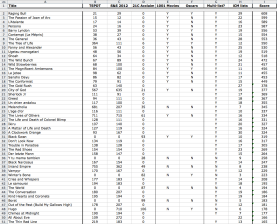 Now, here’s an interesting thing: I very quickly got bored doing the maths on all this. The previous two years, I’ve worked it all out in my head as I went. Year One, very easy (A+B ÷2); Year Two, more complicated, but doable; Year Three, two whole sets of rules and so many films…! So I spent an afternoon learning a bit more about how Excel works and got it to do it all for me. Imagine an evil laugh here.
To work out the scores for the Critical List, then, here’s the code (is it code? It looks like a code. Let’s call it code) that I wrote:
=SUM(IF(B2=0,0,(IF(B2<251,252-B2,1))))+(IF(C2=0,0,(IF(C2<251,252-C2,1))))+(IF(D2=0,0,(IF(D2<251,252-D2,1))))+(IF(E2="Y",50,0))+(IF(F2="Y",25,0))+(IF(G2="Y",50,0))+H2+(IF(D2=0,0,(IF(D2<101,25,0))))
That does everything I just described, automatically, when the correct values are entered in the correct columns — i.e. the ranking for each list, plus Y or N for 1001 Movies and Oscar noms. I’ll be frank, this is one reason there’s only the single multi-list bonus this year — that’s what I wrote into the code, and when I remembered later that it wouldn’t be adding another 50 for the third, fourth, etc, lists, I frankly couldn’t be bothered to work out how to do that. I’d wager it can be done, though.
The Populist List has even more constituent elements — and an even longer (though, technically, less varied) code to work it out. First, the contributing lists were:
- The IMDb Top 250 — aka the movie list. Well, until TSPDT came along. Now I guess it depends on your personal preference which is more relevant. This changes all the time, so was very much the version hosted by iCM on 5th January 2015.
- Empire’s The 500 Greatest Movies of All Time, commonly known as the Empire 500. Supposedly “the most ambitious movie poll ever attempted”, it was conducted by Empire magazine in 2008 and features the opinions of “10,000 Empire readers, 150 of Hollywood’s finest and 50 key film critics”.
- Empire’s The 301 Greatest Movies of All Time, aka the Empire 301. Technically the new version of the above, held last year to mark Empire’s 300th issue. Arguably not as good. As you can see from the numbers up above, some films have moved around a lot.
- iCheckMovies’ Most Checked, being the movies the greatest number of iCM users have seen. I think one of my most-complete lists, as I’ve seen 209 of the 250.
- The All-Time Worldwide Box Office chart, not that it had any bearing on the final selection (you’ll note none of them are on it).
- The Reddit Top 250, in which Reddit users have picked their favourite movies. Constantly updated a la the IMDb version, I believe.
As mentioned before, those were all initially limited to the top 250 entries and weighted equally. Following that, however, there were 25 bonus points to be had for being in IMDb’s top 100, the Empire 301’s top 50, or iCheckMovies Most Checked’s top 50. All of that made the Excel code look like this:
=SUM(IF(B34=0,0,(IF(B34<251,252-B34,1))))+(IF(C34=0,0,(IF(C34<251,252-C34,1))))+(IF(D34=0,0,(IF(D34<251,252-D34,1))))+(IF(E34=0,0,(IF(E34<251,252-E34,1))))+(IF(F34=0,0,(IF(F34<251,252-F34,1))))+(IF(G34=0,0,(IF(G34<251,252-G34,1))))+(IF(H34="Y",50,0))+I34+(IF(B34=0,0,(IF(B34<101,25,0))))+(IF(D34=0,0,(IF(D34<101,25,0))))+(IF(E34=0,0,(IF(E34<101,25,0))))
I don’t expect you to understand or have a use for that, I’m just showing off.
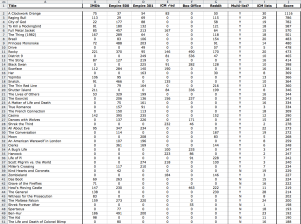 In the end, there were 121 films on the Populist long list and 82 on the Critical one. If you want to have a look at the top 50 of each, as featured in the small pictures earlier and to the right, you can find full-size versions here and here. You’ll note the Critical List isn’t filled out in full. At the end of a long day of list-making and code-writing, I couldn’t be doing with scouring the 1001 Movies and Oscar nominees lists for films that, even with those bonus points, couldn’t make the top 12 (never mind the top 6 that actually mattered). The reason some further down are filled out is because they were done incidentally as I went, for one reason or another. (You’ll also note that the row numbers are out by one from the ranking numbers, which is thanks to the Title row. Sadly I don’t know how to change that, if you even can.)
And so there we have it! It felt less complicated a system than last year to me when I set out, I think because last year I was working out/making up all the rules and this year just tweaking and re-applying them. Making Excel do the heavy lifting for me, though, that was new and tricky, but worth it.
Now all I’ve got to do is actually watch the films…
* These numbers are somewhat debatable. For the record, I’ve counted A Clockwork Orange as British. ^
** I did a quick test to find out, and it should actually be in the mid-50s on the Critical list. Why wasn’t it included? Because the only numbered list it appears on is TSPDT, at 511th, and I only went up to 250th when first compiling from there. Its appearance on 1001 Movies gives it a big points boost after that. This does slightly concern me: how many other films am I missing that would have scored just as well? However, I don’t think it’s possible for anything like that to have cracked the Top 6, so in the end it doesn’t really matter. ^
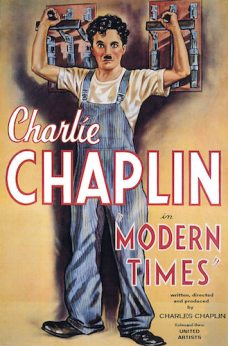 Charlie Chaplin satirises technology and modernisation in arguably
 Seven Samurai used to be a striking anomaly amongst the top ten of
  It’s also unhurried. As Kenneth Turan explains in his essay “The Hours and Times: Kurosawa and the Art of Epic Storytelling” (in the booklet for Criterion’s DVD and Blu-ray releases of the film, and available online
 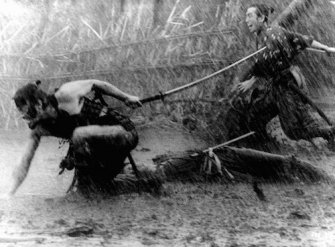 The length ensures our investment in the village, too, just as it does for the samurai. They’re not being paid a fortune — in fact, they’re just being paid food and lodging — so why do they care? Well, food and lodging are better than no food and lodging, for starters; and then, having been in the village so long in preparation, they care for it too. It is, at least for the time being, their home. You can tell an audience this, of course, but one of the few ways to make them feel it is to put them there too — and that’s what the length does. To quote from Turan again,
 the final scene, the way it’s edited and framed, ties the remaining samurai to their deceased comrades, the living and thriving farmers a distant and separate group. Fighting is the way of the past, perhaps, and peaceful farming the future. Or is the samurai’s only purpose to be found in death, because other than that they are redundant?
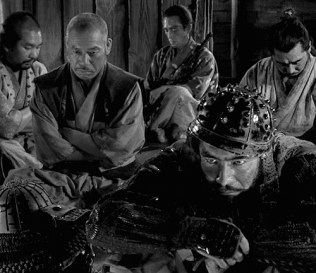 And it wasn’t as if it was overseas viewers who hit on the magic: as Turan reveals, “Toho Studios cut fifty minutes before so much as showing the film to American distributors, fearful that no Westerner would have the stamina for its original length.” The more things change the more they stay the same, I suppose — how many Great Films from Hollywood are ignored by awards bodies and audiences, only to endure in other ways?
 Westerns don’t come more renowned than this Ford-Wayne collaboration about the years-long hunt for a girl kidnapped by Native Americans.
 Box office gross is one of the methods most often used to summarise a film’s success and standing, and yet it’s one of the most useless markers of quality — and quotes like the above, from Terrence Rafferty in his article “Holy Terror” for Criterion’s Blu-ray release of Night of the Hunter (and available online
  In another piece in Criterion’s booklet, “Downriver and Heavenward with James Agee” (online
  And yet, as Rafferty explains, “the most radical aspect of The Night of the Hunter… is its sense of humor. More conventional horror movies overdo the solemnity of evil. The monster in The Night of the Hunter is so bad he’s funny. Laughton and Mitchum treat evil with the indignity it deserves.” I wouldn’t say that humour is one of the film’s defining characteristics, to be honest, but it does undercut its villain. He’s not some unstoppable supernatural creature, but a man who can trip over while chasing you up the stairs, and so on. In some respects it’s this very ordinariness that makes him so scary: however much they creep you out during the film itself, you know there’s no such thing as vampires or werewolves or ghosts. There are Powells in the world, though; an everyday evil that you might not see coming, but can still get you. Brr.
 In
In 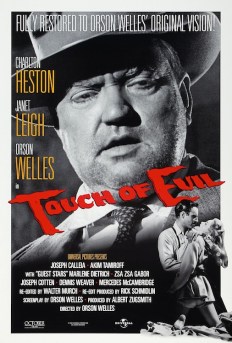 A bomb is stuck to the underside of a car. As the vehicle pulls away, the camera drifts up into the sky, and proceeds to follow the automobile through the streets of a small Mexican border town, until it crosses the border into the US… and explodes. It’s probably the most famous long take in film history, and probably the thing Touch of Evil is most widely known for; that, and it being one of the most commonly-cited points at which the classic film noir era comes to an end.
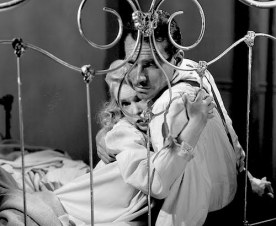 It’s like a terrible fever dream, with events and characters that sometimes seem disconnected, but nonetheless interweave through a dense plot. In this sense Welles puts us quite effectively in the shoes of Vargas and his wife — out of our depth, out of our comfort zone, out of control, struggling to keep up and keep afloat. It might be unpleasant if it wasn’t so engrossing.
 Quinlan at all… there is not the least spark of genius in him; if there does seem to be one, I’ve made a mistake.” You can get pretentious about it all you want, and bring to bear political views that the film doesn’t support (after all, within the film Quinlan is punished for his crimes and the “mediocre” (Truffaut’s word) moral hero triumphs), but sometimes a spade is a spade; sometimes a villain is a villain; sometimes your disgusting moral perspective isn’t being covertly supported by a film that seems to condemn it.
 Notably and obviously absent from that list is Touch of Evil. It was taken away from Welles during the editing process, and though he submitted an infamous 58-page memo of suggestions after seeing a later rough cut, only some were followed in the version ultimately released. Time has brought change, however, and there are now multiple versions of Touch of Evil for the viewer to choose from; but whereas history often resolves one version of a film to be the definitive article, it’s hard to know which that is in this case. Indeed, it’s so contentious that Masters of Cinema went so far as to include five versions on their 2011 Blu-ray (it would’ve been six, but Universal couldn’t/wouldn’t supply the final one in HD.) The version I chose to watch, dubbed the “Reconstructed Version”, tries to recreate Welles’ vision, using footage from the theatrical cut and a preview version discovered in the ’70s to follow his notes. Despite the best intentions of its creators, this can only ever be an attempt at restoring what Welles wanted. Equally, although it was the version originally released, the theatrical cut ignores many of the director’s wishes — so as neither version was finished by Welles, surely the one created by people trying to enact his wishes is preferable to the one assembled by people who only took his ideas on advisement?
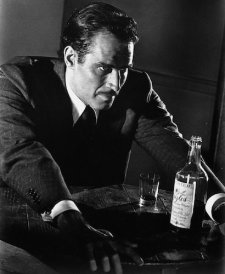 To quote from Master of Cinema’s booklet, “the familiar Wellesian framing appears in 1.37:1: indeed, the “world” of the film setting emerges with little or no empty space at the top and bottom of the frame, almost certainly beyond mere coincidence.” There are things to recommend the widescreen experience (“a more tightly-wound, claustrophobic atmosphere”), and undoubtedly the debate will continue… and such is the wonders of the modern film fan that, rather than having to make do with someone else’s decision on what to put out, all the alternatives are at our fingertips.
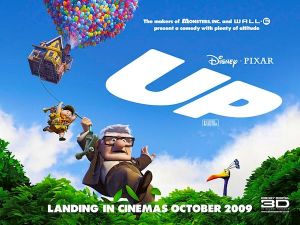 You know Up: it’s the Pixar movie where everyone talks about how amazing the first 10 minutes are, and never seems to have anything to say about the rest of the film.
 the best bits were shown off in advance. The special features reveal the extent the animators went to when researching real-world locations to influence the film’s strange, alien landscape; sadly, the fact the bizarre rock formations are actually a real thing somewhere in the world is more interesting than how they’re used in the film.
 I figured I ran the risk of affecting the outcome of the Scottish independence referendum if I posted this review yesterday (because of course I have that kind of reach and influence), but after Mel Gibson’s historical(ly-dubious) epic wound up on
  Judged as that, Gibson’s three-hour (near as damn it) movie is a pleasingly traditional epic. Many big films these days are just long, but the story here has scope too — it’s about a war, essentially. And war means battles, which are a particular highlight. The standout is surely the famed Battle of Stirling Bridge — you know, the one where the Scots moon the English. Funny and all, but just a small part of a larger sequence. Gibson has the confidence to show the build-up to the fighting, outline the tactics that will be used, and only then launch into the fray. It’s this measured approach that makes it so effective, rather than the crash-bang-wallop straight-to-the-slaughter style of more recent movies. Due to its notoriety I’d assumed the aforementioned clash was the film’s climax, but it’s actually the centrepiece, pretty precisely in the middle of the film. Fortunately there’s enough else going on (because this isn’t actually An Action Movie) that it doesn’t make things feel lopsided.
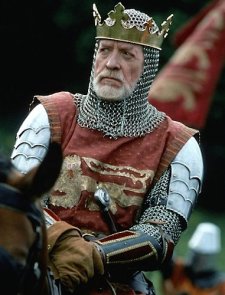 It also doesn’t suffer from that film’s accent issues. Mel Gibson isn’t an American-Scot (or an Australian one), instead delivering an accent that sounds passable to this Englishman. He believed he was too old for the part, which may well be true, but when the rest of it is so inaccurate what does that matter? He’s a solid leading man and a commanding-enough presence. The supporting cast are an array of recognisable Celtish faces — including at least one Irishman playing a Scot and a Scot playing an Irishman — and, because they’re from our fair isles, of course they’re all brilliant. Best of all, however, is Patrick McGoohan. He makes for a fantastic Evil King, given some juicy lines that are even juicier thanks to his delivery. He may not be moustache-twirling-ly memorable like an Alan Rickman creation, but any scene is enlivened by his presence.
 Then there’s that issue of historical accuracy. I know I said we should ignore it, but even if you accept fiction films shouldn’t be slavish history lessons (and not everyone does), how far can they ignore the facts? Often with such films the viewer assumes they’re true until someone says, “actually, I think you’ll find in reality…” Not so with Braveheart: you don’t have to know anything of Scottish history to guess that the face-to-face chats (and more, wink-wink-nudge-nudge) between Wallace and the future-Queen must be almost entirely poppycock (and, in fact, you can drop that “almost”).
 Quirky director Jeunet uses quirky cinematography and quirky special effects to tell the quirky story of a quirky girl, who had a quirky upbringing by quirky parents, and now lives a quirky life with quirky friends. A quirky coincidence leads her into the quirky hobby of cheering up strangers in quirky ways, during which she meets more quirky people who do quirky things, and she quirkily falls for the quirkiest.
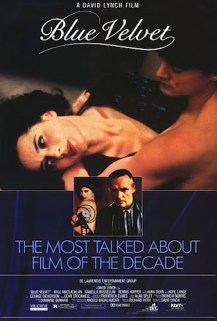 Before he brought the disquieting underbelly of small-town America to television audiences with
  But… is it, really? The white-picket-fence-dwellers are pretty clean; it’s the people inhabiting the scuzzy apartment blocks and industrial estates nearby who are the problem. Those characters are as corrupt and degenerate as their abodes might lead those with regular prejudices to suspect. It’s a less subversive point of view, and I don’t think it’s what Lynch was actually going for. Anyway, the entirety of his moviemaking technique is so outré that you can’t help but find the whole twisted nonetheless.
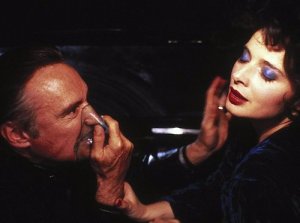 “It’s not a movie for everybody,” Lynch himself said (to Chris Rodley for the book
  100Films.co.uk