
Last month, I said this month would hopefully feature Stranger Things 3, Veronica Mars season 4, and The Boys season 1. It doesn’t. Not any of them. But I’m not short of other things to write about…

Years and Years
 The writer most popularly known for reviving Doctor Who, Russell T Davies, returns to science fiction for the first time in almost a decade with this acclaimed miniseries. This is a very different kind of sci-fi, though — no space invaders or malicious AI or mad scientists here. No, this story begins in 2019 as we know it and then moves across the next 15 years to explore just where we’re headed, in a realistic and grounded way. It focuses on a normal family from Manchester — four siblings, their grandmother, and assorted spouses and children — and how the changes in society and technology affect them. It’s a story of the ordinary people; the folks who don’t shape history, history happens around and to them.
Cannily, it dodges the Brexit bullet — there are implications it went ahead, but it doesn’t have any bearing on the story: these big changes are happening everywhere anyway, whether Britain leaves the EU or not. What it is aware of is how much society and technology are now intertwined. In the first episode, a teenager comes out to her parents as trans — not trans gender, but transhuman. She wants to ditch the limitations of flesh and live forever as data. Some people will scoff at that, but the way it’s presented and plays out over the next five episodes is highly plausible. RTD tackles a whole host of societal issues in a similar way — immigration, the gig economy, nationalism, etc — all mixed together in a way that reflects real life. After all, we’re never just dealing with or worried about one thing at a time, especially nowadays.
As someone who grew up in the ’90s and ’00s, learning about the Cold War as an historical event, I sometimes wondered how people lived their day-to-day lives with the constant threat of nuclear annihilation. Except that’s not what it was actually like, was it? It may’ve been there, in the background, ebbing and spiking depending on the political factors of the day, but people just got on with their everyday lives while that played out on the news. It’s the same nowadays, isn’t it? There’s so much crap going on in the world, and most of it we just see on the news — unless it happens to butt into our own lives for whatever reason. And Years and Years is that same thing, but projected into future events; and not fantastical things, like a mission to Mars or an AI breakthrough, but a very plausible extrapolation of where we’re headed.
Personally, I thought it was a work of borderline genius. RTD has always had a way with characters — of quickly shading in believable individuals, their families and lives; of writing scenes that sing with dialogue and interactions that seem plucked straight from real life — and here that’s married with an imaginative vision of the near future, the two working in harmony to create a drama that’s also a warning about what we’re getting ourselves into… although it’s also an admonishment, showing us what we’ve got ourselves into and wondering if it’s too late to stop it. But there’s a dash of hope in there, too; just a sliver of “maybe it’ll be mostly OK in the end.” Fingers crossed.
Peaky Blinders Series 4
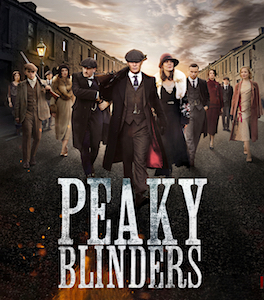 Birmingham’s premier gangsters return with a storyline that forces them to reckon with their past actions. So it’s unfortunate that this is a show that can’t be doing with recaps at the start of episodes. I spent most of the first instalment trying to remember the events of previous series and how they’d led to where things were, which is an unwelcome distraction that could be easily solved with a simple “previously on” at the opening. I don’t know why Netflix hate them so much (well, I do — it’s the assumption you’ll just binge-watch everything, and if you don’t then they want you to feel you have to; and we’re all just buying into what we’re told to do, which is half the problem (funnily enough, that’s a lot of what Years & Years was all about…)
Anyway, once things get up and running, and you can get your head around what’s going on enough to be going on with, this is another thrilling story of ’20s criminality. Adrien Brody pops in as a series-long guest star, a Mafia enforcer from New York who has a vendetta against the Blinders because they killed his dad, and now he’s brought his American muscle to wipe them out. With bigger forces out to gobble them up, the Blinders must rely once again on a mix of their wits and straightforward firepower. The show itself is the same, blending together tricksy plotting (Tommy Shelby may always have a plan, but we’re not always privy to it until after the fact) and impressively staged action scenes (there’s an extended shoot-out at the start of episode five that must’ve eaten up a lot of the budget; and if it didn’t, they’ve done a good job making it look like it did). In fact, the series as a whole looks stunning — style drips off the screen, whether it be the slow-mo hero walks or the pulsating rock soundtrack.
For my money, the plot was a little smaller-scale than previous seasons, despite involving ever-bigger outside forces, which made it feel almost like an extended movie rather than a dense season of television. But don’t take that criticism too much to heart — previous seasons may’ve been even better in my personal estimation, but this is still top-drawer drama.
Unforgotten Series 3
 Where the other shows reviewed this month are big, brassy productions told on a mythic scale, Unforgotten is almost the opposite, and yet it tackles themes no less grand. But it’s a quiet, understated drama, as London detectives Nicola Walker and Sanjeev Bhaskar (along with their team) investigate a cold-case murder, in the process having to tackle the fallout that time has wrought on the victims left behind.
This time, the skeleton of a teenage girl is found under a motorway, and it turns out to be a girl who disappeared on December 31st, 1999, and was a huge story at the time, which naturally leaves our little team under intense media scrutiny. (It’s somewhat amusing seeing this ITV-produced show get to use real ITV News presenters and graphics while the hero characters are slagging off the attitudes and methods of the media.) Unforgotten has the usual murder mystery array of suspects for us to theorise about, but what it also does well is portray the terrible sadness of such crimes. Reveals in the final episode push the storyline in a slightly different direction which allow it to pull focus in a different direction, too, although I’m not sure it really has the time or space to dig into that aspect.
Like Peaky Blinders, I don’t think this was the very best series of the programme (series two was harder hitting and even more emotionally complex), but it’s still more or less on form. It wears its heart on its sleeve, trying to treat these victims and suspects not just as pawns in an elaborate guessing game, but as real people whose lives have been torn apart. That makes it one of the better cop shows on TV, I think.
Things to Catch Up On
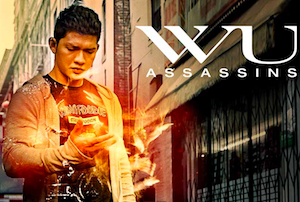 This month, I have mostly been missing Wu Assassins on Netflix, starring Iko “The Raid” Uwais. The trailers look perhaps a bit cheesy, but also promise regular doses of Uwais’ incredible combat skills, so that’ll do me. Elsewhere, Preacher has embarked on its fourth and final season. Considering I’ve not seen most of season two and none of season three, that’s a bigger catchup project. And talking of stuff I’ve not seen, I never got round to Mindhunter season one, even though David Fincher directed some of it, and now there’s a second season, which he’s also partly directed. Considering it’s been five years since his last movie, I do kinda need that Fincher fix…
Next month… take your pick for what I’ll’ve watched and what I’ll’ve missed out of Peaky Blinders season 5 (starts tonight), Dad’s Army: The Lost Episodes (starts tonight), Sanditon (starts tonight), The Great British Bake Off (starts on Tuesday), Carnival Row (out on Friday), and The Dark Crystal: Age of Resistance (out on Friday). Bear in mind: I’ve only just finished one season of Peaky Blinders, and I didn’t much like The Dark Crystal. (Why do I feel like that means it’ll be the only one of these I end up actually watching…)
 After its move to Channel 4, which was as controversial as it was high-profile, I wasn’t sure if I was going to continue bothering with GBBO. What would it be without Mel and Sue’s effortless chemistry and terrible puns, or Mary Berry’s kind twinkle? But cake always wins, and after a few weeks I caved and am now gradually catching up (I mean, too much cake in one go is bad for you, right?) Unsurprisingly, it’s still fundamentally the same show. Sandi Toksvig and Noel Fielding seemed like random picks for the new hosts, but they have the right mix of daftness, quick wit, and empathy to fill Mel and Sue’s shoes, and function surprisingly well as a double act too. New judge Prue Leith is no Mary Berry, but she can do the job. The judging’s hardly the most important bit anyway, is it? That’s the bakes, and they’re as incredible as ever. It’s funny that something that was a tough technical challenge back in series two or three is now just an unmentioned part of something much grander and more complicated. GBBO may have been slightly tarnished by the whole kerfuffle of changing networks and losing popular presenters, but the revised show has turned out to be less a soggy bottom and more a batch of ten almost-but-not-quite-identical sweet treats.
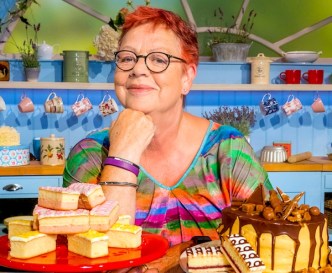 One thing that’s actually been improved by the Bake Off franchise’s move to C4 is this companion show. It always felt a bit cramped before, squeezed into a half-hour when it wanted to be longer, and not allowed to really cut loose with its content because, although it was on the more irreverent BBC Two, it was still on The BBC. In its new home, it’s only been extended by about seven or eight minutes (presumably a result of C4’s commitment not to cut the series’ running time — the old 30 minutes of material plus ads wouldn’t quite fill a 45-minute slot) but that seems to have made the world of difference, allowing it room to breathe and throw in a few more gags. It’s got distinctly cheekier too, which befits host Jo Brand and the kind of guests they have on (mostly comedians). And somehow it never stops being funny how people at home have messed up baking.
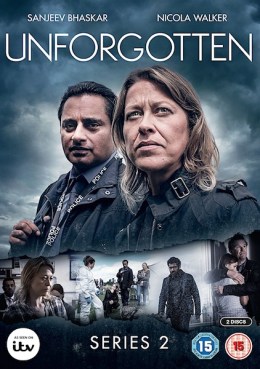 I get the impression ITV’s cold-case thriller was a bit of a surprise success when
 This month, I have mostly been missing the return of Star Trek to TV, in the form of Discovery. It’s “a Netflix original series” everywhere outside the US and Canada, so I imagine I’ll catch up during one of my irregular Netflix subscriptions (after the whole first season is available to binge, of course). Also missed: Rellik, the new thriller with a Memento-esque structure from the writers of
  The 36th run of Doctor Who kicked off with an episode titled The Pilot — no coincidence, that. This is the most newcomer-friendly episode of Who for 12 years, an episode finely calibrated to establish everything for a first-timer but also function for regular viewers too. A lot of that effectiveness can be attributed to Pearl Mackie as Bill, the new companion to Peter Capaldi’s Doctor. After a run of oh-so-special companions running back years, Bill is just an ordinary young woman; but of course she’s extraordinary in her own way: ready to learn, eager to help, full of both inquisitiveness and caring. This is surely the birth of both a fan-favourite companion in Bill and a star in Mackie.
 The last of the Marvel/Netflix series before the Defenders team-up, Iron Fist has certainly divided critics and viewers. It doesn’t begin well: the opening episode is possibly the worst thing yet released as part of the MCU, and I only say “possibly” because I never bothered with Agents of SHIELD after the poor reaction to season one. It’s needlessly slow, repetitive, the characters behave implausibly, and the fights are terrible, looking like a first rehearsal filmed with one take. Things do improve — there are more engaging characters, some interestingly developed arcs, and better realised fights — but it still doesn’t come together as well as it could. For one thing, it makes the running of Rand Enterprises a major element, but has a very vague-seeming understanding of how business actually works. It’s just too simplistic.
 Amongst the eight Arrowverse episodes I watched this month was this: the much-anticipated musical crossover between The Flash and Supergirl, which star Glee alumni Grant Gustin and Melissa Benoist respectively — hence why (some) people called for a musical episode, which caused the producers to decide to do one. Somewhat ironic, then, that it seemed to go down well with critics (at least per
 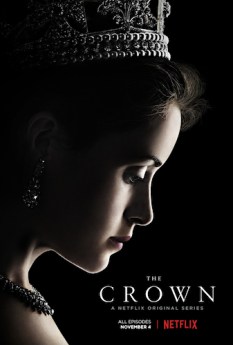 The most expensive TV programme ever made (or not, whatever) certainly has its budget plastered all over the screen, which hopefully didn’t distract most viewers in the way it did me. It shouldn’t, really, because this is a good drama about the humanity behind the public faces. Its adherence to fact is apparently variable, which I imagine is very irritating to historians of the period, but it works for the fiction. There are great performances all round, with John Lithgow in particular disappearing into Churchill to the point that I forgot I was watching an actor more than once. There’s an interesting plot thread early on about the position of Philip (Matt Smith) relative to Elizabeth — how his role as a husband is challenged by her position as Queen, etc — which goes a bit awry as the series goes on and has other plots to focus on. It’s left quite open-ended, so hopefully it’ll be completed in the second season.
 I devoted just 32 words to Line of Duty series one when I finally got round to watching it
 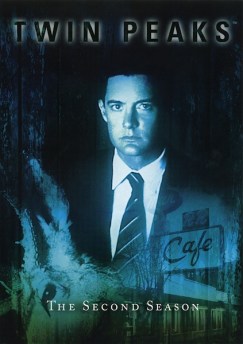 I first saw the debut season of Twin Peaks many years ago during a repeat run (it was a ‘classic series’ even then, though with hindsight it can’t’ve been a decade old at the time), then watched it again when the DVD came out, but this is my first time watching season two (legal complications delayed its DVD release for what felt like forever, and by the time it finally came out I just never got round to it). The second season is infamous for representing a steep decline in quality, though that isn’t yet evident from this batch of episodes, which covers up to the revelation of who killed Laura Palmer and their capture. I’d say it lacks the pure concentrated genius of the first season, having ramped up the quirkiness quotient and, at the behest of the network, rushing the resolution of the Laura Palmer mystery, but it ain’t bad by any means. There’s certainly much to like in the off-kilter characters, the folksy mysticism, and some fantastic performances — Kyle MacLachlan is a constant delight as Agent Cooper, but Ray Wise is frequently incredible as the grieving Leland Palmer. But I guess it’s mostly downhill from here…
 This month, I have mostly been missing series two of Peter Kay’s Car Share, which is a couple of episodes in on the telly or
  100Films.co.uk