
It’s the moments we’ve all been waiting for, as David Tennant returns to Doctor Who and Game of Thrones returns to our screens. Spoiler-free reviews of both (and more) follow…

Doctor Who: The Tenth Doctor Adventures Volume 1
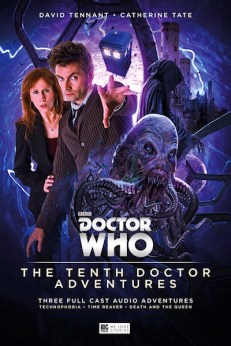 One of Doctor Who’s most popular eras is revived this week, as David Tennant returns to the headline role for the first time since 2013 for a debut series of Big Finish audio dramas. By his side is Catherine Tate’s Donna — what initially sounded like terrible casting but turned out to be a fantastic Doctor/companion pairing. (I know not everyone’s convinced by her even now, but you can’t win ’em all.) Given Tennant’s enduring popularity as the 10th Doctor, it’s no surprise his return to the role has brought Big Finish more attention than ever — their website even went down for a few hours on Monday, unable to cope with the rush of fans downloading the new stories. (And yes, I’m kinda bending the rules by reviewing audio drama in a TV column… but, a) these are designed to recreate a TV series in audio form, and b) it’s my column and I can review what I like.) So do they live up to expectations? Thankfully, yes. Setting out to emulate the era they’re from, they follow the model set out by the first three episodes of every Russell T Davies-helmed season of NuWho: a present day one, a future one, and a past one.
 The first is Technophobia by Matt Fitton, which is set in our recent past (and therefore Donna’s near-future) when the new M-Pad tablet computer seems to be causing the populace to forget how to use technology. Tennant and Tate hit the ground running — it’s a cliché, but it really does sound like they’ve never been away. Their sprightly performances contain little of the stilted “I’m reading this script aloud for the first time” acting that sometimes plagues audio drama. Fitton captures the style and tone of their single TV season to a tee — if they’d done a second year together, you can well believe this as its first episode. Even Howard Carter’s incidental music is a mostly-fitting substitute for Murray Gold’s iconic work.
 The middle tale is sci-fi adventure Time Reaver by Jenny T. Colgan, a best-selling romantic novelist who’s turned her hand to multiple Who projects (including a 10th Doctor and Donna novel published last week to tie-in with these dramas). For me, this was the weak link of the trilogy, though it’s by no means bad. There are some fantastic ideas, but at times their inspirations show through too clearly, and the execution is sometimes lacking. This was Colgan’s first audio drama, and dare I say it shows. Sequences like an action-packed barroom brawl are a little too ambitious to convey in an audio-only medium, and the dialogue is regularly forced to describe what’s going on. On the bright side, Mr Carter offers more magnificent sound design — the noises made by cephalopod villain Gully are immensely evocative.
 The final episode is the group’s historical outing, Death and the Queen by James Goss, and it may be the best of the lot. Our intrepid duo find themselves in the kingdom of Goritania in 1780, when it comes under siege from a destructive cloud that contains Death himself. Goss mixes comedy with peril in just the right quantities to create a story that is an entertaining romp but also manages to expose different facets of the Doctor and Donna’s relationship. If Fitton has bottled the essence of RTD, here Goss evokes Steven Moffat, with a time-jumping opening ten minutes that you can well imagine on TV, but which also work perfectly in audio. Things slow a bit later on, with the dialogue sometimes going in circles — a fault of all three of these plays, actually. They could’ve benefited from a trim to fit within the TV series’ 45-minute slot, rather than allowing the freedom of not having to conform to a schedule let them to slide to 55-ish.
That’s only a niggle, though, and one that pales beside the excitement of having Tennant and Tate back in the TARDIS. This is a run of adventures that largely evoke the pair’s time on TV without being a needless carbon copy of it, meaning they work as both a marvellous hit of nostalgia and exciting new adventures in their own right.
All three stories are currently available exclusively from the Big Finish website, going on general release from 1st September. They can be purchased individually (either as a CD+download or download-only), or as part of a limited edition box set (CD+download) that comes with a 78-minute behind-the-scenes documentary and an hour-long introduction to other Big Finish works, all encased in a book with exclusive photography and articles.
Eurovision Song Contest: Stockholm 2016
 Ah, love a bit of Eurovision, even if the songs weren’t as good this year. Ok, you might say they never are, but there’s often one or two half-decent ones (I still listen to Conchita Wurst’s Rise Like a Phoenix sometimes, mainly because it’s the best Bond theme released in the last decade). Even then, the winner wasn’t the best of that middling bunch, though it probably had the best message. In fact, the best song of the night was the Swedish hosts’ half-time number, Eurovision-spoofing Love Love Peace Peace (watch it here). The much-heralded new voting system worked like a charm… at least for audience tension purposes. Poor Australia with that last-minute lose… though as they shouldn’t really have been there in the first place, it’s hard to feel too bad for them.
Game of Thrones (Season 6 Episodes 1-4)
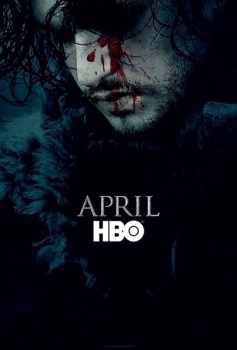 Good luck to you if you’re not watching Game of Thrones but still trying to avoid spoilers this year, with the huge and widely-covered news that [REDACTED] was [REDACTED], or that [REDACTED] killed [REDACTED], or when [REDACTED] and [REDACTED] were [REDACTED] for the first time since [REDACTED], or when [REDACTED] was [REDACTED] but [REDACTED] the [REDACTED] and [REDACTED] of [REDACTED] in the process — even if more people seemed interested in discussing her [REDACTED]s.
Trying not to add to the tumult of spoilers (just in case), I thought that The Red Woman was the now-standard GoT season opener (a mix of recapping/establishing where everyone is, and just beginning to shuffle those players around the board for their next moves) done as well as it’s ever been. Home was where the season really kicked into gear, though — quicker than some other years have managed, that’s for sure. One particular moment was much discussed, understandably, but events elsewhere — both in Westeros and Essos — would’ve been enough to excite interest without it. Oathbreaker engaged more with its flashbacks than its ‘present day’ actions, though another episode-ending scene at Castle Black reiterated the series’ warts-and-all vision of the world. Finally, Book of the Stranger was an immensely satisfying hour — the kind of thing Thrones allows us all too rarely, considering how often its heroes are crushed. Apparently the writers have said this is the year the series’ female characters finally begin to really ‘fight back’, and it would seem this episode is where it begins.
Upstart Crow (Series 1 Episodes 1-2)
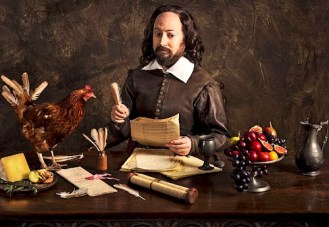 I can’t remember the last time I saw a new multi-camera sitcom that wasn’t either, a) a bit meta (like Miranda or Mrs Brown’s Boys), or b) a revival (like Red Dwarf X). I don’t know if that says more about the current TV landscape or the kind of things I watch, but either way it surprised me when that was the form Upstart Crow took. It’s just one element that gives it the feel of Blackadder, which I don’t mean as a criticism. Even if it feels a little dated in its execution, there are plenty of laughs — some easy, some clever — and, really, what more do you want from a comedy than to laugh? It may not be up to Blackadder’s highest highs (yet — there’s still time; you never know), but I’d wager it stands fair comparison to the classic’s comparatively-lesser instalments… which I mean to be a less critical assessment than it sounds.
Things to Catch Up On
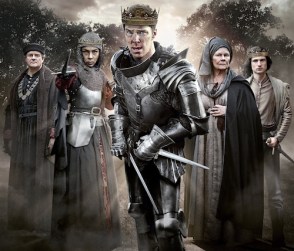 This month, I have mostly been missing the second run of The Hollow Crown, the BBC’s all-star adaptation of Shakespeare’s War of the Roses plays… though as I still haven’t got round to watching the first run from 2012, that’s no real surprise. In fact, Upstart Crow aside, I’ve not yet watched any of their still-running Shakespeare Festival, other highlights (so I’ve heard) of which have included the Shakespeare Live from the RSC celebration and spoof documentary Cunk on Shakespeare. There’s also Russell T Davies’ new version of A Midsummer Night’s Dream, which is on Monday 30th.
Next month… as was just announced yesterday, AMC’s Preacher adaptation comes to the UK via Amazon.
 It’s certainly the summer of good-guy-on-good-guy dust-ups in the superhero subgenre this year, with Batman v Superman
  I’m a little surprised I’m still with this “Sherlock Holmes in modern day America with a female Dr Watson” series, because it was never a particularly good version of Sherlock Holmes and it still isn’t. What it has turned out to be is a decent show in its own right (for a US network procedural, anyway), with sometimes-interesting characters who happen to share the names and the odd characteristic of Sir Arthur Conan Doyle’s famed creations. It’s so much its own show that it’s never really bothered adapting the canon, so it was very odd when episode 16, Hounded, didn’t just use a few names from The Hound of the Baskervilles (as the series has in the past), but actually had a passable swing at modernising the entire plot. It doesn’t seem to have gone down too well with critics and viewers, though for my money it did a much better job than
  A lavish, all-star, ultra-hyped John le Carré adaptation that, thank goodness, lives up to its reputation. Although it wrapped up in the UK a couple of weeks ago, it only started in the US last night, and I recommend any America-based readers who enjoy a good thriller to get on board tout suite. The Night Manager doesn’t have a
  This month, I have mostly been missing season four of The Americans, aka the most underrated drama on television. Well, apart from with critics, that is, who’ve given this run
 I have very mixed feelings about Person of Interest, whose fourth season has only made it to UK TV in the past few weeks (the belated fifth starts in the US in May, they announced yesterday). When it works, it’s a good quality vigilante/procedural action show; but its array of arc plots are as unrewarding as they are never-ending, and are consequently unsatisfying to a fault (literally). However, now that I’m so deep into it, and with cancellation finally confirmed (the foreshortened and delayed fifth season will indeed be its last, as was also finally announced yesterday), I feel like I’m in ’til the bitter end. The makers just bloody better have had the notice to get a proper ending into that now-final episode…
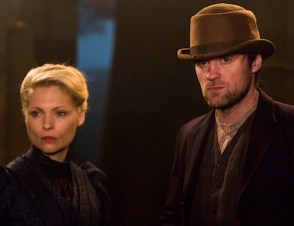 When Amazon picked up Ripper Street after the success of the third series, it was for a fourth and fifth season totalling 13 episodes. The show’s writers seem to have taken the double recommission to heart and crafted an arc plot to last throughout those two seasons, meaning this first half ends on a big surprise and with all sorts of things left up in the air. And now we have to wait. Still, it’ll be fascinating to see how there are six or seven more episodes left, considering the predicament they’ve put the characters in.
 I think I sounded a little more dismissive of Shetland than I’d intended in
  The quality of this revival has certainly been all over the place. I was wary of episode three, Mulder & Scully Meet the Were-Monster, because comedy always seems at odds with The X Files’ grand conspiracy storylines, but I thought it was hilarious and deserving of its acclaim as the best episode of the season. Home Again felt like solid standard X Files fodder, and Babylon was clearly trying to be zeitgeisty but perhaps wasn’t fully thought-through. As for the much-maligned finale, My Struggle II… well, it was a mess, and over-ambitious, and a stupid idea to end it on a cliffhanger when no one knew how well the revival would go down. Let’s hope Chris Carter is right that there’ll definitely be more.
 This month, I have mostly been missing The Night Manager. The critically-acclaimed ratings hit is, as you likely know, a spy thriller adapted from a John le Carré novel, which not only means it has pedigree, but that its star — Tumblr-beloved Marvel villain Tom Hiddleston — is now being tipped to take over as Bond. I wouldn’t know, I’ve not seen it yet.
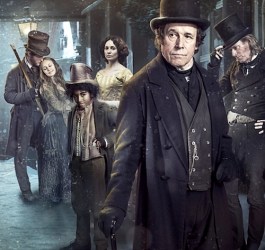 The BBC’s Avengers-style mash-up of characters from the work of Charles Dickens is an interesting mishmash of a show — part soap, part sitcom, part murder mystery — probably quite like Dickens’ originals, to be honest. It’s also an interesting case study in dramatic irony: every major storyline is a prequel to one of Dickens’ works, so how much do you rely on the audience knowing where everyone ends up? We surely all know where Miss Havisham is headed, but do you remember exactly what roles Compeyson and Pocket have to play? And is anyone but a Dickens expert (or someone who’s read Wikipedia, obv.) aware of who Honoria Barbary grows up to be? As a show, it’s not as classy or accomplished as the Beeb’s peerless Bleak House (from a decade ago now!), but it’s considerably more entertaining than their version of Little Dorrit that followed (both apt comparisons, because they’re Dickens adaptations in 15+ parts). It’s designed to be a returning series, and I hope it gets recommissioned.
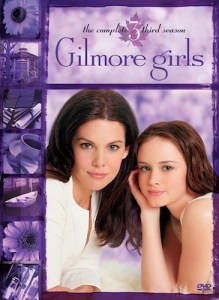 Oh, it’s a Woman’s Show — or, worse, a Teen Girl’s Show. There’s more to Gilmore Girls than that (stupidly reductive, anyway) description. OK, I’m not that fascinated by the ins and outs of Rory’s relationship dramas, and life would be simpler if Lorelai and Luke would just bloody well get together, but it’s endurable due to the fast*, witty, intelligent dialogue (seriously, these characters are impossibly well-read and -watched), the depiction of quirky small-town life and all its crazy characters, and the realistically antagonistic relationship between independent daughter and old-fashioned parents. I got quite far through watching Gilmore once before, many years ago, and then a while back started re-watching with a view to finishing it off. With Netflix’s four-movie revival coming later this year, it’s become time to get a wriggle on. So expect this to keep popping up — I’ve got 100 episodes to go…
 This is a few episodes in over the pond, I know, but it only started here on Monday (see also: The X Files). I’ve never seen one of Ryan Murphy’s other shows (Nip/Tuck, Glee, American Horror Story, etc), except for the Rocky Horror episode of Glee, which I hated. He seems to be quite a divisive creator, so maybe it’s for the best that here he’s only acting as producer and occasionally director. For people like me, who were too young to follow the O.J. case, this is a potentially-fascinating insight into a famous bit of… I was going to say “recent history”, but it’s 22 years ago now. Reportedly the series will focus on how the apparently open-and-shut case we witness in this episode goes astray at trial, which I guess makes this first part all about setting things up. If that is the case, I think there’s a lot of promise.
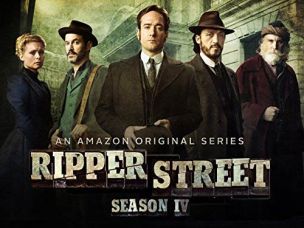 The Amazon-saved Victorian murder drama returned with a 130-minute episode shot in 2.35:1 widescreen — in other words, it was basically Ripper Street: The Movie. In truth, it was clearly designed as a two-parter, and would perhaps have played better in that form. The cinematography of that first episode is glorious though, so rich and well-designed, it’s practically worth watching just for that. Series 3 was the show’s strongest run so far, and for me the new series isn’t quite matching it yet, but it’s still a quality drama about dark deeds in dark places.
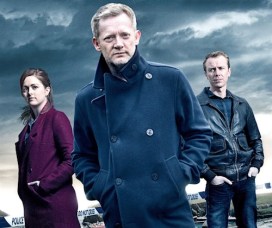 I don’t watch that much crime drama… says the person who’s already highlighted Dickensian, American Crime Story, and Ripper Street, and is also watching Death in Paradise, Elementary, and Vera right now. (I need to cut back on these.) One thing that works in Shetland’s favour is its remote, somewhat desolate setting. I suppose that makes it feel tapped into the Nordic Noir craze a little bit, though that’s probably where the comparison ends. This latest series is also telling a single story over its six parts, which is a change of pace for the show. It’s still in the “intriguing start” phase — there’s clearly something much bigger going on than these small-island cops are used to dealing with.
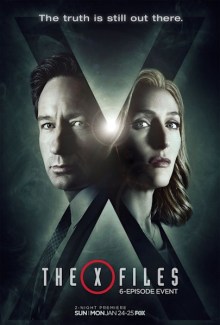 The X Files revival only has one episode left to air in the US now, but over here it’s barely begun (episode two went out on Monday). Despite the general apathetic reaction to the first episode (My Struggle), I largely enjoyed it. Only having dipped in to the original series meant I was thoroughly lost at times, but the Mulder and Scully reunion was suitably nostalgic and it threw around ideas with abandon. Episode two (Founder’s Mutation) seems to have been better received, but I can’t say I noticed a massive up-tick in quality. Ostensibly a “monster of the week” episode, it’s decent in that regard, though I also liked how it tapped into storylines from the past — when you’ve only got six episodes, making any of them completely cut-off and standalone feels somehow wasteful.
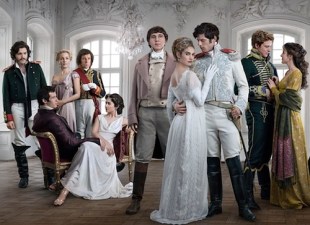 This month, I have mostly been missing the BBC’s new War and Peace — aka Phwoar and Peace, according to social media and/or journalists wanting to have influence on social media. It seemed like the kind of thing (i.e. lots of characters with Russian names) that would benefit from being watched intensively, rather than spread thin over a month and a half, so I’ve got it all saved up. Maybe next month, then.
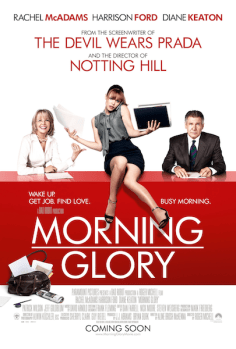 Rachel McAdams takes a break from
 Screened in UK cinemas simultaneously with its TV premiere (and coming to the big screen in various other countries over the next week or so, too), the latest episode of the BBC’s modern-day Sherlock Holmes series is actually a standalone adventure set in the character’s original Victorian time period.
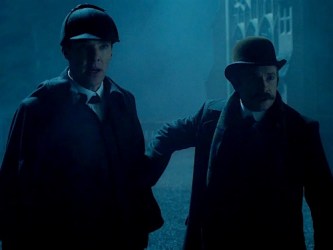 The case they find themselves embroiled in is a little more period than usual, however, with lashings of Gothic and some of the trappings of a Christmas ghost story. The episode is co-written by series creators Mark Gatiss and Steven Moffat, and anyone familiar with Gatiss’ wider work can clearly see his influence here. Moffat brings his trademark fast-paced intricately-tricksy plotting, for which individual viewers’ mileage varies greatly: some find it genius, some find it tedious. Is it clever, or does it just think it’s clever? Is it impossible to follow, or were you just not paying enough attention? As to the first question, I think it’s a bit of both; as to the second, I think the episode ultimately answers everything, but you might need to realise a few things for yourself.
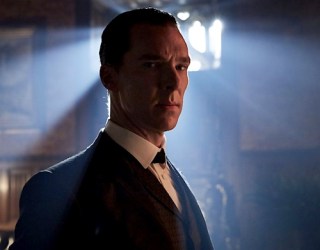 Until the last half-hour or so, anyway, when the modern version suddenly comes crashing in. At first it seems like a clever interlude; a little reminder of the true time period for this version of the characters, and a tease for season four. But it quickly transpires that, no, this episode isn’t actually a wholly standalone aside from the main series — Gatiss and Moffat have found a way to integrate it into continuity. For me, this is where the special begins to come apart at the seams; not because I inherently object to this integration, but because from that point on the episode begins to jump back and forth between the present, the imagined past, and various other dream-state asides. It’s almost entirely justified by the beautifully-shot Reichenbach Falls sequence, but a spot of cinematographic prettiness doesn’t really excuse the way the story goes a little haywire. The least successful part of all, for me, is that it calls into question the solution for the case we’ve just been presented with… but then doesn’t get round to offering another, meaning you kind of feel like the case hasn’t been solved, even though it presumably has been, with the first solution. I think.
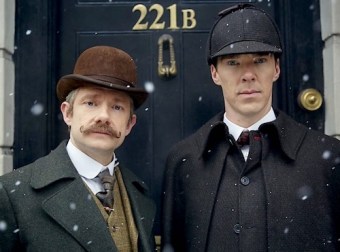 As someone who enjoys Sherlock Holmes in his proper era but is also a fan of this modern day version (I would say “a big fan”, but I’m not one of those people), I’d rather they’d played this a little more straightforward. Not a lot — it’s still under the umbrella of Sherlock after all, and the era-transposed stylistic flourishes in the first hour-ish worked very nicely in my opinion — but the mixed-up mishmash of the final act dilutes the effectiveness of the entire experience. There’s fun and thrills to be had along the way, but in another form it could perhaps have been a Sherlockian classic in its own right.
 The BBC’s long-running spy thriller series
 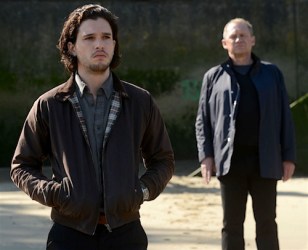 Early seasons focused at least as much on things like the mundanity of spycraft, or how one went about having a personal life while also being a sometimes-undercover agent, as they did on the exciting action of counterespionage — as evoked in the memorable tagline “MI5 not 9 to 5”, of course. As the years rolled on, things got increasingly outlandish and grandiose, just as almost every spy series that starts out “grounded” is wont to do. In season three, an entire episode was spent on the moral dilemma of whether it was acceptable to assassinate someone; a couple of years later, assassinations would just be a halfway-through-an-episode plot development. The one constant through all this was section chief Harry Pearce (Peter Firth), the M figure to a rotating roster of “James Bond”s, including Matthew “
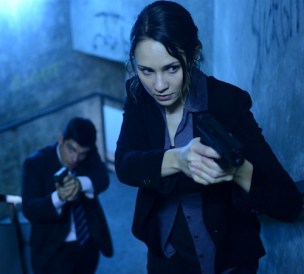 But I’m getting ahead of myself. The story begins with Harry running an op that goes wrong, during which terrorist Adam Qasim (Elyes Gabel) is sprung from custody just before being handed over to the CIA. Cue international incident. Naturally the blame is pinned on Harry, who consequently throws himself off a bridge. Except no one buys that, so they drag in Will Holloway (Kit Harington), a disenchanted one-time protégé of Harry’s (i.e. the series’ latest “younger man who can do the running around”). He knows nothing about it (
 The trailers attempt to promise some of that kind of action, but they’re a bit of a cheat: what adrenaline the film has is mostly released in tiny bursts, scattered throughout. That strategy is fine if you’ve got the money to make each little burst a solid sequence, but when the entirety of some sequences is “jumping through a window” or “climbing a wall to get into a flat”, well… Sure, it looks good in the trailer — it promises lots of action in different places at different times — but that’s also a promise the movie can’t fulfil. The Greater Good certainly isn’t just a low-rent action movie — it’s driven by its plot — but if they’d saved up the filmmaking time, effort, and expense afforded to those single-dose action moments and poured it all into one sequence (in addition to the two or three fully-realised action sequences that the film does have), it might’ve paid dividends.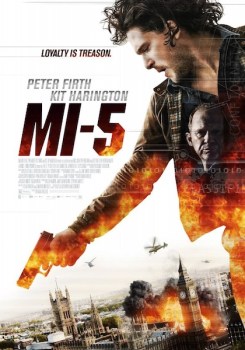

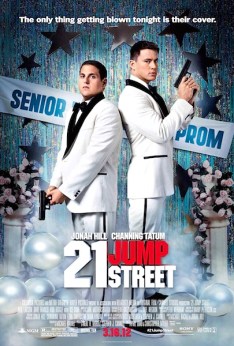 Having turned the unlikely-to-be-any-good story of a machine that makes it rain food into
 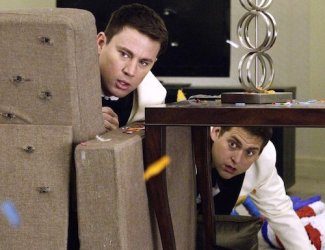 this leaves Hill hanging out with the cool kids — and being lured down the path of parties and their shallower friendship — while Tatum falls in with a gang of ultra-nerdy nerds and starts actually learning stuff. Distilled like that makes it sound pat, but in the film it works; in part because they don’t overplay the clichéd “friends fall out irretrievably… until it’s retrieved for the final act” story arc.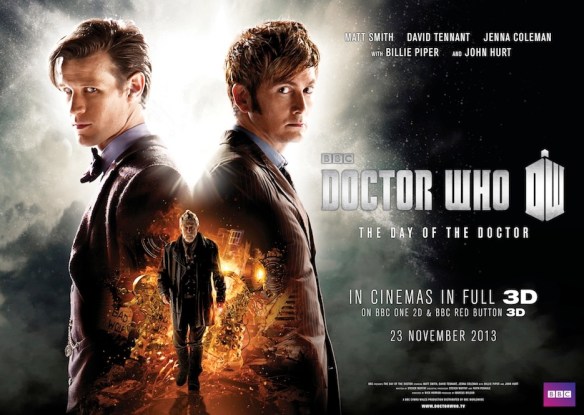
 (and it made more than double per screen what
  The Doctor’s role in the Time War has not only dominated many of his actions and personalities since it happened, but it also stands awkwardly with his persona as a whole. Here’s the man who always does the right thing, always avoids violence, always finds another way, even when there is no other way… and this man wiped out all of his people and all of the Daleks? The same man who, in his fourth incarnation, stared at two wires that could erase the Daleks from history and pondered, “do I have the right?”, before concluding that he didn’t? Doesn’t really make sense, does it?
 I think some fans would have preferred a big party history mash-up; they certainly would have liked to see their favourite faces from the past. But let’s be honest: from the classic era, only Paul McGann could pass muster as still being the Doctor he once was (and he got his own, fantastic, mini-episode to prove it); and how the hell do you construct a story with a dozen leading men? It’s clearly enough of a struggle with three. The Doctor is always the cleverest person in the room, so what do you do with multiples of him? Moffat finds ways to make all of the Doctors here (that’d be David Tennant’s 10th, Matt Smith’s 11th, and John Hurt’s newly-created ‘War Doctor’) have something to do, something to say, and something to contribute — because really, the oldest (i.e newest) Doctor should be the most experienced and have all the ideas, right? There are ways round that, but only so many.
 Along the way, Moffat nails so many other things. The dialogue and situations sparkle, and frequently gets to have its cake and eat it: familiar catchphrases and behavioural ticks of the 10th and 11th Doctors are trotted out to a fan-pleasing extent, and then Hurt’s aged, grumpier, old-fashioned Doctor gets to criticise their ludicrousness, speaking for a whole generation of fans who hate “timey-wimey” and “allons-y” and all the rest. I think it’s this self-awareness that helps so much with selling the episode to everyone, both calling back to well-known elements of the series that many love, and pillorying their expectedness for those that aren’t so keen. Well, it would be a pretty awful party if you had a cake but couldn’t eat it, right?
 Smith and Jenna Coleman are on form too, of course, but as the series’ regular cast members that feels less remarkable. That’s not intended to sell them short, however, as they hold their own against actors who are arguably more, shall we say, established. If there’s one weak link it may be Joanna Page’s eyebrows, possibly the side effect of duelling with an English accent. (Complete aside: I’m rewatching Gavin & Stacey as I write this, and feel horrible even going near criticism of such a lovely person.)
 Credit too to editor Liana Del Giudice, not only for crafting cinematic action sequences, but for stitching together a narrative that is often told with imagery and flashbacks, rather than people stood around chatting. Look at the sequence just after the Doctor sees the painting for the first time as just one clear example. That sequence may be dialogue-driven, but the faded-in and intercut flashbacks and glimpses of other events are what’s really conveying information. This is first-class visual storytelling, not just when compared to the rest of British TV, or international TV, or cinema, but the whole shebang.
 Still, you can’t please all of the people all of the time, and not everyone liked The Day of the Doctor: it may’ve topped DWM’s poll, but there were voters who scored it just one out of ten. But then, that’s true of 239 of the series’ 241 stories; and almost 60% of voters gave it a full ten out of ten — that’s a pretty clear consensus. I didn’t get round to voting myself, but I would’ve been amongst them. There are undoubtedly some weak spots that I haven’t flagged up, but conversely, there are myriad other successes — both minor (the opening! The dozens of sly callbacks!) and major (the use of the Zygons! Murray Gold’s music!) — that I haven’t mentioned either.
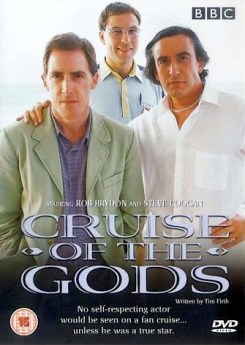 I’ve
I’ve 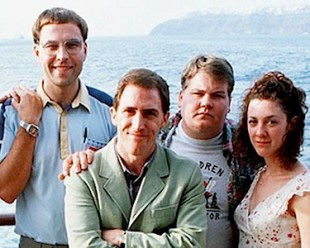 Though the film pokes fun (fairly good-naturedly) at sci-fi obsessives, the underlying story here is about a man overshadowed by his past. In this Brydon gives a strong performance — I think he’s a better actor than he’s normally given credit for — and he’s ably supported by Corden in particular, though to say what gives his role such quality might spoil a twist. He’s another one who’s actually a very good actor, but it gets hidden beneath a public persona that led to such dross as that sketch show with Mathew Horne.
 without ever realising all those disparate things were penned by the same human being. Poor writers.) Lowney, meanwhile, has stuck to TV, with episodes of
  100Films.co.uk