
Barry Sonnenfeld | 106 mins | Blu-ray | 1.85:1 | USA / English | PG / PG-13
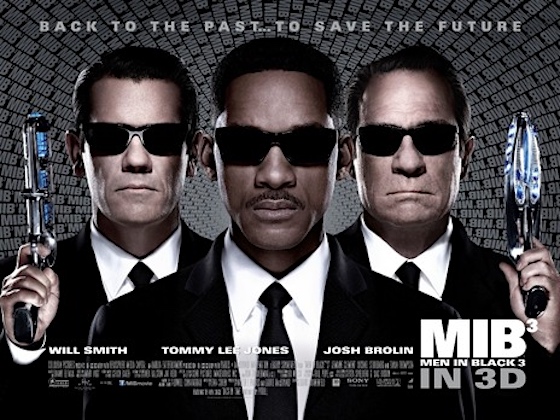
Maybe it’s something to do with my age, but when Men in Black II came out it felt like a bit of a belated sequel to the mega-hit Men in Black — it had been five years, after all, which is quite a long time for a comedy sequel. Well, Men in Black 3 was another ten years after that… As it turns out, MIB2 is a kind of typical first sequel: memorable-but-small characters get massively increased roles; things are referenced just for the sake of referencing them; jokes are repeated or amped up. MIB3 is more like the typical belated sequel: it stands somewhat divorced from the first two, with the minor stuff all gone, and some more significant changes necessitated by the passing of time.
What hasn’t changed are the leads, Agents J (Will Smith) and K (Tommy Lee Jones) — although the latter’s about to, because when an alien criminal he locked up in the ’60s escapes from prison and travels back in time, K is wiped from existence. As the only one who can remember K, it’s up to J to also travel back to the ’60s, rescue the younger K (Josh Brolin), and also save the Earth.
MIB3’s biggest problem is that it’s not funny enough. The first two were sci-fi comedies with the emphasis on the comedy, whereas this is more of a light sci-fi adventure. In some respects it tries to substitute emotional weight for the lack of laughs, aiming for a pay-off that’s designed to put a cap on the whole trilogy. It kind of works, I suppose, but it also feels like a bit of an ill fit. It’s nice that the film’s trying something different, I suppose, but I’d rather the tone was closer to the other movies — more humour, tighter pacing. Director Barry Sonnenfeld used to have an obsession with making his movies shorter (I remember he once said he’d be the only director where a “director’s cut” would actually mean a truncated version of the movie). I don’t know if he’d given up on that notion by 2012, but trimming ten minutes out of this likely wouldn’t hurt.
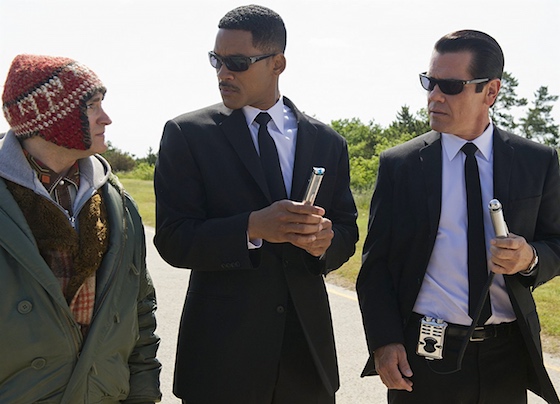
The best bit is definitely Brolin as Young K, doing a bang-on impression of Tommy Lee Jones while also adding enough to make the part his own. As for the rest of the new cast members, Emma Thompson’s role is fine if you consider her appearance no more than a cameo, but Alice Eve is underused as her younger self. Jemaine Clement chews the scenery double-time as the villain, while the always excellent Michael Stuhlbarg has a fun supporting role as a character who can see all possible futures.
MIB3 is not as weak as the much-maligned first sequel (which I don’t hate as much as some, but it isn’t great), but it can’t equal the freshness of the original, either. Little surprise it didn’t lead to a full-blown revival of the franchise… though, as it still did well at the box office and the series’ popularity endures, it’s also no surprise we’ll be getting a spin-off-ish fourth movie next summer.



 Much like the Bond films to which they’re so often compared, the Bourne movies have their devotees while only fitfully pleasing the critical establishment. This fifth movie — which is notable for marking the return of star Matt Damon and director Paul Greengrass after the semi-reboot of
 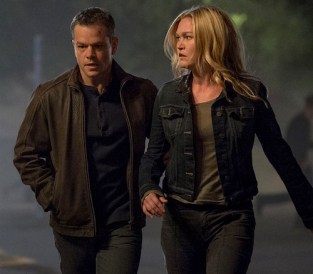 Action sequences ensue, shot with all the ShakyCam you’d expect from Greengrass. By now I imagine you have your own view on whether his style works or not. Personally, I think it’s considerably less bamboozling than when it made its debut in
 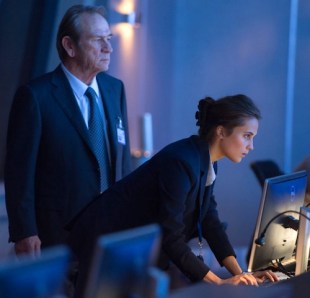 Frankly, Jason Bourne is at pains to mix in hyper-current iconography; the reasoning for Damon and Greengrass’ return now being that the world has changed and how does Bourne fit into that? So as well as social media and Greek riots we’ve got references to and riffs on hacking, Edward Snowden, government surveillance of its own citizens, the prevalence of Facebook/Twitter-esque tech companies, and so on. Sadly, I’m not sure the film’s actually got anything to say about any of these things. Greengrass and his co-writer, editor Christopher Rouse, have appropriated all these zeitgeisty concepts to make the film feel very Now, but that surface sheen is more or less where it ends. I mean, there’s a whole subplot starring Riz Ahmed as the Zuckerberg-like CEO of a social media company that I didn’t even mention in my plot summary because it’s kind of an aside. It’s kind of ironic, really, that it always seemed as if Greengrass’ more natural stomping ground was his documentary-ish real-world-exposé type movies, with his contributions to the Bourne series an unusual sideline; yet when he finally marries the two halves of his filmmaking career, it’s the action rather than current-affairs commentary that takes precedence.
 The end result is that Jason Bourne does thrill as an action movie, which seems to have been the primary goal of its makers, at the end of the day. As an action-thriller, however, the rinsed-and-repeated plot is a slightly faded imitation of former successes; a through-the-motions way to provide those impressively staged chases and punch-ups. It’s not the definitive Bourne movie one might’ve expected from the returning star/director combo (why else come back if not to perfect, or at least add to, the formula?), but instead means the film ends on an odd note: even though it wasn’t a wholly satisfying experience, and even though it doesn’t end with questions still blatantly hanging (as every Bourne movie bar Ultimatum has done), I want Damon and Greengrass to come back and do it all again, please. Only do it properly next time, yeah guys?
 Empire gave this film
  100Films.co.uk