
Christopher McQuarrie | 132 mins | Blu-ray | 2.39:1 | USA, Hong Kong & China / English, Swedish & German | 12 / PG-13
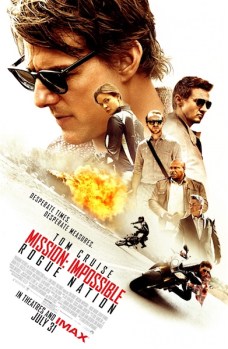 It’s an overcrowded year for spies on the big screen (as previously discussed), so I imagine Paramount were very glad they were able to make the last-minute decision to pull this fifth Mission: Impossible movie forward from its original post-Spectre release date to a summer debut, before audiences perhaps felt the genre was played out. Maybe it wouldn’t have mattered anyway: for my money, Rogue Nation is the best James Bond movie released in 2015.
Beginning a year or two on from the last Mission, we find IMF’s star agent Ethan Hunt (Tom Cruise) investigating the Syndicate, a shadowy terrorist organisation that may not even exist. Hunt finds proof when he’s kidnapped by the Syndicate, escaping with the help of one of their operatives, Ilsa Faust (Rebecca Ferguson). Unfortunately, this is the moment when Washington politicking by CIA director Hunley (Alec Baldwin) sees the IMF shut down. So, naturally, Hunt goes on the run, determined to find and eliminate the Syndicate.
Rogue Nation has a nicely straightforward yet nuanced espionage-y plot, though its hard to accurately summarise its inciting incidents without giving too much away. Suffice to say, it’s not long before Hunt is reuniting with former IMF teammates Benji (Simon Pegg), Brandt (Jeremy Renner), and Luther (Ving Rhames), as well as forming an off-and-on alliance with double (or triple?) agent Faust. They’re aligned against the Syndicate, led by the excellently named Solomon Lane. He’s played by Sean Harris, on fine form as a very still, very quiet, very bespectacled villain. Even though you know the heroes are going to win, it becomes hard to see how they’re going to manage it, so powerful and threatening is Lane.
 Obviously this uncertainty is also thanks to the story constructed by writer-director Christopher McQuarrie. Some automatically dismiss the plots of the Mission films, saying they’re just an excuse to link some death-defying stunts performed by Mr Cruise. Although there may be an element of truth to that, I don’t think this is a bad storyline by any means. As I said, it’s fairly straightforward (there’s no mole in IMF! Hurrah!), but the intricacies keep it engrossing and keep you guessing. And anyway, the action sequences it ties together are first-rate. You’ve pretty much seen the opening plane stunt in the trailer — heck, you’ve seen it on the poster — but it’s still a thrilling opener. Then there’s the opera sequence, a massive logistical challenge for the filmmakers that they’ve crafted to perfection, making one of the most effective and memorable spy sequences for a long time; arguably, ever. There’s a rich pedigree of such scenes set in theatrical spaces, be they by Hitchcock or even in otherwise-poorly-regarded Bond films, but Rogue Nation’s sits proudly alongside them.
Unsatiated by creating two iconic scenes, McQuarrie and co set about offering even more: there’s an underwater sequence where Hunt has to hold his breath for fully three minutes while diving, replacing an underwater computer chip, and escaping; there’s a crazy car-vs.-bike chase through the backstreets of Casablanca; that’s followed by an equally manic bike chase along the motorways and windy cliff roads of Morocco… If the climax — a runaround through the foggy streets of London — feels a little underwhelming by comparison, it’s through no fault of its own. In my Ghost Protocol review I discussed the Mission films’ consistently lower-key finales, and Rogue Nation is no exception, although I’d contend the sequence works well enough that it’s still one of the franchise’s most effective climaxes.
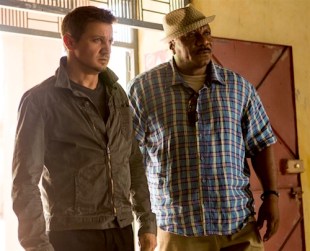 As alluded to above, this is probably the most globetrotting Mission film yet: it starts in Belarus, before taking in Washington D.C., Cuba, Paris, Vienna, Casablanca, and London. It’s things like this that lead me to describe it as a James Bond film. There’s also the balance of a serious plot line with plenty of humour, the use of outlandish just-ahead-of-reality gadgets, and the fact that the series can’t retain a female cast member for more than one film (though that last one isn’t a positive). For all the effort Spectre made to bring classical Bond elements back into the fold, Rogue Nation arguably feels more like a classically-styled Bond movie. It’s not a faultless like-for-like comparison — one of Rogue Nation’s best points as a Mission movie is that the whole team are necessary to complete the mission, a defining factor of the TV series that many felt went awry in the movies, with their focus on Cruise — but the almost-indefinable sensation of this experience is Bondian. It’s not stealing that style, though: considering Ghost Protocol had it too, and Craig-era Bond has abandoned it for a ‘classier’ action-thriller mode, it’s something the M:I series has come to own.
Indeed, of late the Mission films have come to feel more like a series than they did previously. It’s now quite well known that every Mission film has a different director, a conscious choice on the part of star/producer Tom Cruise to give each film a unique flavour. To be honest, I’m not sure how well that’s worked. M:I-2 drips with John Woo’s personal style (to the distaste of many, as it turned out), and I suppose the first film is pretty Brian De Palma-y, but since M:i:III things have got distinctly less distinctive. That was helmed by J.J. Abrams, whose only stylistic point is “lens flare”; and it was his first feature, so he didn’t even have that yet. The fourth film was by Pixar’s Brad Bird, making his live-action debut. This fifth isn’t McQuarrie’s first film, at least, but it is only his third, and the first was 15 years ago and I’m pretty sure no one remembers it. Now, none of these chaps did a bad job — far from it, as Ghost Protocol and Rogue Nation are among the series’ best instalments, perhaps even the two very best — but I think you’d be hard pushed to tell the last three films came from different creative brains.
 So on the one hand the recent news that McQ (as current regular collaborator Cruise calls him) is returning to write and direct the sixth Mission is a shame, because it breaks a twenty-year rule; but on the other, I’m not sure it matters. Plus, by taking on the dual role of sole writer and director, you could argue McQ’s Missions are the most auteur-y of the lot, even in spite of the lack of a terribly unique visual style. Which is all a very long-winded way of saying that I was a little disappointed when it was announced there wouldn’t be a sixth director for the sixth film, because I always thought that was a neat idea; but as the idea hasn’t actually had much effect, who better to ask back than the man who wrote and directed arguably the best Mission: Impossible film of them all?
Perhaps that’s because (according to Abrams in one of the special features) McQuarrie wanted this to be a sort of “greatest hits” for the M:I franchise. He’s done that pretty subtly — you don’t feel like you’re watching a string of ripoffs from the first four — but he has done it, with sequences and locations that recall the previous films, and some nice hidden Easter eggs for the hardcore, too. Technical attributes are equally up to scratch, with some lovely lensing by Robert Elswit. He shot most of it on 35mm film and it pays off, with an indefinable classy quality. The score is by Joe Kraemer, who I’d not heard of before, probably because the main thing he’s done is score both of McQ’s previous films. No matter, because his work here is top-notch, and certainly the most memorable Mission score I can, er, remember. Wisely, he’s taken the iconic main theme as his starting point, also used Lalo Schifrin’s other beloved M:I piece, The Plot, and mixed recognisable motifs and elements from these throughout his own compositions. It works marvellously, and helps contribute to not one but two of the best title sequences the Mission films have yet had. Yes, two, in one film. It feels kinda greedy, but I enjoyed it — when you’ve got a theme that good, why not highlight it twice?
 The cast are liable to get lost among all the grandiose goings-on in a film like this, so its a testament to the skilled team that’s been assembled over the past few movies that they absolutely do not. Cruise is Cruise — surely by now you know whether you like him or not. I always feel like I should dislike him, especially given his crazy real-life religious views, but on screen I find him very entertaining. Rogue Nation is no different. Hunt is on the back foot for a lot of the film, and Cruise is at his best when he’s playing someone who’s almost the underdog. He’s also a more talented comic actor than he’s normally given credit for, and that glimpses through here too. Most of the time comedic duty is handled by Pegg, of course, who provides a good foil as Hunt’s sidekick for much of the film. More surprising, perhaps, is the amount of humour Jeremy Renner brings. It’s much less obvious, dryer and more sarcastic, so the contrasting tone is fun. He’s paired with Ving Rhames for a long stretch, who returns wholesale after sitting out Ghost Protocol but for a cameo. The pairing may come up just short of feeling inspired, but nonetheless makes for an entertaining change. Elsewhere, Baldwin offers a neat, not-too-clichéd turn as the CIA ‘villain’, while Tom Hollander pops in for a funny cameo-level turn as the British Prime Minister.
But the real star of the film is Rebecca Ferguson, marking the second male-led action franchise this year where the movie has been stolen from the male hero by the female ‘support’. (The other, of course, is the much-discussed Furiosa in Fury Road.) Ilsa Faust is a fantastic character, whose allegiances are regularly questioned — every time you think you have her pinned down, something changes. She’s an immensely capable agent, but Ferguson also finds her vulnerable side when needed. She’s no damsel in distress — far from it — but she’s not just a cold man-but-with-boobs action heroine either. (Incidentally, it would’ve been very easy to illustrate this review with half a dozen pictures of Ferguson being awesome. But I resisted. Though I should’ve made room for this.) As an action movie leading man, and a producer who can shape the film how he wants, it’s to Cruise’s credit that he allows everyone else to share so much screen time — and to save him on more than one occasion too — and especially so when one of those characters is pretty much stealing the limelight out from under him.
 As the fifth film in a franchise that has always carried a slight “pretender to the throne” air, Rogue Nation should feel played out and tired. Instead it seems fresh and invigorated, with a spot-on tone, likeable and fun characters, a real sense of jeopardy and menace (missing in so many modern action films), and some of 2015’s very best action scenes — and in the year of Fury Road, that’s really saying something. McQuarrie has already spoken about learning lessons from this so he can make the next one even better. I find that hard to imagine, but that’s his mission, and I choose to accept it.

Mission: Impossible – Rogue Nation placed 1st on my list of The Ten Best Films I Saw For the First Time in 2015, which can be read in full here.
This review is part of the 100 Films Advent Calendar 2015. Read more here.
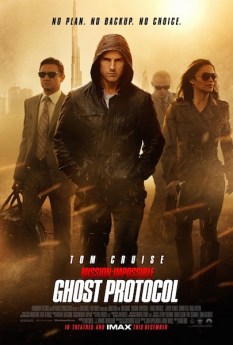 With Bond going “real world” and gadget-free in the Daniel Craig era, and the Bourne series having blazed a trail of “we shot it all handheld and shaky and grainy so it must be real” veracity, it seems the task of providing audiences with a contemporary version of the spy action, just-ahead-of-reality gadgets, and larger-than-life spectacle that the Bond movies specialised in during the ’60s and ’70s, has fallen upon the Mission: Impossible franchise. For my money, it’s taken the baton with aplomb.
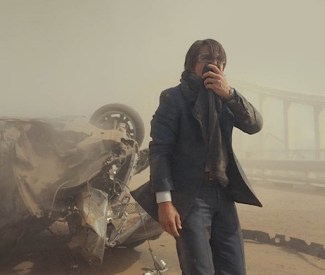 Somewhat unfortunately for pacing, they come halfway through. The climax is a mano-a-mano fight in an automated car park. It’s good, but feels underwhelming by comparison, with Michael “
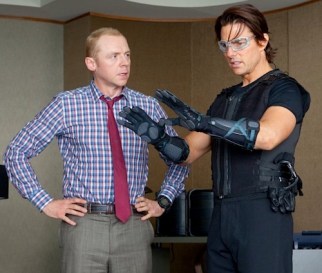 There’s a host of other gadgets to be going on with, though. It may be a side effect of having the writer-director of
 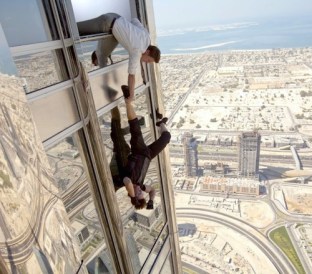 Still, that’s a fault of the home entertainment release, not the film itself. In all other respects, Bird’s work is first-rate. I like that the series consciously changes director with each new film to provide new ideas and voices, but if they were going to break the pattern then Bird would’ve been a good guy to allow back (certainly a superior pick than the third film’s J.J. Abrams, anyway, who was originally slated to tackle this sequel too).
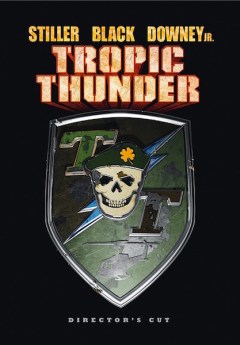 A bunch of obstreperous actors are too much to handle for the director of a Vietnam war movie, so he dumps them in the jungle to shoot it with hidden cameras. Things go awry; hilarity ensues.
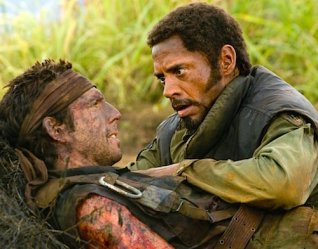 The film may run a little long in the middle, though I don’t think that’s the fault of this extended cut. It adds just over 17 minutes across many little changes and extensions
 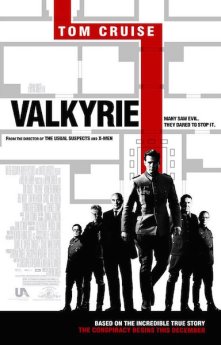 After abandoning the X-Men franchise for a
 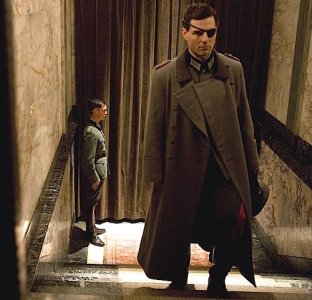 One of the stated aims of the conspiracy is to show the rest of the world that not everyone in Germany believed in what Hitler and his inner circle were doing. It may have taken us a long time to realise that, for fairly understandable reasons, but quality films like this help get the message out. Singer has crafted a proper thriller here, replete with scenes of edge-of-your-seat tension. Many a filmmaker can’t manage that with a fictional storyline, never mind one where we know exactly how it turns out.
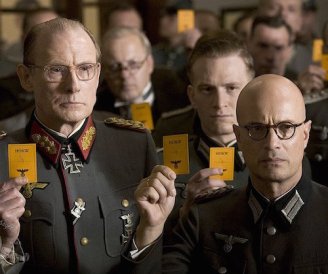 but nor is he in simplistic action hero mode.
 Of late there seems to have been a glut of sci-fi films with highly generic, near-meaningless titles —
 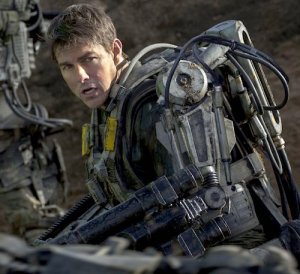 suitably exciting, surprisingly funny, and actually quite clever. It’s also boldly standalone. OK, so it’s an adaptation, but the book is hardly a
  Reflect too heavily and some bits may begin to crumble more but, for me, not too severely.
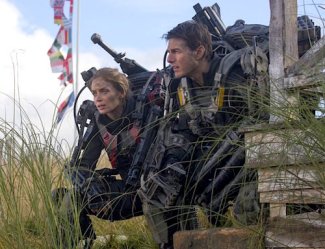 Edge of Tomorrow isn’t an unqualified success, but more than enough of it works to make for a well-above-average modern blockbuster. Excellent action sequences, plenty of amusing asides, and a couple of solid sci-fi concepts to chew on combine to render it quality entertainment. Bonus points for being a true original in a sea of remakes, sequels and spin-offs.
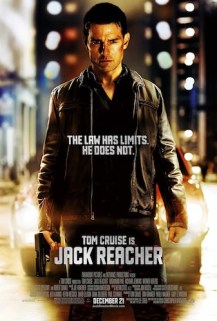 I don’t like Lee Child. I’ve never read one of his novels, but I’ve read and seen interviews with him, and always felt he comes across as intensely pompous and irritating. I disclose this up front because it leaves me predisposed to dislike Jack Reacher, the first (they hope) movie adaptation from Child’s series of novels starring ex-military policeman and now all-purpose vigilante Jack (you guessed it) Reacher.
 How much you consider the twists to be twisty will depend on which suspects your guesswork picks out, but in that regard it’s as strong as other similar genre examples.
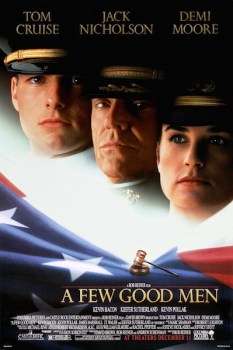 Sometimes you have to wonder where it all went wrong. I can only imagine how good things looked for Rob Reiner at the start of the ’90s, when he’d had an almost-interrupted near-decade-long run of acclaimed movies in the director’s chair:
  100Films.co.uk