
Taika Waititi | 130 mins | cinema | 2.35:1 | USA / English | 12A / PG-13
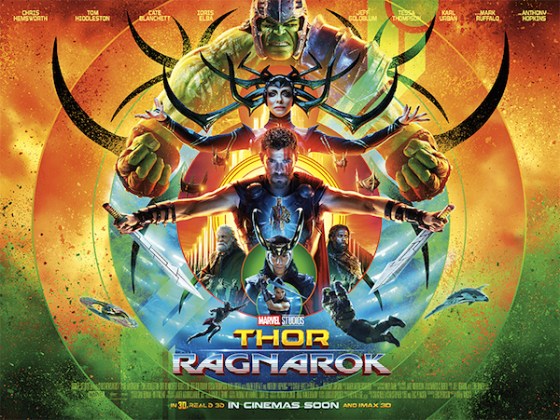
It’s been a busy year for the MCU. Long gone are the days of Marvel Studios putting out one or two movies a year — this is their third theatrical release in 2017, alongside three full seasons of Netflix shows and two network TV series currently running. Whew! Nonetheless, according to Rotten Tomatoes this Thor threequel is the best-reviewed thing they’ve released this year (so far). Some critics have even said it’s the best Marvel Studios movie ever made. Well, let’s not get too hasty.
Two years on from Age of Ultron, Thor (Chris Hemsworth) has been scouring the universe in search of Infinity Stones, to no success. After the Goddess of Death (Cate Blanchett) emerges from her prison intent on conquering Asgard, the God of Thunder is cast out to a remote world ruled over by the Grandmaster (Jeff Goldblum). There he must compete in gladiatorial championships in order to escape and prevent Ragnarok, the long-prophesied destruction of Asgard.
Having previously attempted to make the Thor movies Shakespearean (by hiring Kenneth Branagh to direct the first one) and Game of Thrones-esque (by hiring Alan Taylor to direct the second), to diminishing returns as far as critical reception and audience responsiveness went, Marvel have tried a different tack for this third instalment. Essentially, they’ve done what they’ve done to most of their movies of late: made it funny. Tonally, you could be forgiven for thinking this was a Guardians of the Galaxy sequel (apart from it not starring any Guardians characters, that is).
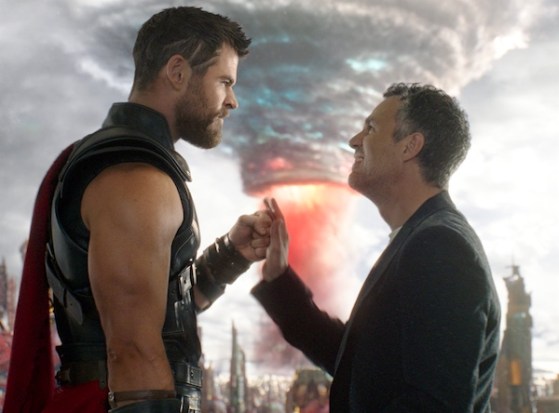
To this end, they hired director Taika Waititi, who’s been gaining attention with this comedies What We Do in the Shadows and Hunt for the Wilderpeople. Waititi’s influence is definitely felt in the film’s splashes of irreverent humour, but everything else about Ragnarok is a typical Marvel Studios blockbuster. Critics who’ve said it’s more a Waititi movie than a Marvel movie were overselling it. The plot, the locations, the characters — they’re all your standard Marvel stuff. It’s colourful, it’s fun, it’s exciting — all standard Marvel operating procedure.
Therefore, just as with almost every Marvel movie, the devil is in the details. Ragnarok is a good one because of Waititi — because of the extra humour he injects, a consistent presence throughout the film, but also because he clearly has a good eye for imagery. If you want a taster, a lot of the most striking stuff is, unsurprisingly, included in the trailers. (Though, interestingly, there are several shots in the trailer that have been modified for the sake of spoilers. But to say more would be, y’know, a spoiler.) Action and more dramatic material are handled as well as ever. That’s the way the cookie crumbles with Marvel Studios movies: a bad or unremarkable director will make a bad or unremarkable Marvel movie, but a good or unique director can seemingly only make their presence felt so far as making “a good Marvel movie”, perhaps with a few of their own flourishes.
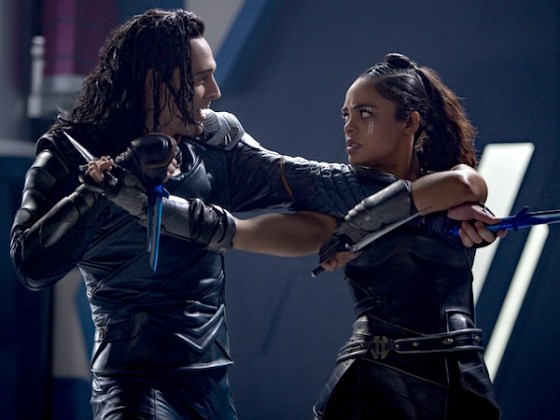
You may have heard some reports claim Ragnarok is an intergalactic buddy movie. It isn’t. Or, if it is, it’s a buddy movie where one of them’s Thor and the other one’s constantly changing. As the eponymous hero, Hemsworth gets to flex the comedic chops he revealed in movies like Ghostbusters. Everyone’s favourite Marvel movie villain, Loki (Tom Hiddleston), is back as well. While Ragnarok may ignore its predecessors tonally, it does a good job of continuing to build on Loki’s character arc. Blanchett is, if anything, under-hammy as the villain, pitching it too low when she’s sharing space with the likes of Goldblum. The expansive cast list means that both returning characters (such as Heimdall (Idris Elba) and Bruce Banner (Mark Ruffalo)) and newcomers (such as Skurge (Karl Urban) and Valkyrie (Tessa Thompson)) can only snag so much screen time each, but several of them are given efficiently-told arcs nonetheless (as usual, Heimdall mostly misses out).
Arguably the film’s standout character is Korg, voiced by Waititi and spewing lines that feel very much from the director’s wheelhouse, even though he’s not credited as a writer. Most of the biggest laughs come from him, especially as bits like “friend from work” are now very familiar from the trailers. There’s also a cameo from Dr Strange (Benedict Cumberbatch), which feels like it’s there just because they included that credits scene in his movie and so were committed to paying it off. I suppose it may have future benefits, as I believe Thor is now the only Avenger to have met Strange, but we shouldn’t be thinking about that — what have we all said before about the MCU being needlessly over-connected?

Talking of credits scenes, you may wish to know that there are two here, Marvel’s default number nowadays. Without spoiling anything, one is the vaguest of vague teases, the other a funny button on one of the film’s subplots. Neither are going to be remembered among the studio’s best credits additions.
If Thor: Ragnarok has a problem it’s the hype that’s been attached to it since the likeable trailers and glowing reviews started coming out. For those with appropriately managed expectations, make no mistake, it is a highly entertaining couple of hours. But it doesn’t break the Marvel mould, instead just filling it with more colourful materials. The best Marvel movie ever? No. The best thing they’ve released this year? Maybe.

Thor: Ragnarok is in cinemas in the UK and various other countries now. It rolls out across the world in the coming weeks, ending with the US on November 3rd.
 It feels kind of pointless reviewing Avengers: Age of Ultron, the written-and-directed-by Joss Whedon (and, infamously, reshaped-in-the-edit-by committee) follow-up to 2012’s “third most successful film of all time” mega-hit
 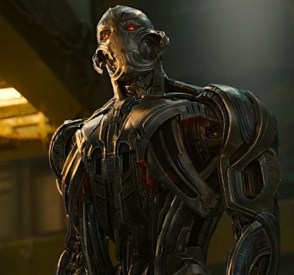 Even though the first half of that is still three years away, we’re still very much on the road to it. Heck, we have been practically since the MCU began, thanks to those frickin’ stones (if you don’t know already, don’t expect me to explain it to you), but now it’s overt as well as laid in fan-friendly easter eggs. The titular threat may rise and be put down within the confines of Age of Ultron’s near-two-and-a-half-hour running time, but no such kindness is afforded to the myriad subplots.
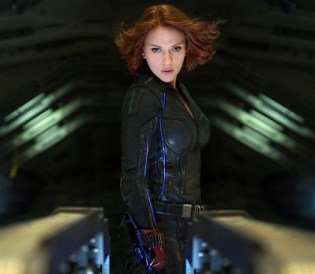 (not just obvious stuff like the Hulk, but digital set extensions, fake location work, even modifying Stark’s normal Audi on a normal road because it was a future model that wasn’t physically built when filming) that stuff they genuinely did for real looks computer generated too. All that time, all that effort, all that epic logistical nightmare stuff like shutting down a capital city’s major roads for several days… and everyone’s going to assume some tech guys did it in an office, because that’s what it looks like. If you’re going to go to so much trouble to do it for real, make sure it still looks real by the time you get to the final cut. I’ll give you one specific example: Black Widow weaving through traffic on a motorbike in Seoul. I thought it was one of the film’s less-polished effects shots. Nope — done for real, and at great difficulty because it’s tough to pull off a fast-moving bike speeding through fast-moving cars. What a waste of effort!
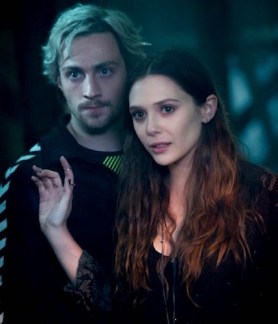 The really daft thing is, Whedon specifically added Scarlet Witch and Quicksilver… wait, are Marvel allowed to call them that? I forget. Anyway, Whedon added the Maximoff twins because, as he said himself, “their powers are very visually interesting. One of the problems I had on the first one was everybody basically had punchy powers.” I know Hawkeye’s power is more shoot-y than punchy, and we all know
  At the end of the day, what does it matter? Age of Ultron isn’t so remarkably good — nor did it go down so remarkably poorly — that it deserves a reevaluation someday. It just is what it is: an overstuffed superhero epic, which has too much to do to be able to compete with its comparatively-simple contributing films on quality grounds, but is entertaining enough as fast-food cinema. Blockbusterdom certainly has worse experiences to offer.
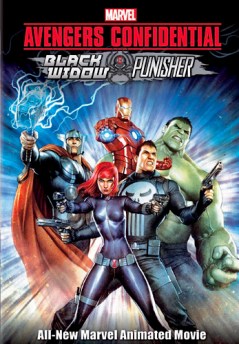 Anime take on Marvel properties. S.H.I.E.L.D. agent Black Widow teams up with vigilante Frank Castle, aka the Punisher, to investigate a threat to global security.
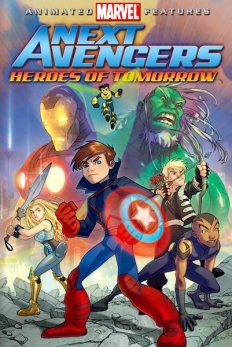 No, not the ’70s spy-fi series
  The rest of the new characters are largely fine, and while they’re clearly grounded in their parents’ personalities, they’re not just carbon copies — Cap’s son James is less worthy than his father, for instance; Black Panther’s son Azari is less elbows-out; and so on. Though Hawkeye Jr. is a little skeevy… Writer Christopher Yost has done a fair job of crafting realistic-enough kids, and in an era when superheroes seem to spend more time fighting amongst themselves than they do against villains, it’s nice that this team largely get on — though not in an overly-rosy “it’s all happy families” way, thankfully.
 Coupled with a good plot, which keeps moving and developing rather than setting up one threat and meandering along until a big fight, as well as a few cameos and maybe even surprises along the way, Next Avengers is the kind of movie you expect to be pretty awful kids-only dross, but turns out to actually be pretty darn good.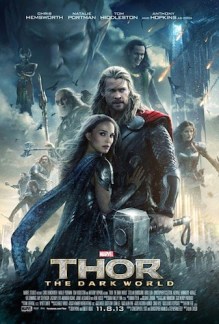
 Good will towards the participants counts for a lot, though. Tom Hiddleston’s Loki steals pretty much any scene he’s in, but Chris Hemsworth’s Thor is not an unlikeable hero, building further on the responsibility-and-honour story arc of the first film. Idris Elba also benefits from an expanded role, but others are less lucky: one of the Warriors Three is ditched as soon as we’re reacquainted with him; more criminally, Christopher Eccleston’s villain has nought to do but stomp around spouting exposition in a made-up language. Anyone could play that role, you don’t need an actor of Eccleston’s ability. Maybe something got cut (though it’s not in the Blu-ray’s deleted scenes), because I don’t see why else he’d’ve taken the part. Well, possibly the payday.
 Despite the title, there’s much fun to be had with The Dark World. It can’t deliver on all of its aims — the equally-promised expansion of Thor and Jane’s relationship is equally sidelined — but there’s enough entertainment value to make it a worthwhile proposition. Perhaps the longer lead-in that the third film seems to be getting (there’s no announced slot for it among Marvel’s numerous future release dates, meaning it’s unlikely to arrive before 2017) will allow them to round everything out a little better.
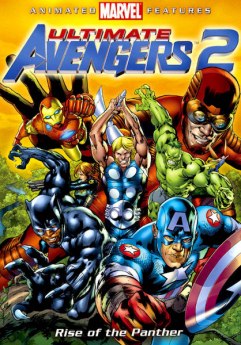 Some things in life baffle me. Form dictates I now list a couple of humorous examples, but we’ll skip that and get to the point: why would you make a direct-to-DVD movie that has a subtitle on the box but not on the film itself? I can understand why titles get tweaked on cinema-release posters and/or subsequent DVD releases — for marketing purposes, say; or clarity — but why, when your title is going direct to the DVD stage, do the titles not match? And why does the box add the subtitle rather than remove it for on-shelf simplicity? I have no answers — it baffles me, remember — but this is the sort of thing I sometimes muse about. The sort of thing that most other people don’t even notice, never mind care about.
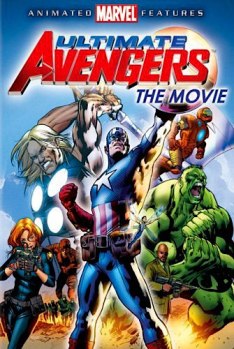 With the
 100Films.co.uk