
I didn’t think I’d watched much TV to cover in this month’s column, and then I came to write it…

Cobra Kai Season 1
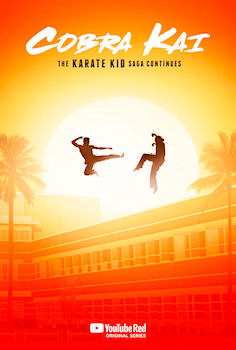 A belated sequel/spin-off to the Karate Kid movies, Cobra Kai was one of the first series to be released when YouTube decided to get in on the Netflix game. It was a hit for them, too, attracting tens of millions of viewers and very strong reviews. And yet it feels like no one talked about it, so where those 90 million people were hiding, who knows. Anyway, with YouTube wrapping up their series production (they were a bit late to a market already saturated by Netflix, Amazon, and a dozen other TV and film studios), existing and future seasons of Cobra Kai have been passed onto Netflix — and now everyone’s talking about it. Are more people watching it, or is the Venn diagram between “people who primarily watch stuff via Netflix” and “people who use social media” just a perfect circle? We’ll never know. I guess I’m one of those people who only started talking about the show after it moved to Netflix. I did mean to get to it sooner, but no way was I paying for YouTube, and I missed the couple of times they made it all available for free.
Anyway, what of the programme itself? As I said, I’d heard it was good, but I didn’t expect it to be this good. Seriously. A belated revival of a half-forgotten oh-so-’80s kids’ sports movie franchise should not be one of the best shows on TV in the 2010s, but, turns out, it kinda is. The writing, the performances, the way it uses the franchise’s legacy but is also it’s own thing… all of that is more or less perfect. One of its strongest features is a nicely nuanced treatment of the returning characters. They haven’t just kept them the same, nor merely inverted it so Johnny’s turned good and Daniel’s gone bad. They both have their heroic and villainous moments; both can be inspiring; both can be embarrassing middle-aged men. There’s a certain lack of vanity on the part of the actors there, acknowledging the real passage of time rather than still trying to be Karate ‘Kids’.
It has what I consider to be the perfect balance of storytelling styles for this streaming era: it’s telling one long story (of course it is), but each episode works as a self-contained unit, with its own plots and subplots. Put another way, it’s ten episodes that together add up to one story, rather than a single long narrative arbitrarily chopped into ten pieces. Because of that, it only gets better as it goes on — you get more invested; the characters develop; stuff pays off… it’s superb. I don’t really do “binge watching” (maybe two episodes in one day, sometimes), but Cobra Kai is so addictive that I ended up watching half the first season in one sitting. It helps that the episodes are short (around 25 minutes each), really feeding the “just one more” feeling. If you’ve only got half-an-hour to spare, you can throw the next episode on and get a satisfying instalment; but if you’ve got nowhere else to be, don’t be surprised if you get suckered in to more, because it does kind of work as “a movie”. (Indeed, watching the first five episodes in one sitting almost felt like watching the first half of a two-part movie, because they reach a particularly suitable break in the overall narrative.)
The move to Netflix was prompted by YouTube informing the production team that they’d air the already-filmed third season, but definitely wouldn’t commission a fourth. The first two seasons have already been such a success for their new home that Netflix have commissioned that fourth season before they’ve even released the third (it’s due early next year). There’s a lot one could analyse about that (considering the first episode already had 90 million views on YouTube, how many more people were there to watch it on Netflix?!), but the important point is: more Cobra Kai, guaranteed! If it keeps up this level of quality, that’s a very good thing.
(The only reason I didn’t race straight on to season 2 was to spread it out a bit, what with the wait ’til season 3. Expect a review next month.)
Strike Lethal White
 A four-part adaptation of the fourth Cormoran Strike novel by
 J.K. Rowling Robert Galbraith, which sees the private detective investigating the blackmail of an MP at the same time as a historical murder comes his way that the may be connected to the same MP. What a coincidence! No, it really is a coincidence; but don’t worry, with four whole hours of story to get through, you’ll probably have forgotten about that by the end. There’s also the ongoing drama of the will-they-won’t-they relationship between Strike and his sidekick, Robin Ellacott. If you thought her getting married to her dick of a fiancé at the end of the last series was going to put a stop to that, you were very wrong. Strike mainly coasts by on the likeability of its two leads — the actual plot isn’t bad, just not anything remarkable. We’ve had four or more decades of this kind of investigative crime drama on British TV, and Strike is one of the ones that happens to currently be on.
Criminal Season 2
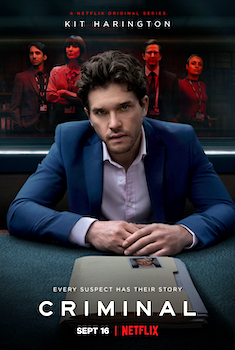 Remember when Netflix first launched Criminal and made a big deal of how it was one format filmed by four different countries? Does no one else remember that? Because I swear it was one of the key USPs, but it’s gone entirely unmentioned in the (surprisingly large amount of) press about the second season — which I presume suits Netflix just fine, because three of the countries have been quietly dropped, so only the UK version remains. (What’s the betting the UK one did better simply because its anglophone cast are more widely known around the world?)
Anyway, it remains a funny old drama — it wants to be grounded and focused (it all takes place in an interview room and the observation room next door), but rather than allow the minutiae of the actors’ skills to shine through (the other USP), it can’t help but indulge in jumping about with narrative bells and whistles. Most questionable is the second episode, in which Kit Harington gives a good performance, but the “falsely accused of rape” storyline feels like it’s failed to read the cultural moment. It’s got a 9.2 rating on IMDb, though, so I guess the men’s rights-type people found it.
Derren Brown: Miracle
 I’d found the last few Derren Brown live shows relatively underwhelming (not to mention his recent TV specials), which is perhaps why I missed this back whenever it first aired on Channel 4 (in 2016) and am only now catching up. Maybe it’s the distance of time, then, but I thought this was a really strong and entertaining set of tricks and set pieces. The only thing I’d like more is if he explained how the faith healing stuff worked. We know it’s a con, a trick, but it still has an effect. He acknowledges part of it (it’s all psychological, “the stories we tell ourselves”), but how does that fix a woman’s eyesight or render a man unable to read? I know magic tricks aren’t ‘meant’ to be explained, but when you’re exposing shysters’ cons, I feel like revealing the methodology is ok.
Netflix Comedy Specials
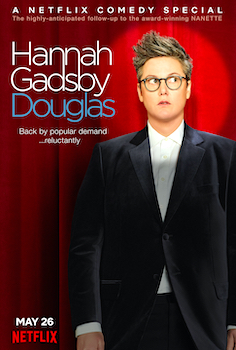 Recently, I’ve been unwinding with some of Netflix’s standup specials. The most noteworthy / widely discussed of those is certainly Hannah Gadsby’s Douglas, her followup show to the massively successful Nanette (which I commented on last month. “Followup” is the right word, because Gadsby begins the set by talking about Nanette’s success and her reaction to it. Then she begins the new show… without beginning the show. Instead, she does a long bit where she lays out the entire structure of the show to come before, almost 15 minutes in, “the show” actually starts. After Nanette was so praised for bending the form of what “standup comedy” could be, I guess she felt the need to do it some more. It’s fairly ingenious and works quite well. As for the material itself, it’s not as emotionally devastating as Nanette, but still appropriately pointed when needed.
Elsewise, I’ve been trying out some American comedians who I hadn’t even heard of before I saw their trailers on Netflix. Demetri Martin’s accurately titled Live (at the Time) indulges in a lot of quick, deadpan humour, including some nice meta jokes. That’s my kind of thing. Also my kind of thing: dark comedy. Apparently Anthony Jeselnik’s Fire in the Maternity Ward is the kind of comedy that some people find offensive, but I struggle to find any comedy “offensive” when it’s clearly being performed with self-awareness that it is wrong, and that’s why it’s funny (as opposed to someone saying something as “just a joke” when it’s their actual word view, i.e. what right wing ‘comics’ tend to do). So, yes, I’m aware some people find Jeselnik’s material beyond the pale, but he hit just the right note for me (i.e. I’ve seen darker, but they probably went too far). Finally (appropriately), Marc Maron’s End Times Fun accepts that the world is fucked and gets on with making gags about it. His bit about how the way hardcore Marvel fans behave is actually the same as religious fanatics is bang on, while his finale — an extended vulgar ‘prophecy’ for the end of days — is hilarious, and quite close to Jeselnik in terms of pushing at offensive-to-some boundaries.
The Twilight Zone ‘Best Of’
 This is my tenth and final selection of the best episodes of the original Twilight Zone, which gets me to the end of the top third of episodes on my consensus ranking (The New Exhibit is ranked 52nd, which is exactly 33.3% through). I think that’s as far as I can reasonably call the “best of”. If you think it sounds quite far through the list to still be calling these “the best”, bear this in mind: a lot of this month’s episodes are well placed in several rankings, but then one or two more negative nellies drag them down. (The Howling Man is the most extreme instance of this: it’s in the top 20 according to voters on Ranker, and placed in the top 30 by ScreenCrush, Paste, and IMDb users, but neither TV Guide nor Thrillist include it in their top 50, and BuzzFeed put it 149th.) My personal opinion of some of these episodes made me wonder if I’d pushed “best of” too far, but there have been episodes in previous “best of” selections that I liked even less, so I think it’s coincidence rather than that TZ has run out of good episodes before I even get halfway through. (And just because I didn’t like them doesn’t mean they’re not well regarded — one of my least favourites here, Stopover in a Quiet Town, has 8.3 on IMDb and is ranked 25th there.)
The first episode this month isn’t a disaster, but doesn’t quite coalesce either. Ring-a-Ding Girl has some very nice ideas, but they’ve not been arranged properly to make a wholly satisfying episode. For one thing, it leaves a whole town full of people aware of the strange thing that’s happened — that doesn’t feel very Twilight Zone, where these things normally only directly affect one or two people, and even they often can’t be sure it actually happened. That’s more a minor point of style than a fundamental flaw, mind. Still, I feel like someone could rewrite this and make it a lot better — heck, it could probably even sustain a feature, if done right. Bit of a shame, then.
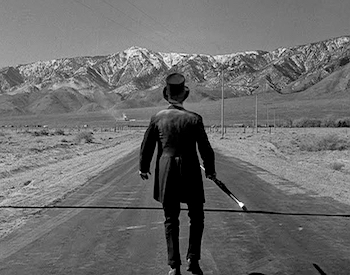 On the other hand, a common feature of The Twilight Zone is “man out of time” stories. The show did a lot of those, and A Hundred Yards Over the Rim is certainly one of them. In 1847, a pioneer at the head of a wagon train heads over a nearby rim to scout for water, and finds himself in 1961. There’s reasonable potential in that, but what follows offers no remarkable features or moral messages. If the pioneer was on the verge of giving up, and seeing that people like him did bring civilisation to those barren places motivated him to carry on, that would be effective. In fact, he’s pretty much the only one in his party who’s already certain they’re on the right path, so all his trip through time represents is a brief obstacle in his path. Similarly, he discovers evidence that his dying son will actually survive and achieve great things, but he didn’t seem to doubt his son’s chances before that, so what did he really gain? Apparently this is JJ Abrams’ favourite episode, which I feel explains a few things…
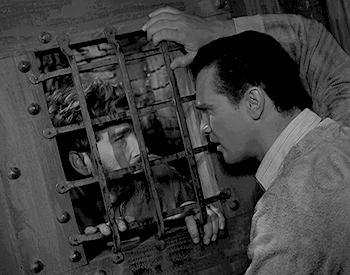
Much better is The Howling Man, a mostly unsettling episode with a “dark and stormy night” feel. that’s a cliche, but Douglas Heyes’ OTT Dutch-angle filled direction emphasises such an overblown atmosphere. It’s fun, if a little campy, especially in its final reveal. It’s the kind of episode that’s so particularly styled that whether you love it or loathe it is entirely down to personal taste, which probably explains those ranking discrepancies I mentioned at the start. As I also mentioned, Stopover in a Quiet Town is one of my least favourite episodes. It’s not that it’s bad per se, but it felt like little more than a remix of a handful of previous episodes; like a workmanlike pastiche rather than a true Twilight Zone instalment. The moral of the story — stated bluntly by Rod Serling in his closing narration — is “if you drink, don’t drive.” Thrillist reckon it’s “the best PSA about drunk driving of all time.” I just think it’s the weirdest.
A man and his dog are the subject of The Hunt, one of TZ’s occasional sweet episodes. When the pair die, you might not think this is going to be a nice one, but we soon follow them into the afterlife — not that they realise it. Yep, as is so often the case with these kinds of TZ episodes, we understand the situation immediately while it takes the characters most of the episode to cotton on. It’s only in the second half that it gets to the real point: arriving at the gates of Heaven, St Peter informs the man that his dog can’t come in. What kind of Heaven would it be without dogs?! Well, this is The Twilight Zone, so… It’s a twee little tale, really. I liked the “dogs are great” side, but was less keen on the sensation it gives of being a Sunday school lesson.
 One for the Angels is another feel-good episode, in which a two-bit street salesman manages to outwit Death… twice! Once for himself, once for a little girl who lives in his block. Ed Wynn embodies the friend-to-children type persona most familiar from his later appearance in Mary Poppins, while Murray Hamilton (also best known for a later film role: the mayor from Jaws) makes for a charmingly besuited Mr Death. That the salesman manages to pitch cheap crap to Death himself for a full quarter of an hour stretches belief. Well, I say “belief” like Mr Death is real, but, even with the rules of fantasy, what does Death need with all that crap? Ah, but it’s all for a good cause, so maybe we can let it slide in the name of feeling happy.
We end on an even rarer beast: a season 4 episode! Out of 71 episodes of The Twilight Zone I’ve watched so far, this is only the 5th from that season — and three of those were in my “worst of” posts. Basically, if you didn’t already know, people don’t like season 4. As one of its better instalments, The New Exhibit is proper horror movie stuff. Indeed, I could see this as the setup for a standalone feature film; which is quite different to season 4’s usual problem, that the double-length episodes led to plots being padded to fill the running time. That said, this isn’t the best execution of the concept. Where it’s going feels inevitable from early on, so it still feels a little long-winded — you could definitely rattle through this tale in 25 minutes. Indeed, as Paste puts it, it “could work as either a very short story, or be expanded into a horror feature. As a 50-minute episode, it takes a long time to get going, then ends abruptly just when it was beginning to get interesting.” Ironically, a feature version would probably get going quicker, then spend more time on the later good stuff — and this episode would’ve benefitted from the same. All of which said, I still found it effectively creepy. Some people say it’s not scary at all, but I guess that depends on whether you find wax figures inherently unsettling or not.
And that concludes what I’m calling “the best of The Twilight Zone“. I’m going to keep working me way through the series and writing about it, though. Hopefully I’ll unearth a few underrated gems among the episodes that fall in the middle of the rankings.
Things to Catch Up On
 This month, I have mostly been missing The Haunting of Bly Manor, the followup to The Haunting of Hill House, which I also never got round to watching. This is the perfect month for that kind of thing, obviously, so I ought to make the effort. Not sure I will, mind. Same goes for Lovecraft Country, which I heard a lot of good things about, and then heard less good things about, and now I’m just not sure. I mean, there’s so much TV to watch nowadays, you gotta be careful not to waste that precious viewing time. And I’m sure there’s been a bunch of other stuff, but God, never mind watching it, I can’t even keep up with remembering it all.
Next month… The Mandalorian is back. (Not watched season one of that yet, either.)
 The
The  When I
  After being less ambivalent about Archer’s fifth season experiment, Archer Vice, I was delighted to see it return to its original espionage trappings for
  This particular batch of Creek episodes begins with Christmas special Black Canary, which aired between series 2 and 3. It’s one of the series’ very best episodes (indeed, it’s the top-rated on IMDb), a great mystery with an atmospheric snowbound Christmastime setting. Unfortunately, things then go off the boil a bit in series 3. Every single episode is written by David Renwick, and you wonder if he was beginning to run out of fresh, clever ideas. Nonetheless, there are some highlights here: a missing alien corpse; a mystery where a missing apostrophe may be a vital clue; and creepy one where a man apparently crawled up some steps after being shot in the head.
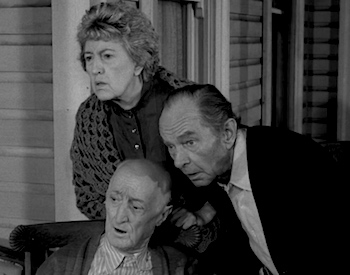 This month’s penultimate selection of the original Twilight Zone‘s best episodes begins with one that was remade by Steven Spielberg for
 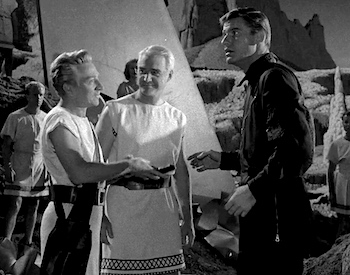 Conversely, there’s a typical Twilight Zone parable to be found in People Are Alike All Over. Unfortunately, it’s one of those episodes that only comes into its own at the final reveal — the journey there seems padded out to fill the requisite amount of screen time. Some of the pulp-SF stuff seems a bit dated now (the idea that Mars might be inhabited by an entire race of human-like beings is, obviously, daft), but it’s all in aid of an accurately cynical critique of mankind and our attitude to new discoveries.
 Finally, Jack Klugman makes his fourth and final TZ appearance as the lead of In Praise of Pip. He plays a bookkeeper and failed father, now worried about his grown son who’s been injured in Vietnam (this is before the full-on Vietnam war, by-the-by — it’s speculated that this might be the first time the country was mentioned in a US drama). What plays out is the story of a man realising he’s wasted his chance to enjoy his kid’s childhood. It’s a good theme, and one fit to be given a fantastical Twilight Zone spin (it makes a change for a TZ episode to be about a man revisiting someone else’s childhood), but I wasn’t convinced by how it played out. In part, he makes a deal with God that thousands, millions, of other parents have tried to make, without success, because they don’t live in the Twilight Zone. I’m not sure how this would play with them… That aside,
  This month, I have mostly been missing the second season of The Umbrella Academy, which I’ve heard fantastic things about. I never got round to watching season one (although I meant to), so I really should catch up. And talking of “second seasons of superhero shows I never got round to the first season of”, Amazon just started The Boys season two. I want to catch up on that, too.
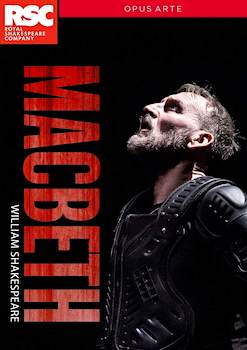 This Royal Shakespeare Company production from 2018, starring Christopher Eccleston and Niamh Cusack, has apparently been
  Having really enjoyed Sloss’s two Netflix specials
  After three seasons on network TV (or Amazon Prime Video here in the UK), Lucifer fell prey to
  I used to love Jonathan Creek back in the day. It was a huge hit, too, gaining high viewing figures and a BAFTA award. On the surface it doesn’t look so special: two mismatched individuals solve murders. But it’s the execution that’s different: these are all “locked room” mysteries, and rather than interview a small array of suspects to guess who did it, they must work out how the murder was even physically possible. Creek is a magician’s trick designer, and the stories kind of work like magic tricks: something seemingly impossible that has a hidden rational explanation. Personally, that’s right up my street, and while some elements of the show are obviously dated (the hairstyles; the cars; the pace is leisurely by modern standards), I think it holds up pretty well.
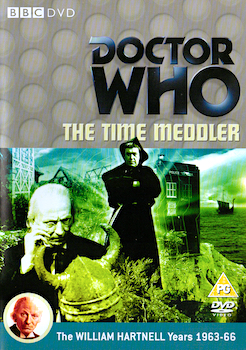 Last month, Doctor Who Magazine ran a Twitter ‘world cup’ to find the most popular stories starring the First Doctor. Many of the usual suspects did well, but I was surprised to see The Time Meddler wind up
  This third selection of episodes deemed the series’ worst (according to
 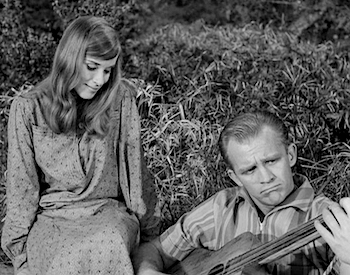 The next episode in our rundown is also based around a song: Come Wander with Me, in which a wandering singer attempts to buy a folksong from a young woman, only to find he might be living the lyrics… maybe. It’s a bit unclear what’s really happening, or why. It’s got some nice ideas, with mysterious characters, the haunting song, and some atmospheric direction by Richard Donner, but it comes to no kind of conclusion. How has this happened before? Has it happened before? Why is it happening again now? The episode barely even begins to ask those questions, never mind answer them; and not in a Lynchian “it’s up to your interpretation” way, which would be fine, but it doesn’t even seem to be aware those questions exist. Frustrating.
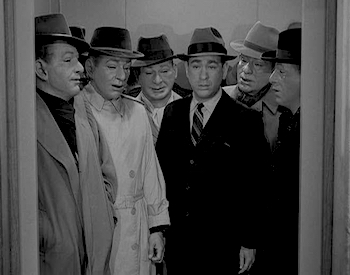 The ‘hero’ of The Mind and the Matter hates people. They bump into him on the subway; they squish against him in the elevator; they accidentally pour coffee over him at work. If he had his way, all the people would just disappear. After he reads a book about the power of the mind, he instantly gains the power to make his thoughts real (no practice required, apparently), and so immediately does away with everyone else. Hurrah! But after a morning’s work in peace and quiet, he’s bored, with no idea what to do. So the first thing he imagines to enliven his world is… an earthquake. Um, what? Unsatisfied with imagining different weather phenomena, and apparently unable to conceive of anything else whatsoever to occupy his interest, he decides to fill the world with people just like him. That results in a world full of grumblers and moaners, which he finds even more distasteful than how it was before — so he just puts it all back. It’s almost a lesson in what happens if you give unlimited power to unimaginative people… except that’s not the point the episode actually wants to make, so it doesn’t really make it. Instead it’s going for “this world isn’t perfect, but it’s better than the alternative and there’s a lot to like”. But it doesn’t make us feel that, it just tells us it. Heck, even the character doesn’t feel it — he’s just as miserable at the end as he was at the start. The whole affair is sort of an infinitely stupider rehash of the classic
  The 13th iteration of Red Dwarf eschews the normal episodic format for a single 90-minute special, in turn ditching the expected Red Dwarf XIII moniker for a subtitle. Well, the show has form in this: for its 21st anniversary revival we got Red Dwarf: Back to Earth instead of Red Dwarf IX, which wasn’t a whole series but instead a 90-minute single story (in that case split into three half-hours, but still).
 Mark Kermode’s insightful deconstruction of cinematic genres returns for a full second series (following a few occasional specials last year). I say “full” — three episodes. Whereas
  For
For 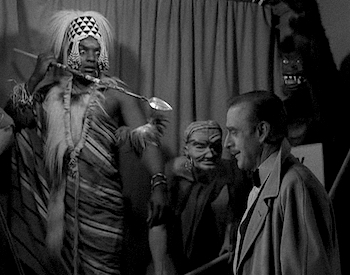 The worst episode according to Buzzfeed is The Jungle, which comes 148th overall. It’s about an American engineer who’s just returned from a trip to Africa where his company is planning to build a hydroelectric dam, and he may’ve been cursed by natives opposed to the project. As you’ve probably guessed, the episode’s biggest problem is some old-fashioned kinda-racist stereotypes about Africa and its people. I mean, the episode doesn’t even bother to say which country he’s been to, it’s just “Africa”. It’s not overtly racist, I don’t think, but it’s certainly tone deaf. There’s a scene where our hero discusses the project with the board of directors that juxtaposes the idea of witchcraft, which they all laugh at, with the irrational superstitions they all practice (not walking under ladders, etc), which is kinda neat, basically saying that “you laugh at their beliefs because you think of them as simple folk, but it’s no worse than our superstitions,” which is truthful and borderline enlightened. But that’s about all the episode has going for it. By the time he’s travelling home through the implausibly empty nighttime streets of New York City and being haunted by jungle sounds, it all seems pretty silly; and then his cab driver just drops dead, and a tramp appears and disappears out of thin air, and you wonder what all that’s got to do with anything. The only moral the episode can offer is “maybe some superstitions are right”, which is poppycock.
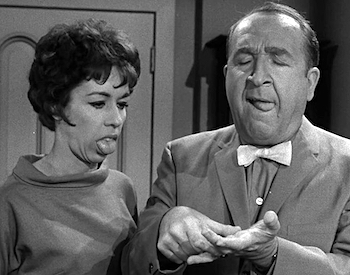
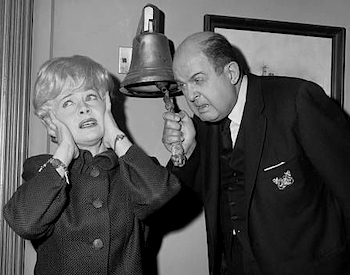 Finally, we end as we began, with an episode voted on by the public: at the bottom of Ranker’s list, and last on average too, is Sounds and Silences. It’s about an excessively-loud, domineering blowhard who gets some measure of comeuppance when he begins to be bothered by everyday sounds like a dripping tap or ticking clock. And then it goes the other way and he can’t hear loud noises at all. It’s poorly written and terribly performed — in the lead role, John McGiver is overacting something rotten. Some criticise the undercurrent of misogyny in the storyline, but I don’t know about that. He blames his mother and his wife for all his problems, but he’s an unlikeable sod so surely any misogyny is his rather than the episode’s — we’re not being asked to agree with him. The character’s ironic fate may be some form of poetic justice, but it’s too long coming to be entertaining, and too obvious to be satisfying. Whether I disliked this or Cavender is Coming more, I’m not sure, but they both merit their places at the bottom.
 This month, I have mostly been missing Westworld season 3, which is now four or five episodes in. I’ve not seen anyone talking about it on social media, so I’ve no idea if it’s good or bad, but I am inferring that not as many people are talking about it anymore, which is its own kind of criticism. One show I have heard mentioned is Tales from the Loop, Amazon’s new anthology sci-fi series. That’s been picking up good notices, and I thought it looked interesting anyhow, so I must make time for it.
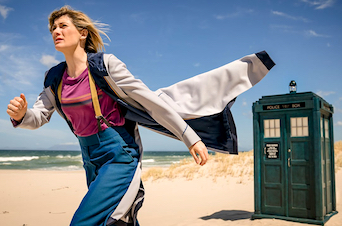 Most of the Doctor Who chatter of late revolves around what happened in the finale — no surprise there, given major revelations were teased in
 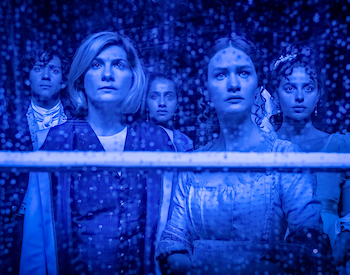 All of which means that the series’ penultimate story, The Haunting of Villa Diodati, was on a whole ‘nother level. For me, this might be the first genuine classic of this era. (If you’ve not seen it, spoilers ahead.) The first half is like a proper horror movie, complete with jump scares and other creepy effects (the dead-eyed little girl behind the door, but only when the lightning flashes… brr!) Naturally there’s a sci-fi explanation for it all, but even that was thrilling and chilling in its own way. It was the best use of the Cybermen since… er,
 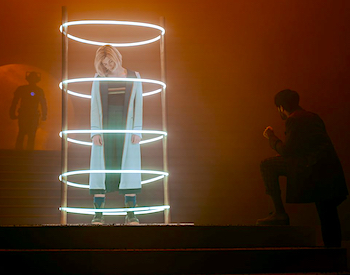 So the real point of it all comes in The Timeless Children, where the Master finds some new sources to rewrite the Doctor’s Wikipedia entry, then reads that revised version to her. I’m only half joking. Chibnall has managed to rewrite Doctor Who mythology in a way that both angers fans with its radical changes, and fundamentally makes no difference whatsoever. The Doctor used to be a mysterious alien from another planet who travelled the universe helping people. Now, she’s a mystery alien from another dimension who travels the universe helping people. Instead of being “just another Time Lord” who rejected the rules of their society and ran away to interfere, the Doctor is now a Special / Chosen One — the originator of the Time Lords’ ability to regenerate; her DNA copied and pasted into every other Time Lord… and then her memory wiped, so she grew up as just another Time Lord who rejected the rules of their society and ran away to interfere… but, y’know, was secretly special. I feel I should hate it, but, honestly, it was so guessable and so fundamentally immaterial that I just can’t muster the energy to care enough to hate it. It may yet go the way of “half-human” anyway, i.e. we’ll all just ignore and/or rewrite it as soon as someone other than Chibnall gets in charge.
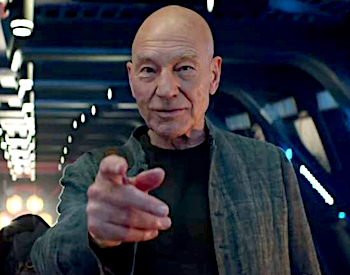 I’m a good few episodes behind on Picard now (episode 7 arrived this week), which is not because I’ve given up on it, but because it hasn’t engaged me quite enough to especially make time for it. It seems to have garnered quite the mixed reaction: the critics’ scores on Rotten Tomatoes are very strong; the user ratings on IMDb aren’t bad at all; but every time I see someone write about the show, on Twitter or another blog or what have you, it seems to be in criticism. I fall in between all these stools. There are things the show is doing well, or at least passably, but other bits that are awful; that feel like the worst of cheap made-for-syndication ’90s sci-fi, rather than the peak TV ‘prestige series’ it clearly wants to be.
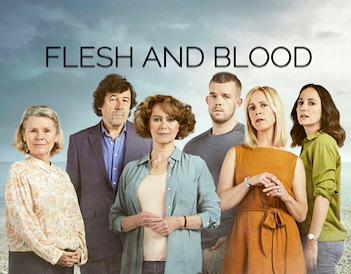 Between its short length (four parts), quality cast (Imelda Staunton, Stephen Rea, Russell Tovey), and condensed broadcast schedule (it was on four consecutive nights), this looked like a miniseries… until a last-second cliffhanger (plus some dangling plot threads) suggested there’ll be more to come. I watched it on that back of that cast and some strong reviews, which it only somewhat merited. It’s a decent family drama, about a 60-something widow getting into a relationship with a man her three grown-up children think might be conning her, with the added spice of a friendly/nosey next-door neighbour who might be a proper weirdo herself; but decent is about the extent of it — the cast elevate the material, which is fine but didn’t excite me otherwise. I expect I’ll keep watching if it comes back.
 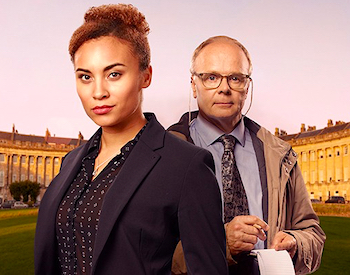 Normally I’d give a new ITV crime drama a miss, but this one is set and filmed in Bath (they got in my way one day by filming in the park I wanted to sit in for lunch, the bastards), so I had to see. It was… adequate. It’s about a hot-shot London detective who relocates to Bath, and lines like “that may be how things are done in London, but you’re in Bath now” were repeated to the point of absurdity. And don’t get me started on the accents (one local review derided the programme for thinking we all speak like Hobbits). Yet, inexplicably,
 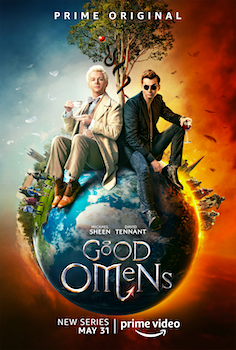 This six-part adaptation of the beloved fantasy novel by Terry Pratchett and Neil Gaiman debuted on Amazon last May, and by rights I should’ve been all over it from day one — I read the book as a kid, and loved it enough that I used to cite it as my favourite novel (the only thing that changed that was the fact it’s been decades since I last read it). But, as regular readers will know, life has got in the way of my viewing choices over the past year or so, and it was in fact that level of attachment that stopped me watching it — it needed my full attention. Obviously, that time has come.
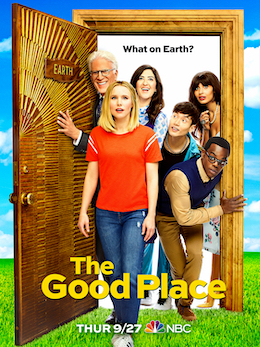 “Holy fork,” I said to myself when I saw that the series finale of this had aired at the end of January — I’d forgotten how much time had passed since I last watched it. If you’ve still not seen any of the show yourself, look away now — it’s the kind of series you want to experience knowing as little as possible, and if you read about later seasons before you’ve seen earlier ones it’s just gonna ruin stuff. (I know that sounds self-evident, but it applies to some shows more than others, and this is very much one it applies to.)
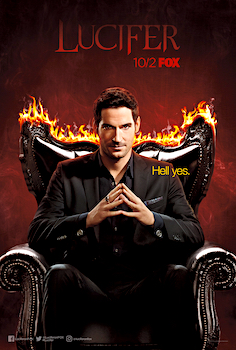 So, I’ve finally caught up on the Fox years of Lucifer — it was here that its original network cancelled the show (Netflix picked it up for a fourth season, recommissioned it for a fifth and supposedly final season, added more episodes to that fifth season, and now are reportedly lining up a sixth season too). I can see why fans were particularly enraged — the season ends on a massive change of circumstance that would’ve been a terrible place to leave it forever. Indeed, the most intriguing thing here is where it will go next, especially given the network change: Lucifer is an old-fashioned network procedural, as much concerned with case-of-the-week crime stories as it is with arc plots and the supernatural goings-on of its angels-and-demons universe; and that was to be expected when it was on an old-fashioned network, but now that it’s on Netflix, the home of bingeing, will it shift its emphasis?
 Jordan Peele’s new version of The Twilight Zone belatedly made it to UK screens a week or two back, almost 11 months after its US airing. I still haven’t watched any of it, but I am still going with cherrypicking the best of the original series.
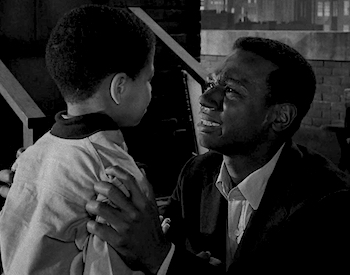 Moving on to
  On a lighter note, in 9th place at TV Guide is Twenty Two. I say “lighter” — the subject matter isn’t as heavy, but this is a creepy episode. It’s about a woman in hospital who has a recurring nightmare about visiting the morgue, but she’s convinced it’s not a nightmare, it’s happening. It’s the enactment of her nightmare that is genuinely creepy (just imagining having to ‘live’ it gives me chills), and the idea of not being sure what’s dreams and what’s reality is a very Twilight Zone concept. Unfortunately, some of the specifics are weak. Whether it’s a nightmare or not would be easy to disprove, considering it includes details like her breaking a glass every night, or that the morgue is room number 22 — if it is, how does she know that? (Her doctor does eventually realise this… after days of hearing about it.) And as there’s nothing else wrong with her, why not discharge her — the nightmare is so location-specific that it couldn’t happen at home. Eventually there’s a twist, and it’s a good’un, pushing the concept somewhere logical (within the bounds of paranormal ‘logic’, anyhow) and retaining the creepiness. (There’s also a question about whether it inspired a much later film series, with which it shares many notable similarities, but to say more would be a whopping spoiler.)
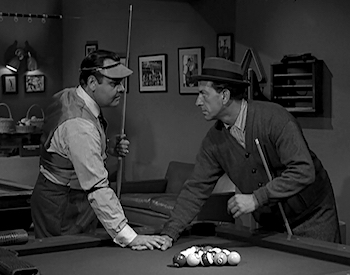 Finally for now, the one outstanding top-ten-er from
 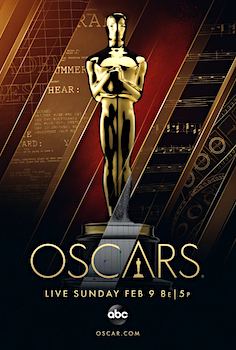 On Twitter in the run-up to the ceremony itself, there was a general acceptance that (a) Parasite was the best picture of the year, and (b) Parasite was not going to win Best Picture. As far as I could see, there was a sort of genial acceptance of these facts, which made a nice change from Film Twitter’s usual condemnation of everything. But then, blow us all down, Parasite did actually win! It’s noteworthy for all sorts of reasons — primarily because it’s the first ever non-English-language film to win Best Picture at the Oscars. It was also only the third time that the Palme d’Or and Oscar have gone to the same film. And director Bong Joon Ho became only the second individual to win four awards at one ceremony (after Walt Disney, and he did it across four different films). As for the rest of the ceremony, most of the other gongs went where expected, leaving 1917 the major victim of Parasite’s surprise success. But it still took home three well-deserved technical trophies, whereas Netflix’s The Irishman (which had the same number of nominations, ten) was shut out entirely.
 This month, I have mostly been missing Noughts + Crosses, the BBC’s high-profile adaptation of Malorie Blackman’s beloved alternate-world young adult novels. It seemed to go down very well on Twitter when the first episode aired, and the whole series is already available on iPlayer, so I’ve no excuse not to make time for it next month (other than all those Picards I have to catch up…)
 100Films.co.uk