
Peter Jackson | 164 mins | Blu-ray | 2.40:1 | USA & New Zealand / English | 15 / R
“I just started shooting the movie with most of it not prepped at all. You’re going on to a set and you’re winging it. You’ve got these massively complicated scenes, no storyboards, and you’re making it up there and then on the spot […] I went to our producers and the studio and said […] ‘I don’t know what the hell I’m doing now.’”
 So says Peter Jackson in the special features accompanying this extended cut of his trilogy-closing saga-ending sixth Middle-earth movie, as widely reported on the set’s release back in November. Similar comments are echoed repeatedly throughout the special features, like how on Lord of the Rings they had racks and racks of metal orc helmets finished a whole year before they were needed for filming, whereas on The Hobbit they were delivering such props to set on the morning they were required for the shoot.
Another revelation: by making the late-in-the-day decision to split the intended two Hobbit movies into three, Jackson gained a whole year to prep and shoot the gigantic (sub)titular battle scene that forms the climax to his telling of Tolkien’s story. Various reasons have been suggested for Jackson and/or the producers’ trilogy-making decision, from genuine artistic intent, to poorly managed storytelling, to pure greed. In the wake of those special features, this new one — that everyone was making it up as they went along, too deep in to see the bigger picture, and desperate for a way to gain some time to get a handle on what they were doing — seems the most plausible of them all.
In the end, The Hobbit films are what they are. What, if anything, does extending the last one by 19½ minutes bring to the table? Well, as with The Desolation of Smaug, the third film counterintuitively doesn’t feel as overlong (note: as overlong) in the extended cut as it did in the theatrical, but I’d attribute that more to the re-watch factor than the extra scenes and moments making it magically quicker. The new material isn’t scattered about as freely as it is in the Lord of the Rings extensions, but instead is largely confined to three or four wholly-new scenes and some short additions throughout the battle, plus largely-immaterial alterations to the effects in existing footage. Anyone interested in a six-page account of every little change can find those details here.
 Most obvious, and most discussed, is the dwarves’ war chariot action scene, whose bloody decapitations saw the film earn an R in the US and 15 over here. A seven-minute action sequence in the middle of the battle, it’s by far the largest single addition, and is mainly notable for all that blood and its use of the word “jambags”. Somewhat ironically, the sequence was a last-minute addition (the physical chariot was the last thing built for the films), which even as they’re shooting it Jackson acknowledges is an indulgence, and then of course it got bumped to the extended edition for being just that.
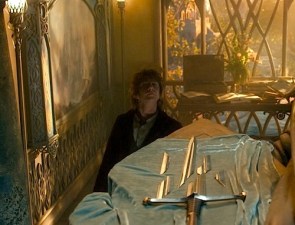
Elsewhere: the brief funeral scene at the end is good; more Billy Connolly is more Billy Connolly; an extended fight at Dol Guldur proves you didn’t need the Smaug confrontation to provide some up-front adrenaline; some extra comedy is uncomfortably, inappropriately silly; I don’t think there’s more of Ryan Gage’s over-featured Alfrid, thank goodness, other than that he’s treated to a death scene — hurrah! Fans who had hoped for more of Beorn fighting in the final battle get their wish… for all of ten seconds (literally). No wonder they weren’t best pleased.
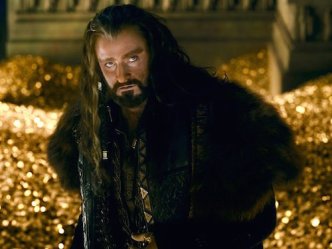
In the comments on my review of the extended second film, I assessed that film’s new scenes between Gandalf and Thorin’s mentally-fractured father Thrain should pay off in the third film when Gandalf re-encountered a gold-mad Thorin. And… they don’t. At all. 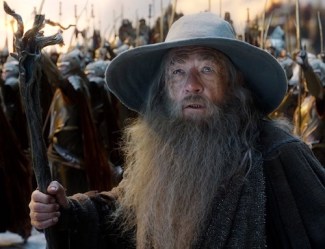 Not a sausage, unless I missed something. It didn’t bother me too much because, quite frankly, I can’t quite remember what it was all about; but when I inevitably watch the extended trilogy back to back one day, it may do then. That said, I can’t imagine it’s a major fault, but again highlights the built-on-the-fly, ill-thought-through state of expanding The Hobbit 2 into The Hobbit 2 and 3.
That The Battle of the Five Armies feels less overlong on a second viewing demonstrates how draggy films come about in the first place: sat in an edit suite for weeks or months, watching a film over and over (and over) again, the material must become so familiar that you lose any sense of perspective about its length or pace. Nonetheless, I still feel The Hobbit would’ve been best served in two films, or by allowing Parts 2 and 3 to run considerably shorter than your usual Middle-earth excursion. Fans have already cut together book-faithful edits of the entire trilogy, which I believe run something like four hours. Maybe that would’ve been best of all.

In case you missed it, my review of the theatrical cut can be read here.
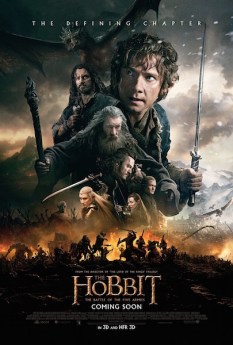 Peter Jackson’s epic Tolkien adaptation blunders its way to a conclusion with an instalment some have declared the trilogy’s best, presumably because they really enjoy watching someone else play video games. That’s what about half of this sextet-completing movie feels like, as it concludes the three-part Hobbit narrative with a CGI-riddled rendering of the titular battle. It’s the shortest film in Jackson’s Middle-earth magnum opus, though it comes to something when a film the best part of two-and-a-half hours long is described as “short”.
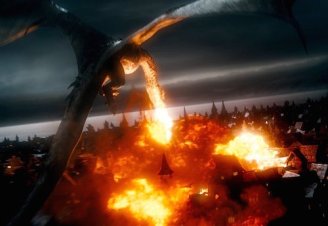 or he could have ended the second film with Smaug defeated and added more material to this third film to reach his desired running time. Or not even bothered adding stuff: if you lost the Smaug opener, The Battle of the Five Armies would still be over two hours long, which anywhere but Middle-earth is considered a decent length for a movie.
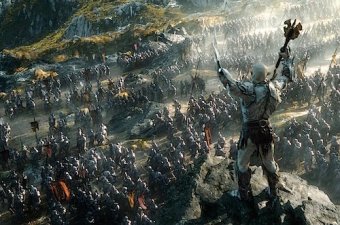 On the ground, the meat of the conflict only occurs when individual heroes are parcelled off into one-on-one duels. None of these particularly stand out, however, other than Legolas athletically jumping around a collapsing bridge that’s all so much CGI. This is where my earlier video game comparison really comes into play.
 all of whom I’d thought would have more to do in the second and third parts of the trilogy. Turner, in particular, should have expected a bigger boost from Jackson’s decision to enrol him in an interracial romantic triangle, but it feels like they pulled back from that story thread a little after it proved unpopular in the previous film. It’s still obviously there, I just expected more of it.
 I was something of a defender of Jackson’s version of The Hobbit at first. I enjoyed An Unexpected Journey and stand by
  At the start of their audio commentary on The Desolation of Smaug, co-screenwriters Peter Jackson and Philippa Boyens note that, when the decision was made to extend the already-shot Hobbit duology to a trilogy, it wasn’t a third movie that need to be created but a second. That is to say, it was the middle instalment that required the most extra material, including a new prologue and climax. The
 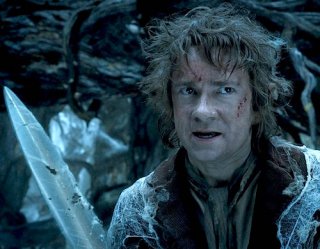 The extended cut amps him up even more, with an extra part in Mirkwood and a moment where he stands up for Thorin in Laketown. In fairness, he doesn’t have as much character development in this film as the first, while Thorin is on a definite arc and Gandalf is off on his own side-plot, but he’s undoubtedly a key character. I really don’t understand that complaint.
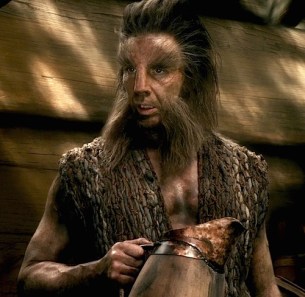 Even if some of the additions are worthless, on balance this is a better version of the film: more Beorn, more of the atmospheric Mirkwood, an additional character whose appearance will hopefully pay off in the extended
  The Desolation of Smowg-not-Smorg begins in the same way
  It’s my understanding that the originally-planned (and shot) two-part version of Jackson’s Hobbit adaptation was transformed into a trilogy by, essentially, taking what was to be film #2 and splitting it in half. That might explain why individual sections are allowed to go on so long here: to bulk up the running time to the kind of epic proportions audiences expect from a Middle-earth movie. Anything less than two-and-a-half hours isn’t going to cut it. But when your climax is a battle between a giant dragon (cool!) and a small army of dwarves (kick ass!) around a deserted underground city (hell yeah!), but my main thought afterwards is, “God that went on a bit”, then you’ve failed at something.
 Meanwhile, Luke Evans’ Bard is as Welsh as the actor’s name suggests, which is a little bit of a surprise. But then the dwarves’ accents have all the rest of the UK covered, so why not. Benedict Cumberbatch sounds like Benedict Cumberbatch playing ‘big’ as Smowg-not-Smorg. It feels like this should be an iconic villain performance but, while good, I found it somehow lacking. Expectation may be scuppering him; maybe I’ll warm to it on future viewings.
 I haven’t picked apart everything that’s wrong with the film (what purpose is there switching from one made-up-for-the-film orc general to another?!), but then nor have I praised everything that works (there are some quality actors in amongst all that crashing and banging). It seems a fair few people liked this Hobbit instalment more than the first; the best explanation I can find is, “because it’s got more action”. Far be it from me to accuse other film viewers of being shallow, but… really? I genuinely enjoyed An Unexpected Journey as a return to the beloved realms and peoples of Middle-earth. The Desolation of Smowg-not-Smaug has some of that, and the charm of introducing us to new parts of the world too, but it’s drowned out by so much aimless noise. Here’s hoping it improves with repeat viewings and/or the inevitable extended edition, because this time I nearly slipped down to a lowly 3 stars.
 Few would deny that Peter Jackson’s extended versions of
  There’s not as much extra time with the dwarves as I expected, though, with most of the character time still going to Bilbo.
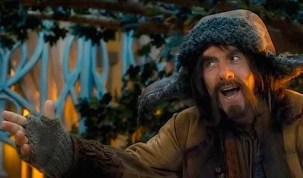 having to work alone on a green screen for many of his scenes with the smaller characters), but newcomers Martin Freeman, Richard Armitage and James Nesbitt shine too. This is Freeman’s film to be the centre of attention, but Armitage and Nesbitt will have much more to do in the follow-ups, and the groundwork is nicely laid here.
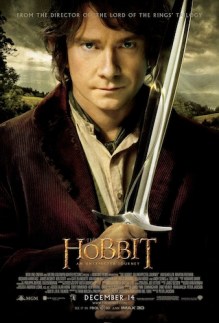 So here we are: nine years after his last tour of duty in Middle-earth, and after a Guillermo del Toro-shaped attempt at not having to serve again, Peter Jackson returns to the world of hobbits, dwarves, elves, orcs, and the rest, to tell the tale some have been clamouring for him to make since
 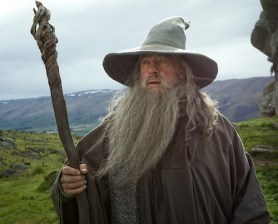 And, I have to say, as someone who hasn’t read the novel since primary school, I couldn’t spot the joins. I could take some guesses, but not many, and considering how long the film is I’m sure there must be quite a lot added.
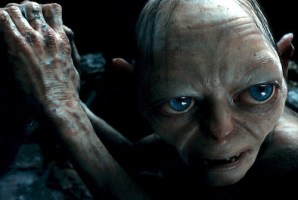 but I could have, and knowing you can do something makes all the difference. There’s also the little timer on the Blu-ray player, which means I can know that it took forty minutes to get out of Bag End rather than just thinking it feels like it. Does that somehow make it more palatable? Would I have been as bothered as others by the film’s length and pacing had I seen it in a cinema initially? It’s tough — nay, impossible — to say, because while there are those other subliminal factors, I also felt like I flat out enjoyed the film for itself, not just for my potential ability to escape it. But it is long and it is episodic, so maybe the association of watching individualistic episodes of TV back to back feeds into the acceptance of that? It’s a circular argument, so we’ll leave it there.
 Howard Shore returns to deliver another fantastic score. After he composed the iconic Fellowship theme for, um, Fellowship, I thought he could never muster anything else as monumental. And, in fairness, that theme is still the defining aspect of the series’ score (its absence here is at times felt, by me at least); but he produced another excellent motif for
 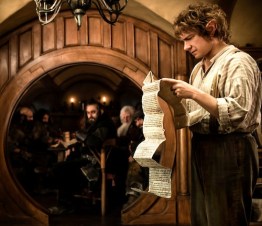 Without the breadth and world-changing story of The Lord of the Rings, The Hobbit was always going to be a somewhat smaller experience. By emphasising the backstory of the dwarves’ stolen homeland and the hints of war-to-come that will ultimately lead in to Rings’ story, Jackson has made it considerably more epic — for good or ill. For me, the whole experience clicked. I don’t think it’s as good as Lord of the Rings, but it is the next best thing.
 Made by the people behind the large
 100Films.co.uk