
Steven Soderbergh | 89 mins | streaming (HD) | 16:9 | USA / English | 18 / R
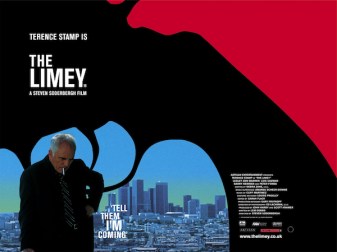 There’s an argument to be made that, from a cinematic perspective, mainstream US cinema these days is boring. Look at the kind of films American auteurs were producing in and around the studio system in the ’90s and early ’00s: Pulp Fiction, Fight Club, Memento, Requiem for a Dream; films that experimented with how they told their stories, the shots they used, how they were edited. Does anyone do that now? Or does anyone do it successfully?
Personally, I’ll be adding Steven Soderbergh’s The Limey to that list. At its most basic it’s a straightforward thriller, in which a British crook played by Terence Stamp is released from prison and travels to L.A. to find out the truth behind the death of his daughter (played in flashbacks by Melissa George, which is kinda weird because she has little to do and no dialogue), and probably take revenge on those responsible. By all accounts, the screenplay by Lem Dobbs was indeed that run-of-the-mill. In the hands of Soderbergh, however, it becomes an arthouse-ish experience, mainly thanks to the editing.
It’s the kind of cutting that’s hard to accurately describe on the page without overdoing it. The movie jumps back and forth in time — not from scene to scene, but from shot to shot. For instance, Stamp’s arrival at the home of his daughter’s friend, and the conversation that follows, is jumbled up with shots of him on the plane, driving in the city, the people his daughter was associating with, and even within the conversation itself, sometimes speech continues on the soundtrack while we watch the characters not talking, or doing something else.  This isn’t a conceit Soderbergh uses for one scene, or wheels out now and then, but an overall approach. Some sequences are more thick with it than others, but it’s always right around the corner. It creates a unique sensation. Not disconcerting, exactly, but mysterious and querying. It has you constantly question what you’re watching — is it a memory? A plan? A fantasy? A delusion? It draws connections back and forth across the timeline of the story, bringing out thematic angles. At its most key, it helps explain what happens at the end (too bluntly for some reviewers, I should add). This collage-like style — which unlike, say, Memento’s back-to-front narrative has no obvious in-story point — will certainly not be to everyone’s taste, but it presents an interesting challenge to our usual ideas of how a film should be constructed.
This led to a somewhat infamous commentary track on the film’s DVD release. The A.V. Club even included it in their New Cult Canon series — not The Limey, that is, but The Limey’s commentary track. In it, Soderbergh and Dobbs discuss the filmmaking process, understandably focusing on how screenplays get transformed, and how screenwriters get screwed over. The Limey that ended up on screen is very different to Dobbs’ screenplay, having been aggressively filtered by Soderbergh. This isn’t hard to believe — the film on screen is a very film-y film; how would you go about conveying the crazy editing style on the page, even if you wanted to? By the sounds of things the whole track is basically a friendly argument, and makes me wish someone somewhere would get round to releasing this on Blu-ray so I could hear it (the film looks great in HD, so I don’t much fancy settling for a DVD, thanks).
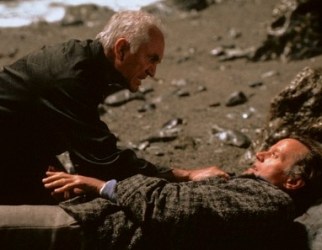 Despite the visual trickery, The Limey still works pretty well as a straightforward thriller. You have to be prepared to accept the slippery editing, because there’s no avoiding it, but the throughline of Stamp tracking down bad men and how he deals with them is still here. Personally, I’ve never much rated Stamp as an actor, but somehow he fits here. He’s a fish out of water, a man out of place — way out of place — and possibly out of time, too, seeming like a ’60s or ’70s British gangster transported to turn-of-the-millennium L.A. It’s no discredit to the supporting cast that they mainly exist to bob around in his wake.
At a guess, I’d say some would criticise The Limey for being a basic revenge thriller with a veneer of artistry applied in the form of its editing, while others would be turned away from its basic revenge thrills thanks to that editorial veneer. I’m always up for mashing together arthouse and mainstream, though, and here Soderbergh does just that, and in a way I found consistently thought-provoking, too. It’s discoveries like this that are the reward for digging into less-heralded corners of interesting filmmakers’ back catalogues.

This review is part of 1999 Week.
The Limey placed 7th on my list of The 20 Best Films I Saw For the First Time in 2016, which can be read in full here.
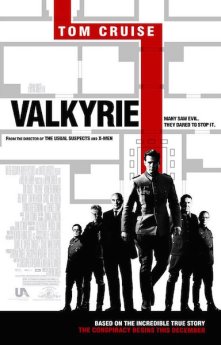 After abandoning the X-Men franchise for a
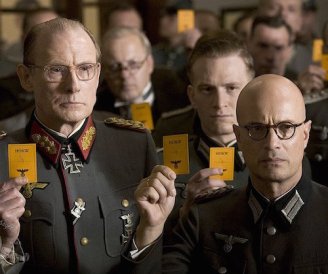
 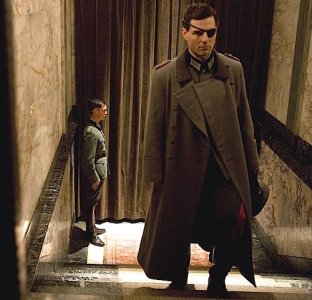 One of the stated aims of the conspiracy is to show the rest of the world that not everyone in Germany believed in what Hitler and his inner circle were doing. It may have taken us a long time to realise that, for fairly understandable reasons, but quality films like this help get the message out. Singer has crafted a proper thriller here, replete with scenes of edge-of-your-seat tension. Many a filmmaker can’t manage that with a fictional storyline, never mind one where we know exactly how it turns out.
 but nor is he in simplistic action hero mode.
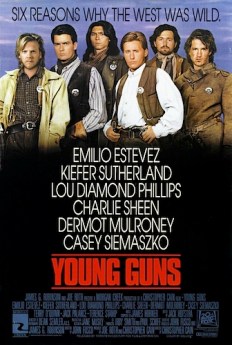 Way back in March, the ever-excellent Colin at
 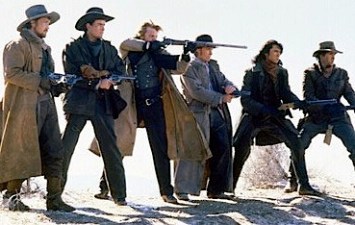 Though if someone was planning to use Young Guns to research the real-life facts of these events, more fool them in the first place. Wikipedia says (without citation) that “historian Dr. Paul Hutton has called Young Guns the most historically accurate of all prior Billy the Kid films”. We’ll leave it at that for now.
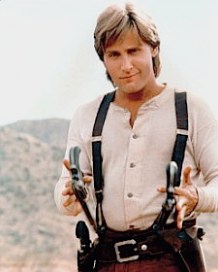 And that’s without mentioning the overuse of dated slow-motion that descends upon its eventual climax.
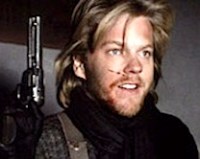 Young Guns is not a particularly likeable film, managing to miss both its potential target audiences: it’s not serious-minded enough for Western enthusiasts, let down by the Brat Pack cast and (it seems) historical accuracy; but it’s surely not fun or modernised enough to appeal to a younger (or younger-minded) crowd. Though clearly it did well enough as it spawned a sequel two years later. I didn’t hate it, I just didn’t particularly like it.
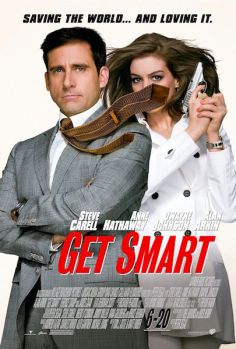 Get Smart, as you likely know, was a TV series in the ’60s, which makes one wonder how it’s taken so long to get to the big screen. I guess it didn’t have the same fanbase or perceived relaunchability that led to an endless array of big-screen versions of ’60s/’70s series in the last decade or two —
 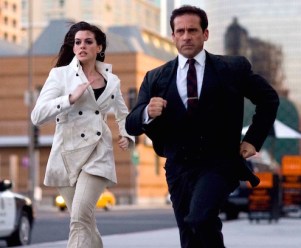 there’s a few action sequences that are surprisingly decent too, considering this is still primarily a comedy.
 to be the smarmy big shot who either ignores or specifically brings down a character like Carrell’s, but instead he’s one of his biggest supporters. (That he turns out to have been A Bad Guy All Along, Gasp! is beside the point.) The office bullies don’t actually have any power at all and are frequently brought down to size. It makes a nice change from the stock sitcom clumsy-hero-who-eventually-comes-good with irritating-and-condescending-higher-ups on the side, the pedestrian and unenjoyable fallback of too many comedy writers.
 but it’s asking a little too much from not necessarily sympathetic viewers.
 100Films.co.uk