
Martin Brest | 105 mins | streaming (HD) | 16:9 | USA / English | 15 / R
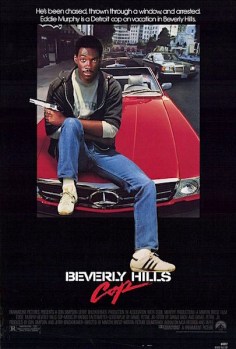 The last time I watched the first entry in a once-popular ’80s comedy cop movie series, it didn’t end well. And that was directed by Richard Donner, of Superman and The Omen fame — Beverly Hills Cop, on the other hand, was helmed by the man who would go on to give us “worst film of all time” contender Gigli. Oh dear. Truth be told, my main reason for watching Beverly Hills Cop is so that I can one day watch Beverly Hills Cop II, directed by Tony Scott, and Beverly Hills Cop III, directed by John Landis. So, I didn’t expect to care for this all that much…
But I actually thought it was really fun. It’s not the funniest movie ever, nor does it have the most thrilling action, or the most engrossing or surprising plot, but it does all those things — well, the first two — well, maybe just the first one — well enough. It’s sort of incessantly likeable.
The term “star vehicle” could have been coined for this film — it’s all about Eddie Murphy as Axel Foley. It’s mad to think he was brought on late in the day, because you just can’t imagine it with anyone else. It’s his performance, his style, that makes the movie worth watching. Without him — with a straightforward lead like Sylvester Stallone, who was originally attached — it would be a painfully rote action/revenge thriller. The plot is no great shakes at all; what works is the fish-out-of-water element of putting Murphy’s black, working-class Detroit cop in white, posh Beverly Hills, plus his engaging performance and humour.
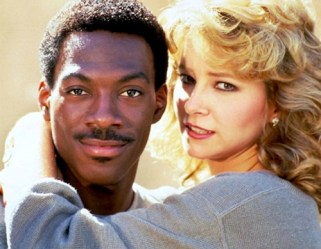 Murphy’s not the only good thing, though. Judge Reinhold and John Ashton make an excellent double act as the pair of cops assigned to keep an eye on Foley in Beverly Hills; Ronny Cox is their amenable boss; Steven Berkoff pretty much just has to turn up to be an excellent villain; Lisa Eilbacher is decent as the girl (presumably changed from being a love interest after they cast a black guy). Her part doesn’t exactly call for a great deal, but she’s fine enough in it; as good as anyone ever is in such a limited role.
There’s also the iconic theme music, Axel F, perhaps better known to The Youth of Today thanks to Crazy Frog (you’d forgotten that, hadn’t you? Sorry). It makes its debut ten minutes into the film during an exciting sequence where… Axel parks his car outside his home. I guess no one knew what they had on their hands… except perhaps composer Harold Faltermeyer, who seems to have written the theme, thought “my work here is done,” and laid it over most of the movie. (That’s unfair — there is other music. Sometimes.)
Beverly Hills Cop’s plot is colour-by-numbers, and sometimes advanced by magic (the way they track Axel and co at the climax just looks like GPS today, but no such system existed in 1984);  the mystery is non-existent (even if it wasn’t obvious Berkoff would be the villain, the henchman who did the deed is shown to be in his employ the first time we meet him); Brest’s direction is unremarkably static… you could probably go on. But thanks to Eddie Murphy and the rest of the cast, Beverly Hills Cop winds up a highly watchable, very likeable spot of entertainment.

This review is part of the 100 Films Advent Calendar 2015. Read more here.
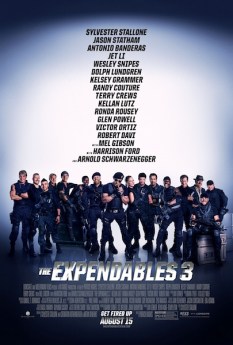 Oscar-nominated screenwriter Sylvester Stallone continues his examination of masculinity and machismo amongst older men in this trilogy-forming instalment of his Expendables franchise.
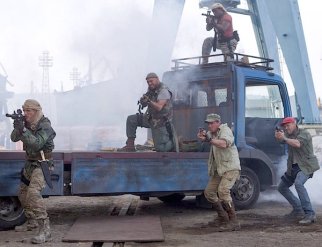 though occasionally obscured by camerawork and editing that turns it into a cacophony of violence. The Blu-ray release helps expose this: the special features include an extended version of Statham’s main battle from the climax, and in that focused form you can see how it’s been carefully constructed and designed. In the film itself, it’s chopped up into ten-second chunks and intercut with everyone else’s duels. It becomes like an impressionistic painting of shooting, punching, kicking, stabbing, running, jumping… It’s a war, as the now-double-sized team of heroes takes on a literal army, and some will revel in the over-the-top-ness of it all. The sheer excess does have a certain charm.
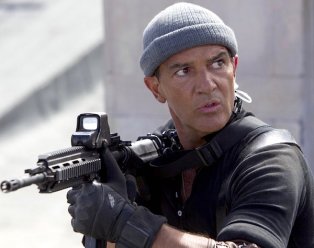 The best addition, unquestionably, is Antonio Banderas. He’s a parkour-performing blabbermouth who keeps pestering Grammer for a job, but no one wants him because he won’t stop talking. And he’s hilarious. Of the 93 changes in the five-minutes-longer extended version (yes,
 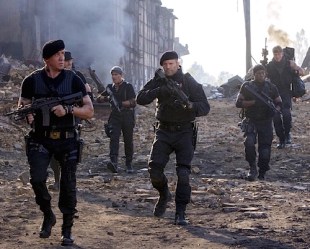 I kind of hope they do make more. The Expendables movies aren’t great films — heck, they aren’t even really great action films — and they’re a bit too cheesy and in-joke-y for the own good — and yet, somehow, I can’t resist them, and I’ll be happy to keep watching them for as long as Stallone and co can keep making them. After all, there are an awful lot of ageing action actors who’ve not appeared yet…
 I had absolutely zero intention of ever watching this Sylvester Stallone vehicle (which is not to be confused with John Woo’s
  Said plot all comes down to a final fight, Stallone vs Jason Momoa (of
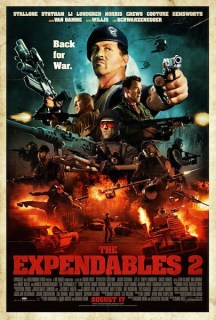 Sylvester Stallone’s ragtag collection of former action stars (and some current ones) reassemble for another throwback fight-fest, this time upping the daftness factor, to mixed results.
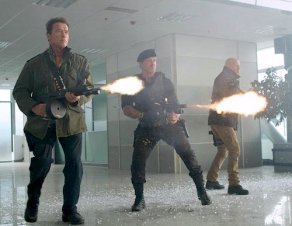 So is it better? Sometimes. The whole thing is inherently silly — these are (mostly) grandfather-aged chaps kicking ass with the best of ’em — and it plays up to that with sly winks to the audience and implausibly-grand combat choreography. But at times the nudge-nudge factor goes a little far, and the disregard for building a wholly plausible story, especially towards the end, is a shame.
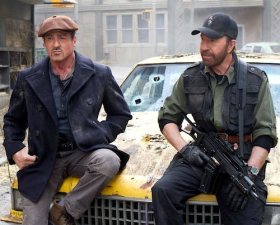 But you didn’t come for that. You came for classic action stars fighting each other. In that regard, it’s pretty much the definition of brain-off brawny fun. If you don’t care for ridiculous action and cheesy dialogue, both of which are laughable in a way that’s hard to tell if it was intended or not, then this is not a film for you. If that sounds up your street, however, then The Expendables 2 is no classic, but it is a fun time.
 Daylight is a disaster movie; the kind they apparently made lots of in the ’70s, and has seen a revival (to some degree) thanks to Roland Emmerich and his brand of apocalypse-bringing. This was made in the ’90s though and, lacking any self-aware qualities, might be seen as a throwback. Whether that matters is probably an issue for more well-versed disaster movie fans than I.
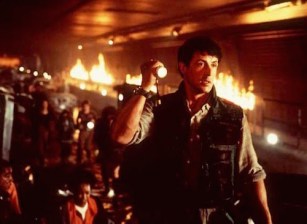 Which Characters Would It Be Most Tragic To Lose and started to work his way through them until he reached the end of the screenplay. I suppose it’s flat-out good advice for a disaster movie, but, try not to get too attached.
 inadvertently overshadows the whole film. I suppose any shot of the Center calls up those memories now, but it’s unfortunate that this one comes at the end of a disaster movie.
 100Films.co.uk