Twilight Zone: The Movie (1983)

2017 #129
Joe Dante, John Landis, George Miller & Steven Spielberg | 97 mins | streaming (HD) | 16:9 | USA / English | 12 / PG

Twilight Zone: The Movie

I can’t remember when I first heard of Twilight Zone: The Movie — certainly not until sometime this millennium — but I do remember being surprised I hadn’t heard of it before. Why wasn’t it more often talked about? After all, here’s a film based on a classic TV series, directed by some of the hottest genre filmmakers of the time: John Landis just after An American Werewolf in London; Joe Dante just before Gremlins; George Miller fresh from Mad Max 2; and, most of all, Steven Spielberg, coming off a run that encompassed Jaws, Close Encounters, Raiders of the Lost Ark, and E.T. I mean, Jesus, even if the movie wasn’t great then surely it should be well-known! It was only later still that I learnt about the infamous helicopter crash. Couple that with a mediocre critical reception and relatively poor box office results, and suddenly it’s no wonder no one ever talked about the film. My viewing of it was primarily motivated by attempting to complete the filmographies of Spielberg and Miller, but I’m glad I did because, on the whole, I rather enjoyed it.

As the original Twilight Zone was an anthology series, so is the movie — hence having four directors. Although the original plan was to have some characters crop up in each segment, thereby linking them all together, that idea didn’t come off. The end result, then, is really just five sci-fi/fantasy/horror short films stuck together — composer Jerry Goldsmith is the only key crew member to work across more than two segments. The advantage of that as a viewer is, if you don’t like one story, there’ll be another along before you know it. Because of that, I’ll take each part in turn.
The Trump Zone

The film begins with a prologue, directed by John Landis, featuring Albert Brooks and Dan Aykroyd as a driver and a hitchhiker chatting about classic TV and scary stories. Although obviously the shortest segment, it’s good fun and sets a kind of comic tone — not one the rest of the film follows, to be fair, but it’s kind of effective in that it has a knowing wink to the audience: “we all know The Twilight Zone is a TV show. Now, here are four stories from it.”

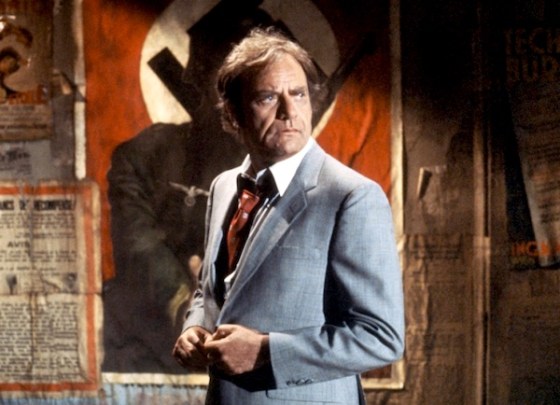
Landis also directs the first full segment, Time Out, the only one of the four not adapted from an original TV episode. Basically, it’s about a Trump supporter. You might not have noticed that if watching before last year, for obvious reasons, but viewed now it’s kind of hard to miss. What’s depressing it that the point of the film is this guy’s views are outdated in 1983, and yet you have Trumpers spouting the same shit in 2017, three-and-a-half decades later. That aside, as a short moral parable it’s effective. It doesn’t have the ending that was scripted (thanks to the aforementioned tragedy), but I think the conclusion it does have is actually more appropriate. It feels kind of wrong to take that view, because the only reason it was changed was that terrible accident. Obviously it wasn’t worth it just for this segment to have a better ending, but there it is.
Scary kid? Check.

Segment two, Kick the Can, is Spielberg’s, and anyone familiar with his oeuvre — and the criticism of it — will see that right away: it’s shot in nostalgic golden hues and contains positive, sentimental moral lessons. In fact, it’s so cloyingly sweet, it’s like a parody of Spielberg’s worst excesses. It was originally intended to be the last film in the movie, and you can see why: it would’ve formed a positive, upbeat finale to the picture. I’m not sure why they moved it — possibly because they felt it was the least-good. That’s what a fair few critics believe, anyway.

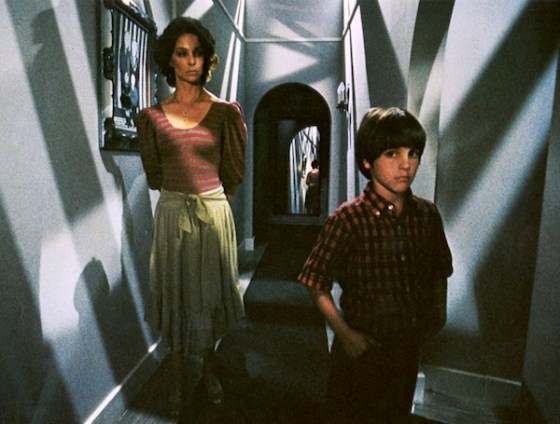
Personally, segment three was my least favourite. This is Joe Dante’s short, titled It’s a Good Life, and is about a woman who accidentally knocks a boy off his bike, gives him a lift home, and finds a pretty strange situation therein. I found it to be kind of aimless; weird for the sake of weird. It’s prettily designed and shot, with bold cartoon colours, but if I watched the film again I’d give serious thought to just skipping it.

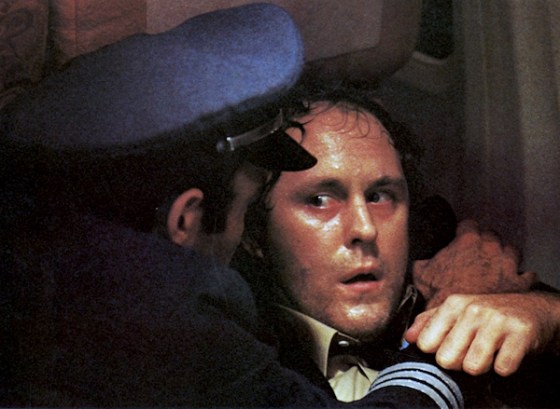
The final segment remakes arguably the most famous Twilight Zone episode: Nightmare at 20,000 Feet. It’s about a paranoid airplane passenger on a turbulent flight, who thinks he sees a monster on the wing. Naturally, no one believes him. I’ve not seen the original version so can’t compare, but director George Miller and star John Lithgow do a fantastic job of realising Richard Matheson’s story, loading it with tension and uncertainty — is it actually all in the passenger’s head? And if it isn’t, can they survive?
Fear of flying

On the whole, I liked Twilight Zone: The Movie more than I’d expected I would. Nonetheless, as a series of shorts, it’s destined to be a footnote in the career of all involved (even Landis has done a fair job of moving on from the controversy — as I said, I hadn’t even heard about it until relatively recently). The only truly great segment is Miller’s finale, but the others all have elements that make them worth a look.

4 out of 5

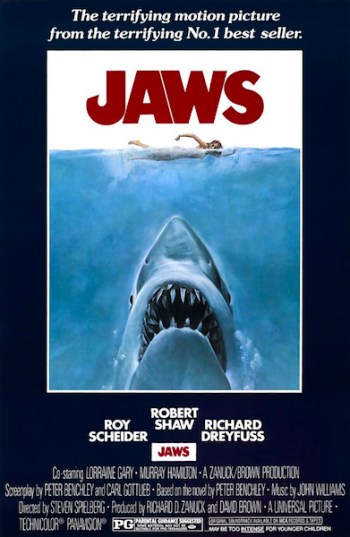
Jaws (1975)

The 100 Films Guide to…

See it before you go swimming.

Country: USA
Language: English
Runtime: 124 minutes
BBFC: A (1975) | PG (1987) | 12A (2012)
MPAA: PG

Original Release: 20th June 1975 (USA)
UK Release: 26th December 1975
Budget: $7-12 million (sources vary)
Worldwide Gross: $470.6 million

Stars
Roy Scheider (The French Connection, All That Jazz)
Robert Shaw (From Russia with Love, The Sting)
Richard Dreyfuss (Close Encounters of the Third Kind, Poseidon)
Lorraine Gary (Jaws 2, 1941)

Director
Steven Spielberg (The Sugarland Express, E.T. the Extra-Terrestrial)

Screenwriters
Peter Benchley (The Deep, The Island)
Carl Gottlieb (Jaws 2, The Jerk)

Based on
Jaws, a novel by Peter Benchley.

The Story
As the seaside resort of Amity Island prepares for the lucrative 4th of July weekend, a series of violent shark attacks threaten the lives of residents and holidaymakers alike.

Our Heroes
Police chief Martin Brody is the one lumped with having to work out how to stop a man-eating shark, battling both small-town politics as well as the underwater predator. Eventually he’s aided by Matt Hooper, a young shark expert, and Quint, a salty old shark hunter.

Our Villain
A 25ft great white shark, with a taste for human flesh.

Best Supporting Character
Amity’s Mayor just wants what’s best for his town and its people — which, in this case, is having the beaches open for July 4th, whether people might get eaten or not.

Memorable Quote
“You’re gonna need a bigger boat.” — Brody

Memorable Scene
A group of young people sit on the beach at night drinking. The eyes of a boy and girl meet. They race off towards the sea, stripping as they go. She gets into the water first, while he’s too drunk to get his clothes off. She messes around in the ocean while he passes out on the sand. Then, she notices something underneath the water — something that grabs her — and… well, it doesn’t end well.

Memorable Music
John Williams’ famous, simple main theme is the definitive musical interpretation of approaching terror. When Spielberg first heard it, he thought it was a joke. Later, he said it was half of what made the film so successful.

Making of
Three mechanical sharks were built for the film, but no one thought to test them in water before taking them on location. They kept malfunctioning, causing a constant headache throughout production — because of them and other issues of shooting at sea, the film’s 55-day schedule ended up taking 159 days, and the $3.5 million budget ballooned to as much as $12 million. On the bright side, Spielberg had to work out how to shoot material around the unavailability of the sharks, which led to him taking a Hitchcockian approach of showing the ‘monster’ as little as possible, which was ultimately a benefit to the film’s effectiveness.

Next time…
Jaws was the highest grossing film of all time, so naturally there were a series of cash-grab sequels. As far as I was aware they were universally condemned, so I’d never paid them any heed, but I recently read a review that made me think I should give them a go. It said Jaws 2 wasn’t actually all that bad, Jaws 3-D was trashy fun, and Jaws: The Revenge… well, in for a penny, in for a pound, I guess. Incidentally, the last one is the film of which star Michael Caine famously said, “I have never seen it, but by all accounts it is terrible. However, I have seen the house that it built, and it is terrific.”

Awards
3 Oscars (Editing, Sound, Original Dramatic Score)
1 Oscar nomination (Picture)
1 BAFTA (Music (also for The Towering Inferno))
6 BAFTA nominations (Film, Director, Actor (Richard Dreyfuss), Screenplay, Editing, Sound)
1 Grammy (Original Score Written for a Motion Picture or Television Special)

Verdict

It’s easy to start discussing Jaws in terms of it being the first summer blockbuster, or its troubled production, or the effect it had on audiences’ desire to go swimming. But divorced from all that, as a film in its own right, it’s a thrilling adventure movie — a man vs. a shark, when it comes down to it. It’s so packed with memorable shots and moments — be they horrific shark attacks, improvised one-liners, or precisely calibrated jump scares — that it’s no wonder it made Spielberg’s name. Personally, I feel the pace flags a bit once the three men get on a boat and go shark hunting, which slightly holds me back from completely loving it. Quibbles aside, it’s still a classic of suspense.

The BFG (2016)

2017 #51
Steven Spielberg | 117 mins | Blu-ray | 2.39:1 | USA & India / English | PG / PG

The BFG

The writer/director team behind E.T. reunite for another tale of a young kid befriending a strangely-proportioned otherworldly creature who can’t quite speak English properly and has an acronym for a name. This one, of course, is adapted from Roald Dahl’s beloved children’s book, here rendered into live-action — or, for a large part, realistic computer animation — by director Steven Spielberg.

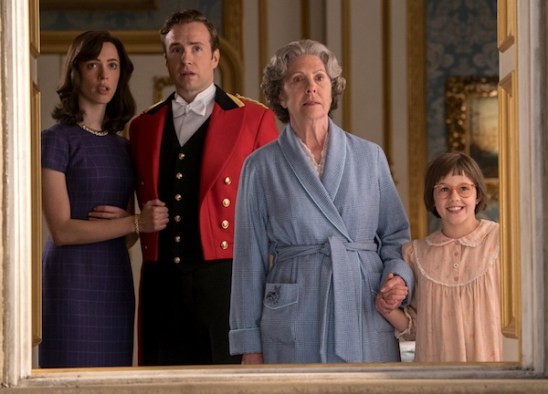
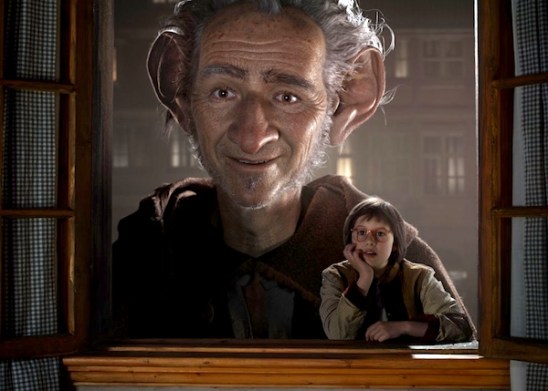
If you don’t know the story, it concerns insomniac orphan Sophie (Ruby Barnhill), who one night spots a 24ft giant outside her window. Wary of her informing the rest of the world of his existence, he snatches her up and carries her off to giant land. Despite Sophie’s fears, he doesn’t eat her, because he’s actually the Big Friendly Giant (Mark Rylance, motion captured) — but his fellow giants are a different story. Led by Fleshlumpeater (Jemaine Clement, also motion captured), they bully the comparatively tiny BFG and are a constant threat to Sophie’s life, so she concocts a plan, which involves a trip to see the Queen (Penelope Wilton).

For all its CGI — and, in creating a fantastical other-world adjacent to our own, there is a lot — much about The BFG feels pleasantly traditional, almost like a throwback to kids’ movies of a couple of decades past. This is partly the re-teaming of Spielberg and screenwriter Melissa Mathison, I suppose, but perhaps also the decision to retain the novel’s original 1982 setting. Not that you’d know it for most of the running time, until the Queen makes some telephone calls to “Nancy and Ronnie” (Reagan) and “Boris” (presumably Yeltsin, though that means someone’s got their eras mixed up); references that, coming quite near the end of the film, made me pause in the realisation that it wasn’t just set today (the reference to Boris made me assume the Queen was phoning our foreign secretary).

Window dressing

More than dated references, though, the throwback feel is thanks to the pace. I’d hesitate to call The BFG slow, but it’s certainly gentle for a good long while. I don’t think it needs to be a fast-paced thrill-ride, but a little extra speed early on, bringing the luxuriant two-hour running time down closer to the 90-minute mark, might’ve been beneficial. There’s certainly magic and wonder to be found throughout, which are very important aspects of a story like this, but I do wonder if kids might get a bit fidgety nonetheless, which would destroy the effect.

There is a lot to admire, however. The production design is superb, the giants’ environment full of stuff pilfered from the human world and re-appropriated into useful things — a ship for a (water)bed, for example, or a road sign for a tray; in one sequence, cars and trucks become roller skates. It’s all realised with startling detailed CGI. Okay, you’re not going to mistake the giants for upsized real humans (which kinda makes me long for a Hook-era version of the film, when they would’ve done it all for real with optical effects), but look at the small details — the texture of the giants’ skin, for example — and it looks phenomenal.

More importantly, the acting is pitched perfectly. Clement and his cohorts manage to be both menacing and comical by turns, Wilton brings easy class to the Queen, and Rafe Spall has an amusing little supporting role as a palace footman. However, Rebecca Hall is utterly wasted in a strangely nothing-y part as the Queen’s assistant — I can only presume this was either one of those “I love the book so will take any role” situations or one of those “my part was mostly cut” situations.

Big star, little star

But the real stars are the two leads. Ruby Barnhill was the result of a months-long search for the perfect Sophie and it was worth the effort. Called upon to be confident, scared, awed, and ingenious, Barnhill’s performance is precisely calibrated — “subtle” would perhaps be overselling it, but she lacks the histrionics you get from weak child actors. She’s overall charming, which is important in engaging us in the relationship between her and the BFG. In the giant role, Mark Rylance is, of course, sublime. He may have been recreated in the computer, but all of his personality shines through, his expressions and mannerisms both believable and familiar if you’ve seen him in his corporeal form. It’s one of the best-yet advocacies of so-called “performance capture” (where the actor’s whole performance is captured by those grey jumpsuits with little dots on, as opposed to just “motion capture” where it’s only their physical moves being digitised and supplemented by animators — both are the same process really, it’s just someone coined a different term to indicate when more of the actor’s own work is retained).

Considering the level of challenge The BFG clearly presented to Spielberg (in the special features he talks about how at times he was unsure how to make the movie, with all the tough requirements of different scales, etc; he and his team actually spent a whole summer making the movie in previsualisation before they did it for real the year after), it’s something of a shame that it’s destined to be regarded as a minor work in his canon. I’m not going to argue it deserves a greater status among his venerable output, but it would be a shame for it to go ignored because of that.

4 out of 5

The BFG is available on Amazon Prime Video UK as of this week.

100 Films @ 10: Most Represented Directors

It’s 100 Films’ 10th birthday at the end of the month. To mark the occasion, I thought in the run-up to it I’d publish some lists based on the last ten years of my blog, because who doesn’t love a list?

How many lists have I got? Why, 100 of course!

…haha, no — that would be ridiculous. There are ten — one for each year of 100 Films. And each one has ten items on it. Ten times ten is… why, it’s 100! What a coincidence.

For the first list, I’ve put opinion aside for pure facts: these are the ten directors who’ve been most-reviewed on this blog. That excludes films only featured in my 100 Favourites series — this is just their work that has been covered as part of my ‘main’ blog.

It may be worth noting that, because it’s purely based on statistics, this isn’t a list of my ten favourite directors… though as they’re ones I keep watching movies by, I guess it’d be a fair starting point.

10
Christopher Nolan

Christopher Nolan has made nine feature films, and seven of them are reviewed here. Throw in an extra one for the IMAX version of The Dark Knight and his short documentary, Quay, and he edges ahead of runners-up John Carpenter, Ernst Lubitsch, George Miller, and Billy Wilder.

9
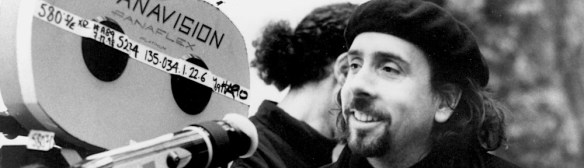
Tim Burton

The next four directors are technically tied, but I’ve found a way to differentiate them. First: the Burtonesque Tim Burton, whose eight entries can be split into six main-list films and two reviews of things I’d already seen (Batman and Batman Returns).

8
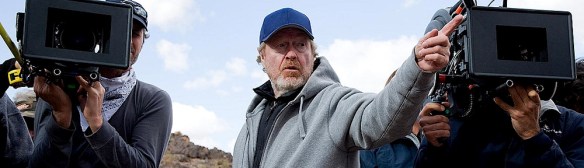
Ridley Scott

Next, the man we can probably thank for all the Director’s Cuts we get these days, the more classical of the two Scott brothers, Sir Ridley Scott. He also has eight, of course, which factors in six main-list films, one alternate cut that I nonetheless counted on my main list (Blade Runner: The Final Cut), and one non-main-list film (Alien: The Director’s Cut).

7
Zack Snyder

Our third eight-film filmmaker is everyone’s favourite “visionary” director of superhero movies (right?), Zack Snyder. All eight of his films were on the main list, though two of them were alternate versions (the extended cuts of Batman v Superman and Watchmen).

6
Clint Eastwood

Simple and straight-up, much like the man himself, Clint Eastwood has a pure eight films.

5
Steven Soderbergh

The top five heads into double figures, with ten films for one-time enfant terrible and now retiree Steven Soderbergh.

4
Martin Scorsese

Perpetual awards season snubee, Martin Scorsese also has ten feature films, but edges ahead thanks to his part in anthology film New York Stories.

=2
Roy William Neill / Steven Spielberg

Unlike other directors on this list, there’s no reasonable way to differentiate this pair. You may not know the name Roy William Neill, but he helmed eleven of the fourteen Sherlock Holmes films starring Basil Rathbone, and those four years of work have landed him near the top of this list. Conversely, Steven Spielberg is probably the most famous film director working today, if not ever, and his eleven films span 44 years, stretching from his first (1971’s Duel) to his most recent Oscar nominee (2015’s Bridge of Spies).

1
David Fincher

Topping the list is my go-to pick for favourite director, David Fincher. He’s helmed ten movies, but I’ve reviewed twelve — that’s eleven main-list features (including the Assembly Cut of Alien³) and one extra for the marginally-extended director’s cut of Zodiac.

Tomorrow: when directors re-cut.

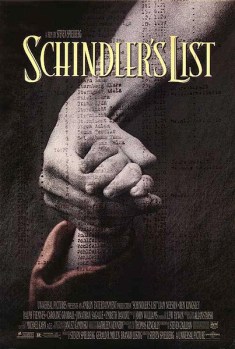
Schindler’s List (1993)

100 Films’ 100 Favourites #80

“Whoever saves one life,
saves the world entire.”

Country: USA
Language: English, Hebrew, German & Polish
Runtime: 195 minutes
BBFC: 15
MPAA: R

Original Release: 15th December 1993 (USA)
UK Release: 18th February 1994
First Seen: VHS, c.2001

Stars
Liam Neeson (Darkman, Star Wars: Episode I – The Phantom Menace)
Ben Kingsley (Gandhi, Iron Man 3)
Ralph Fiennes (The English Patient, The Grand Budapest Hotel)

Director
Steven Spielberg (Amistad, Lincoln)

Screenwriter
Steven Zaillian (Awakenings, Moneyball)

Based on
Schindler’s Ark, a Booker Prize-winning novel (released in America as Schindler’s List) by Thomas Keneally.

The Story
In occupied Poland in the early days of World War 2, German businessman Oskar Schindler opens a factory supplying the German military, staffed by Jewish workers. As the Nazis begin to close the ghettos and ship Jews to concentration camps, Schindler uses his connections and profits to surreptitiously save as many as he can.

Our Hero
Oskar Schindler is a self-interested businessman, womaniser, and member of the Nazi Party. Initially employing Jews merely for financial reasons (they’re cheaper than Polish workers), his innate humanity begins to come to the fore.

Our Villain
Nazis! But in particular Amon Goeth, the sadistic commander of the Paszów labour camp, who’s fond of executing Jews at random, amongst other horrors. Nonetheless, Schindler has to deal with him to ensure the (relative) safety of his workforce.

Best Supporting Character
Schindler’s contact on the local Jewish Council, Itzhak Stern, who becomes essential to making his business a success, and facilitating his operation to save the workers.

Memorable Quote
“I could have got more out. I could have got more. I don’t know. If I’d just… I could have got more.” — Oskar Schindler

Memorable Scene
During the destruction of the ghetto, Schindler sees a little girl in a red coat (the one splash of colour in the body of the film), wandering alone through the devastation. Later, as the Nazis burn piles of the dead, corpses are ferried to the pyres on small wagons. On one, Schindler sees a small body in a red coat… (There’s a good piece on the psychology of why these scenes are so effective here.)

Technical Wizardry
Spielberg chose to shoot in black-and-white to match actual documentary footage of the era, which was how he ‘saw’ the events. It was also shot without storyboards, Steadicams, cranes, or zoom lenses, and about 40% was filmed using handheld cameras, to emphasise a documentary feel. For a similar level of realism, Spielberg originally intended to make the film entirely in German and Polish with English subtitles, but changed his mind because he thought he wouldn’t be able to accurately direct performances in foreign languages.

Making of
Acting as producer, Spielberg initially tried to attract another director because he felt he wasn’t capable of doing the story justice. Martin Scorsese turned it down because he felt it should be done by a Jewish director, and Roman Polanski rejected it because it was too personal (he lived in the Krakow ghetto, only escaping on the day of its liquidation, and his mother died at Auschwitz). Finally, there was Billy Wilder — depending which version you believe, he either wanted to direct but Spielberg was already prepping the shoot, or he actually convinced Spielberg to direct it. Ultimately, Spielberg waited ten years between acquiring the rights and making the film, when he finally felt capable of tackling it.

Awards
7 Oscars (Picture, Director, Adapted Screenplay, Cinematography, Editing, Score, Art Direction-Set Decoration)
5 Oscar nominations (Actor (Liam Neeson), Supporting Actor (Ralph Fiennes), Costume Design, Sound, Makeup)
7 BAFTAs (Film, Supporting Actor (Ralph Fiennes), Director, Adapted Screenplay, Cinematography, Editing, Score)
6 BAFTA nominations (Actor (Liam Neeson), Supporting Actor (Ben Kingsley), Costume Design, Make Up Artist, Production Design, Sound)

What the Critics Said
“If E.T. The Extraterrestrial is Steven Spielberg’s fantasy masterpiece, and Jurassic Park is his commercial masterpiece, then Schindler’s List is certainly his artistic masterpiece. It’s an extraordinary work of vision and passion that raises even the gifted Spielberg to a new level of artistry. And like all great works, it elevates everyone who views it.” — Dennis King, Tulsa World

Score: 96%

What the Public Say
“It’s very, very hard-going and not an easy film to watch, but its importance is unparalleled. You sit there for three hours feeling uncomfortable – because these monstrosities really happened, because we live in a world where people are capable of these acts of inhumanity – and you still can’t even begin to imagine what it must have really been like, to live through that, to see your family and friends shot dead in the street or transported away en masse to the gas chambers. And yet, despite all that, you end the film feeling inspired. Someone made a difference.” — Millicent Murdoch, Millie’s Movie Reviews

Verdict

Schindler’s List wasn’t Spielberg’s first ‘serious’ film, but I think it shows a marked increase in quality over his good-but-flawed previous efforts, The Color Purple and Empire of the Sun. Liam Neeson gives a commanding performance as the imperfect hero, while Ralph Fiennes finds what little humanity there is in Goeth (and there isn’t much) to pull him short of being an Evil Nazi caricature. The stark black-and-white cinematography acknowledges the incomprehensibly horrific events, while Spielberg’s divisive penchant for sentimentality seems well-matched to the tale, offering a measure of hope from humanity’s darkest days.

What’s in #81? What’s in #81?

Saving Private Ryan (1998)

100 Films’ 100 Favourites #79

The mission is a man.

Country: USA
Language: English, French, German & Czech
Runtime: 170 minutes
BBFC: 15
MPAA: R

Original Release: 24th July 1998 (USA)
UK Release: 11th September 1998
First Seen: TV, c.2001

Stars
Tom Hanks (Big, Cast Away)
Edward Burns (She’s the One, 15 Minutes)
Matt Damon (Good Will Hunting, Jason Bourne)
Tom Sizemore (Natural Born Killers, Black Hawk Down)
(The lead cast includes since-famous people like Vin Diesel, Barry Pepper, and Giovanni Ribisi, and the supporting cast even more recognisable faces, but, still, Edward Burns is second billed.)

Director
Steven Spielberg (Empire of the Sun, War Horse)

Screenwriter
Robert Rodat (Fly Away Home, The Patriot)

The Story
In the immediate aftermath of D-Day, a group of soldiers are tasked to locate and rescue just one man: Private Ryan, whose three brothers have been killed in action, earning him a free pass home. As the squad trek across France, mindful of the waste of resources, they encounter first-hand the early days of the Allied invasion of Europe.

Our Heroes
Just a regular bunch of soldiers, co-opted into a PR mission that isn’t that easy. They’re commanded by Captain Miller, their respected leader with a secretive past… a past which is actually thoroughly mundane, and just highlights the bizarre, heightened world of the war.

Our Villains
Nazis!

Best Supporting Character
Matt Damon was cast as the eponymous soldier because Spielberg wanted an unknown with an all-American look. Unfortunately for that plan, before Private Ryan came out Damon won an Oscar for Good Will Hunting and became famous overnight. It certainly changes the effect to have the team rescuing Movie Star Matt Damon rather than Some Unknown Actor, but, on the bright side, he’s good.

Memorable Quote
Reiben: “Hey, so, Captain, what about you? I mean, you don’t gripe at all?”
Miller: “I don’t gripe to you, Reiben. I’m a captain. There’s a chain of command. Gripes go up, not down. Always up. You gripe to me, I gripe to my superior officer, so on, so on, and so on. I don’t gripe to you. I don’t gripe in front of you. You should know that as a Ranger.”
Reiben: “I’m sorry, sir, but uh… let’s say you weren’t a captain, or maybe I was a major. What would you say then?”
Miller: “Well, in that case, I’d say, ‘This is an excellent mission, sir, with an extremely valuable objective, sir, worthy of my best efforts, sir. Moreover, I feel heartfelt sorrow for the mother of Private James Ryan and am willing to lay down my life and the lives of my men — especially you, Reiben — to ease her suffering.’”

Memorable Scene
The opening half-hour, which recreates the Normandy landings in shocking, brutal detail, and is supposedly very true to the actual experience. Surely the definitive modern combat sequence from any war movie.

Technical Wizardry
The heavily desaturated cinematography by Janusz Kaminski instantly lends the film a grim veracity, very appropriate to its tone. Such extreme colour palettes are commonplace nowadays, mainly thanks to digital grading, but when Private Ryan came to US TV providers had to deal with numerous complaints from viewers who thought there was a problem with their signal — which the broadcasters fixed by just upping the saturation of the film, of course.

Truly Special Effect
The involvement of ILM was downplayed so that the film didn’t come across as “an effects movie”, but they still had a key role — for instance, providing most of the bullet hits throughout the D-Day sequence. Not remarkable effects work in itself, maybe, but it’s appropriately invisible.

Making of
The D-Day sequence alone cost $11 million. It was filmed over four weeks (almost half the entire shoot), gradually moving up the beach to film the whole thing in chronological order. Spielberg personally operated the camera for many shots, none of which were storyboarded. The shoot involved up to 1,000 extras, 20 to 30 of whom were amputees fitted with prosthetic limbs to simulate them being blown off. Reportedly, many veterans have congratulated Spielberg on the sequence’s accuracy, including actor James Doohan, aka Star Trek’s Scotty, who participated in the Normandy landings.

Next time…
HBO’s Band of Brothers is basically Saving Private Ryan: The Series, taking the film’s visual style to tell the true story of a company of soldiers from their training, through the invasions of France and Germany, and right up to the end of the war. Often topping lists as the greatest TV series ever made, it certainly belongs in consideration.

Awards
5 Oscars (Director, Cinematography, Editing, Sound, Sound Effects Editing)
6 Oscar nominations (Picture, Actor (Tom Hanks), Original Screenplay, Score, Art Direction-Set Decoration, Makeup)
2 BAFTAs (Sound, Special Effects)
8 BAFTA nominations (Film, Actor (Tom Hanks), Director, Music, Cinematography, Editing, Production Design, Make Up/Hair)
1 Saturn Award (Action/Adventure/Thriller Film)
1 Saturn nomination (Special Effects)
3 MTV Movie Awards nominations (including Action Sequence for the Normandy landings. It lost to Armageddon.)

What the Critics Said
“hands-down the best film of 1998. Spielberg has clearly stated in recent interviews that he made the film as a monument to the brave men who fought and died in that terrible war (and on D-Day, in particular), but he’s also done something morally heroic in the process. Private Ryan clearly illustrates, once and for all, that war — the real, appalling thing, not the flag-waving glorification that you usually see at the movies — is hell on earth. Spielberg accomplishes these goals with a technical virtuosity that no other director, arguably in the history of the cinema, can even approach. […] He’s a director whose work has grown right before our eyes from that of a precocious whiz-kid to the complex, humanistic statements of a true artist. Whether or not you always appreciate how he utilizes his skills, the man is an undeniable genius.” — Paul Tatara, CNN

Score: 92%

What the Public Say
“the opening 25 minutes of Saving Private Ryan – where [Spielberg] thrusts us into the 1944 D-Day landings of Omaha Beach – is arguably his most impressive and certainly his most visceral work. It’s absolutely exhausting in its construction and sense of realism and the realisation soon sets in, that this cinematic auteur is not about to pull any punches in portraying a time in history that’s very close to his heart. The opening is so commanding that some have criticised the film for not living up this grand and devastating scale but Spielberg has many more up his sleeve. He’s just not able to deliver them too close together – otherwise, the film would be absolutely shattering and very difficult to get through. To bridge the gap between breathtaking battles scenes the film falls into a rather conventional storyline about men on a mission but its only purpose is to keep the film flowing and allows Spielberg the ability to make the brutality of war more personal.” — Mark Walker, Marked Movies

Verdict

Is Saving Private Ryan the greatest war movie ever made? Maybe. The relatively simple story allows it to explore the mindset of the soldiers making the first forays into Europe after D-Day, both their camaraderie as a group of men and the actions they took to function through the experience. It’s certainly the most influential World War 2 movie of modern times — nearly 20 years later, its desaturated colour palette remains de rigueur for films set in the war. So too its realistic depiction of combat, which is more plausible than some of the Boy’s Own adventures that came before, though not so ridiculously gruelling as some that have come in its wake. Personally, the only superior WW2 ‘film’ I can think of is Band of Brothers, and considering that has ten hours to explore its characters and situations, it’s not really a fair comparison.

#80 will be… a very different Spielberg/WW2 story.

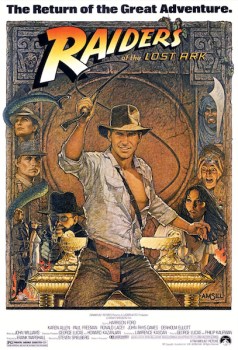
Raiders of the Lost Ark (1981)

100 Films’ 100 Favourites #72

The Return of the Great Adventure.

Also Known As: Indiana Jones and the Raiders of the Lost Ark

Country: USA
Language: English (and German, Hebrew, Spanish, Arabic & Nepali)
Runtime: 115 minutes
BBFC: A (1981) | PG (1987)
MPAA: PG

Original Release: 12th June 1981
UK Release: 30th July 1981
First Seen: VHS, c.1991

Stars
Harrison Ford (Star Wars, Witness)
Karen Allen (Animal House, Starman)
Paul Freeman (The Long Good Friday, Mighty Morphin Power Rangers: The Movie)
Ronald Lacey (Take a Girl Like You, Red Sonja)
John Rhys-Davies (The Naked Civil Servant, The Lord of the Rings)

Director
Steven Spielberg (E.T. the Extra-Terrestrial, The Adventures of Tintin: The Secret of the Unicorn)

Screenwriter
Lawrence Kasdan (The Empire Strikes Back, The Bodyguard)

Story by
George Lucas (THX 1138, Return of the Jedi)
Philip Kaufman (The Outlaw Josey Wales, The Right Stuff)

The Story
1936: adventurer Indiana Jones is hired by the US Army to retrieve the mythical Ark of the Covenant, which they believe is on the verge of being uncovered in Egypt, before the Nazis can get their grubby mitts on it.

Our Hero
Professor of archeology, expert on the occult, and obtainer of rare antiquities, Indiana Jones. Good with a whip; not good with snakes.

Our Villains
Dr. René Belloq, essentially the evil Indy: a fellow archeologist with fewer scruples, who often takes credit for Indy’s hard work and is now in bed with the Nazis. They’re most memorably represented by creepy Gestapo agent Toht, played by Ronald Lacey, who was cast because he reminded Spielberg of Peter Lorre.

Best Supporting Character
The daughter of Indy’s mentor, and his one-time love, Marion Ravenwood, who’s roped in because she happens to possess an artefact with a clue to the Ark’s location. Feisty and capable of holding her own (some of the time, anyway), it’s a shame she didn’t appear in the initial sequels — at Lucas’ insistence, apparently (he also kept her out of the spin-off novels). She eventually returns in Kingdom of the Crystal Skull, the only character from the first three films to be brought back for that adventure (besides Indy, obv.)

Memorable Quote
Sallah: “Indy, why does the floor move?”
Indiana: “Give me your torch… Snakes. Why’d it have to be snakes?”

Memorable Scene
Goodness, where do we start? Well, how about the start! Having made his way safely through a boobytrapped cave, Indy switches a bag of sand for the idol he’s come to retrieve. Unfortunately the trap is not fooled, and Indy has to run out as the place collapses around him and all the traps are triggered — including, most famously, a giant rolling boulder.

Write the Theme Tune…
It’s only one of the greatest movie main themes of all time. Composed by John Williams (of course) it’s technically called The Raiders March, and is a combination of two ideas Williams wrote for Jones’ theme that Spielberg suggested be put together to make one piece.

Technical Wizardry
The film is naturally packed with stunts, one of the most memorable being when Indy is dragged under and out behind a moving truck. To achieve it safely, more clearance was created under the truck by constructing one that was higher than normal and digging out the centre of the road. The shot was filmed at 20fps, lower than the standard 24, so that when played back the truck appeared to be moving faster. The feat was performed by stuntman Terry Leonard, but Harrison Ford was actually dragged behind the truck for some shots. When asked if he was worried, Ford replied, “No. If it really was dangerous, they would have filmed more of the movie first.”

Truly Special Effect
The climax, when the Ark is opened, was a field day for ILM. Techniques used include “animation, a woman to portray a beautiful spirit’s face, rod puppet spirits moved through water to convey a sense of floating, a matte painting of the island, and cloud tank effects to portray clouds.” Plus the villains’ heads melt (a gelatine and plaster model exposed to a heat lamp), collapse (a hollow model with the air sucked out), and explode (which nearly landed the film with an R rating).

Making of
Have you heard the one about the scheduled sword fight and everyone being ill? You have? Oh, okay then.

Next time…
The film was a massive success, so has spawned tonnes of media. Primarily, three direct sequel films, with a fifth set for 2019. Then there’s the three-season TV series The Young Indiana Jones Chronicles, 13 adult novels, 33 Young Indiana Jones novels, 11 “choose your own adventure”-style books, eight German novels (which have never been translated into English), numerous comic books, and 19 computer games, including nine with original storylines and two Lego Indiana Jones games. Also, a stunt show at Walt Disney World in Florida based on Raiders that has been running for 27 years. Whew!

Awards
5 Oscars (Editing, Art Direction-Set Decoration, Sound, Visual Effects, Special Achievement in Sound Effects Editing)
4 Oscar nominations (Picture, Director, Cinematography, Score)
1 BAFTA (Production Design/Art Direction)
6 BAFTA nominations (Film, Supporting Artist (Denholm Elliott), Cinematography, Editing, Music, Sound)
7 Saturn Awards (Fantasy Film, Actor (Harrison Ford), Actress (Karen Allen), Director, Writing, Music, Special Effects)
2 Saturn nominations (Supporting Actor (Paul Freeman), Costumes)
Won the Hugo for Best Dramatic Presentation

What the Critics Said
“Yes, it’s as entertaining as you have heard. Maybe more so. Raiders of the Lost Ark is, in fact, about as entertaining as a commercial movie can be. What is it? An adventure film that plays like an old-time 12-part serial that you see all at once, instead of Saturday-to-Saturday. It’s a modern Thief of Baghdad. It’s the kind of movie that first got you excited about movies when you were a kid. (Translation for today’s children: It’s better than anything on TV.)” — Gene Siskel, Chicago Tribune

Score: 94%

What the Public Say
“Spielberg and George Lucas had, in the same year, rewritten the rules of the science fiction genre; Lucas with Star Wars and Spielberg with Close Encounters of the Third Kind, but what could they do together? Greatness, it turns out. Their contribution: Raiders of the Lost Ark, one of the best, most exciting, most brilliantly written action movies of all time. It’s fun, it has a great sense of wonder and adventure. It’s scary, it’s bloody, it’s violent but you never come away feeling unclean. It has a hero, Indiana Jones, who is fallible but not a wimp. […] I can talk all day about Raiders of the Lost Ark, but I must simply conclude that the movie is just plain fun” — Jerry, armchaircinema

Verdict

George Lucas and Steven Spielberg teamed up for the first time here, recycled elements from movies beloved in their youth, and produced something new and exciting that is still a reference point for blockbusters 35 years later. (We’re getting homages to homages now, aren’t we? Weird.) It’s pretty much a perfect adventure movie: relentlessly paced, packed with action, lightened with humour, full of likeable heroes, who are brave and competent but also a little bit flawed, and hissable villains, with scene after scene of imaginative situations and fabulously staged derring-do. It’s perfectly distilled pulp adventure, and pure cinematic entertainment.

Many Bothans… died to bring us #73.

Duel (1971)

2016 #140
Steven Spielberg | 86 mins | DVD | 4:3 | USA / English | 12* / PG

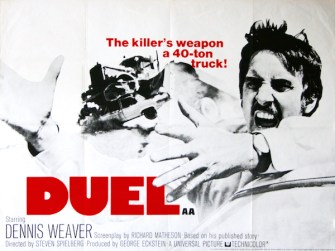
DuelAs far as Americans are concerned, Steven Spielberg’s debut feature film was The Sugarland Express (which I reviewed just last year). For the rest of us, it was Duel. Originally produced as a TV movie for ABC, it was a ratings and critical success, which led Universal to have Spielberg shoot extra footage so they could release it theatrically in the rest of the world. It merits it, too, because Duel is a brilliant work.

Adapted by renowned Twilight Zone writer Richard Matheson from his own short story, the film sees ordinary family guy David Mann (Dennis Weaver) driving across the back of beyond to a business meeting, when he comes up behind a massive slow-moving truck. Perfectly reasonably, he overtakes and continues on his way… but a few seconds later, the truck thunders past him. “Whatever,” thinks Mann (in modern parlance)… until the truck slows down again. When he tries to overtake, the truck speeds up, or blocks his way. So begins a game of cat and mouse between the two vehicles, which mild-mannered Mann finds impossible to escape, as it becomes clear the mysterious truck driver is definitely trying to kill him.

It’s an incredibly simple, straightforward premise; so simple that initially one struggles to see how Matheson and Spielberg intend to ring half-an-hour out of it, never mind a whole feature. That is to underestimate them, however; and to underestimate the truck driver, who has many ways of messing with Mann’s head — all without revealing himself (the one time he disembarks from his cab, we only see his boots as he paces on the far side of his vehicle). Never revealing the trucker’s face was Matheson’s idea, but Spielberg leapt on it wholeheartedly, because the scariest monsters are the ones you never see. Couple that with a specially-chosen truck (of the seven Spielberg ‘auditioned’, it was the one whose front most resembled a face) and you have a genuinely threatening presence.
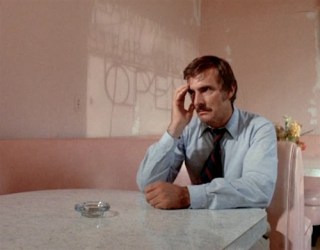
Although Duel has been analysed as a horror movie, or a Western, or a commentary on class war in America, Spielberg didn’t see it that way, regarding it as a pure Hitchcockian suspense thriller. He’s bang on the money. It’s not scary in the way a horror movie would be, and I think calling it a Western is a bit of a reach, though I can kind of see where the class war thing is coming from; but you can absolutely see the ingredients for a Hitchcock movie here. Mann is an everyman (I’m sure his name can be no coincidence), a completely nondescript ordinary Joe, who gets caught up in extraordinary events against his will, and winds up the only person in a position to do anything about them. The truck is akin to the eponymous avians of The Birds, an everyday thing that seems to be acquiring almost supernatural powers; that you can never predict its next action, or where it will next appear, other than to know it will always be there, waiting for you. It’s a situation any driver — or, indeed, any passenger — can conceive of finding themselves in, which adds a “what would I do?” frisson to proceedings.

Weaver is excellent, plausibly charting a course from bland normality to apologetic paranoia, on to hopeless despair, ending in desperate lunacy. At one point he pauses at a roadside cafe to get a breather, but has reason to suspect one of his fellow patrons is his tormenter. As he tries to subtly surveil them, attempting to figure out what he can do to defuse the situation, Mann’s thoughts are narrated on the soundtrack; but we barely need it, because Weaver physically conveys all of his uncertainty, his fear, his wannabe-bravado. Sequences like this also demonstrate how Spielberg was already a master of camerawork and editing, guiding us as to where Mann is looking, shifting angles high and low, the constant changes in perspective not disorientating our sense of space but nonetheless keeping it off kilter.
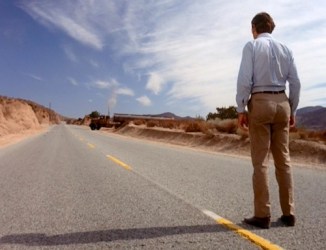
This applies tenfold to the road sequences. Spielberg was originally urged to shoot the film on a soundstage using rear projection, the only way to shoot a feature-length piece of this complexity in the time they had available; but he knew that wouldn’t be effective, so despite the insanely tight schedule he took the production out on the road and shot it all for real. Although he did run over in the end, the original TV movie was still shot in less than a fortnight, and edited in ten days to boot. (The additional photography for the movie version amounted to just two more days.) You wouldn’t know it. The array of complex setups on display is extraordinary if you’re looking out for that kind of thing; even if you’re not, there’s some fairly detailed road choreography in play at times, including dynamic moving material that can only have been achieved with a separate camera car. It’s no wonder this work brought Spielberg a lot of attention, and finally facilitated his long-desired move from TV into movies.

Speaking of which, why has no one ever done a “TV work of Steven Spielberg” box set? There’s a short featurette on the Duel DVD (and Blu-ray) about the other TV productions he directed, and while I’m sure it can’t be his greatest work, he’s clearly not totally ashamed of it, and the clips shown suggest it’d be worth a watch. For one thing, being able to see the original TV edit of Duel would be interesting, for two reasons. First, it would solve the aspect ratio dilemma. The DVD is presented in 4:3, as it was originally shot for TV, even though it’s the movie cut. The more recent Blu-ray follows the cinematic framing of 1.85:1; however, it’s not just cropped and it’s not just widened: when they reviewed the footage to create the movie version, Spielberg discovered he could see himself sat in the back seat giving direction — so the final print is both widened slightly and cropped slightly. I guess which is ‘right’ is now a matter of personal preference, though the Blu-ray undoubtedly looks tonnes better in every other respect.
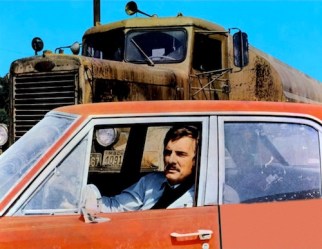
Secondly, it would be interesting to see Duel without the material that was added to pad the length. Specifically, that includes: the opening credits, where Mann backs out of the garage and drives through the city; when he phones his wife from the gas station; the scene at the railroad crossing; and the school bus. With the exception of the railway crossing, which is in-keeping with the focus of most of the rest of the movie, these are exactly the kind of scenes that feel added. That’s not to say they’re badly done, and if you didn’t know there’d been footage added they possibly wouldn’t stick out at all; but it would be interesting to see a version that less dilutes the otherwise near-unwavering concentration on Mann vs. Truck.

Nitpicks and “what if”s aside, Duel is a fantastic calling card from a director who has gone on to become arguably the most significant and influential filmmaker of the ensuing 45 years. To say it stands in contention to still be regarded among his finest films does no disservice to the body of work he’s produced since, but rather indicates just how assuredly he hit the ground running.

4 out of 5

Duel is on The Horror Channel today at 6:40pm and tomorrow at 8am.

* Duel’s initial rating under the modern system was PG in 1987, which stood until 2015 when it was resubmitted (presumably for the Blu-ray) and inexplicably given a 12 — “inexplicably” because even the BBFCinsight information doesn’t make the reasoning clear. It appears to be because of “threat”, which is a ridiculously vague non-justification. ^

Minority Report (2002)

100 Films’ 100 Favourites #61

Everybody runs

Country: USA
Language: English
Runtime: 145 minutes
BBFC: 12
MPAA: PG-13

Original Release: 20th June 2002 (Australia)
US Release: 21st June 2002
UK Release: 4th July 2002
First Seen: cinema, July 2002

Stars
Tom Cruise (Born on the Fourth of July, Mission: Impossible)
Samantha Morton (Morvern Callar, Synecdoche, New York)
Colin Farrell (Tigerland, In Bruges)
Max von Sydow (The Virgin Spring, Shutter Island)

Director
Steven Spielberg (Close Encounters of the Third Kind, War of the Worlds)

Screenwriters
Scott Frank (Out of Sight, The Wolverine)
Jon Cohen

Based on
The Minority Report, a short story by Philip K. Dick.

The Story
Washington, D.C., 2054: a special police department, PreCrime, arrests murderers before they even commit a crime, using information gained from three ‘precogs’ who have visions of the future. When the precogs report PreCrime’s captain, John Anderton, will kill a man he doesn’t even know, he goes on the run to prove his innocence.

Our Hero
PreCrime Captain John Anderton believes in the infallibility of the system, no doubt motivated by the disappearance of his son years earlier, which has also left him a divorced drug addict. He’s played by Tom Cruise, so of course he’s charming and heroic nonetheless.

Our Villains
The PreCrime unit is under consideration for nationwide adoption, so is being audited by sceptical Department of Justice agent Danny Witwer when Anderton is accused. While Witwer might seem antagonistic, you know there’s some other Big Bad behind the whole thing…

Best Supporting Character
Agatha, the lead precog, who sometimes has a different vision to the other two, which produces the so-called ‘minority report’ that may prove Anderton’s innocence — so he breaks her out. Unsurprisingly, an individual who spends her life hooked up to a machine in some kind of dream-state while having visions of different futures isn’t necessarily suited to the real world.

Memorable Quote
Fletcher: “John, don’t run.”
Anderton: “You don’t have to chase me.”
Fletcher: “You don’t have to run.”
Anderton: “Everybody runs, Fletch.”

Memorable Scene
So he can’t be identified by the future’s ubiquitous iris scanners, Anderton has undergone an eye transplant with a dodgy backstreet surgeon. He’s told he can’t take the bandages off for 12 hours or he’ll go blind. While he’s still convalescing, police searching for him arrive at his location. With thermal imaging confirming how many people are in the building, they unleash spider robots to scour each floor and scan everyone’s eyes. Hearing their approach, Anderton attempts to hide in an ice bath, but the thermal scan notices his disappearance. The officers close in on his location, as do the spiders… but he can’t take his bandages off… but the officers will recognise him…

Technical Wizardry
Cinematographer Janusz Kamiński gave the film a very distinctive visual style, described by one critic as looking “as if it were shot on chrome, caught on the fleeing bumper of a late ’70s car”. Aiming for a film noir feel, the shoot was deliberately overlit, then the film was bleach-bypassed in post-production, a process that desaturates the colours but gives the blacks and shadows a high contrast. Kamiński used the same technique on Saving Private Ryan. Here, coupled with the chrome-and-glass production design, it succinctly evokes a dystopian future.

Making of
Spielberg wanted the film’s near-future world to be based in reality rather than the usual extravagant imaginings of science fiction. To create this plausible future, he convened a three-day ‘think tank’ of fifteen experts, including architects, computer scientists, biomedical researchers, and futurists. Their ideas didn’t change key points of the film’s story, but did influence the creation of the world. Production designer Alex McDowell maintained a “2054 bible”, an 80-page guide listing all of the architectural, socio-economic, political, and technological aspects of the future decided by the think tank. The film’s Wikipedia article has a whole section about technologies seen in the film that have since come about or that are in active development.

Next time…
A sequel TV series aired last year (with none of the original cast (well, except for one)). It didn’t go down very well with either critics or viewers, and swiftly had its episode order reduced before being completely cancelled.

Awards
1 Oscar nomination (Sound Editing)
1 BAFTA nomination (Visual Effects)
1 World Stunt Award (Best High Work)
4 Saturn Awards (Science Fiction Film, Supporting Actress (Samantha Morton), Director, Writing)
7 Saturn nominations (Actor (Tom Cruise), Supporting Actor (Max von Sydow), Music, Costumes, Make-Up, Special Effects, DVD Special Edition Release)
Nominated for the Hugo for Best Dramatic Presentation Long Form

What the Critics Said
“Steven Spielberg’s Minority Report doesn’t look or feel like anything he’s done before, yet no one but Spielberg could have made it. Ferociously intense, furiously kinetic, it’s expressionist film noir science fiction that, like all good sci-fi, peers into the future to shed light on the present. The director couldn’t have known, when he and writers Scott Frank and Jon Cohen set about adapting Philip K. Dick’s short story, how uncannily their tale of 2054 Washington, D.C., would resonate in [2002’s] political climate, where our jails fill up with suspects who’ve been arrested for crimes they haven’t yet committed.” — David Ansen, Newsweek

Score: 90%

What the Public Say
“This film is an excellent example of why Steven Spielberg is one of the great master directors of American cinema. It’s a perfect balancing act, a movie that sacrifices neither ideas nor action, nor emotion, nor mystery, in the service of its story. […] How can we categorize this movie? It is a sci-fi neo-noir that prefers to tell its story on Earth and with humans, much like Blade Runner (1982) and Gattaca (1997). It’s a twisty mystery, a classic whodunit of double-crosses, murder, and troubled pasts. It’s also an innocent-man-on-the-lamb chase movie, not unlike The Fugitive (1993). And it all fits together; it works, it feels like, yes, this is the way this story should be told.” — David, The Warden’s Walk

Verdict

Spielberg once described Minority Report’s story as “fifty percent character and fifty percent very complicated storytelling with layers and layers of murder mystery and plot,” which I think is indicative of why it’s such a successful experience: it mixes exciting, propulsive plot and action sequences with thematic concerns that use science-fiction ideas to explore real-world issues, both tangible (the prevalence of state control and policing) and metaphysical (free will vs determinism). It makes for a rounded, thrilling movie.

#62 will be your mission… should you choose to accept it.

Jurassic Park (1993)

100 Films’ 100 Favourites #47

An adventure
65 million years in the making.

Country: USA
Language: English
Runtime: 127 minutes
BBFC: PG
MPAA: PG-13

Original Release: 11th June 1993 (USA)
UK Release: 16th July 1993
First Seen: cinema, 1993

Stars
Sam Neill (Dead Calm, Event Horizon)
Laura Dern (Wild at Heart, Inland Empire)
Jeff Goldblum (The Fly, Independence Day)
Richard Attenborough (10 Rillington Place, Miracle on 34th Street)

Director
Steven Spielberg (Jaws, Indiana Jones and the Temple of Doom)

Screenwriters
Michael Crichton (Westworld, Twister)
David Koepp (Death Becomes Her, Panic Room)

Based on
Jurassic Park, a novel by Michael Crichton.

The Story
Invited to a remote island by an eccentric billionaire, a group of scientists, investors, and children discover he’s managed to clone and resurrect dinosaurs, which he intends to exhibit in his theme park: Dinosaur Land!
…not really — it’s called Jurassic Park. As the visitors tour the park looking at the creatures, a nice two-hour nature documentary unfolds.
…not really — the dinosaurs escape and run amok and people die and it’s basically a horror/disaster movie with giant prehistoric lizards as the killer/natural disaster. Good times.

Our Heroes
Dr Alan Grant and Dr Ellie Sattler are palaeontologists invited to Jurassic Park’s test run by enthusiastic grandfatherly billionaire John Hammond. There’s also Dr Ian Malcolm, a sexy mathematician (oxymoron?), and Hammond’s grandkids, siblings Tim and Lex, who Grant is essentially left to babysit. There’s also a handful of other characters who are essentially dinosaur-food… er, I mean, who are totally going to survive to the end of the movie.

Our Villains
It’s a bit mean to call the dinosaurs villains — they’re just behaving as nature intended. Of course, when uber-predators like Tyrannosaurus Rex and Velociraptors are involved, they’re still the main threat. Their impromptu freedom is all the fault of greedy, traitorous tech geek Dennis Nedry, though.

Best Supporting Character
For what may be the only time in movie history, Samuel L. Jackson is in this movie and isn’t the coolest character. That honour goes to Bob Peck as the park’s badass head ranger, Muldoon.

Memorable Quote
“Don’t move! He can’t see us if we don’t move.” — Dr Alan Grant

Quote Most Likely To Be Used in Everyday Conversation
“Clever girl.” — Muldoon

Memorable Scene
As the newly-arrived visitors drive across the island, Hammond whispers to the driver to stop. Dr Grant idly looks off to the side, and his mouth falls open in shock. He pulls off his hat. He stands. He fumbles to take off his sunglasses, not believing his eyes. Dr Sattler is distracted by a leaf that shouldn’t exist. Grant reaches over to grab her head, turns it to face what he sees. Now she looks shocked, standing and pulling off her glasses. Whatever they’re looking at, it’s big. And only then, as John Williams’ music swells, does Spielberg cut to it: towering over them, a Brachiosaurus — a real, living dinosaur.

Write the Theme Tune…
Some chap named John Williams totally lucked out writing the film’s iconic main theme, which is one of music’s best evocations of the feelings of awe and wonder.

Technical Wizardry
It’s easily overlooked among all the visual antics, but the film’s sound design is incredible, too. Spielberg insisted on all-new sounds being captured throughout (rather than using any library effects) to help ensure the dinosaur roars sounded unique. The T-Rex’s roar was a combination of sounds from dogs, tigers, alligators, elephants, and… penguins.

Truly Special Effect
Spielberg thought about using a combination of animatronics and groundbreaking CGI to create the dinosaurs, but they just resurrected some real ones instead. More seriously, there’s actually only 15 minutes of dinosaur footage in the film. Nine minutes of that is animatronics — despite its fame and influence, just six minutes were created with CGI.

Making of
Spielberg came up with the idea for the famous rippling glass of water when he saw the mirror in his car vibrate because of sound. When the effects team tried to replicate that with water, nobody could do it… but they told Spielberg they could. The night before the effect was to be shot, effects supervisor Michael Lantieri placed a glass of water on a guitar, plucked the strings, and got the desired effect. For the film — where the glass is on a car dashboard, not a musical instrument — guitar strings were attached to the underside of the dashboard. These days you know they’d just do all that with CGI, and this is why older movies are better.

Next time…
Spielberg returned to helm first sequel The Lost World: Jurassic Park in 1997, which has its fans, but not that many. Joe Johnston took over for Jurassic Park III, which is less epic than either of is predecessors, and more of a brisk (just 90 minutes long), straightforward action-adventure movie. After many years of aborted plans, the series was revived last year in Colin Trevorrow’s Jurassic World, which met with incredible financial success and a mixed (though generally favourable) reception. A fifth film, directed by The Impossible’s J.A. Bayona, will be a direct sequel to Jurassic World and is slated for release in 2018.

Awards
3 Oscars (Visual Effects, Sound, Sound Effects Editing)
1 BAFTA (Special Effects)
1 BAFTA nomination (Sound)
4 Saturn Awards (Science Fiction Film, Director, Writing, Special Effects)
7 Saturn nominations (Actress (Laura Dern), Supporting Actor (both Jeff Goldblum and Wayne Knight), Performance by a Younger Actor (both Joseph Mazzello and Ariana Richards), Music, Costumes)
3 MTV Movie Awards nominations (including Best Villain — for the dinosaurs? I don’t know.)
Won the Hugo for Best Dramatic Presentation

What the Critics Said
“As he did in Jaws, Spielberg has crafted a man-vs.-nature masterpiece with admirable logic, darkly funny violence and enthralling state-of-the-art special effects. Watching Jurassic Park, one gets the same feeling of wonderment, glee and old-fashioned fright that moviegoers must have felt 60 years ago when King Kong roared out of the jungle and scaled the Empire State Building. […] We ask for two things from big-budget thrillers like this: Make us believe and make us jump. Jurassic Park delivers on both counts; it’s the best gasp-between-the-giggles movie made since a cocky young director and a clunky Bruce the Shark scared the beach out of us 18 summers ago.” — Steve Persall, Tampa Bay Times
(I want to quote so much of this review, because it’s full of good bits, like how it’s “the most intelligent, pro-feminist adventure movie yet made”; or how “a faithful version of Crichton’s tale would have cost at least twice the film’s $60 million price tag” — a film costing $120 million? Unthinkable!)

Score: 93%

What the Public Say
“We’re kept waiting for the first full shot of a dinosaur, and it’s worth the wait, the little jeep carrying Sam Neill and Laura Dern stopping long enough for them to gawp in helpless wonder at the sight of Brachiosaurs eating. It works for two reasons. One is the reactions of the actors, which only adds to the moment’s sense of authenticity and gravitas. The second is the use of CGI. Jurassic Park was like a great leap forward in special effects technology. Before this, the only way to see dinosaurs on film was the stop-motion animated models shot painstakingly by Ray Harryhausen and his peers. Suddenly, all that was consigned to cinema history thanks to digital effects, work that holds up today because Spielberg knew how to use CGI judiciously rather than too often […] The combination of CGI and puppetry to create the dinosaur looks seamless, and whilst it must have been painstaking to develop and film there’s no doubt it’s great to watch” — Mike, Films on the Box

Verdict

For a certain generation, Star Wars is undeniably the defining cinematic experience. For a more recent one, I guess it’s Harry Potter or something. In between, you have my lot — and as became quite clear with the unexpectedly phenomenal response to Jurassic World this time last year, we have Jurassic Park. It was the first film I ever saw at the cinema, and much of it has been lodged in my memory every since.

That it’s beloved shouldn’t be such a surprise, really: it was huge back in 1993, and is one of only ten films that can lay claim to ever having been The Highest Grossing Movie Of All Time. It wasn’t the first film to employ computer-generated special effects, but by featuring them so prominently it paved the way for further effects breakthroughs. The groundbreaking imagery still holds up today — and when you consider that the effects in some movies out last week are already dated, that’s even more impressive.

It’s certainly not just about the effects, though: it’s a fantastic adventure movie, putting its likeable characters through the ringer in a story that is by turns exciting, funny, scary, and genuinely awe-inspiring.

#48 will be… a roaring rampage of revenge.