
Leslie Iwerks | 88 mins | Blu-ray | 16:9 | USA / English | U / G
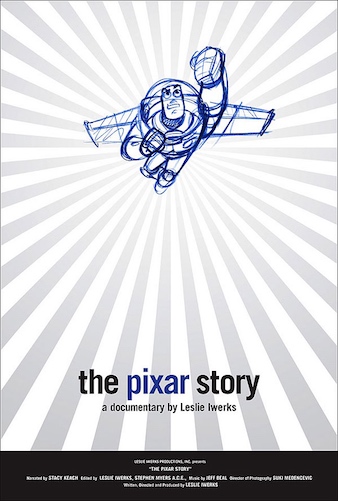
Made to celebrate the first 20 years of Pixar, Leslie Iwerks’ documentary charts not only the genesis, founding, and rise to industry-changing prominence of the beloved computer animation company, but also the birth of computer animation itself.
It starts at the very beginning, with John Lasseter’s education and time as a traditional animator at Disney, and, separately, explaining how computer graphics and animation even came to be. I won’t recap the full story here, but it recounts how Pixar come to be formed, how they pushed at boundaries, and, eventually, how the massive success of their feature films came to transform the American animation industry. While the documentary is primarily narrative, then, it also exposes a little of why all this happened — the processes and philosophies behind-the-scenes at Pixar that helped make their early films so good, and consequently so loved. It doesn’t explicitly dig into this, but their mindset and attitudes seep through in the stories of what happened.
For example, there’s the case of Toy Story 2: Lasseter had just come off the gruelling production and promotion schedule of A Bug’s Life when Disney decided to upgrade Toy Story 2, which was being made by another team, from direct-to-video to a theatrical release. Pixar reviewed the project and were unhappy, but Disney thought it was fine and refused to move the release date. So Lasseter abandoned plans for a much-needed break to spend time with his family and set about retooling the sequel from scratch — but while the original Toy Story and Bug’s Life had each taken years to make, for Toy Story 2 they had just nine months. The rest is history: not only did they get the film out on time, it’s arguably even better than the first one. Quite rightly, that whole palaver is named as their proudest achievement — the way everyone came together to make it happen helped define the company.
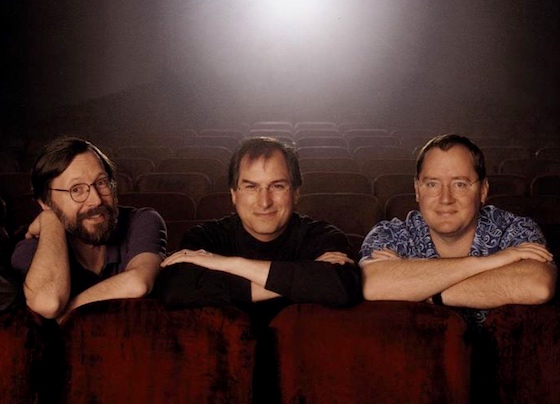
It also exposes another major contributing factor to the company’s success: Steve Jobs’ patience. Toy Story is when the wider world noticed Pixar, but they’d been going for years, pushing boundaries and breaking ground with short films and advertising, but not making a profit. But Jobs stuck with it, giving them more money, because he took a long-term view. Of course, it paid off, and when they did hit it big, it was his business acumen that secured the future of the company: taking them public (which brought in massive funds) and striking a new, better deal with Disney. It’s easy for us to look at the quality of their films and go “that’s what changed things”, but the business side is a vital component too.
Change things they certainly did, as the documentary shows towards the end, with 2D animation dying off and the Disney buyout-cum-merger with Pixar that would lead to 2D being saved — hurrah! Of course, this film is now 11 years old, and we know things didn’t end so happily: despite Lasseter & co’s commitment to helping 2D stay alive, Disney have released jus two traditionally-animated feature films since then, and the last of those was in 2011, apparently with no more planned.

It’s at this point the film is also forced to acknowledge Cars, which I think most would regard as Pixar’s first real critical flop. They talk about how it was “beautiful” and a “hit”, but then move past it speedily, presumably to gloss over the fact it didn’t go down nearly as well as their other movies. This highlights two things: firstly, that this is certainly no “warts and all” telling — if there were internal conflicts or difficulties, they’re glossed over. Secondly, that the film could do with an update. As I said, it’s 11 years old now, and much has changed in that time. Pixar had only released seven movies at that point and were on top of the world, but since then they’ve released many more (they’re up to 19 now, with #20 imminent) and faced challenges of less-well-received films, a resurgence in the quality and popularity of Disney’s main output, and the likes of DreamWorks and Illumination gaining ground. It would be very interesting to see an update on how that time has been for the company.
Despite those drawbacks, The Pixar Story feels like a very good overview of one of the most significant forces in 21st Century movies. Without being too sycophantic, it definitely feels like a celebration, but one that they’d earned.

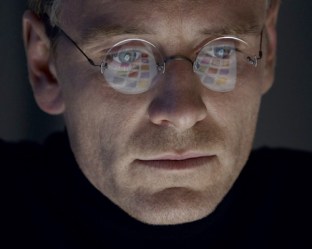
 Written by Aaron Sorkin and directed by Danny Boyle, with a name cast and plenty of awards buzz, this biopic of the eponymous tech genius was an inexplicable box office flop on its release last year — proof if proof were needed that box office does not equal quality, because I thought it was thoroughly excellent.
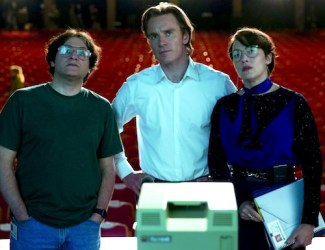 Boyle’s decision to use different film formats for each section — 16mm, then 35mm, then digital HD — helps delineate the eras and, in a way, reflect the products being launched (though I’ll instantly concede that last point may be a bit of a stretch). I imagine it’s too technical a concern to be noticed by your average filmgoer, but I’m sure it must have a subtle effect; and for those of us who are so minded to spot the change, it’s kinda fun and effective. Shot by Alwin H. Küchler, each section has its own charm, from the warm fuzziness of 16mm, to the gloss of 35mm, to the precision of digital. This is a mighty fine looking film, and while modern tech meant the 1080p Amazon Video stream I was watching looked darn near Blu-ray quality, I’m still miffed I didn’t just go straight for the disc, because now I’m going to have to pay for it again at some point.
 The dialogue they’re delivering is so Sorkin. Rearrange character names and you could drop this into
  In a similar vein, I suspect it would make a great companion piece to
 100Films.co.uk