
I suppose lockdown is officially over now, for good or ill, but we begin this month’s TV review by reliving those heady days…

Staged Series 1
 This filmed-in-lockdown comedy stars David Tennant and Michael Sheen as they attempt to rehearse a play over the internet, the goal being they’ll be ready to put it on as soon as theatres reopen. Naturally, there’s much more to it than two actors practising a play — indeed, I’m not sure they ever actually get round to any proper rehearsing. Conflicts abound, both broadly relatable (Sheen is blackmailed into helping look after his elderly neighbour, but develops genuine concern for her) and actorly (a running debate/gag about which of the pair should get top billing), and there are a couple of big-name surprise cameos along the way (no spoilers — the surprises are worth it). With all episodes in the 15- to 20-minute range, the series is hardly a big time commitment (it runs well under two hours in total), but it’s well worth it and consistently funny. Indeed, I wish there was going to be more. Well, a second lockdown isn’t out of the question yet, is it…
Lockdown may be over, but Staged is still available on iPlayer.
Hamilton’s America
 This documentary first aired back in 2016, in the wake of Hamilton’s success on stage. I’m not sure if it’s ever been screened in the UK, but I tracked down a copy after watching Hamilton on Disney+. So, firstly, I’m glad I didn’t watch this before seeing the film — I feel like it would’ve somehow ruined, or at least tarnished, the experience of seeing the full production, because this contains extensive-but-far-from-complete clips from the show. I guess, back in 2016, when the only way to actually see Hamilton was by securing hard-to-come-by, insanely-expensive Broadway tickets, getting to see those clips was probably great for fans.
Aside from that, the documentary is part making-of (it follows lyricist, composer, and leading man Lin-Manuel Miranda starting in 2014, when he’s writing the musical with an impending rehearsal deadline, and then continues on to cover the show’s opening and success) and part history lesson (various cast members and experts discuss the real events and visit relevant historical locations to learn more about their characters). Rather than half-arse either of these aspects, the feature-length running time allows the doc to offer genuine insights into both. For just one example, there’s a bit where they discuss the issue of the Founding Fathers being slave owners, and although it’s only a couple of minutes long, it contains more intelligent commentary than the entire bloody social media debate about it that the film’s release provoked.
It’s a real shame this isn’t on Disney+ to accompany the film, because I think a lot of people who’ve enjoyed that would enjoy this as a chaser. It’s definitely worth a watch if you can track it down.
Star Trek: Picard Season 1 Episodes 9-10
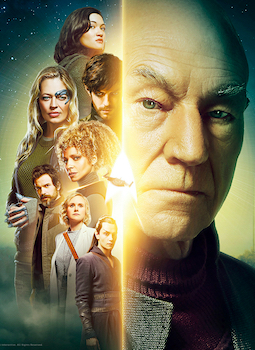 I started this when it began in January, and have been slowly trekking through it ever since — it’s taken me six whole months to get through just ten episodes. That’s a commentary in itself as to what I thought of it, I suppose, though if you asked me I’d say it’s “not bad”.
From what I’ve seen of other people’s reactions, Picard seems to be a real “love it or hate it” show. A lot of people I read and/or whose opinion I respect either can’t stand it or find it thoroughly mediocre, but there are definitely people out there — more than an odd handful, apparently — who think it’s fantastic. As often seems to be the case with something so divisive, I find myself somewhere in the middle. After a rocky start (the first three episodes should’ve been condensed into one feature-length opener, at most), I felt the series settled down reasonably well, with a couple of almost-standalone episodes of varying quality eventually giving way entirely to its arc plot, which from then was executed with a relative consistency of pace — a major problem with many “one long story” streaming series nowadays. The quality of the dialogue and acting remained somewhat turbulent, which perhaps belies the franchise’s roots as predating “prestige TV” — what’s acceptable for Star Trek doesn’t necessarily wash with the modern sophisticated non-die-hard-fan viewer.
That said, for every scene or plot development that worked well, there was something truly ridiculous or implausible just around the corner, with the finale being one of the worst offenders. Some might say “it’s sci-fi — implausible is its stock in trade”, but even sci-fi has rules, and Picard seemed to merrily flout them, often in the name of fan service. And that’s why I end up somewhere in the middle, because overall I thought it was a solid-enough space adventure, undermined by frequent blips in quality and sense. I believe the writing team is undergoing some significant changes ahead of the already-commissioned second season, so maybe they’ll iron out the kinks.
Fleabag
 I’ve never got round to Phoebe Waller-Bridge’s much-acclaimed sitcom, but, during lockdown, Amazon offered the original one-woman-show stage version (recorded last year during a live cinema broadcast) as a charity rental, so I thought I’d see what the fuss was about. My reaction was… muted, to be honest. I can certainly see how it pushes at boundaries, both of the depiction of women in fiction and of taste in general, and for that reason it’s significant, but I only found it sporadically funny, which makes it somewhat unsatisfying as a comedy. Also, I wasn’t expecting it to get so dark — if you’re a lover of small furry animals, beware.
James Acaster: Repertoire
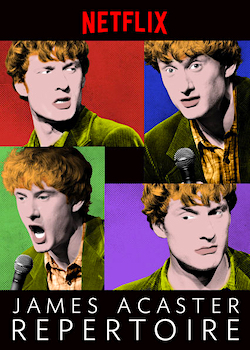 Another filmed stage comedy that left me somewhat underwhelmed. This is more straightforward stand-up, however, and as that it was more often amusing — whether you find Acaster’s “wacky” style (his word) to your taste will dictate exactly how funny. For me, he’s not the most consistently hilarious standup I’ve seen, but provoked laughs regularly enough. The real selling point here, however, is that it’s a four-parter. Ever heard of a multi-part stand-up gig before? Me either. These aren’t just four entirely independent gigs box-set-ed up either, but were conceived and shot as four connected sets.
Despite that high-concept pitch, it turns out the four-part structure isn’t particularly clever after all. The cross-episode callbacks are sometimes good and clever, but sometimes just elicit recognition (accompanied by an “I got that reference!” laugh from the audience). It’s not anything unique to the four-part structure — plenty of other comedians structure their standalone shows in the same way. The only differences are (a) if you watch it in four sittings then some of the callback are to a different episode rather than something earlier in the same set, and (b) it’s three-and-a-half hours of material, all of which were all performed on the same day, which is a remarkable feat. Otherwise, the connectivity is basically limited to episode 4 ending in such a way as to imply it’s ‘set’ before episode 1, including a cleverly staged final shot. But, unless I missed something, the other episodes don’t line up in such a way that 2 must follow 3 and 4 must follow 3, so it doesn’t create some kind of ouroboros loop, which I guess was the kind of structural inventiveness I was looking for.
Overall, Acaster is whimsically amusing — not my favourite standup, but solid with some excellent bits — and the sheer volume of material at a sustained quality level is impressive. But I don’t buy that this miniseries structure is innovative In any way except volume. And I can’t help but wonder if, had he condensed these 205 minutes into a normal 60- to 90-minute set, it might’ve felt like a higher density of pure gold.
The Twilight Zone ‘Best Of’
After a few months spent scraping the bottom of what the original Twilight Zone has to offer, it’s back to the cream of the crop. (At this point you may be wondering “how many episodes can he reasonably class as ‘the best’?!” My final answer is: the top third. Yes, that’s quite a broad definition, but I like to be generous. For what it’s worth, today’s selection gets me to 20.5% on my consensus ranking.)
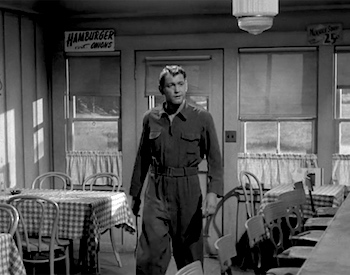 This month’s selection begins at the very beginning: the first-ever Twilight Zone episode, Where is Everybody? The title alone is a pretty succinct pitch of the episode’s theme, and the episode is as one-note as its premise. This is an exciting story in which a bloke… gets himself coffee, and… talks to a mannequin, and… tries to phone the operator but can’t get through, and… has an ice cream, and… yeeeaaah. The twist ending isn’t much cop either, 50% “it was all a dream”, 50% a thin moral about humans’ need for companionship. It could’ve been better: Rod Serling’s original pitch for episode one was a tale about a society where people were executed when they turned 60, which I think is a better concept, but it was deemed too depressing (imagine what they would’ve made of Logan’s Run, where the executions happen at 30!) That said, “everybody’s gone” is a reasonable starting idea, but the episode needs (a) more places to go with it, and (b) a more interesting reveal. (See The Quiet Earth for essentially the same premise being more thoroughly explored.)
Next is one of the very few Twilight Zone episodes that doesn’t have a sci-fi or fantastical element (apparently there are only four such instalments). The Silence concerns a wager between an old rich dude and a talkative guy at his club: if the latter can manage to stay silent for a whole year (while under constant observation, natch), the former will pay him $500,000 (equivalent to over $4 million in today’s money). What the episode really asks is how far would — could; should — you go to win (or keep) half-a-million dollars? Whatever your answer, the episode gives us a very dark version, primarily because of the ending — in traditional TZ fashion, there’s a twist (or two) and no one comes out of it well. Although it’s less allegorical than the series’ usual fantastical episodes, there’s no less of a lesson to be learned.
Conversely, some Twilight Zone episodes feel like a concept without a plot, and The Odyssey of Flight 33 is one of them. It concerns a transatlantic flight that finds itself in some weird midair phenomena, and to say where it goes would be to spoil the only card this episode has up its sleeve — as Oktay Ege Kozak of Paste puts it, the episode is “a light sci-fi rollercoaster ride” without “a clear sociocultural theme or complex existential narrative”. To be less kind, it’s a nice idea but the story doesn’t have anywhere to go with it — it doesn’t even end, just sort of peters out. Conversely, Matt Singer at ScreenCrush argues the ending is “an unsolved mystery [with] total ambiguity, which makes it … that much more disturbing.” Despite that, I actually think is one of those rare episodes that would’ve worked better with season four’s extended running time. Most of the story is set in the plane’s cockpit with its crew, but we meet a couple of the passengers, only for the episode to do nothing with them. At least if their reactions had been fleshed out, maybe there would’ve been more meat here.
 I’ve written before that some episodes suffer from the series’ own influence, or just from an ensuing 60 years of sophistication on the part of the viewer, and Nightmare as a Child is a case in point. It has two reveals, and they’re both not so much guessable as obvious and inevitable. There’s even a bit of a coda to thoroughly explain it all again in case you didn’t get it. Maybe that was necessary back in 1960, when stories like this were breaking new ground in the audience’s minds, but today it feels like overkill. However, I wouldn’t say it’s a bad episode — indeed, the story of a woman meeting a strange little girl who seems to know an impossible amount about her life is still suitably eerie and tense in places — but it is one that plays less effectively today. That said, if you engage with it not as a mystery with a surprise but as simply a story, it has more to offer — Kozak compares it to “a tightly wound Hitchcockian thriller/murder mystery”, while Scott Beggs of Thrillist reckons it “replaces the usual slow burn of horrifying realization with tense, immediate danger” while it “confronts memory and PTSD in a fascinating way”. They’re not wrong.
Another episode with a tricky-to-parse twist is Third from the Sun. It’s a famous one — I won’t directly spoil it here, but I feel like the title gives it away rather. But, a bit like Nightmare as a Child, the episode is saved by being rather good even without the ironic final note (indeed, Kozak reckons the twist is “unnecessary… cheap and immediately predictable”). It’s about two families who, aware that nuclear annihilation might be imminent, try to escape, but a suspicious government figure potentially stands in their way. It’s a decent little tale of Cold War paranoia, but the twist probably is a little distracting. It reshapes what we’ve already seen, and explains some of the deliberate oddities in direction and set dressing, but it sort of doubles back on itself because the characters are now heading into the situation we thought they were in in the first place…
More successful, for my money, is And When the Sky Was Opened, about a pair of pilots of an experimental spaceship that crashed on its return to Earth — except one of the pilots maintains there used to be three of them, but no one else can remember him. A bit like Flight 33, there are no overt morals or explanations to be found here, just a lot of mystery and madness. Unlike Flight 33, I thought it had enough of that to fuel the narrative, leaning in to how the unexplainable phenomena affects the characters. It’s a neat little sci-fi tale — and, incidentally, is based on a story by Richard Matheson, making this his first credit on the series. I know in some circles Matheson is rightly exalted, but I feel like he’s not as widely known as he deserves — Serling gets much of the credit for TZ’s success, but several of the very best episodes are by Matheson.
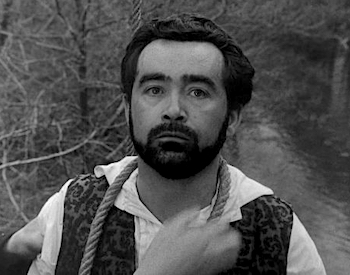 Having begun today with Twilight Zone’s first episode, we end with the last one produced — although they didn’t actually produce it. An Occurrence at Owl Creek Bridge is an award-winning French short film that Serling saw and liked so much he bought the TV rights (saving so much money on the cost of producing another episode that he brought season five in on budget). Even if Serling didn’t point out its alternate origin in his introduction, it’s immediately clear this came from somewhere else, because it doesn’t look or feel at all like a normal TZ episode. So what made Serling think it would fit the show? Why, it has an ironic last-minute twist, of course! This is regularly one of the best-regarded episodes of the series, and the short film itself has a pretty strong rep too, but I don’t get it. There’s some pretty photography and the beginning is fairly atmospheric, but it quickly starts to drag — the story is thin and slow, ending with a twist that I found inevitable from early on.
I feel like I’ve been quite negative on this month’s selection of episodes, but that’s only because I have very high standards for The Twilight Zone. Owl Creek Bridge was the only one I truly disliked, while The Silence and And When the Sky Was Opened are definitely deserving of their higher reputation.
Things to Catch Up On
 Last month, I didn’t include this section because I couldn’t think of anything to put in it. Naturally I then spent the next couple of days remembering things, like the recent re-adaptations of Alex Rider on Amazon and Snowpiercer on Netflix. Obviously, I still haven’t watched either of those. More recently, Netflix launched Cursed, a young adult (I think) take on Arthurian legend from the point of view of the Lady of the Lake. I’m not wholly convinced by the trailers or buzz, but I do love a bit of Arthurian whatnot so it’s on my radar. Also passingly of note is that Amazon just released season three of Absentia. I started out moderately enjoying the first season, but by the end was not at all impressed. I was surprised when it got a second run, so I’m even more flabbergasted to see it back for a third. I guess someone must be watching it. Each to their own.
Next month… the second season of Netflix’s superhero show The Umbrella Academy is out soon, but as I never got round to season one, I doubt I’ll do season two next month. Elsewise, more of the best of The Twilight Zone, and I really should get round to The Mandalorian (how long’s it been now?!)
 The 13th iteration of Red Dwarf eschews the normal episodic format for a single 90-minute special, in turn ditching the expected Red Dwarf XIII moniker for a subtitle. Well, the show has form in this: for its 21st anniversary revival we got Red Dwarf: Back to Earth instead of Red Dwarf IX, which wasn’t a whole series but instead a 90-minute single story (in that case split into three half-hours, but still).
 Mark Kermode’s insightful deconstruction of cinematic genres returns for a full second series (following a few occasional specials last year). I say “full” — three episodes. Whereas
  For
For 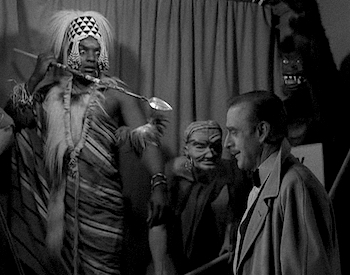 The worst episode according to Buzzfeed is The Jungle, which comes 148th overall. It’s about an American engineer who’s just returned from a trip to Africa where his company is planning to build a hydroelectric dam, and he may’ve been cursed by natives opposed to the project. As you’ve probably guessed, the episode’s biggest problem is some old-fashioned kinda-racist stereotypes about Africa and its people. I mean, the episode doesn’t even bother to say which country he’s been to, it’s just “Africa”. It’s not overtly racist, I don’t think, but it’s certainly tone deaf. There’s a scene where our hero discusses the project with the board of directors that juxtaposes the idea of witchcraft, which they all laugh at, with the irrational superstitions they all practice (not walking under ladders, etc), which is kinda neat, basically saying that “you laugh at their beliefs because you think of them as simple folk, but it’s no worse than our superstitions,” which is truthful and borderline enlightened. But that’s about all the episode has going for it. By the time he’s travelling home through the implausibly empty nighttime streets of New York City and being haunted by jungle sounds, it all seems pretty silly; and then his cab driver just drops dead, and a tramp appears and disappears out of thin air, and you wonder what all that’s got to do with anything. The only moral the episode can offer is “maybe some superstitions are right”, which is poppycock.
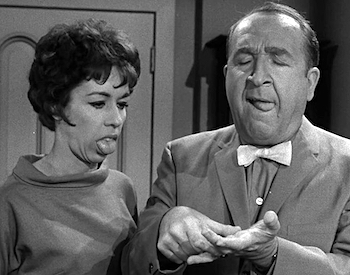
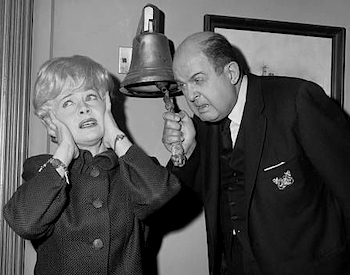 Finally, we end as we began, with an episode voted on by the public: at the bottom of Ranker’s list, and last on average too, is Sounds and Silences. It’s about an excessively-loud, domineering blowhard who gets some measure of comeuppance when he begins to be bothered by everyday sounds like a dripping tap or ticking clock. And then it goes the other way and he can’t hear loud noises at all. It’s poorly written and terribly performed — in the lead role, John McGiver is overacting something rotten. Some criticise the undercurrent of misogyny in the storyline, but I don’t know about that. He blames his mother and his wife for all his problems, but he’s an unlikeable sod so surely any misogyny is his rather than the episode’s — we’re not being asked to agree with him. The character’s ironic fate may be some form of poetic justice, but it’s too long coming to be entertaining, and too obvious to be satisfying. Whether I disliked this or Cavender is Coming more, I’m not sure, but they both merit their places at the bottom.
 This month, I have mostly been missing Westworld season 3, which is now four or five episodes in. I’ve not seen anyone talking about it on social media, so I’ve no idea if it’s good or bad, but I am inferring that not as many people are talking about it anymore, which is its own kind of criticism. One show I have heard mentioned is Tales from the Loop, Amazon’s new anthology sci-fi series. That’s been picking up good notices, and I thought it looked interesting anyhow, so I must make time for it.
 Most of the Doctor Who chatter of late revolves around what happened in the finale — no surprise there, given major revelations were teased in
 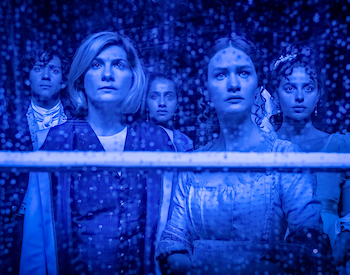 All of which means that the series’ penultimate story, The Haunting of Villa Diodati, was on a whole ‘nother level. For me, this might be the first genuine classic of this era. (If you’ve not seen it, spoilers ahead.) The first half is like a proper horror movie, complete with jump scares and other creepy effects (the dead-eyed little girl behind the door, but only when the lightning flashes… brr!) Naturally there’s a sci-fi explanation for it all, but even that was thrilling and chilling in its own way. It was the best use of the Cybermen since… er,
 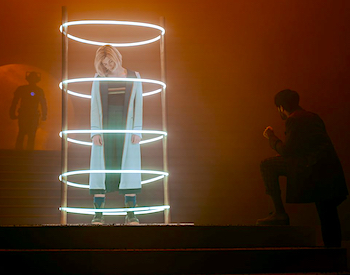 So the real point of it all comes in The Timeless Children, where the Master finds some new sources to rewrite the Doctor’s Wikipedia entry, then reads that revised version to her. I’m only half joking. Chibnall has managed to rewrite Doctor Who mythology in a way that both angers fans with its radical changes, and fundamentally makes no difference whatsoever. The Doctor used to be a mysterious alien from another planet who travelled the universe helping people. Now, she’s a mystery alien from another dimension who travels the universe helping people. Instead of being “just another Time Lord” who rejected the rules of their society and ran away to interfere, the Doctor is now a Special / Chosen One — the originator of the Time Lords’ ability to regenerate; her DNA copied and pasted into every other Time Lord… and then her memory wiped, so she grew up as just another Time Lord who rejected the rules of their society and ran away to interfere… but, y’know, was secretly special. I feel I should hate it, but, honestly, it was so guessable and so fundamentally immaterial that I just can’t muster the energy to care enough to hate it. It may yet go the way of “half-human” anyway, i.e. we’ll all just ignore and/or rewrite it as soon as someone other than Chibnall gets in charge.
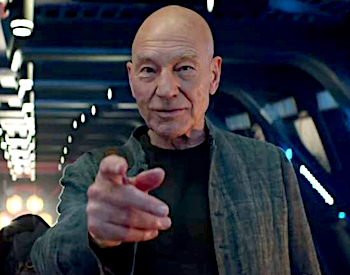 I’m a good few episodes behind on Picard now (episode 7 arrived this week), which is not because I’ve given up on it, but because it hasn’t engaged me quite enough to especially make time for it. It seems to have garnered quite the mixed reaction: the critics’ scores on Rotten Tomatoes are very strong; the user ratings on IMDb aren’t bad at all; but every time I see someone write about the show, on Twitter or another blog or what have you, it seems to be in criticism. I fall in between all these stools. There are things the show is doing well, or at least passably, but other bits that are awful; that feel like the worst of cheap made-for-syndication ’90s sci-fi, rather than the peak TV ‘prestige series’ it clearly wants to be.
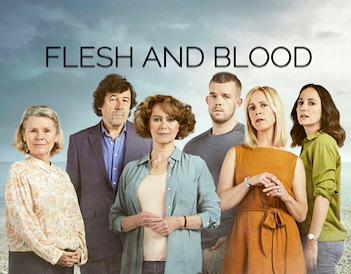 Between its short length (four parts), quality cast (Imelda Staunton, Stephen Rea, Russell Tovey), and condensed broadcast schedule (it was on four consecutive nights), this looked like a miniseries… until a last-second cliffhanger (plus some dangling plot threads) suggested there’ll be more to come. I watched it on that back of that cast and some strong reviews, which it only somewhat merited. It’s a decent family drama, about a 60-something widow getting into a relationship with a man her three grown-up children think might be conning her, with the added spice of a friendly/nosey next-door neighbour who might be a proper weirdo herself; but decent is about the extent of it — the cast elevate the material, which is fine but didn’t excite me otherwise. I expect I’ll keep watching if it comes back.
 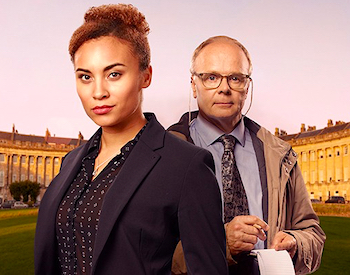 Normally I’d give a new ITV crime drama a miss, but this one is set and filmed in Bath (they got in my way one day by filming in the park I wanted to sit in for lunch, the bastards), so I had to see. It was… adequate. It’s about a hot-shot London detective who relocates to Bath, and lines like “that may be how things are done in London, but you’re in Bath now” were repeated to the point of absurdity. And don’t get me started on the accents (one local review derided the programme for thinking we all speak like Hobbits). Yet, inexplicably,
 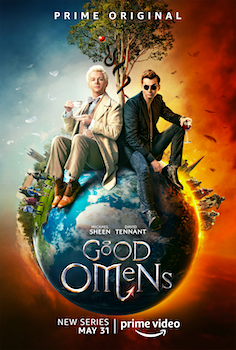 This six-part adaptation of the beloved fantasy novel by Terry Pratchett and Neil Gaiman debuted on Amazon last May, and by rights I should’ve been all over it from day one — I read the book as a kid, and loved it enough that I used to cite it as my favourite novel (the only thing that changed that was the fact it’s been decades since I last read it). But, as regular readers will know, life has got in the way of my viewing choices over the past year or so, and it was in fact that level of attachment that stopped me watching it — it needed my full attention. Obviously, that time has come.
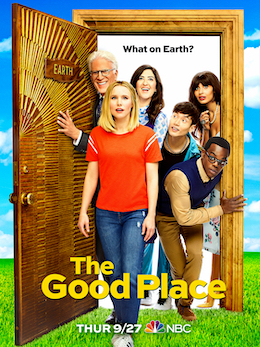 “Holy fork,” I said to myself when I saw that the series finale of this had aired at the end of January — I’d forgotten how much time had passed since I last watched it. If you’ve still not seen any of the show yourself, look away now — it’s the kind of series you want to experience knowing as little as possible, and if you read about later seasons before you’ve seen earlier ones it’s just gonna ruin stuff. (I know that sounds self-evident, but it applies to some shows more than others, and this is very much one it applies to.)
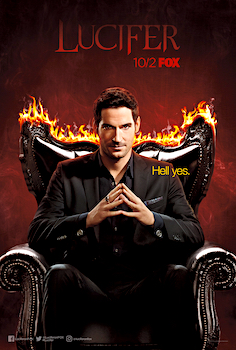 So, I’ve finally caught up on the Fox years of Lucifer — it was here that its original network cancelled the show (Netflix picked it up for a fourth season, recommissioned it for a fifth and supposedly final season, added more episodes to that fifth season, and now are reportedly lining up a sixth season too). I can see why fans were particularly enraged — the season ends on a massive change of circumstance that would’ve been a terrible place to leave it forever. Indeed, the most intriguing thing here is where it will go next, especially given the network change: Lucifer is an old-fashioned network procedural, as much concerned with case-of-the-week crime stories as it is with arc plots and the supernatural goings-on of its angels-and-demons universe; and that was to be expected when it was on an old-fashioned network, but now that it’s on Netflix, the home of bingeing, will it shift its emphasis?
 Jordan Peele’s new version of The Twilight Zone belatedly made it to UK screens a week or two back, almost 11 months after its US airing. I still haven’t watched any of it, but I am still going with cherrypicking the best of the original series.
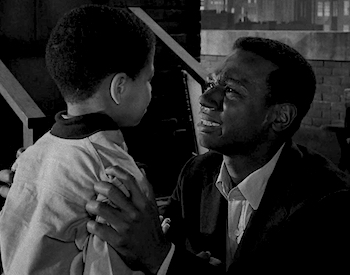 Moving on to
  On a lighter note, in 9th place at TV Guide is Twenty Two. I say “lighter” — the subject matter isn’t as heavy, but this is a creepy episode. It’s about a woman in hospital who has a recurring nightmare about visiting the morgue, but she’s convinced it’s not a nightmare, it’s happening. It’s the enactment of her nightmare that is genuinely creepy (just imagining having to ‘live’ it gives me chills), and the idea of not being sure what’s dreams and what’s reality is a very Twilight Zone concept. Unfortunately, some of the specifics are weak. Whether it’s a nightmare or not would be easy to disprove, considering it includes details like her breaking a glass every night, or that the morgue is room number 22 — if it is, how does she know that? (Her doctor does eventually realise this… after days of hearing about it.) And as there’s nothing else wrong with her, why not discharge her — the nightmare is so location-specific that it couldn’t happen at home. Eventually there’s a twist, and it’s a good’un, pushing the concept somewhere logical (within the bounds of paranormal ‘logic’, anyhow) and retaining the creepiness. (There’s also a question about whether it inspired a much later film series, with which it shares many notable similarities, but to say more would be a whopping spoiler.)
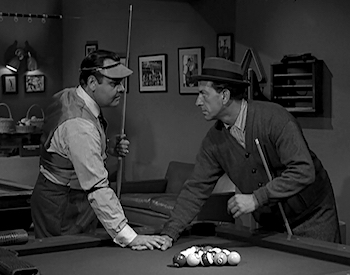 Finally for now, the one outstanding top-ten-er from
  On Twitter in the run-up to the ceremony itself, there was a general acceptance that (a) Parasite was the best picture of the year, and (b) Parasite was not going to win Best Picture. As far as I could see, there was a sort of genial acceptance of these facts, which made a nice change from Film Twitter’s usual condemnation of everything. But then, blow us all down, Parasite did actually win! It’s noteworthy for all sorts of reasons — primarily because it’s the first ever non-English-language film to win Best Picture at the Oscars. It was also only the third time that the Palme d’Or and Oscar have gone to the same film. And director Bong Joon Ho became only the second individual to win four awards at one ceremony (after Walt Disney, and he did it across four different films). As for the rest of the ceremony, most of the other gongs went where expected, leaving 1917 the major victim of Parasite’s surprise success. But it still took home three well-deserved technical trophies, whereas Netflix’s The Irishman (which had the same number of nominations, ten) was shut out entirely.
 This month, I have mostly been missing Noughts + Crosses, the BBC’s high-profile adaptation of Malorie Blackman’s beloved alternate-world young adult novels. It seemed to go down very well on Twitter when the first episode aired, and the whole series is already available on iPlayer, so I’ve no excuse not to make time for it next month (other than all those Picards I have to catch up…)
 Well, it certainly has been an eventful first half to this series of Doctor Who! Never mind bringing back the Master and destroying Gallifrey (again) in
 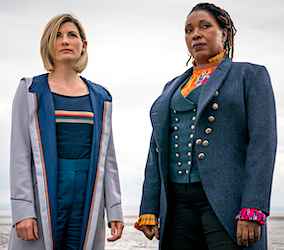 Social media and fan forums and whatnot have debated and analysed that revelation to death, so I won’t bother digging too much into all the possibilities of what it means — only time can tell. I will stake out this opinion, though: I am not a fan of the theory that she’s a pre-Hartnell version of the Doctor. The idea there were incarnations before the one we know as the first has always seemed disrespectful to me, somehow. Yeah, the Daleks ‘made’ Doctor Who, but Hartnell gave it his all too — without him week to week, and the effort he put into public appearances and the like, would the series have survived those early years? He’s not the only thing responsible for its success, and certainly not for its longevity, but he was The First — leave that be, thanks.
 The Star Trek series boldly goes where it’s never gone before: into the Prestige TV market. (Despite initial appearances, based on things like the reviews I’ve read and variably-sized season orders, I’m not sure Discovery was really “prestige TV” in the end.) Is it up to competing with the big boys of this peak TV era?
 I reviewed the first three episodes of His Dark Materials in
  It’s been
 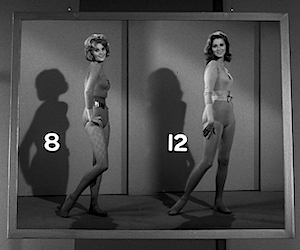 Moving beyond the top ten to complete the top 10% (i.e. the 16 best episodes), next is Number 12 Looks Just Like You (which, by-the-by, comes 10th on Thrillist). This is what some people might call “proper sci-fi” — an idea of the future spun out of what’s possible in the present, using it to present an analogy for the times we live in. And what is the analogy? In this case, there’s a few things you can read into it: mental health; conformism; the transition from childhood to adulthood; maybe all of the above; maybe something else. The only real downside is the episode hints at a wider world that isn’t explored. It’s mentioned in passing that the writing of Shakespeare, Keats, and others has been banned. Why? By whom? And while a bunch of middle-class white people are choosing which generic model they want to look like, what about other races? Class is less of an immediate issue because it seems this is a government-backed thing that everyone must undergo — but then, why do the lower classes get to look just the same as their ‘betters’? Surely there’d be different models depending on your social station? Never mind a 25-minute episode, someone could spin an entire series out of this… Still, having so much to ponder is one mark of a very good episode.
 Finally for now, the last episode in the top 16 (and the only one of today’s episodes not in anyone’s top ten), Nothing in the Dark. Probably best known for staring a young Robert Redford, it’s about an old woman who’s paranoid and agoraphobic due to her fear of meeting Death; but when Redford’s cop is shot right outside her door, she has to let him in to save his life. It’s a nice idea for a story, but (to loop back to what I was saying about The Masks) it feels a little slight in the execution. Half of the second act is taken up in a diversion with a demolition guy which is just that, a diversion. Still, there are very good performances from the two leads, and it comes with a well-meant little message by the end.
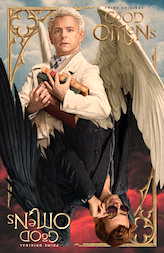 This month, I have mostly been missing Good Omens… again! I
  100Films.co.uk