
Sidney Lumet | 96 mins | Blu-ray | 1.66:1 | USA / English | U
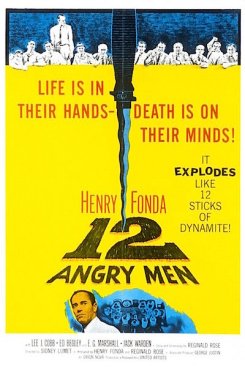 Twelve people sit around in two rooms and talk for an hour and a half in more or less real time — sounds like a recipe for dull pretension, and yet 12 Angry Men is anything but. In fact, it’s probably one of the most gripping thrillers ever made.
The men in question are jurors in a trial we never see — we join the narrative as they retire to the jury room to debate their verdict. Except no debate is necessary: the kid in the dock, charged with murdering his father, is definitely guilty and destined for the electric chair. Or so eleven of the men think, because an initial count throws up one objector: Juror Eight, Henry Fonda. He doesn’t think the boy is innocent, he just thinks they should do their duty and discuss the evidence.
So discuss they do, much to the chagrin of the other men. It’s a burning hot day in New York City, we’re in an era before ubiquitous AC, and the cramped room they’re shut in doesn’t even have a working fan. The men want to get home, or to events they have tickets for, or what have you. But they have no choice, because Fonda won’t just change his vote. It’s through their deliberations that we begin to learn the facts of the case, though really these are neither here nor there: this isn’t really a trial of some minority teenager, but instead of the American justice system and these twelve men.
As the ghost of 82 discusses so well in his review, this is a film filled with first-rate performances. Fonda may be the only ‘name’, but there’s a host of recognisable faces, and every one of them is an essential cog in the film’s well-oiled machine. Screenwriter Reginald Rose has nearly doubled the length of his 51-minute teleplay*, but seems to have accomplished the extension effortlessly. The movie doesn’t feel padded, as other films with limited characters in a limited space can do, but like it’s precisely the correct length for the amount of material it needs to cover.
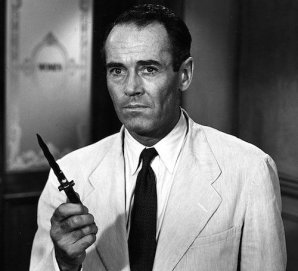 Slowly, steadily, surely, Fonda’s juror leads a recap of the evidence, analysing it, picking it apart, challenging presumptions and suppositions. Gradually, other jury members begin to be won over. This could be trite — of course our hero has to start convincing the others — but this is where the writing and cast shine again, because even men who seemed unswayable have their minds changed in a plausible fashion. Even then, the outcome rarely seems certain, each victory hard won, so that the film holds you rapt, desperate for sense and reason to prevail. There are moments of tension which may literally push you to the edge of your seat; moments of exultant success which may elicit an exclamation of approval similar to a point scored in a sports match.
In his Criterion essay “Lumet’s Faces” (online here), law professor Thane Rosenbaum discusses the film’s groundbreaking and unique perspective on the legal system (how many other jury-room thrillers can you think of, before or since? Not many, I bet). The film has been seen by some as a defence of the jury system: even when a defendant has a poor defender in the courtroom (as, it seems, has been the case here), or an exceptionally gifted prosecutor, the truth will out among the jury. Rosenbaum disagrees:
The presumption that jurors are impartial is dashed within the first ten minutes of the film. … The virtues of the legal system are presented through the prism of its dark side. A jury is empowered to remedy the mistakes made by the defense… but will the jurors be able to overcome the imperfections of their own humanity[?] 12 Angry Men sends a warning to be careful in courtrooms. The custodians of the system make mistakes, and the corrective possibilities may be no better than a crapshoot.
 For all that 12 Angry Men seems to show justice being served in the face of adversity, what it actually shows is justice being served thanks to blind luck: if Juror Eight had been a weaker-willed man, or another who was just as prejudiced as his eleven compatriots, then the debate would never have occurred, the teenager condemned to death in the blink of an eye. What are the odds on every jury room containing a Henry Fonda? I don’t fancy them myself.
Whatever (truthful) messages the film carries about the flaws of the legal system, there’s no denying its power as a thriller. You don’t have to debate its significance to the process it depicts, you can just be engrossed by the twists and turns of its story, be captivated by the twelve three-dimensional people it presents, complete with their own ideas, desires, and prejudices. Legal dramas are a dime a dozen on TV, but most still avoid the jury room. The unbetterableness of 12 Angry Men is probably why.

12 Angry Men placed 5th on my list of The Ten Best Films I Saw For the First Time in 2014, which can be read in full here.
It was viewed as part of my What Do You Mean You Haven’t Seen…? 2014 project, which you can read more about here.
* Trivia time! Sidney Lumet directed over 40 episodes of television before this, his debut feature, but the original 12 Angry Men wasn’t among them. That was helmed by Franklin Schaffner. A lesser-known name than the acclaimed Lumet, I’d say, Schaffner went on to direct Planet of the Apes and Patton, and for the latter won a Best Director Oscar — something that, despite four nominations, Lumet never managed. ^
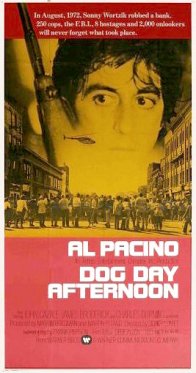 On August 22nd 1972, John Wojtowicz and Salvatore Naturile attempted to rob a Brooklyn bank to raise money for Wojtowicz’s male wife to have a sex change operation. The ensuing hostage situation was watched live on TV by millions of New Yorkers. If you made it up people wouldn’t believe it — especially in the ’70s — which is why this film, closely based on those events, strives so hard for naturalism. And it succeeds, and then some.
 to try to circumvent built-in prejudices that would’ve adversely affected an audience’s reaction too soon. It still works now — it’s not a twist, per se, but it is likely to change one’s perspective on the film and its characters mid-flow, which is always interesting.
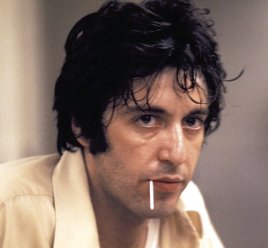
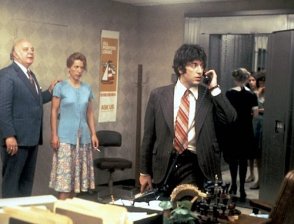 In trying to get a handle on the real Sonny when he was starting on the screenplay, Pierson talked to various people who knew him, but struggled to reconcile their conflicting accounts of the same man. The link he found was that Sonny was always trying to please people, and that’s what he used: in the film, he’s not just out for himself or his boyfriend, but also trying to placate and please his hostages, the police, the media, his partner, his mum, his other wife… Pierson and Pacino do indeed make him a different man to all of them, and this is one of the reasons Sonny is such a great character and a great performance: he’s genuinely three-dimensional. All of us behave differently, to some degree, when we’re with different people — we don’t necessarily realise it, because they’re all facets of the same us, but we do it — so to put that into a character is to make him real.
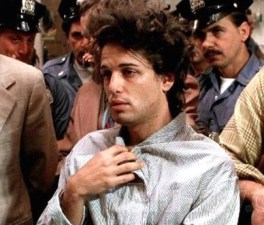 throughout the film trying to avoid turning any of these unusual characters into freaks, and Sarandon pitches it right. He plays the truth of a conflicted, confused character; a man who is perhaps easily led but hard to please, I think. As with the rest of the cast, the little touches he brings — such as starting a sure-to-be-emotional phone call to a man currently in the middle of a tense hostage situation with “so how are you?” — sell the reality of the piece.
 of today’s grainy shakycam stuff, this just feels real; the heart and truth of it come through, not the surface sheen of it being documentary footage. That’s more important.
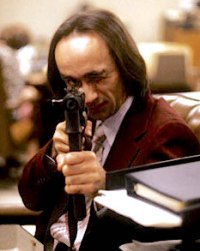 Pierson’s screenplay won at the Oscars. The film was also nominated for Best Picture, Actor, Supporting Actor and Editing, but this was the year of
  The film treads a delicate line between drama, comedy and thriller, but doesn’t once tip too far in any direction. It’s got several genuine laughs, but none compromise its serious side or claim to reality — it’s tense and touching too. Anyone else making a film about an extraordinary situation, be it a true story or from the mind of a crazed writer, would do well to look at Lumet’s work here.
 Murder on the Orient Express is arguably Agatha Christie’s most famous novel, perhaps because of its widely-known twist ending, or perhaps because it’s inspired in part by a high-profile true story, or perhaps because of this multi-Oscar-nominated all-star adaptation.
 100Films.co.uk