
I didn’t post a TV column again last month, so this roundup is thoroughly overdue. So before the Christmas TV season gets properly underway (it kind of already has, but shh), here’s my final regular TV review for 2019. (I still intend to post my usual Christmas-TV-focused one at some point.)

His Dark Materials Series 1 Episodes 1-3
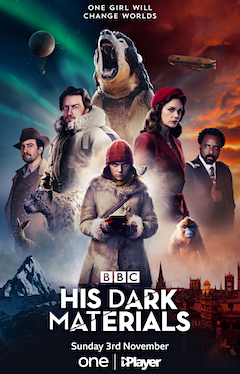 If I’d posted this column on time, this series would’ve just been getting underway. As it is, the final episode airs tonight. And, obviously, I’m quite far behind. I do intend to catch up, but I’m not entirely sure what I make of it.
Philip Pullman’s novels are acclaimed and beloved, of course; there’s a starry and talented cast, naturally; the production values are sky high; there are plentiful interesting ideas and threads to be explored… but the execution is a tad confusing, offering little quarter to those of us who are pretty new to this world (I have seen the film, but that made significant changes) and need it explaining to them — well, aside from a text prologue that feels like it was a late addition when someone realised they hadn’t explained things particularly clearly for newcomers. Even if you get a handle on it all, though, it feels like there’s an indefinable spark missing that would really bring it all to life as an engrossing drama.
Or maybe I’m just expecting too much — this has been a long time coming, with an attendant amount of hype. Perhaps it’ll all cohere as it goes on. As I said, I do intend to stick with it to find out, but I don’t feel it hit the ground running in quite the way I’d hoped.
Watchmen Season 1 Episodes 2-9
 When I reviewed the premiere episode of this last time, I said “there’s a lot of promise and potential here.” Well, reader, I do believe the series lived up to that and then some — it just got better as it went along, with a lot of the very best stuff coming in the final third.
Last time I also wrote about how it was both a sequel and a so-called ‘remix’ of the original novel, and that only became more apparent as the season went on. For the former, there’s no denying this is a follow-up to the book — it explicitly references and builds out of events and characters from Alan Moore and Dave Gibbons’s original work. But it also takes a lot of the iconography, themes, and storytelling devices from the book and rearranges them to help support its own narrative. That kinda makes it sound like just a remake, but that undervalues it — creator Damon Lindelof and his team of writers have brought a lot of other ideas to the table too, mixing those with what’s taken from the book to make a work that is new. So, whereas a traditional sequel would just be “the next adventure of the same characters”, maybe this is more of a companion piece. Whatever you want to call it, I think it’s a worthy addition. But it’s definitely an addition — I dread to think how this plays if you haven’t read the book.
And just like the book, there’s an awful lot more that could be written about what this series has to say and how it says it. I’ll leave that to others — there’s plenty of writing out there about it already. Some of that is a bit clickbaity (well, when isn’t stuff nowadays?), in particular with reference to the ending, which some sites have taken to calling a “cliffhanger”. It isn’t. Indeed, there may not even be a season two — not because HBO don’t want one, but because Lindelof doesn’t necessarily have a story to tell. It’s admirable that they’re not forcing it to happen just because season one has been a success (learning their lesson from True Detective, I suspect), but I also hope Lindelof does alight on an idea for more — if it can equal this, it would certainly be worth seeing.
Indeed, some commentators have been calling Watchmen a late entry for best TV series of the decade, or even one of the very best TV series of all time. Well, I don’t know about that, but it is very good — certainly better than it has any right to be, considering its provenance. That’s an achievement not to be undervalued.
World on Fire Series 1 Episodes 3-7
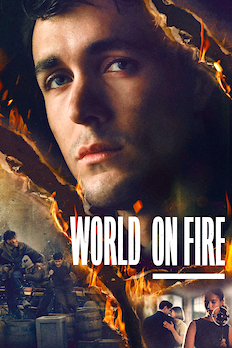 This is good enough that it probably would’ve been A Major Series if it had been made 15 to 20 years ago; heck, maybe even 10 years ago. Today… well, as my previous comment implies, it just doesn’t feel slick enough in the modern TV landscape. It has its plus points (the recreation of Dunkirk was suitably epic, at least compared to the low-key-ish earlier episodes, and Lesley Manville is always magnificent), and it’s done well enough to get recommissioned (thank goodness, because the finale left a tonne of stuff dangling as if it was a midseason episode), but I’ll be surprised if it ends up in the zeitgeist in the manner of, say, Downton Abbey. (Brief thoughts on episodes 1 and 2 last month.)
Shetland Series 5
 This ITV-produced BBC-aired crime drama is so popular that they recently recommissioned it for both a sixth and seventh series. Originally it took the form of two-parters adapted from novels, but for the past few series they’ve done original season-long six-episode storylines. For this run, the gang find themselves up against human traffickers, using Shetland as a waypoint to get slaves into the UK. Overall it’s not as engrossing or remarkable a story as the ones told in the last two series, but it remains a more-than-solid cop show bolstered by a likeable regular cast. That double series recommission is welcome news.
Things to Catch Up On
 This month, I have mostly been missing Jack Ryan season 2 — perhaps not the most high-profile show I could mention here (it’s on Amazon Prime, which never gets the same buzz as Netflix, however hard they try), but I enjoyed the first series a lot so I really do want to make time for this. Speaking of Netflix, they’ve just released The Witcher, which they clearly hope is going to do for fantasy what, er, Game of Thrones did for fantasy — i.e. be a much-talked-about series that brings big ratings. They’re pushing it hard, which for a company that claims to only use word of mouth and let the cream of their output rise naturally… well, it certainly suggests it cost a pretty penny. One show that has generated plenty of word-of-mouth self-promotion is The Mandalorian. Okay, it’s a Disney-produced Star Wars spinoff, it hardly needs the help, but you can’t’ve missed everyone going on about Baby Yoda. It’s not out on this side of the pond until Disney+ launches in the UK on March 31st, but where there’s a will there’s a way… And that’s without mentioning the BBC’s new War of the Worlds (which was poorly received but, as a sci-fi fan, I still feel compelled to watch); or thriller Giri/Haji (which was well-reviewed and sounds right up my street); or… oh, loads of stuff!
Next month… Diddily-dum diddly-dum diddly-dum ooo-weee-ooo, it’s Doctor Who.
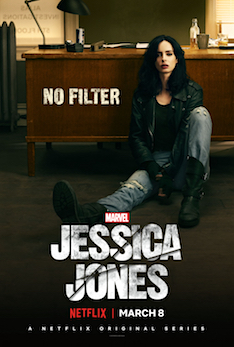 When the first season of Jessica Jones debuted 28 months ago it was practically a cultural phenomenon. Its fresh, unique take on the superhero genre marked it out as noteworthy even at a time when there are innumerable other films and series in that space. A large part of that was the intelligent and grounded way it engaged with some thorny issues, making it a critical darling and attracting audience admiration too. So I’ve been a little surprised that no one really seems to be talking about season two. Perhaps it’s just me and my little internet bubble, but since the flurry of pre-release reviews I’ve heard nary a whisper. I’m sure there must be reviews and recaps out there, which I wasn’t seeking out so as to avoid spoilers, but I didn’t stumble across any either.
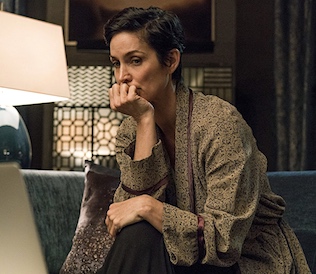 And that’s not to say these series never work in episodic form. For instance, events at the start of episode five, AKA The Octopus, see Jessica begin to force herself to be a better person. It’s one of the season’s strongest episodes, in part because of this burst of character development. Okay, it’s a bit blunt, in that she’s told she needs to improve and we see her consciously trying, but it pays off in a scene where she has to be empathetic to question a mentally-impaired witness. It’s not only Jessica who benefits from development: supporting cast members like Malcolm, Trish, and Jeri get meaty subplots to tuck into. Jeri’s is the best — indeed, her storyline might be the strongest bit of the entire season. There’s a fantastic, nuanced performance from Carrie Anne Moss — it feels like they’ve really worked to make use of her in a storyline that’s far more emotional and nuanced than what she’s had previously in these shows.
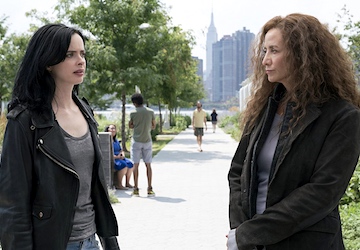 For me, it lost its way a bit again in the final pair of episodes — there are still really good bits, but others feel like a wearisome rehash of plot beats familiar from other superhero/thriller series. Eventually it comes to a good ending — there’s a surprising resolution to the plot, plus an epilogue that lays some intriguing hints for a third season (an inevitability, surely?) — but the faffery of episodes 12 and 13 to get us there… there were more streamlined ways to do this, I think. Or, considering the mandated episode count they have, more interesting ways to have spent the time. So it’s not perfect, but it’s still one of the best of the half-dozen Netflix/Marvel shows.
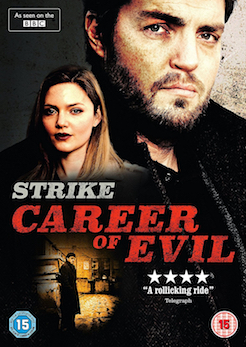 The latest Strike adaptation (and the last for at least a couple of years) was the best so far, I thought — a mysterious, reasonably complicated case, and plenty of character stuff for our likeable pair of heroes, too. The latter is certainly a big part of the series and its appeal, sometimes to the detriment of the actual investigation storyline, I suspect. By which I refer to the fact that some fans of the books have complained that the series isn’t devoting enough time to each adaptation, necessitating big cuts to the plot to fit into just two hours. I’ve not read them myself, and such editing didn’t feel noticeable during
 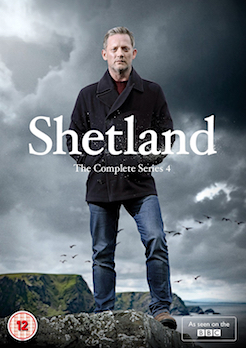 In almost the polar opposite to Strike, Shetland is no longer based on the books that inspired it (even though I believe there are one or two they’ve not adapted), and it takes a whole six episodes to tell its story. Actually, I feel a bit daft calling Strike’s case “complicated” now, because it’s as nothing to this series of Shetland, which sees DI Perez and his team struggling with both a 23-year-old cold case, which has resurfaced because the convicted murderer has just been awarded a mistrial, and a new murder with clear echoes of the first. If that wasn’t enough, the investigation leads them to Norway, where both the suspicious activities of an oil drilling firm and the plotting of a far right nationalist group come into play. Shetland has always had a bit of Scandi Noir about it (must be something to do with the cold northern environs), but it strays even further into that territory by, you know, actually going there.
 Not a reality show about manicurists (that’s what it sounds like, doesn’t it? If I was making a reality show about manicurists I’d be annoyed this took my title), but rather Netflix’s answer to The Great British Bake Off (possibly literally: they were miffed they didn’t get a chance to bid for it when it went to Channel 4). It’s not about super-skilled amateur bakers, though, but rather normal folk who attempt the kind of grand bakes you sometimes see online… and fail miserably. It’s like that bit of An Extra Slice where they look at viewers’ photos, only turned into a whole programme. It’s also very American — brash, loud, fast, unnuanced… It’s also the way it’s shot and edited, very much more like American reality series than British ones, but I shan’t bore you with a Media Studies-esque explanation of that.
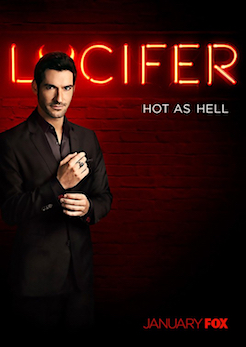 Having finally finished Castle last month, there was a gap in our viewing schedule for a light crime-of-the-week cop show. Lucifer seemed to fit the bill. For one thing, it’s been knocking around for a few years now, meaning there’s a nice backlog of episodes to get through. Loosely inspired by a DC comic, it’s about the actual Devil quitting Hell and setting up a life in Los Angeles, where — for one reason or another — he ends up helping the police investigate murders. Meanwhile, he enters therapy, and there’s an angel knocking around who wants to drag him back to Hell. The series nicely balances the bog-standard US-cop-show case-of-the-week stuff with the ongoing fantastical subplots, powered by a cast of engaging characters with conflicting motives. Best of all is the lead, Tom Ellis, giving a deliciously charming and slightly camp turn as the Prince of Darkness himself as he tries to become a better person. I’m not sure the series has really made any waves (especially on this side of the pond, what with it being an Amazon Prime exclusive here), but it’s really rather good. I mean, it’s not going to be challenging Quality TV for greatest-of-all-time status — it’s still a case-of-the-week buddy show when you boil it down — but it’s done well and a lot of fun.
 This month, I have mostly been missing The X Files season 11, which finished earlier this week in the US (and comes to the same end here in the UK with a double-bill on Monday). I watched (and reviewed, natch) its first episode
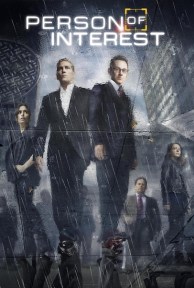 I have very mixed feelings about Person of Interest, whose fourth season has only made it to UK TV in the past few weeks (the belated fifth starts in the US in May, they announced yesterday). When it works, it’s a good quality vigilante/procedural action show; but its array of arc plots are as unrewarding as they are never-ending, and are consequently unsatisfying to a fault (literally). However, now that I’m so deep into it, and with cancellation finally confirmed (the foreshortened and delayed fifth season will indeed be its last, as was also finally announced yesterday), I feel like I’m in ’til the bitter end. The makers just bloody better have had the notice to get a proper ending into that now-final episode…
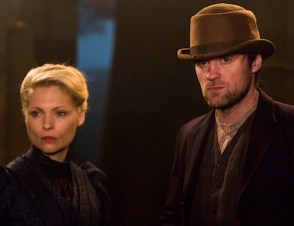 When Amazon picked up Ripper Street after the success of the third series, it was for a fourth and fifth season totalling 13 episodes. The show’s writers seem to have taken the double recommission to heart and crafted an arc plot to last throughout those two seasons, meaning this first half ends on a big surprise and with all sorts of things left up in the air. And now we have to wait. Still, it’ll be fascinating to see how there are six or seven more episodes left, considering the predicament they’ve put the characters in.
 I think I sounded a little more dismissive of Shetland than I’d intended in
  The quality of this revival has certainly been all over the place. I was wary of episode three, Mulder & Scully Meet the Were-Monster, because comedy always seems at odds with The X Files’ grand conspiracy storylines, but I thought it was hilarious and deserving of its acclaim as the best episode of the season. Home Again felt like solid standard X Files fodder, and Babylon was clearly trying to be zeitgeisty but perhaps wasn’t fully thought-through. As for the much-maligned finale, My Struggle II… well, it was a mess, and over-ambitious, and a stupid idea to end it on a cliffhanger when no one knew how well the revival would go down. Let’s hope Chris Carter is right that there’ll definitely be more.
 This month, I have mostly been missing The Night Manager. The critically-acclaimed ratings hit is, as you likely know, a spy thriller adapted from a John le Carré novel, which not only means it has pedigree, but that its star — Tumblr-beloved Marvel villain Tom Hiddleston — is now being tipped to take over as Bond. I wouldn’t know, I’ve not seen it yet.
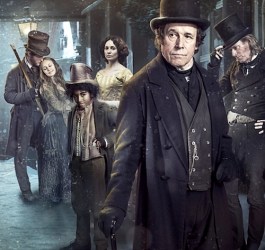 The BBC’s Avengers-style mash-up of characters from the work of Charles Dickens is an interesting mishmash of a show — part soap, part sitcom, part murder mystery — probably quite like Dickens’ originals, to be honest. It’s also an interesting case study in dramatic irony: every major storyline is a prequel to one of Dickens’ works, so how much do you rely on the audience knowing where everyone ends up? We surely all know where Miss Havisham is headed, but do you remember exactly what roles Compeyson and Pocket have to play? And is anyone but a Dickens expert (or someone who’s read Wikipedia, obv.) aware of who Honoria Barbary grows up to be? As a show, it’s not as classy or accomplished as the Beeb’s peerless Bleak House (from a decade ago now!), but it’s considerably more entertaining than their version of Little Dorrit that followed (both apt comparisons, because they’re Dickens adaptations in 15+ parts). It’s designed to be a returning series, and I hope it gets recommissioned.
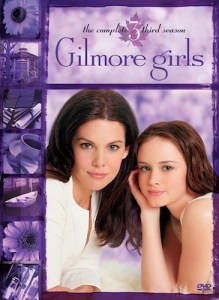 Oh, it’s a Woman’s Show — or, worse, a Teen Girl’s Show. There’s more to Gilmore Girls than that (stupidly reductive, anyway) description. OK, I’m not that fascinated by the ins and outs of Rory’s relationship dramas, and life would be simpler if Lorelai and Luke would just bloody well get together, but it’s endurable due to the fast*, witty, intelligent dialogue (seriously, these characters are impossibly well-read and -watched), the depiction of quirky small-town life and all its crazy characters, and the realistically antagonistic relationship between independent daughter and old-fashioned parents. I got quite far through watching Gilmore once before, many years ago, and then a while back started re-watching with a view to finishing it off. With Netflix’s four-movie revival coming later this year, it’s become time to get a wriggle on. So expect this to keep popping up — I’ve got 100 episodes to go…
 This is a few episodes in over the pond, I know, but it only started here on Monday (see also: The X Files). I’ve never seen one of Ryan Murphy’s other shows (Nip/Tuck, Glee, American Horror Story, etc), except for the Rocky Horror episode of Glee, which I hated. He seems to be quite a divisive creator, so maybe it’s for the best that here he’s only acting as producer and occasionally director. For people like me, who were too young to follow the O.J. case, this is a potentially-fascinating insight into a famous bit of… I was going to say “recent history”, but it’s 22 years ago now. Reportedly the series will focus on how the apparently open-and-shut case we witness in this episode goes astray at trial, which I guess makes this first part all about setting things up. If that is the case, I think there’s a lot of promise.
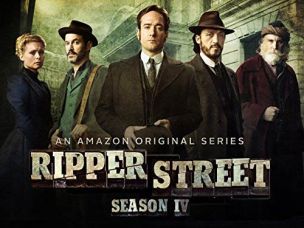 The Amazon-saved Victorian murder drama returned with a 130-minute episode shot in 2.35:1 widescreen — in other words, it was basically Ripper Street: The Movie. In truth, it was clearly designed as a two-parter, and would perhaps have played better in that form. The cinematography of that first episode is glorious though, so rich and well-designed, it’s practically worth watching just for that. Series 3 was the show’s strongest run so far, and for me the new series isn’t quite matching it yet, but it’s still a quality drama about dark deeds in dark places.
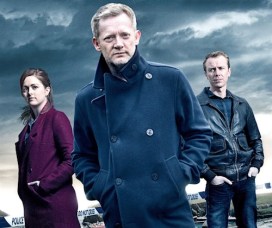 I don’t watch that much crime drama… says the person who’s already highlighted Dickensian, American Crime Story, and Ripper Street, and is also watching Death in Paradise, Elementary, and Vera right now. (I need to cut back on these.) One thing that works in Shetland’s favour is its remote, somewhat desolate setting. I suppose that makes it feel tapped into the Nordic Noir craze a little bit, though that’s probably where the comparison ends. This latest series is also telling a single story over its six parts, which is a change of pace for the show. It’s still in the “intriguing start” phase — there’s clearly something much bigger going on than these small-island cops are used to dealing with.
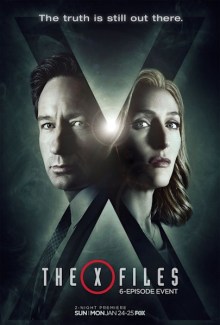 The X Files revival only has one episode left to air in the US now, but over here it’s barely begun (episode two went out on Monday). Despite the general apathetic reaction to the first episode (My Struggle), I largely enjoyed it. Only having dipped in to the original series meant I was thoroughly lost at times, but the Mulder and Scully reunion was suitably nostalgic and it threw around ideas with abandon. Episode two (Founder’s Mutation) seems to have been better received, but I can’t say I noticed a massive up-tick in quality. Ostensibly a “monster of the week” episode, it’s decent in that regard, though I also liked how it tapped into storylines from the past — when you’ve only got six episodes, making any of them completely cut-off and standalone feels somehow wasteful.
 This month, I have mostly been missing the BBC’s new War and Peace — aka Phwoar and Peace, according to social media and/or journalists wanting to have influence on social media. It seemed like the kind of thing (i.e. lots of characters with Russian names) that would benefit from being watched intensively, rather than spread thin over a month and a half, so I’ve got it all saved up. Maybe next month, then.
 100Films.co.uk