
Another later-than-usual TV review, because my TV viewing was affected by the same stuff that’s seen my post count plummet this month, as well as kept this month’s film numbers down (more on that on Saturday). Consequently, I waited until I’d actually watched enough TV to make this post somewhat worthwhile…
Although, despite what I said in last month’s “next month”, I still haven’t watched Lost in Space. Maybe next month (but don’t count on it).

Disenchantment Season 1
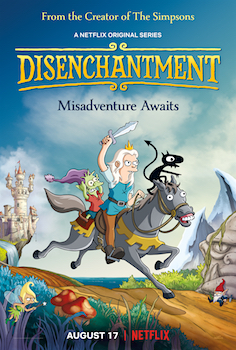 The first new series from The Simpsons creator Matt Groening in almost 20 years, Disenchantment is a riff on the fantasy genre. It follows the misadventures of Princess Bean of Dreamland, a rebellious sort who prefers to sneak out of the castle and get drunk in the pub than… well, do anything else. In the first episode, she and we are introduced to her personal demon, Luci, and Elfo, an elf who has left his happy-clappy kingdom to explore the misery of the wider world. This trio form the heart of the show, though naturally there’s a wider ensemble to help fuel storylines.
You may’ve heard the series has come in for a bit of a drubbing from critics, which I’m not sure is wholly fair. It’s not the most consistently funny show, with background gags sometimes providing bigger laughs than the main stories or situations, but it raises chuckles with decent regularity. It’s also not the most original concoction on TV, with some familiar characters and relationships, just grafted onto a fantasy setting. Although at least it has the good sense to create its own fantasy world, rather than being a direct spoof of, say, a certain other show that has brought the genre widespread attention. Whether it’s set in a fully-realised world or one the writers are creating on the fly, I’m not sure, but there’s a lot of room left to explore.
But even if it’s not hilarious or groundbreaking, the first season builds up a nice little rhythm as it goes along. The weakest episodes are undoubtedly the first few, which are somewhat swamped under setup. After a few standalone stories in the middle — which vary in quality from some of the season’s best instalments to, well, not — things begin to come together for a highly serialised run at the end, which finds a use for many disparate bits from those standalone episodes, and all culminates in a cliffhanger. Fortunately, Netflix’s original commission was for twice as many episodes as are in this first run, so we’re guaranteed a second batch. This serialisation works better for a streaming show than completely standalone episodes, although Disenchantment thankfully doesn’t lose sight of being consumable in episode-sized bites.
So, while it may take most of the season to truly warm to the characters and for the series to find its groove, it does get there, and suggests brighter things in the future. Whether it will ever attain the cult following enjoyed by Groening’s other series is arguably a long-shot (can lightning strike thrice?), but it has potential.
Hang Ups Series 1 Episodes 1-3
 Loosely based on the US series Web Therapy, this new sitcom stars Stephen Mangan as Richard Pitt, a therapist offering his services over the internet. The filming style (each client only appears for a few minutes per episode, popping up now and again throughout the series, always via webcam) allowed them to attract a rather phenomenal supporting cast, including the likes of David Bradley, Charles Dance, Celia Imrie, Richard E. Grant, and David Tennant. The way each episode pingpongs around the various clients and Richard’s many, many personal problems (his marriage, his kids, his parents, his siblings, his bank balance) makes for a whip-crack pace that has pros and cons — each episode seems to disappear in a flash, having at once both dashed through some plot and also gone nowhere. Partly this is the result of an abundance of characters — some of the clients are basically one-off sketches, which is fine, but the regulars’ stories can only advance in small increments. I’m left wondering if it might’ve actually worked better with less going on. Still, the quality cast means characters do get rounded out speedily, and when it works it can be pretty funny.
Things to Catch Up On
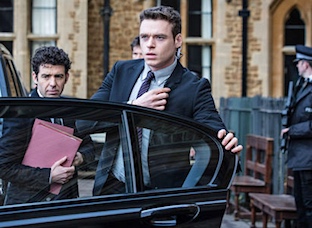 This month, I have mostly been missing Bodyguard, the new BBC One thriller from Line of Duty creator Jed Mercurio that premiered with a two-day double-bill last weekend. It seemed to go down well, based on the ratings and what I saw on Twitter (while avoiding spoilers!) As usual, I intend to wait until the whole series has aired (or most of it, at least) and then whisk through the lot.
Next month… everyone’s least favourite Marvel Netflix show returns. But there’s a new showrunner and a lower episode count, so fingers crossed Iron Fist feels worth the 10-hour investment this time.
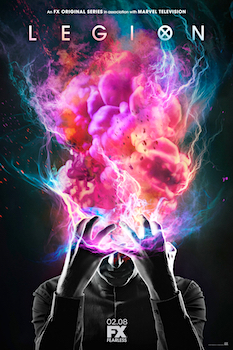 The first live-action X-Men TV series is only tangentially connected to either the movies (there are a couple of vague nods) or even the original comic books (apparently the title character is the only thing taken from them), but instead creator Noah Hawley (the man behind the Fargo TV series) has been allowed free rein to do as he pleases. Turns out that’s a massive mindfuck; a series that’s focused on atmosphere over narrative coherence, full of crazy visuals and abstruse plotting. If you’re thinking, “that sounds a bit Lynchian,” then yes, this is probably the nearest thing we’ll ever get to a David Lynch version of the X-Men.
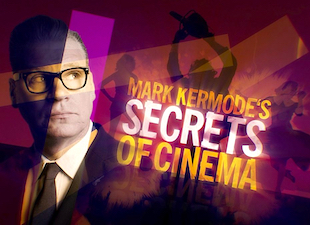 Mark Kermode is our guide for this BBC Four documentary series that seeks to expose the inner workings of movie genres and what makes them so effective. Co-written by Kermode and encyclopaedically knowledgeable movie guru Kim Newman, the series certainly has the chops to take on such a task. Focusing on one genre per episode, it makes an interesting choice to start with romcoms — a massively and enduringly popular type of movie, unquestionably, but one that’s often ignored by serious film analysis. That makes it the perfect choice for a series such as this, because, as the episode makes clear, the whole point of the genre is to do something very, very hard (produce a funny movie with loveable characters) and make it look easy (and when they succeed, that’s why it gets ignored!) As insightful as the first edition was, I preferred the second one, focusing on heist movies, though that’s purely because it’s a genre I’m more disposed toward.
 As I mentioned when I reviewed
  This month, I have mostly been missing Picnic at Hanging Rock, the new adaptation of Joan Lindsay’s novel (perhaps better known from Peter Weir’s 1975 film adaptation), which is currently halfway through airing here in the UK. It looks up my street, so I intend to binge it at some point. Also, Keeping Faith, the BBC Wales drama that was such a hit on iPlayer they’re finally giving it a run on BBC One proper. Oh, and the third series of Unforgotten is also partway through, and they’ve gone and revived The Bletchley Circle too. Who says summer is a quiet time for TV?
 100Films.co.uk