
As I mentioned in my August review, this TV column was meant to go up last month, but I didn’t get round to it and now there’s tonnes to cover. So, let’s get cracking…

Lucifer Season 5 Episodes 1–8
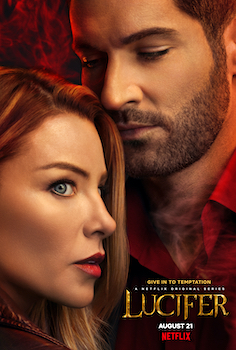 The
The Fox Netflix comic book adaptation reimagining returns for its final penultimate season. For most of its production cycle, season 5 was indeed intended to be the end of Lucifer. Apparently it was only when they came to writing the finale that they realised it contained a whole season’s worth of material, and so a sixth season was brought into being. And for this first half of season 5 — or season 5A, if you prefer — it does feel like things are headed towards an ending, mainly because of the reveal/cliffhanger on the midseason finale (no spoilers here!)
Before that, we get to see Tom Ellis exercise his acting chops by playing Lucifer’s scheming, American-accented twin brother, Michael, and a fun episode where all the cast get to play at being in a black-and-white ’40s film noir. That episode, It Never Ends Well for the Chicken, is an absolute delight, one of the series’ best ever, and is also by far the lowest-rated on IMDb. Some people don’t deserve nice things… Anyway, the season as a whole continues in the same vein as ever, albeit leaning a little more into its fantastical arc plots (as it also did last season, to be fair). It’ll be interesting to see how all that plays out, bearing in mind everyone thought they were making an ending until very late in the day.
The Crown Season 2
 When I last watched The Crown, Peter Capaldi was still the Doctor, the Netflix MCU was still expanding, and there was still a month left of the glorious days before “is Twin Peaks season 3 a movie?” debates. I enjoyed that first season, so quite why it’s taken me this long to get round to the second, I don’t know. Anyway, season two is in some ways the second half of season one — in my first season review I noted that the storyline about Philip’s position relative to Elizabeth was left open-ended, and the second run does indeed follow up on that, providing the focus of the first few episodes and a throughline that’s only really resolved in the finale (whether they’ll pick back up on it with the new, older cast in future seasons, I guess I’ll find out later). Whether its historical accuracy is strictly, well, accurate is still debatable, but any modifications or embellishment to fact are to the aid of making a compelling drama, which this undoubtedly is. Some people will never get on board with caring about the rarefied family and political problems of a royal family, but I think it’s remarkable how human and relatable those often are; and, when they’re not, they’re usually at least of some historical significance.
Archer Season 7
 After being less ambivalent about Archer’s fifth season experiment, Archer Vice, I was delighted to see it return to its original espionage trappings for season 6. I guess the writing team disagreed, because once again they’ve relocated the cast to a new setting: as a private detective agency in LA. For me, this played much like Vice did: I enjoyed it enough while it was on, but overall it can’t seem to equal the quality of the spy-based seasons. The storylines often aren’t as engaging; the humour isn’t as effective.
Next up is a period of the show where they pushed the setting even further from the original format each season, which doesn’t fill me with excitement, for obvious reasons. Though first up is “a 1947 noir-esque Los Angeles setting”, which does sound up my street. Fingers crossed.
Jonathan Creek Series 3–4 + Specials
 This particular batch of Creek episodes begins with Christmas special Black Canary, which aired between series 2 and 3. It’s one of the series’ very best episodes (indeed, it’s the top-rated on IMDb), a great mystery with an atmospheric snowbound Christmastime setting. Unfortunately, things then go off the boil a bit in series 3. Every single episode is written by David Renwick, and you wonder if he was beginning to run out of fresh, clever ideas. Nonetheless, there are some highlights here: a missing alien corpse; a mystery where a missing apostrophe may be a vital clue; and creepy one where a man apparently crawled up some steps after being shot in the head.
But the next Christmas special, Satan’s Chimney, is a definite return to form — the kind of Gothic mystery one associates with Creek but actually only gets from time to time. It’s the second best-ever episode according to IMDb voters. It’s also the first after costar Caroline Quentin departed the show. Julia Sawalha makes a solid replacement, depending on personal preference (I think Maddy is the better character; my partner disliked her intensely was glad to see her replaced). Unfortunately, the ensuing series 4, in which she also costars, seems to struggle for ideas even more than series 3, including some particularly dark and unpleasant mysteries.
And then, following a five-year gap (enough for Renwick to recharge, I guess), we get another feature-length special, The Grinning Man, which once again leans into the Gothic, and, once again, finds it works out for the best — it’s the fourth best-ever episode per IMDb voters. I’m seeing a pattern emerge. It also introduces another new sidekick in the form of Sheridan Smith, who adds a bit of sparky youth, even in spite of Renwick’s slightly “old man trying to write young person” characterisation of her. Unfortunately, this may be where the “good stuff” ends, at least if we’re to believe IMDb: no future episode even cracks the top 20, with five of the remaining seven right at the bottom of the chart. Oh dear.
The Twilight Zone ‘Best Of’
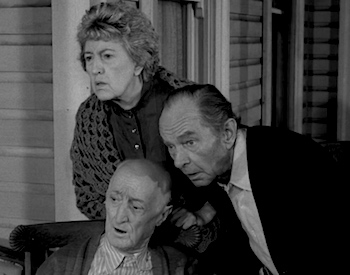 This month’s penultimate selection of the original Twilight Zone‘s best episodes begins with one that was remade by Steven Spielberg for the film revival, Kick the Can. It’s mostly a very grounded episode, set in an old people’s home where one ‘troublemaker’ tries to incite the others to have some fun. He has a crazy “fountain of youth”-type theory… which, of course, turns out to be true (this is The Twilight Zone, after all). It’s a very sweet episode, with a nice little message — essentially, you’re only as old as you feel; it’s about having an attitude that keeps you young. But trust TZ to not let it be entirely nice, adding a bit of glumness to even a happy ending by having one guy get left out. The movie version expanded on the ending, which was criticised by some, but those additions were actually the suggestion of the original episode’s writer.
Sticking with the big-screen theme, Mirror Image was reportedly the inspiration behind Jordan Peele’s Us, which doesn’t surprise me because Us came to mind while I was watching it. They’re not that similar to execution, just base concept — a woman waiting for a bus thinks she’s going mad when other people in the depot tell her she’s done things she doesn’t remember… but then she spots her doppelgänger in a mirror. It’s a creepy premise, and some moments provide suitable visualisations of that idea, but unfortunately it runs out of places to go with its setup, and the ending is inconclusive. Us does it better because it does go somewhere with it. Plus, Us‘s explanation for what’s actually going on is just as unsettling as when it was all unexplained, whereas Mirror Image undermines itself with some mumbo jumbo about parallel universes.
A Penny for Your Thoughts hasn’t inspired any cinematic do-overs (that I know of), but it’s easy to imagine it being reworked as a mid-’90s Jim Carrey comedy. It’s about a bank clerk who tosses a penny and it lands on its side, which grants him the ability to hear others’ thoughts (I’m sure that’s scientifically accurate). Unfortunately, it seems he’s not the brightest spark, because he keeps talking to people as if they’d just said their thoughts out loud. Okay, if this happened to you then you wouldn’t believe it and it might take you a moment to catch on… but even once this guy twigs, he keeps making the same mistake. Anyway, it builds up to a nice little twist (just because someone’s thinking about something doesn’t mean they’ll follow through) and, no spoilers, but it comes to a happy ending. A pleasant Twilight Zone episode?! A veritable rarity.
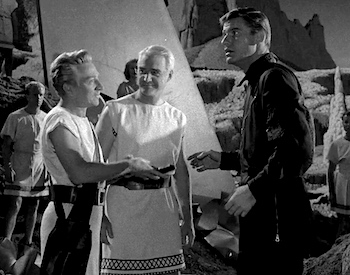 Conversely, there’s a typical Twilight Zone parable to be found in People Are Alike All Over. Unfortunately, it’s one of those episodes that only comes into its own at the final reveal — the journey there seems padded out to fill the requisite amount of screen time. Some of the pulp-SF stuff seems a bit dated now (the idea that Mars might be inhabited by an entire race of human-like beings is, obviously, daft), but it’s all in aid of an accurately cynical critique of mankind and our attitude to new discoveries.
The simply-titled season three opener is Two, named for its characters: two survivors from opposing sides of a devastating war, who bump into each other in a deserted town and proceed to eye each other up as they mooch around semi-aimlessly. It’s conceptually sound (about reconciliation between individuals when there’s no point fighting anymore), but dull in execution — so much of it is just them wandering around, not reconciling. Alternatively, it’s “an ethereal poem of an episode” (per Thrillist). I suppose that’s one way of looking at it.
The Last Flight might be my pick for the most underrated Twilight Zone episode. I know I’m including it in a review of ‘best’ episodes, but this is the ninth such selection, and I’d rate it much higher — in my opinion, it’s one of the series’ very best instalments. Written by the great Richard Matheson (arguably a more consistent writer than even Rod Serling; but then he only wrote 16 episodes vs Serling’s 92), it’s the story of a World War I pilot who lands at a present-day American airforce base. I won’t spoil what unfolds from there, because the episode is perfectly conceived and executed from beginning to end, a note of praise I wouldn’t apply to even some of the most well-regarded episodes. Part of why it’s so good is that it doesn’t just settle for its first idea — there’s a twist, and then there’s character development, and a final reveal/confirmation. Not every Twilight Zone episode bothers to add so much detail or so much character richness.
 Finally, Jack Klugman makes his fourth and final TZ appearance as the lead of In Praise of Pip. He plays a bookkeeper and failed father, now worried about his grown son who’s been injured in Vietnam (this is before the full-on Vietnam war, by-the-by — it’s speculated that this might be the first time the country was mentioned in a US drama). What plays out is the story of a man realising he’s wasted his chance to enjoy his kid’s childhood. It’s a good theme, and one fit to be given a fantastical Twilight Zone spin (it makes a change for a TZ episode to be about a man revisiting someone else’s childhood), but I wasn’t convinced by how it played out. In part, he makes a deal with God that thousands, millions, of other parents have tried to make, without success, because they don’t live in the Twilight Zone. I’m not sure how this would play with them… That aside, BuzzFeed describe the episode as “sweet. Harmless. Moving in a boring, safe sort of way,” and I’d tend to agree. On the bright side, it has one great scene in a hall of mirrors — a well-worn cinematic device but here justified with some clever compositions. Like the majority of Twilight Zone episodes, there’s always something to like.
Things to Catch Up On
 This month, I have mostly been missing the second season of The Umbrella Academy, which I’ve heard fantastic things about. I never got round to watching season one (although I meant to), so I really should catch up. And talking of “second seasons of superhero shows I never got round to the first season of”, Amazon just started The Boys season two. I want to catch up on that, too.
Back to Netflix, who also just released mission-to-Mars drama Away. It’s a concept that always entices me, even if the last one I tried, Mars, was so weak I only ever watched one episode. They’ve also recently launched Young Wallander, a reboot that sees the Swedish detective as a junior cop in the present day. Not sure how I feel about that — what makes it Wallander as opposed to Generic Swedish Cop? I’ll find out at some point, hopefully.
Next month… talking of stuff Netflix have recently added, they’ve got the first two seasons of YouTube’s Karate Kid sequel, Cobra Kai, ahead of their premiere of the third season next year. I’ll definitely be covering that next month, as well as… I dunno, whatever else turns up and/or I finally get round to watching.
Plus more Twilight Zone. There’s a lot of that to go yet.
 The 13th iteration of Red Dwarf eschews the normal episodic format for a single 90-minute special, in turn ditching the expected Red Dwarf XIII moniker for a subtitle. Well, the show has form in this: for its 21st anniversary revival we got Red Dwarf: Back to Earth instead of Red Dwarf IX, which wasn’t a whole series but instead a 90-minute single story (in that case split into three half-hours, but still).
 Mark Kermode’s insightful deconstruction of cinematic genres returns for a full second series (following a few occasional specials last year). I say “full” — three episodes. Whereas
 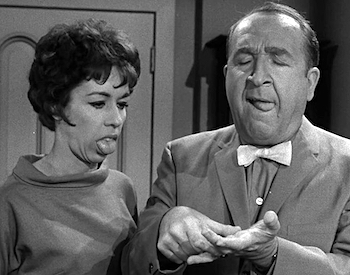 For
For 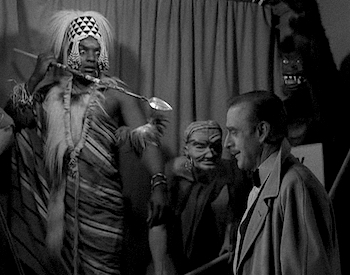 The worst episode according to Buzzfeed is The Jungle, which comes 148th overall. It’s about an American engineer who’s just returned from a trip to Africa where his company is planning to build a hydroelectric dam, and he may’ve been cursed by natives opposed to the project. As you’ve probably guessed, the episode’s biggest problem is some old-fashioned kinda-racist stereotypes about Africa and its people. I mean, the episode doesn’t even bother to say which country he’s been to, it’s just “Africa”. It’s not overtly racist, I don’t think, but it’s certainly tone deaf. There’s a scene where our hero discusses the project with the board of directors that juxtaposes the idea of witchcraft, which they all laugh at, with the irrational superstitions they all practice (not walking under ladders, etc), which is kinda neat, basically saying that “you laugh at their beliefs because you think of them as simple folk, but it’s no worse than our superstitions,” which is truthful and borderline enlightened. But that’s about all the episode has going for it. By the time he’s travelling home through the implausibly empty nighttime streets of New York City and being haunted by jungle sounds, it all seems pretty silly; and then his cab driver just drops dead, and a tramp appears and disappears out of thin air, and you wonder what all that’s got to do with anything. The only moral the episode can offer is “maybe some superstitions are right”, which is poppycock.
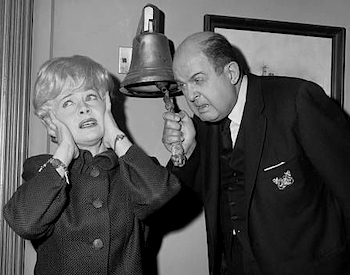 Finally, we end as we began, with an episode voted on by the public: at the bottom of Ranker’s list, and last on average too, is Sounds and Silences. It’s about an excessively-loud, domineering blowhard who gets some measure of comeuppance when he begins to be bothered by everyday sounds like a dripping tap or ticking clock. And then it goes the other way and he can’t hear loud noises at all. It’s poorly written and terribly performed — in the lead role, John McGiver is overacting something rotten. Some criticise the undercurrent of misogyny in the storyline, but I don’t know about that. He blames his mother and his wife for all his problems, but he’s an unlikeable sod so surely any misogyny is his rather than the episode’s — we’re not being asked to agree with him. The character’s ironic fate may be some form of poetic justice, but it’s too long coming to be entertaining, and too obvious to be satisfying. Whether I disliked this or Cavender is Coming more, I’m not sure, but they both merit their places at the bottom.
 This month, I have mostly been missing Westworld season 3, which is now four or five episodes in. I’ve not seen anyone talking about it on social media, so I’ve no idea if it’s good or bad, but I am inferring that not as many people are talking about it anymore, which is its own kind of criticism. One show I have heard mentioned is Tales from the Loop, Amazon’s new anthology sci-fi series. That’s been picking up good notices, and I thought it looked interesting anyhow, so I must make time for it.
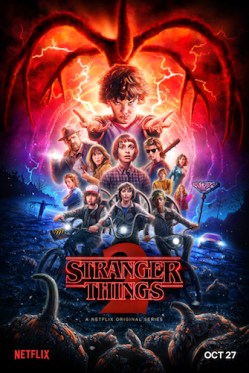 Netflix’s most talked about show (well, unless you count House of Cards for all the wrong reasons) returns wth a second season that isn’t just a continuation, it’s a sequel — note how it’s officially called Stranger Things 2 (which
 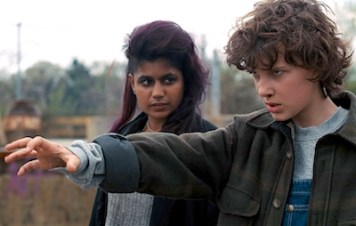 Now, you can’t discuss Stranger Things 2 without mentioning the infamous Chapter Seven. If you’ve missed the internet’s collective exclamation of disappointment and/or annoyance, IMDb has it in a nutshell: on there, the user ratings of all the other episodes (from both seasons) range from 8.5 to 9.5, a spread of 1.0 (obviously), but Chapter Seven has 6.2, a full 2.3 marks below the next lowest score. Ouch. It’s not great, but I didn’t think it was that bad. It’s a total aside from the main action, and placed where it is seems designed just to delay the pay-off to Chapter Six’s cliffhanger for another 45 minutes (in a regular programme it’d be two weeks, but this is Netflix). I don’t really hold with that being an actual problem, though — that’s just taste. No, the real problem is that it rushes through a character arc for Eleven that would’ve been better presented over multiple episodes. Considering before that she’s spent several episodes just sat around watching TV, there were surely better ways to structure her role this season.
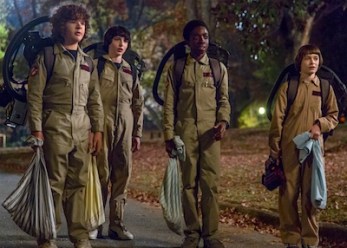 Even though it has all the big action stuff you’d expect, Chapter Nine still devotes a serious chunk of time to a character-focussed epilogue; reminding you that, as with most loved shows, the heart of it is the characters and their relationships. Indeed, although the season as a whole didn’t have the same effectiveness as the first, I thought the finale was a better climax. In fact, it would be a perfectly valid place to leave the entire series… but there are (at least) two more seasons to go. It might be nice if season three opened up the timeline a bit, because so far Hawkins seems to be a place where Crazy Terrible Shit happens over a couple of days and then everything’s fine for a whole year.
 I had nice things to say about the first half of Red Dwarf XII in
 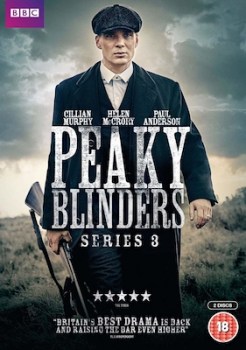 Beginning with a significant time-jump and monumental change in circumstance worthy of a Mad Men season premiere, the third series of Peaky Blinders soon sees everyone’s favourite Brummie gangsters embroiled in espionage and counter-espionage as they’re enlisted to help exiled Russian aristocracy launch a bid to reclaim their country. There’s so much more going on than that, but I won’t get into it here because we’ll be here all day — Peaky Blinders is a complexly plotted series; right up the final episode, which contains revelations that turn the previous six hours on their head. Even with all that narrative to get through, it still finds plenty of time to give most of its large-ish ensemble cast some strong character arcs. There are a few streaming series that could learn a thing or two from that…
 I confess: I started watching Rick and Morty fully expecting to hate it. I’d always thought it looked and sounded annoying, so I paid it no heed… but then it seemed to keep coming up — people referring to it in excited tones, and it ranking 7th on
  This month, I have mostly been missing Mindhunter, David Fincher’s new Netflix series about the early days of criminal psychology and criminal profiling at the FBI. It was actually released before my last TV post, but I didn’t have Netflix at the time so I didn’t bother to mention it. I would watch it next, but The Punisher is out tomorrow. Maybe after that…
 Everyone was a bit surprised when they announced a second series of Doctor Foster. The
 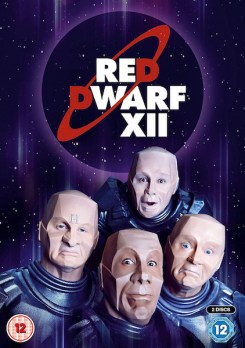 I still think of Red Dwarf as a programme that’s popped back for a bit of a revival, but I guess at this point it counts as just an ongoing show: since Dave brought it back in 2009 they’ve produced four series, half as many as the entire original run on the BBC. Give it another five or six years and they may equal, or perhaps even surpass, that number. It’s been a long time since I actually watched any of those old episodes that made the show’s name, so I can’t offer an opinion on whether the new runs are of the same quality — some say they are, some say they aren’t. Personally, I still think it’s funny overall, and (as I often say) that’s really all you need from a comedy. That said, one thing Dwarf has always done, and continues to do, is draw from actual science and science-fiction concepts to drive its plots and many of its gags. That makes it a proper sci-fi-comedy, rather than just a regular sitcom that happens to be set on a spaceship. Hurrah for that.
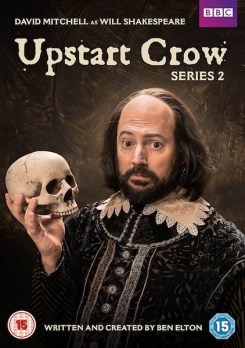 Talking of funny sitcoms, this series of Upstart Crow has been hilarious. Okay, I could do without Harry Enfield turning up as Shakespeare’s dad — almost every scene featuring him sees the humour take a turn towards the puerility of the toilet — but the rest of it is often pretty clever, riffing on Shakespearean plots and trivia. There was even a screenwriting joke in one episode that I guess would pass most people by. It also has a nice line in almost anachronistic humour, where characters comment on a fact of the day that is actually a commentary on modern life. It’s not subtle, and perhaps writer Ben Elton returns to that comedy well too often, but it’s always funny. And as I often say…
 It’s funny coming to The Thick of It for the first time now. It was so cutting-edge when it aired, and yet politics has got so much barmier since — these specials debuted a whole decade ago now, when the idea that Trump might be President was the kind of thing no one but sitcom gag writers thought about. That’s not to say the show’s lost any of its bite, just that it’s not as timely as it once was. These two hour-long specials, The Rise of the Nutters and Spinners and Losers (plus 15-minute bonus episode Opposition Extra, which follows some characters from Rise of the Nutters during the events of Spinners and Losers), set their satirical sights on the transition of power from Tony Blair to Gordon Brown. Don’t worry if you don’t remember that — there’s no reading up required, because The Thick of It is a fiction loosely inspired by real political events, rather than a straight riff on reality. It’s every inch the 21st century’s answer to Yes Minister in that respect. Although there’s an ensemble cast, all of whom are very amusing, the unmistakable star is Peter Capaldi’s Malcolm Tucker. With a regime change in the offing, Tucker risks being thrown out as part of the old guard, and so is on the back foot trying to manipulate things to his advantage. After three seasons of Capaldi as the Doctor, witnessing him here use his brain to run rings around other people to get the result he desires now feels like watching a somewhat evil — and much swearier — version of everyone’s favourite Time Lord.
 This month, I have mostly been missing The Gifted, the new TV show set definitively in the X-Men universe — unlike the last one, Legion, which apparently wasn’t. As you might infer from that use of “apparently”, I still haven’t got round to Legion either. I also haven’t seen the other new Marvel Comics-related show, Inhumans, which is part of the MCU. After the terrible reviews it’s received, I’m not sure I’ll bother.
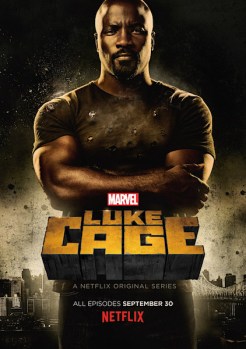 The third series in the Marvel/Netflix stable wins points for boldness, much as Jessica Jones did this time last year. Where Daredevil is a well-done but ‘standard’ superhero show, leading to it being somewhat demeaned by the Cool Kids of the critical world (but much higher-rated by us plebs on the likes of IMDb), Jessica pushed into dark psychological territory, and now Luke Cage brings black culture and life into the fold.
 It feels like only yesterday I was writing here about season four (it was, in fact,
  Well, it’s only taken me 3½ years to get round to this (seriously, where does time go?!) This bunch really represents the series’ highs and lows. On the one hand, Be Right Back — in which Hayley Atwell signs up for a company who create a virtual version of her deceased partner using his contributions to social media — is an exploration of broadly-plausible near-future-tech with a focus on its potential emotional effect. That’s what Black Mirror does best, I’d argue: look at stuff that may, perhaps, be in the pipeline, and how that would actually play out for us. On the other, there’s The Waldo Moment, which is also sickeningly plausible — as Charlie Brooker himself has said, it’s more or less come true, though with the likes of Boris Johnson and Donald Trump instead of a blue cartoon bear — but as an episode it doesn’t quite seem to know where to go with its concept or what it might ultimately signify. The episode just stops rather than ends, until a flash-forward coda that’s a bit silly in its extremity. Even Brooker, while doing press for the third season (released tomorrow), has said he’d go back and re-do that episode if he could. Still, full marks for effort.
 This latest series of Red Dwarf (which airs its fifth episode tonight, with the sixth available on demand from tomorrow) seems to have gone down rather well, with some reviews even hailing it as a “return to form” — that form being “the good old days” of Red Dwarf VI (or thereabouts), over 20 years ago. Personally, I didn’t dislike Red Dwarf VII or Back to Earth, and I even have a soft spot for Red Dwarf VIII, so what do I know? Nonetheless, I would concur that this Dwarf represents a fine vintage, hitting the series’ unique mix of accessible mainstream-ish comedy and proper science-fiction concepts. Red Dwarf XII is already in the can for 2017, and I wouldn’t be surprised to see Dave commission more episodes beyond that.
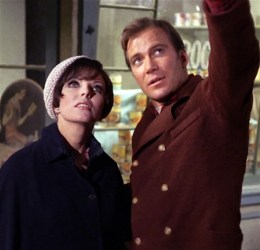 The entirety of TV Star Trek is available on Netflix, so I took the chance to watch the most acclaimed episodes of both The Original Series and The Animated Series — which happen to be connected, something I didn’t realise until afterwards. Er, I mean, which I totally planned. Both are pretty fine uses of science-fiction to explore relatable issues. Well, not many of us have to deal with disruptions to reality caused by time travel, or knowledge of the future creating dilemmas about what we do next, but they work the relatable stuff in around the surface plots. And they both still seem pretty bold for network TV episodes even today, almost half a century later, as (spoilers!) Kirk lets a good woman die to retain the correct timeline, and a kids’ cartoon deals with the subject of euthanasia.
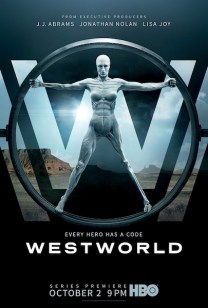 This month, I have mostly been missing loads of stuff. Probably the most talked about is HBO’s adaptation of Westworld, which has apparently pulled in even bigger ratings than Game of Thrones. Over here there’s the second series of The Missing, which if it’s half as good as the first will be a real must-see. Then there’s Woody Allen’s first (and last) TV series for Amazon, Crisis in Six Scenes. Reviews have been mixed to poor but I still intend to get round to it. And finally Hooten & the Lady, which may be the worst title for anything in the history of ever, but a globetrotting adventure series inspired by the likes of Indiana Jones and Romancing the Stone sounds right up my alley.
 100Films.co.uk