
Francis Lawrence | 123 mins | Blu-ray | 2.40:1 | USA / English | 12 / PG-13
 If you’re not au fait with the first two Hunger Games movies, there’s nothing for you here. Why would you want to join a story halfway through anyway?
Even for those of us who are, Mockingjay Part 1 — the first half of a two-part finale that, for my money, plays more like its own standalone movie than most first halves of two-part finales manage (I’m thinking of Deathly Hallows 1 or The Matrix Reloaded here) — throws us in at the deep end, starting a little while after the end of the last film and challenging us to keep up. It’s a little frustrating at times — if you’ve not watched the previous movies into the ground, there are points where you wonder if you’ve forgotten something or just not been told it yet — but ultimately helps make for an engrossing, mature movie.
Naturally I mean “mature” in the sense of “grown up”, not in the oft-misused sense of “for adults only, wink wink”. This is a thoughtful film, one which has more time for examining issues of politicking than for bang-bang-a-boom fight scenes. Indeed, if you’ve come looking for an action movie — as, it seems, most critics did — then you’ll definitely be disappointed. If, however, you’re looking for a film to continue the series’ rich vein of sci-fi political allegory, well, you’re in luck. This edition: propaganda.
In the previous films, heroine Katniss (Jennifer Lawrence) inadvertently inspired a rebellion against the ruling Capitol, which has been bubbling away without her knowledge. Now, having been targeted by evil President Snow (Donald Sutherland), she’s been transported to the underground locales of District 13, where they want to put her in films to continue spreading dissension among the other districts. At the same time, the Capitol are putting Katniss’ captured lover Peeta (Josh Hutcherson) on the air, arguing for peace and maintaining the status quo. It’s a war of hearts and minds, essentially,  as both sides attempt to rally ordinary people to their cause through the power of the media. It’s a tale that’s as timely as ever, surely.
One of my favourite elements here is the distrust that both sides engender. The rebels Katniss has found herself with are certainly the good guys, battling to overthrow an abusively oppressive regime, but they aren’t whiter-than-white — they won’t always do everything our hero would like; she’s not always sure she can trust them. There’s no doubt about which side is the right one to be on, but it’s at least a little more complex than the norm.
Katniss herself remains a refreshingly un-self-assured heroine. She doesn’t always know or do what’s right, she isn’t always sure of her purpose or her goals, or even her own feelings. That’s so much more human than so many movie heroes, no doubt in part thanks to having an Oscar-able actress to carry the role. True, we’ve seen these facets before from her in both of the previous films, but hurrah to author Suzanne Collins and to the filmmakers for not taking the simple route of having her transform into something she didn’t start as. There’s still a whole outstanding film to bring about such a change, of course, so we’ll just have to wait and see how they follow this through to the end.
The fact there will be another film is an undoubted point of contention. The Hunger Games is the latest to follow in Harry Potter’s footsteps and split the final book of a series in two when filmed. Indeed, since Twilight latched onto that bandwagon it’s become de rigueur, with the final-book-split usually announced as soon as the first film in a wannabe-series is a box office hit — see the Divergent series, for example (or The Maze Runner for one that supposedly won’t succumb to this). Despite the complaints from many other critics and viewers, 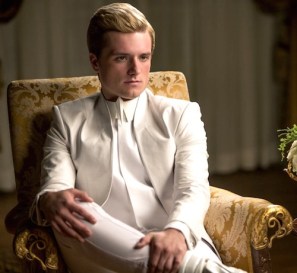 I must say that (as someone who hasn’t read the book) it didn’t feel overly like the first half of something longer to me. Of course there’s a cliffhanger and stuff, but there was at the end of the last film as well. This is no worse than that. If anything, I felt Mockingjay Part 1 built to its ending more successfully — I was quite surprised when Catching Fire stopped, whereas here the ending felt like a natural stopping point. In fact, given the point some of the storylines reach, it’s difficult to imagine them feeling anything other than rushed if they’d been executed in half the time. Maybe the film is a little drawn out in places and some storylines could’ve been condensed (how many propaganda films do we need to see Katniss make, really?), but that’s a niggle about perhaps wanting a minor trim, not a complaint decrying the need for full-blown editorial intervention.
Whether or not this Part 1 stands alone will be cemented by the next film, I feel. If the focus on using Katniss as no more than a propaganda figurehead isn’t continued in Part 2 then, well, that’s the part of the story that this film is about. It doesn’t feel like it needs to be continued next time — that particular propaganda angle has been fully explored — and so I think this instalment will feel much more like a fully-fledged film in its own right if they just move on. I hope the final film give us new themes, new subplots, new arcs to follow; I hope it feels like Part 4 of 4, in the way this currently feels like Part 3 of 4, and doesn’t play as Part 3B of 3 and retroactively transform this into Part 3A.
If you like a lot of Hunger Games action from your Hunger Games movie, Mockingjay Part 1 will certainly be a disappointment. On the other hand, if you more enjoy the political satire side of the series, 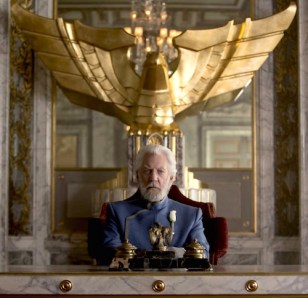 it may be your favourite instalment so far (and you wouldn’t be alone in that view). For me, Catching Fire is the best of the three because it crystallises both of those constituent elements; and if the first film was purely the action side (with a bit of the politics), then here we find its mirror image: purely politics (with a bit of action). Either way, perhaps the ultimate fate of all these films rests on how well the next, final part can bring all their action, themes, and plots to fruition.

The Hunger Games: Mockingjay – Part 1 is available on Netflix UK from today.
 Arguably the most famous clash of the First World War, the Battle of the Somme lasted four-and-a-half months from July to November 1916 and, with over a million men wounded or killed, is “
 The British press certainly believed they were seeing “the real thing at last” (the Manchester Guardian), feeling it showed “war, grim, red war; the real thing” (the Daily Sketch). The British public agreed, flocking to see the movie en masse: twenty million admissions were sold in the first six weeks of release. At the time, the battle still raged (the film debuted on 10th August 1916) — as Smithers notes, “to its original audience, the film was not history but a despatch from the front”. It is such an historical document now, but at the time it wasn’t even recent-history — it was produced as newsreel, a record of current events, designed to make people at home feel connected to the everyday lives of their family, friends and countrymen serving on the frontline.
 Equally striking is the scale of the operation. You know it was a monumental effort, but actually seeing so many men… You never see that scope in dramas because they don’t have the budget for all those extras, I guess, but here the crowds of soldiers just waiting around are remarkably large. And crikey, the heavy artillery! Even though you know these were real weapons, today they look more like some fantastical steampunk creation, so covered are they in rivets, and so damn huge.
 Speaking of the music, the Imperial War Museum DVD release offers up a choice of two scores: a newly-commissioned (in 2008) one by film composer Laura Rossi, and a recreation of the kind of music that would have accompanied the film in 1916. The film’s producer and distributor, William F. Jury, was also the editor of trade paper The Bioscope, and had columnist J Morton Hutcheson draw up a list of suitable pieces to be performed alongside screenings, which was published days before the film’s release. To quote Dr Toby Haggith (the Imperial War Museum’s film programmer), again in the DVD booklet
 Haggith summarises many of Hutcheson’s choices as “motivated wholly by the needs of propaganda… jaunty, martial and unashamedly heroic. Given the nature of the scenes recorded and the bloody history of this phase of the battle, the selection of such upbeat music seems deeply inappropriate.” However, other selections “reflect Hutcheson’s personal response to scenes that he found distressing on a universal level, and which led him to warn musicians that ‘they must realise the seriousness and awfulness of the scenes’… These contradictions suggest that Hutcheson had difficulty selecting music for the film because he was torn by the contrasting images and messages it conveyed. In this way the medley highlights the tension at the heart of the film.” Musician Stephen Horne, who leads the 1916 medley recreation, agrees that the film is torn “between a sense of propagandist duty and a desire to honour the reality that had not evaded the camera’s gaze.” It’s true that, however positive the final movie wants to be, it can’t completely escape reality. At one point it cuts abruptly from a jauntily-scored scene of men happily receiving post to “German dead on the field of battle”. A deliberate juxtaposition of happiness with the fate that awaits them with near inevitability? Seems a bit radical for a propaganda piece…
 But it can’t avoid drawing parallels: the film ends almost as it began, with artillery being moved up for the next assault and men marching to the front, waving merrily as they go. History repeats — probably not the lesson a propaganda film wants to impart, but one it can’t quite escape. And one that, even a hundred years later, we can’t quite learn.
 100Films.co.uk