Archive 5, Vol.9

I have a backlog of 525 unreviewed feature films from my 2018 to 2023 viewing. This is where I give those films their day, five at a time, selected by a random number generator.

Today, a couple of Agatha Christie adaptations from very different eras; plus a heist, a horror, and a Hong Kong love story for the ages.

This week’s Archive 5 are…

  • Evil Under the Sun (1982)
  • Sneakers (1992)
  • Us (2019)
  • Crooked House (2017)
  • In the Mood for Love (2000)


    Evil Under the Sun

    (1982)

    Guy Hamilton | 112 mins | digital HD | 16:9 | UK / English | PG / PG

    Evil Under the Sun

    The third in the run of Poirot adaptations that began with Murder on the Orient Express and continued with Death on the Nile — no, not the recent Branagh ones: this is the first time they did exactly that. But, funnily enough, both third films in their respective series (i.e. this and Branagh’s A Haunting in Venice) take a UK-set Christie and relocate it somewhere more exotic, to fit with the style of the rest of the series. So, rather than a small island off the north Devon coast (which likely stretches the definition of “under the sun”, based on my experience of Devon), here the action is located to the Adriatic Sea, although actually filmed on Mallorca.

    All of which is incidental when the rest of the movie is, at best, fine. It doesn’t help that the storyline is ultimately very similar to Death on the Nile, making the whole affair feel like more of a rehash than it needs to. Guy Hamilton’s direction underwhelms, giving a TV movie-ish feel, which is only exacerbated by the less-starry cast — there are recognisable names and faces here (James Mason, Diana Rigg, Maggie Smith), but, in totality, it’s not in the same league as the previous two films. It rather prefigures where Ustinov’s Poirot would appear next: literally, TV movies.

    3 out of 5

    Evil Under the Sun was #2 in my 100 Films in a Year Challenge 2020.


    Sneakers

    (1992)

    Phil Alden Robinson | 126 mins | Blu-ray | 1.85:1 | USA / English | 15 / PG-13

    Sneakers

    I never paid Sneakers any attention (not that it came up often) — I think, because it’s an American movie called Sneakers, I assumed it was about shoes — until indie magazine Film Stories announced a Blu-ray release (long since sold out, I’m afraid). I’m always keen to support small/new labels doing interesting things. And thank goodness for that, because, turns out, it’s actually very much my kind of film and good fun.

    So, turns out, in this context, “sneakers” are not an Americanism for trainers, but good-guy hackers who test security systems. When the team are hired to steal a code breaking device, they get suspicious about the setup and, of course, it turns out they’re right to be. Thus unfurls a tech-based heist thriller with a strong vein of humour, but without tipping over into being an outright comedy. Stylistically and tonally, that’s right up my street — I love a heist movie, and that kind of tone (funny without being silly; what I think of as a ‘real world’ awareness of humour) often works for me. It’s the kind of film that’s just a lot of fun to watch. I can imagine it being highly rewatchable; a go-to favourite for people who do that kind of thing.

    4 out of 5

    Sneakers was #132 in my 100 Films in a Year Challenge 2021.


    Us

    (2019)

    Jordan Peele | 112 mins | digital HD | 2.39:1 | USA, China & Japan / English | 15 / R

    Us

    Part of what made Jordan Peele’s debut feature, Get Out, such a success was the way it chimed perfectly with the cultural zeitgeist of 2017; indeed, of the whole decade (time may yet add “of the whole century”). This immediate followup doesn’t benefit from a similar boost, but it’s a strong work of horror cinema in its own right.

    Us follows a family who are attacked by a group of doppelgängers. That’s the most basic version, anyway — Peele seems to have a lot of ideas he wants to mix in here; almost too many. It seems to operate on the level of a home invasion/slasher kind of movie much of the time, but having more on its mind means it’s a bit too slow to satisfy as something so viscerally straightforward. Thus, all the Meaningful stuff ends up crammed into the third act, which perhaps leaves it feeling back-heavy. There’s also a big twist, naturally. On one hand, it seems really obvious, pretty much from the beginning; but on the other, it does cast the rest of the movie in a different light, which is quite interesting.

    If all that sounds rather negative… I blame my notes (I’m writing this review over four years later based solely on what little I wrote down at the time). Us is imperfect, but it’s also great in places, and is at least passably interesting to reflect on in light of the final reveal.

    4 out of 5

    Us was #23 in my 100 Films in a Year Challenge 2020.


    Crooked House

    (2017)

    Gilles Paquet-Brenner | 115 mins | digital HD | 2.35:1 | UK & USA / English | 12 / PG-13

    Crooked House

    Despite a moderately starry cast (Glenn Close, Terence Stamp, Gillian Anderson, Christina Hendricks fresh from Mad Men; plus Brits of varying degrees of recognisableness) and a screenplay by Julian “Downton Abbey” Fellowes, this Agatha Christie adaptation was virtually dumped straight to TV here in the UK (apparently it did have a theatrical release, but the TV premiere was less than a month later — and on lowly Channel 5 at that). Of course, some of the best Christie adaptations have been made for TV; but when something’s designed for theatrical and ends up skipping it, it’s never a good sign.

    Fortunately, Crooked House isn’t a disaster, though it’s far from a resounding success. Quite what attracted the big names I don’t know — it’s a reasonable setup (big dysfunctional family), but the screenplay isn’t exactly sparkling, aside from one or two moments or scenes. There is, at least, one helluva resolution. It also feels disjointed thanks to poor editing and/or direction. If the aim was to keep the pace up, it failed, because it begins to drag after a while. All of this is only partially masked by decent cinematography from Sebastian Winterø, which is the only thing that saves it from looking very TV-ish. Maybe it found its rightful home after all.

    3 out of 5

    Crooked House was #1 in my 100 Films in a Year Challenge 2020.


    In the Mood for Love

    (2000)

    aka Fa yeung nin wah

    Wong Kar-wai | 99 mins | digital HD | 1.66:1 | Hong Kong & China / Cantonese & Shanghainese | PG / PG
    In the Mood for Love

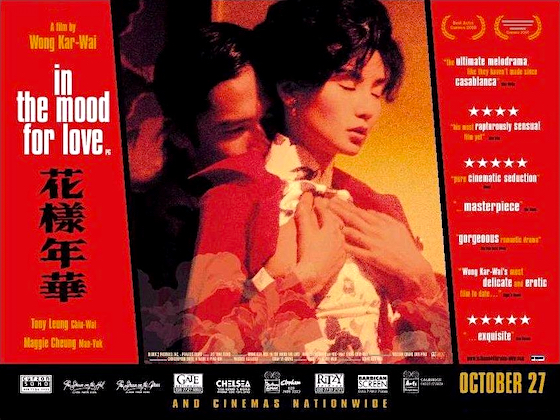
    If my four-years-late review of Us was hampered by largely-negative notes, my four-years-late review of In the Mood for Love is in even worse shape: no notes at all. Some trivia? I can do that! An interesting quote from the director? Got it saved! But anything on my own thoughts beyond settling on a five-star rating? Nope. I would try to repurpose my Letterboxd review, but all I wrote was: “I mean nothing but respect when I pithily describe this as Brief Encounter in Hong Kong.” Accurate but, indeed, pithy.

    On the bright side, this is a widely-acclaimed film, so if you’re after in-depth writing I’m certain you’ll find some somewhere else. Indeed, even if I did have more fulsome notes, I doubt I’d contribute anything more insightful. This is a subtle, almost delicate work, and that’s the kind of thing I feel I often struggle to properly get to grips with in my short, usually spoiler-averse reviews. Suffice to say, I concur that this is a very good film indeed; although, as with any understated work, some might prefer if the feelings and emotions were more overt. Each to their own.

    5 out of 5

    In the Mood for Love was #200 in my 100 Films in a Year Challenge 2020. It was viewed as part of Blindspot 2020.
  • Archive 5, Vol.8

    I have a(n insanely huge) backlog of 533 unreviewed feature films from my 2018 to 2023 viewing (not to mention the 77 shorts, but they’re a problem for another day). This is where I give those films their day, five at a time, selected by a random number generator.

    Today, it’s killers galore with Korean zombies, comical hitmen, rampaging security robots, and plain ol’ murderers. Plus, dying of boredom in Saturday detention.

    This week’s Archive 5 are…

  • One Cut of the Dead (2017)
  • The Breakfast Club (1985)
  • Chopping Mall (1986)
  • Dead Man’s Folly (1986)
  • Wild Target (2010)


    One Cut of the Dead

    (2017)

    aka Kamera o tomeru na!

    Shinichiro Ueda | 96 mins | Blu-ray | 16:9 | Japan / Japanese | 15

    One Cut of the Dead

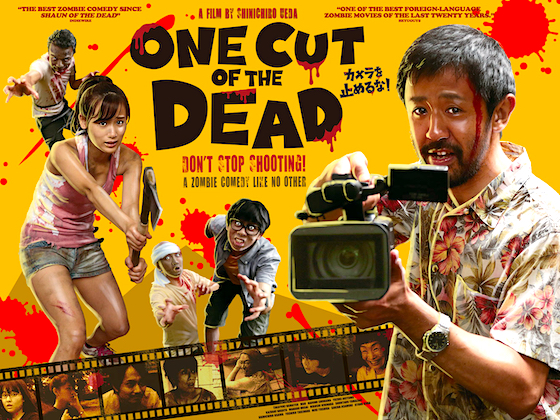
    You know, it’s not just my reviews that are tardy: I bought this because it was hyped up, both as “good” and as “see it knowing as little as possible”, and it went on my “must watch soon” pile… where it sat for 14 months. And that’s far from the most egregious example of “ooh, I must get round to that” equally a long, long delay.

    Now, it’s taken me another 46 months to write this review. Eesh. On the bright side, perhaps I shouldn’t be so worried about spoilers anymore. I mean, if you’ve not seen it by now, whose fault is that? And it definitely is the kind of film where the less you know the better, because it’s going to pull the rug out from under you. Of course, even knowing that means you’re on the lookout for what’s going to happen; and the film gives you a helping hand, because right from the off there are nods to the conceit. Still, I’ll try to be fairly vague.

    It’s a film of three parts. The first is, with hindsight, an establisher; setup and groundwork for what comes next. Alternatively, some genre fans will take that as the purpose of the movie, and what follows as extraneous. Then there’s a long, slow middle section. Again, no direct spoilers, but we know where this part of the narrative ends up, so it feels like it’s over-expounding stuff (we don’t need as much backstory as we get) and consequently goes on a bit. Halfway through, I began to wonder what all the fuss was about. I worried that I’d left it too long to see it and let the hype get the better of me.

    But, ultimately, it’s all setup for the final half-hour, and it pays off in hilarity. The middle could still do with a trim, but it’s worth sticking with for the payoff.

    4 out of 5

    One Cut of the Dead was #54 in my 100 Films in a Year Challenge 2020.


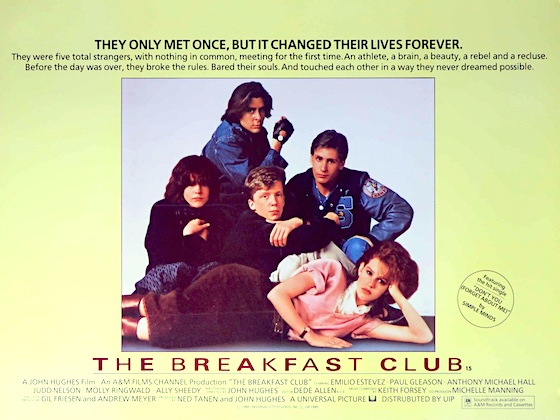
    The Breakfast Club

    (1985)

    John Hughes | 97 mins | Blu-ray | 1.85:1 | USA / English | 15 / R

    The Breakfast Club

    Is The Breakfast Club the definitive ’80s high school movie? It’s got to be on the shortlist, right? Personally, I preferred Heathers, or, if you want to stay within the John Hughes universe, Ferris Bueller, but that doesn’t mean this is without its qualities.

    If you’re unfamiliar, it’s about a gaggle of misfits in Saturday detention. Over the course of the day, the unlikely group form a bond — well, there’s a surprise. One thing I did like about that: even after they’ve become ‘friends’, the slightest thing can still set off their animosity to one another. They’ve not really changed and it’s a fragile allegiance. The stuff about how they’d never talk to each other in real life after this rings true. So, I don’t want to come down too heavily in the region of the idea that the film might be clichéd. I’ve read other modern reviews criticise it for that, and you have to wonder: when you’re writing about a popular movie 35 years after it came out, was the film clichéd or did it create the clichés? That said, my favourite observation in this sphere was: “if this is cliché, then life is too.” Oh boy is that a sentiment I agree with about so many fictions that are deemed “cliché”.

    That said, I guess we’re beyond the film’s era of influence now. I mean, if you made something like this today, it would probably be an arthouse-aimed indie production (in fairness, the original is also an indie), probably produced for a similar (or lower) budget than it was almost 40 years ago; and it would be adored and analysed by 30- and 40-something-year-old cineastes while actual teenagers were at the multiplex watching MCU XXIV. (You can tell I wrote these notes four years ago, because I would not now suggest the latest MCU release as a default popular success.)

    On the other hand, I know we all look down on remakes, but if you’re going to remake any popular film, this is the kind of thing that would withstand it. It’s so much about its era that if you took the basic concept and remixed it for the 2020s, there are a several interesting avenues to be explored. I’m sure cliques still exist in American high schools (based on media depictions, they never seem to go away), so you’d still get the contrasting personalities; and you could shift the sexual dynamics, the way different groups view each other, and sort out the ending (the way certain characters are ‘fixed’ is very of its time, and not in a good way); and put a modern spin on it all, of course, with some race and LGBT points. You know, make it “woke”, as dickheads say. That would be a pretty different film, but that’s entirely the point: if you’re going to remake something, make it different, make it new. (To be clear, I’m not criticising the original film for not including those elements — it’s a product of its time and it’s not choosing to be about those things, which is entirely valid.)

    I appreciate I’ve talked more about what the film could be today than what it is. Oops. But, look, this is the kind of film where I can’t remember any of the characters’ names — if I wanted to talk in specifics, I’d have to refer to them by their actors (or do a bit of googling, of course). That’s another way of saying I did like it, but it’s not a film that’s stuck with me in the way it has for its many fans.

    4 out of 5

    The Breakfast Club was #56 in my 100 Films in a Year Challenge 2020. It was viewed as an additional film in my Blindspot 2020 project, after I failed to watch it for Blindspot 2019.


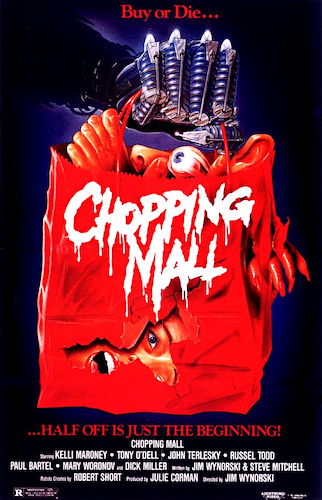
    Chopping Mall

    (1986)

    Jim Wynorski | 76 mins | digital (HD) | 16:9 | USA / English | 18 / R

    Chopping Mall

    Blood, boobs, and berserk ’bots are the order of the day in this campy sci-fi actioner.

    That’s right: “sci-fi actioner”. I don’t know where I’d heard about this, or if I’d just made inferences from the title and poster, but I’d assumed it was a regular slasher whose USP was simply “it’s set in a shopping mall”. But nope, it’s actually about security robots who go barmy and start killing a bunch of young people who’d locked themselves in a mall overnight. According to IMDb, it was originally released as Killbots — a more to-the-point title — but it performed poorly, and the producers’ reasoning was the title had made audiences think it was a Transformers-like kids movie (if anyone did take their kids to see it, boy, were they in for a surprise!) So, after cutting over quarter-of-an-hour, they re-released it with the more-clearly-exploitation-y title and… well, I don’t know if it as a major success or anything, but I guess it performed better and that’s the version that has endured.

    I don’t know what was in those deleted 15 minutes, but presumably nothing of great import. Indeed, the short running time is a blessing: it gets on with things at the start, and doesn’t try to drag them out later. It knows what we’ve come to a movie like this for, and it delivers that with admirable efficiency. What’s left is so barmy and schlocky that it’s kinda fun, even if most of it doesn’t make a lick of sense. Even allowing for the implausible setup (lightning sends robot security guards berserk), there’s little to no logic in what follows (the robots have turned murderous? Fine, but why are they such shit shots? And why, when they have an easy shot, do they suddenly stop shooting? And so on).

    Chopping Mall is no lost gem, although it may make you nostalgic for an era when they actually made stuff like this. Would the world be a better place if people were still churning out low-budget schedule-fillers full of gratuitous-but-clearly-fake violence and unnecessary-but-welcome nudity? I don’t know, but I doubt it could be any worse. At least it might’ve desensitised younger generations enough that we wouldn’t have to suffer endless rounds of “sex scenes are bad, actually” discourse on Twitter…

    3 out of 5

    Chopping Mall was the 13th new film I watched in 2023.


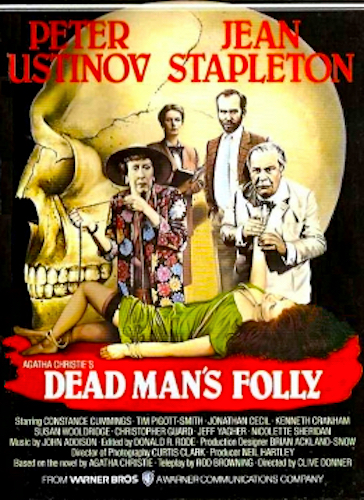
    Dead Man’s Folly

    (1986)

    Clive Donner | 94 mins | digital (SD) | 4:3 | USA / English | PG

    Dead Man's Folly

    This second of three TV movies starring Peter Ustinov as Poirot marks the fourth of his six appearance as the character overall, and it might be the low point of the generally-underwhelming bunch. Ustinov was no doubt a quality performer, and I know his version of Poirot has its fans, but, for me, he remains a lesser interpreter of the Belgian sleuth.

    This particular film does nothing to outweigh his shortcomings. I don’t know if it’s the fault of the original story, this adaptation, or just me, but I didn’t feel there was enough provided for the the viewer to join in with the whodunnit guessing game, which I think is half the fun of a murder mystery. Events just unfurled until, eventually, Poirot explained it all. Add to that a portrayal of Poirot’s sometime-sidekick Hastings by Jonathan Cecil that verges on the lascivious, and production elements (costuming, hairdos, music) that are painfully ’80s, and the recipe is all-round distasteful.

    2 out of 5

    Dead Man’s Folly was #154 in my 100 Films in a Year Challenge 2021.


    Wild Target

    (2010)

    Jonathan Lynn | 98 mins | digital (HD) | 2.35:1 | UK & France / English & French | 12 / PG-13

    Wild Target

    In this remake of French comedy-thriller Cible émouvante, Bill Nighy plays an ageing hitman who falls for his latest target, pretty young thief Emily Blunt. Romance blossoms, in what must be one of the most implausible storylines ever committed to film. That’s partly because of the 33-year age gap between 26-year-old Blunt and 59-year-old Nighy (who, frankly, seems even older — the age gap may be roughly father/daughter, but she feels more like his granddaughter), but also because the movie does little to overcome this blatant shortcoming. If it wants us to buy it, it needs to sell it, but instead it half-arses it. When you learn that Helena Bonham-Carter was originally cast in Blunt’s role (but had to pull out due to commitments to Alice in Wonderland), it all begins to make sense: you can imagine a relationship between her and Nighy working on screen, and presumably they didn’t bother to retool the screenplay in between actor changes.

    All of which says, the film just about survives because there’s enough else going on. The hitman and thief wind up on the run from the people who want her dead, with a young apprentice (Rupert Grint) in tow, and the ensuing farcical hijinks are all daft fun, with the great cast (which also includes Martin Freeman, Eileen Atkins, and Rupert Everett, among others) clearly having a good time. Sometimes that’s off-putting, but here it’s infectious.

    4 out of 5

    Wild Target was #59 in my 100 Films in a Year Challenge 2021.


  • 2022 | Weeks 12–13

    So, it’s already the 15th — fundamentally halfway through the month — and this is just my ffith post in May. (It would’ve been third, but then my West Side Story and F9 reviews felt like they should have their own posts.) In my mind, I’ve raced this batch out as quickly as possible following my start-of-month posts, but it certainly doesn’t feel very speedy when you look at the dates.

    And, talking about messing with time, this roundup begins by taking us all the way back to March: week 12 ended on the 27th of that month. I might’ve posted sooner, were it not that week 12 seemed too small to run by itself. For what it’s worth, week 13 ended on 3rd April, so I’m still over a month behind now.

    Anyway, here are the rest of the new films I watched that fortnight…

  • Muriel’s Wedding (1994)
  • Cobra (1986)
  • Django & Django (2021)
  • A Man Escaped (1956), aka Un condamné à mort s’est échappé
  • Death on the Nile (2022)


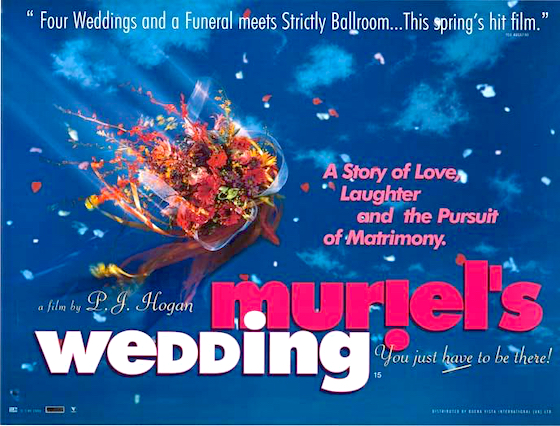
    Muriel’s Wedding

    (1994)

    P.J. Hogan | 101 mins | digital (HD) | 1.85:1 | Australia & France / English | 15 / R

    Muriel's Wedding

    This is one of those films I’ve been sort of aware of forever, but never really paid a huge amount of attention, until suddenly I’m watching it almost on a whim. It’s the story of the misadventures of small-town Australian girl Muriel (a breakout performance from Toni Collette), who doesn’t fit with her family or ‘friends’ and so sets off to the big city for a different life.

    I don’t know what I was expecting from the film, exactly — a kooky Aussie romcom, I guess — but not a surprisingly dark, quirky almost to the point of being twisted, black comedy. Not that that’s a bad thing, but it kind of bamboozled me by being a lot odder and more tonally complex than I’d anticipated. I liked it, but it’s a weird one.

    4 out of 5


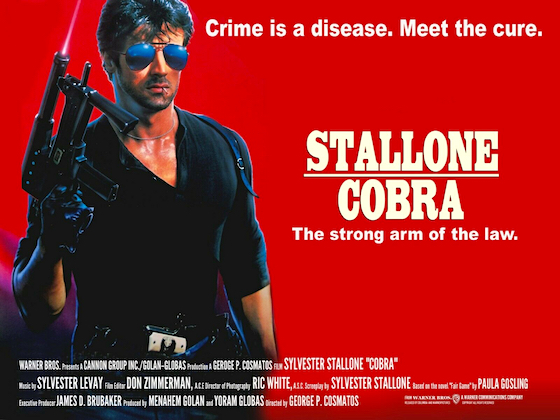
    Cobra

    (1986)

    George P. Cosmatos | 87 mins | digital (HD) | 16:9 | USA & Israel / English | 18 / R

    Cobra

    This is the kind of film I might never have watched were it not for my WDYMYHS challenge. It’s a film I’d heard very little about, and what I had heard wasn’t good, but when it came to selecting the 12 most significant films I hadn’t seen from 1986, it scraped in. I’m glad things like that happen, because while Cobra is far from being a new favourite or something, I did enjoy it.

    Sly Stallone stars as a hot-shot cop on the trail of a serial killer with cult affiliations. That’s about it for the plot. This is a film that’s all style and no substance — though, when you’ve got this much style, maybe that is the substance. It’s so much a stereotypical ’80s macho action fest that it plays like a spoof of itself in places, with over-the-top editing, performances, and one liners that all seem driven by some sense of ‘cool’. I kinda love it for that. Take the car chase at the halfway mark: it’s a ludicrous sequence (one bit barely connects to the next; cars explode when shot; etc), but it’s filmed and cut with style and packed with excitement. It’s epic.

    Remarkably, it’s based on a novel. I say that’s remarkable because novels are devoid of being able to show off flashy visuals or dynamic action sequences, so you think of them as being heavier on things like plot and character — but, as discussed, this has very little plot, and even less character development. The already-brief running time seems to mostly contain music montages and extended action scenes. Reportedly the original cut was around two hours, which was then mercilessly shorn down to the under-90-minute final cut in an attempt to squeeze in more screenings per day. I imagine a lot of what went was the plot, although apparently there was also a lot of graphic violence — and what we’re left with still earnt an 18.

    I guess if a “director’s cut” was going to surface it would’ve done so by now (given all the other films that got them back in the ’00s). It’s something of a shame, because perhaps that version would round out the storyline enough to match the flair that’s all we get from the existing cut. Really, it’s a trashy film, but I rather enjoyed its trashiness. As stated, it’s all style and, at just 87 minutes, all business.

    3 out of 5

    Cobra is the 23rd film in my 100 Films in a Year Challenge 2022. It was viewed as part of “What Do You Mean You Haven’t Seen…?” 2022.


    Django & Django

    (2021)

    Luca Rea | 77 mins | digital (UHD) | 16:9 | Italy / English, Italian & French | 15

    Django & Django

    The work of the “second-best Spaghetti Western director”, Sergio Corbucci, is analysed by admirer Quentin Tarantino, and supplemented with a handful of anecdotes from a couple of people who worked with him. The small number of interviewees means the film is lacking in the depth you get from having multiple perspectives, but it’s a fine overview of Corbucci’s work nonetheless.

    Indeed, the title — implying a focus on two specific films — is a bit of a misnomer. Not only is it about Corbucci’s career as a whole, with Django just one film among many, but there’s only a single clip from Django Unchained, when QT mentions how Corbucci’s style influenced his choice of Southern setting. That’s it for discussion of Tarantino’s own work — barring a lengthy opening aside into the alternate history of Once Upon a Time in Hollywood; a ‘short story’ about Rick Dalton’s time in Italy and his meetings with Corbucci. Tarantino relates these events as if they’re historical fact — the guy really did thoroughly imagine his alternate history!

    3 out of 5

    Django & Django is the 24th film in my 100 Films in a Year Challenge 2022.


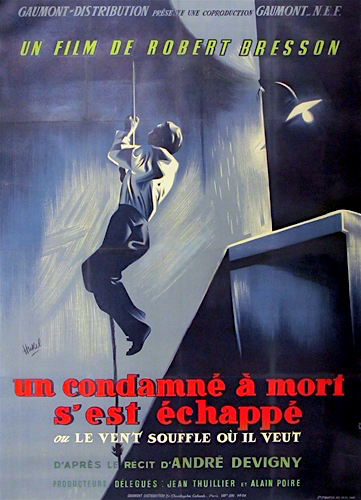
    A Man Escaped

    (1956)

    aka Un condamné à mort s’est échappé ou Le vent souffle où il veut

    Robert Bresson | 101 mins | digital (HD) | 1.33:1 | France / French & German | U

    A Man Escaped

    Most “prisoner of war” movies are about plucky Brits and/or Yanks stuck in jail somewhere behind enemy lines, working out ways to escape almost as a time killer, or at best a matter of honour. A Man Escaped is something different. Based on the memoirs of André Devigny, a member of the French Resistance held in a French prison by the occupying Germans during World War II, and written and directed by Robert Bresson, who was also imprisoned by the Germans as a member of the Resistance, you can’t doubt its pedigree for authenticity. Indeed, Devigny was an adviser on the film, and lent the production the actual ropes and hooks he had used in his escape. More than these points of fact, it’s the film’s overall tone that’s striking — more dour and pessimistic than the usual POW drama, at least as I remember them. Here, the need to escape isn’t a game, it’s literally life or death.

    Bresson certainly knows where he wants his focus to be. The film begins with our hero, Fontaine (François Leterrier), arriving at the prison, although an escape attempt on the way there sees him immediately condemned to solitary confinement. Nonetheless, we remain by his side, never leaving him or his point of view, right until the end, when… well, that would be a spoiler. In terms of background, there’s only what we can pick up along the way; the barest outline of who he is, why he’s there, and what awaits him on the outside. That’s extraneous detail — this is all about his time in prison, his mentality in prison, and how he intends to escape the prison.

    To that end, Bresson spends a lot of time detailing very little. The process by which Fontaine fashions ropes, or chips away at a crack in his door to facilitate a way out, is shown in almost-excruciating detail. It’s all about the prep. When something truly dramatic does happen — like Fontaine gaining a roommate, and the question of whether that man can be trusted — it’s dealt with quickly, confined to a couple of quick scenes. I can only think that’s part of the point: much of the work to escape prison is tedious preparation, but when a spanner gets in the works it has to be dealt with quickly lest it derail the whole enterprise. Such ‘big things’ are a potential threat, but it’s arguably the little things that are even more dangerous. Accidentally drop something noisily, thus alerting the guards to your suspicious activities, and it’s all over.

    As a film, it doesn’t feel as strikingly stylised as the other Bressons I’ve seen, but it definitely has a stripped-back simplicity that’s part of his overall ethos. It’s debatable if we need the semi-monotone voiceover that describes exactly what we can see on screen — I’m no expert, but such an unnecessary and purely cinematic addition seems out of sorts with Bresson’s usual style. That said, at points it adds insight into Fontaine’s thought process, so the narration is not without merit.

    4 out of 5

    A Man Escaped is the 25th film in my 100 Films in a Year Challenge 2022. It was viewed as part of Blindspot 2022.


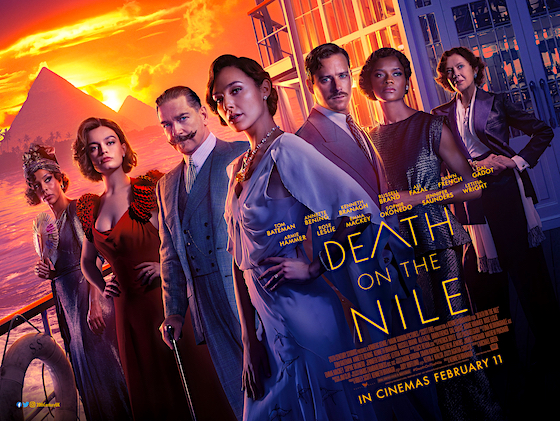
    Death on the Nile

    (2022)

    Kenneth Branagh | 127 mins | digital (UHD) | 2.39:1 | USA & UK / English & French | 12 / PG-13

    Death on the Nile

    Kenneth Branagh returns as both director and star for another Hercule Poirot mystery, after the somewhat-surprising success of his Murder on the Orient Express — “surprising” in the sense that it did better at the box office than I think anyone expected. It performed less well with critics, but I enjoyed it. Sadly, this followup is not its equal… though that’s not necessarily saying it’s bad.

    For me, it was a film of two halves — although, often as not, those two halves occurred simultaneously. For example: there’s an over-reliance on CGI for the Egyptian vistas makes many scenes look disappointingly fake; but then there’s a fantastic, huge set for the boat where much of the film takes place, and the real-life elements are quite handsomely shot on 65mm. Story-wise, there’s been a lot of rejigging (try to line up the cast with who played the roles in previous adaptations, for example, and you’ll soon discover a lot of the characters are amalgamations), but Christie’s typically excellent plotting survives mostly intact. That said, the ratio of buildup to detective work feels off, with the murder seeming to occur quite late in the film and the subsequent investigation feeling rather rushed.

    The motive behind screenwriter Michael Green’s remixing seems to be a serious attempt to make the film All About Love — not just the motive for the crimes, but all the subplots and whatnot too. I guess they were seeking some kind of justification for why this story is being filmed again, and what makes it worthy of the all-star movie treatment, rather than being just a run-of-the-mill, see-it-every-week-on-TV whodunnit. Plus, there’s a bizarre attempt to provide a backstory for Poirot’s moustache. No, seriously.

    Branagh initially seemed miscast as Poirot, but wasn’t bad in Orient Express, and that continues here. His version of the character is rather likeable, imbuing the Belgian with a neat sense of humour that marks his interpretation out from previous incarnations (Ustinov often played it for laughs too, but with less subtlety). There’s the customary all-star supporting cast, but they’re somewhat wasted, with some big names or talented performers left with too little to do. Though, when about half of them are employing dodgy accents, maybe that’s no bad thing.

    A mixed bag, then. It’s far from my favourite Christie adaptation; although it might actually be my favourite Death on the Nile by default, because I don’t think the previous versions (a Ustinov film and Suchet TV episode) are the best their respective series have to offer either. Whatever — I love this kind of stuff, and I’m glad to hear they’re intending to forge ahead with a third outing.

    3 out of 5

    Death on the Nile is the 26th film in my 100 Films in a Year Challenge 2022.


  • The Past Christmas on TV

    Once again it was another busy festive period on the tellybox, and here’s what I thought of what I watched.

    Doctor Who  Resolution
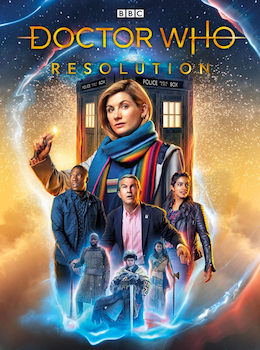
    Doctor Who: ResolutionNow, that’s more like it! After the damp squib of alleged-finale The Battle of [Mashes Hand on Keyboard], this New Year’s Day special does a much better job of putting a capstone on series 11. Despite its status as a separate “special” episode, it’s hard to deny that it’s actually part of the last series (despite what BBC Worldwide would have us believe, with their cash-grab move of leaving the episode out of the series box set, which isn’t even released for another fortnight): Ryan’s dad finally turns up (after being mentioned multiple times during the main series), while the primary storyline does a more subtle and effective job of mirroring series premiere The Woman Who Fell to Earth than Battle of Thingy-Wotsit did by just having a returning villain.

    Resolution has a returning villain too, of course: the Daleks! Or, rather, one sole Dalek. Like 2005 episode Dalek, Resolution seeks to make a single Dalek a world-threatening force, and largely does a bang-up job. As has been thoroughly demonstrated by now, current showrunner Chris Chibnall isn’t half the writer that Russell T Davies or Steven Moffat are (and he only proves this harder by trying to emulate their styles so often), so Resolution doesn’t have as much freshness or innovation as some Dalek tales from Davies’ and Moffat’s eras. But, saying that, the Dalek ‘riding’ a human via some kind of icky telepathic link is a new idea, which makes for some effective horror moments, especially given the creepy cephalopod-influenced design of the creature. There’s plenty of exciting running about too, making this the most blockbuster-like version of Who we’ve yet seen from Chibnall’s era.

    It still wasn’t perfect (as glad as I was to see Ryan’s dad turn up, the lengthy heart-to-heart scenes crippled the pace, and his inevitable redemption was narratively unearned; plus, Yaz continues to get shafted with “generic companion” duties), but overall it was a fun treat for Christmas New Year’s Day. More episodes with this kind of ambition when the series returns in 2020, please!

    The ABC Murders
    The ABC MurdersOnce upon a time it seemed implausible that anyone would ever try to play Poirot ever again, given how iconically (and thoroughly) David Suchet had embodied the Belgian detective during the 25-year series in which he starred. But I suppose it was inevitable that it would happen someday, and so following Branagh’s go at the end of last year, this year ends with another pretender to the throne: John Malkovich. Where Branagh stuck to tradition, with a flamboyant and fastidious embodiment of the character that seemed in-keeping with how Agatha Christie wrote him, Malkovich and regular TV-Christie scribe Sarah Phelps (she’s written all of the BBC’s new adaptations to date) have gone more revisionist. This Poirot is quiet, unassuming, ageing, almost embarrassed to be butting into the police investigation, especially as they would rather he pushed off, and he lives in a 1930s where fascism is ascendent and foreigners are despised, so he feels compelled to hide his Belgian roots as much as possible. It all feels psychologically plausible (and the mirroring of Brexit Britain is obvious), but it’s also a big set of changes to take in one go, which understandably angered some fans. I confess, I’ve never read a Poirot book, but I was a fan of the Suchet series. Nonetheless, I enjoyed this take on the character as an alternative — it may not be faithful, but it is believable.

    The same could be said of the plot. Poirot and/or Christie are best remembered for country house-type murder mysteries, with a bunch of upper-class suspects in a confined location, who Poirot interviews one by one before bringing them all together to explain what happened. This was the format that Branagh used to reassuring effect in his film (and, presumably, will continue to use in his next one, if my memory of its structure serves me right). The ABC Murders doesn’t go that way, however, with Poirot on the hunt for a killer who taunts him via letters. The suspect pool is limited not by confined location, but by how sophisticated the viewer wants to be at guessing — the structure is that of a howcatchem rather than a whodunit, as we witness the murderer going about his deeds while Poirot attempts to find him out. But this is Christie, so there’s a twist in the tail. Look, I’m trying not to spoil it for anyone who’s not seen it yet, but everyone I was watching with figured early on that (last spoiler warning!) the guy who was Obviously The Murderer was not the murderer, and so it turned into the usual guessing game of “which recognisable guest star did it?” Well, at least one aspect of this was reassuringly familiar, then.

    Watership Down
    Watership DownThe BBC and Netflix teamed up for this £30 million CG animated adaption of Richard Adams’ children’s novel, perhaps most (in)famous for its 1978 film adaptation that is said to have traumatised all who saw it (I never have). I guess most of that money went on the all-star cast (seriously, the number of well-known names is mad — far too many to list here, so you can check out this list if you want), because it certainly doesn’t seem to have been spent on the animation. Frankly, much of the series looks like an unfinished animatic; the stuff you sometimes see on animated movies’ DVD release as deleted scenes or work-in-progress versions. And yet, there are occasional flashes of polish: look closely at the rabbits’ fur in many scenes and you’ll see high levels of detail.

    Cheap production values are not the be-all-and-end-all, though — such things can be easily overlooked if there’s a good story or characters. But Watership Down’s animation is so poor that it scuppers that, too. Most of the characters are visually indistinguishable, made worse when there are so many of them to get to know, and very little screen time is invested in delineating them. It’s not even something you get used to or work out for yourself — the longer the series went on, the more confusing it became to follow who each rabbit was and what was meant to be happening to them. It’s frustrating and distancing, getting in the way of you caring about the characters or the story, which literally ruins the entire production. We stuck with all four hours of it because of a bloody-minded “we’ve started so we’ll finish” attitude. I’d recommend not even starting it.

    Not Going Out  Ding Dong Merrily on Live
    Not Going Out LiveNormally I’d fold this into the comedy roundup (see below), but I enjoyed it so much I’m singling it out. As the title implies, this was a live edition of the long-running sitcom. What inspired that, I don’t know, but it paid off with the series’ best episode for years. The storyline didn’t necessitate the live-broadcast format in the same way as 2018’s other live comedy special, Inside No.9, but writer-star Lee Mack built in various sequences to push what was possible live. And, naturally, some things went wrong — golden opportunities for a quick-thinking comic like Mack, who got to throw in plenty of improvisations and fourth-wall breaking. It may not be sophisticated, but it was funny. Indeed, I enjoyed it so much that I watched it twice within 24 hours.
    Comedy roundup
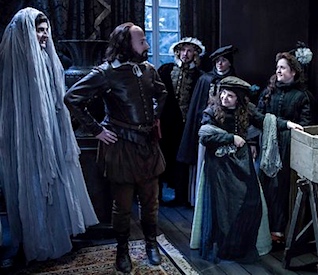
    Upstart Crow: A Crow Christmas CarolAlso tickling my funny bone this season were a new Upstart Crow Christmas special, given a prime Christmas Day slot. It riffed off A Christmas Carol, which was unfortunate because I saw rather too many version of that this year (see below for another). I can’t say Crow’s take was particularly special, but I’m fond of the sitcom anyway so another episode is always welcome. The night before that (Christmas Eve, for those not keeping up), BBC One had one-off comedy-drama Click & Collect, with Stephen Merchant as a dad who must travel to the other end of the country to collect that year’s most-wanted toy for his daughter, accompanied by his irritatingly over-friendly neighbour. It’s the kind of fluff that would feel a bit too daft most of the time, but hits the right light-entertainment note at Christmas. A bit more cutting edge was Goodness Gracious Me: 20 Years Innit!, marking the 20th anniversary of the groundbreaking British-Asian sketch show with a special that used some of the series’ funniest sketches as examples to discuss what made the show so important. It was a subtly clever way to be both “greatest hits” clip show and retrospective documentary at once. Sadly, the repeat of an overlong old Christmas special that followed wasn’t quite as vintage. And, as I’m rounding things up, there were also seasonal editions of panel shows Mock the Week (the usual clips and outtakes), Have I Got News for You (more compiled clips), and Insert Name Here (actually a new edition! I’m fond of it and was happy to see back on our screens). Several others I’m yet to catch up on (Would I Lie to You, The Imitation Game), though I did see both new episodes of Mrs Brown’s Boys. I know I “should” hate it, but the Christmas Day one, at least, made me laugh.
    Also watched…
  • Black Mirror Bandersnatch — Was it a film? An episode of TV? Something else? I’m still not 100% sure, but I went with “film” and reviewed it in full here.
  • A Christmas Carol — A filmed version of Simon Callow’s one-man show, and another production that sits on the film/TV divide. They released it in cinemas before it was on TV, though, so I’ll be reviewing it as a film at some point. The only reason I mention it now, then, is because I thought it was very good and wanted to point out it’s still on iPlayer.
  • The Dead Room — Simon Callow reading again, this time in Mark Gatiss’ latest attempt to revive the beloved-by-some “Ghost Story for Christmas” format from the ’70s. It was an effectively creepy little tale while it lasted, but it seemed to stop before the story was over.
  • Mark Kermode’s Christmas Cinema Secrets — A festive edition of the series that entertainingly explains the inner workings of genre. In this case, we learn that pretty much every Christmas movie is basically A Christmas Carol.
  • Les Misérables Episode 1 — OMG there woz no singing!!!! (Proper review in a future post, when more of it has aired.)

    Things to Catch Up On
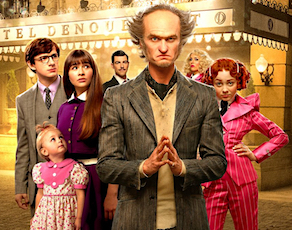
    A Series of Unfortunate Events season 3This Christmas, I have mostly been missing A Series of Unfortunate Events season three — the final one! Okay, it only came out yesterday, but I was with family and couldn’t watch it (ugh!) Not that I’d want to rush through it, anyway. By the time you’re reading this I’ll have made a start, and it’ll be reviewed next month. The same is true of Luther season four, which also started yesterday and which I’ll watch sometime later.

    Next month… look away, if you can: it’s the final series of Unfortunate Events!

  • The Past Month on TV #41

    Christmas is on the horizon, with the usual glut of seasonal specials and high-profile miniseries/one-offs crammed into a couple of weeks. But that’s for my next TV column — this time, here’s a bit more of the usual stuff.

    Doctor Who  Series 11 Episodes 8-10
    It Takes You AwayThe most recent season of Doctor Who went out, not with a bang, but with a whimper, in perhaps the most underwhelming “finale” the show has ever done. It wasn’t really a dramatic and exciting culmination of this year’s run of episodes, which is what a true “finale” is. Rather, it was just the last episode shown before the season… stopped. Fortunately, before that were two more episodes that proved this new era’s best stuff comes from its guest writers rather than its showrunner.
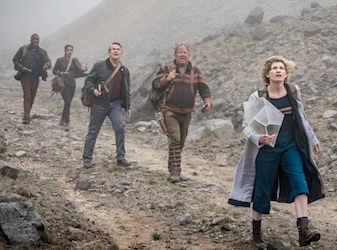
    The Witchfinders saw the TARDIS Team head into the past for the third time this season, and once again brought up a heavy theme: after racism in Rosa and religious division in Demons of the Punjab, now it’s the misogyny of 17th century witch hunts. Fortunately it wore this somewhat more lightly than the previous two episodes, which meant it lacked their emotional weight. Instead, it was a fun adventure, revolving around an alien race reanimating the dead, and a broad, camp, but occasionally nuanced performance from Alan Cumming as King James I. I thought he was a lot of fun.

    It Takes You Away set its scene as a “monster lurking near a remote cottage” tale, but pulled off a couple of twists to reveal something entirely different. It was an episode rich in science-fiction ideas — almost too rich, arguably, as the emotional impact they led to was powerful but perhaps not given enough screen time to be fully processed. But with some typically Doctor Who quirkiness thrown in, this was one of my favourite episodes of the season. Even if the execution sometimes faltered, I admired its ambition.

    Which brings us back round to the finale, the stupidly titled The Battle of Ranskoor Av Kolos. It’s such a dumb, unpronounceable title that I don’t think I was alone in suspecting it was a cover for something else (in the same way the classic series used to hide the return of the Master by crediting the actor by an acronym in the Radio Times, for instance). But no, that sadly was the title. Even worse, it had barely anything to do with the episode itself — the titular conflict is over, with the Doctor and co arriving to help the few remaining survivors defeat the big bad. Or, rather, get a bunch of exposition from the survivor (with a few hoops jumped through to make sure that exposition is gradually doled out rather than received all at once), then virtually ignore him while they set about some other storyline.

    The Battle of Ranskoor Av KolosTypically for showrunner Chris Chibnall, it was a half-thought-through tale, with regular logic gaps and narrative dead ends, and none of the impact you expect from a season-ender. Kinder viewers may say that’s because there’s a New Year’s Day special imminent which is the real finale, but I think that’s just being optimistic. Certainly, the BBC haven’t seen fit to include the special in the season box set (even though it’s released a fortnight after the special airs), which I’m sure is partly a shameless cash grab, but also indicates its separate status.
    With that in mind, we can already take an overview of the season as a whole. It’s been a mixed one for me, with a lot of stuff I really liked, but frequently undercut by dodgy execution. I’m not at all convinced Chibnall has the necessary skills to be in charge of the show — even the best scripts exhibit a lack of polish that Russell T Davies or Steven Moffat would’ve brought. And considering there are niggling faults across the board (the direction is rarely terrible, but pretty much every episode has some odd shot or editing choices), the blame must surely lie at his door. The next season won’t materialise until sometime in 2020 — hopefully that’ll be long enough to get things more in order. But with pretty strong ratings and praise in some quarters, I’m not convinced the production team will see where they need to improve.

    Crisis on Earth-X
    I ended up finally quitting all Arrowverse shows just before this crossover event aired last November, though I’d intended to make it through these episodes first (I fell behind and just never picked them back up). The crossover itself seemed to go down well, and with a new one having recently aired that I also intend to watch (to see how they’ve handled Batwoman), I thought I’d first catch up on last year’s.

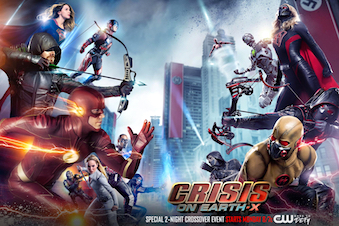
    Crisis on Earth-XWhereas the previous four-show crossover failed to really coalesce into a successful single narrative, Crisis on Earth-X manages to lose the sense of hopping about across different series to play more like a single four-part story. I suppose that’s not the only way to do a crossover, but for someone tuning in just for the event who isn’t interested in the ongoing storylines of each individual series, it’s more entertaining this way. That said, it’s not as if those elements go away: the story is kicked off by everyone coming together for the wedding of Barry Allen (aka the Flash) to his longtime love Iris West. The nuptials are eventually interrupted by Nazi doppelgängers from another dimension (I do love how outright comic booky these shows can be), but it takes most of the opening episode to get there — I’d forgotten how much time these shows spend on soapy stuff like weddings and relationship woes. In that regard, they’ve certainly been designed to fit their US network (The CW, more associated with teen-girl content until these series came along). From there it goes full superhero show, with large-scale action sequences and dimension hopping antics. It may not transcend its genre roots to be objectively high-quality premium TV, but it’s pretty fun.

    Agatha Christie’s Poirot  Series 2 Episodes 4-6
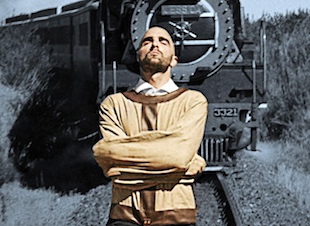
    Poirot series 2One day I’m going to watch all of Poirot from the start, but I happened to see these few episodes this month. They’re from the series’ early days (obviously), when episodes were an hour long and based on short stories (as opposed to the feature-length novel adaptations they did later). What’s remarkable is how different they are, structurally and tonally, from those later episodes, with which I’m more familiar. The feature-length ones each feel like a standalone movie, whereas these early episodes do feel like a TV series, with “case of the week” plots. For example, there’s a regular recurring cast (alongside the titular detective there’s his sidekick Captain Hastings, his housekeeper Miss Lemon, and trusty Inspector Japp), who all appear every week and each get some kind of subplot, even if it’s not tied to the main storyline — in one episode, while the other three are away solving a jewel theft, Miss Lemon has to hunt for her missing keys. And that’s another thing: there’s not always a murder. And there’s not always a pile of suspects, either — none of these episodes feature the famous “gather all the suspects in one room and explain what happened”-style finale, so synonymous with the series. So, in many ways it feels quite strange, but still entertaining.
    Also watched…
  • Great News Season 2 Episodes 1-7 — See last month for my comments on season one, which still apply (they tried adding Tina Fey as a guest star for a few episodes at the start of season two, which doesn’t massively change things). This little run ended with a Christmas episode (a fun riff on A Christmas Carol), which seemed a good place to pause for now.
  • The Royal Variety Performance 2018 — I haven’t bothered to watch one of these since 2012, but somewhat accidentally caught this year’s. It turned out to be rather good on the whole, I thought. Not so much the song-plugging music acts, but the comedians and circus turns, yeah.
  • Would I Lie To You? Series 12 Episodes 5-6WILTY is regularly superb, but sometimes it outshines even itself. There was one such moment back in episode three this series; there’s another in episode six, when regular panellist Lee Mack says he had to turn down an invitation to the Royal wedding to film that episode. It sounds like an obvious lie… but the other regulars, who didn’t receive invites, are worried it might just be true…

    Things to Catch Up On
    Death by MagicThis month, I have mostly been missing Death by Magic — not a high-profile show, maybe, but a new Netflix thing that seems up my street. Other than that, I’ve been conspicuously failing to get around to a bunch of “box sets” (I hate calling digital collections “box sets” — there’s no “box” involved) that I’ve been meaning to get to for varying amounts of time: The Little Drummer Girl, Killing Eve, The Haunting of Hill House, Lost in Space, the Netflix years of Black Mirror, Ash vs Evil Dead, Chilling Adventures of Sabrina (which even added a new Christmas episode), Riverdale, Mindhunter, Inside No.9… Not to mention everything that’s on my long-term back-burner, like Breaking Bad, The Wire, The Sopranos, The Shield, The X Files, things that don’t begin with a definitive article… There’s no doubt many more that are currently slipping my mind, anyway. With an abundance of Christmas specials incoming, I guess whichever series I dive into next will have to wait until January.
    Next month… is January, but expect an overview of Christmas telly before that.

  • Murder on the Orient Express (2017)

    2017 #164
    Kenneth Branagh | 114 mins | cinema | 2.39:1 | USA, UK, Malta, France, Canada & New Zealand / English, French & German | 12A / PG-13

    Murder on the Orient Express

    Did we need another version of Murder on the Orient Express? That seems to be the question that preoccupies many a review of the film, primarily with reference to the Oscar-winning 1974 version directed by Sidney Lumet and starring Albert Finney as Agatha Christie’s Belgian detective, Hercule Poirot, alongside an all-star supporting cast. That’s not the only other adaptation of arguably detective fiction’s most famous novel, though there were fewer than I thought: a modernised TV movie starring Alfred Molina was made in 2001, and it was of course filmed as part of the David Suchet Poirot TV series in 2010, but that’s your lot (in English — the Germans and Japanese have both done it on TV). So, on the one hand, maybe we should be all set for screen versions; on the other, it’s not like it’s the only remake.

    So, if you’ve not seen a version before, you’re spoilt for choice. If you want to know which I think you should pick… Well, I’ve not seen it, but I imagine we can discount that 2001 TV movie. Suchet is still the definitive screen interpretation of Poirot, but that particular episode is not the series’ finest hour, as I recall. And while I enjoyed the ’74 version a good deal, I wasn’t bowled over by it. Which brings us to this new one.

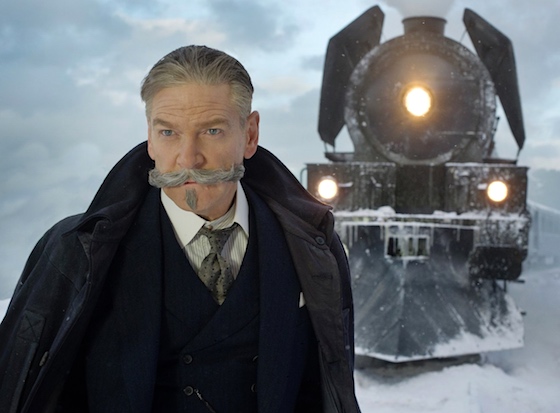
    The star of the film: Branagh's moustache

    Personally, I thought it was very good indeed. It’s a film of its genre and heritage — by which I mean it functions the way Christie-style murder mysteries always do, and it’s staged and shot mostly with a classical dignity — so if you have a dislike for that then this isn’t revisionist in a way that will win you over. But within those ‘constraints’ it’s very well done. The photography, in particular, is magnificent. Shot on 65mm, but without showing off about it in the way some other directors have recently, it has a richness, a grandeur, and an elegance that is most befitting.

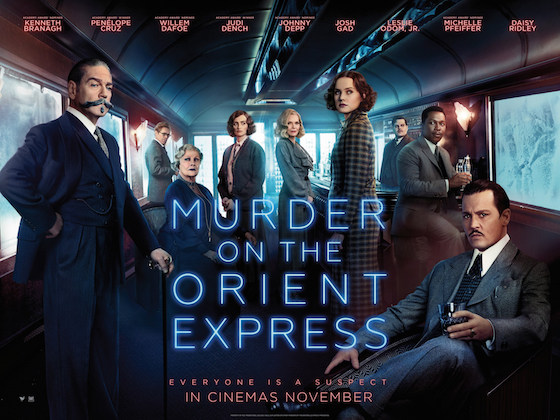
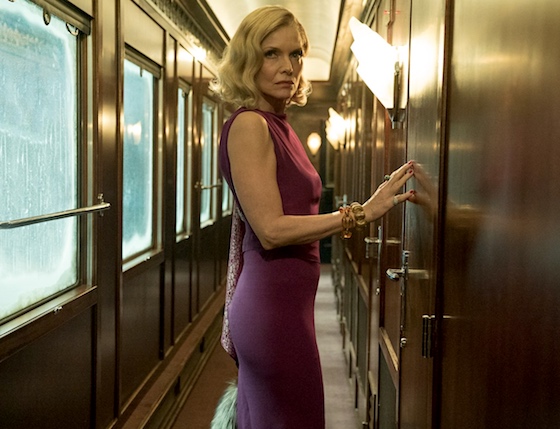
    Having mentioned the all-star cast of the previous film, it must be said that this version doesn’t skimp in that department either. The key roles are filled with a veritable who’s-who of acting talent, including big names (Johnny Depp, Michelle Pfeiffer, Penélope Cruz), quality thesps (Olivia Colman, Willem Dafoe), people who’ve worked with Branagh before (many of the small roles), people who tick multiple of those boxes (Dame Judi Dench, Sir Derek Jacobi), and freshly-minted stars too (Star Wars‘ Daisy Ridley, Sing Street‘s Lucy Boynton; depending on your point of view, Beauty and the Beast‘s Josh Gad and Hamilton‘s Leslie Odom Jr as well). The size of the cast and style of the story means that even the most-featured only get a couple of scenes of their own (plus scattered lines in ensemble moments), but the talent involved imbues the roles with inherent character.

    A dangerous liaison?

    And then there’s Branagh himself as Monsieur Poirot. Most discussion of his performance has focused on the moustache, understandably. It’s certainly a magnificent feat. But Branagh is a very fine actor, of course, and he manages to make Poirot his own — an impressive job when there’s the spectre of David Suchet’s definitive performance looming. I wouldn’t say he’s surpassed Suchet in any way, but his take on the character is different enough to dodge too many direct comparisons, while not being so different that it no longer feels like Poirot, at least to me.

    Frankly, I feel like an important element to enjoying the film is to approach it with an openness to it being its own thing — a courtesy I don’t believe it was afforded by some critics and viewers. Many reviews I’ve read had a tendency to compare it to the 1974 film, either in a specific “what I thought of each” sense or a broad “your opinions of that film may colour your view of this one”. I guess that’s a useful metric to some people, but it’s better to judge the film on its own merits, I feel. That said, I’ve also seen some call it too slow, others call it too fast; some say it’s too dull, others say it’s too full of action… No wonder it ended up with middling average scores: never mind not being able to please everyone, it seems like you can’t please anyone. Personally, I thought it largely hit the mark in all those respects.

    Classical elegance

    And it seems like the wider audience agreed: it ended up grossing $350 million worldwide, which places it in the top 30 releases of 2017. For a film of this type in the current box office climate, that’s an excellent achievement. For comparison, it’s just below the likes of Fifty Shades 2, Cars 3, and The Mummy Mk.III, and it also out-grossed films such as The LEGO Batman Movie, Blade Runner 2049, Split, Baby Driver, and even Get Out. I guess it appealed to a different audience than the one that routinely discusses movies online. It also means we’re getting a sequel, with Death on the Nile set for a 2019 release. Do we need another version of that too? Well, why not?

    4 out of 5

    Murder on the Orient Express was released on DVD, Blu-ray, and all the rest, in the UK this week.

    Murder by Death (1976)

    2015 #120
    Robert Moore | 91 mins | download | 1.85:1 | USA / English | PG / PG

    A gaggle of famed detectives are summoned to a remote mansion to solve a murder in this detective spoof by playwright Neil Simon. The twist is, all the characters are spoofs of famous literary/film/TV ‘tecs. Also, that the murder hasn’t happened yet. And also, that the person inviting them is Truman Capote. Not “someone playing Truman Capote”, but “Truman Capote playing someone”.

    A comedy where a bunch of people are invited to a remote mansion to solve a murder? Yes, it does sound an awful lot like Clue. Indeed, based on my reading, almost all modern assessments of the film seem to boil down to two straightforward alternatives: “it’s not as good as Clue” or “it’s better than Clue”. As it pre-dates Clue by almost a decade, maybe that shouldn’t be our only point of reference? Still, I guess the ’80s-ness and name-y cast of the later film has helped it gain more traction — it certainly seems to be on TV regularly, whereas I only learnt of Murder by Death as a footnote when reading up on the Thin Man series.

    For what it’s worth, I think its quality is about level with Clue. Such appreciation may partly depend on one’s familiarity with the characters being spoofed, however: it’s a funny story in and of itself, but a fair dollop of the humour revolves around riffs on the personalities, quirks, and storytelling tropes of Nick & Nora Charles, Poirot, Miss Marple, Sam Spade, and Charlie Chan, whereas Clue requires, at most, that you know the icons from Cluedo.

    I said Clue has a namier cast, but Murder by Death is no slouch, including Maggie Smith, David Niven, Peter Falk, and Alec Guinness as a blind butler, an affliction that’s mined for all its comedic value (and then some). They all give great comic performances, as does James Coco as the film’s version of Poirot. There are some neat send-ups of the genre — the literally-impossible mysteries and all that — as well as some good old-fashioned wordplay and silliness. The only downside is it loses its way a bit by the end. I suppose it doesn’t strictly need a satisfactory conclusion to the mystery, because it’s only a spoof ‘n’ all, but I feel like it would’ve benefitted from a stronger finale nonetheless.

    However, it’s a consistently amusing film, and everyone involved seems to be having a whale of a time. It’s definitely worth seeking out for fans of detective fiction who don’t mind the genre being gently ribbed.

    4 out of 5

    Murder on the Orient Express (1974)

    2009 #94
    Sidney Lumet | 122 mins | TV | PG / PG

    Murder on the Orient ExpressMurder on the Orient Express is arguably Agatha Christie’s most famous novel, perhaps because of its widely-known twist ending, or perhaps because it’s inspired in part by a high-profile true story, or perhaps because of this multi-Oscar-nominated all-star adaptation.

    The plot is the stereotypical Christie set up: a group of fairly well-off people find themselves in a confined setting, one is killed, a sleuth works out who. This time it’s a train rather than a luxurious mansion, but the basics are there. This isn’t a criticism — I enjoy a good Christie adaptation as much as everyone else who’s kept the current TV incarnation on air for 21 years (and counting) — and here at least Christie has a number of twists to her usual style. As mentioned its launching point is a true story, the Armstrong kidnapping and murder being based on the Lindbergh kidnap of 1932 (just a couple of years before the book was written); the snow-bound train’s location (very apt after our recent weather) is certainly different to a stereotypical country estate setting; and then there’s the infamous ending.

    I won’t spoil it here, just in case anyone doesn’t know it. Some are very critical of this particular denouement, labeling it an unsatisfactory cop-out that doesn’t make sense. Neither of these things are true. It is not reliant on an extraordinary coincidence — it might look that way at first, but the full explanation reveals it to be anything but — and there are numerous clues along the way as to what it might be, even if some are more thematic than the actual red herrings that almost lead Poirot astray. It’s a shame that knowledge of the ending is quite widespread these days, though that’s perhaps inevitable for a 76-year-old story. Still, I’ve done my bit.

    In the lead role, Albert Finney’s Poirot may have received an Oscar nomination and, more importantly, been approved by Christie herself (according to some; according to others, she wasn’t impressed), but he now pales in the inevitable comparison with David Suchet’s definitive portrayal of the Belgian detective. Suchet has defined Poirot in a way few other major franchisable characters have been (Connery may be widely accepted as the best Bond, but there are plenty who’d choose Moore, Craig, Dalton and Brosnan, and you may even find someone who likes Lazenby; equally, Sherlockians may divide themselves between Rathbone and Brett, not to mention Cushing and hundreds of others). He has the advantage of being able to perfect the role across hundreds of hours of television, but nonetheless stands proud as the high-watermark that others can only try to reach (even those who played the role 15 years earlier).

    Finney’s version is more obviously comical than Suchet’s. Where humour in the latter is derived from his serious fastidiousness, Finney plays it more for laughs; where Suchet seems almost solemn in his investigations Finney frequently bursts into laughter. It’s a broader interpretation of the character, one that ultimately lacks subtlety. At least Finney is thoroughly subsumed in the role, which means that after a while one does become accustomed to it.

    The rest of the cast are well suited to their roles. Ingrid Bergman won the Best Supporting Actress Oscar for her role, though one wonders if it was a weak year for the category as her part is miniscule and not particularly memorable. Elsewhere, famous names such as Lauren Bacall, Sean Connery, John Gielgud, Michael York, and many more, round out a truly star-studded ensemble where each has but a small part to play. It must be relatively easy to attract big names to Christie adaptations — as the TV series still do — when the author is so beloved and the amount of time required to shoot is (for a guest star) so small. Best here, perhaps, is Martin Balsam as Poirot’s friend Bianchi, who’s treated to several good scenes, not least the series of interviews where after each he confidently declares “it was them!”

    As a standalone film, Murder on the Orient Express is a skilled effort (I can’t comment on its quality as an adaptation because I’ve never read the book). For a viewer so familiar with Suchet’s interpretation of the character, however, even an all-star cast can’t quite remove the feeling that it’s not quite right. The Suchet-starring adaptation of this particular case has been filming recently, hopefully for broadcast later in 2010 (though knowing ITV we could have to wait as long as 2012), but even though it’ll have the definitive Poirot leading its cast, this film leaves a lot to live up to.

    4 out of 5

    (Originally posted on 15th January 2010.)

    What makes a film a film?

    What makes a film a film? I don’t mean “as opposed to a book”, or “as opposed to a pile of rubbish”; but rather, “as opposed to a TV special”, or different to a direct-to-DVD movie — indeed, is there a difference?

    This is the sort of thing that’s bothered me for a while, mainly thanks to the Radio Times. The Radio Times’ film section frequently features reviews for things they label as “US TVM” — translation: an American TV Movie. Not everything falls into this category. The 1996 Doctor Who TV Movie (the clue’s in the title) was just listed as a TV special, as was the recent one-off episode of 24, Redemption. Why are these different to other feature-length made-for-TV one-off dramas? The former was a British co-production, perhaps, but the latter wasn’t. The latter is part of an on-going series, made between seasons, however. But then, one-off editions of other (older) series have been reviewed as “US TVM”s, so why are they different? It’s not even a hard rule in that instance, as some old series have their feature-length episodes screened as a matter of course among other repeats.

    On a different tack, what about Paul Greengrass’ excellent Bloody Sunday, simultaneously screened on Channel 4 and released in cinemas? Or more recently, Ballet Shoes — just part of last year’s Christmas schedule in the UK, but it received a limited late-summer theatrical release in the US. So is that a film, or ‘just’ a TV special? Is a cinema release the key? Well, no — at least as far as the Radio Times are concerned — because Ballet Shoes wouldn’t now feature in their film review section were it repeated, while those other “US TVM”s will continue their circulation. [2015 note: A few years after I wrote this, Ballet Shoes was indeed repeated, and not listed as a film. Whenever Bloody Sunday is on, the Radio Times list it as a film.]

    Is length the issue? Clearly not — look at the Basil Rathbone Sherlock Holmeses, some of which struggle to make the hour mark, a running time that Midsomer Murders or Poirot tops with every new episode.

    And all this without even considering direct-to-DVD movies!

    Perhaps it’s not a scientific rule-driven process, but just a “feel”? But that’s rubbish too — I’d wager 24: Redemption is at least twice as cinematic as most of the ’80s “US TVM”s awarded a proper film section review. Maybe it’s production method, then? But Redemption was produced as an individual piece, outside of the series’ production — much as a ‘proper’ 24 movie would’ve been, though surely with a smaller budget. So too was the Doctor Who TV movie, and obviously all one-off UK productions are made in a similar vein. And many of them, like Ballet Shoes, are surely just a theatrical release away from being a ‘film’ rather than a one-off TV drama, aren’t they? Perhaps it’s stylistic conventions — production company logos at the start, for example. But that seems a tad arbitrary to me, and plenty of independent films dispense with such.

    Or perhaps, in this modern world, IMDb is the decider — whether it has that little “(TV)” after the title or not (it does for Ballet Shoes and 24, but not for Bloody Sunday). But then, why are the people at IMDb — and, we should remember, most of their content is user-generated anyway — any more qualified to decide than you or I?

    It’s all down to the individual then, is it? Perhaps. If I declare 24: Redemption a film and review it as a numbered entry in 2008, would anyone care? But would it mean that, ‘morally’, I should go back and review Ballet Shoes as part of 2007? Or last month’s Einstein and Eddington as part of 2008? Or afford any of the countless other feature-length TV specials I’ve seen in the past two years the same treatment?

    I don’t have any answers here, just more questions. I’m not going to go back and review Ballet Shoes though. Nor am I going to add Einstein and Eddington, or this Christmas’ The 39 Steps when it comes around. I may well count 24: Redemption, though [I did]. I don’t have Sky, so as far as I’m concerned it may as well be direct-to-DVD, especially in its extended DVD-exclusive form.

    And direct-to-DVD movies definitely still count… don’t they?