
Welcome to my monthly “Failures” column, where I look back at some of the films I could, would, maybe even should have watched last month… but failed to.
Pick your poison for what was the most noteworthy theatrical release in March: Bong Joon-ho’s first film since the all-conquering Parasite, Mickey 17; or Disney’s latest live-action remake and PR mess, Snow White. I know which I’ll be watching first when they make their way to disc and/or streaming. Elsewise, it was quite a strong month for animation, with Oscar winner Flow finally making it to UK screens, alongside the highest grossing animated movie of all time (thanks China), Ne Zha 2, and the latest entry in the long-running Gundam anime franchise, this time pairing up with the creatives behind Neon Genesis Evangelion for the barely-pronounceable Mobile Suit Gundam GQuuuuuuX: The Beginning, released theatrically ahead of its TV series (on Prime Video worldwide from next week. I presume the movie, or an episodic version of it, will form part of that offering). Also occupying screen space were Steven Soderbergh’s second film this year already, spy thriller Black Bag, and a new Jason Statham actioner directed by David “Suicide Squad” Ayer, A Working Man, plus other films I know even less about but had big names in them or just enough of a marketing push that they entered my consciousness, like Last Breath, Opus, The Alto Knights, Novocaine, and The Woman in the Yard. I look forward to next hearing of them when they’re on free/subscription streaming and I automatically add them to my never-ending watchlist.
Talking of streaming, Netflix had an original this month that managed to attract chatter on a theatrical level — albeit for all the wrong reasons, because The Electric State is supposedly slop of the lowest order. I’ll say this for it: it prompted me to buy the book it’s based on, which I hear is excellent. Conversely, attracting no attention whatsoever (as far as I saw) was Prime Video Original Holland, which appears to be some kind of mystery thriller starring Nicole Kidman, Matthew Macfadyen, and Gael García Bernal. That interests me on the surface, but dropping it with no fanfare hardly instills confidence. Similar could be said for O’Dessa on Disney+ — yes, Disney+ has some original feature-length content to report this month! It’s a rock musical of some sort, apparently, starring Stranger Things’ Sadie Sink, who the industry seems to be desperately trying to make happen and I have no idea if it’s working or not (nothing she’s led seems to have broken out, but who knows what’s going on with Young People on the TikToks and whatnot).
Otherwise it was business as usual, in the sense that theatrically-released films of various sizes made their subscription streaming debuts. Disney+ de facto leads the way with big-hit animated sequel Moana 2 and unwanted live-action sequel Mufasa: The Lion King. Prime Video was on a slightly smaller scale with Brit flick The Critic and second Hellboy reboot Hellboy: The Crooked Man, though I bet I watch at least one of those before I watch either of those Disney offerings. The best Netflix could muster was Transformers: Rise of the Beasts, which may or may not have already been on NOW, I can’t remember, thus showing how much I care for that franchise at this point. And as for NOW, their slate included litigation-provoking adaptation It Ends With Us, one-quarter of an epic Western in Horizon: An American Saga – Chapter 1 (has Chapter 2 come out yet? I forget), and AI horror Afraid (aka AfrAId, geddit?)
Back catalogue additions that particularly caught my eye included two titles on Prime I’d never heard of before: The Black Watch, aka King of the Khyber Rifles, a 1929 John Ford movie co-starring Mrs Thin Man, Myrna Loy, which doesn’t have a great score on IMDb but, hey, what do they know; and Knight Chills, a TTRPG-related slasher movie, which looks low-rent but perhaps fun. Hey, it can’t be worse than Mazes and Monsters… probably. iPlayer filled a gap by offering the first Harry Palmer sequel, Funeral in Berlin. The others are on Prime, so now I can watch them all, for good or ill (I figure there’s a reason most people have only heard of The Ipcress File). MUBI are encouraging me to give the work of Jacques Tati another go by adding a bunch of his films. I saw M. Hulot’s Holiday and Playtime at uni (and reviewed the latter) and didn’t care for either, but my taste has broadened since then, so who knows now?
As ever, I could spend many paragraphs rattling through all the other streaming additions, but (as has become my habit recently) let’s focus on ones I already own on disc. For example, Se7en cropped up on Netflix, thus giving me an excuse to mention it for the third month in a row and hopefully push me to watch the 4K disc I bought. It could be worse: How the West Was Won is on iPlayer, and that was one of the first Blu-rays I bought, so it’s been sat on my shelf for 15 or so years. Could be worse: I own Orson Welles’s Confidential Report on Criterion DVD, and look, there it is in HD on Prime. At the other end of the scale, a recent ‘mistake’: I imported the US Blu-ray of The Last Voyage of the Demeter because there was no sign of a UK release, then didn’t rush to watch it and now there’s been a UK release, a 4K release, and it’s streaming ‘free’, and in 4K to boot. Dammit.
I could go on in this vein, but let’s instead to transition to future stars of my “regrets” section: all the new stuff I’ve bought on disc! Lots of 4K titles this week, from brand-new releases like Gladiator II, The Lord of the Rings: The War of the Rohirrim, and Megalopolis, to lavish new editions of older titles, like a pair of David Cronenbergs from Second Sight, The Brood (which I’ve never seen) and Scanners (which I have and rather loved); a pair of Akira Kurosawas from the BFI, Yojimbo and Sanjuro (both great, though most praise tends to be aimed at the first whereas I have a soft spot for the second); the first in Hammer’s attempt to highlight some of their lesser-known titles, Four Sided Triangle; and, though I am usually loathe to pay full price for a Criterion, I wanted to support them releasing films like Godzilla vs. Biollante.
(If you’ll indulge an aside into some semi-informed analysis: Godzilla vs. Biollante strikes me as a telling release, in that Criterion putting it out by itself at this point suggests there’s no chance of the hoped-for Heisei Era set coming as a companion / followup to the Showa Era one they released as #1000 back in 2019. Sure, they released the original Godzilla as a standalone title before the Showa set, but that’s a different kettle of fish: the original will interest some people who don’t care for the franchise as a whole, whereas Biollante is nothing so iconic. The fact it’s only the second Heisei film leaves me hopeful the ones that followed will also get the Criterion treatment; at least the next two would be nice, as their previous double-bill Blu-ray release is currently $195+. Or maybe I’m looking at it all wrong — maybe they’ve got access to all these films in 4K and think a 4K box set would be prohibitive. But I think the fact they haven’t started with the era’s first film, The Return of Godzilla (aka Godzilla 1984), doesn’t bode well for that presumption. As always, time will tell.)
Also, I begrudgingly bought the Steelbook release of Panic Room. I’m not a huge fan of Steelbooks (unless they’re doing something clever or have exceptionally nice art, which they so rarely do), especially as nowadays it just seems to be an excuse to gouge an extra £10+ from the customer; but you can no longer guarantee that the Steelbook won’t be the only 4K release of a title (look at all those Disney+ series, and I guess that model works because Warner recently copied it for The Penguin), and, like many people, I’ve been waiting on Panic Room in HD (never mind 4K) for what feels like forever, so I didn’t want to miss out. It’s a particularly ugly Steelbook too, so I can’t even console myself with “at least it looks pretty”. If they do put out a regular edition soon, I’ll be miffed; but while there’s no sign of one, hey, at least I finally own it in HD.
Slipping down to regular ol’ 1080p Blu-ray, the boutique labels continue to dominate my spending. This month’s inevitable Radiance haul included new releases Hardboiled: Three Pulp Thrillers by Alain Corneau (containing Police Python 357, Série noire, and Choice of Arms); French sci-fi romance Je T’aime, Je T’aime; a pickup from a previous wave, Italian newspaper-based thriller Slap the Monster on Page One; and, from their partner label Raro Video, poliziotteschi Rulers of the City. How am I meant to resist when they’re putting out stuff in some of my pet favourite subgenres? The same goes for Eureka releasing a double-bill of Venom Mob films, The Daredevils and Ode to Gallantry. I’m not even a fan of the Venom Mob films I have seen, but I see something classic from Shaw Brothers Studio and I struggle to resist. Maybe these will be the ones where I understand what makes the group so popular.
Okay, so, yeah, I should probably cut back on purchases like that. Will I ever learn? Well, news came at the end of the month that may help: HMV have ended their 20% “first order” discount, which has long been usable on as many orders as you like if you knew what you were doing. The scheme had been running for a couple of years, meaning big purchasers racked up hundreds, if not thousands of pounds of savings. I dread to think exactly how much I saved (because it would mean I spent four times more), but it was a significant factor in my purchasing decisions. Now, I guess I’ll end up spending about the same but get less for it, and spread my purchases around other stores too. We can’t exactly complain (we got far more out of it than we were ever meant to), but I can’t help but think that if HMV are expecting their gross sales to increase by 25%, they’ve got a nasty surprise coming.
 One thing this week has achieved is re-confirming that Fincher is one of my favourite directors. Another is to remind me that I’ve not seen a single one of his films at the cinema.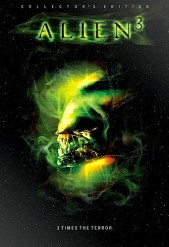

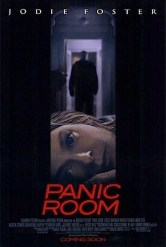


 Panic Room stands out as (arguably) Fincher’s most atypical film. Whereas his others are all epic, in one way or another, this is the exact opposite. It’s very contained, virtually the entire running time spent on one night in one house, alleviated only by brief outside bookends and a guided tour of the house at the start. Fortunately, it’s still an outstanding little thriller.
 all the way squeezing the camera through banisters, coffee pots, and other assorted obstacles. There are several such shots, the majority early on (though not exclusively — witness the Hitchcockian transparent floor, for instance). This is presumably to help enliven the relatively slow build-up; later, the story’s inherent tension largely takes over.
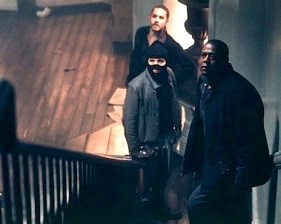 perfectly well staged and suitably tense or exciting as required, but Foster’s slow-mo dash for her mobile, and back into the panic room as the three burglars come pounding up the stairs, is one of those sequences that transcends the film it’s in to become a stand-out example of the form. Any skilled action director could have produced a good sequence at full-speed from that setup, but by switching to slow-motion Fincher stretches out the tension like an elastic band ready to snap, putting us on the edge of our collective seat as we urge Foster on through air that seems as thick as treacle.
 One other particularly interesting element is how we feel about Forest Whitaker’s character. This isn’t
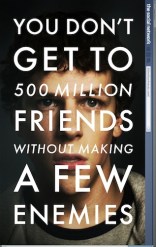
 David Fincher’s multi-Oscar-nominated latest,
  My viewing starts tonight, for a week running Friday to Friday — I’m relying on HMV to get The Social Network to me in timely fashion for that to work. I intend to start posting reviews on Sunday night — technically, Monday morning — which gives me a couple of days to write them, for a week running Monday to Monday. Neatness in both watching and reviewing, then.
 So the week begins with a film I’ve seen in a cut I haven’t, ends with two films I’ve never seen, and along the way takes in several of my favourite-ever films. Lovely.
 100Films.co.uk