
J.C. Chandor | 125 mins | streaming (UHD) | 2.11:1 | USA / English, Spanish & Portuguese | 15 / R

Former US soldier Santiago ‘Pope’ Garcia (Oscar Isaac) is struggling to make a difference as a consultant to a South American police force when his informant (Adria Arjona) finally gives him the location of powerful drug lord Gabriel Lorea (Reynaldo Gallegos), who’s hiding deep in the jungle surrounded by ill-gotten gains to the tune of many millions of dollars. Deciding the cops are too corrupt to handle this, Pope reaches out to his old military buddies — commander and strategist Tom ‘Redfly’ Davis (Ben Affleck), pilot Francisco ‘Catfish’ Morales (Pedro Pascal), and brothers Ben and William ‘Ironhead’ Miller (Garrett Hedlund and Charlie Hunnam) — to take on one last ‘off the books’ mission: kill Lorea and pocket the money for themselves. But they decide it’s too immoral so stay at home and do nothing.
Not really! Of course they agree to do it, risking their lives and their moral code for a big payday they all desperately need.
On the one hand Triple Frontier is a standard men-on-a-heist actioner, and a lot of people seem to have dismissed it as such. On the other, however, there’s quite a lot of different things going on here. Almost too many, in fact, as arguably the film doesn’t have time to explore them all. There’s a distinct thread about the treatment of veterans in the US — that these guys have been used up and spat out, and now struggle with their mental health and/or to even make a living in regular society. It also ties this into some “warrior code” mentality, which I’ve heard said is quite a realistic depiction of the mindset these kinds of guys have in real life, but does come across as a bit macho bullshit at times here (there’s a scene where they’re camping in the jungle, bemoaning that they’re the last of their kind, etc).

As well as these themes, there’s some surprise genre mash-ups going on, too. Nothing too radical, but the film doesn’t play out as I expected (vague-ish spoilers follow). At the start, it’s has almost a Sicario vibe, particularly in a sequence where Pope leads a violent raid on a gang hideout. Then it gets stuck into what the trailers promised: a bunch of military professionals pulling off a heist. Naturally, it doesn’t all go according to plan (no good heist movie has everything go according to plan!), and as the guys struggle to make their escape the film makes a hard turn into Treasure of the Sierra Madre territory, which I did not see coming. It doesn’t dig into the psychology of greed anything like as much as that film, but as the team trek through the jungle and feud amongst themselves, the film takes on a “jungle adventure” aspect I wasn’t expecting. This is where I think those claims of it being just a “standard” kinda military-men-on-a-mission movie are particularly wide of the mark.
Apparently the film has been struggling through development since 2010, presumably after screenwriter Mark Boal won his Oscar for The Hurt Locker. That film’s director, Kathryn Bigelow, was originally attached (she’s still credited as a producer), and the film also bounced around a couple of different studios (before winding up at Netflix) and churned through a long list of possible cast members (according to IMDb, they include the likes of Tom Hanks, Johnny Depp, Denzel Washington, Sean Penn, Leonardo DiCaprio, Mark Wahlberg, Will Smith, Tom Hardy, Channing Tatum, Mahershala Ali, and Casey Affleck).
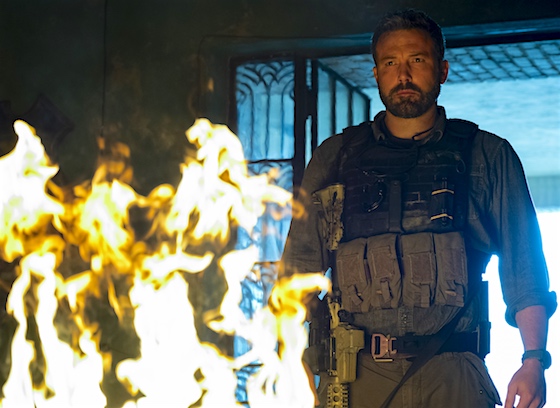
I feel like it ended up in a pretty decent place, however. The five guys are believable as ex comrades, and it’s all very well put together, with slick but not flashy direction from J.C. Chandor, helmer of the excellent All is Lost, plus Margin Call and A Most Violent Year, neither of which I’ve seen but I’ve heard are good. Triple Frontier does nothing to besmirch his rep. It’s crisply shot by DP Roman Vasyanov — like the direction, not excessively flashy but still strong, including some great aerial stuff. Apparently this is the first film to use the full 6.5K resolution of the ARRI Alexa 65 camera, which is why it retains the camera’s unique aspect ratio of 2.11:1. In truth, it doesn’t make much difference, because it’s near as dammit the 2:1 that’s so popular among other Netflix productions, but that works for me.
Triple Frontier doesn’t reinvent the wheel, but I think some of the commentary dismissing it as mere standard fare has done it some disservice. As a heist/action movie it’s more than competent, with some turns and developments that keep it surprising and fresh, and visuals that reward seeing it on the best-quality screen you can.

Triple Frontier is available on Netflix now.
 2016 Academy Awards
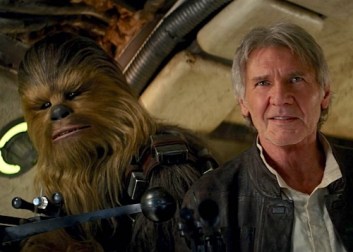
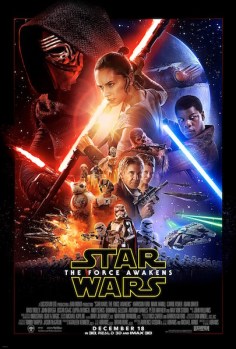 Star Wars: The Force Awakens is not the best film of 2015. Not according to the Academy of Motion Picture Arts and Sciences, anyway, who didn’t see fit to nominate it for Best Picture at tomorrow’s Oscars. Many fans disagree, some vociferously, but was it really a surprise? The Force Awakens is a blockbuster entertainment of the kind the Academy rarely recognise. Okay, sci-fi actioner
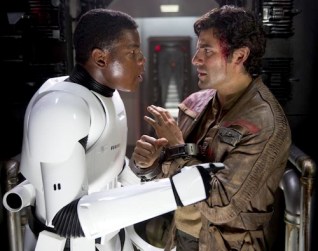
  I too could talk about the likeable new heroes; the triumphant return of old favourites; the underuse of other old favourites; Daisy Ridley’s performance; John Boyega’s performance; the relationship between Rey and Finn; the relationship between Finn and Poe; the success of Kylo Ren and General Hux as villains (well, I thought they were good); the terrible CGI of Supreme Leader Snoke; the ridiculous overreaction to the alleged underuse of Captain Phasma; that awesome fight between the stormtrooper with that lightning stick thing and Finn with the lightsaber; the mystery of Rey’s parentage; the mystery of who Max von Sydow was meant to be (and if we’ll ever find out); some elaborate theory about why Ben wasn’t called Jacen (there must be one — elaborate theories that will never be canon are what fandoms are good for); the way it accurately emulates the classic trilogy’s tone; the way it’s basically a remake of
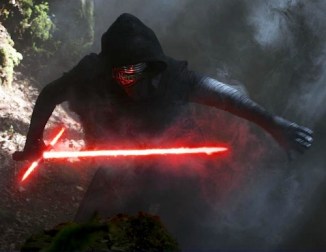 J.J. Abrams seems to have tricked some people into thinking he’s a great director with The Force Awakens (rather than just a helmer of workmanlike adequacy (when he’s not indulging his lens flare obsession, at which point he’s not workmanlike but is inadequate)), and I think that’s partly because it’s quite classically made. Yeah, it’s in 3D, but the style of shots used and — of most relevance right now — the pace of the editing help it feel in line with the previous Star Wars movies. Some of the more outrageous shots (often during action sequences) stand out precisely because they’re outside this norm. Perhaps we take for granted that Abrams delivered a movie in keeping with the rest of the series, because that’s The Right Thing To Do, but that doesn’t mean he had to do it. And the transitional wipes are there too, of course.
 No one knows what the difference is between these two categories. I’m not even sure that people who work in the industry know. As a layperson, it’s also the kind of thing you tend to only notice when it’s been done badly. The Force Awakens’ sound was not bad. It all sounded suitably Star Wars-y, as far as I could tell. That’s about all I could say for it. It feels like these are categories that get won either, a) on a sweep, or b) on a whim, so who knows who’ll take them on the night?
 “restraint […] applying the basic filmmaking lessons of the first trilogy,” according to
  those elements aren’t gone about in an awards-grabbing fashion anyway. In the name of blockbuster entertainment, however, they’re all highly accomplished.
 British Academy Film Awards 2016
 A British sci-fi movie from a first-time director will tomorrow take a place at the table (well, in the auditorium) alongside 2015’s biggest awards contenders, as it vies for multiple gongs at this year’s BAFTAs — and it stands a very plausible chance of walking away with several of them, too. I hope it does, because, after a year that brought us awards-quality sci-fi bombast (
 In truth, it’s not the most thorough deconstruction of what it means to be human and whether artificial intelligence can have that right, but it does touch on these issues and, in so doing, leaves them open for the viewer to mull over for themselves, or debate with friends, or however else one likes to consider their movies post-viewing (like, I dunno, writing about them on the internet or something).
 And his dance scene is surely one of 2015’s highlights (there’s an extended version hidden on the US Blu-ray, which is a treat). Garnering the most praise (and awards) is Alicia Vikander’s take on an AI. It’s a tricky role to tackle, because she’s not just a robot — that would defeat the point of Nathan’s exercise — but nor is she fully human. It’s a tightrope of a role, a fine line to walk, and Vikander negotiates it with aplomb. To say too much more would be to spoil it.
 Those after a dissertation-like hard-science deconstruction of the meaning and possibilities of AI will likely find Ex Machina slightly lacking, as will anyone after the crash-bang thrills most mainstream sci-fi provides. Viewers prepared for a decently thought-provoking dramatic thriller about near-future tech, however, should be both engrossed, and grateful that movies like this are (for the time being) still getting made.
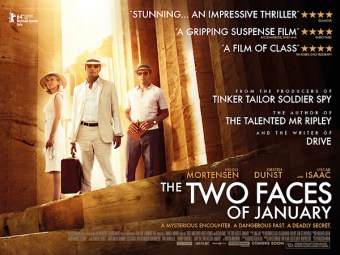 The writer of
  On the surface it might just seem like Colette is the dim-blonde wife, going along with her husband whatever happens and flirting with their sexy tour guide, but there’s clearly more going on under the surface. How much does she really know about Chester’s actions? Is she an innocent bystander, or is she involved? Is it harmless flirting with Rydal, or are Chester’s drunken suspicions on the money?
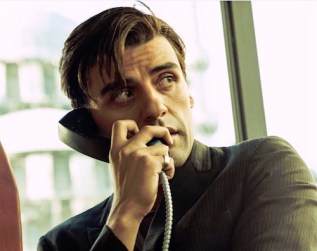 Filming this particular Highsmith novel was a long-held ambition for Amini (he first tried to acquire the rights after his big-screen writing debut,
  100Films.co.uk