
Panos Cosmatos | 121 mins | download (HD) | 2.39:1 | USA, UK & Belgium / English | 18
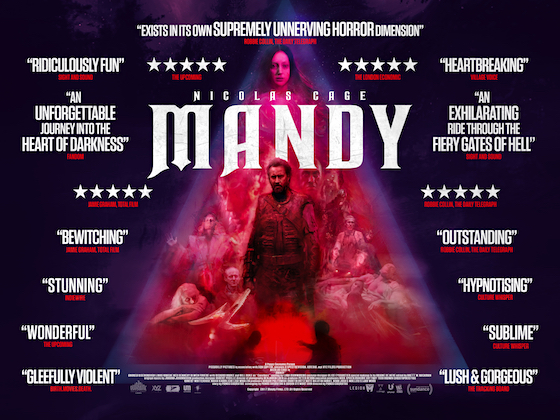
Words feel inadequate to describe Mandy, the sophomore feature from writer-director Panos Cosmatos, the son of George P. Cosmatos, who directed the likes of Rambo: First Blood Part II and Tombstone — films which are not helpful comparisons here, I hasten to add. You could call Mandy an action movie, of a sort, but it’s unlike either of those. It’s not like a whole lot else, really.
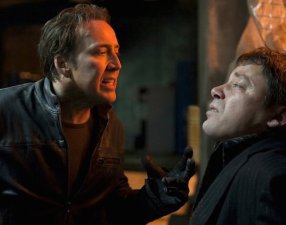
Let’s start with the plot. I’m not sure Cosmatos did, but we will. Set in the mid ’80s, it centres around Red Miller (Nicolas Cage) and his girlfriend Mandy Bloom (Andrea Riseborough), who live happily in the back of beyond somewhere in the United States. One day a group of Christian cultists happen to drive past Mandy, and their leader, Jeremiah Sand (Linus Roache), takes a shine to her. With the aid of a demonic biker gang, Sand and co accost Red and Mandy for some nefarious cult-ish purpose. Naturally it does not end well, sending Red on a nightmarishly surreal journey of revenge.
I said Mandy could be considered an action movie, which is true: Red’s revenge naturally leads to some violence, which in this case often come at the end of fights. But if you come just for the action you’re liable to leave unsatisfied, because Cosmatos definitely makes you wait for it. Some of it does satisfy on a visceral, B-movie level (there’s a showdown in a quarry I shan’t spoil by detailing), but its purpose is not to revel in combat.

Rather, it is very much a horror movie. Not in terms of the obvious connotations of the genre — there’s no supernaturally-powered serial killer, no vampires or werewolves, no jump scares — but in the unnerving atmosphere the film sets out to create. This is what I meant when I said I’m not sure Cosmatos started with the plot: there’s a definite story here, and characters and emotional arcs within that too, but the primary goal seems to be the mood that’s generated and the feelings that instills in the viewer. It’s possible Cosmatos may have bigger ideas on his mind beyond that — some reviewers seem obsessed with the notion that the film wants to explore philosophical concepts but doesn’t do it very well. Perhaps they’re right. I didn’t see it that way, however, taking the whole affair as simply an inescapable dive into a fever dream nightmare experience, where the aesthetics and the sensations they create are the point.
Certainly, a good many elements are on board with this twisted perspective. The performances are certainly in the right space, with Nic Cage going full Nic Cage as he travels deeper into the nightmare, the impact of his barminess emphasised by him being fairly normal at the start. As the cult-leading big bad, Roache steps up to the plate of trying to equal Cage’s insanity, and I’d say he gets there — an impressive feat. Around them, Cosmatos lets thing unfurl at a leisurely, dreamlike pace. Some will say it’s too slow and succumb to boredom, but I think it’s very deliberate — though I will certainly allow that it does go too far in this regard at some points.

Further to that, he blends in a lot of surreal and fantasy-inspired imagery and visual flourishes, with Benjamin Loeb’s photography often pushing into extremes of colour (lots and lots of red), lens flare (so much more effectively than anything J.J. Abrams has ever been responsible for), and a deliberately-created haziness that, once again, the best descriptor for is “dreamlike”. That said, the shot-on-film, pushed-to-extreme aesthetic also helps evoke low-budget ’80s fantasy/horror films, in a kind of race-memory way — I couldn’t give you specific examples of what films I feel it’s emulating, but there’s something about the overall style that gives that vibe. Jóhann Jóhannsson’s eerie score also hits those same beats, in terms of both the era recreated and the film’s own unsettled atmosphere.
Mandy is today’s premiere on Sky Cinema, which feels like an ill fit to me. Maybe I’m being unfair, but I always feel like Sky Cinema (and by extension its viewer base) is much more focused around mainstream blockbuster kind of movies, especially for a Saturday premiere. Instead, it feels like Mandy should be making its TV debut on Film4 at about 11pm in the middle of the week (I won’t be surprised if that’s where it ends up getting its first network TV airing). I can see some tuning in expecting a violent revenge action-thriller and giving up after a few minutes of its particular weirdness. For those on its wavelength, however, it’s an experience (and it’s definitely an experience) that’s thrilling in a very different way.

Mandy is available on Sky Cinema from today.
It placed 11th on my list of The 15 Best Films I Saw For the First Time in 2019.


 Believing the mission lost, the military has launched its back-up plan: an airstrike that will destroy the poison gas but also kill everyone on the island. Naturally our heroes manage to complete their mission nonetheless, and as the jets streak across San Francisco Bay, Stanley attempts to signal abort with two green flares. In slow motion, of course.
 Score:







 Jon Schnepp’s widely-reviewed documentary about the batshit-crazy Nic Cage-starring Tim Burton-directed Superman movie that almost happened in 1999. If all you’ve seen are the photos of a stoned-looking Cage in a light-up abomination of a Superman costume that leaked onto the internet a few years ago, prepare to be amazed. Indeed, those infamous photos and footage are an aberration that this documentary explains.
 There seem to be an increasing number of “making-of documentaries about films that didn’t get made”, to the extent where it’s almost turning into a sub-genre. The highly-praised
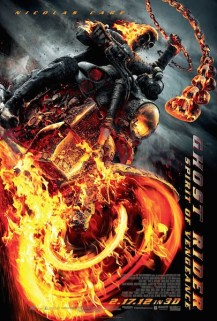 Best known for the trailer that showed its hero pissing fire, Ghost Rider: Spirit of Vengeance is a semi-reboot of the Marvel comics franchise about a demon-possessed vengeance-seeking motorbike rider.
 where adults have east European accents but kids sound American, and Idris Elba pretends to be French.
 later seasons didn’t and, in my opinion, suffered. Johnny Depp-starer
 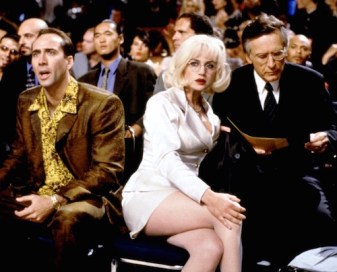 If there’s one significant flaw, it’s that the ending is too much based on convenience and coincidence; and someone in the editing room should’ve paid more attention to removing all references to the original, deleted ending in which the casino got flooded. I have no idea why that was removed — maybe someone thought it was a bit ludicrous. But it sounds more satisfying than what was included, which, as noted, relies on a handy spot of coincidence and at least one action that seems out of character. I can forgive it though, because I liked everything else. And the post-climax montage is a suitably downbeat ending to our hero’s story — another noir trait there.
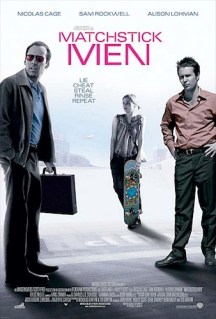 Matchstick Men ends with a twist. One of those great big changes-everything-you’ve-just-seen numbers that have a habit of making a film notorious. Yet I’m almost loath to mention it, because I’ve never read a review, preview, summary or what-have-you of the film that mentions there’s a twist. Maybe I’ve just been reading the wrong pieces; maybe no one cares; maybe they’re all just playing along trying to keep it secret. But not me, because I bloody hated it.
 Twists are fine. Twists can be great. As I said, you can guess a twist is coming and it can still work. A really good twist works even when you know for certain it’s coming; its existence raises what you’ve seen, makes it all work even on repeated viewings when the element of surprise is obviously gone. Matchstick Men doesn’t have that kind of twist. It has the kind of twist that undermines everything you’ve just seen. Not because it’s illogical — it isn’t in the slightest — but because it tramples over the film’s emotional resonance, in my opinion.
 Alison Lohman is also exceptionally good as a 14-year-old girl. It took a scene or two to convince me, but after that I was plenty on board with it. It occasionally takes some effort to remind yourself she was 24. As the third lead, Sam Rockwell plays a typical Sam Rockwell part. He does it very well, naturally, and there’s nothing to fault him on, but he’s been better elsewhere. The rest of the cast are absolutely fine but not exactly called on much — this is Cage’s film, and to a lesser extent Lohman’s. They have the emotional journey, the film’s heart-and-soul around its long(-ish) con ‘plot’ (which could just be lifted from any episode of Hustle… except it’s not even that complex).
 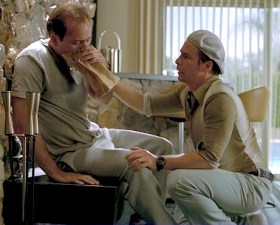 Matchstick Men was a lot better than I’d expected, because most of the coverage I remember shoved it aside as a middle-of-the-road side project for Scott. It’s definitely better than that, if still not the “sweep the Oscars” success
 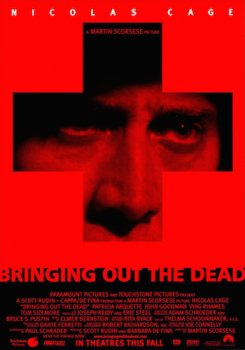 It’s hard to know what to make of this, because by the end it all seems a little pointless. The storyline, which follows Nicolas Cage’s paramedic across three nights in New York, is a mixture of short episodic medical incidents with longer threads that continue throughout. These connect and fall apart, feeling as episodic as the rest, and most of them don’t really lead anywhere.
 100Films.co.uk