
 Jon Schnepp’s widely-reviewed documentary about the batshit-crazy Nic Cage-starring Tim Burton-directed Superman movie that almost happened in 1999. If all you’ve seen are the photos of a stoned-looking Cage in a light-up abomination of a Superman costume that leaked onto the internet a few years ago, prepare to be amazed. Indeed, those infamous photos and footage are an aberration that this documentary explains.
Schnepp guides us neatly through the film’s protracted development, from the early script stages — initially penned by Kevin Smith — right up to costume fittings and special effects tests. It’s remarkable how late in the day the film was canned. A wide array of interviewees means the documentary offers a genuine insight into the entire process, with the likes of screenwriters and concept artists offering details on specific elements, to producer Jon Peters (certainly a ‘character’) and director Tim Burton sharing more of an overview of the project. Indeed, the only significant absentee is Cage.
Some have said Schnepp puts himself in the film too much. He’s a long, long way from the worst example of a documentary maker intruding too heavily, in my opinion, though it’s true that at times he could pull it back a bit. A sequence where someone takes a phone call mid-interview while Schnepp patiently has a drink is presumably supposed to be some kind of comedic interlude, but it’s obviously an inside joke because it’s a narrative-interrupting pause with no worthwhile effect. Thankfully, such indulgences are few and far between.
 There seem to be an increasing number of “making-of documentaries about films that didn’t get made”, to the extent where it’s almost turning into a sub-genre. The highly-praised Jodorowsky’s Dune is a fixture of my “must watch soon” list, while one looking into George “Mad Max” Miller’s very-nearly-happened Justice League movie is in the works. Schnepp has said that while producing The Death of “Superman Lives” he also uncovered information on a variety of other well-known didn’t-happen superhero movies (like J.J. Abrams’ Superman: Flyby, Wolfgang Petersen’s Batman vs Superman, and Darren Aronofksy’s Batman: Year One) and is considering turning those stories into a TV series. I hope he does.
No one outright claims Superman Lives would have been a huge success, as you might expect they would (especially Peters). Instead, as the documentary comes to a close, an interesting consensus emerges from its contributors: that Superman Lives would have been either a completely revolutionary hit or a critical and commercial bomb, but, either way, it would certainly have been interesting. Although this documentary is only really worthwhile for anyone already intrigued by the project or fans of behind-the-scenes-of-blockbusters tales, it’s hard to disagree with that opinion.

The Death of “Superman Lives”: What Happened? is available to purchase in a variety of digital packages, as well as on DVD and Blu-ray, from tdoslwh.com.
* There are no certificates because it’s not officially been released in the UK and it’s “not rated” in the US. If you’re bothered, it would probably be a 15 / R for language. ^
 later seasons didn’t and, in my opinion, suffered. Johnny Depp-starer
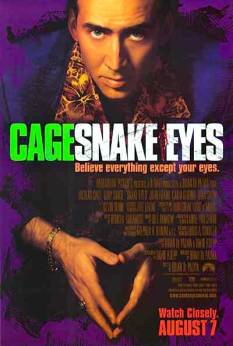
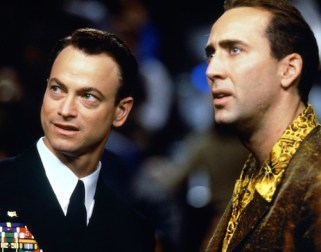
 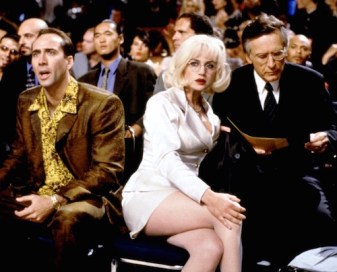 If there’s one significant flaw, it’s that the ending is too much based on convenience and coincidence; and someone in the editing room should’ve paid more attention to removing all references to the original, deleted ending in which the casino got flooded. I have no idea why that was removed — maybe someone thought it was a bit ludicrous. But it sounds more satisfying than what was included, which, as noted, relies on a handy spot of coincidence and at least one action that seems out of character. I can forgive it though, because I liked everything else. And the post-climax montage is a suitably downbeat ending to our hero’s story — another noir trait there.
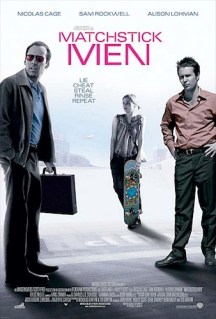 Matchstick Men ends with a twist. One of those great big changes-everything-you’ve-just-seen numbers that have a habit of making a film notorious. Yet I’m almost loath to mention it, because I’ve never read a review, preview, summary or what-have-you of the film that mentions there’s a twist. Maybe I’ve just been reading the wrong pieces; maybe no one cares; maybe they’re all just playing along trying to keep it secret. But not me, because I bloody hated it.
 Twists are fine. Twists can be great. As I said, you can guess a twist is coming and it can still work. A really good twist works even when you know for certain it’s coming; its existence raises what you’ve seen, makes it all work even on repeated viewings when the element of surprise is obviously gone. Matchstick Men doesn’t have that kind of twist. It has the kind of twist that undermines everything you’ve just seen. Not because it’s illogical — it isn’t in the slightest — but because it tramples over the film’s emotional resonance, in my opinion.
 Alison Lohman is also exceptionally good as a 14-year-old girl. It took a scene or two to convince me, but after that I was plenty on board with it. It occasionally takes some effort to remind yourself she was 24. As the third lead, Sam Rockwell plays a typical Sam Rockwell part. He does it very well, naturally, and there’s nothing to fault him on, but he’s been better elsewhere. The rest of the cast are absolutely fine but not exactly called on much — this is Cage’s film, and to a lesser extent Lohman’s. They have the emotional journey, the film’s heart-and-soul around its long(-ish) con ‘plot’ (which could just be lifted from any episode of Hustle… except it’s not even that complex).
 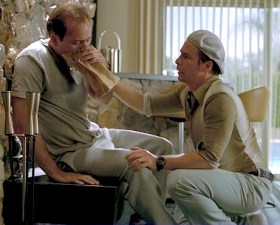 Matchstick Men was a lot better than I’d expected, because most of the coverage I remember shoved it aside as a middle-of-the-road side project for Scott. It’s definitely better than that, if still not the “sweep the Oscars” success
 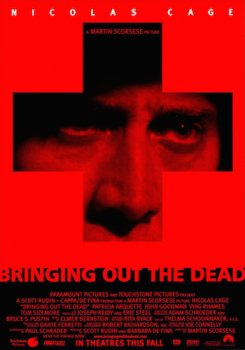 It’s hard to know what to make of this, because by the end it all seems a little pointless. The storyline, which follows Nicolas Cage’s paramedic across three nights in New York, is a mixture of short episodic medical incidents with longer threads that continue throughout. These connect and fall apart, feeling as episodic as the rest, and most of them don’t really lead anywhere.
 100Films.co.uk