
Steven Spielberg | 116 mins | Blu-ray | 1.85:1 | USA & UK / English | 12 / PG-13

Perhaps the timeliest historical movie ever made, The Post is, in its plot, about the publication of the ‘Pentagon Papers’, a leaked report that examined decades of US government decisions about the Vietnam war; but, thematically, it’s about press oversight of a government lying to its people to cover up their own wrongdoing, including trying to forcibly stop the press from performing that role — sounds familiar, doesn’t it? Not to mention that it also concerns itself with matters like whether sources who leak classified information are whistleblowers or traitors, and attitudes towards women in positions of power in the workplace.
For various reasons related to these elements, it’s attracted a lot of comparisons and accusations. For example, some have criticised it for being about a case in the ’70s rather than one in the present day. I guess allegory is tricky for some people to understand… Or, alternatively, that any such parallels were accidental, as if experienced director Steven Spielberg wasn’t aware of them. I think the film went from script to screen in just nine months for a reason…
Then there’s the inevitable comparison to Spotlight, another recent newspaper journalism-themed true-story movie, and a Best Picture winner to boot. Those who thought Spotlight was exceptional tend to think The Post doesn’t measure up. Personally, I thought Spotlight was good, but I didn’t love it as much as some others. I would hesitate to say The Post is better than it, but I would be equally as hesitant to say it isn’t as good. Arguably Spotlight is a better movie about journalism, focusing as it does on the everyday legwork and procedure that go into putting together a major story, whereas The Post has more on its mind than just the facts of how reporting works. There are also many comparisons to All the President’s Men, but I’ve still not seen that so can’t comment fairly (there is this rather excellent trivia/connection, though).

Relatedly, some people think this film should’ve been about the New York Times, as they were the paper that first broke the Pentagon Papers story and initiated the legal case it all led to (and, later, they were the only paper awarded a Pulitzer Prize for the publication). There’s certainly an argument for that being the real story, but, conversely, that would be to assume the focus of this movie is solely the publication of the Pentagon Papers. In fact, The Post is the story of Katharine Graham and the Washington Post, and how the Pentagon Papers changed them both. It’s the story of an underdog-like local paper making an (inter)national mark by doing something at odds with a legal ruling — the fact they chose to back-up the Times by publishing too (even if the action was instigated as much by friendly rivalry/jealousy as it was by “freedom of the press” ethics) is an important point in itself.
It’s also the story of a woman — a business owner at a time when women didn’t hold such roles; and not a woman who confidently elbowed her way in either, but one who found this position thrust upon her — going from meek and overpowered to confident in her own mind and running the show. I’ve read reviews that think this latter element is somehow forced on the film, as if the makers didn’t notice it until halfway through and only decided to draw it out when they reached a shot near the end where Streep walks past a crowd of other women with admiring expressions. That’s not the case, obviously — that’s simply not how movies are made — and that arc is clearly in mind from the very first scene where we meet Graham. Meryl Streep is excellent in the role, which is easily the film’s most fully-realised character. Everyone else is certain of themselves and what they believe is the right thing to do, but over the course of the film she goes from quiet, uncertain, and reliant on her trusted advisor, to believing in her own instincts and standing up for them. It’s a clearly-charted but believable journey.
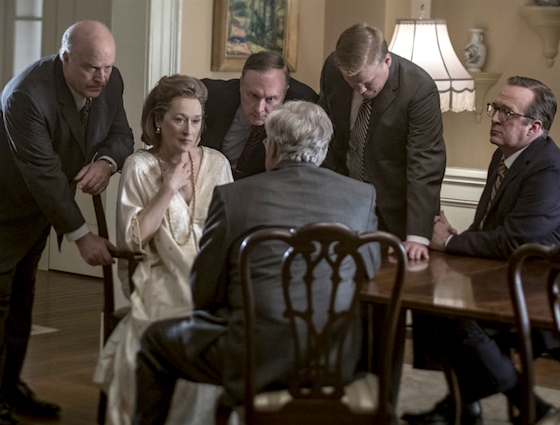
Nonetheless, it’s somewhat hard to divorce The Post from the context of when it was made — the way it reflects the current climate in American politics and the news coverage thereof. But then, is that a problem? Are works of art not as much about the time in which they were made as the time in which they’re set? I guess that’s a whole other debate. That said, it carries a message that would be important in any era, about the need for reasoned, responsible, independent oversight of those who govern us.

The Post is available on Amazon Prime Video UK from today.

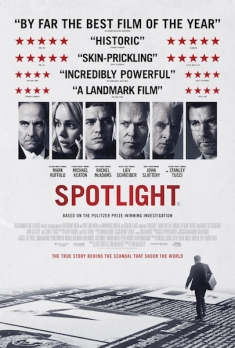 The most recent Best Picture Oscar winner tells of how the Boston Globe’s investigative journalism unit, the eponymous Spotlight team, exposed the widespread sexual abuse of children by the local Catholic Church — and, just as shockingly, the way the institution itself swept this under a rug for decades. As a film, this story is effectively a conspiracy thriller: a team of journalists expose a wide-reaching criminal cover-up within a respected and powerful institution. If it were fiction, you’d struggle to believe it, the scale of the conspiracy so vast that the very notion of it would be implausible. So it’s all the more astonishing — and horrifying — that it was real. And, as the closing title cards reveal, far larger than the Spotlight team realised even when they went to print.
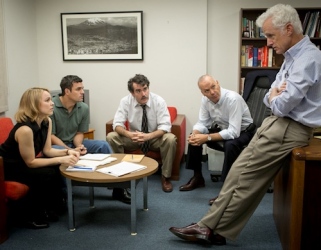 Instead, it lets the story and the events speak for themselves, with the screenplay being the real powerhouse here. On that scale the directing isn’t even in second place. That’d be the performances, as the actors carry the delivery of information while still feeling like human beings pursuing an investigation, rather than mere narrators of what they discovered. McCarthy’s work is therefore the kind of helmsmanship that wouldn’t attract awards attention, except maybe by association with the film’s overall acclaim (he did get nominations, but the cynical side of me doubts awards bodies genuinely appreciated the qualities of what they were watching). Nonetheless, awards are not the be-all-and-end-all, and the low-impact style was surely the right way to go. This is a tale bigger than auteurist showboating, and McCarthy handles it with appropriate respect.
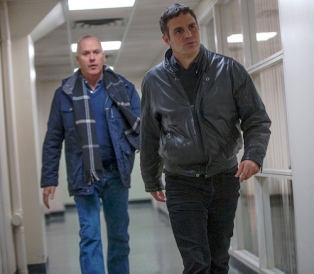 this is also perhaps where the film’s only egregious bum note comes in: Ruffalo’s shouty speech about how they need to go to press now, which was naturally used across all the trailers and clips. It feels like that is precisely what that speech was designed for — that it was written, directed, and acted with the “here’s our big dramatic trailer moment” in mind. It’s not entirely out of character in context, but it is a bit much.
 So was it the best film of last year? Perhaps that depends what you look for in movies. As much as I think the understatement fits, I also think it’s what stops it from being as cinematically exciting as, say, the visually-driven hyper-kinetic storytelling of
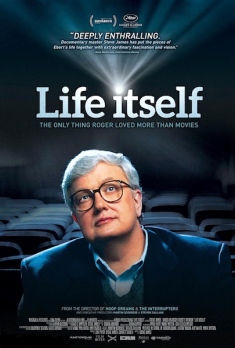 Roger Ebert was an influential, respected, beloved critic for decades, and one with an interesting life: he began in old-school newspaper journalism, defined TV movie criticism, and eventually spearheaded the profession’s move online. So it merits recounting in this documentary by the director of
 100Films.co.uk