If there’s something strange in your neighbourhood, who ya gonna call? Three middle-schoolers on their bicycles, apparently…

Stranger Things (Season 1)
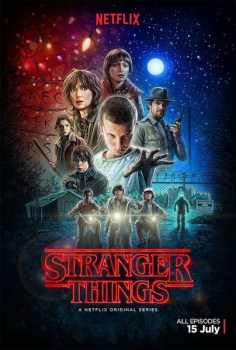 Hype — it’s a funny old business. It’s hard to have avoided hearing something about Stranger Things, Netflix’s summer hit that went down like gangbusters, its ’80s nostalgia perfectly calibrated to target the kind of people who run entertainment news websites these days — just to be cynical about it. Or truthful. Then there came the backlash, which attested there was nothing more to the show than those callbacks and tributes; a hollow experience of copying and “hey, remember this? That was good, wasn’t it?”
So, I confess, I approached the first chapter with the thought in mind that I might be about to watch the most overrated thing since sliced bread. The opening instalment did little to sway me either way — as with many a ‘pilot’ episode (it’s not a pilot if it goes straight to series, but anyway), it’s got a lot of establishing to do: teaching us the normality of this world, introducing us to the players, setting up a mystery, teasing where that might be going… Stranger Things does all this well, but not exceptionally. It’s good, it makes you want to stick with it, it has promise, but it’s not one of those first episodes where you come away thinking, “Holy moly, this is gonna be great!” (First example of that that comes to mind: Game of Thrones. Another: Firefly. I’m sure you have your own.)
Like so many streaming series, produced with an awareness that they’ll be released all at once like a really long movie, it’s a little slow-going at times, but it’s kept ticking over with some exceptional elements. Yes, it’s bedded in the style and tone of many beloved ’80s genre classics — primarily Stephen King tales and films produced (not just directed) by Steven Spielberg — but that’s just the execution. In storytelling terms, it has its own mythology, and it feels like there’s a rich vein of originality there. Or possibly it’s just references and riffs I’m not familiar with, who knows. Even better than that are the performances. Winona Ryder is incredible as the mother of a missing boy, her raw feelings and frantic actions forming a core of plausible emotional reaction in the centre of fantastic events. Millie Bobby Brown is also excellent as the mysterious Eleven, conveying so much personality and internal conflict with very little dialogue.
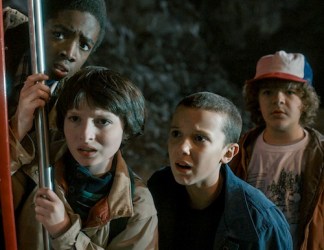 Without wanting to get into spoiler territory (despite what the media would have you believe, not everyone has Netflix all the time and not everyone watches every new zeitgeisty series immediately. Apologies if you write for an entertainment site and I’ve just given you palpitations), everything comes together nicely for a barnstorming pair of climactic episodes. For my money, the penultimate chapter is the best one: with a bunch of revelations out of the way (some of them easily guessed but finally confirmed), the series kicks off a run of long-awaited fan-pleasing events (as in many a drama, it takes this long for everyone to finally start talking to each other; also, the bit with the van!) The finale is less accomplished, with some characters wandering around for a bit in a way that feels designed to pad the running time. Still, it’s a satisfying conclusion… to season one, anyway.
As an outsider for most of the summer, the endless and ever-increasing handwringing over whether there would be a second season was actually kind of amusing — and the punchline came when it was revealed Netflix had actually commissioned season two before season one was even released, they’d just decided to keep it secret for a bit. Here’s the thing: Netflix has never not recommissioned one of its original series. Even Marco Polo, which apparently no one watched or talked about, got at least a second run. And here you have a show which everyone’s talking about, and presumably most of them are actually watching too, and you think Netflix aren’t going to bring it back? I mean, it wraps itself up quite well, but there’s a whole pile of blatant teases for future storylines. C’mon, people!
Anyway, I’m happy to report that Stranger Things by and large lives up to the hype, especially by the time it reaches its climax. Bring on season two! Between that and all the Marvel series, maybe I’m going to end up with a year-round Netflix sub after all… You win, Netflix. You win.
Class (Series 1 Episodes 1-5)
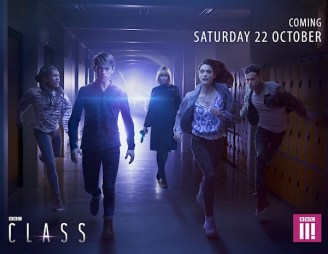 Ten years to the very day since the launch of the original dark, sexy BBC Three Doctor Who spin-off, Torchwood, we got this dark, sexy BBC Three Doctor Who spin-off. Playing as much like the other 21st century Who spin-off, CBBC’s The Sarah Jane Adventures, it concerns a bunch of Sixth Formers battling alien threats coming through cracks in time and space that occur around their school. And also having sex with each other at the drop of a hat, because that’s totally what life is like for all teenagers. So yes, Torchwood + Sarah Jane x Skins = Buffy, pretty much. I really liked the first episode (as pilot-type episodes go, it’s a strong’un), and the third, Nightvisiting, was also a great concept well executed; but the other three instalments were run-of-the-mill and/or awash with niggles. Plus the two-parter in episodes four and five suffered from having too little story to fill two whole episodes. So it’s a mixed bag, but Torchwood was the same at the start and eventually produced one of the best miniseries ever made (Children of Earth), so you never know.
The Flash (Season 3 Episodes 1-2)
Arrow (Season 5 Episodes 1-2)
 The CW’s raft of superhero shows restarted on UK TV this month. I’ve given up on Legends of Tomorrow and am still not joining Supergirl (though I got hold of the opening episodes, co-starring Superman, to maybe make time for at some point); but, five seasons in, Arrow has me suckered for the long-haul, and The Flash tempted me back with the intrigue of adapting Flashpoint. I’ve never got on the bandwagon with Flash, which attracted a lot of praise during its first season that I simply didn’t agree with, leading it to outshine Arrow in ratings and people’s affections. Arrow has long been off the boil, and season five certainly hasn’t got it back up to temperature so far, but The Flash had plenty of issues of its own. It’s not problem free now, but I actually really liked the first couple of episodes of the new season. It’s still a long way from the top tier of TV superheroes (Netflix have that sewn up), but it’s likeable.
Things to Catch Up On
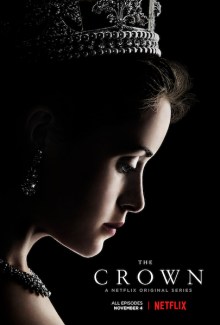 This month, I have mostly been missing the most expensive TV show ever made*, Netflix’s much-discussed The Crown. I don’t know if they’ve been pushing it as much in the rest of the world as they did in the UK, but it certainly felt like it was everywhere… for about a week, as is usually the way with Netflix series. Also missed: the equally-discussed Netflix-exclusive new run of Black Mirror. Both of these are because I don’t keep up a permanent Netflix subscription, but between them, the forthcoming Gilmore Girls revival, and the Series of Unfortunate Events remake in January, I will be signing up again late in December (using the free month voucher they had in the Radio Times, hurrah!)
* Apparently it isn’t, actually.
Next month… I’ll be out of the country when the next update is due, so it may be a little later than normal — perhaps a ‘Christmas special’.
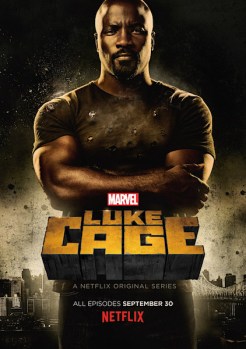 The third series in the Marvel/Netflix stable wins points for boldness, much as Jessica Jones did this time last year. Where Daredevil is a well-done but ‘standard’ superhero show, leading to it being somewhat demeaned by the Cool Kids of the critical world (but much higher-rated by us plebs on the likes of IMDb), Jessica pushed into dark psychological territory, and now Luke Cage brings black culture and life into the fold.
 It feels like only yesterday I was writing here about season four (it was, in fact,
  Well, it’s only taken me 3½ years to get round to this (seriously, where does time go?!) This bunch really represents the series’ highs and lows. On the one hand, Be Right Back — in which Hayley Atwell signs up for a company who create a virtual version of her deceased partner using his contributions to social media — is an exploration of broadly-plausible near-future-tech with a focus on its potential emotional effect. That’s what Black Mirror does best, I’d argue: look at stuff that may, perhaps, be in the pipeline, and how that would actually play out for us. On the other, there’s The Waldo Moment, which is also sickeningly plausible — as Charlie Brooker himself has said, it’s more or less come true, though with the likes of Boris Johnson and Donald Trump instead of a blue cartoon bear — but as an episode it doesn’t quite seem to know where to go with its concept or what it might ultimately signify. The episode just stops rather than ends, until a flash-forward coda that’s a bit silly in its extremity. Even Brooker, while doing press for the third season (released tomorrow), has said he’d go back and re-do that episode if he could. Still, full marks for effort.
 This latest series of Red Dwarf (which airs its fifth episode tonight, with the sixth available on demand from tomorrow) seems to have gone down rather well, with some reviews even hailing it as a “return to form” — that form being “the good old days” of Red Dwarf VI (or thereabouts), over 20 years ago. Personally, I didn’t dislike Red Dwarf VII or Back to Earth, and I even have a soft spot for Red Dwarf VIII, so what do I know? Nonetheless, I would concur that this Dwarf represents a fine vintage, hitting the series’ unique mix of accessible mainstream-ish comedy and proper science-fiction concepts. Red Dwarf XII is already in the can for 2017, and I wouldn’t be surprised to see Dave commission more episodes beyond that.
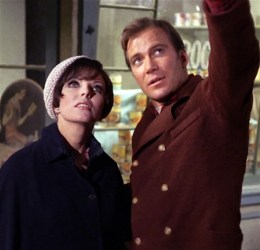 The entirety of TV Star Trek is available on Netflix, so I took the chance to watch the most acclaimed episodes of both The Original Series and The Animated Series — which happen to be connected, something I didn’t realise until afterwards. Er, I mean, which I totally planned. Both are pretty fine uses of science-fiction to explore relatable issues. Well, not many of us have to deal with disruptions to reality caused by time travel, or knowledge of the future creating dilemmas about what we do next, but they work the relatable stuff in around the surface plots. And they both still seem pretty bold for network TV episodes even today, almost half a century later, as (spoilers!) Kirk lets a good woman die to retain the correct timeline, and a kids’ cartoon deals with the subject of euthanasia.
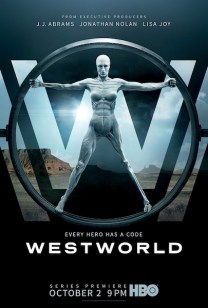 This month, I have mostly been missing loads of stuff. Probably the most talked about is HBO’s adaptation of Westworld, which has apparently pulled in even bigger ratings than Game of Thrones. Over here there’s the second series of The Missing, which if it’s half as good as the first will be a real must-see. Then there’s Woody Allen’s first (and last) TV series for Amazon, Crisis in Six Scenes. Reviews have been mixed to poor but I still intend to get round to it. And finally Hooten & the Lady, which may be the worst title for anything in the history of ever, but a globetrotting adventure series inspired by the likes of Indiana Jones and Romancing the Stone sounds right up my alley.
 It’s certainly the summer of good-guy-on-good-guy dust-ups in the superhero subgenre this year, with Batman v Superman
 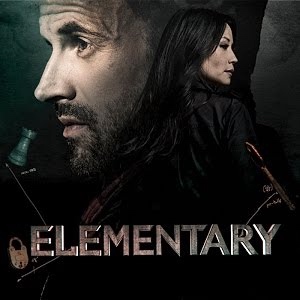 I’m a little surprised I’m still with this “Sherlock Holmes in modern day America with a female Dr Watson” series, because it was never a particularly good version of Sherlock Holmes and it still isn’t. What it has turned out to be is a decent show in its own right (for a US network procedural, anyway), with sometimes-interesting characters who happen to share the names and the odd characteristic of Sir Arthur Conan Doyle’s famed creations. It’s so much its own show that it’s never really bothered adapting the canon, so it was very odd when episode 16, Hounded, didn’t just use a few names from The Hound of the Baskervilles (as the series has in the past), but actually had a passable swing at modernising the entire plot. It doesn’t seem to have gone down too well with critics and viewers, though for my money it did a much better job than
 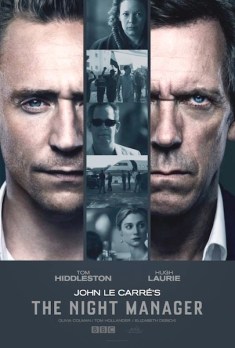 A lavish, all-star, ultra-hyped John le Carré adaptation that, thank goodness, lives up to its reputation. Although it wrapped up in the UK a couple of weeks ago, it only started in the US last night, and I recommend any America-based readers who enjoy a good thriller to get on board tout suite. The Night Manager doesn’t have a
 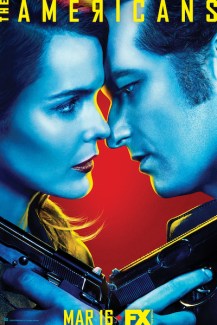 This month, I have mostly been missing season four of The Americans, aka the most underrated drama on television. Well, apart from with critics, that is, who’ve given this run
  I’ve observed before that the ’80s seem to be everywhere in film these days, and here’s another example: Turbo Kid is in every respect an homage to low-budget ’80s genre fare.
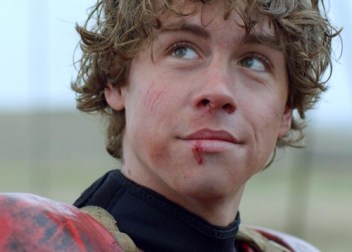 Then there’s the score, which is of course all ’80s synths, in a similar style to the score of

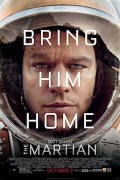 #21
#21 
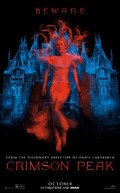 #36 Noah (2014)























 Favourite Film of the Month
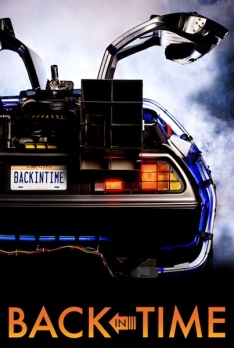 If you’re on social media (or even just frequent pop culture news sites), you can’t fail to have noticed that Wednesday just passed was “Back to the Future Day”, the exact date Marty McFly and Doc Brown (and Marty’s girlfriend) travel to in
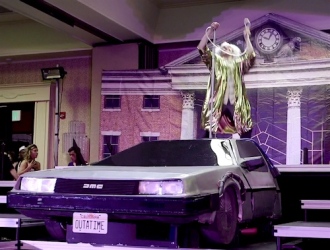
 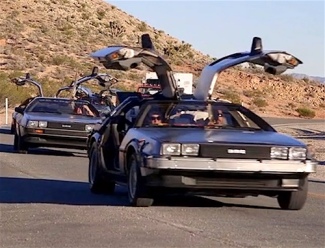 Then it moves on to the fans — what the film means to them, and what that’s led them to do. Those we meet include a couple who travel around the US in a DeLorean fundraising for Michael J. Fox’s charity; the team of aficionados who restored Universal Studios’ decrepit display DeLorean; the family of collectors who own the only film-used DeLorean that will ever be in private ownership; a guy who built a mini-golf course in his yard with a Back to the Future-themed hole that he’s used for charity events with some of the films’ cast; the people who have had some success developing a real-life hoverboard; and the guy who set up a fansite that was so good it became the official site, and is now regularly employed as an official consultant about the films, not least for the rafts of merchandise that comes out these days. We also get a look at the Secret Cinema event in London from a year or two ago that made headlines for all the wrong reasons. Naturally, none of that gets mentioned here (in fairness, because it has nothing to do with Back to the Future itself).
 That glaring error aside, Back in Time is not a bad film, provided you know what to expect. It’s a shade too long and the storytelling is occasionally a little jumbled, but there are some nice interviews and stories — hearing Michael J. Fox recount the Royal Premiere where he was sat next to Princess Diana pretty much makes the whole exercise worthwhile.
