100 Films @ 10: Great Scenes

Howard Hawks famously said that a good movie was simply “three good scenes and no bad ones”. For today’s list, I’m focusing on examples of the former.

There’s no set average for the number of scenes in a feature film, but a good rule of thumb is that a typical movie scene lasts two or three minutes — which means I’ve probably seen in excess of 48,000 scenes as part of this blog. That’s rather a lot to recall, so I’m not presuming to say these ten are the very greatest from that lot. What they are is ten that stuck in my memory particularly, for one reason or another. Even if they’re not the greatest, they are great.

10
The Swimming Pool

from Let the Right One In

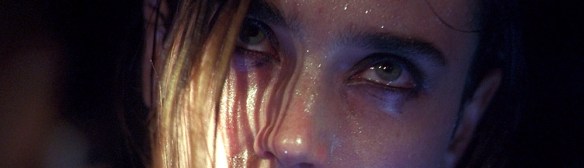
The bullies that have plagued young Oskar throughout the film corner him in a public swimming pool and, brandishing a knife, inform him that if he can’t hold his breath for three minutes he’ll lose an eye. They push Oskar under the water. The seconds tick by. Then, we reach the real reason this scene is here: as the shot holds on Oskar underwater, we hear the muffled sounds of breaking glass, then screams. Feet run backwards across the water. Heads and limbs drop into the pool. The water begins to turn red. This could’ve been a brutal action climax like any other, but by staging it in a brightly-lit swimming pool, by not showing us the meat of the action, and by achieving it all in one shot, director Tomas Alfredson creates a sequence of supernatural force that is eerily grounded.

9
The Opening Shot

from Touch of Evil

Long takes are all the rage nowadays, made even easier by advances in digital cinematography and editing, but this hails from a time when they were a bit more special. It remains one of the most famous because of its content: we see a bomb planted on a car, then follow it as its unsuspecting owners drive through the streets. When will it go off? And, beyond that, Welles’ preferred soundtrack — overlapping snippets from multiple sources as the camera moves through the town — helps establish the melting-pot world of the film about to follow.

8
The Train Robbery

from The Assassination of Jesse James by the Coward Robert Ford

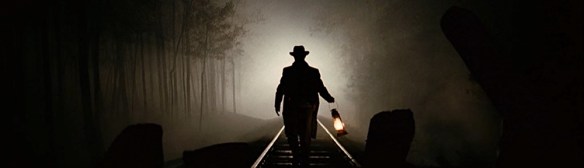
Another opening scene where the photography is the star. This time, it’s the work of the great Roger Deakins, as a gang of crooks await a train in a forest at night, lit only by the orange glow of lanterns. Then the train itself arrives, its stark headlight throwing sharp relief on the shadowy trees. Deakins himself has said it’s his best work, and who are we to disagree? The effectiveness is only heightened by the slow, deliberate, tension-mounting pace maintained by director Andrew Dominik.

7
The Superfreak Dance

from Little Miss Sunshine

After all the trials and tribulations of the movie, the Hoover family finally make it to the Little Miss Sunshine pageant and little seven-year-old Olive gets up on stage… where she dances a striptease-style routine to Superfreak. It neatly satirises and pillories the ludicrous sexualisation of these beauty pageants. Then the sequence only gains in stature when the officials try to pull Olive off stage early, which ends up with the whole family throwing dignity to the wind and dancing with her — the previously disjointed family finally united.

6
The Tanker Chase

from Mad Max 2

I already discussed this at length in my review, so to quote myself, it’s “an almighty action sequence […] a speeding battle through the outback. It feels wrong to just call it ‘an action sequence’, like that’s selling it short. You get the sense that this is why the movie exists; that co-writer/director George Miller’s goal with the entire rest of the film has been to get us to this point. It’s not just ‘the climax’, it’s ‘the third act’, and it’s stunning — the choreography of it, the editing, the stunts, as dozens of vehicles chase each other, people run around on top of them, jump between them… I don’t think it’s hyperbolic to say it must be one of the greatest action sequences ever committed to film.” It’s so good, they later remade it as an entire movie. And if you want to see something equally awesome, here’s the Mad Max 2 scene re-scored with music from Fury Road.

5
The Henley Royal Regatta Boat Race

from The Social Network

You could cut this 100-second sequence out of The Social Network and it would have no impact on the film’s plot, but it would also rob us of one of the most striking sequences in the CV of director David Fincher — and considering his continued visual mastery, that’s saying something. The tilt-shift-style photography came out of necessity, as the sequence was shot just months before the film’s release and they had to shoot the close-ups somewhere else entirely, but it gives the whole thing a unique visual style that, particularly when combined with a version of In the Hall of the Mountain King from composers Trent Reznor and Atticus Ross, is something very special.

4
The Poem

from Skyfall

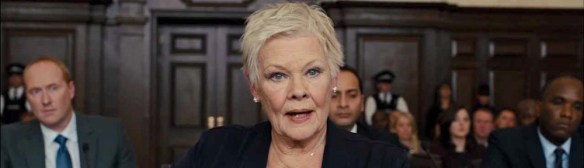
Whoever thought we’d one day find moviemaking artistry in the James Bond series? Skyfall isn’t even the first time that happened (see: the opera escape from Quantum of Solace), but the reason this sequence is even better is the way it sums up the film’s themes. As I described it in my review: “Bond races to an inquiry where M is giving evidence, in pursuit of Silva who is intending to finalise his revenge, with the soundtrack sharing only Judi Dench’s voice delivering a reading from Tennyson: ‘though we are not now that strength which in old days moved earth and heaven,’ she says, cementing [the] themes of what the role of the secret service (and, indeed, Britain) is in the modern world; and continues, ‘heroic hearts, made weak by time and fate, but strong in will to strive, to seek, to find, and not to yield,’ as a weakened, past-it Bond races to her rescue. It’s so perfect it could have been written for the film especially.”

3
The Truck Flip

from The Dark Knight

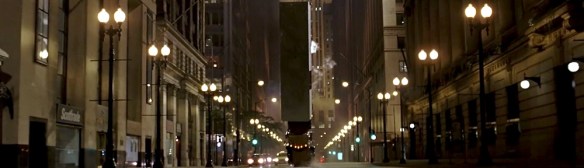
Pure spectacle seems hard to come across in movies post-CGI, where anything that can be imagined can be created on screen by even relatively small-scale movies. But when you combine the first time a narrative feature film had been shot in IMAX with an incredible stunt performed for real, you’re reminded of the magic of cinema. It’s the most memorable part of a car chase sequence that is exceptionally well executed on the whole, too.

2
The Montage

from Requiem for a Dream

To quote my review: “I’m not sure you can quite be prepared for what comes [at the end]. Even if you were told what happens, or see some of the imagery, or feel like you can see worse stuff on the internet without even looking too hard (which, of course, you can)… that’s not the point. It’s the editing, the sound design, the sheer filmmaking, which renders the film’s final few minutes — a frenzied montage that crosscuts the climaxes of all four characters’ stories — as some of the most powerful in cinema. It’s horrendous. It’s brilliant.”

1
The Basement

from Zodiac

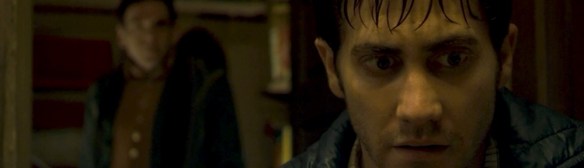
When I first thought of this idea for a top ten, this was the first thing that came to mind. In it, Jake Gyllenhaal’s obsessive investigator Robert Graysmith visits the home of a suspect’s friend. The pair are alone in the house, and they both go down into the basement to see something… when Robert hears someone upstairs. Describing this scene does it no justice — it’s one of the most hair-raisingly chilling in screen history.

Tomorrow: New York, London, Paris, Munich, everybody talk about… film music.

100 Films @ 10: Most Effective Director’s Cuts

Whether they be director’s, extended, ultimate, or any number of strung-together adjectives someone in marketing thought sounded exciting, direct-to-home-media alternate cuts of movies are all the rage nowadays. They have been for quite a while, actually — thanks no doubt to the booming sales of the DVD era — so for today’s top ten I thought I’d run down some of the most effective. I don’t necessarily mean the best (these aren’t “the ten best films that happen to have extended editions”), but rather the ones that have the biggest positive impact on the end result — which is sometimes the same thing, of course.

I know the initially stated point of these top tens was to look back over the last ten years, but this time I’ve widened the remit to include all extended cuts, mainly because that only added one title. Losing out because of that is X-Men: Days of Future Past – The Rogue Cut, which does contain significant changes, especially to the climax, but didn’t really belong because I actually think the theatrical cut is smoother.

10
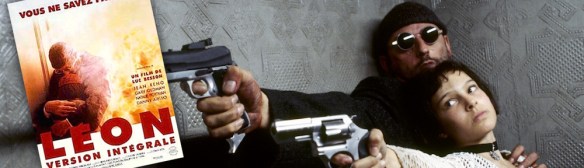
Léon
Version Intégrale

To undermine my introduction right away, the extended version of Léon doesn’t actually make massive changes to the movie. Some of the additions bolster character development, but the film wasn’t shortchanged on that in the first place. It is great though, but it’s also just more greatness. Does that mean it shouldn’t be here? Well, if you’re watching the US Blu-ray, it’s the longer version that has the proper title card, which is reason enough to prefer it in itself.

9
Watchmen
Director’s Cut

There are three cuts of Watchmen, but it’s the middle one that is director Zack Snyder’s preferred version of the film (aptly, given its subtitle). I’ve still not got round to the semi-experimental Ultimate Cut so can’t truthfully comment on whether Snyder’s right, but when I reviewed the Director’s Cut I asserted that, thanks to “a little extra room to breathe and a few worthwhile extensions, and in spite of the odd tweak that doesn’t work, this is the superior cut of the film.”

8
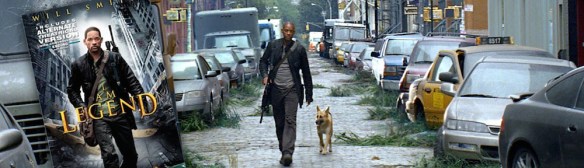
I Am Legend
Alternate Theatrical Version

The extended cut of I Am Legend has one of the most meaningless subtitles of all — it wasn’t released theatrically, so how is it an “alternate theatrical version”? That said, “alternate” is definitely a more apt descriptor than “extended”: although this version is longer, the biggest change is a completely different ending. That makes a difference to the film’s tone, as well as paying off some subplots. But it only changes the movie so much — those misguided CGI creatures are still there, after all.

7
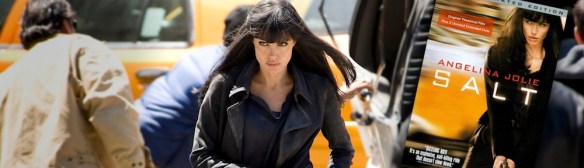
Salt
Director’s Cut

This middling action-thriller starring Angelina Jolie is not the first film that’s going to come to mind to most people (for any reason, ever), but it exists in three different cuts that make some striking differences. I discussed them in depth in my review, but on balance the one they labelled the Director’s Cut is best.

6
Alien³
Assembly Cut

The second Alien sequel was a fraught production for a number of reasons, which wound up in an obviously-compromised theatrical version. A little over a decade later (doesn’t sound so long with hindsight, does it?) the original “assembly cut” was released — not a director’s cut because, understandably, David Fincher wants nothing to do with the movie. The different version doesn’t save the film entirely, but it does clarify some of it, thereby improving it.

5
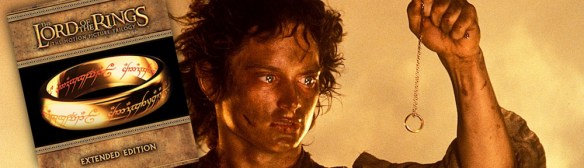
The Lord of the Rings
Extended Edition

From Fellowship onwards, the extended versions of Peter Jackson’s adaptation of J.R.R. Tolkien’s epic are the preferred versions, deepening characters and expanding the rich world of the story. But by the time of the third and final movie, they’re essential: in a rare misstep, Jackson chose to completely excise one of the trilogy’s primary villains, Christopher Lee’s Saruman, from the theatrical version of Return of the King, so only in the extended version is the storyline of a major character actually resolved. That film won Best Picture nonetheless, which is why these aren’t ranked higher: the extended cuts are better, yes, but the theatrical versions are an incredible cinematic achievement regardless.

4
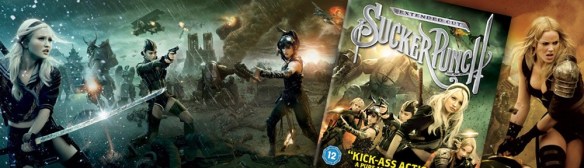
Sucker Punch
Extended Cut

Zack Snyder again, with another director’s preferred cut only debuting on the home release. This time he had to cut the film for censorship, revising it multiple times until the MPAA gave it the necessary PG-13. In the process, he removed several lines and scenes that helped to clarify what the hell was going on, which is rather helpful in such a crazy-ass movie. I’ve never bothered with the theatrical cut, but — in its extended form if no other — I think it’s something of an underrated movie.

3
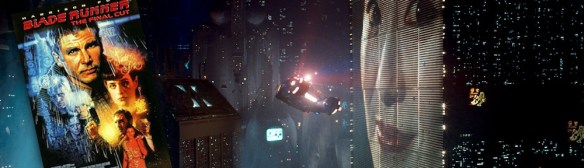
Blade Runner
The Final Cut

Arguably the daddy of all alternate cuts, Blade Runner’s so-called Director’s Cut wasn’t really anything of the sort — Ridley Scott was busy and couldn’t be properly involved, merely providing notes for a studio after a fast buck. Years later, he was able to do it properly, resulting in the aptly named Final Cut… which is kinda just a polished version of the earlier Director’s Cut, but there you go. (Incidentally, there are some people who prefer the theatrical version. I’ve still not got round to it myself, but… well, there are also some people who prefer the theatrical cuts of Lord of the Rings. What I’m saying is, there’s no accounting for taste.)

2
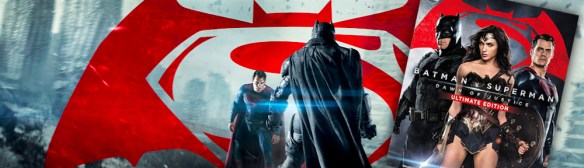
Batman v Superman: Dawn of Justice
Ultimate Edition

Guess who’s back? Zack Snyder’s third entry on this list is his most effective revised cut he’s yet done. There are aspects of Batman v Superman that mean some people will never like it, but it’s hard to argue that the Ultimate Edition isn’t an improvement, clarifying plot details and character motivations left, right, and centre. Seriously, though, what is it with Zack Snyder and cutting scenes that explain the plot?! At least when he does a director’s cut (which is most of the time) he really makes use of it.

1
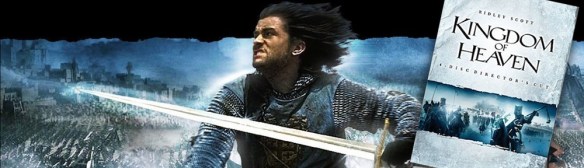
Kingdom of Heaven
Director’s Cut

Guess who’s also back? The other great proponent of the director’s cut, Ridley Scott — though he’s more prone to using and abusing the term than Mr Snyder (the director’s cut of Alien is, famously, nothing of the sort). I’ve never seen the theatrical version of Kingdom of Heaven so can’t actually vouch for this myself, but, by adding a massive 45 minutes of material, Scott’s lengthier cut turned a theatrical dog into a film some regard as a masterpiece. I can’t think of another director’s cut that has ever instigated such a thorough reappraisal of a film’s critical standing.

Tomorrow: ten good scenes and no bad ones.

100 Films @ 10: Most Represented Directors

It’s 100 Films’ 10th birthday at the end of the month. To mark the occasion, I thought in the run-up to it I’d publish some lists based on the last ten years of my blog, because who doesn’t love a list?

How many lists have I got? Why, 100 of course!

…haha, no — that would be ridiculous. There are ten — one for each year of 100 Films. And each one has ten items on it. Ten times ten is… why, it’s 100! What a coincidence.

For the first list, I’ve put opinion aside for pure facts: these are the ten directors who’ve been most-reviewed on this blog. That excludes films only featured in my 100 Favourites series — this is just their work that has been covered as part of my ‘main’ blog.

It may be worth noting that, because it’s purely based on statistics, this isn’t a list of my ten favourite directors… though as they’re ones I keep watching movies by, I guess it’d be a fair starting point.

10
Christopher Nolan

Christopher Nolan has made nine feature films, and seven of them are reviewed here. Throw in an extra one for the IMAX version of The Dark Knight and his short documentary, Quay, and he edges ahead of runners-up John Carpenter, Ernst Lubitsch, George Miller, and Billy Wilder.

9
Tim Burton

The next four directors are technically tied, but I’ve found a way to differentiate them. First: the Burtonesque Tim Burton, whose eight entries can be split into six main-list films and two reviews of things I’d already seen (Batman and Batman Returns).

8
Ridley Scott

Next, the man we can probably thank for all the Director’s Cuts we get these days, the more classical of the two Scott brothers, Sir Ridley Scott. He also has eight, of course, which factors in six main-list films, one alternate cut that I nonetheless counted on my main list (Blade Runner: The Final Cut), and one non-main-list film (Alien: The Director’s Cut).

7
Zack Snyder

Our third eight-film filmmaker is everyone’s favourite “visionary” director of superhero movies (right?), Zack Snyder. All eight of his films were on the main list, though two of them were alternate versions (the extended cuts of Batman v Superman and Watchmen).

6
Clint Eastwood

Simple and straight-up, much like the man himself, Clint Eastwood has a pure eight films.

5
Steven Soderbergh

The top five heads into double figures, with ten films for one-time enfant terrible and now retiree Steven Soderbergh.

4
Martin Scorsese

Perpetual awards season snubee, Martin Scorsese also has ten feature films, but edges ahead thanks to his part in anthology film New York Stories.

=2
Roy William Neill / Steven Spielberg

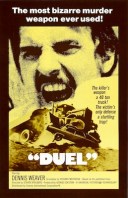
Unlike other directors on this list, there’s no reasonable way to differentiate this pair. You may not know the name Roy William Neill, but he helmed eleven of the fourteen Sherlock Holmes films starring Basil Rathbone, and those four years of work have landed him near the top of this list. Conversely, Steven Spielberg is probably the most famous film director working today, if not ever, and his eleven films span 44 years, stretching from his first (1971’s Duel) to his most recent Oscar nominee (2015’s Bridge of Spies).

1
David Fincher

Topping the list is my go-to pick for favourite director, David Fincher. He’s helmed ten movies, but I’ve reviewed twelve — that’s eleven main-list features (including the Assembly Cut of Alien³) and one extra for the marginally-extended director’s cut of Zodiac.

Tomorrow: when directors re-cut.

The Mystery Blogger Award

Mystery Blogger Award

Let’s break this down…

1. Put the award logo/image on your blog.
Boom, done! Next!

2. List the rules.
Doing that.

3. Thank whoever nominated you and provide a link to their blog.
I was very kindly nominated by sgliput of Rhyme and Reason ~ Poetry Meets Film Reviews.

4. Mention the creator of the award and provide a link as well.
The Mystery Blogger Award was created by Okoto Enigma.

5. Tell your readers 3 things about yourself.
1) The last five Blu-rays I bought were: the new remastered release of Heat, The Last of the Mohicans, The King of Comedy, The Mask of Zorro, and… Red Sonja. Yep.
2) I spend most of my spare time… writing this blog. I really should get some other hobbies.
3) I have to sign a non-disclosure agreement for my job, which means I can’t tell you what I recently learned about a certain rodent abode and their plunderous pentalogy. (It’s not that exciting really, just more interesting than the stuff I usually know about.)

6. Nominate 10 – 20 people.
That’s… quite a lot of people. As these awards sometimes have a tendency to go round and round, and I know not everyone’s interested in doing them, feel free to consider yourself invited if you’re reading this. Reply in the comments or on your own blog, the choice is yours!

7. Notify your nominees by commenting on their blog.
See above.

8. Ask your nominees any 5 questions of your choice; with one weird or funny question (specify).
1) Which film haven’t you seen that you most feel you should’ve seen?
2) R2-D2 or BB-8?
3) With the Oscars imminent, which previous Best Picture winner do you think was the least deserving?
4) Tea or coffee?
5) What’s in the box? What’s in the box?! (This is the weird and/or funny question.)

9. Share a link to your best post(s).
I mean, they’re all pretty great, amiright? Thanks to that bracketed S, I’m going to mention a regular feature rather than one specific post: the Arbie awards that I hand out each month.

As you can see, the rules don’t actually mention answering the nominator’s five questions, which I can’t help but feel is an itty-bitty oversight on the part of the creator. Nonetheless, here are my answers to sgliput’s queries…

What film(s) do you love that others seem to ignore or not even know about?
I’m sure there are loads, but I’m going to go with Josie and the Pussycats.

If you had to eat one food (or kind of food) for the rest of your life, what would it be?
Pizza is the food of the gods. Also, flexible.

If technology allowed us to live in an ideal virtual Matrix-world, would you choose that over reality?
I mean, if I could do all that cool kung fu stuff, maybe. But as it’s other people who contribute an awful lot to making the world a shitty place at times, how ideal would a virtual world with those people in it really be?

What one film do you think is vastly overrated?
I’m sure there are loads of these as well, but the one that always springs to mind is No Country for Old Men.

For a fun question, you have three paradox-free wishes that won’t come back to bite you (says a genie). What would they be?
Paradox free? Well, I’d have to wish my old dog, Rory, back to life; I’d wish for, like, a billion pounds, because then I’d be pretty well set; and I’d wish for a thousand more wishes, too.

TTFN.

The Best & Worst of 2016

I watched so many films in 2016 that I’d forgotten I saw some of them so recently. Going back over the list, there were films I watched as late as March that I was amazed weren’t things I’d seen a couple of years ago. I don’t know what this signifies, really, other than that watching almost 200 films in a year has warped my perspective.

Anyway, it’s now time to consider the quality of that viewing: which films were the worst? Which the best? And what did I miss?

So without further ado…


The Five Worst Films I Saw For the First Time in 2016

This year I saw some films so bad that Home on the Range hasn’t made my bottom five! In alphabetical order, they were…

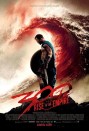
300: Rise of an Empire300: Rise of an Empire
300 was hardly the height of cinematic class, but this makes it look like an accomplished work of auteurism (though, considering how Zack Snyder has continued down a similar aesthetic path, perhaps it always was). It’s just poorly made, with flat performances, cheap direction, aimless violence, and CGI that wouldn’t look great in a computer game.

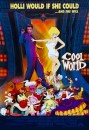
Cool WorldCool World
Maybe if director Ralph Bakshi had got his way Cool World would be a masterpiece. Maybe not, too. Torn between conflicting interests (it’s a kid-friendly movie with adult content) and with distractingly poor technical aspects (the animation and live action often seem mismatched), it’s an unappealing mess.

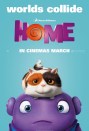
HomeHome
DreamWorks’ animated movies never quite achieve the crossover acclaim that greets almost anything Pixar spit out, which is sometimes a shame… and sometimes it really isn’t, like with this irritating movie about an irritating alien and his irritating human friend. Pixar have never made anything this annoying. Not even Cars.

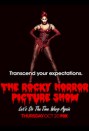
The Rocky Horror Picture Show: Let's Do the Time Warp AgainThe Rocky Horror Picture Show: Let’s Do the Time Warp Again
“Is this even worse [than The Rocky Horror Glee Show]? Well, that’s a bit like someone forcing you to eat a dog shit and a cat shit before asking you which tasted nicer.” Most accurate review I’ve ever written.


The Twilight Saga: New MoonThe Twilight Saga: New Moon
New Moon contains the single funniest scene in any movie I’ve seen this year. Unfortunately, New Moon is not a comedy (not deliberately, anyway) and that scene is not a comedy interlude (not deliberately, anyway). For all the Twilight saga’s other sins, I will forever love it for giving us Face Punch. (Oh, but the rest of the film is pretty terrible.)


The Twenty Best Films I Saw For the First Time in 2016

Last year I commemorated the fact I’d doubled my titular target by also doubling the size of my top ten, joking about having never done a percentage increase before. But that got me thinking: what if I did? So from now on my “top 10” will be a “top 10%” — which this year means it’s a top 20 again.

My guiding principle when ranking this year’s picks became films that excited me — not in the adrenaline-pumping sense of having fantastic action sequences, but in the sense of films which left me feeling thrilled by their cinematic achievements. Not that I’m saying every film here is some wonder of Cinema, just that the notion guided some of my choices. It’s ended up with some very good, perhaps even better, films slipping down the chart. But never mind: as is usually the case with lists like this, it’s only a snapshot of my thinking right now.

Finally: as always, this list is created from the movies I watched for the first time this year, not just new releases. However, I did watch 38 films that had their UK release in 2016, and six of them are in my top twenty, so I’ve noted their ‘2016 rank’ too.

An intelligent, considered sci-fi movie that ponders artificial intelligence and its potential right to life, but also a gripping psychological thriller about three individuals locked in a bunker. And there’s Oscar Isaac’s dance scene too.

Sion Sono’s comic book epic mixes battle rap, comic grotesques, ultra violence, gratuitous nudity, more barmy notions than you can shake a stick at, and probably the kitchen sink too, into possibly the most batshit-crazy movie I’ve ever seen. Is it trash or art? It can be two things.

Wes Anderson described his typically-idiosyncratic young-love adventure as “an autobiography about something that didn’t happen”, which is possibly my favourite description of a film ever. A movie for the romantic adventurer in every childhood bookworm.

The best comedy or musical of 2015 is neither of those things, but it is one in a pleasing run of intelligent sci-fi movies Hollywood is offering these days. Trust Ridley Scott and Matt Damon to make a movie about using science to grow potatoes into a gripping adventure.

An underrated le Carré thriller starring Sean Connery as a book publisher coerced into helping MI6 and the CIA bring over a defector, alongside Michelle Pfeiffer as his Russian contact. Strong performances enliven a typically le Carré plot: grounded, plausible, unguessable, with a surprising conclusion.

2016 #6 A neo-noir crime thriller about racism featuring nudism and drug abuse… from Disney! It’s still a kid-friendly animated comedy, of course, but one that functions particularly well — arguably even better — for adult fans.

It looks like such a boilerplate indie movie that I kinda expected to hate this, but it caught me off guard with characters I related to and a story that I found affecting without being saccharine. Probably the most emotional a movie has made me feel this year.

Famed for Daniel Day-Lewis’ awards-scooping performance that is arguably one of the greatest of all time, there’s actually much more to Spielberg’s biopic. Playing like a gorgeously-shot period version of The West Wing, if you like men politicking in gaslit rooms, this is heaven.

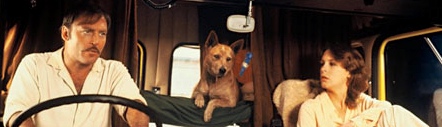
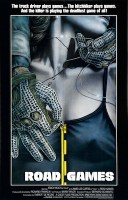
Now we move into my Top Ten. Yeah, I know it’s #12, but I really thought these two would make it. I guess they’re kinda =10th, then; though that would be cheating… Anyway: I hadn’t even heard of this movie before this year, but the coincidence of a blog post and a Blu-ray release led me to purchase it and I was so glad I did. It’s Rear Windscreen meets Duel Down Under in a superb Ozploitation thriller.

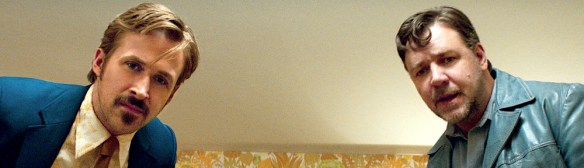
2016 #5 Russell Crowe and Ryan Gosling reveal rarely-seen comic talent as a pair of not-actually-that-nice guys who nonetheless have some morals in Shane Black’s spiritual sequel to Kiss Kiss Bang Bang. This has just as convoluted a plot, and it matters just as little — its major asset is that it’s frequently hilarious.

2016 #4 Yes, really. And, just so we’re clear on what’s going on here, neither Civil War nor Doctor Strange are in my Top 9. Is BvS ‘better’ than anything Marvel Studios put out this year? Hm. But is it a more interesting movie? I thought so. Zack Snyder made a dark, morally ambiguous, imperfect movie that reflects the dark, morally ambiguous, imperfect days we live in. Perhaps it’s just too timely for its own good? People don’t seem to want a movie that questions our heroes and our relationship towards them in a world where real-life heroes feel in short supply. It’s clearly not the movie a lot of people think they need, but maybe it’s the one they deserve right now.

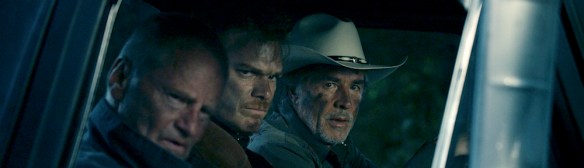
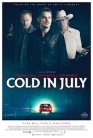
Of all the films on this list, Cold in July has arguably the most surprising plot: it takes sharp right-angle turns at several points, never breaking the style and genre it sets itself in, but instead shuttling the viewer off in entirely different directions than expected. By the time it reaches its action-packed climax, you have no idea quite what it’s going to do — and how better to end a neo-noir thriller than that?

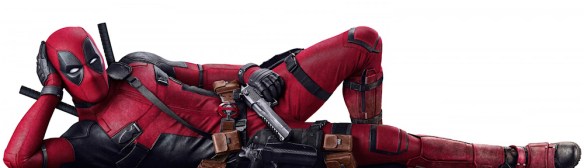
2016 #3 This may be all the way down in 8th place, but in some respects it’s #1: I’m not sure I’ve had more pure fun watching a movie this year than I did during Deadpool (The Nice Guys would be closest). Okay, so it’s a little puerile really, but the humour comes thick and fast, and the regular fourth-wall breaking undercuts not just the film but the whole superhero genre. Having talked about the excitement of great Cinema at the start, this isn’t that, but it is a fantastically good time.

Steven Soderbergh transforms a pretty straightforward revenge story into an elliptical narrative that has you constantly questioning what you’re watching — is it flashback, flash-forward, a dream, a plan, a fantasy…? In the end it’s probably none of those things, but Soderbergh’s unusual editing techniques create an arthouse/mainstream mash-up that is a uniquely querying, mystifying, yet satisfying experience.

2016 #2 In an era when Hollywood considers “science-fiction” a byword for “action-adventure”, it’s all the more remarkable that an intelligent, adult drama like this was backed by a major studio. It’s partly a timely message about the need for mankind to understand each other across nations and work together, but it’s also a thoughtful meditation on the human condition — what it means to be human, what it costs us, and if it’s worth it. Director Denis Villeneuve paces events sublimely, imbuing the alien spacecraft with a wonder and fascination that you’d’ve thought lost in modern “anything is possible” cinema, but the film really belongs to Amy Adams and her layered, affectingly real performance.

Another thought-provoking science-fiction movie (for those not keeping count, it’s the fourth in this list), Predestination has been less heralded but deserves to be better known. Adapted from a short story by genre giant Robert A. Heinlein, it’s satisfying both as a tangled time travel mystery (with some great twists, whether you guess them or not) and as a consideration of human and historical issues about things like identity and feminism.

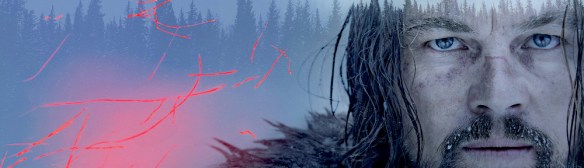
2016 #1 I’m as surprised as anyone by how much I liked The Revenant, having not been particularly enamoured of the previous Alejandro G. Iñárritu films I’d seen, but this gruelling survival-story Western oozes excellence from every frame. Leo’s pretty good, as are the rest of the cast, but Emmanuel Lubezki’s cinematography is the highlight: appropriately crisp depictions of wintery nature, an incredible use of natural light, and single-shot sequences that blow Birdman out of the water. By telling the story primarily with these visuals, Iñárritu has created a work of true cinema.

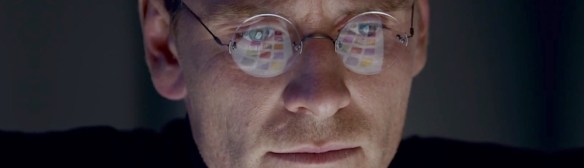
Like Lincoln, this is a beautifully-shot biopic about people stood around in rooms talking. The big gun it has in its corner, however, is an actual West Wing writer — its creator, no less — Aaron Sorkin. Sorkin’s screenplay is a precisely constructed marvel, brought to the screen by a quality cast capable of wrapping their tongues around his magnificent dialogue, and in Danny Boyle a director with the right visual sensibilities to make the material sing. What could have just been an Apple fanboy’s wet dream is instead a gripping character drama with a surprising corporate thriller vibe at times.

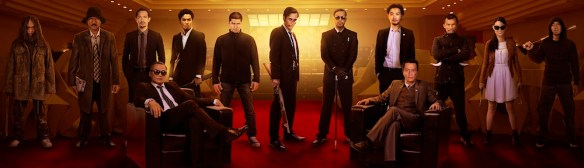
An orange to The Raid’s apple, this sequel is bigger and grander in every conceivable aspect. A sprawling crime epic, spanning many years, many locations, and many characters, it’s the antithesis of the tightly-focused first film — but all the better for it. Even with the more intricate plot, there’s still plenty of time for elaborate action sequences, crafted with even greater skill and inventiveness than the first movie. It’s surely one of the greatest action movies ever made.

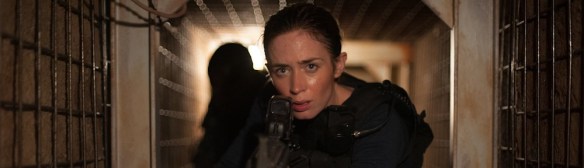
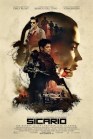
In a top twenty filled with crime thrillers (see: #15, #11, #9, #7, #2), gorgeously-shot movies (see: #13, #6, #4, #3), and remarkable female leads (see: #20, #15, #6, #5), it’s only fitting that a film which does all of these so skilfully should top my list. Emily Blunt is the powerhouse FBI agent who finds herself out of her depth in a complex cross-agency investigation that leads her, and us, to some dark and morally questionable places. It’s all incredibly shot by the reliably amazing Roger Deakins. Between this and his other entry in my top ten, I think Denis Villeneuve has marked himself out as one of the most exciting directors working right now.


I always want to include this section of my post, but sometimes I’m not quite sure what to put in it — if it was just some more ranked films, I’d’ve included them above. But this year I have something concrete to begin with, because there were several films that I surprised myself by not including in my top twenty. They were films that I really liked — and, perhaps even more so, lots of other people really liked and include in their lists — but which, for some reason, when I was sorting through my options, fell by the wayside in favour of… well, in favour of the films that did make it in. I’m talking about films like Captain America: Civil War, Doctor Strange, Fantastic Beasts and Where to Find Them (maybe that’s not on many other lists, but I really enjoyed it), The Iron Giant… and, of course, Rogue One. My already mixed feelings about the latest Star Wars movie were massaged by happening to read Andrew Ellard’s Tweetnotes and Film Crit Hulk’s dissection of the film while preparing this list, and while I don’t necessarily agree with everything they have to say, between them they managed to clarify and illuminate some problems I already had with the movie, and that kinda put me off its inclusion.

A shout out, too, for those less-widely-loved films that I really, really liked but couldn’t quite justify being in this top twenty — films like Crimson Peak, Dragon (Wu Xia), The Good Dinosaur, Grand Piano, Lost River, Pan, and Andrea Arnold’s Wuthering Heights. And despite all those Shaw Brothers movies I watched, none ended up charting — but One-Armed Swordsman came close.

Finally, I can’t end this without mentioning the 26 films that earned 5-star ratings this year — especially as I haven’t actually published reviews for nine of them yet! So, 15 made it into the top twenty, but as they’re spread throughout the list I’ll name them again: Arrival, Cold in July, Deadpool, Ex Machina, The Limey, Lincoln, The Martian, The Nice Guys, Predestination, The Raid 2, The Revenant, Road Games, The Russia House, Sicario, and Steve Jobs. The other 11 were: 12 Years a Slave, Barry Lyndon, Hamlet, The Iron Giant, Macbeth, Napoleon, The Pianist, Spotlight, The Spy Who Came in from the Cold, Witness for the Prosecution, and Wuthering Heights. Additionally, short film The Present also got full marks.


During 2016 I watched 38 movies that were released in 2016, but of course that means there were plenty I missed. As usual, then, here’s an alphabetical list of 50 films that are listed as 2016 on IMDb (unless IMDb got it glaringly wrong) that I’ve not yet seen.

They’re chosen for a variety of reasons, from box office success to critical acclaim via simple notoriety — though I’ve decided to not include any more bloody Ice Age films on these lists, because they keep making them, they keep doing pretty well at the box office, and I keep not watching them.

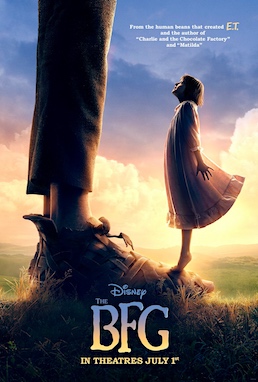
The BFG
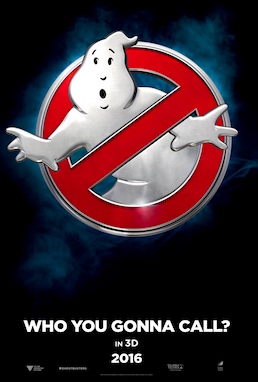
Ghostbusters
The Jungle Book
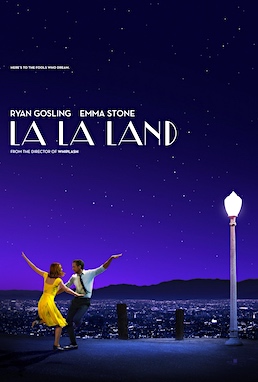
La La Land
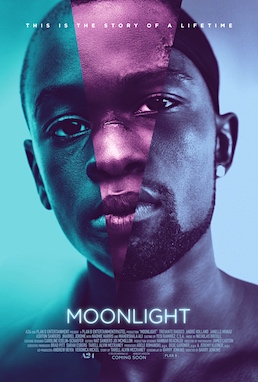
Moonlight
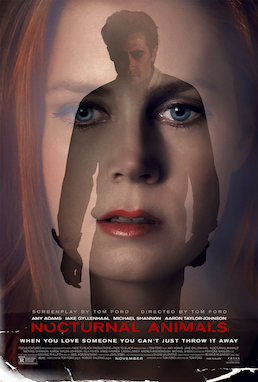
Nocturnal Animals
Finding Dory
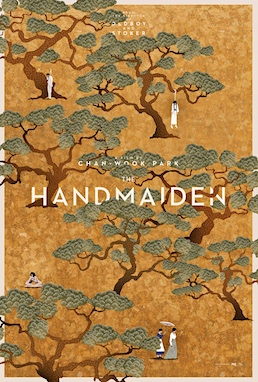
The Handmaiden
Kubo and the Two Strings
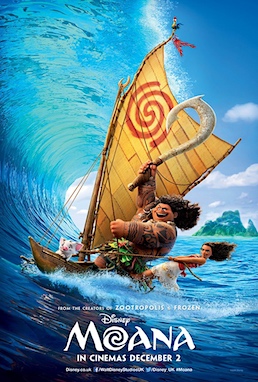
Moana
The Neon Demon
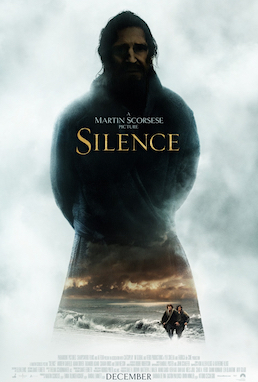
Silence
Absolutely Fabulous: The Movie
Alice Through the Looking Glass
Allied
Assassin’s Creed
Ben-Hur
The BFG
Blair Witch
Bridget Jones’s Baby
Don’t Breathe
Eddie the Eagle
Everybody Wants Some!!
Finding Dory
Ghostbusters
The Girl on the Train
Gods of Egypt
Hail, Caesar!
The Handmaiden
Hell or High Water
Hunt for the Wilderpeople
I, Daniel Blake
Independence Day: Resurgence
Inferno
Jack Reacher: Never Go Back
The Jungle Book
Kubo and the Two Strings
La La Land
The Legend of Tarzan
Live by Night
London Has Fallen
The Magnificent Seven
Manchester by the Sea
Me Before You
Miss Peregrine’s Home for Peculiar Children
Moana
A Monster Calls
Moonlight
The Neon Demon
Nocturnal Animals
Now You See Me 2
Passengers
Pride and Prejudice and Zombies
Sausage Party
The Secret Life of Pets
Silence
Sing
Sing Street
Sully: Miracle on the Hudson
Teenage Mutant Ninja Turtles: Out of the Shadows
Warcraft: The Beginning
Your Name

…and many more.


And that’s 2016 over… apart from the 36 reviews I still have to post, of course. I think that’s one of my worst ever. That’s what comes of not doing my advent calendar.

It’s also the end of 100 Films’ first decade, which I intend to make even more of a fuss about than I already have when the official birthday rolls around at the end of February. I’m thinking lists, and probably statistics. Any excuse for some statistics.

But, for now, all that remains is for me to thank you for reading and wish you all the best with your own film-watching endeavours. Let’s hope 2017 is a better one for us all.

The Story of Film: An Odyssey (2011)

2015 #112
100 Films in a Year #1000
Mark Cousins | 915 mins | DVD | 1.78:1 | UK / English | 15

The Story of Film: An OdysseyWritten, directed, and narrated by film journalist/historian/fan Mark Cousins, The Story of Film: An Odyssey is an epic 15-hour account of innovation throughout the history of moviemaking, which began its premiere broadcast five years ago today. It’s an acclaimed work, to be sure, but one that also attracts its fair share of controversy — about films and filmmakers that Cousins chose to leave out, in some cases about those he chose to include, and about how the documentary itself was made: the oddly framed interviews, the artistic shots of baubles, Cousins’ accent and vocal inflections. (Also, in the context of counting it as part of 100 Films, you may think it’s a TV series. Well, I went over that here.)

In the booklet that accompanies the series’ film’s UK DVD release, Cousins explains how and why the project came about:

There have been histories of the movie genres before, star histories, continental histories, histories of popular cinema, Godard’s essayistic history, etc. But no-one had tried to do a history of innovation in the movies. […] I was angry, too, that movie history is often so parochial, so provincial. We remember Garbo but not the great Chinese actress Ruan Lingyu, we worship Pixar but not the great Iranian kids’ films of Mohammed Ali-Talebi. This is blatantly unfair. The playing field is not level. The bullies with massive marketing budgets force their movies on us, whether they’re good or not, thus restricting our choice.

Part of the point of The Story of Film, then, is to widen Western audiences’ understanding of film and its history — a position also not without controversy, but I’ll come back to that.

The original concept was to tell this story over a handful of 90-minute episodes — “three chunky Saturday nights on BBC2 or C4”, as producer John Archer describes it in the DVD’s booklet. Unfortunately, the BBC declared the project was “too big”, which is ironic considering how it ended up. As Cousins describes in this making-of article, to help pitch the series they set out to produce a 10-minute test. When that clocked in at 50 minutes, they realised the final piece would have to be considerably longer than expected. By the time More4 got involved to buy the UK TV rights, the expected running time was 12 hours. It continued to grow, eventually looking like it would finish at 18 hours. Cousins decided this could be honed “to 15 hours but any less and — I told my producer and Tabitha Jackson our Exec Producer at More4 — we’d have to cut out Woody Allen, Robert Altman, people like that… So they gave me 15 hours.”
Those final 15 hours represent tens of thousands of hours of work. Cousins estimates the work needed to prepare and finish the clips from other films (of which there are about 1,000) totalled 20,000 man hours, most of it completed by just Cousins and Archer, working 90-hour weeks on four hours sleep a night, with festival and broadcast deadlines looming. Before that, they spent six years travelling the world — “across China and LA, to Tokyo and the streets of Mumbai, to the urban canyons of New York, the film schools of Paris, to Eisenstein’s Moscow and Bergman’s Sweden” — recording interviews and scene-setting footage. It’s an epic undertaking, whichever way you cut it. As film programmer Thom Powers described it in the TIFF catalogue, “by taking a DIY approach, Cousins preserves an editorial independence that normally gets lost with a bigger budget and committee decision-making. […] After experiencing this history from such a distinctive viewpoint, you may crave similar treatments for music, literature, politics or whatever compels you.”

The end result is indeed a magnificent viewing experience. Cousins’ chosen remit is so wide, and his knowledge so deep, that even the most seasoned cinephile is sure to learn something new at some point. It’s like attending a film course with an immensely well-read lecturer who’s keen to share his accumulated wisdom with you. Indeed, to quote from the man himself again, “in the era of DVD, Blu-ray, streaming and VOD, hundreds of thousands of movies are available, often a click away. At times of such plenitude, it’s easy to get bewildered — what should I watch next? The Story of Film: An Odyssey is […] our passionate suggestions of what to watch next.” Those suggestions encompass the whole history and world of cinema, in a very literal way. This manifestly isn’t just the story of Hollywood and European arthouse — Cousins is also keen to cover the emergent cinema of South America, Africa, and others. Including them isn’t a sop; a case of “everyone gets a prize!” It’s a case of films of genuine import or interest that have been overlooked, for various reasons, and Cousins makes a strong case not only for why these wrongs should be righted, but for why you’d want them to be, too.

Nonetheless, some have criticised the series for its lack of focus on American/Western cinema, which is to spectacularly miss (part of) the point. One of Cousins’ goals is to shake us out of our inward-looking learnt-by-rote Hollywood-centric history of the movies. He’s not seeking to ignore Hollywood, but to share what was going on elsewhere in the world — stuff that, sometimes, Hollywood later appropriated for its own. And besides, I don’t need him to tell me of the rise and fall of the studio system, of the arrival of the film school auteurs, of the birth and growth of the blockbuster, of the indie explosion and near-death, of the rise of a new studio system and the near-dominance of the blockbuster. Some people seem to want a documentary that tells the history of cinema as they already know it; a documentary that does so little to challenge their existing knowledge that they probably could’ve knocked it out themselves given an hour or two. Isn’t it better to have something challenging? Something that says, “you think you know the history of cinema, but are you sure?” Something that shows us something new.

Cousins specifically outlines pretty much all of this in his eight-minute introduction right at the start of the series. He outright says the accepted history of cinema is wrong and needs rewriting. Now, that doesn’t mean you have to accept that he’s right to say that — and whether or not you feel his story adequately makes the case for it will be the deciding factor in whether you should believe him or not — but to expect anything different is to not be paying attention. He also makes clear that it’s the story of innovation in film. Does that make it comprehensive? No, of course not — there are surely many films that aren’t innovative in and of themselves but that are significant and immensely influential. That doesn’t make Cousins wrong to omit them, because that’s not exactly the story he’s telling. But it also validates the argument that this is “a” story of film rather than a catch-all definitive telling of everything important.
The other main complaint about the series seems to concern Cousins’ voice, in particular citing a tendency towards AQI. This might sound like a witless niggle, but when you’re essentially listening to that voice talk for 15 hours, it isn’t a small issue. Personally, I find AQI intensely irritating and so think I’m quite sensitive to it, but I barely heard it at all. In fact, on the whole, I found Cousins’ narration to be uncommonly pleasant, especially as it so often comes with the benefit of some nice, crisp diction. Besides, that upward inflection “is also a feature of several UK dialects, especially in mid-Ulster and Belfast” — guess which city Mr Cousins hails from.

Although The Story of Film works as one (very long) film, it’s also possible to see where the divisions into 15 TV-friendly parts occurred. Here are some of my thoughts on each section, using the titles as found in the DVD booklet (because not everyone agrees on those).

Part One: Birth of the Cinema (1895-1920)

Beginning at the beginning, the opening hour is like a “basics of film” class — it covers all the innovations of framing (close-ups), editing (parallel cutting; the 180 rule), and more. It teaches how films are built to this day from how those rules were discovered and established. When it moves on to things like the birth of the movie star, of special effects, of Hollywood, you realise that so much of what still defines the world of movies was set out back in its very earliest days.
As an opening instalment, it also gives you a sense of Cousins’ stylistic goals for the series. For instance, although this is an artistic history of film (of its concepts, ideas, and meanings), it’s one that’s cognisant of how external real-world forces played a part in that — for example, the American studios being located in Hollywood because of people wanting to avoid the copyrights and patents placed on filmmaking on the East Coast. It also tells the story across the ages at all times. The broad sweep of the narrative structure moves chronologically, but Cousins is unafraid to make connections to films made many decades later to help illustrate a point or to show how ideas or techniques have endured. It’s more effective and informative than remaining slavishly chronological.

Part Two: The Hollywood Dream (1920s)

Sticking with the silent era (more on the significance of that in a minute), this hour covers grand fantasies and romances, like The Thief of Bagdad; the innovations and influence of silent comedians like Keaton, Lloyd and, primarily, Chaplin; and the birth of documentary, not as mere observed non-fiction, but as storytelling in its own right. Cousins asserts that documentary is seen by most as being plainly factual, but it is actually one of the most innovative of all genres. Certainly, there’s more to the construction of documentaries than some people realise.

Even this early in the series, there are so many films of which we get fascinating glimpses — it’s sure to leave you with a massive list of things you want to see. Similarly, it’s so dense with information and analysis that it feels wrong to watch too much at once. It’s like eating too much rich food: you still enjoy it, but you can’t separate it out in your mind, can’t appreciate or process it properly. But then binge watching is all the rage nowadays, so maybe that’s just me. (Or maybe people aren’t appreciating things fully, but that’s a debate for another time.)

Part Three: Expressionism, Impressionism, Surrealism (1920s)
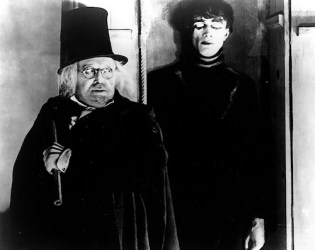
The third hour explicitly concerns the people and movements Cousins sees as alternatives or rebels to ’20s and ’30s cinema, both what they did that was different and how it fed back into the mainstream. We’re talking the likes of impressionism (Abel Gance), expressionism (Caligari), surrealism (Buñuel), the Russians (Eisenstein), the Japanese (Ozu), the Chinese (Ruan Lingyu), and more. All innovated in different ways — ways that were either integrated into common filmmaking, or remain striking and boundary-pushing to this day, almost 100 years later.

Some people write off the silent era as “that funny little bit at the beginning before sound came along”, dismissing a 35-year chunk of culture in a single swipe. That’s like ignoring every film made between 1981 and today (which, in fairness, I suppose some people do). Naturally, Cousins is not so foolhardy: it’s over three hours before he reaches the arrival of sound. When he ends this hour by foreshadowing the coming of sound, it’s constructed like a cliffhanger; not only that, but the narration disappears and is replaced by intertitles, to emphasise the point. This isn’t classical documentary making, but playful, individualistic, and clearly iconoclastic. It’s a personal visual lecture, rather than a glossy, polished, manufactured ‘product’.

Part Four: The Arrival of Sound (1930s)

Sound is obviously an important aspect of movies nowadays, but at first it was almost more of a burden. Cousins argues that its arrival standardised American cinema into only six genres: horror, Western, gangster, comedy, musical, and animation. It’s an interesting contention — I suppose his broader point is that Hollywood atrophied, to an extent; its camerawork certainly did, at least at first — but it doesn’t sound quite extensive enough. I mean, surely they made romances?
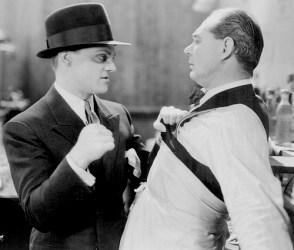
Still, it’s easy to let such things slide when Cousins is busy drawing fascinating links elsewhere. Here, he discusses the contrast between the white light of Westerns (films about an idealistic age when laws were made) and the dirty light of gangster pictures (films about a dying world where lawbreakers are the heroes of a cynical age, when the making of the laws is long forgotten). These two genres co-exist, yet don’t consciously interact — except in the mind of the filmgoer, when we see both types of picture and can draw such links; links that none of the filmmakers involved ever intended, but which are unquestionably there. Cousins draws out these connections beautifully.

Finally, Cousins paints the ’30s as being about the American genres vs. innovation in European cinema, before taking us to London to meet a man who was both a great genre filmmaker and great innovator: Alfred Hitchcock. Britain bridging the gap between Europe and the US? Twas ever thus.

Part Five: Post-War Cinema (1940s)

Hitchcock said cinema is life with the boring bits cut out; the neo-realists said cinema is the boring bits. That probably explains why I’ve yet to enjoy anything neo-realist. Aside from that, Cousins gives us a nice big chunk on film noir and how it combined multiple influences, and covers the importance of Welles, Stagecoach, and The Third Man, which Cousins thinks encapsulates all of ’40s cinema. As you can see, this is not a documentary maker who’s ignoring established and well-known texts, but is perhaps more selective about which merit inclusion.

From a filmmaking perspective, between the film clips the series is what you might call “artistically shot” — there are very few talking heads; it’s all narrated by Cousins; and there’s lots of metaphorical imagery, some blatant (to represent the bauble of Hollywood we have… a bauble on a tree near Hollywood), others more ephemeral. However, at this point in the series we begin to see more taking heads, because we’re reaching eras where people (or people-who-knew-people) are still alive. It feels like a consequence of that is more close readings of specific films and/or filmmakers, with the series moving away from the “film theory” feel of earlier episodes a little bit, more into the territory of being the story of what occurred.

Part Six: Sex & Melodrama (1950s)

Talking of filmmaking technique, Cousins chooses to frame every interview differently. You might think it amateurism, not knowing how to frame interviewees consistently, but it was a conscious choice. He was, presumably, trying to convey something with how he framed them. Whether that was a worthwhile exercise or not is another matter. It certainly comes across as highly idiosyncratic at times.

At this point, the story of film is really increasingly global: there are great films in America, Britain, Europe, and Japan, as you might expect, but also Egypt, India, and Latin America. On the surface, the different films of these different countries are completely different. Underneath, Cousins demonstrates, they’re linked by trying to come to terms with a new, changing world, repressed emotions bursting forth, and sex. Lots of sex.

Part Seven: European New Wave (1960s)

Cousins begins by tackling the new waves led by four European directors: Bergman, Fellini, Bresson, Tati. There are a couple of significant directors missing from what one typically thinks of as “new wave” there, but this isn’t Cousins being deliberately controversial: after talking about the innovations of those four, he says the directors of the French New Wave came along and “carpet bombed” their revolutions, describing Godard as “the greatest movie terrorist”.

Here, Baz Luhrmann (believe it or not) makes a nice point about changing styles: the Nouvelle Vague wasn’t “real life”, it was an artifice, but an artifice that rejected the big costumes, pretty shots, vibrant colours, and romanticism of mainstream American cinema; and eventually that artifice came back in to fashion, and eventually it will be rejected again. Everything is cyclical, which is practically a philosophy for all life. Luhrmann compares it to language: the words change but the message remains the same; people always say “I love you” or “I want to kill you”, but how they say it is just fashion.

Part Eight: New Directors, New Form (1960s)

As the ’60s continue, new waves and revolutions are everywhere. There’s the Eastern Bloc and the cinema of protest (“rebels with a cause”, as Cousins puts it) and even more new, radical filmmakers in Japan, Africa, Iran, even the UK: Saturday Night and Sunday Morning, Kes, A Hard Day’s Night. It’s interesting to see very familiar films of British cinema put into this context — Ken Loach discusses the influence of Czech film on Kes, for instance.

Not even America is exempt. In a world where JFK, Malcolm X, and a million civilians in Vietnam protests were all murdered, and where cinema attendance was falling as people stayed home with TV, there were radical filmmakers Stateside too — including Hitchcock! Psycho, for instance, which eschews Hollywood gloss with its plain costumes, plain locations, and plain black & white photography, which Cousins aligns with documentary-influenced independent cinema. More obviously, there was Easy Rider. It was innovative, throwing all kinds of techniques at the screen, and appealed to young people who were fed up with conservative mainstream cinema and wanted something groundbreaking, forward-thinking, revolutionary — and it was a box office hit. The series gets you in the mindset to go beyond the connections Cousins draws and begin to make links yourself. Like, if this is how film as a medium, and society as a whole, seems always to have moved forward, then what thrilling revolutions can we see young people flocking to in the modern day? Disney superhero movies. Belated sequels to childhood favourites. Adaptations of socially conservative novels aimed at teenagers. Oh. Such contrast between then and now is a bit depressing, really.

Cousins concludes by saying this era of innovativeness wasn’t permanent — the ’70s would bring old-fashioned romantic entertaining cinema. As per Luhrmann’s theory, “what goes around comes around”, essentially. To be more positive about modern movies, I suppose this is an era we’re in now. I guess you could conflate the indie boom of the ’90s with the ’60s, or the auteur side of the ’70s; while the post-millennial special effects blockbusters are the latest incarnation of the Star Wars/Jaws/etc-driven ’80s. But then again, blockbusters also existed in the ’90s, and popular indie movies exist now — so how do you decide what’s the dominant form of an era? Is that purely the job of history — what gets remembered best. But what about when they all get remembered, as with the ’90s? I’ve diverged wildly into my own half-conceived theories here, but as if to back up my point about a time being more than one thing, the ’70s are about to get three whole episodes…

Part Nine: American Cinema of the 70s

In the first part on the ’70s, Cousins identifies three types of American auteurs/arthouse: mockery/satire (Buck Henry), dissident films that challenged conventional style (Charles Burnett), and assimilationist movies that told studio genre-style stories with new techniques (Robert Towne). Flying in the face of that criticism about Cousins ignoring US/Western films, in most eras he comes back to America, its story and innovations, after he’s done everywhere else. The exceptions are the birth of Hollywood in the ’20s and the radical ’70s, when he starts with America. Does Cousins want to get these famed and fêted eras in the US out of the way before he moves on to elsewhere, to avoid the nagging “but what about [major US film / director / movement]” question that many viewers would be troubled about otherwise? I doubt he’s so concerned with what you or I are pondering. Rather, these are the times when American cinema was most genuinely innovative (at least in Cousins’ opinion).

Part Ten: Movies to Change the World (1970s)

In the second part of the ’70s, Cousins has a particularly bold assertion: “Performance was not only the greatest ’70s film about identity. If any movie in the whole story of film should be compulsory viewing for filmmakers, maybe this is it.” I’ve not seen it, so I couldn’t say whether I agree or not, but it’s an unusual claim.

Cousins rattles round the globe here (Germany, Japan, Italy, Australia), but the most interesting part comes in Burkina Faso. Today, tens of thousands of people there attend the opening of a film festival. Local director Gaston Kaboré argues that consuming film from other countries is interesting, but if that’s all you do then your lose your uniqueness, your own way of seeing and thinking, your identity. This is exactly what continues to happen in countries that primarily consume American movies — they are increasingly Americanised. I don’t think it would be unreasonable to argue that Britain is one of the worst hit by this. Unlike other countries, we have governments with no serious interest in supporting a national cinema, and the lack of a language barrier between us and the US (only aided by the internet, both in terms of global conversation and media piracy) has created an ever-strengthening supply-and-demand culture across both TV and film. Of course, it can go both ways: look at all the British TV series that have had relatively large US success in the past few years. Somehow I think it’s had more of an impact on our little island, though.

Part Eleven: The Arrival of Multiplexes and Asian Mainstream (1970s)
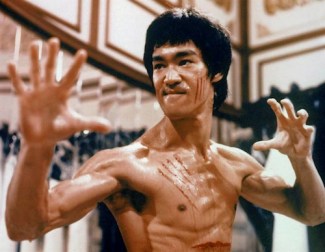
As Cousins closes out his three-hour overview of the ’70s, we (or I) find ourselves in much more familiar territory: first Hong Kong, for the Shaw Brothers, Bruce Lee, John Woo, Tsui Hark, A Better Tomorrow, Once Upon a Time in China, Dragon Inn, Iron Monkey… then India, for Bollywood and Sholay… then the Middle East, with films about Mohammad and recent events… and then, most recognisable of all to Western audiences, and most influential of all to the world, Hollywood — Jaws, The ExorcistStar Wars. In all instances, this is cinema that moved away from intellectual thought and hard-hitting realism, and more towards feeling, sensation, emotion, fantasy. These things come and go (Luhrmann’s point about the cyclical nature of it all being perhaps the most pertinent observation of the entire series), but it’s hard to argue against the developments of the ’70s still being an influence today.

Part Twelve: Fight the Power: Protest in Film (1980s)

Much of this series is about things that are important within the world of film, but here we find movies that literally changed the world — like A Short Film About Killing, which contributed to the abolition of the death penalty in Poland. Elsewhere, director John Sayles and his producer/partner Maggie Renzi give birth to the methodology of what we now know as American independent cinema. Renzi says that Hollywood doesn’t even do what Hollywood does very well anymore — that it takes nine writers to produce a screenplay no better than the first draft — and she’s probably right.

While the list of “films that look worth seeing” continues to grow, sometimes the speed at which they pass by makes it tricky to know how worth seeing they are. For example, in this hour Cousins discusses Yeelen, describing it as “one of cinema’s most complex works of art”. Based on a Malian legend, telling of a heroic quest featuring magic and precognition, it sounds interesting, but it’s also hard to infer if it’s complex in a good, interesting way or in a frustrating, pretentious way.

Part Thirteen: New Boundaries: World Cinema in Africa, Asia, Latin America (1990s)

With only a couple of hours left(!), Cousins reaches modern concerns — here, it’s the last hurrah of celluloid and realism, before digital and fakery took over. Part of Cousins’ thesis seems to be that world cinema filmmakers were reacting to fantasy cinema by trying to show the real world, but that became a last gasp before fantasy cinema took over. It’s almost like a battle for the fate of cinema, between realism and fantasy; and fantasy won. So we have Dogme 95 and La Haine, but also Iranian filmmakers who played with form and reality, like making fictional versions of true stories using the real people; or Abbas Kiarostami, who made a film, then made a film about searching for the actors from that film, then made a film about an incident from the making of the second film. And fantasy and reality collide in places, like Michael Haneke and Funny Games, where the evil youths wink at the camera and rewind life like we rewind videos. That was groundbreaking, and obviously only possible in the home video era when rewinding, y’know, existed.

Part Fourteen: New American Independents & The Digital Revolution (1990s)

As we get closer to today, you find more and more references to the past. Is film coming full circle? Or at least becoming more self-aware; referencing itself more often. We’re talking Tarantino’s post-modern screenplays, the Coen brother’s re-appropriation of classic genres and imagery, Gus Van Sant’s film-history-aware visuals, the satire of Paul Verhoeven, Baz Luhrmann’s flamboyant romanticisation of real life, and so on. It makes you think: is this the absolutely perfect time to be making a major “history of film” documentary?
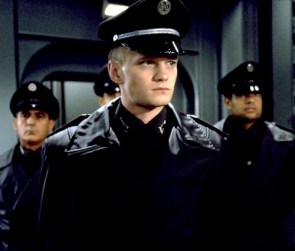
It also reminds you that style or genre do not have to negate substance. Starship Troopers was born out of Verhoeven’s desire to make a film about young men coming into the prime of their lives at an exciting time for their country when everything was developing — that time and country being Germany in 1935, and the men being excited by Nazism. No Hollywood studio would ever make that movie, of course, but take those themes and do them as science fiction…

Part Fifteen: Cinema Today and the Future (2000s)

Unsurprisingly, the concluding hour feels somewhat less clear about what was particularly innovative and what exactly was going on that was most significant — it’s coming up to the present day and looking to the future, which is too recent to get a proper handle on. Nonetheless, Cousins does find genuine innovation, like the single-take Russian Ark. It’s not a film I liked, and even the analysis here incidentally alludes to why: you need to know what you’re seeing, and the context of what came next (in history) to get the point. If your knowledge of Russian history isn’t on the money, if you don’t know what you’re seeing depicted and what came after it, the film offers you no succour, and feels aimless. But innovative? Yes. Indeed, it’s a filmmaking feat that has only recently been emulated.
Talking of emulation, it seems unlikely anyone else will make a documentary as comprehensive and insightful as what Cousins has achieved here. For anyone serious about a love of film, it is a must-see. That doesn’t mean you’ll always agree with it, or accept it as the definitive telling of the story of motion pictures, but it is nonetheless a wide-reaching and thoroughly educational overview of what is arguably modern times’ most significant artform.

5 out of 5

The ⅔ Monthly Update for August 2016

2016 is 66.67% over — here’s how my film viewing went for the last 12.5% of that, i.e. the most recent 8.3% of the year.


#128 Batman v Superman: Dawn of Justice – Ultimate Edition (2016)
#129 Batman: The Killing Joke (2016)
#130 The Good Dinosaur (2015)
#131 Pride (2014)
#132 Road Games (1981), aka Roadgames
#133 Armageddon (1998)
#134 The Adventures of Buckaroo Banzai Across the 8th Dimension (1984)
#135 Charlie Wilson’s War (2007)
#136 Enemy (2013)
#137 Me and Earl and the Dying Girl (2015)
#138 Deep Blue Sea (1999)
#139 Dallas Buyers Club (2013)
#140 Duel (1971)
#141 The Salvation (2014)
#142 The Maltese Falcon (1941)

.


  • With 15 new films watched, August is my best month since April. It’s also my 27th month in a row with 10+ films.
  • With two-thirds of the year still to go, 2016 is already my second highest year ever, having sailed passed 2014’s final tally of 136 in the middle of the month.
  • This month’s WDYMYHS viewing was the progenitor of much of what we know as film noir, the 1941 adaptation of The Maltese Falcon.


The 15th Monthly Arbitrary Awards

Favourite Film of the Month
There are a few quality films up there this month, in my opinion, both the expected (Duel, The Maltese Falcon) and the less-so (BvS Ultimate Edition, The Good Dinosaur), but probably my favourite of the lot was the Ozploitation flick you could call “Duel Down Under”, or “Rear Windscreen” — Road Games.

Least Favourite Film of the Month
For all the faults of Armageddon, the recently released Honest Trailer has just served to clarify/remind me of the disappointment of Batman: The Killing Joke.

Best Song I’d Never Heard Of Until I Saw It in a Trailer This Month
After I watched something or other on Amazon this month, one of the recommended films was Demolition starring Jake Gyllenhaal. (It wasn’t after Enemy, because I watched that on Now TV; it was probably Dallas Buyers Club. Anyway.) I knew nothing about the film but have seen it come up a few times, so I watched the trailer, and the best part of that was the music: Heart’s Crazy On You. This has been a real “how have I never heard this before?!” moment. It also made me really want to see the film, so, y’know, trailers work.

Best Bit of Audio Commentary Ever
I am going to review Armageddon eventually, but really, all you need to do is watch these 2 minutes of Ben Affleck’s commentary:

The Audience Award for Most-Viewed New Post of the Month
I tend to find reviews of alternate cuts do particularly well, hit-wise (I figure that’s why the first two Harry Potters are far and away my most-read posts ever, and still usually top the list for each day, while the other Harry Potters just see average-to-good figures). The post that topped this month’s tally doesn’t surprise me greatly, then. The winner, by a country mile (it’s already my second most-read new post of the entire year), is my review of Batman v Superman: Dawn of Justice – Ultimate Edition.


It’s a heady genre cornucopia this month, with nine movies spanning Action, Comedy, Drama, Musical, Romance, Sci-fi, Thriller, and Western — usually more than one at once.


The 8.3% of the year known as September.

The Perfectly Adequate Monthly Update for July 2016

Another month over, another list of movies I watched during it…


#116 Zootropolis (2016), aka Zootopia
#117 Superman Returns (2006)
#118 Cold in July (2014)
#119 American Ultra (2015)
#120 Ten Little Indians (1974), aka And Then There Were None
#121 Zoolander (2001)
#122 Pride and Prejudice (1940)
#123 High-Rise (2015)
#124 The Visit (2015)
#125 The Imitation Game (2014)
#126 Sicario (2015)
#127 The Sting (1973)

.


  • A total of 12 new films this month means I maintain my ten-per-month minimum for the 26th month.
  • It also easily passes my July average (6.5, by far the lowest of any month), and is equal-best July ever (with last year).
  • It’s the ‘worst’ month of 2016 to date, though.
  • This month’s WDYMYHS viewing was classic con caper The Sting, which is still enjoyable but somewhat overshadowed by the fact it’s been so influential in the four decades since its release.
  • Zootastic: watched both Zoolander and Zootropolis, aka Zootopia, this month. That signifies absolutely nothing, it’s just there aren’t that many films with titles beginning “Zoo”.

(I’ve decided to put a moratorium on the Analysis section until at least December’s update — as I wrote in June, it’s a bit pointless at the minute. That’s why relevant stats & stuff are now included in this part.)


The 14th Monthly Arbitrary Awards

Favourite Film of the Month
Although it has the shortest list of any month so far this year, it was a pretty strong one quality-wise — a ‘problem’ that afflicts both these first two categories, of course. Despite there being several strong contenders, I’m going to come down in favour of twisty, surprising neo-noir Cold in July.

Least Favourite Film of the Month
There were films this month that weren’t as great as I was hoping, to one degree or another (High-Rise, The Sting), and others that lived up to my moderate-to-low expectations just fine (American Ultra, Zoolander), but none that were outright bad. So the unlucky winner is Ten Little Indians, for being a word-for-word remake (of the ’60s version) that isn’t quite as good as its predecessor.

Most Blatant Author Surrogate of the Month
Jesse Eisenberg’s lead character in American Ultra feels like it’s just screenwriter Max Landis going, “hey, what if it turned out I was Jason Bourne…”

Film Most Deserving of a TV Spin-off Series of the Month
I know I already mentioned this in my review, but I really would devote some of my precious TV-viewing time to a Zootropolis Zootopia Zootropolis spin-off… if it was one of those kids’ shows that’s so well written it works for an adult viewer too, of course. I guess the detailed animation required to realise that world is cost-prohibitive to this ever happening, though.

The Audience Award for Most-Viewed New Post of the Month
A first, here: the most-viewed new post last month was the review of the month before that; i.e. The Independent Monthly Update for June 2016. Maybe it was my Brexit joke; maybe it was Deadpool; who can say?


This month: child hitmen, magical nannies, Shakespeare with big cats, and a really long walk to return some unwanted jewellery.


Summer! I hate summer. On the bright side, it means winter is coming… eventually…

100 Films’ 100 Favourites: The Story So Far…

For a transcript of the video, see here.

To recap, the first 50 are…

  1. Aladdin
  2. Alien
  3. Apocalypse Now Redux
  4. Apollo 13
  5. Back to the Future
  6. Back to the Future Part II
  7. Back to the Future Part III
  8. Batman Begins
  9. Batman Returns
  10. Beauty and the Beast
  11. The Big Sleep
  12. Blade
  13. Blade Runner: The Director’s Cut
  14. Bloody Sunday
  15. The Bourne Identity
  16. The Bourne Supremacy
  17. Casablanca
  18. Casino Royale
  19. Children of Men
  20. Conspiracy
  21. Cube
  22. Daredevil
  23. Die Hard
  24. Dogma
  25. Dogville
  26. Donnie Darko
  27. The Empire Strikes Back
  28. Face/Off
  29. Fight Club
  30. Flash Gordon
  31. For a Few Dollars More
  32. From Russia with Love
  33. Galaxy Quest
  34. The Game
  35. Gangs of New York
  36. Ghost in the Shell
  37. Ghostbusters
  38. Gladiator
  39. The Godfather
  40. GoldenEye
  41. Gone with the Wind
  42. Groundhog Day
  43. Highlander
  44. The Incredibles
  45. Indiana Jones and the Last Crusade
  46. Josie and the Pussycats
  47. Jurassic Park
  48. Kill Bill: Vol. 1
  49. Kiss Kiss Bang Bang
  50. Lemony Snicket’s A Series of Unfortunate Events

During my selection process for this list, my almost-final long-list stalled at a little over 150 films. As I’m posting these in alphabetical order, I can now list some of the also-rans that almost made it but, for one reason or another, didn’t.

The Adventures of Robin Hood
Austin Powers: The Spy Who Shagged Me
Battle Royale
Butch Cassidy and the Sundance Kid
Closer
Collateral
Crouching Tiger, Hidden Dragon
Cruel Intentions
eXistenZ
The Fugitive
The Godfather Part II
Goldfinger
Hilary and Jackie
A History of Violence
Independence Day
Indiana Jones and the Temple of Doom
Inside Man
Interview with the Vampire
Jaws
JFK
Kill Bill: Vol. 2
.

That’s only 21, with another 34 to be revealed next time — which does make me wonder if I just got harsher as I moved through an alphabetical list!

Tomorrow, the second half begins…

The Independent Monthly Update for June 2016

In? Out? Pretty sure “shake it all about” won the referendum.
(It was a toss up between a Brexit joke and a Game of Thrones one, and only one of those wouldn’t constitute spoilers. Well, depending on your definition of “spoiled”.)

#102 Cop Car (2015)
#102a Independence Day (Special Edition) (1996/1998)
#103 The Revenant (2015)
#104 Legend of the Guardians: The Owls of Ga’Hoole (2010)
#105 Beverly Hills Cop III (1994)
#106 Spy (Extended Cut) (2015)
#107 Deadpool (2016)
#107a Bambi Meets Godzilla (1969)
#108 Ip Man 3 (2015), aka Yip Man 3
#109 Steve Jobs (2015)
#110 Fantastic Four (2015)
#111 Barry Lyndon (1975)
#112 Ivan Vasilievich: Back to the Future (1973), aka Иван Васильевич меняет профессию
#113 The Bank Job (2008)
#113a The Present (2014)
#114 The Lobster (2015)
#115 Pan (2015)

.


  • WDYMYHS continues apace with Stanley Kubrick’s 7th film on the IMDb Top 250, Barry Lyndon. It’s getting a 40th anniversary theatrical re-release towards the end of July, so expect a review nearer the time.
  • #1 thing I didn’t quite get round to this month: Zootropolis, aka Zootopia. It’s not out on UK DVD/Blu-ray until the end of July, but I imported it from the US (before 37.4% of the electorate went and knackered the value of the pound).
  • The Bank Job finally carries the number of films I’ve seen from my 2008 ‘50 Unseen’ list past the 20 mark. Ridiculously, last year’s list also passed that marker this month.
  • Independence Day is the first non-main-list film I’ve watched for review this year, and Bambi Meets Godzilla is the first short film.


It’s funny: having passed 100 last month, the whole statistics / how far I’ve got / predictions for the future shebang has been much less on my mind of late (which has been more occupied with writing 100 Favourites posts, because I’m no longer far ahead on them). Nonetheless, here are a couple of observations.

With 14 new feature films watched, June bests last month’s 13 (just), but sits behind all other months of 2016. It’s also not quite as good as last June, which scored 16, but it well surpasses June’s average of 8.25. It’s the 25th consecutive month with over 10 films, too, so that’s nice — still on track for that to hold until this December messes it up, at least.

As ever, the end of June marks the year’s halfway point. With my year-to-date monthly average at 19.2, the obvious forecast places me at 232 by the end of the year, which — in almost the opposite of last year, when these predictions kept proving undervalued — I don’t expect to reach. Taking the average of the last two months as a better guide, that gets me to 196, which seems more plausible. Really, I’m only in the habit of making these predictions from the years when it took me ’til December to reach #100, and so trying to guess if I was going to do it ‘mattered’ — these days, what does it matter? I’ll get where I get.

And on that downbeat note…


The halfway point of the year also means the halfway point of my 100 Favourites. The (alphabetical) first 50 is completed by:


The 13th Monthly Arbitrary Awards

Favourite Film of the Month

A couple of 2015 Oscar contenders caught my attention this month, and The Revenant or Steve Jobs would certainly be a worthier pick… but I called this category “favourite” rather than “best” for a reason, and dammit if I didn’t enjoy Deadpool more than a man of my age (i.e. older than teenage) reasonably should.

Least Favourite Film of the Month

I didn’t love every film I watched this month, but I did at least like the vast majority. Some may think last year’s much maligned Fantastic Four reboot would be a shoo-in here, but no, I quite liked it. So the only bad film this month — and therefore an easy ‘victor’ in this category — was unnecessary sequel Beverly Hills Cop III.

Best Moulin Rouge Rip-Off of the Month

Smells Like Teen Spirit in Pan. (Sorry if I’ve now spoiled that surprise for you.)

Most Unexpected Appearance by a Eurovision Song Contest Entrant… Ever
The word “most” feels a bit redundant here — how many Eurovision entrants have ever turned up in movies? Well, aside from Abba. Anyway, I’d never seen a Paul Feig film before, but he earns a shed-ton of bonus points (enough to wipe out Ghostbusters? We’ll see) for not only featuring Ukraine’s 2007 submission by Verka Serdyuchka in Spy, but for setting an action sequence to it too.

The Audience Award for Most-Viewed New Post of the Month
A close one this time, but it ended with victory for a 100 Favourites entry, for the second month in a row: my generation’s Star Wars, the enduringly popular Jurassic Park.


Historically, July is my lowest-totalling month, and the only month where I’ve ever failed to watch a single new film (in 2009). 2016’s iteration should do better than that, at least.