
Tom McCarthy | 129 mins | streaming (HD) | 1.85:1 | USA & Canada / English | 15 / R

2016 Academy Awards
6 nominations — 2 wins
Nominated: Best Supporting Actor (Mark Ruffalo), Best Supporting Actress (Rachel McAdams), Best Director, Best Film Editing.
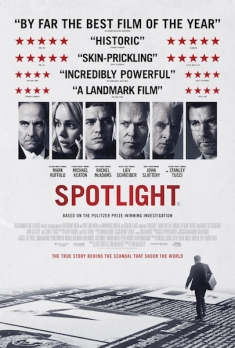 The most recent Best Picture Oscar winner tells of how the Boston Globe’s investigative journalism unit, the eponymous Spotlight team, exposed the widespread sexual abuse of children by the local Catholic Church — and, just as shockingly, the way the institution itself swept this under a rug for decades. As a film, this story is effectively a conspiracy thriller: a team of journalists expose a wide-reaching criminal cover-up within a respected and powerful institution. If it were fiction, you’d struggle to believe it, the scale of the conspiracy so vast that the very notion of it would be implausible. So it’s all the more astonishing — and horrifying — that it was real. And, as the closing title cards reveal, far larger than the Spotlight team realised even when they went to print.
There are many fascinating true stories that have produced merely adequate movies, so it’s something else again that transforms Spotlight into a Best Picture winner — albeit a somewhat controversial one, in that it came in a year when the top award went to one of three different films at the major awards (the others being The Revenant and The Big Short), rather than a consensus emerging as the various ceremonies all rewarded the same film (as usually happens, more or less); relatedly, it was the first Best Picture winner for over 60 years to only nab one other gong. More pertinently, doubts about the film’s deservingness stem from criticisms of its relatively plain directorial style, its focus on the plot rather than the characters within it, and its monomaniacal attention to the process of investigation rather than the thing being investigated.
In my opinion, the film’s storytelling would be better described as no-nonsense. It actually takes confidence to be this understated, I think. Tom McCarthy’s direction isn’t slickly shot and edited to make the story seem like a whizz-bang fast-paced thriller; nor is it affectedly artistic or indie, the kind of style this sort of low-to-mid-budget drama often resorts to nowadays. 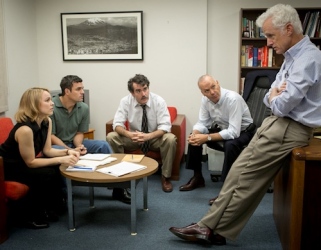 Instead, it lets the story and the events speak for themselves, with the screenplay being the real powerhouse here. On that scale the directing isn’t even in second place. That’d be the performances, as the actors carry the delivery of information while still feeling like human beings pursuing an investigation, rather than mere narrators of what they discovered. McCarthy’s work is therefore the kind of helmsmanship that wouldn’t attract awards attention, except maybe by association with the film’s overall acclaim (he did get nominations, but the cynical side of me doubts awards bodies genuinely appreciated the qualities of what they were watching). Nonetheless, awards are not the be-all-and-end-all, and the low-impact style was surely the right way to go. This is a tale bigger than auteurist showboating, and McCarthy handles it with appropriate respect.
I think the perceived lack of characterisation for the journalists is due to similar reasons — both that the film has different fish to fry, and also that it goes about such business with greater subtlety. Personally, I think you come away with a really good sense of who these men and women are as people; at the very least, how they are in their work environment, which at the end of the day is where we’re observing them. This is accumulated through how they behave in interviews and meetings, how they react to developments and revelations, how they do their jobs. It’s good writing and good acting, because there are no scenes devoted to merely “exploring character” or whatever. There are allusions to their private lives without making them full-blown subplots, and that’s a good thing — this tale doesn’t need embellishing with a shoehorned romance or a failing marriage. That said, 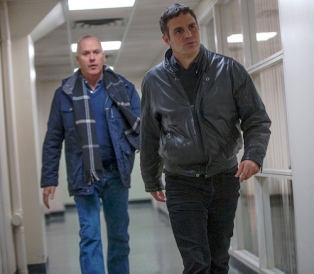 this is also perhaps where the film’s only egregious bum note comes in: Ruffalo’s shouty speech about how they need to go to press now, which was naturally used across all the trailers and clips. It feels like that is precisely what that speech was designed for — that it was written, directed, and acted with the “here’s our big dramatic trailer moment” in mind. It’s not entirely out of character in context, but it is a bit much.
One reason it feels out of place is that the film perhaps hasn’t quite whipped up our fury at the situation to the same level. That’s not to say it’s soft on it — there are horrifying tales and facts related — but while the film is about historic Catholic abuse, it’s really about journalism. Other critics of the movie accuse it of telling the abuse story in a way that could be better covered through a documentary or reading a Wikipedia article, but I think that misses what makes Spotlight really tick. It’s the process the journalists go through — how they uncover the story as much as what they uncover — that the film is demonstrating for us. Sure, you can read a Wikipedia article to find out what they unearthed, but without them unearthing it in the first place there’d be no Wikipedia article to read. That’s what the film is really about. These events happened 15 years ago; the truth they outed has been a massive story ever since — that’s not something that needs fresh exposure (other than it never hurting to remind people). But as the world moves away from proper journalism, into the realm of amateur bloggers rehashing press releases and ‘professional’ organisations running endless clickbait listicles because that’s where the advertising revenue is, it’s a timely reminder that it’s this kind of proper, old-fashioned journalism that can expose massive, important issues; issues that you might think the police or legal system should expose, but which they’re sometimes (maybe even often) complicit in.
 So was it the best film of last year? Perhaps that depends what you look for in movies. As much as I think the understatement fits, I also think it’s what stops it from being as cinematically exciting as, say, the visually-driven hyper-kinetic storytelling of Fury Road. But to focus too much on the deservingness or otherwise of awards is to miss the point. Much like it doesn’t need flashy camerawork or editing, or diversions into the characters’ private lives, so Spotlight doesn’t need awards to make you pay attention. It’s a story about the importance of independent investigation, told in a strong but no-frills fashion that befits the weight of the material.

Spotlight is available on Amazon Prime Video UK from today.

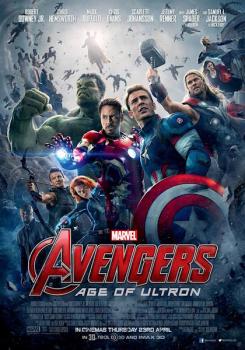 It feels kind of pointless reviewing Avengers: Age of Ultron, the written-and-directed-by Joss Whedon (and, infamously, reshaped-in-the-edit-by committee) follow-up to 2012’s “third most successful film of all time” mega-hit
 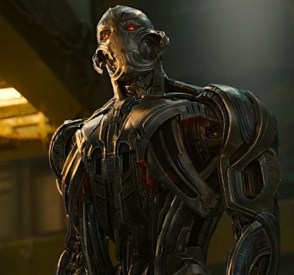 Even though the first half of that is still three years away, we’re still very much on the road to it. Heck, we have been practically since the MCU began, thanks to those frickin’ stones (if you don’t know already, don’t expect me to explain it to you), but now it’s overt as well as laid in fan-friendly easter eggs. The titular threat may rise and be put down within the confines of Age of Ultron’s near-two-and-a-half-hour running time, but no such kindness is afforded to the myriad subplots.
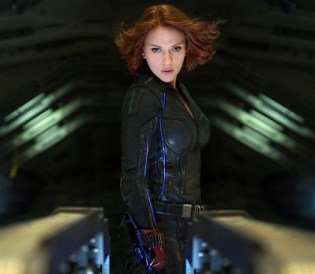 (not just obvious stuff like the Hulk, but digital set extensions, fake location work, even modifying Stark’s normal Audi on a normal road because it was a future model that wasn’t physically built when filming) that stuff they genuinely did for real looks computer generated too. All that time, all that effort, all that epic logistical nightmare stuff like shutting down a capital city’s major roads for several days… and everyone’s going to assume some tech guys did it in an office, because that’s what it looks like. If you’re going to go to so much trouble to do it for real, make sure it still looks real by the time you get to the final cut. I’ll give you one specific example: Black Widow weaving through traffic on a motorbike in Seoul. I thought it was one of the film’s less-polished effects shots. Nope — done for real, and at great difficulty because it’s tough to pull off a fast-moving bike speeding through fast-moving cars. What a waste of effort!
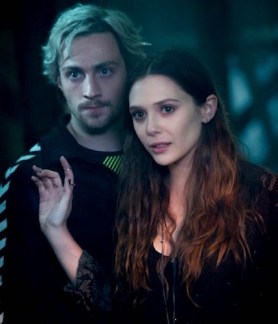 The really daft thing is, Whedon specifically added Scarlet Witch and Quicksilver… wait, are Marvel allowed to call them that? I forget. Anyway, Whedon added the Maximoff twins because, as he said himself, “their powers are very visually interesting. One of the problems I had on the first one was everybody basically had punchy powers.” I know Hawkeye’s power is more shoot-y than punchy, and we all know
  At the end of the day, what does it matter? Age of Ultron isn’t so remarkably good — nor did it go down so remarkably poorly — that it deserves a reevaluation someday. It just is what it is: an overstuffed superhero epic, which has too much to do to be able to compete with its comparatively-simple contributing films on quality grounds, but is entertaining enough as fast-food cinema. Blockbusterdom certainly has worse experiences to offer.
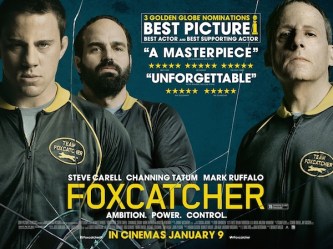 The director of
 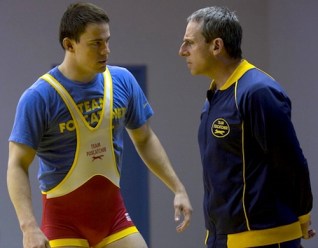 Fortunately, it has three leads who are up to carrying a narrative of that nature. In a rare dramatic role, and lumbered with a hefty prosthetic noise, Carrell’s John Du Pont almost feels like a caricature rather than a plausible human being… but apparently the film has actually toned down how odd the man was, so what are you gonna do? It’s a memorable performance none the less. Tatum is an understated lead, demonstrating he’s a better actor than you might expect as he displays emotional complexities in a man who doesn’t seem especially emotionally complex. Showing a character struggling with feelings he probably doesn’t quite understand is quite a feat, especially when it’s not explicitly conveyed in dialogue, so applause for Tatum there. Ruffalo, meanwhile, provides typically strong support, embodying a wrestler — right down to a very specific, unusual way of carrying himself — from the guy who plays Bruce Banner rather than the Hulk.
 making one wonder if anything the film may suggest is consequently wide of the mark.
 Louis Leterrier, helmer of the
 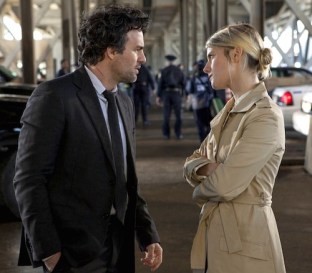 Their criticisms aren’t wholly unfounded: the characters are thin; at times it’s unclear which side we’re meant to be following or most invested in; the use of CGI in the magic somewhat undermines it; a good deal of the plot stretches credibility. Conversely, the credibility is questionable from very early on, so the counterargument goes that it’s the whole MO of the film — you don’t complain about Iron Man not being possible in real life, do you?
 Such a style certainly fits the magic world. I guess it’s just not to everyone’s taste.
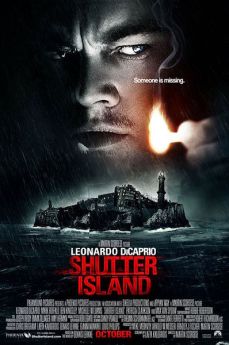 Adapted from a novel by Dennis Lehane (whose work also inspired
 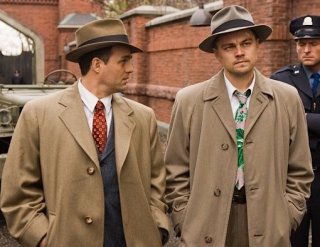 Besides, the film has other delights beyond being an elaborate guessing game. One of the things Lehane set out to do in his novel was write “a gothic”, and Scorsese and co have taken that ball and run with it. It’s overflowing with a fantastic atmosphere: unsettling, creepy, chilling, horror-movie scary when needed (some sequences are properly hair-raising); truly gothic-feeling. Every aspect of filmmaking — the direction, the photography, the editing, the sets and locations, the music — work in harmony to create a coherent mood.
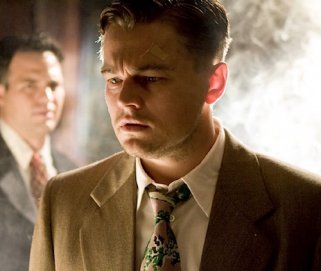 And then, after Scorsese and co have done their best to shred your nerves, in the final half-hour the pathos is immense. Quite without realising it had brought me to that point, I had a tear in my eye. This is in part thanks to some great performances, though you do need to reach the twist to fully appreciate them. Everyone reveals more levels once you know it, and indeed it’s clear a great amount of effort went into ensuring re-watchability — that if you view it again knowing the answers, you can spot things; not clues, per se, but elements in the performance, the design, the staging, that tie in to the reveal.
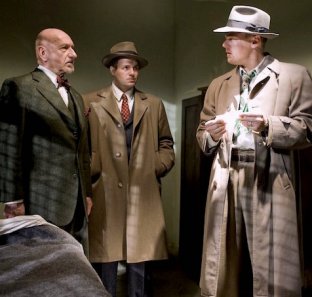 I think the more you let Shutter Island percolate after it’s over, the better it becomes. Solving the mystery and guessing at the twists occupies so much of your time on a first viewing that you almost miss the details in the characters and the world, but they build up nonetheless. There’s layers and depth here, and a plausibly realistic depiction (even according to an expert) of something that’s incredibly hard to depict in fiction. You can view Shutter Island as just an atmospheric gothic mystery chiller, and as that it’s a quality piece of work, but it’s the extra depth that mark it out as, actually, a great movie.
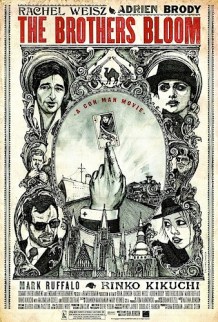 “Crikey, time flies!” I thought when I compiled this listing and saw that The Brothers Bloom was released in 2008. Somehow it felt like it was only last year, not three (or, if at the start of 2008, closer to four) years ago.
 but then the job of a trailer is to sell you a film, so if the end result doesn’t match it 100% is that a failing? How are you meant to summarise the entire tone of a film in a two-minute spoiler-free sales burst anyway? That dilemma is emphasised in this case because it’s the opening that feels least like the trailer. I mean, the pre-titles is kinda quirky-fun, but then it gets a little serious and slow, and later — perhaps half-an-hour or three-quarters of an hour in — you get to all the stuff the trailer was selling. And then the last act is back to something more unusually — or, if we’re to be unkind, unevenly — paced and toned. I can imagine the marketing meetings for this were a struggle…
 Perhaps the problem for others was that the ending doesn’t quite spell everything out. I’m certain every question you might have is answered, more or less, but it doesn’t lead you by the hand back over the film pointing everything out, as many twist-ending-ed films do. Part of me appreciates this assumption of intelligence; part of me would like it all handily explained so I don’t sit here wondering it for myself. I don’t feel completely lump-headed not wanting to do that — there’s no Deeper Meaning or Philosophical Insight gained from sorting this out, I don’t believe; just an understanding of who was being conned and when, and who knew what and why.
 How time flies — I’ve been meaning to re-watch Zodiac ever since I
  As the changes have little impact on the film’s fundamental quality, the points in
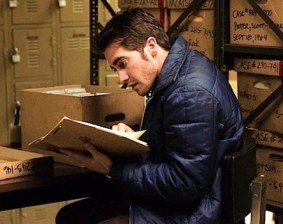
 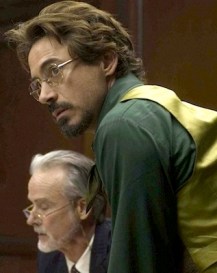 but the sheer weight of evidence the other way seems to leave little room for doubt. More so, then, is that the murders are done with before the halfway mark. That’s because it’s still following the story of the investigation, true, but a lesser filmmaker could have weighted it differently, rushing through Graysmith’s later enquiries in a speedy third act. Instead, Fincher’s focus throughout is on the people looking into the crime, and it’s as much the tale of their obsession — and what it takes to break their obsession, be it weariness or pushing through ’til the final answer — as it is the tale of a serial killer.
 and place-and-time subtitles too, but hey, sometimes you need specificity.
 Context time: I’m a David Fincher fan.
  100Films.co.uk