
Adam Randall | 90 mins | streaming (HD) | 2.35:1 | UK / English | 15
When it comes to TV, Netflix are dominating the cultural landscape with much-discussed original series like Stranger Things, Making a Murderer, Orange is the New Black, the Gilmore Girls revival, their cadre of Marvel shows… I could go on. But when it comes to their original movies — the eponymous “flix” — well, it’s a bit different. Their Crouching Tiger Hidden Dragon sequel went down like a lead balloon; Beasts of No Nation was well reviewed but couldn’t translate that into the awards buzz that was clearly hoped for; and their Adam Sandler movies… well, those are apparently very popular with viewers, at least.
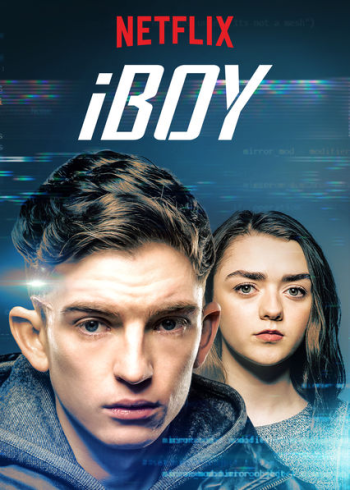
Their latest effort, iBoy, is based on a young adult novel about a teenager who fights against bad people — so that’s pretty zeitgeisty at least. It’s not set in a dystopian future, though, but why bother when our own days are so bleak? So iBoy sets its stall in present-day London, where Tom (Bill “the sweet one from Son of Rambow” Milner, looking completely different) is just a normal teen — going to school by day, blocking out the sounds of violence around his tower block by night. When the girl he fancies (Maisie Williams) invites him round to study one evening, he turns up at her flat to find her being, to not put too fine a point on it, gang raped. He runs, trying to phone the police, but the gang give chase and shoot him in the head. When he wakes up, parts of his phone have been inoperably embedded in his brain, which he soon comes to realise has given him the ability to interact with technology using his mind.

So, yeah — scientifically, it’s a thoroughly dubious premise. But is it any worse than having abilities bestowed by a radioactive spider-bite or spilled toxic goo? In respect to Tom’s newfound powers and how he chooses to use them — as a vigilante seeking revenge on the gang that have been terrorising his estate — iBoy is more in line with superhero narratives than other young adult adaptations. Where it comes unstuck is the tone. How many superhero films are going to feature gang rape? Well, somewhat appropriately, I guess the Netflix ones might. But the disjunct between iBoy’s daft premise and the grim world of inner city gangs (there are more acts of shocking violence) is a difficult one to negotiate.
To its credit, iBoy doesn’t use the assault as a starting incident and then discard its aftereffects — the presence of Maisie Williams, who’s been quite outspoken about the treatment of female characters in media, should give an indication that it’s not so thoughtless. But nor does a 90-minute movie that’s fundamentally about a superpowered vigilante have much time to dig into it properly. Nonetheless, Williams essays the role with some subtlety, aided by a screenplay that keeps things appropriately unverbalised. Perhaps the most effective part is when, home alone, she has to venture outside for some milk.

Unfortunately, the screenplay doesn’t pay the same amount of attention to the hows-and-whys of its hero and his abilities. Apparently hacking someone else’s phone involves watching a progress bar; he can learn how to fight while watching a couple of YouTube videos during the ten seconds he’s walking towards an assailant; and so on. A little more effort would’ve sold the premise more and could’ve removed these niggles (at least have him download a phone-hacking app or something; maybe the YouTube videos could be downloaded into his brain, but his unpracticed muscles struggle to perform the moves). Problem is, the notion of phone fragments getting stuck in your brain and giving you superpowers is pretty silly, so even if you provide better internal consistency, it’s still a struggle to parse that implausibility being mashed up against the ultra-real-world stylings of the rest of the story. Films like Super and Kick-Ass do the “real-life superhero” thing by making their hero a bit inept. Maybe iBoy isn’t shooting for “real-life superhero”, but then why are the threats he faces so serious?
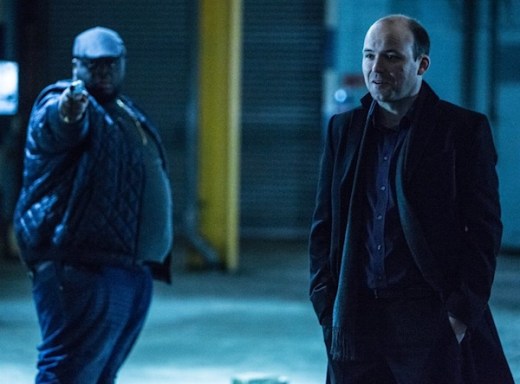
Talking of the threats, Rory Kinnear turns up near the end as the Big Bad, and lifts the film considerably. I suppose there’s not a whole lot of originality in a politely-spoken but actually horrendous villain, but Kinnear sells the part effortlessly. You kind of want to see that character (or at least that performance) turn up in something bigger and better. Elsewhere, Miranda Richardson brings some much-needed lightness as Tom’s grandma, who serves as an Aunt May figure. If nothing else, you can rely on British productions to have quality acting, eh?
For all this criticism, on the whole I didn’t dislike iBoy while it played out, it just doesn’t stand up to scrutiny. As Netflix’s first genuine original movie from the UK, it’s a shame it can’t demonstrate to the rest of the Netflix-viewing world what British film could be capable of if encouraged, but maybe that would be too big a weight to put on its little shoulders anyhow.

iBoy is available on Netflix everywhere (I presume).
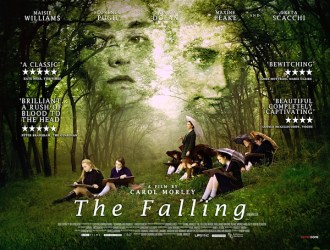 Inspired by real events, The Falling stars
  Writer-director Carol Morley has kept the pace and tone slow, in an enchanting rather than ponderous fashion, but it’s a “not for everyone” pace nonetheless. For me, it only really lost its way as it moved into its final stages. Without wanting to spoil where it goes, in my opinion too much was explained, but at the same time it explained nothing.
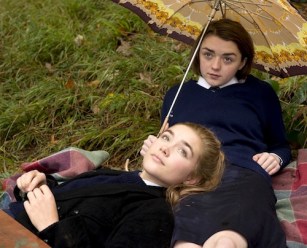 An element I do think was at the forefront of consideration is sensuality and sexuality, which plays a large and significant part in the film. Pretty much any movie bar “bawdy high school comedies starring obvious twentysomethings” seems to veer away from schoolgirl sexuality these days, wary of inevitable “OMG u a pedo” reactions, I guess. Sexuality does not equal pornography, though; and, as I alluded, here it’s played out as much through a heightened, tactile sensuality. It does probably ‘help’ that it’s a film written and directed by a woman — it would carry a very different, more Lolita-ish air if it had been written or directed by a man. What exactly it’s saying with all this is arguably as mysterious as the cause of the fainting epidemic, but then it’s all tied together: teenage years are a period of sexual awakening, of course, and if you’re in an environment where nearly everyone is of the same gender, and where such things are massively repressed… well, how is it going to manifest itself? If “sex” is somehow the cause of the fainting, it’s not because sex is bad, it’s because there’s no other appropriate outlet for it.
 Best of the lot, however, is Florence Pugh. Reportedly discovered when The Falling’s casting directors visited her school, you can see why she’s quickly been snapped up for a leading role. I wouldn’t be surprised if Hollywood come knocking looking to make her the next Kate Winslet/Keira Knightley/Gemma Arterton/etc “English rose”-type lead in some blockbuster or other.
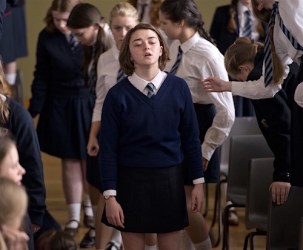 For me, it’s the kind of film that, with time and subconscious reflection, I may come to remember more fondly and be keen to see again, or all but forget. It’s the kind of film I could, without even re-watching it, re-evaluate and want on my year-end top ten, or could see on my top ten contenders long-list come January 1st and wonder, “dear God, what was I thinking?!” It’s the kind of film I’m not sure I wholly liked, but I’m glad I’ve seen.
 100Films.co.uk