
Box office-related chatter this month has mainly been asking, is the superhero boom over? With last month‘s Ant-Man 3 doing weaker business than expected, and now Shazam! Fury of the Gods underperforming, has given people cause to wonder if the near-monopoly the genre has exerted over the box office might finally be crumbling. I don’t wish for superhero movies to die off completely, but a little less dominance would be nice.
In their place, other films have flourished: Rocky spin-off sequel Creed III; horror franchise revival sequel Scream VI; fantasy reboot Dungeons & Dragons: Honour Among Thieves; and, of course, the latest instalment in the popular gun-fu action series, John Wick: Chapter 4. The fact those are all still sequels or IP continuations might make some feel we’re just jumping out of the superhero frying pan into a different kind of IP fire, but at least there’s some variety of tone and style and content there.
Also reaching UK cinemas this month was the pulpy-looking Adam Drive vs dinosaurs adventure 65; a pair of Mia Goth-starring horrors, Pearl and Infinity Pool; a delayed bow for Warner Bros animation Mummies, a film I’ve heard so little chat about that I keep looking it up to check it’s real; and a bit of copyright exploitation (set to become a theme/genre unto itself over the next few years — it’s gonna need a catchy name, a la blaxploitation and sexploitation) in Winnie the Pooh: Blood and Honey. Funny concept, maybe, but I heard it was not good.
Meanwhile, Marlowe — the new film by director Neil Jordan, starring Liam Neeson and a fairly name-y supporting cast (Diane Kruger, Jessica Lange, Alan Cumming, Danny Huston, etc), adapting a story about Raymond Chandler’s famed detective — went straight to streaming as a Sky Original. Oh dear. I’ve heard it’s as weak as that situation suggests. Still goes on my watchlist, though. Netflix’s headline premiere of the month was a revival of another popular detective, albeit a more recent creation, in TV series continuation Luther: The Fallen Sun. They actually put it into cinemas last month, presumably in an attempt to head off greater-than-usual accusations of it just being a TV movie (I mean, a new instalment of a TV series being released in such a way that you can only watch it on your TV? Of course it would’ve been fair to call that “a TV movie”.) They had another animation that seems to have flown under the radar, The Magician’s Elephant. Maybe it’s just me, but a lot of Netflix’s original animations seem to pass me by, only to then turn up with an Oscar nomination or something (cf. The Mitchells and the Machines, The Sea Beast, and others), so maybe it’ll enter my sphere of awareness again at a later date. Finally, Apple TV+ just debuted Tetris, about the creation of the eponymous video game. Maybe they couldn’t make a Pixels-style adaptation work.
I didn’t see tell of any brand-new originals on Amazon Prime, but they did add Palme d’Or winner and Oscar nominee Triangle of Sadness; and, from the less auspicious end of the spectrum, belated threequel Clerks III. Disney+ did their usual thing of rushing everything to streaming lickety-split, this time with Sam Mendes’s Empire of Light; although MUBI also pull a similar trick nowadays (though it feels more understandable with their smaller-scale, indie-type releases), this month with Iranian serial killer thriller Holy Spider. Meanwhile, Netflix seemed to get plenty of eyeballs onto their debut of extreme climbing-related thriller Fall, as well as sci-fi-horror sequel A Quiet Place Part II. That moved over to them from Sky Cinema, which still seems to be home to the most subscription streaming debuts. This month they included The Black Phone, Bodies Bodies Bodies, Elvis, Minions: The Rise of Gru, Where the Crawdads Sing, and the film that generated a tonne of awards season chatter thanks to the campaign for Andrea Riseborough, To Leslie.
As ever, I could go on and on about deeper catalogue titles across all the aforementioned services — plus titles on BBC iPlayer and All 4; and ITVX has quite the film section, though it’s hard to browse for new additions — but then we’d be here forever. Instead, let’s move right along to all the stuff I bought on disc this past month.
Perhaps the most noteworthy new release this month was Second Sight’s long-awaited 4K release of George A. Romero’s Martin. I do actually own the Arrow DVD from many moons ago and, in typical fashion, have never got round to watching it, so I wasn’t quite as itching for the very chance to see the film, as some have been; but it’s always nice to have something in tip-top quality. It also means I now own the vast majority of Romero’s filmography on Blu-ray or 4K (the only one I’m missing is Bruiser, which has only had an HD release in Germany and France). I ought to get on with watching them, really… Also coming to 4K this month, another relatively-minor feature from an acclaimed horror director, Red Eye. I previously owned it on DVD, which I only bought, cheap, a whole decade ago, because a Blu-ray wasn’t forthcoming and I wanted to rewatch it. That disc never entered a player. So, that rewatch is long overdue, and hopefully the 4K disc will be spun soon. In a similar situation of continual neglect is The City of Lost Children, released on 4K tomorrow (my copy trend up early). I’ve previously owned it on DVD and Blu-ray, but never seen it. Yeah, I’m a fool for this kind of thing. Anyway, another one that goes on my “really should watch this very soon” pile.
Other upgrades this month included 88 Films’ 4K reissue of Jackie Chan / Sammo Hung / Yuen Biao actioner Dragons Forever (it’s been out a while, but I’ve been waiting to snag it on an offer as, again, I hadn’t actually watch my Blu-ray copy); their newly-restored reissue of Chan’s Snake & Crane Arts of Shaolin; and Criterion’s Infernal Affairs Trilogy set (again, benefitting from waiting for an offer price). As if that wasn’t enough action from Hong Kong, I also picked up Eureka’s new releases of In the Line of Duty III and IV (following on from the series’ first two films, Yes, Madam and Royal Warriors, in December and January respectively); and another Jackie Chan title from 88 Films, Gorgeous. It felt to me like these classic HK/Chinese actioners were hard to come by in the UK in recent years (the Hong Kong Legends label used to do sterling work, of course, but that’s been defunct for some time), but we’re definitely spoilt now, with multiple labels regularly releasing high-quality editions. I’m doing a pathetic job of getting round to watching them (ain’t that true of everything?), but I continue to lap them up to sit on my shelf.
Similarly, almost anything put out by Indicator finds its way onto my shelves, and this was true again this month with their bundle of moderately obscure titles from the 1930s (and one from the ’40s). Those included Ernst Lubitsch’s Broken Lullaby and Bluebeard’s Eighth Wife (I enjoyed the box set of his silent work that Eureka put out many years ago, so I’ve always been interested in seeing more of his Hollywood productions, with the famed ‘Lubitsch touch’); James Whale’s The Kiss Before the Mirror; and Frank Capra’s State of the Union.
The rest of my purchases this month were similarly based on reputation alone, usually of the filmmaker rather than the film itself, although all slightly older releases I’d waited for discounts on. Therein are the likes of Henri-Georges Clouzot’s La Prisonnière; Criterion’s releases of Jim Jarmusch’s “acid western” Dead Man and Kasi Lemmons’s Southern Gothic drama Eve’s Bayou; and, finally, Rainer Werner Fassbinder’s Berlin Alexanderplatz — technically a 14-episode miniseries, but there were at least some theatrical screenings of the entire 15-hour piece, so it’s not wholly egregious to mention it here. Though considering I struggle to find the time for those 90-minute-ish comedy-actioners, when I’m going to get round to a 15-hour series about “misery, lack of opportunities, crime and the imminent ascendency of Nazism” in Weimar Germany, I don’t know.

 Previously on Twenny-Four… There may be no Jack Bauer, the new font for the clock may be bizarrely wrong, and the on-screen text may have abandoned the familiar golden yellow for a soft blue, but everything else about Legacy is same old, same old. If you remember it from
 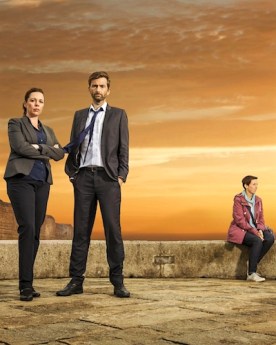 DI David Tennant and DS Olivia Colman (or whatever their characters are called) return after the much-criticised second series for a third run that represents a blazing return to form. Nearly every police drama on TV is always about murder, but here our committed coppers are faced with something that seems harder to prove, and all the more distressing and divisive for those involved: a sexual assault. The series was apparently put together with extensive advice from expert organisations, which means on occasion it almost tips a little too far into factual territory, like a “this is how it’s done in real life” dramatisation. Fortunately screenwriter Chris Chibnall is better than that, quickly focusing on how it affects the characters, and on building the mysteries that will fuel eight whole episodes. Suspicion abounds, but if Broadchurch’s first series proved anything it was that everyone can guess the culprit before the end without it undermining the effectiveness of the drama. I think we’re a ways from that point yet, though…
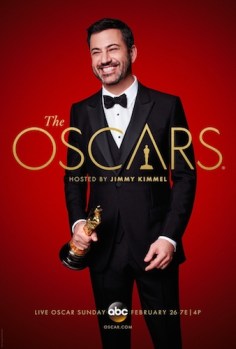 Best. Oscars. Ever! Oh, I bet it was horrendous actually being there having to deal with that ending, but my goodness, as a viewer it was fantastic. It couldn’t’ve been more dramatic if you’d scripted it. Imagine how terrible it could have been, though — if Moonlight had been forced to cede the win to La La Land, for instance (that would’ve sent #OscarSoWhite into overdrive), or if it had been in a category with a sole winner, who in the middle of their no-doubt-tearful acceptance speech was informed they hadn’t won after all and had to embarrassedly hand the statuette over to someone else… But no, it turned out OK. Well, not so for the La La Land guys, but for everyone else, yeah. And the rest of the ceremony wasn’t half bad either. Jimmy Kimmel was the most confident and capable host for bloody ages (and I say that as someone who enjoyed the likes of Neil Patrick Harris and Hugh Jackman) — if the show’s producers know what’s good for them, he’ll be the new regular host.
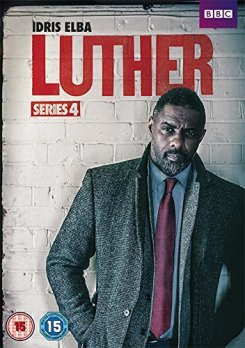 The recent news that Fox have scrapped plans for a US remake of Luther (because they couldn’t find a lead actor good enough to replace Idris Elba) reminded me that I never got round to watching the original version’s last series, this two-parter that aired back in December 2015. I can see why feeling unable to cast anyone as engaging as Elba would lead them to abandon their remake, because there’s not all that much special about Luther outside of its lead. Some people talk about it as if it’s among the forefront of the Quality TV era that we’re currently blessed with, but that’s just a bit daft — much like the programme itself. It doesn’t know it’s daft — it’s all very serious — but it is daft, really. Sure it’s dark, and sometimes kinda scary, and certainly grim, but its realism quotient is way low. It has much more in common with the overblown heightened world of, say,
 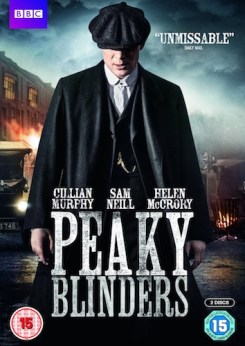 I’ve been meaning to get round to this since it first aired back in 2013, and for whatever reason now was the time (partly it was brought to mind by writer Steven Knight’s new dark period drama,
 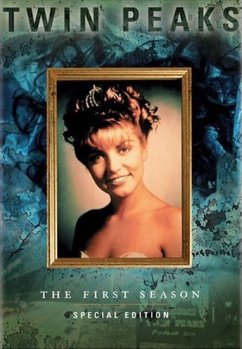 “She’s dead… wrapped in plastic!” With those immortal words (not the first lines, but never mind) a TV phenomenon was born, and a whole new era of television slowly began.
  This month, I have mostly been missing the penultimate season of The Americans, which is two episodes in Stateside (no idea if there’s still a UK broadcaster; at this point I’m not sure it matters). Long-time readers may recall I like to save up The Americans and watch it binge-ish-ly once the season ends, which is a very rewarding way to watch such an intricately-constructed programme. The downside is that means I’m still a couple of months away from getting to find out what happens this year in “
 100Films.co.uk