
Rian Johnson | 152 mins | cinema | 2.39:1 | USA / English | 12A / PG-13
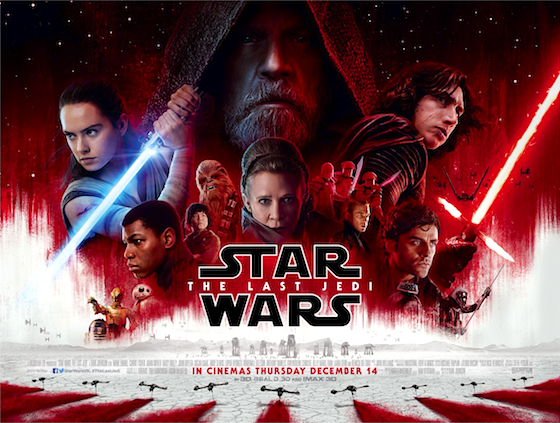
I’ve felt a great disturbance in the Force, as if a small but vocal group of fanboys suddenly cried out in terror and were unfortunately not silenced because on the internet such complaining goes on forever.
Yes, something terrible has happened: a new Star Wars movie has come out and, rather than go the Force Awakens route of appealing to nostalgia and familiarity, it’s attempted to boldly go where no Star Wars movie has gone before. Well, it’s maybe not quite that innovative, but writer and director Rian Johnson has given us an Episode VIII that eschews rehashing former glories for an attempt to push the franchise forward in interesting new ways. It’s not an unmitigated success, but it is considerably more than just “a good effort”.
Picking up exactly where Episode VII left off, The Last Jedi opens with the Resistance fleeing as the First Order strike back. With those villains in pursuit, intent on wiping out the Resistance once and for all, hot-headed pilot Poe Dameron (Oscar Isaac) and former Stormtrooper Finn (John Boyega) hatch a plot to cripple the First Order’s flagship. Meanwhile, on the other side of the galaxy, Force-adept orphan Rey (Daisy Ridley) tries to persuade hermit Luke Skywalker (Mark Hamill), the only remaining Jedi Master, to rejoin the fight.
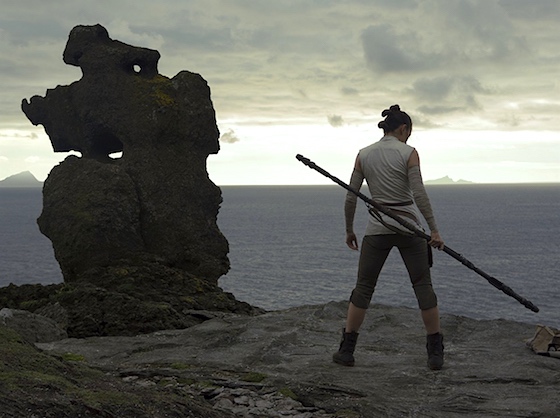
Two years ago, The Force Awakens set a new trilogy in motion by not only introducing us to a selection of new characters and their conflicts, but also by posing a bunch of questions and establishing a pile of mysteries. The Last Jedi has the task of either perpetuating these — essentially, putting them on hold to be answered in 2019’s finale, Episode IX — or actually (gasp!) resolving some of them. No spoilers (I imagine if you care then you’ve seen the film by now, but just in case…), but Johnson has indeed decided to furnish us with some answers, and it’s generally this that has riled up certain parts of the internet.
Frankly, it’s not a debate I want to wade into, in part because I generally think the complaints are misplaced — many of them stem from fans having expected certain things, then not got those things. They say that’s not it; that Johnson’s writing of characters and ability to tell a story is fundamentally flawed… but they’re wrong. Johnson’s answers are fine — in fact, in many cases they’re exactly the kind of thing I’d hoped for (yep, some of us did get what we wanted!) — they’re just not the kind of answers some people expected. And I think that’s a good thing. This way is more surprising. But also, it’s not surprising for surprise’s sake — it fits the story being told. Minor spoilers here for the film’s themes, which are failure and what it takes to be a hero. (That’s two of them, anyway. I’m sure there are more.) The former, as we are told, is important — you learn more from failure than from success, as they say. The latter is, at least in part, explored in terms of who gets to be a hero, and why. Both of these lead to answers that have made some people deeply unhappy, usually for the wrong reasons — as I say, an awful lot of people are blaming Johnson’s abilities as a filmmaker, when really they just don’t like the perfectly-well-built story they’ve been given.
Anyway, that’s enough harping on about other people’s issues. I do think the film had some flaws, primarily in the pacing department. I think where it goes wrong is how it emphasises the events on Ahch-To (Luke’s island) and Canto Bight (the casino planet). I get the impression the latter has been built up to give us somewhere to cut away to during the former, but it means what is a subplot aside gets too much screen time. We expect a three-act structure, and it makes that whole section feel like Act Two of Three, but it isn’t. I can imagine this plays better on a rewatch, so I’m reserving judgement slightly.
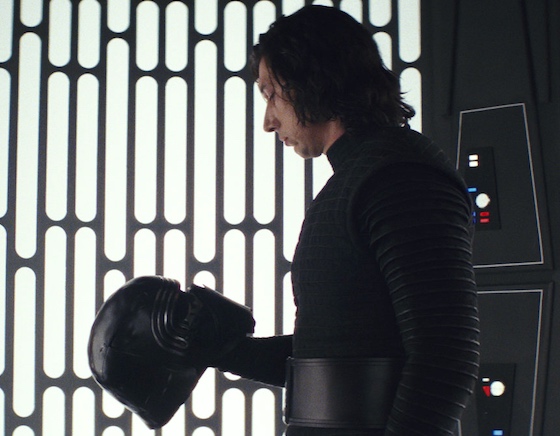
That aside, though, The Last Jedi has much to please. Every major player is granted a noteworthy arc, developing as people throughout the movie. The pay-offs to all that are particularly satisfying. Obviously I can’t talk about that without spoiling it, but everything that occurs in the throne room after it becomes clear this isn’t your typical Star Wars throne room scene is among my favourite stuff in the whole saga. And you’d have to go some way to beat the long-awaited reunion between a couple of characters, in a perfectly-written and emotionally loaded scene. This definitely contains some of the best acting in any Star Wars movie — Carrie Fisher gives one of the best performances of her career; Mark Hamill makes you wonder why his never took off like, say, Harrison Ford’s did; and the young guns get their moments too, particularly Daisy Ridley and Adam Driver, with a shoutout for the always wonderful Domhnall Gleeson.

Away from the dramatic conflicts, it also satisfies as an action movie, with some of the saga’s most incredible sequences. At times it feels like we’re watching an actual war, rather than the odd skirmish that pops up in previous films. The smaller level combat is impressive too. This is certainly not a film just about its action set pieces, but they don’t disappoint. All around this may well be the best-directed Star Wars movie, with its shot choices, editing, and some bold and original ways of staging things that give us examples of pure filmmaking never before seen in this series. Part of that is the beautiful cinematography by Johnson’s regular DP, Steve Yedlin. There’s been striking photography in previous Star Wars movies, but none so consistently as this. One bit in the second half provoked actual gasps and “wow”s from my audience — and we’re British, we don’t make noise during films.
Except laughter. People laughed, too. This is a funny film. Too funny, in some people’s estimations. Maybe they forget that Star Wars has always been amusing (on IMDb the highest-rated quote from A New Hope is Han’s chat over the intercom when they’re breaking Leia out, which is basically a comedy skit). I had mixed feelings about one extended bit at the beginning (it’s funny, but does it fit in Star Wars?), but mostly I thought the level of humour was about right. That reminds me of the most ridiculous single criticism I’ve read of the film, though: some people have claimed the film has a “vegan agenda” due to one comedy bit. I kid you not. Elsewhere, the humour is used to succinctly undercut some of the series’ pomposity, which ties back round to Johnson’s pleasantly irreverent aims that I was alluding to earlier.
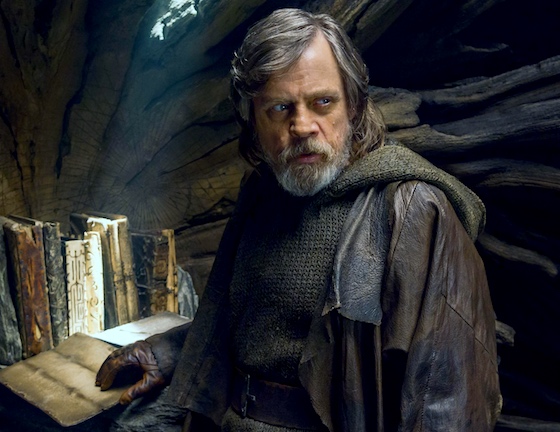
One of the key lines from The Last Jedi’s trailer (and it’s also very important in the film, of course) comes from Luke: “This is not going to go the way you think.” That’s quite clearly the case between the film and its audience, too. Some of us have revelled in that; others despised it. Others still find themselves in between, stuck being drawn back and forth to two complex and opposing emotional states. Being uncertain of your feelings between the Light and the Dark — seems only appropriate for this franchise, doesn’t it?
The Last Jedi doesn’t play to the populist cheap seats in the way The Force Awakens did, which makes it a less congenial movie, but perhaps a better one. It doesn’t effortlessly entertain with nostalgic Star Wars-ness as Episode VII does, but instead takes all that familiar iconography and prods at it to push it in new directions. Like another big sci-fi sequel this year, Blade Runner 2049, it’s a film whose true appreciation may only occur over time. I didn’t like everything about it, but the stuff I liked, I loved.

Star Wars: The Last Jedi is in cinemas everywhere now. I imagine you’ve already seen it.
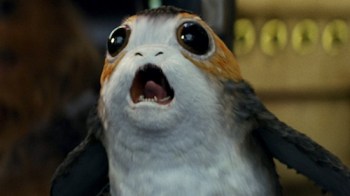
P.S. I loved the Porgs.
 2016 Academy Awards
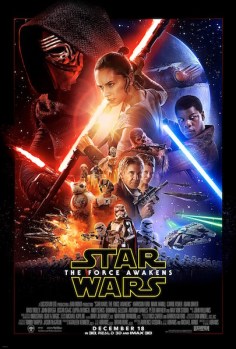 Star Wars: The Force Awakens is not the best film of 2015. Not according to the Academy of Motion Picture Arts and Sciences, anyway, who didn’t see fit to nominate it for Best Picture at tomorrow’s Oscars. Many fans disagree, some vociferously, but was it really a surprise? The Force Awakens is a blockbuster entertainment of the kind the Academy rarely recognise. Okay, sci-fi actioner
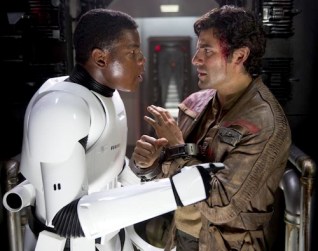
  I too could talk about the likeable new heroes; the triumphant return of old favourites; the underuse of other old favourites; Daisy Ridley’s performance; John Boyega’s performance; the relationship between Rey and Finn; the relationship between Finn and Poe; the success of Kylo Ren and General Hux as villains (well, I thought they were good); the terrible CGI of Supreme Leader Snoke; the ridiculous overreaction to the alleged underuse of Captain Phasma; that awesome fight between the stormtrooper with that lightning stick thing and Finn with the lightsaber; the mystery of Rey’s parentage; the mystery of who Max von Sydow was meant to be (and if we’ll ever find out); some elaborate theory about why Ben wasn’t called Jacen (there must be one — elaborate theories that will never be canon are what fandoms are good for); the way it accurately emulates the classic trilogy’s tone; the way it’s basically a remake of
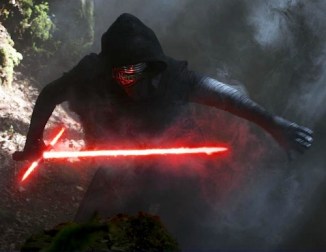 J.J. Abrams seems to have tricked some people into thinking he’s a great director with The Force Awakens (rather than just a helmer of workmanlike adequacy (when he’s not indulging his lens flare obsession, at which point he’s not workmanlike but is inadequate)), and I think that’s partly because it’s quite classically made. Yeah, it’s in 3D, but the style of shots used and — of most relevance right now — the pace of the editing help it feel in line with the previous Star Wars movies. Some of the more outrageous shots (often during action sequences) stand out precisely because they’re outside this norm. Perhaps we take for granted that Abrams delivered a movie in keeping with the rest of the series, because that’s The Right Thing To Do, but that doesn’t mean he had to do it. And the transitional wipes are there too, of course.
 No one knows what the difference is between these two categories. I’m not even sure that people who work in the industry know. As a layperson, it’s also the kind of thing you tend to only notice when it’s been done badly. The Force Awakens’ sound was not bad. It all sounded suitably Star Wars-y, as far as I could tell. That’s about all I could say for it. It feels like these are categories that get won either, a) on a sweep, or b) on a whim, so who knows who’ll take them on the night?
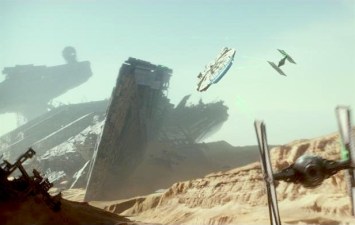 “restraint […] applying the basic filmmaking lessons of the first trilogy,” according to
 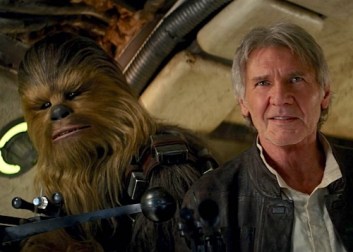 those elements aren’t gone about in an awards-grabbing fashion anyway. In the name of blockbuster entertainment, however, they’re all highly accomplished.
 100Films.co.uk