
In this month’s TV review: wah gwaan in Luke Cage season two, and “what’s going on?!” in Westworld’s finale.

Luke Cage Season 2
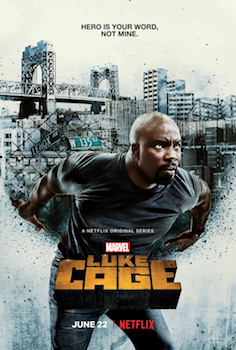 The ninth season of the MCU on Netflix takes us back to Harlem for the continuing adventures of the eponymous bulletproof black man. It’s hard to imagine a more timely superhero for America (maybe if he was an immigrant too), not that the series’ is actually all that concerned with such issues, aside from passing nods and references. Instead, it’s more of a gangster crime drama: the still-standing season one villains, underworld power couple Mariah and Shades, intend to go legit by selling their illegal gun business, using the profits to invest in social projects for Mariah’s beloved Harlem. Standing in their way is Bushmaster, a superpowered patois-speaking Jamaican gang leader, who has a long-held grudge against Mariah’s family — and he’s come for retribution.
This focus on the conflicts between the villains has led some critics to reckon that Luke Cage has been sidelined in his own show. That’s true to an extent: because we’re privy to Mariah, Shades, and Bushmaster cooking up and executing their separate schemes, Luke is left to kind of wander around, trying to figure out stuff we already know. At the very least, the series is as interested in its villains as in its heroes — I reckon if you totted it up, Luke and Marian’s screentime would be pretty comparable. On the bright side, this is a very character-driven season — it’s as concerned with who these people are and how they’re changed by events, rather than just the mechanics of the plot — and Luke is certainly no exception. For one, his estranged father is in town — a superbly nuanced turn from the late Reg E. Carney (who the season is dedicated to, appropriately), which lends a different perspective again.
Plus, picking up and running with a theme from the first season, Luke is now famous as “Harlem’s hero”, but this is going to his head a bit, negatively affecting his relationship with Claire. The series does a good job of reflecting the celebrity status of superheroes, something the other Marvel films and series haven’t really touched on. If these events were even vaguely real, there’s no way Luke Cage could hang out in Harlem without being noticed. So now there’s an app to track his whereabouts, merchandise, sponsorship offers, his actions make headlines, and wealthy fans are willing to pay for him to make personal appearances. Luke espouses an ambivalent relationship to all this: he’d rather it wasn’t happening, but it does have its uses — and those prove seductive.
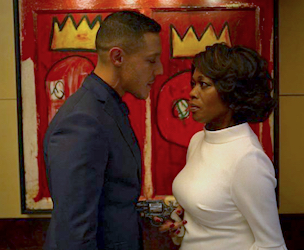 Mike Colter remains a likeable lead, but, again, it’s a villain who steals the show: as Mariah, the brilliant Alfre Woodard is perhaps the best thing about the whole series. Her performance is consistently fantastic, selling every twist and turn of character the writers throw at her. The season is as much about what events do to her as it is about Luke. She isn’t entirely alone, though: there are plenty of great performances, and scenes to showcase them, throughout the season. Occasionally there are some really bloody terrible ones though, like the time detective Misty Knight and her captain argue loudly about a shared secret while they’re in a room full of other cops. Is that bad writing, bad acting, bad direction, or all of the above?
And sometimes the good stuff is spread a bit thin. There are points, especially midseason, where it feels so goddamn slow. Or maybe not slow, but long. Episodes seem to just keep going. One is called On and On, like some kind of joke at our expense. This is the case with so many of these streaming shows, though — most of them need more plot and/or tighter storytelling. I guess part of the problem is the 13-episode diktat, which presumably the showrunners have no say over. It’d be better if they could make the season the length it needed to be, rather than spin wheels to make it last as long as it has to. That said, most Luke Cage episodes use the full hour “time slot”, and a couple run over it, so if maybe they’ve kind of reclaimed the padding…
Talking of other shows, the last time we saw Luke Cage in Luke Cage he was headed off to jail, but he starts this season free as a bird. Oh, and another major character is missing an arm. MCU fans will know that, since the last season, The Defenders happened, in which we saw these major changes to these characters’ status quo. There are vague nods at explaining some of that for anyone who skipped the team-up miniseries, but, really, it assumes you’ve watched it; and that ‘issue’ crops up again later in the season, with a couple of guest appearances by characters from Iron Fist. If you’re not interested in any of the other Marvel/Netflix series and don’t want to invest eight hours to find out a couple of linking story points (because The Defenders’ main plot has nothing to do with Luke Cage’s storylines), then maybe you need to read a plot summary on Wikipedia or something.
 The flip side to all that is that this interconnectedness will perhaps be comic book fans’ favourite thing about the show — the way it casually references other series, or suddenly brings their characters in for a guest spot, is just like how comic books operate. It’s pretty constant too: barely an episode goes by without a significant reference to or cameo appearance by someone from another Marvel/Netflix show; and these aren’t all mere Easter eggs, but sometimes quite important or vital pieces of plot or character development.
For all its variability, Luke Cage finds its groove as the season goes on, and the final few episodes feel like an improvement (though I’d still contend they’re longer than they need to be). It all builds to a finale that feels almost low-key — I mean, there’s war on the streets and a lot of minor characters die, but that’s almost incidental, because it’s all about the characters, their relationships to each other, and how those find (or fail to find) closure. No spoilers, but it ends in a really intriguing place for season three. That’s not been officially commissioned yet, but surely it’s inevitable. It’ll be interesting to see where they take things next.
Westworld Season 2 Episodes 8-10
 And so Westworld’s sophomore run rides into the sunset, and I think it’s left behind more questions than answers.
When the show’s first season finally came to expose its secrets, there was a lot of oohing and ahhing — the twists and reveals, whether you’d guessed them or not, retroactively made a lot of sense, and suggested a good deal of cleverness on the part of the writers. Season two’s finale, on the other hand, seems to have been met with a collective “…huh?” Even plenty of people who enjoyed it confess to not understanding everything that was going on, while others have just given up at this point.
Personally, I’m somewhere in between. There’s a lot to like and admire about the closing hours of season two, not least the production values: the show looks fantastic, and the acting is top notch. But I won’t dismiss the argument that the writers have disappeared up their collective arse, because there’s a lot of tricksiness and jiggery-pokery going on here that is sometimes hard to unravel — a stark contrast to the end of season one, I think, which managed to make the games it had been playing clear. Perhaps in their bid to outwit Reddit users, Westworld’s second season seems to have been jumping through hoops merely to be cleverer than its viewers, and I’m not sure that’s paid off.
 Exhibit A is the “Hale was Dolores all along” revelation. It’s a neat twist, almost up to season one levels, were it not undermined by the season’s own structure: Hale hasn’t been Dolores all along, and the muddled timelines make it hard to recall how many scenes we’ve had with “Halelores” (as the writers apparently dubbed her). In fact, one of the ways they hid her in plain sight was to limit her screen time: apparently she only popped up in episodes three and seven. Those scenes are littered with subtle clues to her identity, however, though I guess the Redditors missed them — probably because they couldn’t keep track of which timeline we were in either.
There’s so much else going on here that I don’t even know which bits to pick out. I guess that’s part of the problem: with so many conclusions saved up until the finale and then all stuffed in at once, there’s just too much to digest and process in one almighty hit. One of my long-held suspicions has definitely been confirmed though: despite the plot of the series’ movie inspiration, co-creator Jonathan Nolan isn’t really interested in making a thriller about a robot rebellion at a technologically-advanced theme park, but instead has set out to make Person of Interest 2.0, for good or ill. That’s only going to become more apparent next season, I think, which is set to leave the titular park behind entirely. It’ll be interesting to see how many viewers it takes along with it…
Things to Catch Up On
 This month, I have mostly been missing Preacher’s third season, which started this week. Well, I only watched the first two episodes of season two in the end, so I’m very far behind. There’s also another Marvel TV series, Cloak & Dagger (which is passingly referenced in Luke Cage, apparently). That’s releasing new episodes weekly (on Amazon Prime this side of the pond). So many of these weekly shows I now wait to be complete before I binge them, but then I don’t get round to it (cf. Star Trek: Discovery, Black Lightning, etc). Finally, I happened to spot there had been a French sci-fi series called Missions on BBC Four, just before it disappeared from iPlayer, so now I’ve got all of that downloaded too.
Next month… you know, I have no idea. I know it’s the summer, but there must be something coming up? Maybe I’ll finally take the chance to dig into my massive backlog.
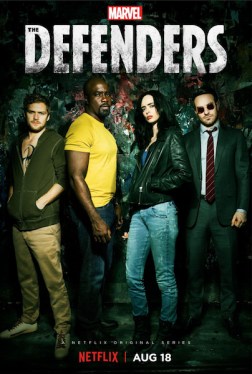 After years of build-up, and a grand total of 65 episodes of lead-in shows (yes, that many, really), we’re finally here: the culmination of Phase One in the Netflix arm of the Marvel Cinematic Universe. Like Phase One of the movie side, said culmination is a big ol’ team-up of every hero we’ve been introduced to so far, working together to stop a threat that’s been building across some of their individual series.
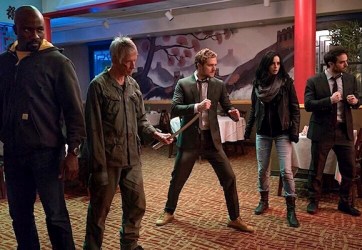 With the team introduced to one another, Royal Dragon is almost a bottle episode — the gang hole up in a Chinese restaurant to hide from the Hand and make a plan. It works neatly to let our heroes settle their differences and agree to actually team up. There’s some fun sparky dialogue in their interactions, too. For my money it’s the best instalment of the series. The downside: having said that episode three is the end of act one, episode four really feels that way, with the team finally united — but we’re halfway through the series.
 Overall, the relative brevity and speed of the story here does make it feel like an event miniseries, more than the sprawling and novelistic styles of the four contributing series. Maybe it’s just because it’s how I chose to watch it, but I reckon it plays better as four feature-length episodes than eight normal-length ones. As this is Netflix and you can watch at your own pace, maybe that doesn’t matter; but if you were watching this weekly, I think it’d be immensely frustrating that it took three whole weeks to get to the actual team-up. In a
  Picking up where
  So ignoring those somewhat facile complaints, we can get back to looking at the end of the episode as pure spectacle. Other people (people not complaining about the timelines) hailed this as the series’ most incredible visual display yet. Well, some people always do that. It was great to see the dragons in action against the army of the dead, the exploding ice indeed looked spectacular, but as a battle it wasn’t equal to what we saw in Hardhome, Battle of the Bastards, or this season’s The Spoils of War. Coming fourth(-ish) to those is still a mean feat.
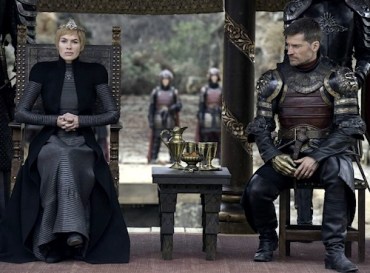 Some people were blown away by the twists and revelations in the finale. I guess it’s the fault of the internet age, but it felt like an awful lot of stuff that had just been a long time coming to me. The Night King using his dragon to melt the wall should probably have been mind-blowing, but it felt like it was just a matter of time (him actually getting a dragon the week before, however, was as effective as it was meant to be). The reveal about Jon Snow? We’ve already had enough breadcrumbs to put it together. It’s not really worth mentioning until Jon hears it for himself. On the other hand, the revelation that Bran doesn’t know everything — he has the option to see anything ever, but he has to go looking for specifics — is potentially important. How? Well, we’ll see.
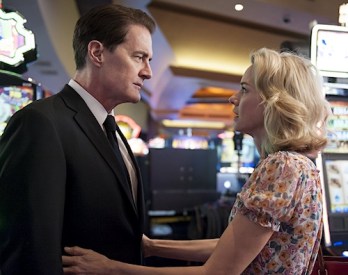 As we reach the penultimate week of the Twin Peaks revival, the one-armed man speaks for us all: “You are awake… Finally.”
 While signed up to Netflix for The Defenders, I also started watching this Netflix “Original” (it’s on ABC in the US, but Netflix have global rights, hence it gets their “we made this, honest” branding over here). Its setup has intrigued me since it launched last year, but its traditional release model (21 episodes across nine months) didn’t fit with my “subscribe for a month now and then” usage of Netflix until after the season had finished, i.e. now.
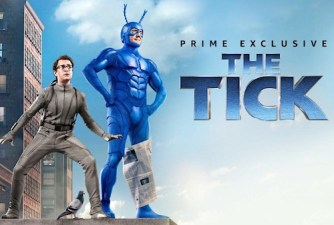 This month, I have mostly been missing Amazon’s new version of The Tick, the first half of the first season of which debuted last week, a full year after the pilot was made available. I wasn’t too impressed by that episode (my review is
 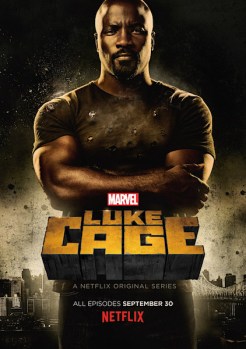 The third series in the Marvel/Netflix stable wins points for boldness, much as Jessica Jones did this time last year. Where Daredevil is a well-done but ‘standard’ superhero show, leading to it being somewhat demeaned by the Cool Kids of the critical world (but much higher-rated by us plebs on the likes of IMDb), Jessica pushed into dark psychological territory, and now Luke Cage brings black culture and life into the fold.
 It feels like only yesterday I was writing here about season four (it was, in fact,
  Well, it’s only taken me 3½ years to get round to this (seriously, where does time go?!) This bunch really represents the series’ highs and lows. On the one hand, Be Right Back — in which Hayley Atwell signs up for a company who create a virtual version of her deceased partner using his contributions to social media — is an exploration of broadly-plausible near-future-tech with a focus on its potential emotional effect. That’s what Black Mirror does best, I’d argue: look at stuff that may, perhaps, be in the pipeline, and how that would actually play out for us. On the other, there’s The Waldo Moment, which is also sickeningly plausible — as Charlie Brooker himself has said, it’s more or less come true, though with the likes of Boris Johnson and Donald Trump instead of a blue cartoon bear — but as an episode it doesn’t quite seem to know where to go with its concept or what it might ultimately signify. The episode just stops rather than ends, until a flash-forward coda that’s a bit silly in its extremity. Even Brooker, while doing press for the third season (released tomorrow), has said he’d go back and re-do that episode if he could. Still, full marks for effort.
 This latest series of Red Dwarf (which airs its fifth episode tonight, with the sixth available on demand from tomorrow) seems to have gone down rather well, with some reviews even hailing it as a “return to form” — that form being “the good old days” of Red Dwarf VI (or thereabouts), over 20 years ago. Personally, I didn’t dislike Red Dwarf VII or Back to Earth, and I even have a soft spot for Red Dwarf VIII, so what do I know? Nonetheless, I would concur that this Dwarf represents a fine vintage, hitting the series’ unique mix of accessible mainstream-ish comedy and proper science-fiction concepts. Red Dwarf XII is already in the can for 2017, and I wouldn’t be surprised to see Dave commission more episodes beyond that.
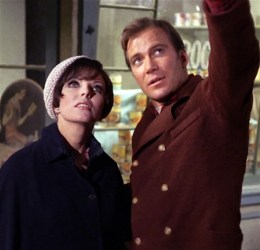 The entirety of TV Star Trek is available on Netflix, so I took the chance to watch the most acclaimed episodes of both The Original Series and The Animated Series — which happen to be connected, something I didn’t realise until afterwards. Er, I mean, which I totally planned. Both are pretty fine uses of science-fiction to explore relatable issues. Well, not many of us have to deal with disruptions to reality caused by time travel, or knowledge of the future creating dilemmas about what we do next, but they work the relatable stuff in around the surface plots. And they both still seem pretty bold for network TV episodes even today, almost half a century later, as (spoilers!) Kirk lets a good woman die to retain the correct timeline, and a kids’ cartoon deals with the subject of euthanasia.
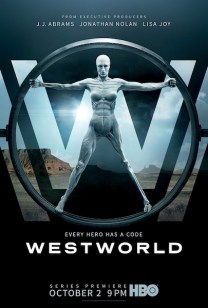 This month, I have mostly been missing loads of stuff. Probably the most talked about is HBO’s adaptation of Westworld, which has apparently pulled in even bigger ratings than Game of Thrones. Over here there’s the second series of The Missing, which if it’s half as good as the first will be a real must-see. Then there’s Woody Allen’s first (and last) TV series for Amazon, Crisis in Six Scenes. Reviews have been mixed to poor but I still intend to get round to it. And finally Hooten & the Lady, which may be the worst title for anything in the history of ever, but a globetrotting adventure series inspired by the likes of Indiana Jones and Romancing the Stone sounds right up my alley.
 100Films.co.uk